
Reviewed · MUSEUMS
Zagreb: Museum of Illusions Entrance Ticket
Your eyes will argue with your brain here. Zagreb’s Museum of Illusions packs more than 70 visual, sensory, and educational exhibits into a playful visit that makes science easy to grasp. I especially like the large hologram exhibition and the chance to take creative photos in rooms that twist your sense of balance and size.
I also like the freedom to move at your own pace. You can study an optical trick, try a puzzle, then return to an exhibit for another photo without following a fixed tour. The main drawback is the compact setting: the museum can feel repetitive or untidy when children and groups crowd the rooms, and it is not suitable for wheelchair users.
In This Review
- Key points to know before you go
- What your $14 ticket gets you in Zagreb
- Starting with the museum’s optical tricks
- Defying gravity in the water room
- Watching people grow, shrink, and change
- The mirror maze and the ceiling room
- Seeing one of Europe’s largest hologram exhibitions
- The playroom’s puzzles and brain games
- How long should you allow?
- Who will enjoy it most?
- Practical booking advice
- Should you book Zagreb’s Museum of Illusions?
- FAQ
- Where is the Museum of Illusions experience located?
- How much does admission cost?
- How long is the ticket valid?
- How many exhibits are included?
- Is there a hologram exhibition?
- What languages are available?
- Is the museum wheelchair accessible?
Key points to know before you go

- More than 70 exhibits: Expect optical, sensory, and educational installations rather than a conventional museum collection.
- A strong photo stop: The Rotated Room, mirror maze, ceiling room, and size-changing effects are made for playful pictures.
- A major hologram display: The museum presents one of the largest hologram exhibitions in Europe.
- Hands-on science: Exhibits explain vision, perception, the brain, and why your senses can misread a scene.
- Good for families and friends: The playroom adds puzzles and games, while many installations work best with two or more people.
- Compact and informal: There is no required route, which gives you freedom but can create congestion at busy times.
What your $14 ticket gets you in Zagreb
Admission costs $14 per person and is valid for one day. That is a reasonable price if you enjoy interactive museums, photography, or unusual indoor activities, especially since the ticket covers more than 70 exhibits rather than a single display.
I would not judge the value by the building’s size alone. The museum is described by one visitor as too small, and that criticism is fair if you expect a long, traditional museum visit. This is a compact entertainment and learning stop. You pay for the number of things you can try, not for hours of galleries or extensive historical collections.
At the current rating of 4 out of 5 from 261 ratings, the overall picture is positive but not flawless. The strongest appeal is creativity and photo potential. The main limits are crowd flow, repetition, and the compact layout.
You receive an entrance ticket only. There is no listed transport, meal, or extended guided program included. Show your voucher at the museum’s main entrance, then explore independently. English and Croatian are the stated languages for the host or greeter, and captions are available in English, German, Italian, and Croatian.
More museums and galleries in Zagreb:
- Zagreb: Skip-the-Ticket-Line Museum of Broken Relationships
★ 4.5 · 847 reviews - Zagreb: Nikola Tesla Technical Museum Ticket
★ 4.5 · 520 reviews - Museum of Illusions Zagreb
★ 4.0 · 197 reviews
Starting with the museum’s optical tricks
Do not expect a route that unfolds like a standard exhibition. The layout is informal, with installations arranged for you to approach, test, and photograph. That freedom is useful because you can spend extra time on the effects that interest you and move quickly past ones that feel familiar.
The tradeoff is organization. One visitor praised the creative design but found the lack of a clear path messy when many people and children were present. I would visit with a little patience and avoid treating the museum like a timed procession. If one exhibit is crowded, try another and return later.
Many of the displays rely on a simple idea: your eyes collect information, but your brain has to interpret it. When the visual clues conflict, your brain makes a fast guess, and the illusion appears. That makes the experience more than a collection of tricks. You are watching your own perception make a mistake.
Defying gravity in the water room
One of the most memorable examples is the room where water appears to flow uphill. The effect challenges your normal sense of level and direction, so it works best when you take a moment to look carefully rather than rushing toward the next photo.
This type of exhibit explains why the museum suits curious adults as well as children. You do not need a science background. The point is to notice what your eyes report, compare it with what you know should be happening, and see how easily perception can be fooled.
The museum’s explanations connect these effects with vision, the human brain, and science. For families, that gives the experience some substance. Children can play with the trick, while adults can help explain why the scene feels impossible.
Watching people grow, shrink, and change
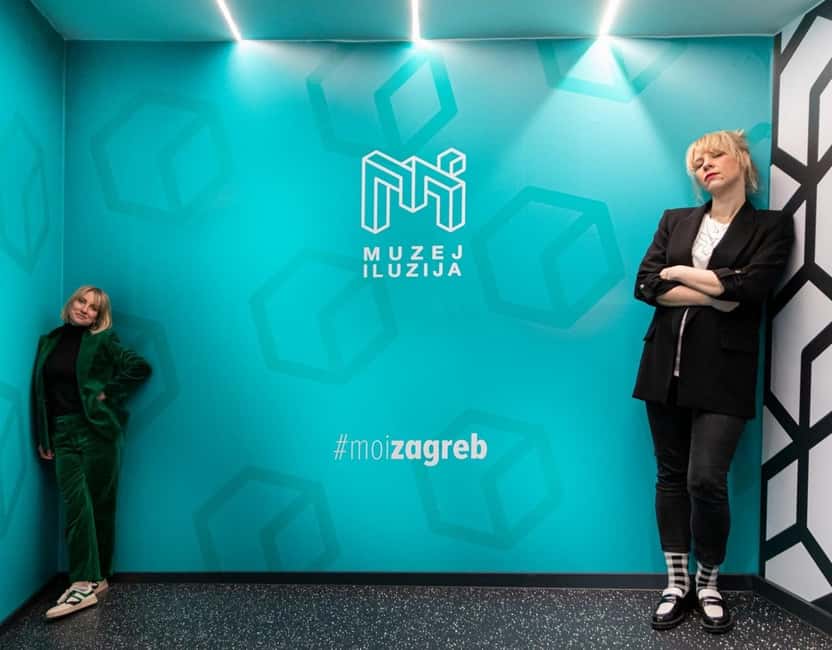
The museum also includes an effect that makes one person appear larger or smaller than another. It is a simple setup with a reliable payoff, particularly if you visit with friends or family members who are willing to pose.
This is where the museum becomes a social activity rather than a quiet collection of displays. You are not only looking at an exhibit. You are asking someone to stand in a certain place, comparing what you see, and taking a picture before switching roles.
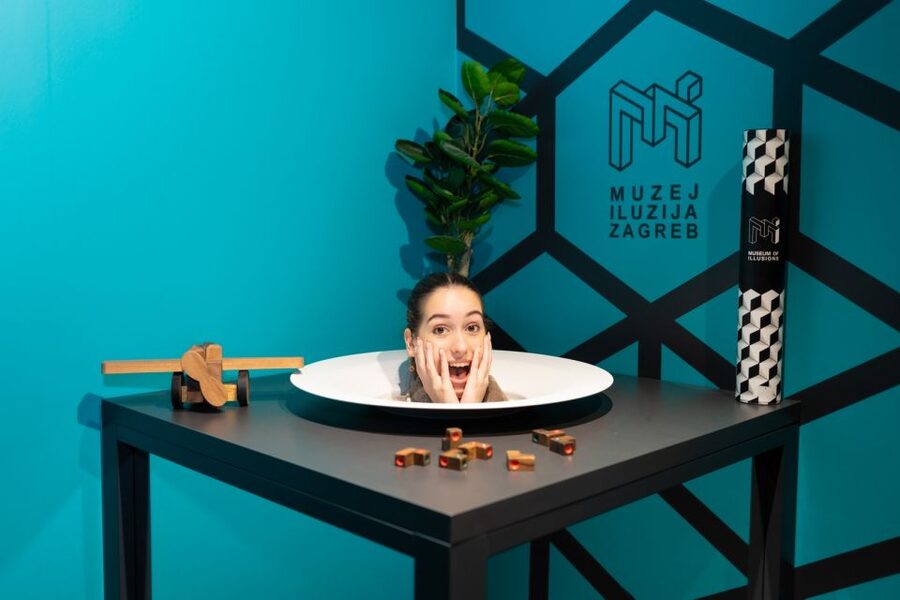
The same idea applies to the famous head-on-a-tray display. It sounds odd because it is meant to. The scene plays with visual context and makes an ordinary body seem disconnected from itself. You may find some installations repetitive after a while, but the best ones give you a different kind of visual joke.
A few more Zagreb trips worth comparing
- From Zagreb: Plitvice & Rastoke Guided Day Trip with Ticket
★ 4.9 · 2,955 reviews - Zagreb: Rastoke & Plitvice Lakes Guided Tour with Ticket
★ 4.9 · 1,897 reviews - Communism & Croatian Homeland War Tour
★ 5.0 · 1,355 reviews - Best of Zagreb with the WW2 Tunnels
★ 5.0 · 973 reviews
The mirror maze and the ceiling room
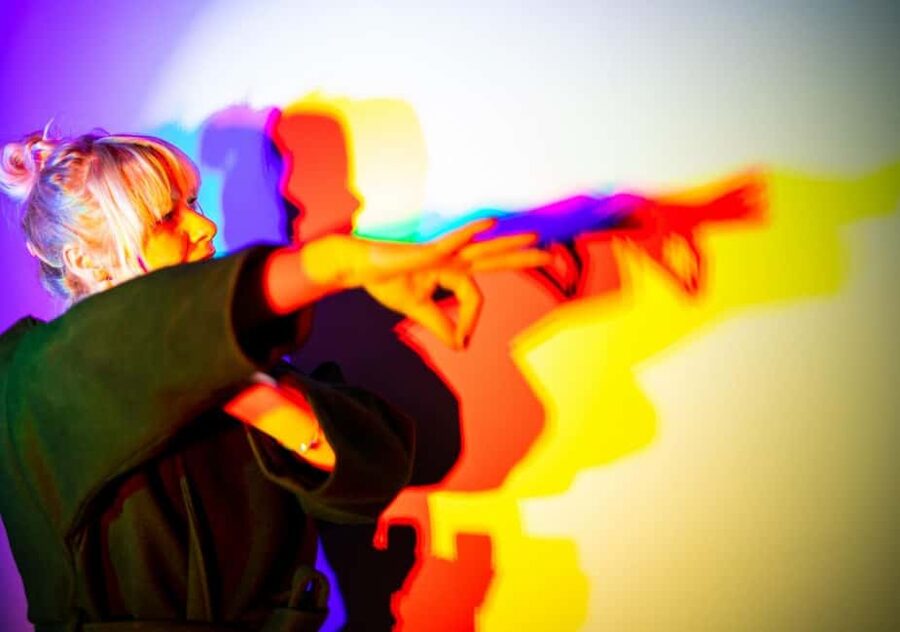
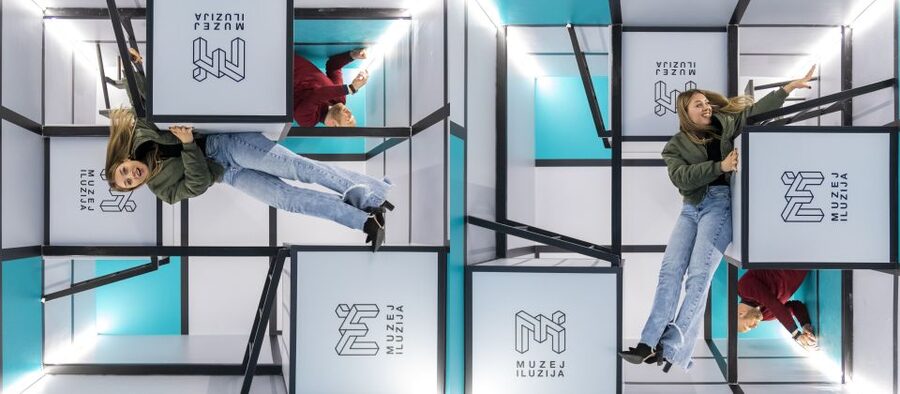
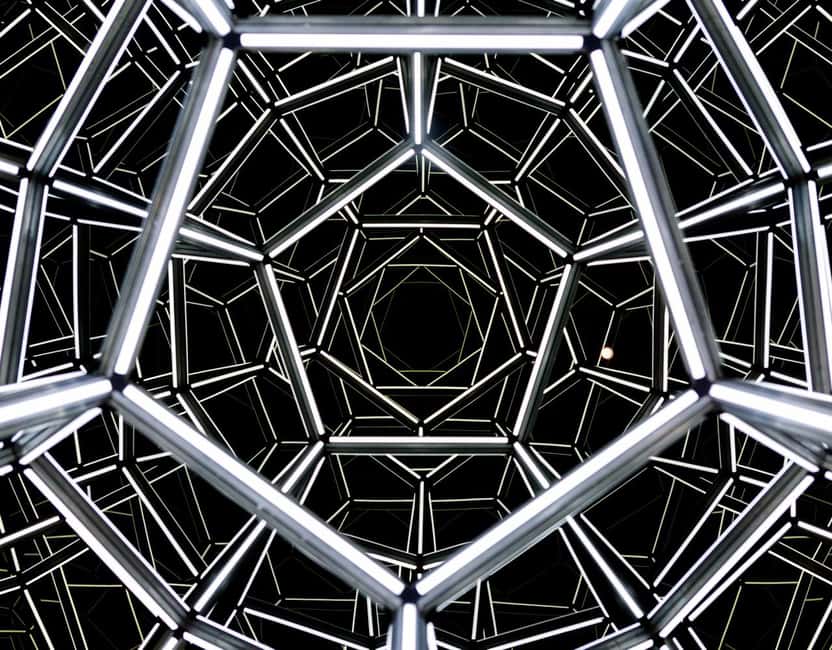
The mirror maze is one of the museum’s most obvious photo stops. Mirrors multiply the space and make it harder to tell where the route continues. Move slowly, look for the actual passage, and keep your camera ready if you want a picture that captures the confusion.
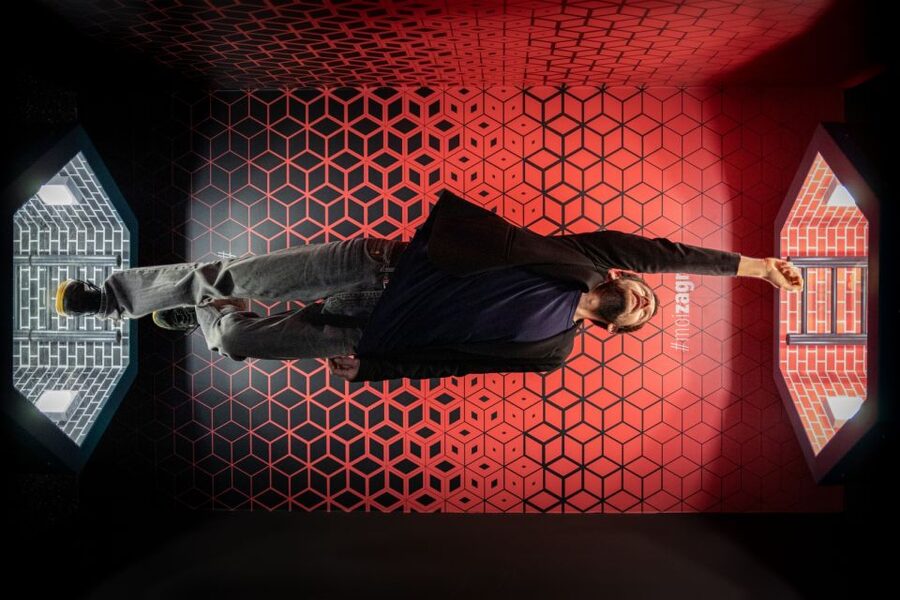
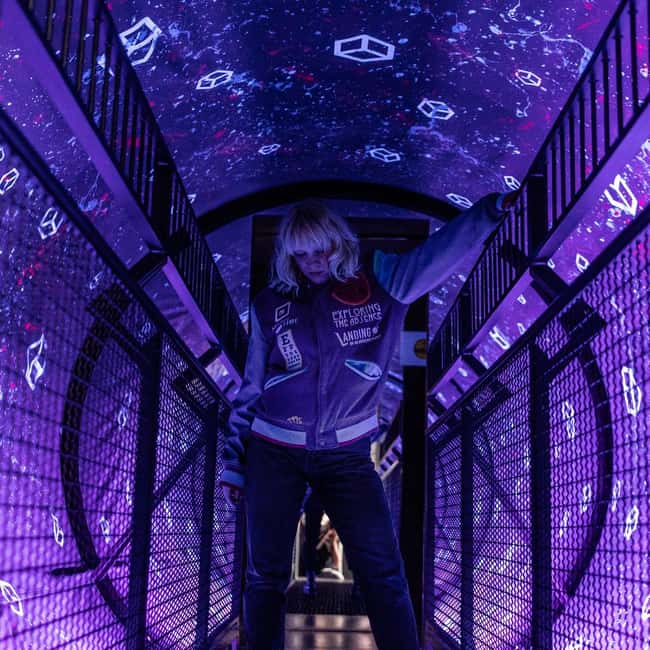
Another room lets you climb onto the ceiling, at least in appearance. The room is rotated, while your camera can preserve the illusion that you are standing in an impossible position. This is a good example of the museum’s basic formula: change the setting, adjust your viewpoint, and let your brain fill in the wrong answer.
The Rotated Room is singled out as the place to photograph your accomplishment at the end of the visit. I would save a little energy for it rather than treating it as just another room. It gives you a clear final picture and a fun way to close the visit.
Seeing one of Europe’s largest hologram exhibitions
The hologram section gives the museum a different rhythm. Instead of asking you to pose inside a distorted room, it asks you to inspect images that seem to float, shift, or take form in front of you.
The exhibition is promoted as one of the largest hologram displays in Europe. That is a useful reason to visit even if you have already seen a few basic optical illusions elsewhere. Holograms connect the playful side of the museum with light, image-making, and the limits of what your eyes expect to see.
Take your time here. Holographic effects can be easy to glance at and miss. The museum encourages careful viewing, and this is one section where slowing down should improve the experience.
The playroom’s puzzles and brain games
The playroom adds hands-on challenges to the visual effects. It contains educational games and puzzles designed to make you test logic, coordination, and perception.
This area matters because it gives you something to do after the photo rooms. If you visit with children, the puzzles may hold attention in a different way from the larger installations. If you come with friends, they can also create a little friendly competition.
Do not expect a formal class or a long explanation at each game. The museum’s educational value comes from trying the activity, seeing what confuses you, and then thinking about why. That approach works well for a short city visit.
How long should you allow?
The ticket is valid for one day, but the information does not give a fixed visit length or a required starting time. You should check availability when booking, since starting times may apply.
The open layout means your visit could be quick if you take a few photos and move on, or longer if you test the puzzles and study the explanations. I would think of it as a flexible indoor stop rather than a full-day museum commitment.
That flexibility is useful in Zagreb. You can fit the museum around other plans without needing to follow a guided schedule. Still, the compact size means you should not book it expecting to spend an entire day inside.
Who will enjoy it most?
I would recommend this museum to:
- Families looking for an educational activity that does not feel like a lesson
- Friends who want unusual group photos
- Couples who enjoy trying visual tricks together
- Visitors seeking an indoor activity with a clear price
- Anyone curious about perception, vision, and the brain
It may be less satisfying if you prefer quiet art galleries, long historical displays, or a carefully arranged route. The museum is playful and interactive. Some people will find that refreshing, while others may find the effects too similar after the first several rooms.
The experience is also not suitable for wheelchair users. Service animals are permitted, but pets are not. Food and drinks are not allowed inside. Bring a camera, since photography is one of the main pleasures of the visit.
Practical booking advice
You can cancel up to 24 hours before the activity for a full refund. The reserve-now, pay-later option also helps if your Zagreb schedule is still changing.
At the entrance, show your voucher at the museum’s main entrance. The host or greeter languages are English and Croatian, while exhibit captions are available in English, German, Italian, and Croatian.
Because crowding can affect the informal layout, I would look for a quieter available time if your schedule allows. A busy room can make it difficult to understand an illusion or take a clean photo. The lack of a fixed path is pleasant when the museum is calm, but less helpful when several families are trying the same installation.
Should you book Zagreb’s Museum of Illusions?
Book it if you like interactive science, playful photography, and short city attractions that give you something to do rather than simply something to look at. The hologram exhibition, Rotated Room, mirror maze, upside-down settings, and puzzle area give the $14 ticket a fair amount of variety.
Think twice if you want a large museum or a polished, clearly marked route. The space can feel small, the effects may become repetitive, and busy periods can make the layout feel disorganized. For most families, friends, and curious adults, though, it is an easygoing stop with enough clever surprises to earn a place in a Zagreb day.
FAQ
Where is the Museum of Illusions experience located?
It is located in Zagreb County, Croatia. You show your voucher at the museum’s main entrance.
How much does admission cost?
The listed price is $14 per person.
How long is the ticket valid?
The ticket is valid for one day. Available starting times should be checked when booking.
How many exhibits are included?
Admission includes access to more than 70 exhibits, including visual, sensory, educational, and hologram displays.
Is there a hologram exhibition?
Yes. The museum includes one of the largest hologram exhibitions in Europe.
What languages are available?
The host or greeter languages are English and Croatian. Captions are available in English, German, Italian, and Croatian.
Is the museum wheelchair accessible?
The experience is listed as not suitable for wheelchair users. Service animals are permitted, but pets are not. Food and drinks are also not allowed.
Just added around Zagreb
- Drava Rafting Safari★ 4.5 · 18 reviews
- Toast to the Morning After: Zagreb Museum of Hangovers Visit★ 4.0 · 39 reviews
- From Split: Transfer to Zagreb with Stop at Plitvice Lakes★ 4.6 · 44 reviews
- Severin na Kupi: Canoeing and Kayaking on the Kupa River★ 4.6 · 22 reviews
- Rafting/Kayaking adventure river Kupa★ 4.4 · 21 reviews
- Private Walking Tour of Zagreb★ 4.9 · 5 reviews
- Jump into Zagreb: Walking Tour with local guide★ 4.8 · 3 reviews
- From Zagreb: Varazdin Baroque Town & Trakoscan Castle★ 4.9 · 38 reviews
Museums, compared.

Blue Lagoon & Underwater Museum from Split with Lunch & Drinks
Read our review →
Skip-the-Ticket-Line Museum of Broken Relationships
Read our review →

PREMIUM Emperor’s Walking Tour for History Lovers + Museum
Read our review →
Klis Fortress GOT and Olive Museum Entry Tickets
Read our review →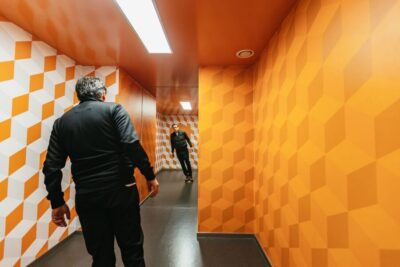
Browse the lists this tour appears in