

Reviewed · CITY TOURS
Zagreb: Guided City Tour with WWII Tunnels
Zagreb reveals itself one story at a time. This two-hour walk links the city’s grand squares, medieval lanes, market life, and Gric Tunnel with a local guide who can turn a short visit into a useful introduction to Croatia’s capital. I like the compact route, which covers the main Old Town sights without wasting time on transport, and I like the mix of famous landmarks with less polished places such as the WWII tunnels and Bloody Bridge. The main consideration is that two hours goes quickly, so you will see many places from outside rather than tour every church or building indoors.
The guiding is the real strength. Past guides including Katherine, Ivana, Darko, Diana, Vid, Tonka, Ena, and Luka have been praised for clear explanations, humor, useful food and drink suggestions, and an obvious affection for Zagreb. Bring comfortable shoes, keep your ears covered when the cannon fires, and leave large luggage behind.
In This Review
- Key points to know before booking
- Starting beneath the Horseman Statue
- Zagreb Cathedral and the city’s central symbols
- Stone Gate, where devotion meets city legend
- St. Mark’s Square and Zagreb’s postcard roof
- Lotrščak Tower and the noon cannon
- Gric Tunnel and Zagreb’s wartime past
- Bloody Bridge and the city’s rougher stories
- Dolac Market, Zagreb’s daily food center
- Why the guide makes the difference
- What two hours can realistically cover
- Is $23 a fair price?
- Who should book this Zagreb walk?
- Should you book the WWII tunnels tour?
- FAQ
- Where does the Zagreb city tour begin?
- Where does the tour finish?
- How long does the tour last?
- How much does the tour cost?
- Which languages are available?
- Is a local guide included?
- Does the tour visit the WWII tunnels?
- Will I hear Zagreb’s noon cannon?
- What should I bring?
- Can I bring luggage or a large bag?
- Can I cancel the booking?
Key points to know before booking
- The route starts and ends at Ban Jelačić Square: This central meeting point makes the tour easy to fit into your first day in Zagreb.
- Gric Tunnel adds a darker wartime chapter: You spend about 10 minutes in the tunnel, built during the Second World War under fascist rule.
- The noon cannon can be very loud: If your tour timing matches the traditional firing, protect your ears and expect a sharp report.
- You see Zagreb’s essential Old Town sights: The route includes Stone Gate, St. Mark’s Square, Lotrščak Tower, Dolac Market, and Zagreb Cathedral.
- Guides receive the strongest praise: The best part of the experience is the lively storytelling, with history, local tales, humor, and practical recommendations.
- The $23 price is fair for a first look: You receive two hours with a certified local guide, but indoor admissions are not listed as included.
Starting beneath the Horseman Statue
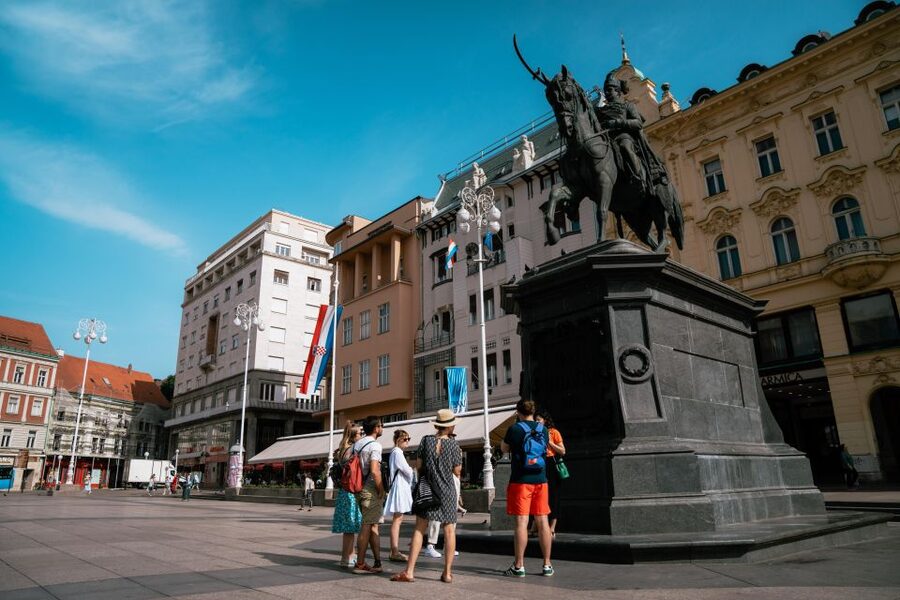
Meet in front of the Horseman Statue at Ban Josip Jelačić Square. This is Zagreb’s main urban meeting place, so it is a sensible spot for finding your guide and getting your bearings before walking uphill into the Old Town.
The square itself is worth pausing over. It is broad, central, and closely tied to the city’s daily life. Trams and pedestrians pass through, while the statue of Ban Josip Jelačić gives the place its name and visual focus. Your guide uses this opening to place Zagreb in context, connecting the modern center with the older hilltop neighborhoods above it.
I like beginning here because you do not need to spend the first part of the tour hunting for an obscure address. After the meeting, the route is walked on foot and eventually returns to the same square. That makes it easy to continue exploring, visit a café, or head elsewhere in the city once the tour ends.
A few more Zagreb trips worth comparing
- From Zagreb: Plitvice & Rastoke Guided Day Trip with Ticket
★ 4.9 · 2,955 reviews - Zagreb: Rastoke & Plitvice Lakes Guided Tour with Ticket
★ 4.9 · 1,897 reviews - Communism & Croatian Homeland War Tour
★ 5.0 · 1,355 reviews
Zagreb Cathedral and the city’s central symbols
The route includes a photo stop at Zagreb Cathedral, Croatia’s largest church. Its scale gives you an immediate sense of the importance of Zagreb as the country’s religious and civic center.
You should expect a guide-led explanation rather than a long interior visit. The tour is designed around outdoor sightseeing, and access to public buildings can change. One past participant found churches and other public buildings closed during repairs following earthquake damage, so do not book this walk on the assumption that every interior will be open.
That limitation does not make the cathedral stop pointless. You can still appreciate its size, position, and place in the city’s identity. Your guide can also help connect the cathedral to the market and square nearby, showing how religious, commercial, and civic life meet in this compact part of Zagreb.
Stone Gate, where devotion meets city legend

Stone Gate is one of the most atmospheric stops. This 13th-century entrance once formed part of the approach to the Old Town, and it remains a passageway rather than a detached monument. You walk through a real piece of the medieval city instead of simply viewing a ruin behind a fence.
The gate is also a place of devotion. The small chapel inside gives the passage a quiet, intimate feel, especially after the open space of Ban Jelačić Square. This is a good moment to listen closely to your guide, since the importance of Stone Gate is easier to understand through its stories and local meaning than through its surviving stonework alone.
The stop works well for photographs, but be considerate of people using the chapel. The space is not large, and the route can feel tight if the group pauses all at once.
St. Mark’s Square and Zagreb’s postcard roof
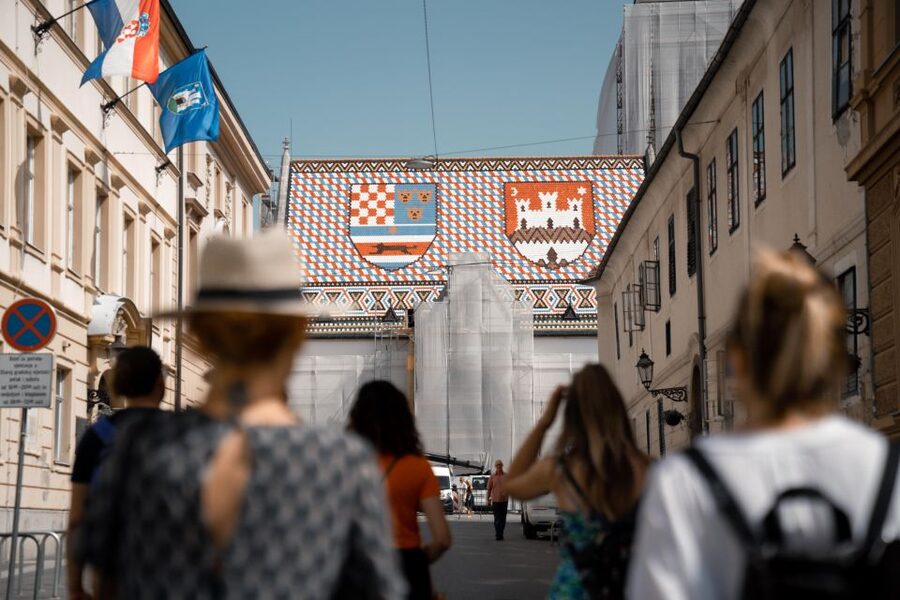
St. Mark’s Square is the visual high point of the walk. St. Mark’s Church is famous for its colorful tiled roof, which carries the historic coats of arms associated with Zagreb and Croatia. Even if you have seen photographs before, the church makes more sense when your guide explains its role in the old political center.
Nearby St. Catherine’s Church adds a different note. The tour points out its pink ceiling, an unusual detail that is easy to miss if you walk through the square alone. These two churches help show why a local guide adds value: the interest is not only in identifying buildings, but in noticing details you might otherwise pass without a second look.
You may not enter either church. The tour information lists photo stops, and access can be affected by worship, restoration, or earthquake repairs. Plan to enjoy the square from outside, then return independently if you want to check whether the interiors are open.
Still Zagreb, at a slower pace:
- Best of Zagreb with the WW2 Tunnels
★ 5.0 · 973 reviews - Plitvice Lakes with Ticket & Rastoke Guided Tour from Zagreb
★ 5.0 · 966 reviews - Zagreb: Small Group Walking Tour City Center and WW2 Tunnels
★ 4.9 · 895 reviews - Zagreb: Skip-the-Ticket-Line Museum of Broken Relationships
★ 4.5 · 847 reviews
Lotrščak Tower and the noon cannon
In front of Lotrščak Tower, the tour reaches one of Zagreb’s most memorable traditions. A cannon is fired at noon, and the sound is much louder than many people expect.
If your starting time places you at the tower at midday, you may witness the shot during the walk. The exact timing matters, so ask when booking or at the beginning of the tour if the cannon is a priority for you. One useful piece of advice is simple: cover your ears.
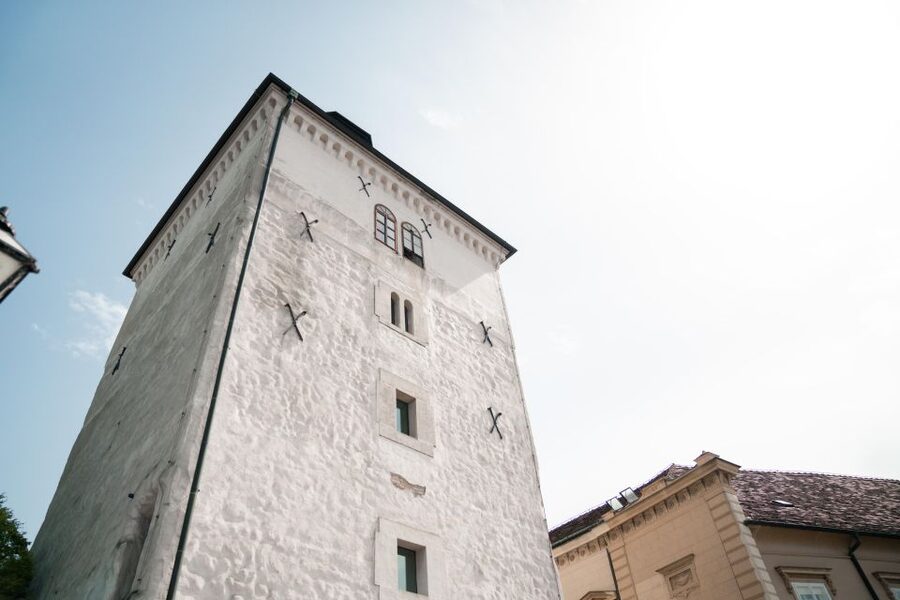
Lotrščak Tower also gives the guide a natural place to explain Zagreb’s defenses and the old upper-town setting. The tower is not just a photo background. It helps you picture the former fortified city and understand how the Stone Gate and other historic points fit together.
The cannon is fun, memorable, and slightly startling. If you are sensitive to loud noises, stand back and be ready. It is one of those small city traditions that can make a walking tour feel tied to the place rather than assembled from standard sightseeing stops.
Gric Tunnel and Zagreb’s wartime past
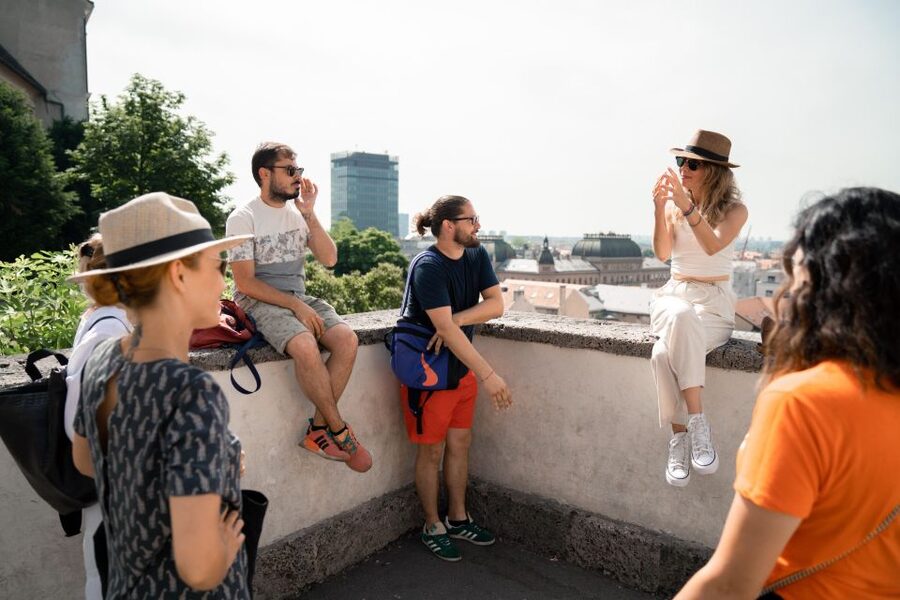
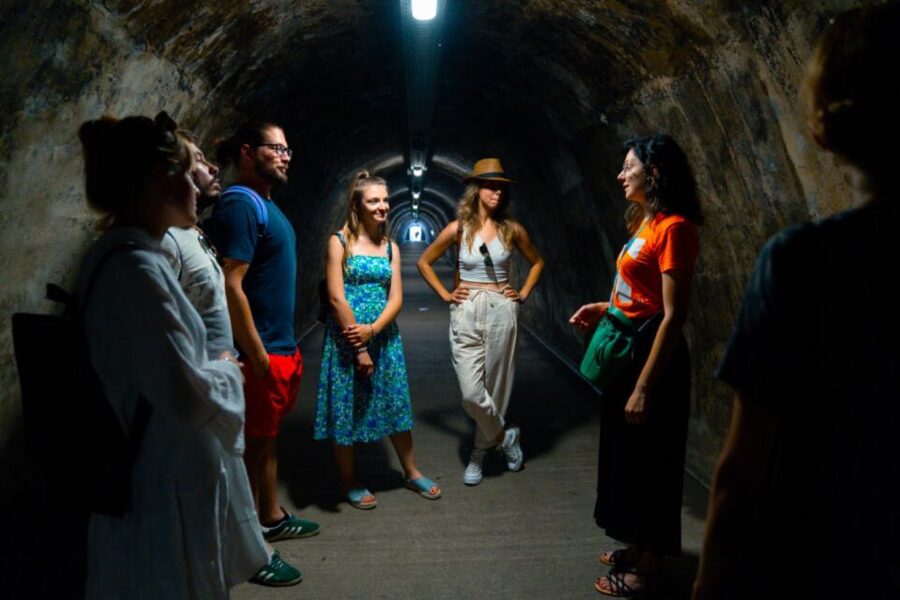
The WWII tunnel is the tour’s most distinctive feature. Known as Gric Tunnel, it runs beneath the city and was built by fascists during the Second World War. You spend roughly 10 minutes inside, making this a short but striking change from the open streets and church squares.
The tunnel gives physical weight to a difficult period. Instead of hearing only dates and political labels, you walk through a space shaped by wartime fear and urban defense. That shift is valuable because Zagreb’s past is not limited to pretty facades and Austro-Hungarian-looking streets.
Keep your expectations measured. This is a brief passage, not a long underground museum visit, and the tunnel is listed as a sightseeing stop with about 10 minutes devoted to it. Its value comes from the contrast and the guide’s explanation, not from a large collection of exhibits.
Large bags and luggage are not allowed. Leave suitcases behind, and carry only what you need for the walk. Comfortable shoes are also important because the route includes Old Town streets, stairs or inclines may be encountered, and the tour keeps moving between stops.
Bloody Bridge and the city’s rougher stories
Bloody Bridge offers a useful counterpoint to the polished central sights. Its name recalls conflicts that took place there over many centuries, reflecting the turbulent relationship between Zagreb’s historic communities and neighborhoods.
This is the kind of stop that can disappear if you explore alone with only a checklist of landmarks. There may be less to photograph than at St. Mark’s Square, but the story gives the street a stronger identity. I value stops like this because they explain how a city developed through arguments and rivalries, not just through impressive construction.
Your guide’s style matters here. The strongest guides on this tour mix fact, legend, anecdote, political background, and local humor. Diana, for example, was praised for combining those elements and answering questions, while Darko was singled out for modern storytelling and practical recommendations. Those qualities suit a stop where the story is more important than the monument.
Dolac Market, Zagreb’s daily food center
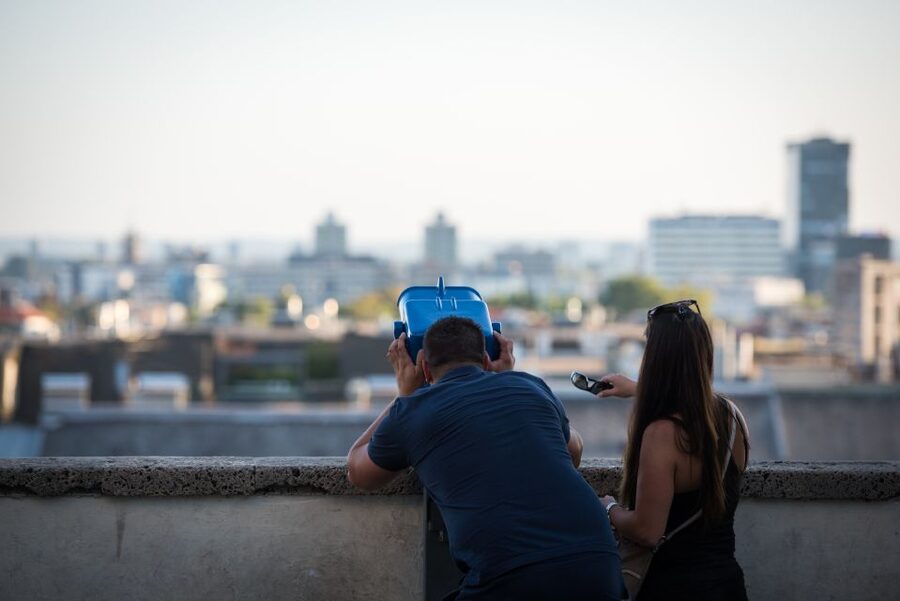
Dolac is Zagreb’s largest green market and one of the most enjoyable stops on the route. The colors, smells, and voices of the market provide a welcome change after the formal churches and towers.
This is where you see the city functioning in the present tense. Stalls, produce, and local buying habits tell you more about everyday Zagreb than another grand facade would. Your guide can point out what matters and help you understand the market’s place in local life.
The timing of a market visit can affect what you find. The activity may vary during the day, but the tour description specifically highlights the colors and aromas, so Dolac is intended as a sensory stop rather than a quick photograph. If you want to shop or eat there, ask your guide for suggestions and consider returning after the walk ends.
The market is also close to the cathedral and Ban Jelačić Square, which makes the route efficient. You are not being taken far out of the center for one isolated attraction. Instead, the market helps tie together the city’s religious center, main square, and upper-town streets.
Why the guide makes the difference
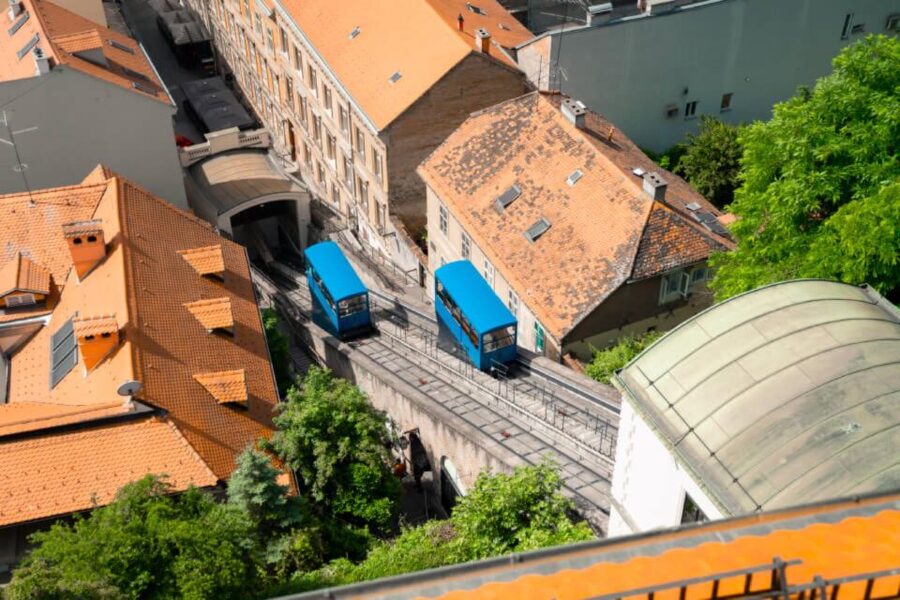
The tour includes a certified local guide with more than 500 tour experiences. That matters because Zagreb’s most interesting details are often small: a roof pattern, a church ceiling, a street name, an old rivalry, or a local tradition that makes little sense without explanation.
The strongest feedback centers on energy, humor, and clear storytelling. Katherine was praised for her lively delivery and command of Zagreb’s past and present. Ivana received similar praise for enthusiasm and local knowledge, while Vid was described as attentive, eloquent, and funny.
Diana appears several times as a particularly strong guide. Her approach combines facts with legends and anecdotes, and she also offers ideas for places to eat and drink. Tonka was praised for answering questions and keeping the walk engaging, while Ena was noted for presenting Croatian and Zagreb history in an approachable way.
Guide assignments can change, so you should not book solely because you hope for one named person. Still, the pattern is useful: this experience depends heavily on the guide, and the company has a strong record of delivering personable tours. Even a first-time guide received warm praise for being clear and well spoken, which suggests that the team’s tone is friendly rather than stiff.
What two hours can realistically cover
Two hours is a good length for an introduction. You see the essential sights, hear the main historical framework, walk through the WWII tunnel, and return to the central square before the experience becomes tiring.
The tradeoff is depth. You will not have time for extended visits inside several churches, a long market lunch, or detailed exploration of every lane. Most stops are photo or explanation points, with the Gric Tunnel receiving about 10 minutes.
I would use this as an orientation walk on your first day. Take notes when the guide recommends places to eat, drink, or visit later. Then return to Stone Gate, Dolac, the cathedral, or St. Mark’s Square at your own pace.
The route is also useful if your time in Zagreb is short. Since it begins and ends at Ban Jelačić Square, you can fit it around other plans without arranging a separate return transfer.
Is $23 a fair price?
At $23 per person, the tour offers solid value if you want a guided introduction rather than a self-guided walk. You are paying for two hours with a local guide, a carefully arranged route, historical interpretation, and access to the Gric Tunnel as part of the walk.
The value is strongest for first-time visitors. A guide can save you time, explain the connection between upper and lower Zagreb, and offer recommendations that may improve the rest of your stay. The price is less compelling if you already know the Old Town well or prefer to explore quietly without a group.
No attraction admissions are listed as included, and the major stops are primarily viewed from outside. Keep that in mind when comparing the price with a tour that includes museum tickets or tower entry.
Free cancellation up to 24 hours before the start and the option to reserve now and pay later make the booking less restrictive. Starting times vary, so check availability before you commit, especially if you want to be near Lotrščak Tower at noon.
Who should book this Zagreb walk?
I would recommend it to first-time visitors, couples, solo visitors, families with older children, and anyone who wants a quick introduction before exploring alone. The route gives you both the familiar postcard sights and a less obvious wartime site.
It is especially useful for people who enjoy stories more than static sightseeing. The guides are repeatedly praised for humor, patience, local recommendations, and an easy way of explaining difficult periods in Croatian history.
You may want a different option if you need full wheelchair or mobility details, since the provided information does not specify accessibility. You should also choose another experience if you are carrying large luggage, since suitcases and large bags are not allowed.
Should you book the WWII tunnels tour?
Book this tour if you want to see Zagreb’s major Old Town sights in two hours and understand how they connect. The combination of Stone Gate, St. Mark’s Square, Lotrščak Tower, Gric Tunnel, Bloody Bridge, Dolac Market, and the cathedral gives you a useful first picture of the city.
The main reason to book is the guiding. You are likely to get more than a list of dates and building names, with stories, humor, questions, and practical advice about the rest of your visit. Just keep your expectations realistic: this is an outdoor walking introduction with a short tunnel visit, not a series of long indoor tours.
At $23, it is a sensible choice for your first Zagreb morning or afternoon. Wear comfortable shoes, protect your ears near the cannon, carry no large luggage, and allow extra time afterward to revisit the places that catch your interest.
FAQ
Where does the Zagreb city tour begin?
The meeting point is in front of the Horseman Statue at Ban Josip Jelačić Square.
Where does the tour finish?
The walk returns to Ban Josip Jelačić Square.
How long does the tour last?
The tour lasts two hours.
How much does the tour cost?
The listed price is $23 per person.
Which languages are available?
The live guide is available in English and Spanish.
Is a local guide included?
Yes. The experience includes a certified local guide with more than 500 tour experiences.
Does the tour visit the WWII tunnels?
Yes. The route includes Gric Tunnel, with about 10 minutes assigned to the sightseeing stop.
Will I hear Zagreb’s noon cannon?
The tour includes a stop in front of Lotrščak Tower to witness the famous noon cannon shot. Timing depends on the tour start and route, and the cannon is loud, so cover your ears.
What should I bring?
Bring comfortable shoes and a camera.
Can I bring luggage or a large bag?
No. Luggage and large bags are not allowed.
Can I cancel the booking?
You can cancel up to 24 hours in advance for a full refund. The activity also offers a reserve-now, pay-later option.
Just added around Zagreb
- Zagreb: Explore with an Art Historian – Private Walking Tour★ 4.9 · 9 reviews
- Zagreb: VR 3D Immersive Film Experience – Voucher★ 4.6 · 9 reviews
- Zagreb: Plitvice With Secured Tickets, Boat And Train Ride★ 4.6 · 15 reviews
- Zagreb: Private custom tour with a local guide★ 4.6 · 48 reviews
- Zagreb: Pub Crawl, 1-Hour of Unlimited Drinks, & Club Entry★ 4.1 · 86 reviews
- Zagreb : Must-See Attractions Walking Tour With A Guide★ 4.6 · 11 reviews
- Zagreb BIG Tour – Private Tour★ 4.8 · 48 reviews
- Zagreb: Chocolate Museum Entry Ticket★ 4.5 · 72 reviews
City Tours, compared.
City Walls Early Morning or Sunset Walking Tour
Read our review →
Dubrovnik Combo: Old Town & Ancient City Walls
Read our review →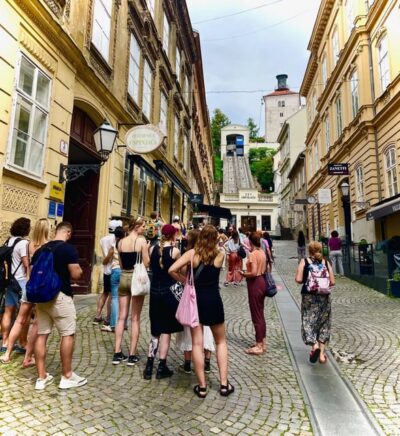
Small Group Walking Tour City Center and WW2 Tunnels
Read our review →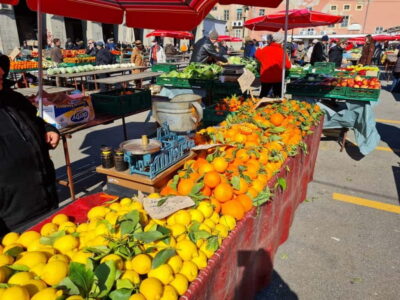
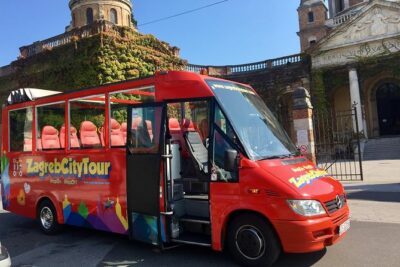
Hop On Hop Off Panoramic bus – Zagreb City Tour
Read our review →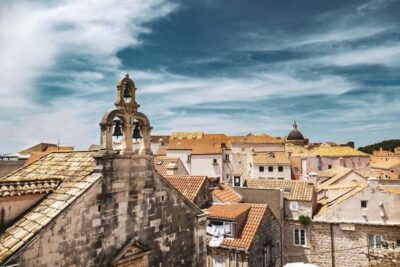
Browse the lists this tour appears in