
Reviewed · WALKING TOURS
Zagreb : Must-See Attractions Walking Tour With A Guide
Zagreb reveals itself on foot. This two-hour tour links the city’s grand squares, medieval lanes, market stalls, wartime tunnel, and hilltop views in one tidy route. I like the private format, which lets you ask questions and adjust the pace, and I like the guide’s practical role in helping you choose what to do next.
The route covers Zagreb’s best-known sights without turning the city into a checklist. I especially like the mix of major landmarks and everyday places such as Dolac Market and Tkalciceva Street. The main caution is guide quality: most feedback praises warm, capable guides, but one recent booking reported a serious lack of basic site knowledge.
In This Review
- Key Points At A Glance
- Starting At King Tomislav Statue
- Strossmayer Promenade And The Upper Town Feel
- Dolac Market, Zagreb’s Everyday Center
- Kaptol, Opatovina, And Tkalciceva Street
- Zagreb Cathedral And The City’s Religious Landmark
- Tunel Grič And Zagreb’s Wartime Past
- The Short Funicular And Lotrščak Tower
- St. Catherine’s Church And Baroque Zagreb
- What The Two-Hour Pace Really Means
- Guide Quality And The Value Of Local Advice
- Is $29 A Fair Price?
- Who Should Book This Zagreb Walk?
- Should You Book It?
- FAQ
- Where does the Zagreb walking tour meet?
- How long does the tour last?
- What places are included on the route?
- Is the tour private?
- Which languages does the guide speak?
- Is public transport included?
- Is the tour wheelchair accessible?
- Are food and drinks included?
- Are attraction entrance tickets included?
- Can I cancel the booking for a full refund?
Key Points At A Glance
- A strong first look at Zagreb: In two hours, you see the cathedral, market, old districts, tunnel, funicular, tower, and St. Catherine’s Church.
- Private and adjustable: Your group can shape the walk around its interests, with no unrelated people in the private option.
- Good local orientation: The guide can suggest more places to eat, visit, and explore after the tour.
- A route with variety: Medieval streets give way to food stalls, café life, military history, and city views.
- English and Spanish available: Live guiding is offered in both languages.
- One important check: Confirm the group format and guide arrangements when booking, since the details mention both private touring and small-group walking.
Starting At King Tomislav Statue
King Tomislav Statue is a sensible meeting point for a first walk through Zagreb. It sits in a central square with easy access to the Art Pavilion, the Croatian National Theatre, and the Botanical Garden. Even before the walking begins, you are placed among some of the city’s key cultural landmarks.
The square also gives the tour a useful sense of direction. From here, you can move toward the historic center rather than spending the opening minutes finding your bearings. If you arrive early, the surrounding area gives you a pleasant place to wait and begin noticing Zagreb’s blend of formal public spaces and daily city life.
The tour lasts about two hours. That is enough time for an introduction, not enough time for long interior visits at every stop. Expect guided explanations and photo stops rather than extended time inside each building.
The meeting point and route are wheelchair accessible according to the activity details. Still, this is a walking tour through older parts of town, so anyone concerned about mobility should confirm the exact path and access arrangements in advance.
More Walking Tours in Zagreb
- Zagreb: Small Group Walking Tour City Center and WW2 Tunnels
★ 4.9 · 895 reviews - Zagreb: City and WWII Tunnels Walking Tour
★ 4.9 · 845 reviews - Walking tour of Zagreb
★ 5.0 · 383 reviews
Strossmayer Promenade And The Upper Town Feel
Strossmayer Promenade brings you into the older, hillier side of Zagreb. The walk is known for its romantic mood, and the route gives you a chance to see the city from a more open viewpoint than the tight streets below.
This is one of the better places to hear how Zagreb’s upper districts fit together. Your guide can point out the relationship between Gradec and Kaptol, two historic areas that shape the city center. You are not only looking at buildings. You are learning how Zagreb developed around its religious, civic, and defensive centers.
The stop is listed at about 24 minutes, though the full tour remains two hours and the timing may be adjusted. That flexibility matters. A private tour can linger here for photographs or move on if the weather is poor and the view is less rewarding.
I would pay attention to small details rather than expect a major attraction visit. The promenade works best as a place to connect Zagreb’s old town, public life, and views. It is an atmospheric opening to the historic core, not a standalone monument.
Dolac Market, Zagreb’s Everyday Center
Dolac Market is where the tour shifts from grand architecture to ordinary city life. The market is a useful stop because it shows you how Zagreb functions, not just how it presents itself to sightseeing groups.
Your guide can help explain what you are seeing and point out the market’s place in local routines. You may find produce, food stalls, and the steady movement of people shopping and meeting. The activity details do not include food or drinks, so any purchase is at your own expense.
That exclusion is not a major problem, but you should know it before arriving. If you want to taste something or buy a snack, bring a little extra money and allow for the fact that the tour has a fixed overall schedule.
Dolac is also a good place to ask practical questions. You can ask your guide where to return later, what food areas are worth your time, or which parts of central Zagreb suit your plans. This is where the tour’s local advice can become more useful than a string of dates and architectural terms.
The market may be busy, so stay close to your guide and keep your belongings secure in the normal way. On a private tour, you have a better chance of stopping for a question without holding up a large group.
Kaptol, Opatovina, And Tkalciceva Street
From Dolac, the route moves through Kaptol and toward Opatovina Park. Kaptol brings the religious and medieval side of central Zagreb into focus, while Opatovina follows the old Kaptol walls and gives the walk a more layered sense of place.
This section is valuable because it connects separate sights. You begin to see why the cathedral, market, old fortifications, and upper town belong in one story. A guide can make those links clear as you walk, which is harder to do when you are moving between attractions alone with a phone map.
The route then reaches Tkalciceva Street, one of the liveliest parts of the center. Bars and eateries line the street, making it a useful place to get restaurant suggestions. Your guide’s advice here may save you from choosing a place based only on a busy frontage or a convenient location.
The street’s energy may not suit everyone. If you prefer quiet lanes and long historical explanations, this portion can feel more social and commercial. If you want to know where Zagreb’s evening life gathers, it is a helpful stop.
A private format gives you room to explain what you enjoy. Tell the guide if you want more food advice, more history, or more time for photographs. The activity specifically allows customization, so you should use that option rather than treating the route as fixed.
Still Zagreb, at a slower pace:
- From Zagreb: Plitvice & Rastoke Guided Day Trip with Ticket
★ 4.9 · 2,955 reviews - Zagreb: Rastoke & Plitvice Lakes Guided Tour with Ticket
★ 4.9 · 1,897 reviews - Communism & Croatian Homeland War Tour
★ 5.0 · 1,355 reviews - Best of Zagreb with the WW2 Tunnels
★ 5.0 · 973 reviews
Zagreb Cathedral And The City’s Religious Landmark
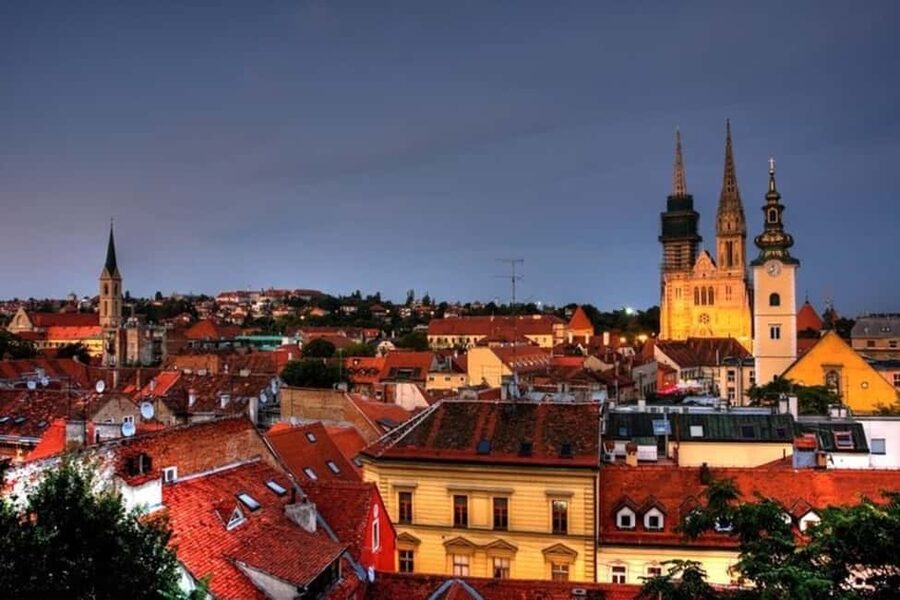
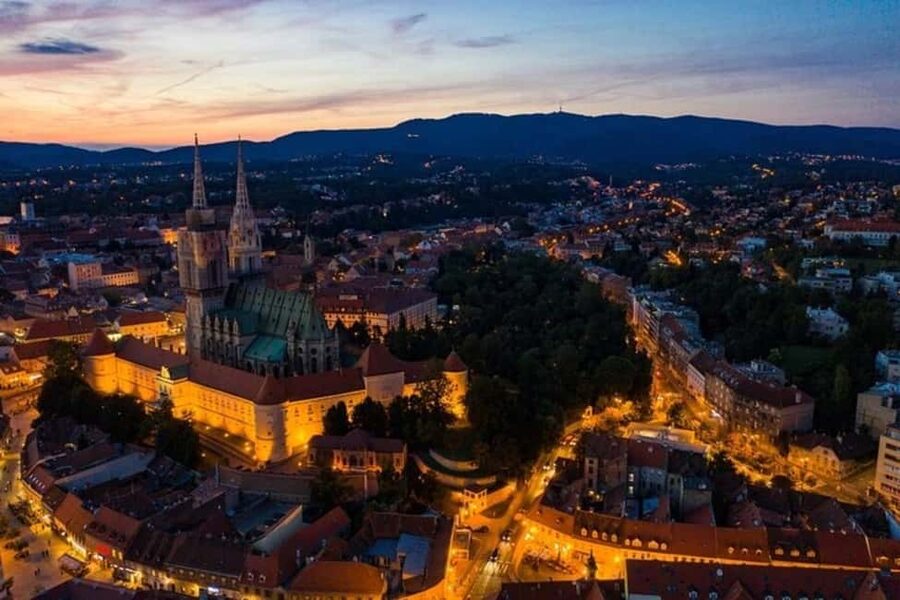
Zagreb Cathedral is one of the tour’s major sights. Its scale and architectural detail give the guide a natural point for discussing Zagreb’s religious and civic identity.
The visit is listed as a photo stop and guided sightseeing stop. Do not assume that the tour includes a long interior visit. Opening conditions can vary, and one practical point raised in the booking feedback was the need to know which monuments are open and which are closed in the city.
Ask about access at the beginning of the walk. The guide or local team may be able to tell you what can be visited that day, and the activity includes help with booking tickets for desired visits. That does not mean admission is included, so ask clearly about any extra cost.
The cathedral works well in the sequence because you reach it after seeing the market and older districts. You have already seen Zagreb as a living city, so the building becomes part of a larger picture rather than an isolated photo stop.
If the interior is unavailable, the exterior still gives you a significant landmark and a useful pause in the route. A good guide should explain what you can see from outside and offer a sensible alternative if access is restricted.
Tunel Grič And Zagreb’s Wartime Past
Tunel Grič adds a different note to the walk. This passage was built as a World War II shelter and offers a look at a less polished part of Zagreb’s past.
The tunnel is useful because it breaks up the architectural sightseeing. After market streets and churches, you are walking through a place designed for protection and uncertainty. It gives the guide a chance to explain how major events affected ordinary city life.
Conditions inside may feel quite different from the open streets above. The activity describes the tunnel as a relic of World War II, but it does not promise a full museum-style visit or a particular exhibition. Expect a guided look at the passage rather than a lengthy underground program.
This is another stop where a private guide can improve the experience. You can ask for more context if wartime history interests you, or keep moving if you are more focused on architecture and food. The route does not force every person into the same level of detail.
The Short Funicular And Lotrščak Tower
One of the tour’s most distinctive moments is the ride on Zagreb’s funicular. The activity describes it as the world’s shortest funicular, making this a quick but memorable part of the route.
The ride connects the lower and upper parts of the center and helps explain Zagreb’s unusual vertical layout. It is not a long transport experience, but it saves effort and gives the walk a change of pace.
At the top, Lotrščak Tower adds a defensive landmark and a strong story hook. The daily cannon blast at noon is one of Zagreb’s famous traditions. If your tour timing reaches the tower at the right moment, you may hear it, though the activity does not guarantee that the tour will coincide with noon.
The tower is listed as a photo stop and guided visit. Ticket entry is not specifically included, so ask if going inside matters to you. The guide can help with ticket arrangements for desired visits, but admission fees remain separate unless your selected option says otherwise.
The timing here matters. A two-hour route cannot promise a slow tower visit, an extended view, and a full explanation at every earlier stop. If Lotrščak Tower is your priority, tell the guide early so the pace can reflect that.
St. Catherine’s Church And Baroque Zagreb
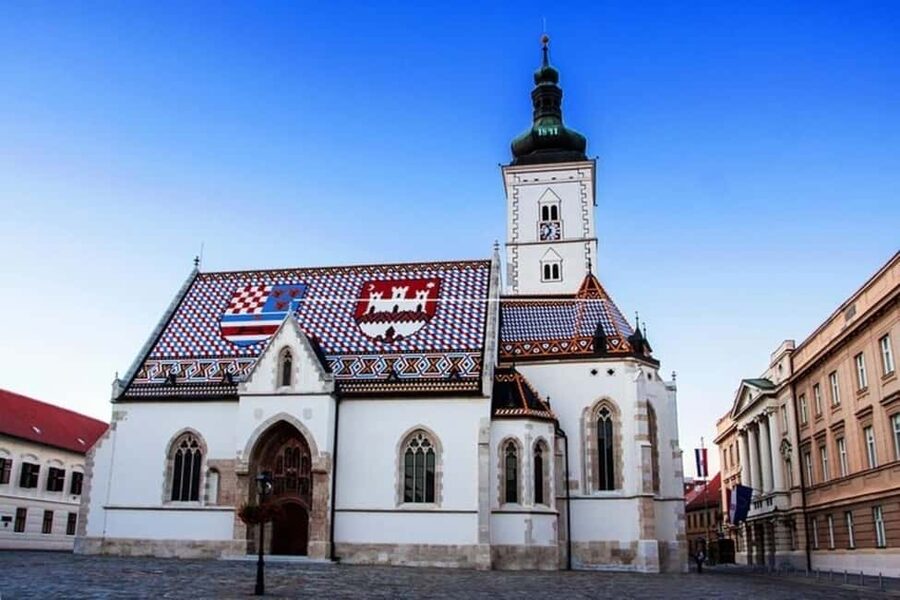
St. Catherine’s Church gives the tour a quieter, more decorative finish in the upper town. Its Baroque design provides a contrast with the cathedral and the older defensive elements seen earlier.
This stop is especially useful for people who want architectural variety. Zagreb’s center is not one single style, and St. Catherine’s helps show how the city changed over time. Your guide can explain the building’s place in the upper town and point out details that are easy to miss during a quick walk.
Again, the planned stop is a guided visit and photo stop, not a guaranteed extended interior tour. If the church is closed, ask the guide to explain the exterior and identify other open sites nearby.
The church also fits well with Strossmayer Promenade and the old Gradec area. By this stage, the route has moved from the lower city into Zagreb’s historic upper districts, so the final stops feel connected rather than random.
What The Two-Hour Pace Really Means
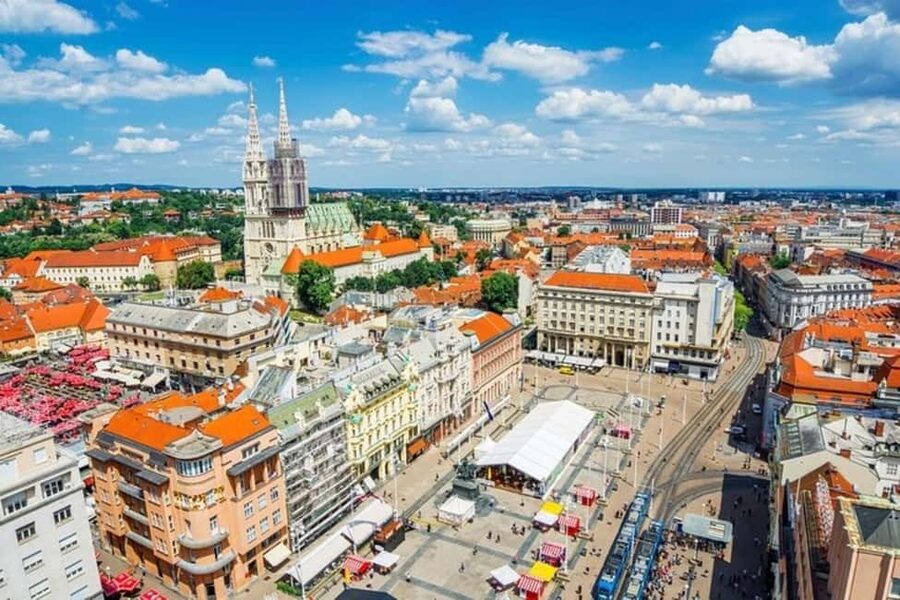
Two hours is a useful length for a first orientation. You can see many central sights without giving up half a day, and you still have time afterward for a museum, meal, or independent wandering.
The trade-off is depth. With stops at the promenade, market, tower, church, cathedral, tunnel, and old districts, each place receives a limited share of the clock. You should think of this as a guided introduction with local advice, not a substitute for spending a full morning inside Zagreb’s major sites.
The private option improves the value if you are traveling as a couple, family, or small group with shared interests. You can ask for a slower pace, more photographs, or extra food recommendations. The published details also mention a small-group walking tour, so check whether the exact booking option is fully private or shared.
Public transport is included as part of the walking experience unless you choose an option that says otherwise. The route includes the funicular, but no separate food or drink is provided. Wear practical shoes and keep your schedule flexible enough to ask questions without rushing from stop to stop.
Guide Quality And The Value Of Local Advice
The strongest feedback centers on guides who are friendly, patient, and passionate about Zagreb’s past. Guides named Mirna and Carla received especially warm praise for setting a comfortable pace, explaining places clearly, and pointing out small details that large tours often skip. Another booking praised a guide’s professional, courteous approach and strong command of the subject.
That is the ideal version of this experience: a local who helps you understand the city and gives useful advice for the rest of your stay. The guide can also help with ticket arrangements for visits you want to make after or during the tour.
There is one serious warning. One booking described a guide who was willing but unable to answer basic questions about important sights. That is not a minor flaw in a sightseeing tour. If the guide cannot explain the places you are paying to see, the private price becomes hard to justify.
The overall rating is 4.6 from 11 reviews, which points to generally strong satisfaction but still represents a small sample. I would treat the guide as the central part of the product and confirm the language, group type, and guide arrangements before paying.
Is $29 A Fair Price?
At $29 per person, the cost is reasonable if you value personal attention and practical orientation. You are paying for two hours with an English- or Spanish-speaking guide, a route through the main center, customization, and help planning additional visits.
The value improves for a private group because you are not simply joining a large walk and following a fixed script. You can shape the conversation around food, architecture, wartime history, or the places you most want to see.
The price is less attractive if you only want a quick list of monuments or plan to visit every attraction independently. Food, drinks, and any admission tickets are extra, and the limited time means you may need to return later for interiors.
For a first day in Zagreb, I think the price can make sense, especially if the guide is strong. Book it early in your stay so the advice about restaurants, museums, markets, and evening areas can improve the rest of your visit.
Who Should Book This Zagreb Walk?
I would recommend it to first-time visitors who want a clear introduction without committing to a half-day tour. It also suits couples and families who prefer private questions over a fixed lecture.
The route works well for people interested in several sides of Zagreb: architecture at the cathedral and St. Catherine’s Church, daily life at Dolac Market, old defenses around Kaptol, wartime history in Tunel Grič, and city views from the upper town.
You may want a different format if your main goal is detailed museum time, a food tasting, or a long interior visit at each church and tower. Those interests need more time than this compact walk provides.
The tour is wheelchair accessible according to the activity information, and live guiding is available in English and Spanish. Free cancellation up to 24 hours before the start and reserve-now, pay-later booking add useful flexibility.
Should You Book It?
Book this tour if you want Zagreb explained by a local, with the freedom to ask questions and adjust the walk. The route is well chosen, the price is moderate, and the mix of market, medieval districts, tunnel, funicular, tower, and churches gives you a real feel for the center.
Before confirming, verify that your booking is private, ask which guide and language are assigned, and check which monuments are open that day. With a capable guide, this is an efficient and personable first look at Zagreb. With a poorly prepared guide, the experience loses much of its value, so that final check matters.
FAQ
Where does the Zagreb walking tour meet?
The meeting point is the King Tomislav Statue in central Zagreb. The square is near the Art Pavilion, Croatian National Theatre, and Botanical Garden.
How long does the tour last?
The tour lasts two hours.
What places are included on the route?
The route includes Strossmayer Promenade, Dolac Market, Lotrščak Tower, St. Catherine’s Church, Zagreb Cathedral, Kaptol, Gradec, Opatovina Park, Tkalciceva Street, and Tunel Grič.
Is the tour private?
A private group option is available, and the included details describe a private and exclusive tour with no one else in your group. They also mention a small-group walking tour, so confirm the exact format you are booking.
Which languages does the guide speak?
Live guiding is available in English and Spanish.
Is public transport included?
The walking tour includes public transport unless you select an option that states otherwise.
Is the tour wheelchair accessible?
Yes, the activity information describes the tour as wheelchair accessible.
Are food and drinks included?
No. Food and drinks are not included in the price.
Are attraction entrance tickets included?
The tour includes help from the team with booking tickets for desired visits, but the provided information does not say that entrance fees are included.
Can I cancel the booking for a full refund?
Yes. You can cancel up to 24 hours in advance for a full refund. You can also reserve now and pay later.
Just added around Zagreb
- Zagreb: Explore with an Art Historian – Private Walking Tour★ 4.9 · 9 reviews
- Zagreb: VR 3D Immersive Film Experience – Voucher★ 4.6 · 9 reviews
- Zagreb: Plitvice With Secured Tickets, Boat And Train Ride★ 4.6 · 15 reviews
- Zagreb: Private custom tour with a local guide★ 4.6 · 48 reviews
- Zagreb: Pub Crawl, 1-Hour of Unlimited Drinks, & Club Entry★ 4.1 · 86 reviews
- Zagreb: Guided City Tour with WWII Tunnels★ 4.9 · 155 reviews
- Zagreb BIG Tour – Private Tour★ 4.8 · 48 reviews
- Zagreb: Chocolate Museum Entry Ticket★ 4.5 · 72 reviews
Walking Tours, compared.
Walking Tour of Split and Diocletian’s Palace
Read our review →
Krka Waterfalls tour with Trogir Walking tour and Krka panoramic boat cruise
Read our review →
City Walls Early Morning or Sunset Walking Tour
Read our review →Browse the lists this tour appears in