
Reviewed · MUSEUMS
Split: Museum of Illusions Entrance Ticket
Expect your eyes to argue with your brain. Split’s Museum of Illusions packs optical tricks, sensory puzzles, mirror effects, and playful science into a compact indoor visit. I like the hands-on design, especially the room where people appear to grow or shrink, and I like that the exhibits entertain while explaining perception and vision. The main drawback is language coverage: captions are available in English, German, Italian, and Croatian, but not French.
This is an easy rainy-day choice in Dalmatia, and it gives families or curious adults a break from sightseeing in the old town. I also appreciate the flexible one-day ticket, wheelchair access, service-animal policy, and cancellation option. Just remember that children cannot enter without an accompanying adult, and you will want a camera for the many visual tricks.
In This Review
- Key points to know before you go
- What the Museum of Illusions in Split is really like
- Entering with your voucher and getting oriented
- Defying gravity in the water room
- Watching people grow and shrink
- Losing your bearings in the mirror maze
- The head-on-a-tray and ceiling illusions
- Playrooms with puzzles and science
- How much time and attention should you allow?
- Is the $14 ticket good value?
- Who should visit, and who should skip it?
- Should you book the Museum of Illusions?
- FAQ
- Where is the Museum of Illusions experience located?
- How much does admission cost?
- How long is the ticket valid?
- What does the ticket include?
- How do I enter the museum?
- Are the exhibits available in French?
- Is the museum wheelchair accessible?
Key points to know before you go
- The upside-down water effect challenges your sense of gravity and makes a good first test of how quickly your brain accepts visual clues.
- The size-changing room creates especially amusing photos, with one person appearing much taller or smaller than another.
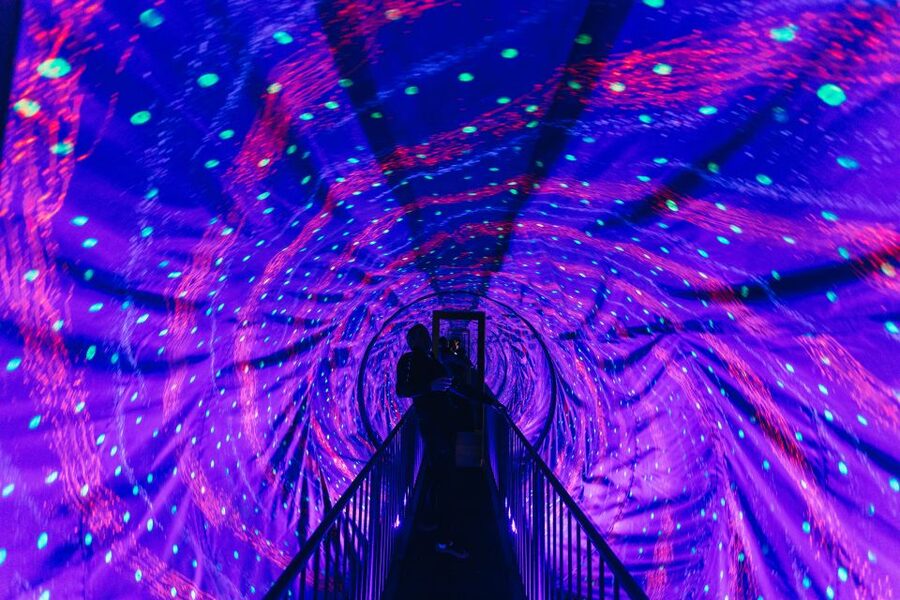
- The mirror maze turns a simple walk into a test of orientation, patience, and confidence.
- The playrooms add games and puzzles, so the visit is not just a series of things to look at.
- Captions come in four languages: English, German, Italian, and Croatian.
- The $14 ticket is best value if you enjoy taking part in exhibits rather than simply viewing them.
What the Museum of Illusions in Split is really like
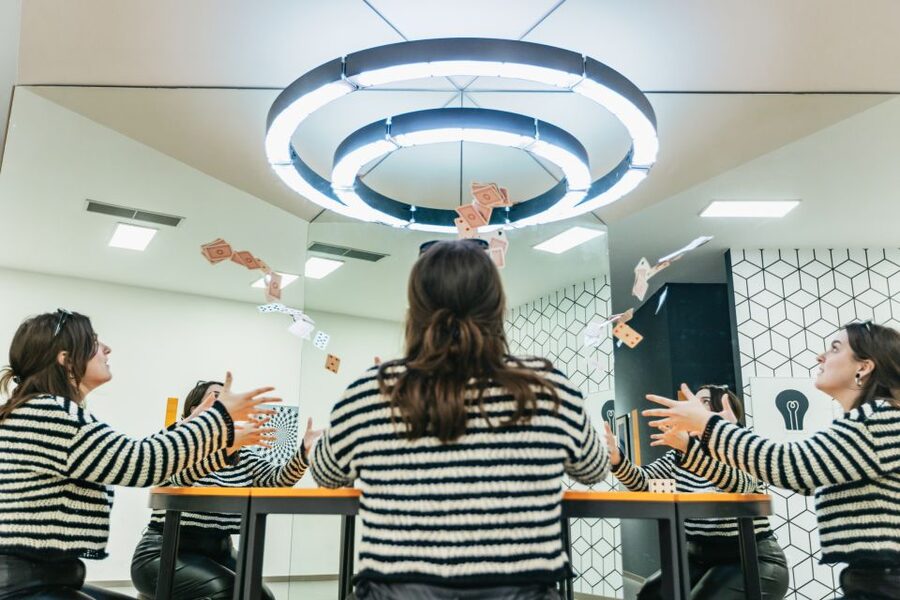
The Museum of Illusions is built around a simple idea: your eyes collect information, but your brain decides what that information means. The exhibits create situations where those two systems do not agree.
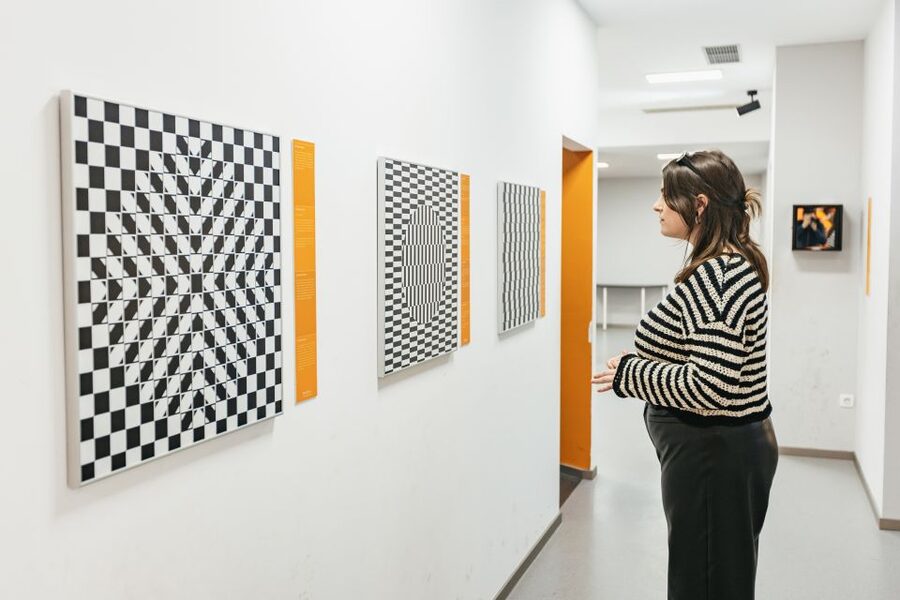
That makes the visit more active than a traditional museum. You are not walking past paintings with labels. You are stepping into rooms, standing at marked positions, looking through mirrors, and testing what happens when perspective is manipulated.
I like this approach because it works for different ages at once. Children can enjoy the surprise, teenagers can pose for photographs, and adults can read the explanations and think about why the trick works. The educational side is present, but it does not overpower the fun.
The experience is also easy to fit into a day in Split. It is indoors, open for a valid one-day visit according to the selected availability, and does not require a guide-led schedule. You show your voucher at the main entrance and explore at your own pace.
Do not expect a huge museum with a long historical collection. This is a focused attraction built around optical effects, perception, and interactive play. Its success depends on your willingness to participate.
More museums and galleries in Split:
- Blue Lagoon & Underwater Museum from Split with Lunch & Drinks
★ 4.5 · 1,122 reviews - Split: Game of Thrones Museum Entrance Ticket
★ 3.8 · 385 reviews - SPLIT-PREMIUM Emperor’s Walking Tour for History Lovers + Museum
★ 5.0 · 333 reviews
Entering with your voucher and getting oriented
Your visit begins at the museum’s main entrance. Show your voucher there, then follow the exhibits through the available rooms and play areas.
Because starting times depend on availability, check the booking calendar before you commit to a particular day. The ticket is valid for one day, but the supplied information does not state a fixed length for the visit. That is useful if you want to place it between other Split plans without committing to a strict tour timetable.
I would keep your phone or camera ready from the start. Photography is not an extra feature here. It is part of the fun, since many installations are designed to make a photograph record something your eyes briefly accepted as real.
The museum provides captions in English, German, Italian, and Croatian. If you are comfortable in one of those languages, you should be able to follow the explanatory material. If you need French, note that it is not included in the listed caption languages. One French-speaking visitor particularly enjoyed the size-changing room but found the lack of French explanations disappointing.
Defying gravity in the water room
One of the most memorable ideas is a room where water appears to flow uphill. This is a neat example of how the setting around an object can overpower your normal expectations.
Your brain expects water to follow gravity. When the visual surroundings suggest a different angle, the scene becomes difficult to accept even though you know it is an illusion. The exhibit is useful because it turns a basic scientific idea into something you can inspect with your own eyes.
I would take a moment here rather than rushing through for a quick photograph. Look carefully at the installation, consider the angle of the room, and notice how strongly your first impression controls what you think is happening.
This is the kind of exhibit that works well for children because it produces an immediate reaction. It also gives adults a reason to read the captions and discuss the difference between visual evidence and physical reality.
Watching people grow and shrink
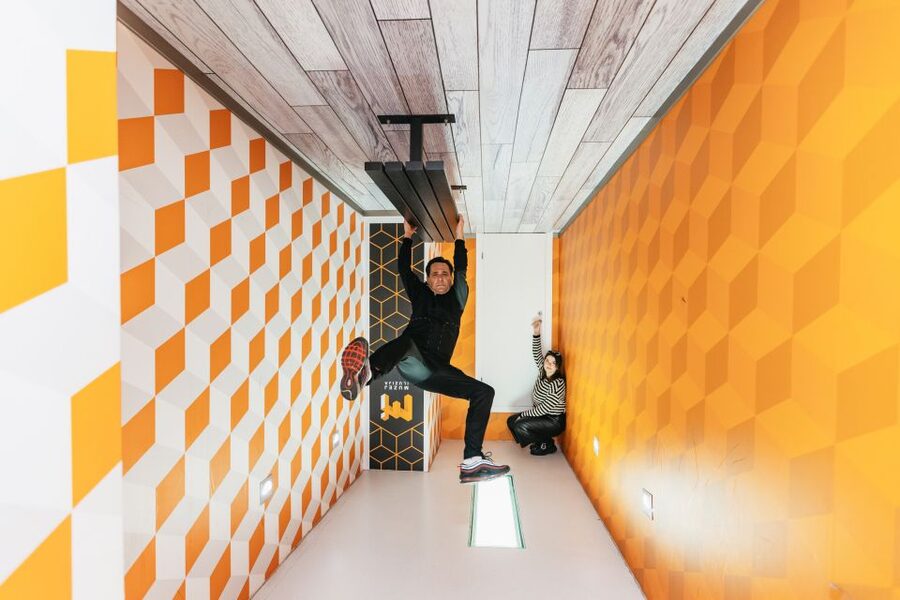
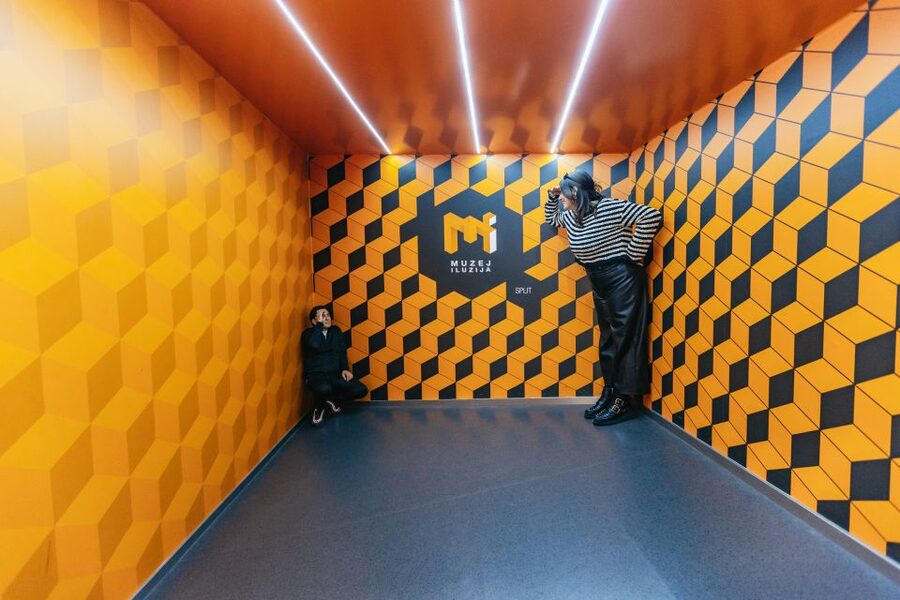
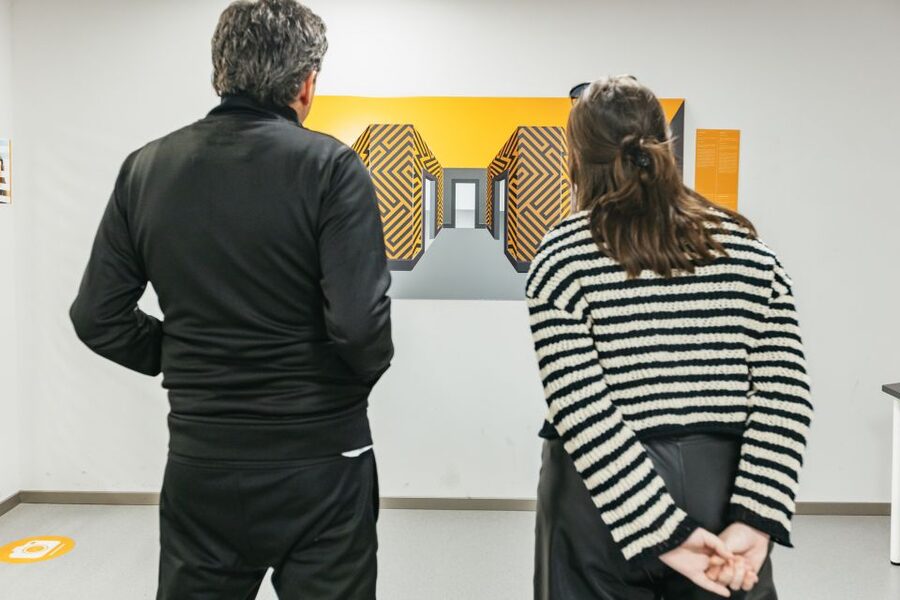
The room that makes people appear larger or smaller is likely to be the museum’s best photo stop. Two people can look wildly different in size even though they are standing in the same room.
This exhibit depends on perspective and the way the room is shaped. The effect is strongest when you stand in the right spot and frame the photograph carefully. It is not enough to point a camera randomly. Follow the marked viewing position or the museum’s instructions so the illusion reads clearly.
I like this room because it gives you something to do together. One person can pose while another takes the photo, then you can switch places. It is also one of the easiest exhibits for a family group to understand without a long explanation.
If you are visiting with friends, expect a little competition over who gets the funniest picture. That is not a problem, but it can slow the flow if several groups are trying to photograph the same effect. Be patient and let each person have a turn.
A few more Split trips worth comparing
- Split: Krka Waterfalls Trip with Boat Cruise and Swimming
★ 4.8 · 10,519 reviews - From Split: Krka Waterfalls, Food & Wine Tasting Tour
★ 5.0 · 9,326 reviews - Blue cave, Mamma Mia and Hvar, 5 islands speedboat tour
★ 5.0 · 7,150 reviews - From Split: Krka Waterfalls, Food & Wine Tasting Tour
★ 4.9 · 6,598 reviews
Losing your bearings in the mirror maze
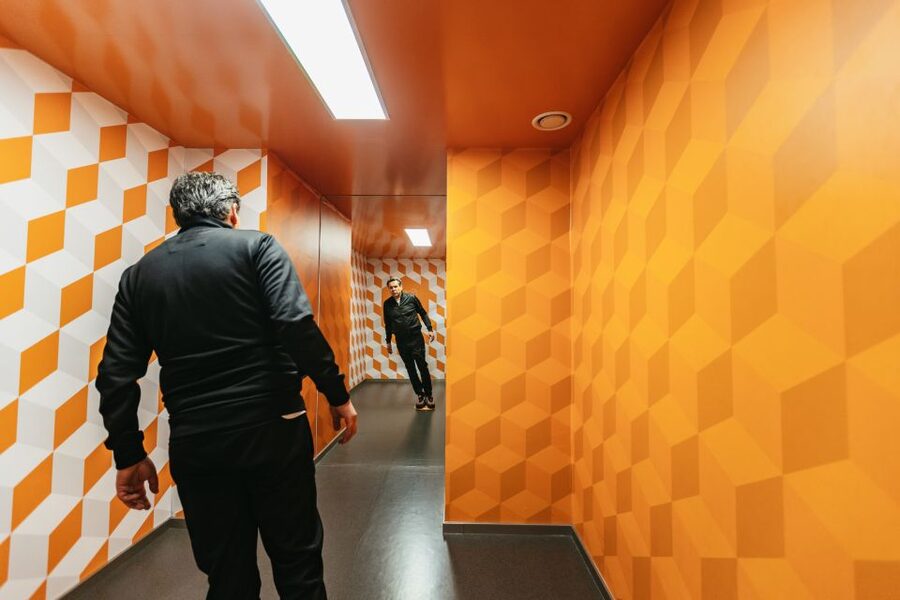
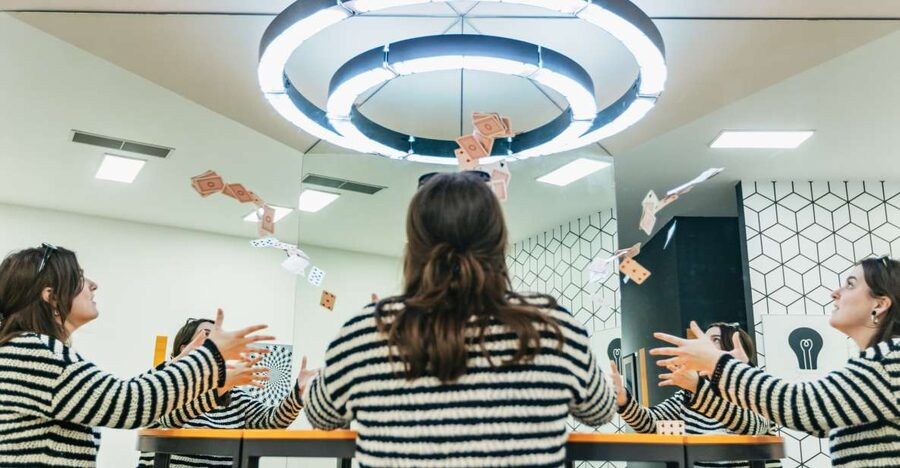
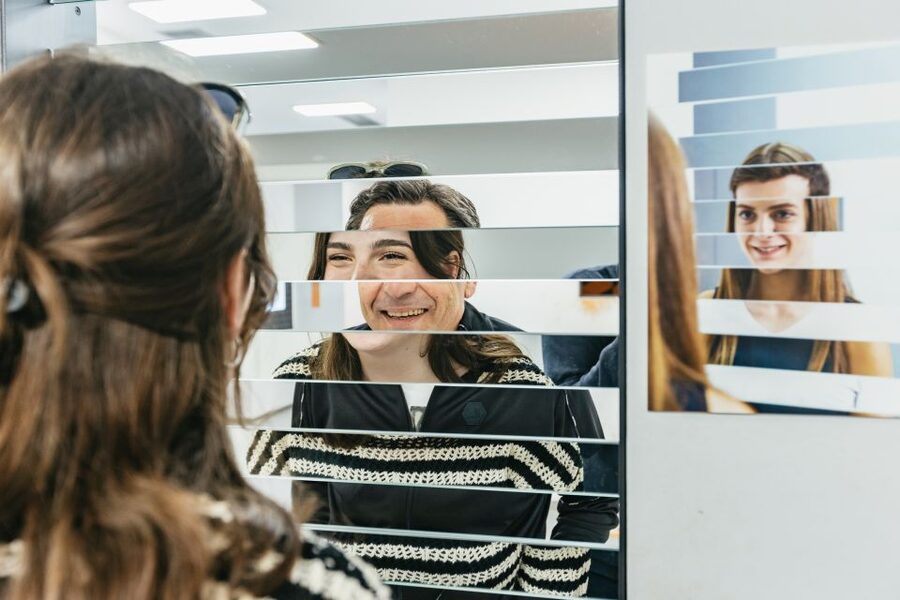
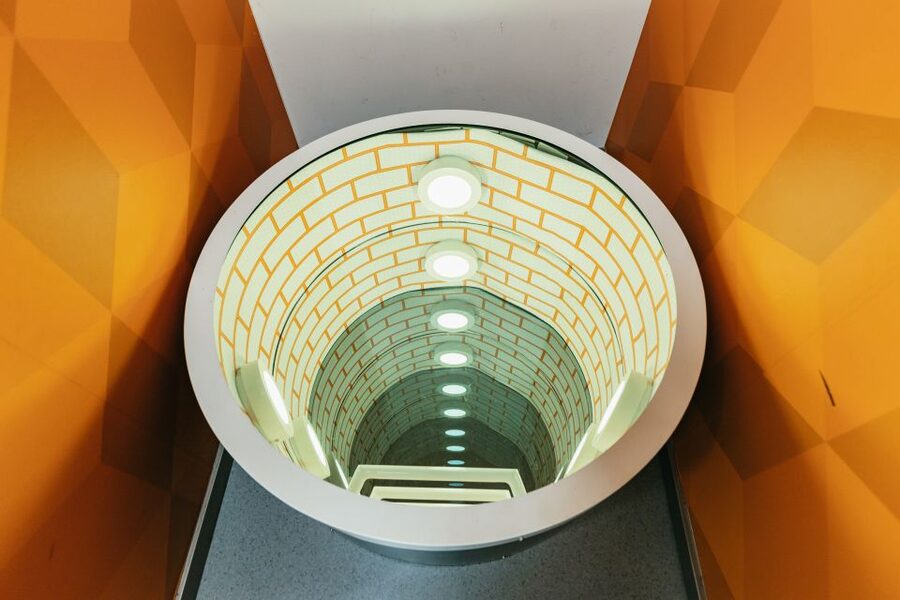
A maze of mirrors turns a familiar hallway into a confusing puzzle. You see reflections where you expect open space, and the repeated images make it harder to judge which direction is real.
This is more than a photo backdrop. It tests your sense of distance and orientation. You may think you are walking toward an exit only to meet glass, while a genuine opening can look like another reflection.
The mirror maze is best approached slowly. Keep your hands in front of you and pay attention to the route rather than trying to hurry. It is a simple tip, but visual tricks are less funny if you walk into a mirror.
The maze also changes the pace of the visit. After several stationary exhibits, you are moving and making decisions. That physical element helps keep children engaged, though younger children may need closer supervision.
The head-on-a-tray and ceiling illusions
The museum includes an installation where you can make it appear that someone’s head is being served on a tray. It is a playful visual trick with a slightly odd sense of humor, the sort of photograph people remember after the visit.
Another exhibit lets you appear to climb onto the ceiling. Again, the photograph depends on perspective and careful positioning. These effects work because your brain fills in the scene quickly, even when the image contains clues that something is not normal.
I would treat these rooms as short experiments. Look first, pose second, and read the explanation afterward. The entertainment is stronger when you understand what your eyes are doing instead of snapping pictures without noticing the trick.
The museum’s best feature is this mix of amusement and explanation. You get the silly image, then a reminder that perception is not a perfect copy of the world.
Playrooms with puzzles and science
The playrooms add educational games and puzzles to the optical effects. This matters because a museum based only on photographs can feel repetitive after a while.
Here, you can spend time working out how a puzzle functions, testing a visual idea, or comparing your response with someone else’s. The exact games are not listed individually, so you should think of the playrooms as a hands-on extension of the main exhibits rather than a separate attraction with a published schedule.
I like the playrooms for families because they encourage discussion. You can ask a child what they see, let them guess how the trick works, and then compare that guess with the caption. Adults may find the same activities appealing, especially if they enjoy puzzles and simple science.
The educational content covers vision, perception, the human brain, and science. You will not leave with a full course in neuroscience, but you should come away with a clearer sense of how easily your brain makes assumptions.
How much time and attention should you allow?
The ticket is valid for one day, but no exact visit duration is provided. That means you should check the available start times and plan around your own pace.
If you stop for photographs, read the captions, and try the puzzles properly, the experience will take longer than a quick walk-through. If you are mainly interested in a few famous effects, you can move faster.
I would not schedule this as the only activity of a full day. It works best as one stop among several in Split, particularly when you want an indoor attraction or a change from churches, streets, and outdoor sightseeing.
Your visit will also depend on how crowded the rooms are. The supplied information does not give a group size or a timed-entry capacity, so allow yourself flexibility rather than planning a tightly timed connection afterward.
Is the $14 ticket good value?
At $14 per person, this is a moderate-priced attraction rather than a bargain-basement stop. Its value depends on how much you enjoy interactive exhibits and photography.
I think the price is reasonable if you use the museum as an active experience. You are paying for access to several installations, playrooms, visual experiments, and explanatory material. The ticket makes less sense if you dislike posing for pictures, solving puzzles, or looking closely at optical effects.
The one-day validity adds practical value. You can reserve a place, check the available starting time, and keep the rest of your Split plans flexible. You can also reserve now and pay later, which helps if your itinerary is still changing.
Free cancellation up to 24 hours in advance gives you another useful safety net. It is worth checking the precise booking conditions before purchase, but the basic policy allows a full refund when you cancel within that time limit.
The overall rating of 4.2 from 254 reviews suggests a generally positive response, though not universal praise. That fits the attraction: many people will enjoy the novelty, while anyone expecting a large traditional museum may find it limited.
Who should visit, and who should skip it?
I would recommend the Museum of Illusions to families, couples, groups of friends, and adults who enjoy unusual photo opportunities. It is also a sensible choice if you want an indoor activity in Split that does not require a full day.
Children may enjoy the surprises, but unaccompanied minors are not permitted. An adult needs to be present, so plan accordingly.
The museum is wheelchair accessible, which makes it more practical for visitors with mobility needs. Service animals are permitted as well. The supplied information does not describe each exhibit’s individual dimensions, so if you need details about a specific installation, ask the museum before visiting.
Language is the main consideration for some visitors. English, Croatian, German, and Italian captions are available. If you depend on French explanations, you may still enjoy the visual effects, but the educational side will be less complete.
Bring a camera, but also bring a little patience. The best images depend on standing in the correct place and giving other people time to try the exhibits.
Should you book the Museum of Illusions?
Book it if you want a playful, hands-on stop in Split and enjoy the idea of seeing ordinary rules break in front of you. The uphill water, size-changing room, mirror maze, ceiling illusion, and puzzle areas give you plenty to test and photograph.
Skip it if you want a large collection of historic objects, a guided cultural tour, or a long, formal museum visit. For most people, the $14 price is fair when the attraction is treated as an interactive hour or two rather than a major sightseeing landmark.
I would especially choose it for a family day, a rainy afternoon, or a group that wants photographs with a story behind them. Check the caption languages, bring your camera, and book only if the available time fits your plans.
FAQ
Where is the Museum of Illusions experience located?
It is located in Split, in the Dalmatia region of Croatia.
How much does admission cost?
The entrance ticket costs $14 per person.
How long is the ticket valid?
The ticket is valid for one day. Check availability for the starting times offered on your selected date.
What does the ticket include?
The ticket includes entrance to Split’s Museum of Illusions.
How do I enter the museum?
Show your voucher at the museum’s main entrance.
Are the exhibits available in French?
The museum offers captions in English, German, Italian, and Croatian. French is not listed among the available caption languages.
Is the museum wheelchair accessible?
Yes. The museum is wheelchair accessible, and service animals are permitted.
Just added around Split
- Slatine – Island Hopping Excursion (Trogir/Blue Lagoon/Shipwreck)★ 4.0 · 24 reviews
- Krka Waterfalls & Primošten from Trogir, Seget, Čiovo & Kaštela★ 5.0 · 18 reviews
- Island Hopping Boat Excursion with Lunch (Trogir,Blue Lagoon, Šolta)★ 3.5 · 6 reviews
- From Trogir, Seget, Okrug: Krka Waterfalls & Šibenik Culture Tour★ 5.0 · 10 reviews
- From Split & Trogir: ATV Quad Tour on Island Čiovo★ 5.0 · 21 reviews
- Split: Blue Lagoon Boat Trip with Lunch, Wine and Snorkeling★ 5.0 · 3 reviews
- Split Sunset Stand Up Paddle Tour★ 5.0 · 16 reviews
- Split: Sunset Guided Kayaking Tour★ 4.8 · 71 reviews
Museums, compared.
Blue Lagoon & Underwater Museum from Split with Lunch & Drinks
Read our review →
Skip-the-Ticket-Line Museum of Broken Relationships
Read our review →

PREMIUM Emperor’s Walking Tour for History Lovers + Museum
Read our review →
Klis Fortress GOT and Olive Museum Entry Tickets
Read our review →
Browse the lists this tour appears in