
Reviewed · WALKING TOURS
Trogir; Private walking tour of higlights of Trogir
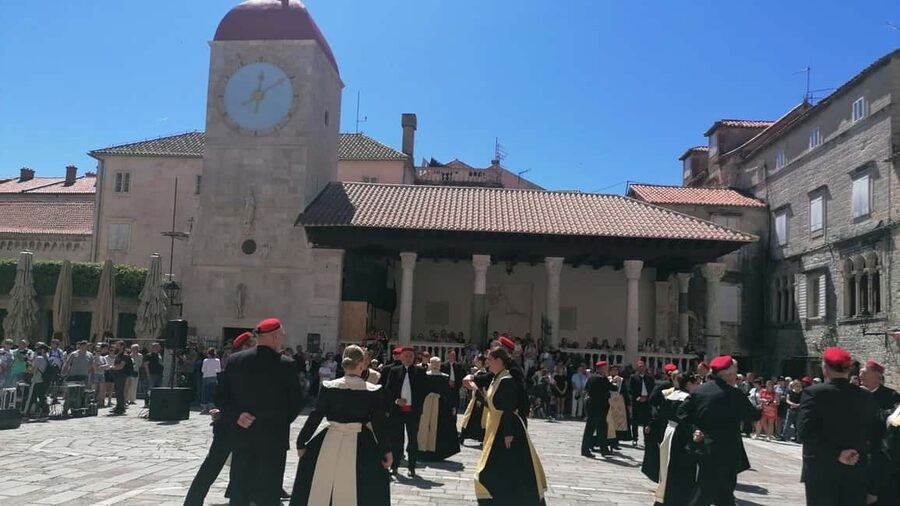
Trogir rewards slow footsteps. This private walk brings the city’s compact old town to life through its palaces, carved stone, cathedral, loggia, waterfront, and fortress. I especially like the private format for groups of up to eight and the way the route links major sights with the stories behind them. I also like that the guide can finish somewhere other than the starting point if that better suits your plans.
The main consideration is simple: the $129 price is per group, not per person, so the value depends on how many people join you. A full group gets a fair deal, while a solo visitor or couple pays much more for the same guide. Personal expenses are not included, and the tour information does not state that admission fees are covered.
In This Review
- Key points about the Trogir walk
- Why Trogir works so well on foot
- Starting beneath the north city gate
- The Cipiko Palaces and Trogir’s noble families
- St. Lawrence Cathedral and its carved portal
- The City Loggia and City Hall
- The story of Kairos and the happy moment
- The Riva promenade and its Mediterranean pause
- Finishing at Fortress Kamerlengo
- The guide, language, and weather flexibility
- Is $129 good value for a private Trogir tour?
- Who should book this walk?
- Should you book the Trogir private walking tour?
- FAQ
- Where does the Trogir walking tour start?
- Where does the tour end?
- How many people can join the private tour?
- How much does the tour cost?
- What languages are available?
- Is a tour guide included?
- Are personal expenses included?
- What sights are visited?
- Can I cancel the booking?
Key points about the Trogir walk
- A private tour for up to eight people: You get a guide focused on your group rather than a large crowd.
- Starts at the north city gate: This is Trogir’s main northern entrance and an easy place to begin exploring.
- Cipiko Palaces and St. Lawrence Cathedral: The route covers two of the town’s most important architectural sights.
- Kairos adds a memorable Greek connection: You hear the story of Kairos, the Greek god linked with the happy moment.
- Riva views finish the old-town experience: Palm trees, the sea, and anchored boats provide a pleasant change from stone lanes.
- Weather flexibility has real value: During a severe storm, the guide moved one booking by three hours without trouble.
Why Trogir works so well on foot
Trogir is a compact Mediterranean city with an unusually long human story. It has been inhabited for more than 3,600 years, and its old center gathers Greek, medieval, noble, religious, and maritime connections into a small area.
That concentration is what makes a guided walk useful. You can wander through the stone lanes on your own, but it is easy to see only attractive walls and miss the reason certain fragments, carvings, and buildings matter. A local guide gives those details a place in the larger story.
I like the scale of this experience. You are not being driven between scattered sights or rushed through a long list of stops. You move from the north gate through the historic core, then reach the waterfront and finish near Fortress Kamerlengo. The route gives you architecture, local stories, and sea views without needing transport between stops.
The tour is also private, which changes the pace. You can ask about a palace, stop to clarify a point, or request advice for the rest of your time in Trogir and Dalmatia. The guide is specifically available for vacation recommendations, a useful extra when you have not yet decided how to spend the rest of your visit.
More Walking Tours in Split
- Trogir: City Highlights Guided Walking Tour
★ 4.9 · 199 reviews - Trogir walking tour with a local guide
★ 5.0 · 129 reviews - Trogir: Old Town Guided Walking Tour
★ 4.6 · 76 reviews
Starting beneath the north city gate
The meeting point is in front of the north city gate, the main entrance on the northern side of Trogir’s old town. This is an appropriate beginning because the gate introduces the fortified character of the city before you even enter the narrow streets.
Take care to identify the correct spot: the directions refer to the north city entrance and north city gate. If you are meeting friends, agree to meet directly in front of the gate rather than somewhere vaguely nearby.
From here, the guide can orient you to Trogir’s historic core and explain how the old city fits together. That first bit of context matters. Trogir can feel like a maze of stone passages, but the route becomes easier to understand once you recognize the relationship between its public buildings, noble residences, religious center, waterfront, and defensive walls.
Because the experience is a walking tour, wear shoes that feel secure on old stone streets. The supplied details do not specify a tour length, so I would also avoid scheduling an immediate appointment afterward. Give yourself room for the walk, questions, and any pause caused by weather.
The Cipiko Palaces and Trogir’s noble families
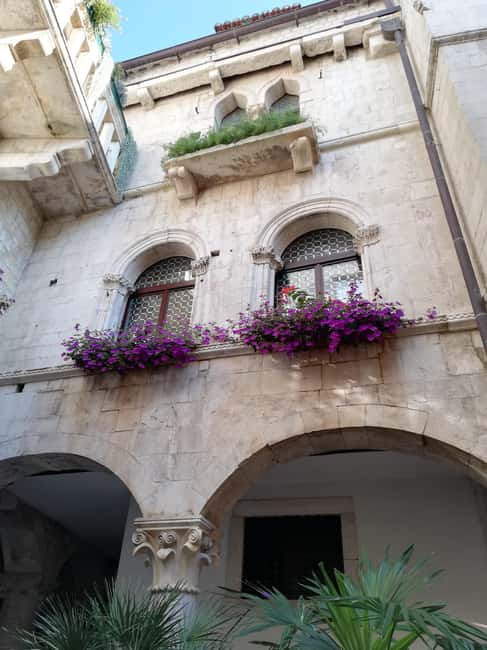
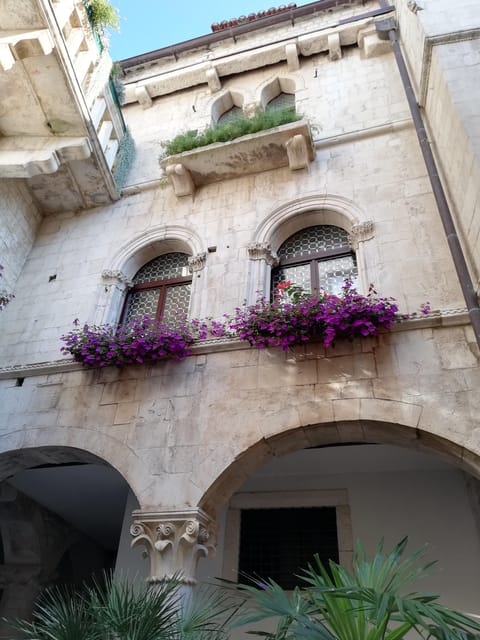
The Cipiko Palaces are among the tour’s key stops. Their appeal is not only their appearance but also the glimpse they provide into the families who shaped Trogir’s public and private life.
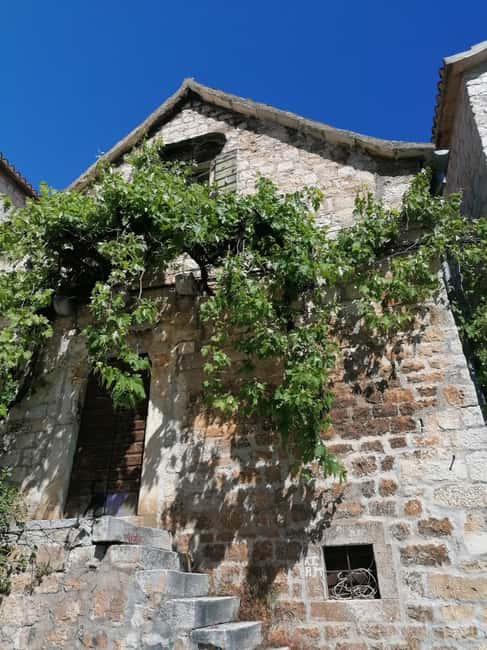
The tour explains the noble families, their palaces, and the stone fragments they collected as a way of showing respect for the past. That detail gives you something specific to look for. Instead of seeing reused stone as decoration alone, you can consider how Trogir’s residents displayed links to earlier cultures and honored the city’s long record.
This is one of the places where a local guide adds real value. Architecture can tell you that a family had money and influence, but the story of who lived there and why the building mattered helps you read the street more carefully.
You should not expect a museum-style visit with a long display of objects. The strength here is the street-level setting. You see the palaces in the same lanes where daily life continues, and the old city feels less like a preserved shell.
St. Lawrence Cathedral and its carved portal
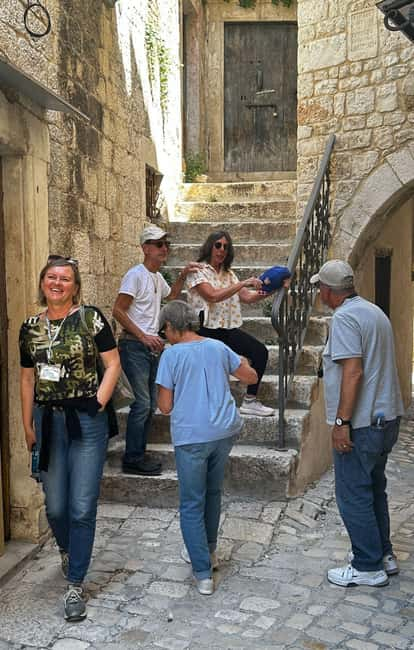
The Cathedral of Saint Lawrence is the artistic center of the route. The tour highlights its masterpiece portal, which gives you a close look at the skill and ambition invested in Trogir’s religious buildings.
The portal deserves time. Carved stone works best when you can study it at walking speed, noticing figures, patterns, and the amount of labor held in a single entrance. The guide’s explanation helps connect the details to Trogir’s artistic heritage and to the masters who lived and worked here.
The experience includes a visit to the cathedral, but the information does not specify whether an entrance ticket is included. I would ask about any admission charge when you book or meet the guide, especially if you are carefully managing your budget.
For many people, this will be the tour’s most rewarding architectural stop. The Cipiko Palaces show noble power, while the cathedral presents religious and artistic ambition on a larger scale. Together, they make the old town easier to understand.
More Walking Tours in Trogir:
- Split Old Town Walking Tour
★ 5.0 · 25 reviews - Private Trogir walking tour with LOCAL guide
★ 4.8 · 23 reviews - Discover Trogir: Guided Walking Tour of a Medieval Gem
★ 5.0 · 13 reviews - Trogir Old City Walking Tour
★ 5.0 · 8 reviews
The City Loggia and City Hall
The City Loggia and City Hall shift the focus from private families and church art to public life. The guide reveals the secrets of these buildings and explains how civic spaces fit into the story of Trogir.
A loggia is the sort of structure that can seem ordinary if you do not know what happened there. A guide can show you why a public building mattered, who used it, and how it connected to the town’s administration and social life.
City Hall adds another layer. In a small historic center, public authority, trade, religion, and noble families were close neighbors. That physical closeness helps you understand how power operated in a medieval Mediterranean town.
This part of the walk is also a good reminder that Trogir is more than a collection of pretty facades. Its streets were built for real civic business, ceremonies, debate, and administration. The guide’s stories turn those quiet buildings into active parts of the town’s past.
The story of Kairos and the happy moment
The Kairos story gives the tour a lighter and more unusual stop. Kairos is described as the Greek god of the happy moment, a figure connected with recognizing and seizing the right instant.
That story ties Trogir to its Greek foundations and makes the city’s ancient past feel personal rather than remote. You are not simply hearing that Greeks once influenced the area. You are given a memorable idea to carry through the streets: opportunity arrives briefly, and you have to notice it.
This is exactly the kind of detail I want from a walking tour. It is short enough to remember, but distinctive enough to separate Trogir from a standard list of churches and palaces.
The supplied information does not identify the exact object or location associated with Kairos, so I would ask the guide to point out the relevant artwork or symbol clearly. That question can lead to one of the more enjoyable exchanges of the walk.
The Riva promenade and its Mediterranean pause
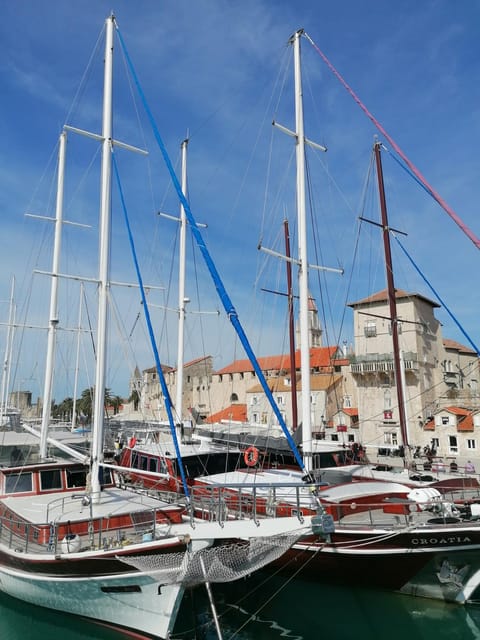
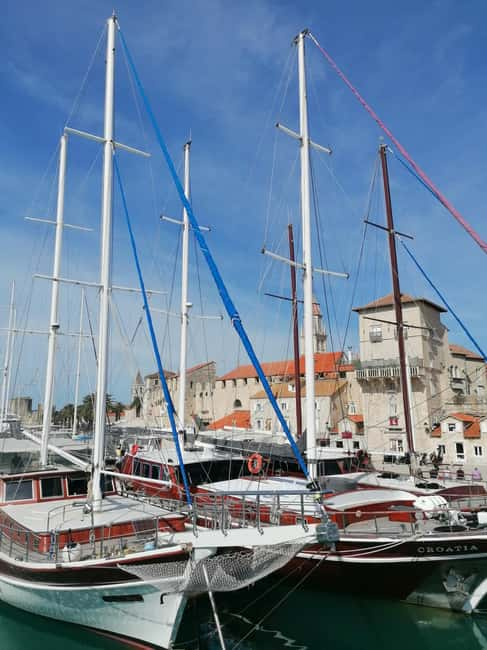
After the close stone streets, the Riva promenade offers a change of mood. You look out toward the sea, palm trees, and anchored ships, with the waterfront giving you a broader view of Trogir’s Mediterranean setting.
I like this part because it keeps the tour from becoming an indoor or architectural checklist. The water explains much about Trogir’s character. The city is not only a historic settlement but also a place shaped by the sea and by movement along the Dalmatian coast.
The Riva is also a practical orientation point. After walking through the old center, the promenade helps you understand where the city opens toward the water. It is a natural place to pause, take photographs, or ask the guide for suggestions about the rest of your stay.
Do not expect the waterfront to replace the historic core. Its value comes from contrast. The old lanes provide detail and shade, while the Riva gives you space, light, palms, and boats. The two settings work well together.
Finishing at Fortress Kamerlengo
The tour concludes at Fortress Kamerlengo, an impressive defensive structure at the edge of the historic area. Ending here gives the route a clear sense of progression, from the city gate to noble residences, public buildings, cathedral art, waterfront views, and finally a major piece of military architecture.
The fortress also completes the story of Trogir as a protected coastal town. Earlier stops show how people worshipped, governed, and lived. Kamerlengo reminds you that the city also had to defend itself.
The activity information says the tour can end at the starting point or at another location that suits your group. It also describes the standard ending as back at the meeting point, so confirm your preferred finish with the guide. This flexibility can be useful if you want to continue along the waterfront or head to another part of Trogir afterward.
No fortress admission details are provided. If you hope to go inside rather than view it as part of the walking route, ask whether entry is included or requires a separate payment.
The guide, language, and weather flexibility
A licensed local guide leads the tour in English or German. The local perspective matters here because the route depends on explanation, not just on reaching a set of buildings.
The strongest practical sign from the available feedback is how the guide handled bad weather. When an intense storm hit Trogir at the agreed meeting time, the guide moved the tour by three hours and fitted the group into the revised schedule without difficulty. That is a small detail, but it tells you something useful about communication and flexibility.
Dalmatian weather can change quickly, and an outdoor walking tour is exposed to rain and storms. You should still check the forecast and bring sensible protection, but it is reassuring that the guide has shown flexibility when conditions make the original time impractical.
The guide also offers recommendations for the rest of your vacation in Trogir and Dalmatia. I would use that opportunity. Ask for help shaping the next part of your day, finding places connected to your interests, or deciding how to make the most of your time in the area.
Is $129 good value for a private Trogir tour?
The price is $129 for a group of up to eight. That means the value improves sharply as your group gets larger.
At eight people, the cost works out to about $16 per person. At four people, it is about $32 each. For two people, it is $64 each, and a solo visitor pays the full group price. The guide, rather than personal expenses, is the included service, so the private format is the main reason to choose this option.
I think the price is sensible for a family or group of friends that wants a dedicated guide and the freedom to ask questions. It is less compelling for a couple on a tight budget, especially if you only want a quick introduction to the town.
The tour covers several important sights and gives you local recommendations beyond the walk. That broader usefulness improves the value if this is your first time in Trogir or if you want help planning more of your Dalmatian visit.
Remember that personal expenses are not included. The information also does not confirm admission fees, so ask about any tickets before you arrive. This avoids an awkward surprise at the cathedral or fortress.
Who should book this walk?
I would recommend it most strongly to:
- Families who want a flexible pace and a guide who can answer questions
- Groups of friends who can share the $129 cost
- First-time visitors who want the old town explained rather than simply photographed
- Architecture fans interested in palaces, carved stone, and the cathedral portal
- Visitors staying in Trogir who want practical suggestions for the rest of their Dalmatian holiday
- People who prefer a private experience in English or German
It may be less suitable if you want a long museum visit, a food-focused tour, or a detailed schedule with a stated duration. The supplied information centers on outdoor sightseeing and historical explanation, and it does not list food, transportation, or entrance tickets as included features.
Should you book the Trogir private walking tour?
Book it if you are traveling with a group and want a personal introduction to Trogir’s old center. The route covers the right subjects: the north gate, Cipiko Palaces, Saint Lawrence Cathedral, City Loggia, City Hall, Kairos, the Riva, and Kamerlengo Fortress.
I especially like the mix of major sights and smaller stories. The palace fragments, the Kairos connection, and the guide’s local recommendations give the walk more character than a simple list of monuments.
For two people, compare the $129 cost with other ways of seeing Trogir before booking. For a group of five to eight, the price becomes much easier to justify. If you value flexibility, local advice, and a guide who can adjust plans during bad weather, this is a practical choice.
FAQ
Where does the Trogir walking tour start?
It starts in front of the north city gate, which is the main entrance to Trogir’s old town.
Where does the tour end?
The standard ending is back at the meeting point. The guide can also finish at another location that suits your group, so confirm your preferred endpoint.
How many people can join the private tour?
The price covers a group of up to eight people.
How much does the tour cost?
The price is $129 per group of up to eight people.
What languages are available?
The tour is available in English and German.
Is a tour guide included?
Yes. A licensed tour guide is included.
Are personal expenses included?
No. Personal expenses are not included in the tour price.
What sights are visited?
The route includes the Cipiko Palaces, Cathedral of Saint Lawrence, City Loggia, City Hall, the Riva promenade, and Fortress Kamerlengo. It begins at the north city gate, and the guide also explains the story of Kairos.
Can I cancel the booking?
You can cancel up to 24 hours in advance for a full refund. You can also reserve now and pay later, which keeps your plans more flexible.
Just added around Trogir
- Trogir: White Lagoon, Maslinica & Blue Lagoon Speedboat Tour★ 4.8 · 11 reviews
- Trogir: Old Town Guided Walking Tour★ 4.6 · 76 reviews
- Trogir 1.5-Hour City Tour★ 4.4 · 37 reviews
- Trogir: Blue Lagoon, Maslinica, and Solinska Bay Boat Tour★ 4.9 · 88 reviews
- TROGIR: Blue Lagoon & 3 Islands Half-day Speedboat tour★ 4.6 · 28 reviews
- Private Transfer from Split Croatia Airport to Hotel★ 5.0 · 4 reviews
- Trogir Old City Walking Tour★ 5.0 · 8 reviews
- Trogir Old Town History and Monuments Private Guided Walking Tour★ 5.0 · 5 reviews
Walking Tours, compared.
Walking Tour of Split and Diocletian’s Palace
Read our review →


Krka Waterfalls tour with Trogir Walking tour and Krka panoramic boat cruise
Read our review →
City Walls Early Morning or Sunset Walking Tour
Read our review →Browse the lists this tour appears in