
Reviewed · WALKING TOURS
Pula Sightseeing Walking Tour
Pula rewards a slow first walk. This tour makes the city easier to understand through local stories, Roman monuments, and practical tips from Saša, a guide who grew up in Pula and returned after college because of her love for Istria. I especially like the relaxed chatty format and the smart route through several major sights, including the Arena, Sergii Arch, Roman mosaic, and Temple of Augustus. You also get useful suggestions for museums, restaurants, and getting around.
The main consideration is that the $34.91 price does not cover entrance fees. The Arena costs €10 and the Temple of Augustus costs €2, and the optional climb to Kaštel may not suit everyone. The tour can also last anywhere from 1½ to 2½ hours, so allow some flexibility.
In This Review
- Key points about the Pula walking tour
- Why a local walk is a good introduction to Pula
- Starting at Pula Arena, the city’s Roman showpiece
- Getting your bearings at Tito’s Park
- Roman gates and the route through old Pula
- Sergii Arch, a family monument on Pula’s best-known street
- The Punishment of Dirce mosaic, a small but telling stop
- The Forum and Temple of Augustus
- The optional climb to Kaštel
- What the $34.91 price really covers
- Who should book this Pula walk?
- Should you book the Pula Sightseeing Walking Tour?
- FAQ
- How long does the Pula Sightseeing Walking Tour last?
- Where does the tour begin?
- Where does the tour finish?
- Is admission to the attractions included?
- Is the walk to Kaštel required?
- How many people can join the tour?
- Can I cancel for a full refund?
Key points about the Pula walking tour
- A local guide with a personal connection: Saša grew up in Pula and returned after college, giving the tour a resident’s point of view.
- Seven central sights in one walk: The route links the Arena, Roman gates, Sergii Arch, Roman mosaic, Forum, Temple of Augustus, and Kaštel.
- History told through people and stories: Saša is praised for making the past entertaining, even for people who do not usually enjoy history.
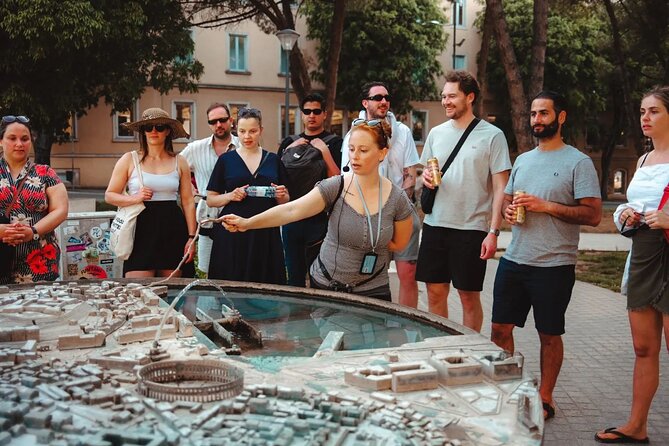
- A useful orientation at Tito’s Park: A small model of central Pula helps you understand the shape of the city before continuing.
- Optional views from Kaštel: The fortress requires a climb but offers views toward the Arena and shipyard side of town.
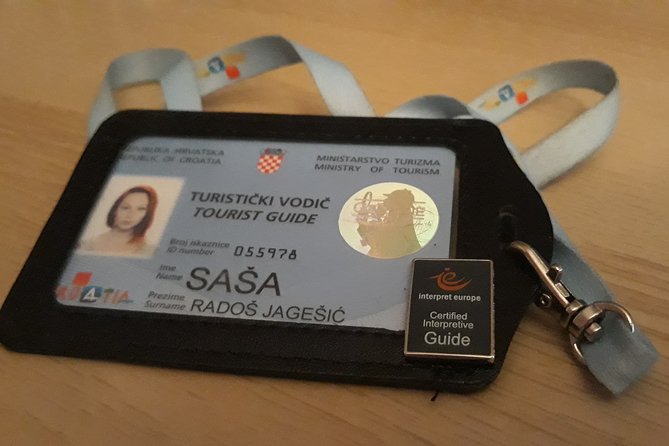
- Small-group format: The maximum group size is 20 people, with a mobile ticket and a licensed guide.
Why a local walk is a good introduction to Pula
Pula is often presented through one giant Roman monument, its amphitheatre. That would be a mistake. The Arena is the headline sight, but the city around it contains Roman gates, a family triumphal arch, a mosaic tucked into an ordinary street setting, a temple on the Forum, and a medieval fortress above the center.
I like this walk because it connects those pieces instead of treating them as isolated photo stops. Saša’s approach is built around conversation, stories, and advice you can use for the rest of your stay. You are not only shown where the sights are. You are given a clearer idea of how Pula developed under the Histri, Romans, Venetians, and Austrians.
The tour also has a personal angle. Saša grew up here, left for college, and came back because she enjoys life in Istria. That background matters. A local who has chosen to return can offer a more personal explanation of why the town feels the way it does, rather than simply reciting dates and architectural labels.
The supplied feedback gives Saša particularly strong praise for her storytelling. One person who normally does not care much for history found the focus on memorable people and unusual stories entertaining. Another enjoyed seeing Pula through the lives of people who were born here, lived here, or passed through the city. That suggests this is a good choice if you want history with a human face.
More Walking Tours in Istria
- Pula: Historic Walking Tour with Local Guide & City Views
★ 4.8 · 143 reviews - Pula walking tour
★ 5.0 · 96 reviews - Pula: Historic Sites Guided Walking Tour
★ 4.8 · 78 reviews
Starting at Pula Arena, the city’s Roman showpiece
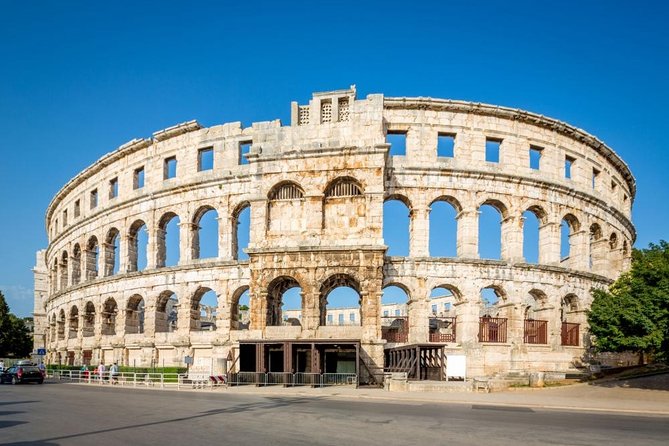
The walk begins at Flavijevska ul. 2, near the Pula Amphitheatre. This is the logical place to start. The Arena is Pula’s most recognizable monument and the best doorway into the city’s Roman past.
You can hear the story from outside or choose to go inside, depending on your preference. That flexibility is useful. The exterior gives you the scale and shape of the building without adding an entrance charge, while going inside gives you a closer look at the Roman arena itself.
The scheduled discussion here takes about 30 minutes, making it the longest stop. That tells you something about the tour’s priorities. You will not simply pause for a quick photograph and move on. Saša uses the amphitheatre to explain Roman Pula and the dramatic changes the monument has witnessed.
Admission is not included. The stated entrance fee is €10, so add that to the tour price if you want to visit the interior. I would decide before arriving because the choice affects both your budget and how much time you spend at the first stop.
The Arena is also a useful test of the tour’s style. If you want a fast checklist of sights, a 30-minute story may feel long. If you enjoy context, this is where the tour begins to earn its price.
Getting your bearings at Tito’s Park
From the Arena, the tour continues to Tito’s Park. In front of the park is a small model of central Pula, used to explain the city layout and preview the route.
This is a short stop of about 10 minutes, but I consider it one of the most practical parts of the walk. Pula’s central sights can seem scattered when you first arrive. A simple model helps you see how the Roman center, Forum, gates, fortress, and modern streets relate to one another.
The park is dedicated to fighters against fascism during the Second World War. That adds a more recent chapter to the tour after the Roman focus at the Arena. You get a reminder that Pula is not only an ancient city preserved for sightseeing. Its public spaces also carry memories from the twentieth century.
Roman gates and the route through old Pula
The Gates of Hercules are next. They are described as Pula’s oldest town gates and take only about five minutes to see.
This is a compact stop, so you should not expect a long visit or an interior experience. Its value comes from seeing how Roman Pula was entered and defended. The gate also helps you notice the way ancient remains are woven into the present-day city rather than placed in one isolated archaeological park.
The Twin Gates follow later in the route. They are identified as the first and youngest of the three Roman town gates still standing today. Again, the visit lasts around five minutes. The short timing is sensible because these are exterior monuments, but you will want to listen closely while Saša explains their place in the old town.
Taken together, the gates help turn a walk through central Pula into a lesson in city planning. You begin to picture the Roman settlement as a working town with entrances, streets, homes, public buildings, and wealthy residents, rather than as a collection of unrelated stones.
More Walking Tours in Pula:
- Pula Essentials Walking Tour
★ 4.8 · 64 reviews - Pula Essentials Walking Tour
★ 5.0 · 62 reviews - Pula: Old Town Walking Tour for Foodies with Dinner and Wine
★ 4.6 · 18 reviews - Dubrovnik: Old Town Walking Tour
★ 4.8 · 5,174 reviews
Sergii Arch, a family monument on Pula’s best-known street
The Arco dei Sergi, also called the triumphal arch of the Sergii family, receives about 10 minutes. It sits at one end of one of Pula’s most famous streets, giving you a clear sense of how ancient architecture remains part of the modern urban scene.
The arch was connected to the Sergii family, a prominent Roman family. That family connection is important because it shifts the story away from emperors and armies alone. Roman monuments were also built to honor local power, status, and family memory.
I like this stop because it offers an easy contrast with the Arena. The amphitheatre represents mass entertainment and public spectacle. The Sergii Arch points toward private ambition and family prestige. Saša’s people-centered style should work well here, especially if you prefer stories about individuals to long lists of dates.
It is also a strong photo stop. The arch is on a well-known street, so the setting gives you a direct view of how Pula’s Roman past meets its everyday city life.
The Punishment of Dirce mosaic, a small but telling stop
The floor mosaic known as The Punishment of Dirce is one of the more easily missed sights on the route. It was found during the Second World War and indicates the location of a once-wealthy Roman palace.
The visit lasts about 10 minutes, and there is no entrance fee. You should set your expectations correctly. This is not another huge monument like the Arena. Its appeal is the surprise of finding a Roman artwork in a less obvious setting and realizing that wealthy homes once occupied parts of the city now covered by later streets and buildings.
The mosaic also fills in an important gap. The Arena and temples show public Pula, while this floor helps you picture private Roman life. A city becomes easier to understand when you can imagine both its grand public buildings and its decorated homes.
This is exactly the sort of stop that can pass unnoticed if you explore alone without background information. Saša’s explanation gives it meaning, and the short visit keeps the tour moving.
The Forum and Temple of Augustus
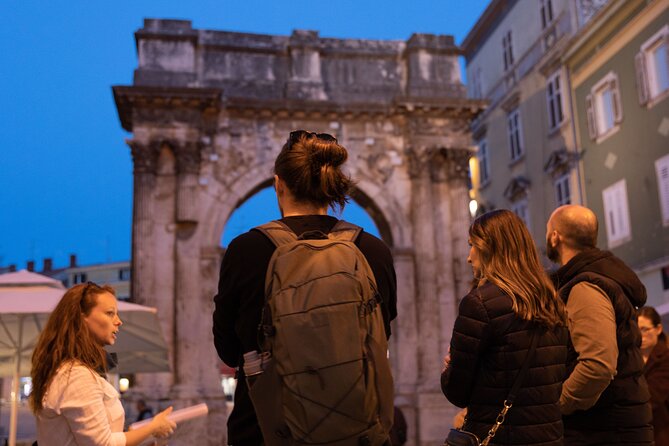
The walk ends at the Forum, where the Temple of Augustus sits beside the medieval Venetian City Hall. This pairing is one of the clearest examples of Pula’s layered past. Roman and Venetian buildings occupy the same civic center, showing how the city changed hands and functions over many centuries.
The temple is dedicated to the goddess Roma and Emperor Augustus. The stop takes about 10 minutes, and admission is not included. The stated entrance fee is €2, which is modest compared with the Arena, but you should still carry that extra amount if you want to go inside.
The Forum is also the tour’s endpoint, at Forum, 52100 Pula. Ending here is useful because you are left in a central area rather than returned to the starting point. You can continue exploring on your own, use Saša’s restaurant and museum advice, or simply pause to look at the civic heart of the city.
The Temple of Augustus is a good final lesson in the tour’s overall theme. Pula is not presented as belonging to one period. Roman, medieval, Venetian, Austrian, wartime, and modern elements share the same streets.
The optional climb to Kaštel
Kaštel is an optional addition. It is a medieval fortress that now houses the Historic and Maritime Museum and provides views toward the Arena and the shipyard side of town.
The climb takes about 15 minutes. That sounds manageable, but the tour description clearly calls it a climb, so consider your energy and footwear. The stop may be less appealing if you want a completely flat walk or if you are already tired after the Arena and central streets.
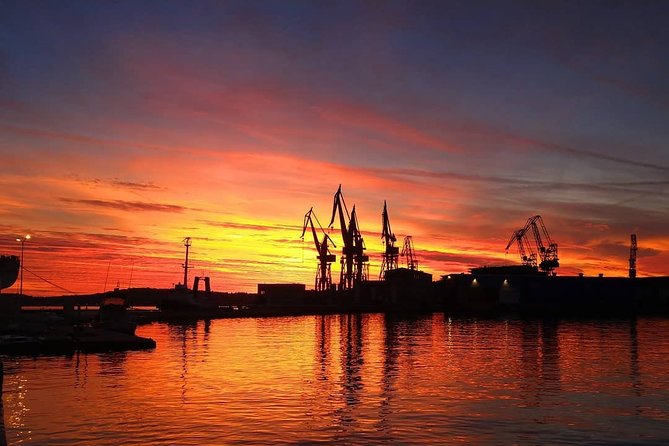
For me, the main reason to add Kaštel is the view. From above, you can look back toward the amphitheatre and see the shipyard side of Pula. That gives you a broader sense of the city beyond the polished central sights.
Museum admission is not included. You do not need to enter the museum to benefit from the fortress stop, but check with Saša about the exact plan if the museum is a priority for you. The optional nature of Kaštel is helpful because it lets the group balance sightseeing with physical effort.
What the $34.91 price really covers
At $34.91 per person, the main thing you are buying is a guided explanation of Pula, not a bundle of entrance tickets. The price includes a licensed guide, while the Arena, Temple of Augustus, and any other attraction fees are extra.
I see the value in the tour if you want a strong first look at Pula and appreciate personal storytelling. The route covers several important sights in roughly two hours, and Saša adds practical advice about restaurants, museums, and getting around. That can save you time later, especially if Pula is one stop in a longer Istrian trip.
The value is weaker if you plan to read up beforehand, move quickly, and visit every site independently. In that case, the extra admission fees may make the total cost feel less attractive.
The maximum group size is 20 people. That is not a private walk, but it is still limited enough to preserve a more personal feel than a large coach excursion. The exact duration can range from 1½ to 2½ hours, mainly because the Arena, conversation, and optional Kaštel stop may change the pace.
The tour uses a mobile ticket. Confirmation is sent within 48 hours, subject to availability, so avoid treating the booking as final until that confirmation arrives.
Who should book this Pula walk?
I would recommend it to you if this is your first visit to Pula, you want the main sights explained in one outing, or you like history told through memorable people and stories. It is also a good fit if you want advice from someone who grew up in the city rather than a guide delivering only formal facts.
Families and mixed-interest groups may find the conversational style useful. The feedback specifically highlights that Saša can make history interesting even for someone who normally does not enjoy the subject.
You should think twice if you dislike walking, do not want to pay for optional entrances, or prefer to explore entirely at your own pace. Kaštel adds a climb, and the tour’s relaxed storytelling may not suit someone looking for a short, rapid orientation.
Most people can participate, service animals are allowed, and the route is near public transportation. The tour requires good weather. If poor weather causes cancellation, you are offered another date or a full refund.
Should you book the Pula Sightseeing Walking Tour?
Book it if you want Pula explained by a local who can connect Roman monuments with later Venetian, Austrian, and modern chapters. The strongest reason to choose it is Saša’s storytelling style, especially if you want the city’s past presented through interesting people rather than a dry list of dates.
I would choose the tour early in a Pula stay, then use the advice about museums, restaurants, and getting around for the rest of your visit. Add the Arena if you want the full experience, and consider Kaštel if you are comfortable with the climb and want a wider view.
Skip it if you only want entrance access or a quick photo walk. For everyone else, the compact route, local perspective, and human stories make the $34.91 fee a fair way to get oriented.
FAQ
How long does the Pula Sightseeing Walking Tour last?
The tour lasts approximately 1 hour 30 minutes to 2 hours 30 minutes. The timing can vary based on the pace, the Arena visit, conversation, and the optional walk up to Kaštel.
Where does the tour begin?
The meeting point is Flavijevska ul. 2, 52100 Pula, Croatia.
Where does the tour finish?
The tour ends at Forum, 52100 Pula, Croatia.
Is admission to the attractions included?
No. Entrance fees are not included. The stated prices are €10 for the Amphitheatre and €2 for the Temple of Augustus.
Is the walk to Kaštel required?
No. The Kaštel visit is optional. It involves a climb and offers views toward the Amphitheatre and the shipyard side of town.
How many people can join the tour?
The maximum group size is 20 people.
Can I cancel for a full refund?
Yes. You can cancel at least 24 hours before the experience start time for a full refund. Poor weather may result in a different date or a full refund.
Just added around Pula
- Pula Essentials Walking Tour★ 5.0 · 62 reviews
- Pula: Sunset/Night-time Illuminated Transparent Kayak Tour★ 4.0 · 9 reviews
- Pula Discover Scuba Diving Package★ 4.5 · 18 reviews
- Pula Boat Trip with Snorkeling★ 4.0 · 7 reviews
- Pula Kayak, Cliffs & Snorkeling Adventure★ 5.0 · 164 reviews
- Pula Kayaking at Blue Cave with Cliffs Tour and Snorkeling★ 5.0 · 4 reviews
- Pula Arena Amphitheater Admission Ticket★ 4.0 · 68 reviews
- Private Sunset Dolphin Excursion with Dinner and Animation★ 5.0 · 13 reviews
Walking Tours, compared.
Walking Tour of Split and Diocletian’s Palace
Read our review →
Krka Waterfalls tour with Trogir Walking tour and Krka panoramic boat cruise
Read our review →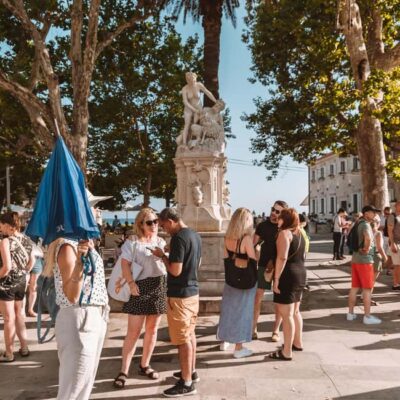
City Walls Early Morning or Sunset Walking Tour
Read our review →Browse the lists this tour appears in