
Reviewed · WALKING TOURS
Pula: Historic Sites Guided Walking Tour
Pula reveals its past quickly. This 90-minute walk links the Roman Arena, Augustus Temple, castle, and old town in one tidy route, giving you a useful first look at Istria’s largest city. I like the mix of famous monuments and small Roman traces, and I like that the guide keeps the pace moving without turning the tour into a history lecture. The main drawback is that entry tickets are not included, and the route is not suitable for people with mobility impairments.
I especially like the chance to see Pula from the Venetian castle, then return to street level for the Cathedral, Forum, mosaics, market, and ancient gates. Guides such as Sini and Siniša have earned praise for clear English, humor, and their ability to answer questions. You should also plan for changing weather, since the walk runs rain or shine.
In This Review
- Key details before you book
- Why this short Pula walk works well
- Starting beneath the Pula Arena
- Climbing to the Venetian castle
- From the Cathedral to the Roman Forum
- Roman mosaics and the Arch of Sergii
- Pula Market and the ancient Hercules Gate
- What the guide adds to the monuments
- Is $20 good value in Pula?
- Weather, footwear, and the walking demands
- Who should book this Pula walking tour?
- Should you book it?
- FAQ
- How long does the Pula historic sites tour last?
- How much does the tour cost?
- Where does the tour begin?
- How will I recognize the guide?
- Where does the tour finish?
- Which language is the tour offered in?
- Are entry tickets included?
- Does the tour run in bad weather?
Key details before you book
- A fast route through Pula’s historic center: In 90 minutes, you see the Arena, Castle, Cathedral, Roman Forum, Augustus Temple, City Hall, Arch of Sergii, market, and Twin Gate.
- The meeting point is easy to identify: Find the guide in front of the Amphitheater entrance, wearing a blue card and holding an umbrella.
- The castle adds a change of pace: The 17th-century Venetian fortress provides panoramic views and a lesson in Pula’s later military past.
- Roman remains appear throughout the walk: Look for mosaics, the Temple of Augustus, the Arch of Sergii, Hercules Gate, and other traces woven into the modern city.
- The price is modest for a guided orientation: At $20 per person, the tour gives you a useful framework before you explore Pula on your own.
- Practical limits matter: You need to manage a walking route, stand outdoors in all weather, and pay separately for any entry tickets.
Why this short Pula walk works well
Pula can feel confusing at first. Its Roman monuments are not gathered inside one single archaeological park. Instead, they are spread through an active city where cafés, shops, traffic, markets, and modern buildings sit beside ancient stone.
That makes a local guide useful. You are not simply moving from one monument to the next. You are learning how the pieces fit together, from the Arena at the edge of the old center to the Forum, then onward through gates and streets shaped by many periods of rule.
At $20, I see this as an orientation tour rather than a full archaeological study. You get a broad overview, plenty of historical context, and a chance to ask questions. The 90-minute length also suits a port stop, a first afternoon in town, or anyone who wants the main sights without committing to a long walking program.
The strongest praise has gone to the guides. Sini is repeatedly described as friendly, funny, and very well informed, while Siniša is praised for clear explanations and strong storytelling. One especially useful feature is the guide’s ability to answer questions as they arise. That matters in Pula, where a single street can contain Roman, Venetian, Austro-Hungarian, and modern clues.
More Walking Tours in Istria
- Pula: Historic Walking Tour with Local Guide & City Views
★ 4.8 · 143 reviews - Pula walking tour
★ 5.0 · 96 reviews - Pula Essentials Walking Tour
★ 4.8 · 64 reviews
Starting beneath the Pula Arena
The tour begins at Istarska ul. 50, in front of the Amphitheater entrance. Look for a guide with a blue card around the neck and an umbrella. That identification detail is worth remembering because the Arena area can be busy, especially during the main summer season.
The opening talk focuses on the Pula Amphitheater, usually called the Arena. Even if you have already photographed its great outer walls, a guide helps explain what you are looking at and why this building matters to the city.
The Arena is the natural place to begin because it is Pula’s most recognizable monument. Its scale gives you an immediate sense of the city’s Roman importance. The guide’s introduction also helps you notice details you might otherwise pass without a thought.
You should not expect a long interior visit as part of the walk. Entry tickets are not included, so this experience is best understood as a guided look at the monument and its place in Pula’s story. If you want to explore the Arena inside, check the admission arrangements separately.
The tour then moves into the center. That transition is useful: you leave the city’s most famous Roman structure and begin seeing how ancient remains appear among everyday streets and public spaces.
Climbing to the Venetian castle
Next comes Pula Castle, built by the Venetians in the 17th century. This stop changes the tone of the tour. The Arena introduces Roman power, while the castle shows Pula as a later strategic port shaped by Venetian control and military concerns.
Your guide explains the fortress’s history and former inhabitants, giving you a wider view of the city’s past. Pula is not only an ancient Roman stop. Its story continued through later rulers, and the castle makes that clear.
The castle is also valued for its panoramic views. From above, you can better understand Pula’s layout and see why the site had practical military value. The climb gives the tour a physical high point, though it also creates one of its main practical limits.
If you have difficulty walking uphill or managing uneven surfaces, this portion may be uncomfortable. The activity is specifically not suitable for people with mobility impairments, so take that warning seriously. Comfortable shoes are sensible, and you should expect the experience to remain an outdoor walking tour rather than a stop-and-start sightseeing ride.
From the Cathedral to the Roman Forum
After the castle, the route continues toward the Cathedral. This part of the walk helps connect Pula’s Roman foundations with its later religious and civic life.
The Cathedral is not presented as an isolated attraction. It forms part of a larger old-town sequence, where the guide points out how different periods overlap. You might see ancient stone near later structures, then turn a corner and find yourself in a square that still functions as a public gathering place.
The Roman Forum is the center of the next major section. In Roman times, the Forum served as a civic heart, and today it remains one of the best places to understand how Pula’s public life was organized.
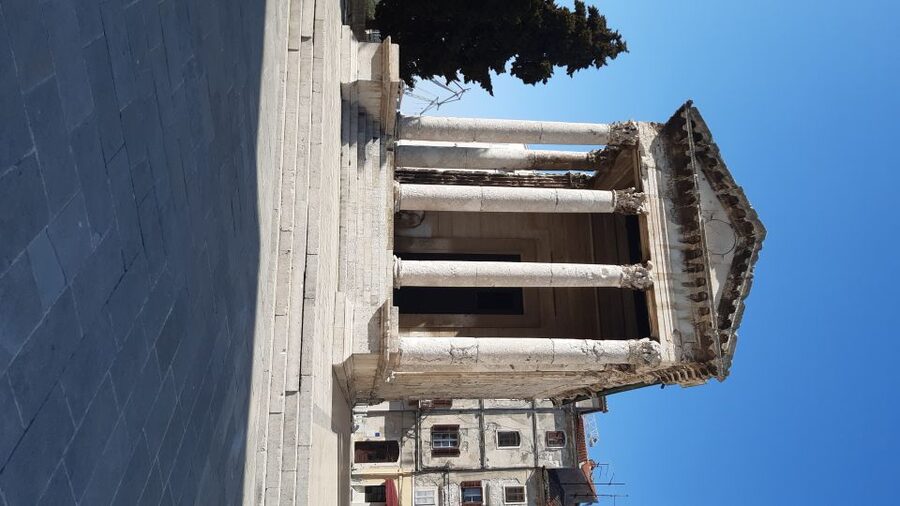
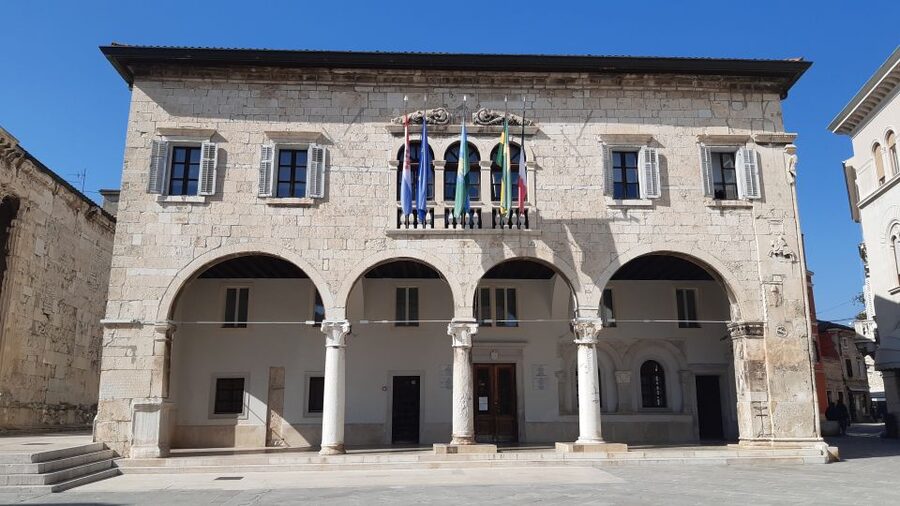
Here you see the Augustus Temple and City Hall. The pairing is especially helpful because it places an ancient religious building beside a later municipal building. The contrast lets you read the square as a living part of town rather than a frozen ruin.
The Augustus Temple is the tour’s 2,000-year-old centerpiece. Its compact form makes it easy to overlook if you are rushing, but the guide gives it proper attention. You can study the columns and proportions while hearing how the temple fits into Roman Pula.
City Hall adds another layer. Together, the two buildings show how the Forum changed over time while keeping its role as a civic space. I like this stop because it rewards context. Without an explanation, you see an old temple and a public building. With one, you begin to understand the long sequence of power, worship, and government in the same square.
More Walking Tours in Pula:
- Pula Essentials Walking Tour
★ 5.0 · 62 reviews - Pula: Old Town Walking Tour for Foodies with Dinner and Wine
★ 4.6 · 18 reviews - Pula Sightseeing Walking Tour
★ 5.0 · 3 reviews - Dubrovnik: Old Town Walking Tour
★ 4.8 · 5,174 reviews
Roman mosaics and the Arch of Sergii
The walk continues through streets where Roman remains are less imposing but still important. Roman mosaics appear along the route, offering a reminder that ancient Pula was not made only of grand public monuments.
These smaller remains are easy to miss. They may not have the visual impact of the Arena, but they help you picture ordinary urban life, homes, decoration, and daily movement in the Roman city. This is one reason the guided format earns its price. You are more likely to notice what is at ground level when someone points it out.
The Arch of Sergii provides another major Roman landmark. It is an elegant monument connected with the Sergii family and gives you a chance to see Roman architecture at street level, close to the modern flow of the city.
The arch works well as part of a walking route because you do not have to make a separate trip to see it. The guide places it in the broader story of Pula’s public image and Roman identity. Keep your camera ready, but listen too. The architectural details mean more once you know what to look for.
Pula Market and the ancient Hercules Gate
The route then reaches Pula Market, established in the early 1900s. This is a useful break from monuments because it shows the city as a working place, not simply an outdoor museum.
The market also marks a different period in Pula’s development. Its early 20th-century origins sit far apart from the Roman structures, yet the tour places them in the same walk. That range is one of the experience’s strengths. You get ancient, Venetian, religious, civic, and modern urban history without needing several separate tours.
From the market, the route heads toward the ancient Gate of Hercules. The gate is another reminder that Roman Pula was a real city with entrances, movement, and daily traffic, not merely a collection of ceremonial buildings.
You finish at Twin Gate. Ending there gives the walk a clear sense of progress through the old center. You begin at the Arena, move through the castle and Forum, pass smaller remains and market streets, and end near another ancient city entrance.
Because the tour finishes away from the Arena, note the endpoint when planning the rest of your day. Twin Gate is useful for continuing your own exploration, but you should not assume you will be returned to the starting point.
What the guide adds to the monuments
The guide is the heart of this experience. The route itself is easy to outline, but the value comes from interpretation.
Sini receives particularly strong praise for broad ancient-history knowledge, excellent English, a friendly manner, and an ability to handle questions. Other feedback describes the guiding style as engaging, informative, and well paced. One person specifically appreciated seeing the planned route and monuments on a town diorama before setting off.
That small orientation can make a difference. You understand where you are going before the streets begin to blend together, and you can see how close the principal sights are to one another. The walk is described as leisurely, not hurried, which suits a historic center where you need time to look up, compare buildings, and listen.
The tone also seems to be a strong point. You get facts, but not only facts. Humor and stories keep the 90 minutes from feeling like a list of dates. If you enjoy asking questions, this tour should suit you particularly well.
English is the available tour language. The guides have been praised for speaking clearly, but the amount of detail means you will get more from the walk if you are comfortable following an English explanation outdoors.
Is $20 good value in Pula?
For $20 per person, I consider this good value if you want a broad introduction to Pula’s historic center.
You see a large number of important sites in a short period: the Arena, castle, Cathedral, Forum, Augustus Temple, City Hall, Roman mosaics, Arch of Sergii, Pula Market, Hercules Gate, and Twin Gate. You also receive local commentary rather than relying on plaques or a guidebook.
The price is less compelling if you want extended time inside individual monuments. Entry tickets are not included, and the walk does not appear designed for lengthy independent exploration at each stop. Think of it as a well-organized first layer. You can return later to the Arena, Forum, or other sites that catch your attention.
The 90-minute length is a real advantage for many schedules. It is long enough to cover the essential route but short enough to leave time for lunch, the market, independent sightseeing, or a trip elsewhere in Istria.
Weather, footwear, and the walking demands
This tour runs rain or shine. That policy matters in Pula, where much of the experience takes place outdoors and the route includes the castle. Check the forecast, but do not book it assuming a cancellation for light rain.
Wear shoes that are comfortable for a historic-center walk. The supplied information does not describe every surface, but the castle visit and old-town route mean you should be ready for walking rather than a flat museum circuit.
The tour is not suitable for people with mobility impairments. That is the clearest limitation. If you need an accessible route, this is not the right choice based on the stated conditions.
Video recording is not allowed. You can still pay attention to the guide and take in the sights, but plan around that rule if recording tours is important to you.
Free cancellation is available up to 24 hours before the start for a full refund, and you can reserve now and pay later. Those options help if your Istria plans are still shifting, but the weather and mobility conditions remain the more important booking considerations.
Who should book this Pula walking tour?
I would recommend it to a first-time Pula visitor who wants the main historic sights explained in plain English. It also suits you if you have only a short stay, need help getting your bearings, or prefer a local guide to a self-guided walk.
History fans should enjoy the range from Roman temples and gates to the Venetian castle and early 20th-century market. The tour is also a good fit if you like asking questions, since the guides are praised for responding thoughtfully rather than simply reciting a prepared script.
Families with older children may find the 90-minute length manageable, though the mobility warning still applies. People who dislike outdoor walking, need a fully accessible route, or want long interior visits should choose another format.
The tour is especially useful at the start of your time in Pula. Afterward, you know which places deserve a longer visit and how the old center fits together. You can return to the Arena or Forum with a much better sense of what you are seeing.
Should you book it?
Book this tour if you want strong historical orientation, a reasonable price, and a compact route through Pula’s main sights. The repeated praise for Sini and Siniša points to guides who explain clearly, add humor, and welcome questions.
Skip it if you need an accessible experience, cannot manage an outdoor walk in poor weather, or want admission to the monuments included. For most able-bodied visitors with 90 minutes to spare, though, this is a sensible way to meet Pula: Roman landmarks first, later history next, and the living city always close by.
FAQ
How long does the Pula historic sites tour last?
The tour lasts 90 minutes, or one and a half hours.
How much does the tour cost?
The stated price is $20 per person.
Where does the tour begin?
Meet in front of the entrance to the Pula Amphitheater at Istarska ul. 50.
How will I recognize the guide?
The guide will have a blue card around their neck and hold an umbrella.
Where does the tour finish?
The walk finishes at Twin Gate.
Which language is the tour offered in?
The live guided tour is offered in English.
Are entry tickets included?
No. Entry tickets are not included in the tour price.
Does the tour run in bad weather?
Yes. The tour takes place rain or shine. Video recording is not allowed, and the activity is not suitable for people with mobility impairments.
More History Tours in Pula
- Olive Oil Guided Tasting and History in Pula
★ 4.5 · 34 reviews - Dubrovnik Old Town History Walking Tour
★ 5.0 · 1,684 reviews - Walking Tour of Split with a ‘Magister’ of History
★ 5.0 · 1,122 reviews - Split Walking Tour with Professor of History
★ 5.0 · 926 reviews
Just added around Pula
- Pula Sightseeing Walking Tour★ 5.0 · 3 reviews
- Pula Essentials Walking Tour★ 5.0 · 62 reviews
- Pula: Sunset/Night-time Illuminated Transparent Kayak Tour★ 4.0 · 9 reviews
- Pula Discover Scuba Diving Package★ 4.5 · 18 reviews
- Pula Boat Trip with Snorkeling★ 4.0 · 7 reviews
- Pula Kayak, Cliffs & Snorkeling Adventure★ 5.0 · 164 reviews
- Pula Kayaking at Blue Cave with Cliffs Tour and Snorkeling★ 5.0 · 4 reviews
- Pula Arena Amphitheater Admission Ticket★ 4.0 · 68 reviews
Walking Tours, compared.
Walking Tour of Split and Diocletian’s Palace
Read our review →
Krka Waterfalls tour with Trogir Walking tour and Krka panoramic boat cruise
Read our review →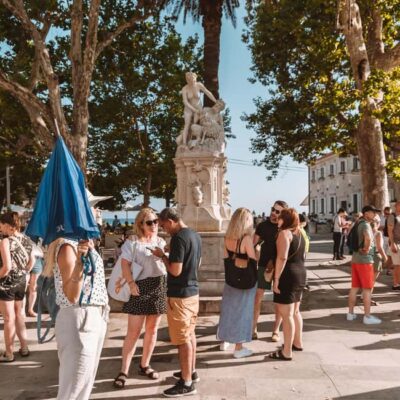
City Walls Early Morning or Sunset Walking Tour
Read our review →Browse the lists this tour appears in