
Reviewed · WALKING TOURS
Pula Essentials Walking Tour
Pula rewards a slow first walk. I like the tour’s clear sweep from Roman ruins to modern Croatia, and I like that your guide adds practical advice on food, nightlife, and nearby activities. The main consideration is that the Arena is viewed only from outside, and the English-only tour needs at least two participants to run.
At $34 per person, this is a useful way to get your bearings before exploring on your own. Guides Stefano and Ana have earned especially warm praise for their friendly explanations and easy handling of questions, though one booking reported repeated explanations and a guide who seemed to have had too much wine beforehand.
In This Review
- Key points at a glance
- Why this walk works as a first look at Pula
- Starting at Tito’s Park beside the city model
- Meeting Pula’s Roman centerpiece at the Arena
- Twin Gate and Gate of Hercules: small ruins, useful context
- Giardini and the Arch of the Sergii
- Ulica Sergijevaca and the changing city center
- The Forum and Temple of Augustus
- Riva at sunset and Pula Cathedral
- How good is the guide?
- The $34 price and what you actually receive
- Who should book this Pula walk?
- Practical advice before you go
- Should you book the Pula Essentials Walking Tour?
- FAQ
- How long does the Pula Essentials Walking Tour last?
- How much does the tour cost?
- Where does the tour begin?
- Where does the tour finish?
- Is entry to the Pula Arena included?
- What language is the tour offered in?
- Is the tour wheelchair accessible?
- Can I book a private group?
- How many people are needed for the tour to run?
- Can I cancel the booking?
Key points at a glance
- A 2,000-year-old Roman Arena: You see Pula’s best-known monument early, with about 20 minutes for sightseeing from the outside.
- History across many eras: The walk covers Roman, Venetian, Austrian, Italian, Yugoslav, and modern Croatian chapters.
- Useful local advice: Your guide points out places to eat, drink, enjoy nightlife, and plan activities around Istria.
- A compact old-town route: Tito’s Park, the Twin Gate, the Arch of the Sergii, the Forum, the Cathedral, and the Riva fit into a 90-minute walk.
- Highly praised guiding: Stefano and Ana are repeatedly described as friendly, clear, and well prepared.
- Good flexibility: You can cancel up to 24 hours ahead for a full refund, reserve without paying immediately, and request a private group.
Why this walk works as a first look at Pula
Pula is not a city you understand from one monument alone. Its streets carry traces of Roman rule, Venetian influence, the Austrian period, Italian administration, Yugoslavia, and present-day Croatia. This walk gives you a useful timeline while moving through the center at a manageable pace.
I especially like the way the tour connects famous sights with ordinary planning. You are not only shown where the Temple of Augustus or the Arch of the Sergii is located. You also get suggestions for eating, evenings out, and things to do in the surrounding area.
The strongest praise goes to the guides. Stefano is often singled out for making difficult history easy to follow, while Ana is praised for her warm manner and good local advice. If you ask questions, the tour seems designed to allow conversation rather than simply delivering a memorized speech.
The 90-minute length is another plus. You get a solid introduction without giving up half a day. It is short enough for a port stop or an arrival afternoon, though the route covers many sites, so you should expect an overview rather than long discussions at every monument.
More Walking Tours in Istria
- Pula: Historic Walking Tour with Local Guide & City Views
★ 4.8 · 143 reviews - Pula walking tour
★ 5.0 · 96 reviews - Pula: Historic Sites Guided Walking Tour
★ 4.8 · 78 reviews
Starting at Tito’s Park beside the city model
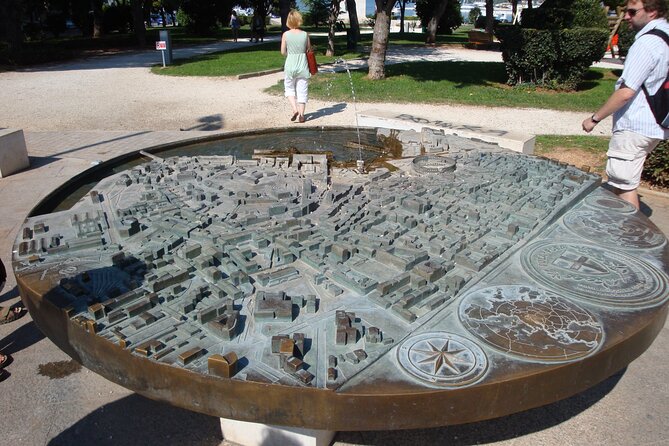
The meeting point is at the top of Tito’s Park, across from the large anchor. Look for a cast model of Pula with a small fountain. That detail matters because parks and open urban spaces can be vague meeting places, especially when several walking groups gather nearby.
The park itself begins the story in a relaxed way. You spend about 10 minutes sightseeing here before moving toward the old town. The starting point outside the historic core also lets the walk build toward the Arena instead of dropping you straight into a cluster of monuments.
You finish at either Tito’s Park or the Forum. That gives you a practical choice: return toward the starting point or continue exploring from the central square.
Meeting Pula’s Roman centerpiece at the Arena
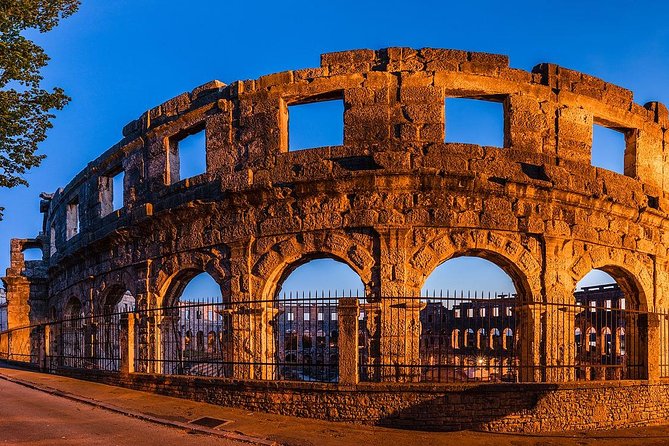
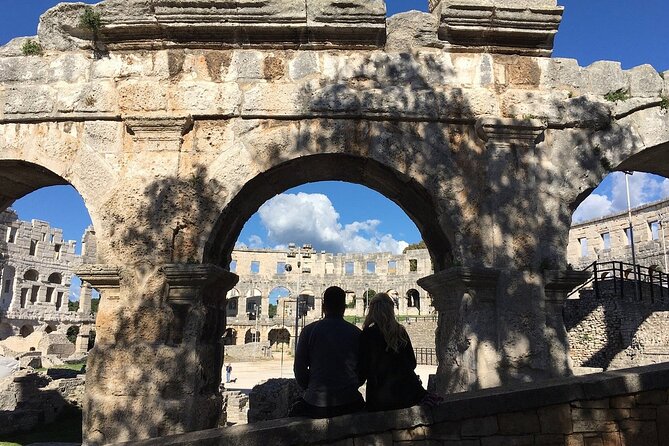
The Pula Arena receives the longest stop, about 20 minutes. This is the tour’s main visual anchor, and seeing it near the start helps put the rest of Pula into context.
The amphitheater is about 2,000 years old and is one of the clearest reminders of the city’s Roman past. Your guide explains the monument as part of Pula’s wider development, rather than treating it as an isolated photo stop.
There is one important limitation: the ticket price does not include entry, and this walking experience sees the amphitheater from outside only. If you want to go inside, you will need to arrange that separately and pay the entrance fee yourself.
That is not necessarily poor value. The $34 fee covers a certified guide and a city walk, not a monument admission package. Still, you should know what you are buying. This is best for understanding Pula and seeing its main sights from public areas, not for extended interior visits.
Twin Gate and Gate of Hercules: small ruins, useful context
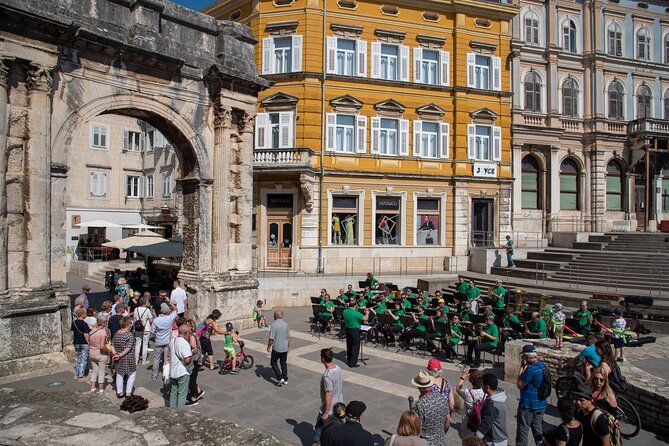
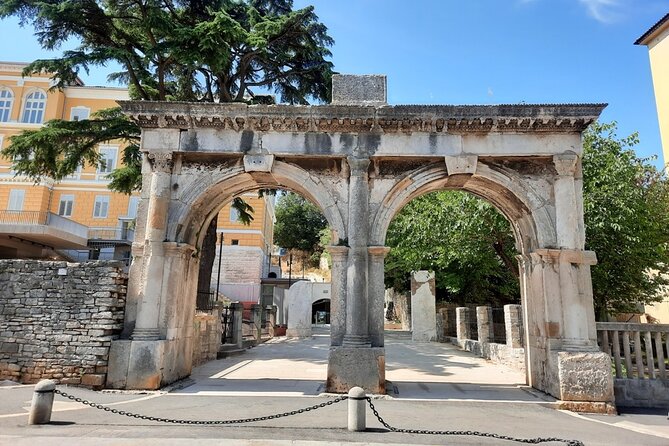
The Twin Gate comes next, with around 10 minutes for sightseeing. Smaller Roman remains can be easy to miss when you explore alone, so a guide adds real value here. You get help spotting the shape and purpose of old defensive structures amid the present-day city.
The Gate of Hercules follows for another 10 minutes. It is a modest monument compared with the Arena, but it helps show how Roman Pula was organized and protected.
These stops also break up the walk nicely. You are not spending the entire tour at one large ruin. Instead, you move through the city and see how ancient fragments sit alongside later streets and buildings.
More Walking Tours in Pula:
- Pula Essentials Walking Tour
★ 5.0 · 62 reviews - Pula: Old Town Walking Tour for Foodies with Dinner and Wine
★ 4.6 · 18 reviews - Pula Sightseeing Walking Tour
★ 5.0 · 3 reviews - Dubrovnik: Old Town Walking Tour
★ 4.8 · 5,174 reviews
Giardini and the Arch of the Sergii
A 10-minute walk through Giardini brings you toward the Arch of the Sergii. This part of the route is less about entering a single sight and more about watching the character of the center change as you move between landmarks.
The Arch of the Sergii receives another 10-minute stop. It offers a clear link to Roman civic life and the people who shaped the city during that period. Your guide can help you read the monument as more than an attractive gateway.
This is also a good stretch for questions. The walk is public and relaxed, and past bookings describe the best guides as friendly, clear, and willing to explain beyond the basic script. Stefano, in particular, is praised for answering questions ranging from local history to details about Pula’s harbor and regional culture.
Ulica Sergijevaca and the changing city center
The tour then follows Ulica Sergijevaca for about 10 minutes. Walking this street gives you a better sense of Pula as a lived-in town rather than an open-air museum.
This is where the guide’s practical advice can be especially useful. You can ask where to eat, where to have a drink, what to do at night, and which activities might suit the rest of your stay. One of the best reasons to take a city walk early is that you can use these suggestions immediately afterward.
The information is not limited to Pula’s monuments. The tour also touches on the wider Istrian area, so you can ask for ideas beyond the city center.
The Forum and Temple of Augustus
The Forum is one of the most important stops, with about 10 minutes for sightseeing. It gives you a natural place to think about the many layers of Pula’s past, since the square remains a central gathering point in the city.
The Temple of Augustus receives a shorter five-minute stop. That may feel brief if you want detailed architectural discussion, but it works well within a compact orientation walk. You see the monument, hear why it matters, and keep moving.
The Forum is also one of the two stated end points. If your guide finishes here, you are already in a useful position for continuing your own walk, finding a meal, or returning to a hotel in the center.
Riva at sunset and Pula Cathedral
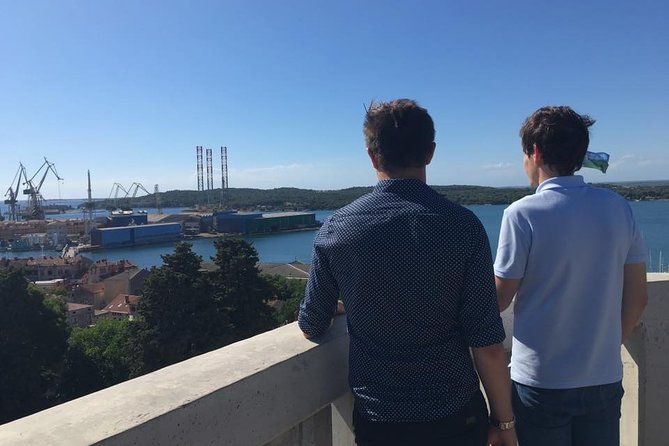
The route reaches the Riva for a 10-minute walk, with sunset listed as part of this section. The waterfront gives the tour a change of pace after the monuments and narrow central streets.
Timing matters here. A sunset walk can be pleasant, but the exact light depends on the starting time and season. Check the available departure times when booking if this part of the experience matters to you.
The final sightseeing stop is Pula Cathedral, allocated about 10 minutes. Ending with the Cathedral adds another layer to the city’s story and prevents the tour from becoming Roman-only. Pula’s identity comes from several periods, and the final stops reinforce that point.
The listed route order places the Cathedral after the Riva, then returns you to Tito’s Park or the Forum. Since walking-tour timing can shift with questions and group pace, ask your guide where the final drop-off will be if you need to meet a reservation afterward.
How good is the guide?
The guide is the heart of this experience. The tour includes a certified guide and is offered in English. Stefano receives especially strong praise for being professional, friendly, engaging, and able to make complicated history easy to understand.
Ana is also praised for her pleasant manner, historical knowledge, and useful advice for making the most of Pula and the surrounding area. Several bookings describe the guides as willing to answer questions rather than rushing through the route.
There is one less favorable account. A participant found the guide friendly but repetitive and felt the guide had been drinking earlier in the day. That appears to be an isolated concern beside the much stronger pattern of positive feedback, but it is fair to mention when assessing any guided experience.
The best fit is someone who enjoys conversation and context. If you only want quick photo stops, some explanations may feel longer than necessary. If you want to understand how Pula became the city you see today, the guide is likely worth more than an audio guide or self-guided map.
The $34 price and what you actually receive
At $34 per person, the tour is priced as a guided orientation rather than a sightseeing pass. You pay for 90 minutes with a certified English-speaking guide, route planning, historical interpretation, and local suggestions.
The value is strongest when you take it near the start of your stay. Advice about dining, nightlife, and nearby activities can prevent wasted time later. The walk also helps you decide which monuments deserve a second visit.
The price does not cover entrance tickets, and the Arena is seen only from outside. If your main goal is to spend time inside the amphitheater, add that cost and plan a separate visit.
A private group is available, though the supplied details do not state the private price or exact group size. For a public tour, the minimum is two participants. If you are the only person booked one hour before departure, the tour will not take place and you will be refunded.
Who should book this Pula walk?
I would recommend it to first-time visitors, couples, solo visitors who want local orientation, and anyone with only a short afternoon in Pula. It also suits people who enjoy history but prefer a moving, conversational format to a long museum visit.
Families and older visitors may appreciate the 90-minute limit, and the activity is listed as wheelchair accessible. Still, you should confirm any specific mobility needs when booking because the route passes through a historic center with several different public spaces and streets.
The tour is only in English. If you need another language, this experience will not meet that need.
It is less suitable if you want private, in-depth access to every monument. The stops are brief, the Arena is exterior-only, and the aim is to give you a broad understanding of Pula rather than cover one period in exhausting detail.
Practical advice before you go
Arrive at the top of Tito’s Park and look for the city model and tiny fountain across from the large anchor. That is more reliable than simply searching for the park entrance.
Wear comfortable shoes and allow yourself enough time to walk between the meeting point and the old town. The tour is described as a relaxed afternoon stroll, but it covers many stops in 90 minutes, so a steady pace is still required.
Bring questions. The most useful parts may be the conversations about local food, nightlife, the harbor, regional activities, and the many changes Pula has seen. Stefano and Ana are particularly praised for making space for this kind of exchange.
You can cancel up to 24 hours in advance for a full refund. The reserve-now, pay-later option also helps if your schedule is still changing, though the two-person minimum remains important for solo bookers.
Should you book the Pula Essentials Walking Tour?
Book it if you want a friendly, efficient introduction to Pula’s Roman, Venetian, Austrian, Italian, Yugoslav, and Croatian past. The combination of major sights, local suggestions, and strong guide feedback makes $34 a fair price for a first orientation.
I would book it early in your stay, ideally at a time that lets you enjoy the Riva section in daylight or near sunset. Choose another option if entering the Arena is your top priority or if you need a language other than English.
For most visitors, this is a smart first step: short, practical, and full of useful context before you set off to explore Pula on your own.
FAQ
How long does the Pula Essentials Walking Tour last?
The tour lasts 90 minutes.
How much does the tour cost?
The listed price is $34 per person.
Where does the tour begin?
It begins at the top of Tito’s Park, across the street from the large anchor. Look for a cast model of the city with a small fountain.
Where does the tour finish?
The tour has two possible drop-off points: Tito’s Park and the Forum.
Is entry to the Pula Arena included?
No. The Arena is seen from outside only, and entrance tickets to sights are not included.
What language is the tour offered in?
The tour is offered in English only.
Is the tour wheelchair accessible?
Yes, the activity is listed as wheelchair accessible.
Can I book a private group?
Yes. A private group option is available.
How many people are needed for the tour to run?
At least two participants are required. If an individual booker remains the only person booked one hour before the tour begins, that booking will be refunded.
Can I cancel the booking?
Yes. You can cancel up to 24 hours in advance for a full refund.
Just added around Pula
- Pula Sightseeing Walking Tour★ 5.0 · 3 reviews
- Pula Essentials Walking Tour★ 5.0 · 62 reviews
- Pula: Sunset/Night-time Illuminated Transparent Kayak Tour★ 4.0 · 9 reviews
- Pula Discover Scuba Diving Package★ 4.5 · 18 reviews
- Pula Boat Trip with Snorkeling★ 4.0 · 7 reviews
- Pula Kayak, Cliffs & Snorkeling Adventure★ 5.0 · 164 reviews
- Pula Kayaking at Blue Cave with Cliffs Tour and Snorkeling★ 5.0 · 4 reviews
- Pula Arena Amphitheater Admission Ticket★ 4.0 · 68 reviews
Walking Tours, compared.
Walking Tour of Split and Diocletian’s Palace
Read our review →
Krka Waterfalls tour with Trogir Walking tour and Krka panoramic boat cruise
Read our review →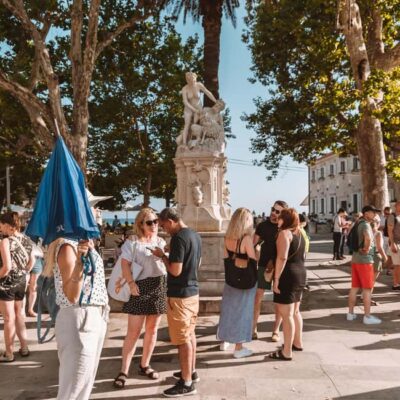
City Walls Early Morning or Sunset Walking Tour
Read our review →Browse the lists this tour appears in