
Reviewed · WALKING TOURS
Pula walking tour
Pula reveals itself on foot. This 90-minute walking tour links the city’s major Roman remains with its fortress, cathedral, market, and old town gates. I like the sensible route and the chance to hear local stories from guides such as Sini, who has earned praise for clear explanations, humor, and strong knowledge of Pula and Istria.
I also like the pace. You see a great deal without giving up your whole morning, and the tour leaves time for independent exploring afterward. The main limitation is important: site entries are not included, so you see the Arena, fortress, temple, and other landmarks from outside unless the cathedral happens to be open.
In This Review
- Key points to know before booking
- What this Pula walk is really designed to do
- The Pula Arena: a powerful opening, seen from outside
- Fort Kastel: a short climb with a wider view
- Pula Cathedral: a brief look at a living religious site
- The Temple of Augustus: Roman Pula in miniature
- The Arch of the Sergii: a graceful entrance to the old center
- Pula’s market: a glimpse of the city today
- The Gate of Hercules and Twin Gates: a strong finish
- The guide makes the difference
- Is $20.16 good value?
- Who should book this walk?
- My verdict: a smart first hour and a half in Pula
- FAQ
- How long does the Pula walking tour last?
- How much does the tour cost?
- What language is the tour offered in?
- Where does the tour begin?
- Where does the tour end?
- Is admission to the Pula Arena included?
- Does the tour enter the fortress?
- Can you enter Pula Cathedral?
- How many people can join the tour?
- Is cancellation free?
Key points to know before booking
- A compact tour of Pula’s essential sights: The route covers eight landmarks in about 90 minutes, from the Arena to the Twin Gates.
- A guide-led history lesson without a museum schedule: You get context for Roman, Venetian, Byzantine, Austro-Hungarian, and Croatian influences while walking through the center.
- The Pula Arena is viewed from outside: This is useful for orientation, but you need a separate ticket and extra time if you want to enter.
- Fort Kastel adds a harbor view: The uphill walk gives the tour a broader sense of why Pula developed where it did.
- Small groups help with questions: The maximum group size is 15, and some departures may feel almost private when attendance is low.
- A good first visit for about $20.16: The price is fair if you want a guided overview, but less so if you mainly want entry into monuments.
What this Pula walk is really designed to do
This is an orientation tour, not a full archaeological visit. You move through the center, pause at important buildings, and listen while your guide explains what you are seeing. That distinction matters because Pula’s landmarks can look like scattered old stones if you do not know how they fit together.
The route brings together several layers of the city. Roman monuments form the main thread, but the walk also touches later religious, military, commercial, and civic life. You may hear about Pula from roughly 3,000 years ago through the present day, including its Italian and Croatian cultural connections.
The format suits you if you want to get your bearings quickly. It also works well near the beginning of a stay, since the guide can point you toward places to eat and areas worth revisiting. One guide, Sini, is praised for communicating well with an entire family, while other guides have been described as friendly, funny, and easy to understand.
The meeting point is at the entrance to Pula Arena on Flavijevska ulica. Take that wording seriously. A map application may send you somewhere confusing, so check that you are at the Arena entrance rather than simply somewhere on the surrounding street.
The tour finishes at the Twin Gates on Carrarina ulica. That makes practical sense: you end near another Roman remnant and remain in the old center, where you can continue walking or stop for lunch.
More Walking Tours in Istria
- Pula: Historic Walking Tour with Local Guide & City Views
★ 4.8 · 143 reviews - Pula: Historic Sites Guided Walking Tour
★ 4.8 · 78 reviews - Pula Essentials Walking Tour
★ 4.8 · 64 reviews
The Pula Arena: a powerful opening, seen from outside
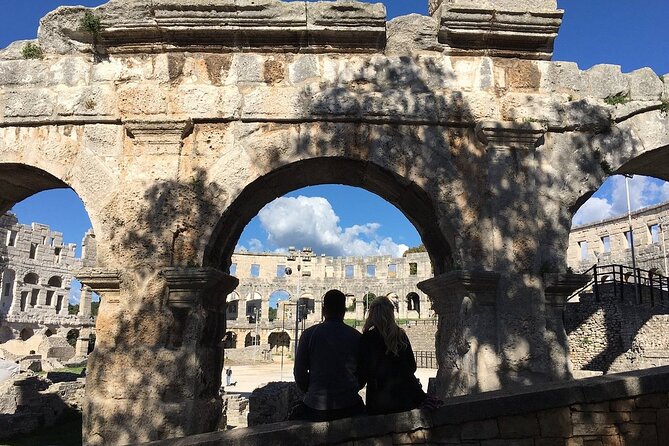
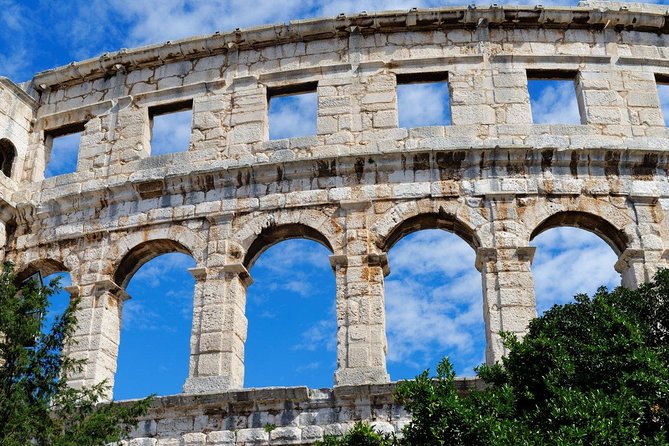
The tour begins at Pula’s most famous monument, the Roman amphitheater. Your guide explains the Arena from the exterior, with about 20 minutes set aside for this stop.
That is enough time to understand the building’s place in the city and to hear the basic story of its construction and use. The Arena is also the easiest landmark to appreciate at a glance. Its large stone walls and repeated arches give you an immediate sense of Roman engineering.
I would pay close attention here, because the first stop sets the historical frame for everything that follows. Later Roman remains can be smaller and less obvious. Once you understand the scale and importance of the amphitheater, the rest of the old city makes more sense.
The trade-off is clear. You do not go inside the Arena on this tour. Admission is not included, and the guide explains it from outside. If entering the amphitheater is high on your list, plan a separate visit and budget for the ticket. The walking tour can help you decide if that extra visit is worthwhile, but it does not replace it.
One earlier group felt the Arena deserved more detailed attention and a closer look, even from outside. That is fair criticism. Since the amphitheater is the headline sight, you may want to linger after the official explanation and take your own photographs.
Fort Kastel: a short climb with a wider view
From the Arena, the walk continues to Kastel, the fortress above the center. The scheduled stop is about 10 minutes, and the guide explains the fortress from the outside while you enjoy the view toward the harbor.
This is one of the most useful stops for understanding Pula as a port city. The view helps connect the old center with the water and gives you a sense of the city’s defensive position. You are not just looking at another old wall. You are seeing how military needs shaped Pula.
The route does involve walking uphill, so I would wear practical shoes and bring water in warm weather. The required fitness level is described as moderate. The walk is generally considered easy by people who have taken it, but it is still a walking tour with several stops and some elevation.
Kastel also breaks up the Roman focus. Pula was not frozen in antiquity, and the fortress points to later periods of conflict and defense. You get a broader picture of the city rather than a simple parade of Roman monuments.
Admission is not included. The stop is primarily about the exterior and the view, so you should not book this tour expecting a detailed interior fortress visit.
Pula Cathedral: a brief look at a living religious site
The cathedral receives about five minutes. Your guide explains the church from outside, and you may enter if it is open.
That short timing tells you how to think about this stop. It is a quick piece of the city’s religious story, not a full church visit. If the doors are open, you have the chance to look inside, but entry depends on circumstances at the time.
The cathedral helps show how Pula’s story continued after the Roman period. It also gives the route a change of mood after the fortress. The guide can place the building within the city’s wider cultural development, while you get a short pause from the streets.
There is no admission charge listed for this stop. Still, do not count on an interior visit. If seeing the cathedral inside matters to you, keep a flexible schedule and do not assume the walking tour will provide enough time.
More Walking Tours in Pula:
- Pula Essentials Walking Tour
★ 5.0 · 62 reviews - Pula: Old Town Walking Tour for Foodies with Dinner and Wine
★ 4.6 · 18 reviews - Pula Sightseeing Walking Tour
★ 5.0 · 3 reviews - Dubrovnik: Old Town Walking Tour
★ 4.8 · 5,174 reviews
The Temple of Augustus: Roman Pula in miniature
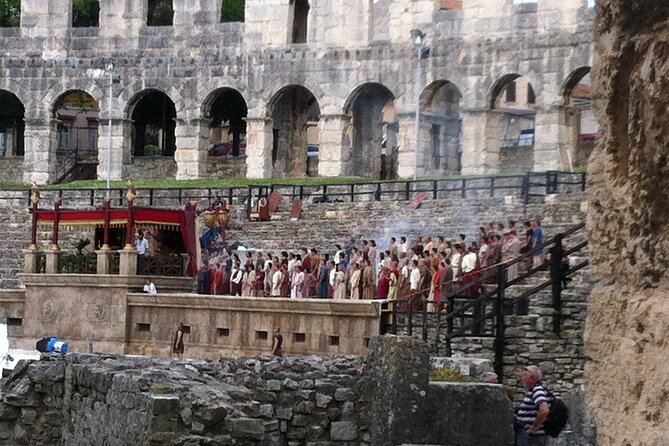
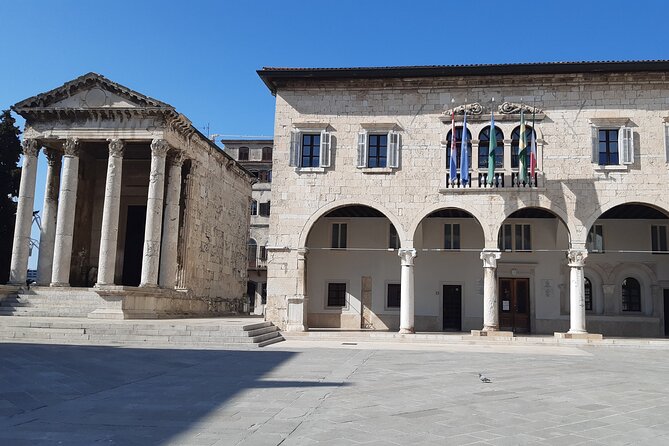
The Temple of Augustus is another 10-minute stop, explained from outside. It sits in the Forum area and gives you a closer, more intimate encounter with Roman architecture than the Arena.
This is a good place to listen for details. The Arena overwhelms you with size, while the temple rewards careful looking at its columns, proportions, and setting. Your guide can also explain how the Forum functioned as a civic center, helping you picture Roman public life rather than viewing the temple as an isolated ruin.
Again, there is no included entry. The tour focuses on the exterior, which is enough for a useful introduction but not for anyone hoping to inspect the interior displays. I like this stop because it shows how much of Pula’s Roman past remains woven into ordinary city streets.
The route also makes a useful comparison between famous and less famous monuments. You get the large amphitheater, then a smaller temple, then arches and gates. That variety keeps the walk from feeling like the same sight repeated eight times.
The Arch of the Sergii: a graceful entrance to the old center

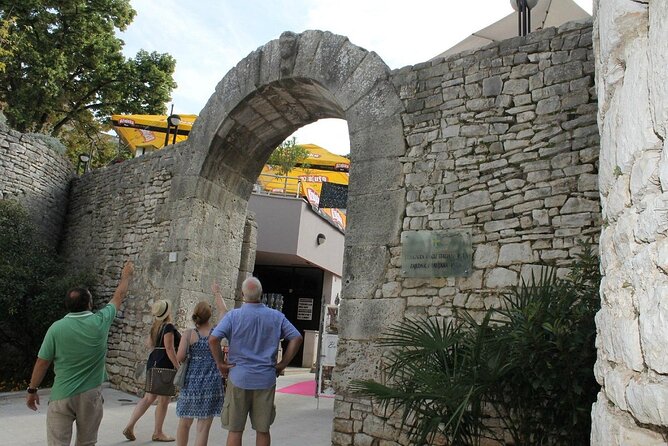
The Arco dei Sergi, also called the Arch of the Sergii, receives about 10 minutes. Your guide explains it from outside, and the stop is free.
This arch is a fine example of how Roman remains can shape the feel of a modern street. It is not as massive as the Arena, but its location makes it part of the everyday passage through central Pula. You can look at the monument, then continue into the surrounding streets without a formal change of scene.
This is also a good point to ask questions. The guides are praised for answering questions directly and for keeping the walk friendly rather than overly formal. If you are traveling with teenagers, that matters. One family found the guide able to hold the interest of their children while covering the main sights.
The arch is best appreciated with context. On its own, it is a stone gateway. With an explanation of who built it and why, it becomes a clue to the status and ambitions of Roman families in Pula.
Pula’s market: a glimpse of the city today
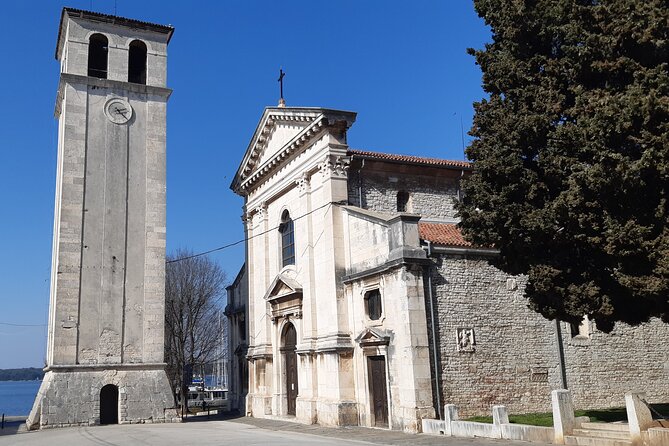
The walk then reaches Gradska Trznica Pula, the city market. The scheduled stop lasts about 10 minutes, and the guide explains the market from outside.
This is one of the tour’s most useful changes of pace. After several ancient monuments, you see a place connected to daily life. The market helps you move from the Pula of emperors and armies to the Pula of shopping, food, and local routines.
Do not expect a food tasting. Food and drinks are not included. The market is viewed from the outside, and the guide offers context rather than a meal stop. Still, I would make a note of it for later. The tour’s short visit can help you decide if you want to return on your own.
One guide also offered lunch suggestions at the end of the walk. That is exactly the sort of practical local help that adds value to a short city tour. You can ask for recommendations, though the information provided does not promise a formal restaurant stop or meal.
The Gate of Hercules and Twin Gates: a strong finish

The Gate of Hercules takes about five minutes. Your guide explains it from outside, and no admission fee is listed.
Because the stop is brief, expect a compact explanation rather than a long lecture. The gate is part of the evidence that Roman Pula was a planned and defended city. It also prepares you for the final stop, the Twin Gates.
The Twin Gates receive another five minutes and mark the end of the walk. These gates are particularly practical as a finishing point because you are still close to the old center and can continue sightseeing without arranging transport.
Together, the two stops provide a neat ending. You see the remains of entrances and defenses, then finish at a place that invites you to keep exploring. If you have only a few hours in Pula, the route gives you a useful checklist for the rest of your visit.
The guide makes the difference
The strongest part of this experience is the human explanation. Pula’s monuments are impressive, but the walk depends on the guide turning stones into a story.
The guides are described as clear in English, friendly, patient, and able to answer questions about both Pula and the wider Istrian region. Several people praised the pace, saying it was comfortable and easy to follow. That is useful if you are walking with family members who do not want a long academic lecture.
Sini receives especially warm praise for his ability to communicate with families and explain the city’s long story in an engaging way. Other guides have been described as charismatic, funny, and passionate about Croatian history. You cannot guarantee a particular guide unless your booking confirms one, but the praise suggests that the quality of the guiding is a major reason to choose this walk.
The group limit is 15 people. That is not a private tour in the strictest sense, but it is small enough to make questions more practical than on a large coach excursion. Some departures may feel almost private if only a few people book.
The tour is offered in English. Children must be accompanied by an adult. Since the route operates in all weather, bring clothing that suits the forecast. Pula’s streets and monuments do not become more comfortable simply because the sky changes its mind.
Is $20.16 good value?
At about $20.16 per person, I consider this a reasonable price for a guided introduction to Pula. You are paying for a local professional guide, a carefully arranged route, and 90 minutes of useful context.
The value is strongest if you are new to the city. In a short span, you cover the Arena, Kastel, cathedral, Temple of Augustus, Arch of the Sergii, market, Gate of Hercules, and Twin Gates. You also get help connecting Roman, military, religious, and modern parts of Pula.
The value is weaker if your main goal is entering monuments. Tickets and entries are not included, and most stops are explained from outside. Add the cost of any sites you later choose to visit, along with food and drinks, since those are also excluded.
I would compare the price with the cost of spending your first morning trying to piece the city together from a guidebook. If you enjoy independent research and have plenty of time, you may prefer to walk alone. If you want a clear route and local explanation, the price is modest.
The tour is often booked about 28 days ahead. That suggests you should reserve early during busy periods, especially if your schedule is tied to a cruise arrival or a specific departure time.
Who should book this walk?
I would recommend it to first-time visitors, families, couples, and anyone with only half a day in Pula. It gives you the main story without taking over your entire day, and the route leaves time for an Arena interior visit, lunch, or further wandering.
It is also a good fit for teenagers. The guides have been praised for keeping younger visitors interested, and the mix of ruins, fortress views, market life, and city streets is more varied than a single-site tour.
You should think twice if you need step-free sightseeing, although the supplied details only specify a moderate fitness level and do not provide fuller accessibility information. You should also reconsider it if you want long interior visits, since the tour does not include them.
Cruise passengers need to be especially careful. Refunds are not provided if you miss the activity because your ship arrives late or fails to arrive. Leave a safe margin before booking the departure time.
Free cancellation is available up to 24 hours before the start time. Changes or cancellations inside that window are not refunded, so keep an eye on local time.
My verdict: a smart first hour and a half in Pula
I would book this walking tour if I wanted a friendly introduction to Pula rather than a ticketed tour of its interiors. The route is well chosen, the duration is manageable, and the guide’s explanations appear to be the main strength.
The best plan is to take the walk early in your stay, then return to the places that caught your attention. Give the Arena more time if you want to go inside, revisit the market when you are ready for food, and use the fortress view as a reference point for the harbor.
Skip it if you already know Pula well or prefer to explore every monument at your own pace. For most first visits, though, about $20.16 buys a useful map of the city, a local voice, and a much clearer sense of how Pula’s Roman remains fit into the place you see today.
FAQ
How long does the Pula walking tour last?
The tour lasts approximately 1 hour and 30 minutes.
How much does the tour cost?
The listed price is $20.16 per person.
What language is the tour offered in?
The tour is offered in English.
Where does the tour begin?
It begins at Pula Arena, Flavijevska ul., 52100, Pula, Croatia.
Where does the tour end?
It ends at the Twin Gates, Carrarina ul. 8, 52100, Pula, Croatia.
Is admission to the Pula Arena included?
No. The Arena is explained from outside, and admission is not included.
Does the tour enter the fortress?
The guide explains Kastel from outside and includes a view toward the harbor. Admission is not included.
Can you enter Pula Cathedral?
You may enter if the cathedral is open, but an interior visit is not guaranteed.
How many people can join the tour?
The maximum group size is 15 people.
Is cancellation free?
You can cancel up to 24 hours before the experience starts for a full refund. Cancellations or changes made less than 24 hours before the start are not refunded.
Just added around Pula
- Pula Sightseeing Walking Tour★ 5.0 · 3 reviews
- Pula Essentials Walking Tour★ 5.0 · 62 reviews
- Pula: Sunset/Night-time Illuminated Transparent Kayak Tour★ 4.0 · 9 reviews
- Pula Discover Scuba Diving Package★ 4.5 · 18 reviews
- Pula Boat Trip with Snorkeling★ 4.0 · 7 reviews
- Pula Kayak, Cliffs & Snorkeling Adventure★ 5.0 · 164 reviews
- Pula Kayaking at Blue Cave with Cliffs Tour and Snorkeling★ 5.0 · 4 reviews
- Pula Arena Amphitheater Admission Ticket★ 4.0 · 68 reviews
Walking Tours, compared.
Walking Tour of Split and Diocletian’s Palace
Read our review →
Krka Waterfalls tour with Trogir Walking tour and Krka panoramic boat cruise
Read our review →
City Walls Early Morning or Sunset Walking Tour
Read our review →Browse the lists this tour appears in