
Reviewed · WALKING TOURS
Pula Essentials Walking Tour
Pula’s past is written into its streets. This 90-minute to two-hour walking tour links the city’s Roman monuments with its Venetian and Austrian chapters, while a local guide adds the stories and practical tips that a map usually misses. I like the relaxed pace and the way the route ends at Pula’s famous Arena, where you can continue inside on your own. I also like the useful advice about restaurants, drinks, ice cream, and things to do after the walk.
The tour costs $34.99 per person, which is fair if you want a clear introduction to Pula rather than a quick monument checklist. The main consideration is that the Arena is viewed only from outside, and entrance is not included. You will need a separate ticket if you want to explore the amphitheater’s interior.
The experience has earned a 4.8 rating, with 95 percent of participants recommending it. Most praise goes to Stefano, who is described as warm, funny, patient, and full of local stories. One serious booking problem was reported when a cancellation did not reach the customer, so keep an eye on your confirmation and messages before setting out.
In This Review
- Five things to know before you book
- Why this short walk works well in Pula
- Starting at Tito’s Park
- Forum Square and the Roman heart of town
- The Arch of the Sergii and the old city entrance
- The Gate of Hercules and Pula’s Italian connection
- The Twin Gates and traces of the recent past
- Finishing at Pula’s Arena
- The guide makes the biggest difference
- Is $34.99 good value?
- Who should book this walking tour?
- Timing, group size, and practical details
- Should you book the Pula Essentials Walking Tour?
- FAQ
- How long does the Pula Essentials Walking Tour last?
- How much does the tour cost?
- What language is the tour offered in?
- Where does the tour start?
- Where does the tour finish?
- Is entry to the amphitheater included?
- How many people can join the tour?
- Can I cancel for a full refund?
Five things to know before you book

- The route covers six central sights: You walk from Tito’s Park through Forum Square, the Arch of the Sergii, the Gate of Hercules, the Twin Gates, and finally to the Arena.
- Stefano is the guide most often praised: His clear English, humor, patience, and local knowledge help turn a short walk into a lively history lesson.
- The Arena is an outside visit only: The tour finishes at the main entrance, giving you the option to buy a separate admission ticket.
- The pace is gentle: You remain on foot for most of the experience, so comfortable shoes matter more than speed.
- Evening timing adds atmosphere: The route is designed to show Pula in the softer light before dinner, when you can easily continue into the old town afterward.
- The group can reach 30 people: Smaller departures may feel almost private, but you should not count on that every time.
Why this short walk works well in Pula
Pula can look easy to cover. The old town is compact, and the Arena is hard to miss. Yet the city’s story is not simple. Roman Pula, Venetian Pula, Italian Pula, Austrian Pula, and modern Croatian Pula all occupy the same streets.
That is where a guide earns the fee. Instead of seeing a series of old stones, you get a basic map of how the city developed and why different monuments sit where they do. The stops are close enough to keep the walk comfortable, but each one adds a different piece to the story.
I would use this tour early in a Pula stay. It helps you get your bearings, then leaves you with ideas for dinner and further exploring. Several people appreciated receiving restaurant suggestions at the end, and one guide even directed the group toward a modern restaurant where the evening continued.
The timing is also practical. At roughly an hour and a half, the walk does not consume a full day. You can fit it between sightseeing and dinner, or use it as an easy first activity after arriving in town.
More Walking Tours in Istria
- Pula: Historic Walking Tour with Local Guide & City Views
★ 4.8 · 143 reviews - Pula walking tour
★ 5.0 · 96 reviews - Pula: Historic Sites Guided Walking Tour
★ 4.8 · 78 reviews
Starting at Tito’s Park
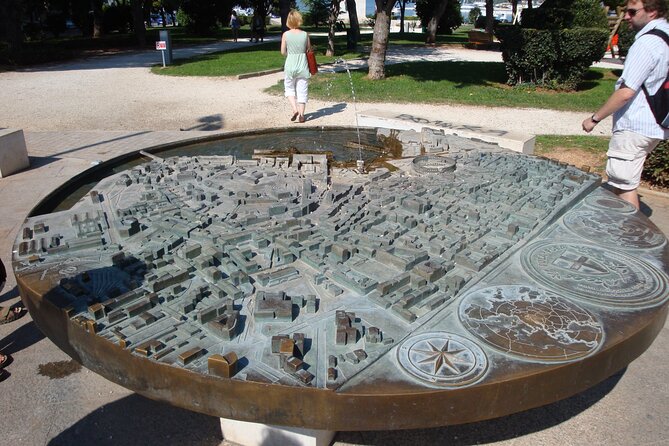
The meeting point is Tito’s Park on Carrarina Street. The tour begins with a short introduction to Pula’s layout and history, which is useful because the city’s old center can feel like a collection of disconnected lanes at first.
This opening lasts about 10 minutes and costs nothing beyond the tour fee. It is not a monument-heavy start, but it gives you a framework for the rest of the route. Pay attention here, since the old town’s Roman plan and later layers make more sense once you understand the basic shape of the center.
The guide also sets the tone at this point. Stefano is repeatedly praised for speaking English well, answering questions, and making the walk feel like a conversation rather than a lecture. That matters on a short tour. You can ask about something you noticed instead of waiting for a formal explanation at every stop.
Forum Square and the Roman heart of town
Forum Square is the first major historical stop. In Roman times, this was the center of public life. Today, it is also a pleasant place to pause for a drink, which neatly connects ancient Pula with modern street life.
The tour allows about 10 minutes here. That is enough for an explanation and a look around, though not enough for a long café stop. You are learning how the square functioned in Roman Pula, then seeing how the same central location still draws people today.
I like this part because it shows the city’s history as something still woven into daily life. You do not need to imagine an isolated archaeological site. The old center remains part of Pula’s social life, with cafés and evening activity close at hand.
If you want extensive architectural detail, this stop may feel brief. The value lies in the guide’s explanation and the connection between past and present, not in a long visit to one building.
The Arch of the Sergii and the old city entrance
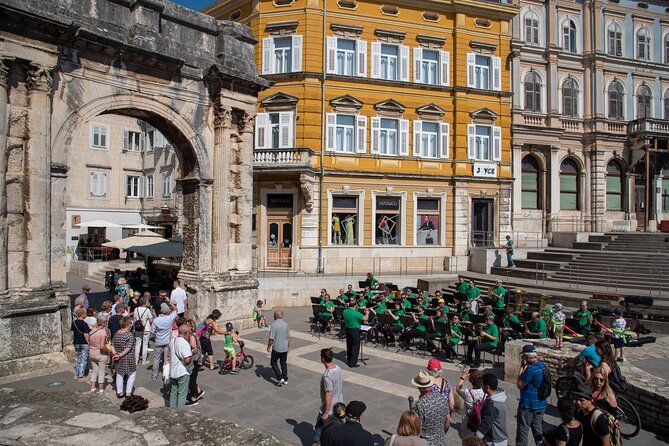
The Arch of the Sergii takes you to one of Pula’s key Roman gateways. It was the main entrance to the ancient town and remains one of the city’s main meeting points.
The planned stop lasts around 10 minutes. This is one of the easier places to appreciate without entering anything. You can see how a monument once tied to the Roman city now functions as a familiar point in modern Pula.
A guide can also help you look beyond the arch’s basic appearance. The useful question is not only what it is, but why it was placed there and how the old town grew around it. The tour’s value comes from those links between the monuments.
This is also a good moment to ask about places you want to revisit later. The guide’s local suggestions are one of the strongest practical features of the walk. If you want a particular restaurant, drink, or dessert, ask while the route is still underway.
More Walking Tours in Pula:
- Pula Essentials Walking Tour
★ 4.8 · 64 reviews - Pula: Old Town Walking Tour for Foodies with Dinner and Wine
★ 4.6 · 18 reviews - Pula Sightseeing Walking Tour
★ 5.0 · 3 reviews - Dubrovnik: Old Town Walking Tour
★ 4.8 · 5,174 reviews
The Gate of Hercules and Pula’s Italian connection
The Gate of Hercules is described as the oldest surviving gate in Pula. It once guarded access to the old town, while the nearby Circolo connects the stop to the Italian community’s social and cultural life.
The stop takes about five minutes, so expect a quick explanation rather than a long viewing. That short timing is reasonable for a gate, but it means you should listen closely and ask questions promptly.
This is one of the tour’s useful reminders that Pula’s identity has never been limited to one period. Roman remains are the headline attraction, but later Italian and Austrian influences are part of the city’s story too. The route gives those layers room without turning into an academic seminar.
The Italian connection may be especially interesting if you want to understand Istria beyond its Roman monuments. Pula’s past reaches across changing borders and communities, and the guide helps place the visible remains in that wider setting.
The Twin Gates and traces of the recent past
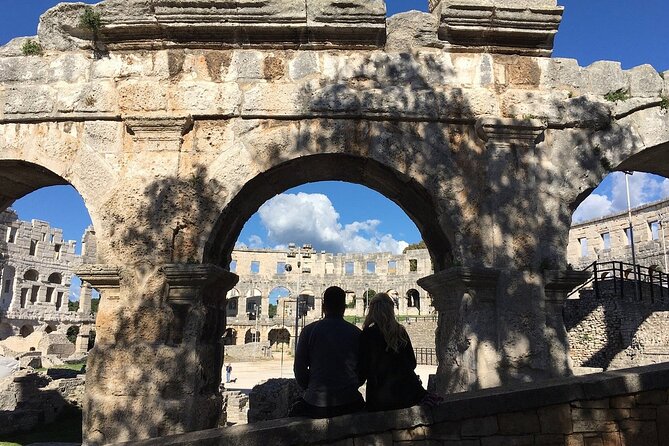
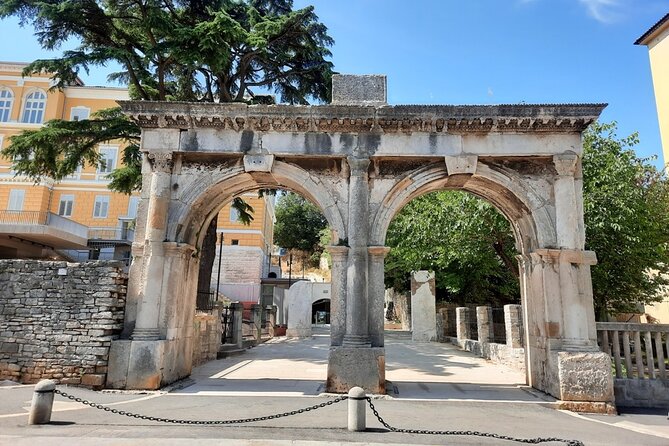
The Twin Gates are another old entrance to the town. Their appearance is grander than the brief five-minute stop might suggest, but the guide also points toward less obvious stories connected with the site and its more recent past.
This is the kind of stop you could easily pass without understanding what you are seeing. A quick explanation gives the gates a purpose and helps you read the old town as a defended settlement rather than simply a pleasant area for walking.
The itinerary here is concise, so do not expect time for a detailed photo session or a long pause. Still, the stop adds variety. You have seen a public square, a triumphal arch, and now another piece of the city’s former entrances.
The route’s strength is its rhythm. No single stop lasts too long, and you keep moving through the old center instead of spending the entire evening in one place.
Finishing at Pula’s Arena
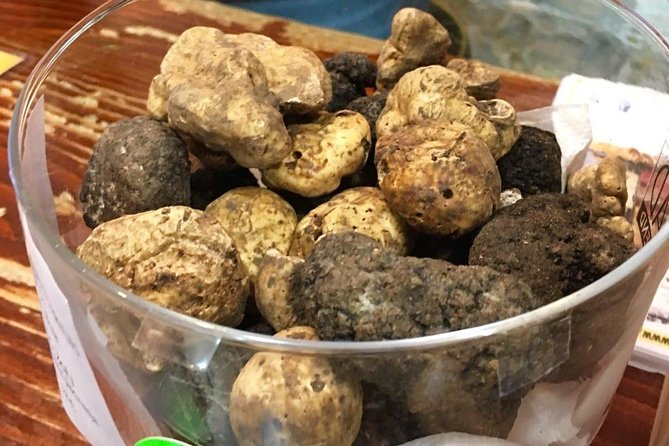
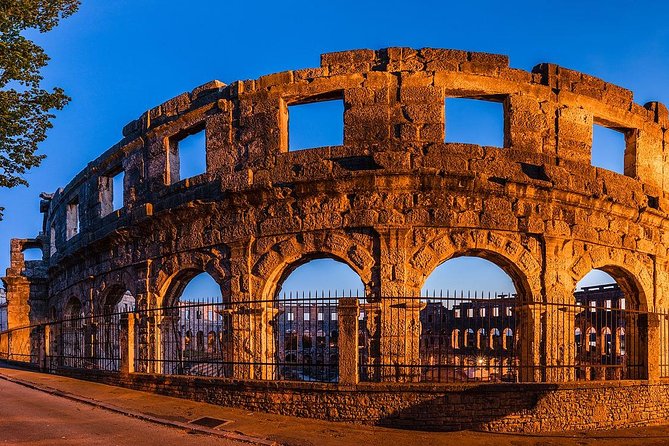
The final stop is the Amphitheatre of Pula, usually called the Arena. The tour spends about 20 minutes walking around its outer walls and looking inside from the exterior viewpoints.
This is the grand finish, and it is easy to see why. The amphitheater is the city’s defining sight, but arriving at it after learning about the Roman town gives it more meaning. You have already seen the old center’s forum and entrances. Now you can place the Arena within that Roman setting.
The tour ends at Flavijevska Street, directly in front of the main tourist entrance. That arrangement is excellent if you plan to visit the interior. You can finish the guided walk, check opening hours, and buy a separate admission ticket if the site is still open.
Do not assume your tour fee covers entry. It does not. The amphitheater is seen from outside, and any interior visit requires its own ticket. One participant appreciated that the guide knew the visiting hours and left enough time to go inside afterward, but your timing will depend on the date and the site’s schedule.
If you are satisfied with exterior views, the tour still gives you a solid look at the building. If the Arena is a major reason for visiting Pula, plan the separate interior visit in advance and treat the walking tour as the historical lead-in.
The guide makes the biggest difference
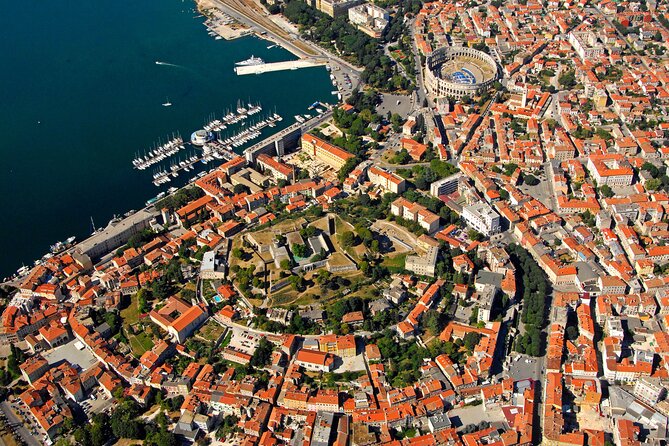
The strongest praise centers on Stefano. He is described as friendly, funny, patient, and deeply familiar with Pula. His English is reported to be very good, and he is willing to answer questions beyond the basic route.
That last point is important. A short city walk can feel rushed when the guide sticks rigidly to prepared facts. Here, the experience appears more flexible. Stefano has answered questions about the city, nearby areas, history, food, and later activities.
He also adjusts the pace. Several people describe the walk as easy-going and slow enough to follow comfortably. One small group received what was effectively a private tour because only a few people had booked that evening. You may get the same lucky situation, but the maximum group size is 30, so do not book expecting personal attention every time.
The guide’s personality also helps with difficult weather. One group took the tour in heavy rain and still found the experience worthwhile because Stefano kept the explanations engaging. The experience requires good weather, though, and poor conditions can lead to a new date or a full refund.
Is $34.99 good value?
At $34.99 per person, this is not the cheapest way to walk through Pula. You can see the outside of the monuments without paying an entry fee, and the old town is compact enough to explore independently.
The fee makes more sense if you value context, local orientation, and practical advice. You are paying for a licensed guide who links Roman, Venetian, Austrian, Italian, and modern parts of the city. You are also buying a useful first look at where to eat, drink, and continue exploring.
The price is less attractive if you want a long archaeological tour or entry to the Arena included. You will need to pay separately for the amphitheater, and the stops at the Gate of Hercules and Twin Gates are short.
I see it as good value for a first evening in Pula, especially for families, couples, and anyone who prefers a relaxed introduction before exploring alone. It is also useful for older teenagers, since the walk is not too demanding and the stories give the monuments more life.
Who should book this walking tour?
I would recommend it to you if you want to understand Pula quickly without spending half a day on your feet. The route is calm, central, and built around the city’s major historical sights.
It suits families particularly well. One family of five described the 90-minute format as a good way to learn about Roman and medieval Pula without exhausting everyone. The guide’s willingness to answer questions also helps keep the experience active for different ages.
It is a smart choice for a first day. You get an overview, learn where the main sights are, and receive suggestions for the rest of your stay. A couple who took the tour early in their holiday felt more connected to the city afterward, which is exactly what an introductory walk should do.
You may want something else if you prefer museums, interior visits, or a strict focus on Roman archaeology. This tour is about the city as a whole, and the Arena remains an exterior stop unless you arrange a separate visit.
Timing, group size, and practical details
The tour is offered in English and uses a mobile ticket. Confirmation is normally sent when you book, though bookings made within four hours of departure may be confirmed as soon as possible, subject to availability.
The start is at Tito’s Park, Carrarina ul. 9. The end is at the Arena’s main tourist entrance on Flavijevska ul. 3. Since the tour finishes at a useful sightseeing point, you can continue inside if conditions and opening hours allow.
Wear comfortable walking shoes. The route is leisurely, but you remain on your feet through several old-town streets and stops. Public transportation is nearby, service animals are allowed, and most people can take part.
You can cancel for a full refund up to 24 hours before the start time. Cancellations or changes within 24 hours are not refunded or accepted. The tour can also be canceled if the minimum number is not reached, in which case you are offered another date, another experience, or a full refund.
One reported cancellation problem involved the platform failing to pass along a cancellation made by the operator. It appears to have been a communication failure rather than a normal feature of the tour, but I would still check your messages before leaving for the meeting point.
Should you book the Pula Essentials Walking Tour?
Book it if you want a friendly, well-paced introduction to Pula’s old center, especially early in your stay. The route covers the city’s key Roman sights while making room for Venetian, Austrian, Italian, and modern history. Stefano’s warmth, humor, and local advice are the main reasons the experience earns such strong marks.
I would be less quick to recommend it if you want an included Arena ticket or a long, detailed archaeological visit. In that case, budget extra for the amphitheater and treat this walk as the introduction rather than the whole experience.
For most people, the best plan is simple: take the tour in the evening, wear good shoes, ask for food recommendations, then visit the Arena interior afterward if it is still open. At $34.99, that gives you both the city’s story and a practical start to the rest of your time in Pula.
FAQ
How long does the Pula Essentials Walking Tour last?
The tour lasts approximately one hour and 30 minutes to two hours.
How much does the tour cost?
The price is $34.99 per person.
What language is the tour offered in?
The tour is offered in English.
Where does the tour start?
It starts at Tito’s Park, Carrarina ul. 9, 52100 Pula, Croatia.
Where does the tour finish?
It ends at Flavijevska ul. 3, in front of the main tourist entrance to Pula’s Arena.
Is entry to the amphitheater included?
No. The tour views the amphitheater from outside, and entrance fees are not included.
How many people can join the tour?
The maximum group size is 30 people.
Can I cancel for a full refund?
Yes. You can cancel at least 24 hours before the experience for a full refund. Cancellations within 24 hours are not refunded.
Just added around Pula
- Pula Sightseeing Walking Tour★ 5.0 · 3 reviews
- Pula: Sunset/Night-time Illuminated Transparent Kayak Tour★ 4.0 · 9 reviews
- Pula Discover Scuba Diving Package★ 4.5 · 18 reviews
- Pula Boat Trip with Snorkeling★ 4.0 · 7 reviews
- Pula Kayak, Cliffs & Snorkeling Adventure★ 5.0 · 164 reviews
- Pula Kayaking at Blue Cave with Cliffs Tour and Snorkeling★ 5.0 · 4 reviews
- Pula Arena Amphitheater Admission Ticket★ 4.0 · 68 reviews
- Pula city tour in German★ 5.0 · 34 reviews
Walking Tours, compared.
Walking Tour of Split and Diocletian’s Palace
Read our review →
Krka Waterfalls tour with Trogir Walking tour and Krka panoramic boat cruise
Read our review →
City Walls Early Morning or Sunset Walking Tour
Read our review →Browse the lists this tour appears in