
Reviewed · WALKING TOURS
Pula Private 2-Hour Guided Walking Tour
Pula reveals its past at street level. This private two-hour walk packs Roman gates, a first-century amphitheater, the Forum, Cathedral, market, and Venetian Fortress into a route led by a local resident. I like the flexible format and the chance to hear about local customs, not just dates and stones. I also like that a private group of up to 15 can set the pace together. The main drawback is the brisk schedule, especially if you enter the amphitheater or stop often for photos.
Guide Sinisa, also referred to as Sini, receives especially warm praise for his clear English, humor, local recommendations, and careful walking pace. You should expect roughly a couple of miles on foot, with a few hills and limited shade. In hot weather, the tour works best with water, a hat, and sensible shoes.
In This Review
- Key points to know before you book
- Why this short Pula walk works well
- Starting at Pula Arena with the Roman past in view
- The Venetian Fortress and Pula harbor view
- Pula Cathedral and centuries of changing worship
- Augustus Temple and the Roman Forum
- The Punishment of Dirce mosaic, a small but special stop
- Roman arches at Sergi and the Gates of Hercules
- Pula Market and the everyday city
- Twin Gates, the final Roman marker
- What the two-hour schedule really feels like
- Heat, hills, and what to wear
- Price, group size, and overall value
- Who should book this Pula walking tour?
- Should you book it?
- FAQ
- How long is the Pula private walking tour?
- How much does the tour cost?
- Is the tour private?
- Is the guide licensed?
- Is the tour offered in English?
- Is admission to Pula Arena included?
- Can I visit the Arena from inside?
- Where does the tour start and finish?
- Is the walking tour physically demanding?
Key points to know before you book
- The amphitheater is the main event: You can enter Pula Arena for an additional €10 per person, or hear the explanation from outside.
- A private group keeps things personal: Only your party takes part, with a maximum group size of 15.
- Nine sights fit into two hours: The route covers Roman, medieval, Venetian, Austro-Hungarian, and modern Pula.
- The guide can adjust the pace: This matters on hot days and on the hills near the Venetian Fortress.
- The route ends at the Twin Gates: You finish near Carrarina Street, not back at the Arena.
- The price works best for a group: At $145.50 per group, the cost becomes more reasonable when shared among several people.
Why this short Pula walk works well
Pula is a city where major sights sit close together, but the story can feel scattered if you walk without context. A Roman arch appears beside a modern street. A cathedral occupies ground tied to centuries of changing rule. An old fortress looks over the harbor, while a market building still serves everyday local life.
This tour gives you a useful framework quickly. In about two hours, you move from the Arena through the old town and finish at the Twin Gates. That makes it a good first look if Pula is one stop on a larger Istrian trip, or if your time in town is limited.
The private setup is the biggest practical advantage. You are not trying to keep up with a large crowd or waiting for a guide to gather people at every corner. You can ask questions, request a slower pace, or tell the guide which sights matter most to you.
The route is still active. You should expect a couple of miles of walking, some hills, and periods in the sun. The tour is not a difficult hike, but it calls for a moderate level of fitness. One useful detail from the experience is the guide’s attention to pace. On a hot day, the group paused in shaded areas rather than pushing straight through.
More Walking Tours in Istria
- Pula: Historic Walking Tour with Local Guide & City Views
★ 4.8 · 143 reviews - Pula walking tour
★ 5.0 · 96 reviews - Pula: Historic Sites Guided Walking Tour
★ 4.8 · 78 reviews
Starting at Pula Arena with the Roman past in view
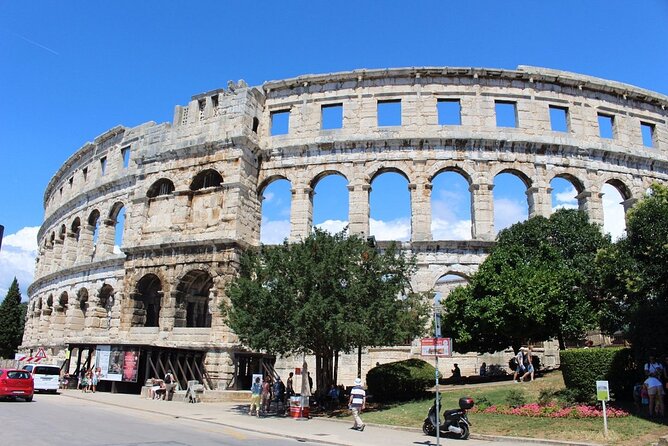
The tour begins at Pula Arena on Flavijevska Street. This is an effective starting point because the amphitheater gives you an immediate sense of Pula’s Roman importance.
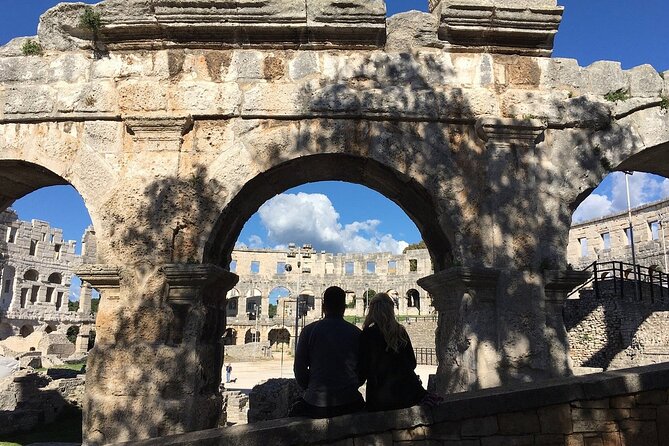
Built in the first century AD, the Arena is one of the city’s defining sights. From outside, the guide explains the structure and its place in Roman Pula. If you choose to go inside, the guide can purchase the admission tickets at the entrance without waiting in line.
Admission is not included. The listed cost is €10 per person, so you should decide before the tour whether the interior matters to you. If you have already visited Roman amphitheaters elsewhere, an exterior explanation may be enough. If this is your first time seeing one, I would consider paying the extra fee, since the inside gives the building’s scale more meaning.
The scheduled stop is about 30 minutes. That is the longest pause on the route, but it is still not enough for a slow, detailed visit. You will get an introduction rather than an extended archaeological tour. The private format helps here because you can ask about the features that catch your eye.
The Venetian Fortress and Pula harbor view
From the Arena, the walk continues to the Venetian Fortress. This 17th-century fortification is explained from outside, with a view toward Pula harbor.
The stop lasts about 15 minutes. The value is less about entering the fortress and more about seeing how later rulers used Pula’s position and defenses. The harbor view also gives you a change from the close-set streets and monuments of the old town.
There is no included admission here, and the plan is an exterior visit. That keeps the tour moving, but it also means you should not expect a full fortress tour. The walk to this point includes a few hills, so this is one place where the guide’s pacing can make a real difference.
Pula Cathedral and centuries of changing worship
The Cathedral of Pula dates to the fifth century AD and is presented as the city’s most important church. You walk around it while the guide explains its role and history. If the doors are open, you go inside.
The interior visit depends on opening conditions, so it should be treated as a possibility rather than a promise. The scheduled time is only about 10 minutes, which is enough for a brief look and explanation, not an extended church visit.
This stop helps connect Pula’s Roman past with its later Christian life. It also breaks up the outdoor walking. If the cathedral is open, you may appreciate the chance to step inside for a few quiet minutes, especially during hot weather.
More Walking Tours in Pula:
- Pula Essentials Walking Tour
★ 4.8 · 64 reviews - Pula Essentials Walking Tour
★ 5.0 · 62 reviews - Pula Food Walking Tour
★ 4.5 · 22 reviews - Pula: Old Town Walking Tour for Foodies with Dinner and Wine
★ 4.6 · 18 reviews
Augustus Temple and the Roman Forum
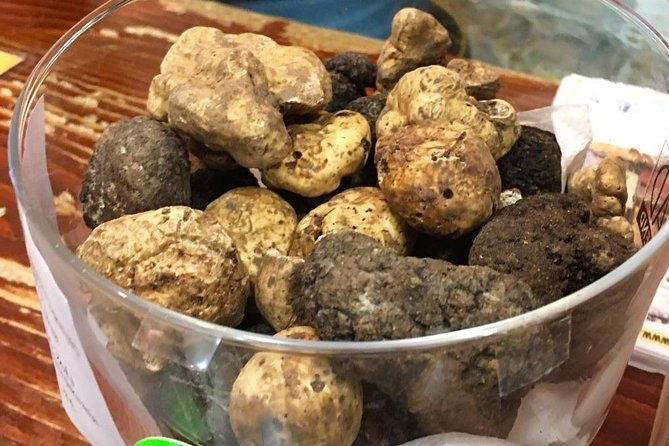
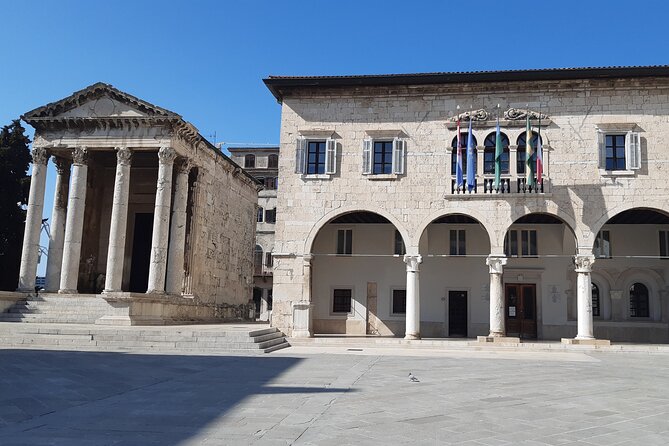
The next major pause comes at the Roman Forum, where you see the Temple of Augustus and the city hall built in 1396. The stop lasts about 15 minutes and is explained from outside.
The Temple of Augustus dates from the first century AD, making it one of the clearest reminders that ancient Pula was not limited to the amphitheater. The nearby city hall adds another layer, showing how the same civic center continued to matter long after Roman rule ended.
This is one of the places where a guide adds real value. Without context, you may see a temple and a later public building. With an explanation, the Forum becomes a record of how Pula’s civic life changed over time.
There is no listed included admission for the temple or city hall. The focus is on the setting, exterior details, and story rather than an interior visit.
The Punishment of Dirce mosaic, a small but special stop
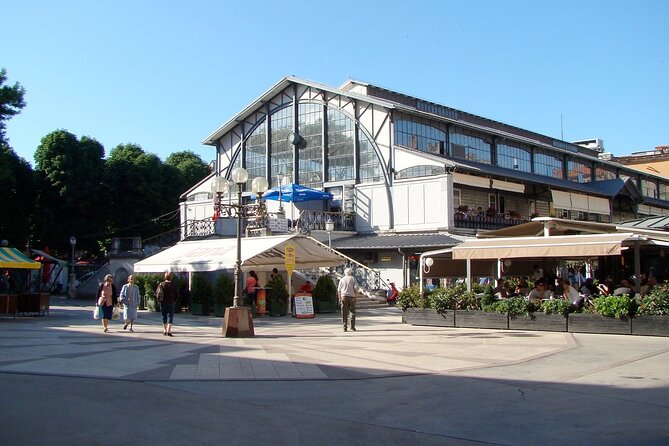
The floor mosaic known as The Punishment of Dirce is one of the more unusual stops on the route. Dating from the second century AD, it offers a close look at Roman domestic art rather than monumental public architecture.
The visit lasts about 10 minutes, and admission is free. This is a compact stop, but it adds variety to the tour. After the enormous Arena and the open Forum, you are looking at a smaller piece of ancient life preserved in the city.
I especially like the inclusion of this mosaic because it keeps the tour from becoming a parade of famous landmarks only. You get a sense that Pula’s past survives in unexpected corners, not just in the buildings that appear on postcards.
Roman arches at Sergi and the Gates of Hercules
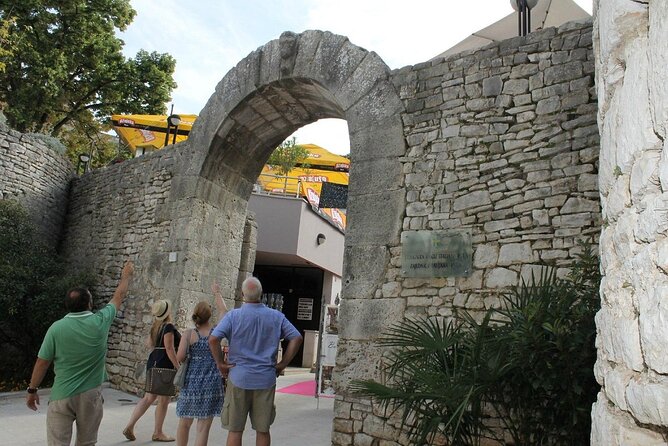
The Arco dei Sergi, also called the Arch of the Sergii, dates to the first century BC. You walk beneath and around it while the guide explains its decorations and inscriptions.
The stop lasts about 10 minutes. The arch is best appreciated up close, where carved details and lettering are easier to notice. The guide’s comments help you understand why this is more than an attractive gateway.
Later, the tour reaches the Gate of Hercules, another Roman city gate from the first century BC. This stop is only about five minutes, so expect a quick explanation and a look around rather than a long pause.
The short timing is sensible. These gates are important pieces of the old city, but they do not require the same amount of time as the Arena. Still, if you enjoy architecture and inscriptions, you may wish the schedule allowed more time for photographs.
Pula Market and the everyday city
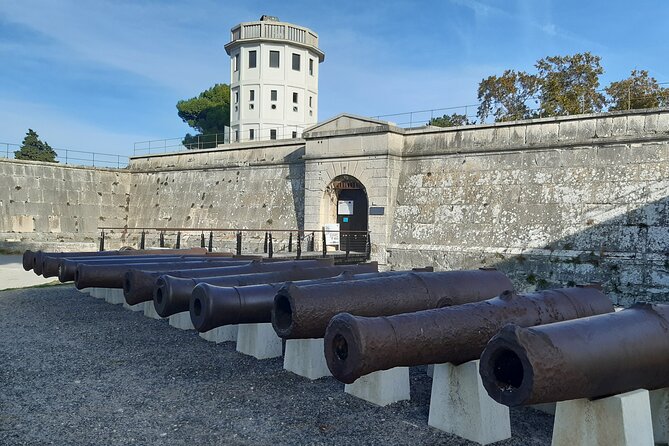
The Gradska Trznica Pula, or city market, occupies a building from 1903. The tour walks around and through the market, with an explanation of the building and its role. If open, you also visit the fish market.
This is one of the route’s most useful stops for anyone who wants more than ancient monuments. A market shows how the city functions today. It gives you a chance to see the everyday side of Pula, with local food and a setting used by residents rather than designed mainly for sightseeing.
The market stop is planned for about 15 minutes. Because the fish market visit depends on opening conditions, it is not guaranteed. Even so, the building itself adds a different period to the tour and offers a break from the exposed stone streets.
The guide’s local recommendations are another benefit here. Sinisa gave useful advice about olive oil and local cuisine, so this is a good moment to ask what to eat or buy after the walk. The suggestions can help turn a short tour into a better rest of the day.
Twin Gates, the final Roman marker
The final stop is the Twin Gates of Pula on Carrarina Street. These gates date to the second century AD and are among the remaining Roman city entrances.
The stop lasts about five minutes. Like the Gate of Hercules, it is brief, but it rounds out the story of Pula as a walled Roman town. The tour ends here rather than returning to the Arena, so take note of the finish point when planning your next activity.
Ending at the Twin Gates also places you near the old town’s other sights. You can continue exploring on your own, find food, or make your way to public transportation. The route is near public transit, which makes the start and finish reasonably practical.
What the two-hour schedule really feels like
The published times add up to roughly two hours, but the walking between stops is part of the experience. You are not spending two full hours inside monuments. Instead, the tour combines short explanations, exterior views, a possible cathedral interior, and the optional Arena visit.
That format suits you if you want orientation and context. It is less suitable if you prefer to study each site at length. The Arena receives about 30 minutes, while several gates receive only five to ten minutes.
The private group helps the schedule feel less rigid. Your guide can explain what interests you and adjust the pace within reason. Still, you should not expect to cover every stop slowly, especially if your group is large or you spend time taking photos.
The tour is offered in English. Confirmation is sent within 48 hours of booking, subject to availability. The listed operating window runs daily from noon to 2 p.m., so the timing is fixed rather than offered throughout the day.
Heat, hills, and what to wear
Pula’s summer heat can make a short city walk feel longer. One group found the day extremely hot but appreciated stopping in the shade. That is a useful warning, not a minor footnote.
Wear comfortable walking shoes and bring water. A hat or other sun protection will make the outdoor sections easier. The route includes a few hills, especially around the fortress area, but it is intended for people with moderate physical fitness rather than serious hikers.
The private arrangement is helpful if someone in your group needs a slower pace. You can discuss the speed directly with the guide instead of being tied to a large group’s schedule.
Price, group size, and overall value
The price is $145.50 per group of up to 15 people. That makes the value depend heavily on how many people are in your party. For two people, it is a fairly costly two-hour walk. For a family or group of friends, the per-person price drops quickly.
The fee includes a licensed guide but not the Arena entrance. At €10 per person, entering the amphitheater adds a separate cost. You should also remember that the other listed stops are mainly exterior visits, with free admission noted for the cathedral, mosaic, arch, market, and gates.
I see the strongest value in the local interpretation and flexibility. If you only want a list of monuments, a self-guided walk costs less. If you want someone to connect Roman Pula, Christian Pula, Venetian Pula, and modern daily life in clear English, the private guide earns more of the price.
The tour has a five-out-of-five rating from 10 reviews, with 100 percent recommending it. That is a small sample, so I would not treat it as final proof, but the praise is consistent: clear explanations, enthusiasm, good English, careful pacing, and helpful food recommendations.
Who should book this Pula walking tour?
This tour fits you best if:
- You have only a few hours in Pula.
- You want a private guide rather than a large group.
- You enjoy history but also want local food advice.
- You prefer a planned route that covers the main old-town sights.
- You are comfortable walking a couple of miles in possible heat.
- You are traveling with family or friends who can share the group price.
It may not suit you if you want a long interior visit at the Arena, extensive time at every monument, or a tour that avoids hills and sun. You should also think twice about booking if you need a fully accessible route, since the experience requires moderate physical fitness and includes some hills.
Cancellation is free if you cancel at least 24 hours before the local start time. Changes or cancellations inside that window are not accepted for a refund.
Should you book it?
Book this tour if you want a fast, personal introduction to Pula with a guide who can connect the major sights and point you toward local food. Sinisa’s friendly style, strong English, humor, and attention to walking pace add practical value, especially for first-time visitors.
If you are a couple on a tight budget, the price may feel high for two hours. If you are a family or small group, it becomes much easier to justify. I would also decide about the Arena entrance before starting, since that choice affects how much time you spend at Pula’s signature monument.
FAQ
How long is the Pula private walking tour?
The tour lasts approximately two hours.
How much does the tour cost?
The listed price is $145.50 per group, with up to 15 people included.
Is the tour private?
Yes. Only your group participates, and the maximum group size is 15 people.
Is the guide licensed?
Yes. A licensed guide is included.
Is the tour offered in English?
Yes. The experience is offered in English.
Is admission to Pula Arena included?
No. Entry to the amphitheater costs €10 per person and is paid separately.
Can I visit the Arena from inside?
Yes. If you want to enter, the guide can purchase the tickets at the entrance without waiting. You can also choose an exterior explanation instead.
Where does the tour start and finish?
It starts at Pula Arena on Flavijevska Street and ends at the Twin Gates on Carrarina Street 8.
Is the walking tour physically demanding?
You should have a moderate level of physical fitness. The route involves roughly a couple of miles of walking and includes a few hills.
Just added around Pula
- From Pula: Island Stop and National Park Day Cruise★ 4.4 · 153 reviews
- Wine Tasting Experience at the organic winery in Šišan★ 3.5 · 13 reviews
- 1-Hour Private E Foil Surfing Lessons in Istria★ 5.0 · 4 reviews
- Waves & Watercolors: A Seaside Painting Workshop★ 5.0 · 21 reviews
- Transfer Pula – Poreč★ 5.0 · 5 reviews
- 3 Hours Private Wine and Sunset Tour★ 5.0 · 9 reviews
- Stop on Island & National Park Day Cruise with Lunch Drinks★ 5.0 · 10 reviews
- Transfer Pula – Rovinj★ 5.0 · 4 reviews
Walking Tours, compared.
Walking Tour of Split and Diocletian’s Palace
Read our review →
Krka Waterfalls tour with Trogir Walking tour and Krka panoramic boat cruise
Read our review →
City Walls Early Morning or Sunset Walking Tour
Read our review →Browse the lists this tour appears in