
Reviewed · WALKING TOURS
Zagreb: Small Group Walking Tour City Center and WW2 Tunnels
Zagreb reveals itself one story at a time. This 2.5-hour small-group walk links the city’s grand parks, medieval lanes, market, churches, and WWII-era Gric Tunnel with a local guide who explains not only what you are seeing, but how Zagreb works today. I like the clear route through the old town and the mix of major sights with local habits, from market life to the Croatian art of lingering over coffee.
I also like the price: at $23 per person, you get a useful first look at central Zagreb without paying museum-tour rates. The main drawback is that it is a walking tour with several uphill and uneven sections, so it is not suitable for wheelchair users. The funicular is also closed for renovation until March 2026, and the tunnel can occasionally be unavailable for an event.
In This Review
- Key points at a glance
- Why this Zagreb walk works well for first-time visitors
- Zrinjevac Park and Ban Jelačić Square
- Zagreb Cathedral and the stories behind its repairs
- Dolac Market, Zagreb’s everyday heart
- Inside Gric Tunnel
- Gradec, the Upper Town, and the city view
- Lotrščak Tower and the closed funicular
- St. Mark’s Church and the Museum of Broken Relationships
- Stone Gate, Zagreb’s oldest surviving gate
- Guides who make the difference
- Pace, group size, price, and practical value
- Who should book this tour?
- Should you book the Zagreb WWII Tunnels tour?
- FAQ
- How long is the Zagreb city center and WWII tunnels tour?
- Where does the tour begin?
- Where does the tour finish?
- Is the tour offered in English?
- Is the Gric Tunnel always open during the tour?
- Can I ride Zagreb’s funicular during this tour?
- Is Dolac Market open for every tour departure?
- Is the tour suitable for wheelchair users?
Key points at a glance
- Start at Zrinjevac Park: Meet beside the small meteorological station on the north side of the park.
- See Zagreb’s essential sights: The route includes Ban Jelačić Square, the Cathedral, Dolac Market, Gradec, Lotrščak Tower, St. Mark’s Square, and Stone Gate.
- Walk through Gric Tunnel: Allow about 20 minutes for this unusual underground passage, though access can change if an event is taking place.
- Hear local stories, not just dates: Guides such as Petra, Tom, Bernarda, and Maja are praised for connecting history with modern Zagreb life.
- Plan around the market: Dolac Market closes in the afternoon and on public holidays.
- Expect a return to the main square: The tour finishes at Trg bana Josipa Jelačića, making it easy to continue exploring on your own.
Why this Zagreb walk works well for first-time visitors
Zagreb is easy to underestimate. It has a compact center, but its story is spread across two medieval settlements, formal Austro-Hungarian streets, market lanes, religious landmarks, and an Upper Town that feels quite different from the lower city.
This tour gives you a sensible introduction in one continuous walk. You begin in Zrinjevac, one of the elegant green squares in the city center, then move toward the main square and the Cathedral before climbing toward Gradec. The route is not just a parade of façades. It explains how Zagreb formed, how its residents use public spaces, and why certain places still matter.
I would choose this tour early in a Zagreb visit, especially if you have only one day. It gives you enough orientation to return later for coffee, food, museums, or a slower look at the streets that caught your eye.
The guides are a major part of the experience. Petra is repeatedly praised for storytelling, warmth, and detailed explanations. Tom is described as fluent in English and patient with questions, while Bernarda and Maja are noted for their strong personal connection to Zagreb. Maja, in particular, brings in present-day customs, restaurant suggestions, and practical ideas for the rest of your stay.
That personal touch matters. Zagreb’s history includes medieval rule, changing occupations, war, religious traditions, and modern Croatian identity. A good guide can turn those subjects into a readable story rather than a pile of dates.
More Walking Tours in Zagreb
- Zagreb: City and WWII Tunnels Walking Tour
★ 4.9 · 845 reviews - Walking tour of Zagreb
★ 5.0 · 383 reviews - Zagreb Small Group Guided Walking Tour with WW2 Tunnels
★ 5.0 · 380 reviews
Zrinjevac Park and Ban Jelačić Square
The meeting point is Trg Nikola Šubić Zrinski 2, in Zrinjevac Park, next to the meteorological station. Look for the small display showing the temperature and barometric pressure on the north side of the park.
Zrinjevac is a calm place to begin. Its formal paths and city-center setting offer a gentle introduction before the group reaches the busier core. The guide uses the park to set up Zagreb’s development and explain how the lower city connects with the older Upper Town.
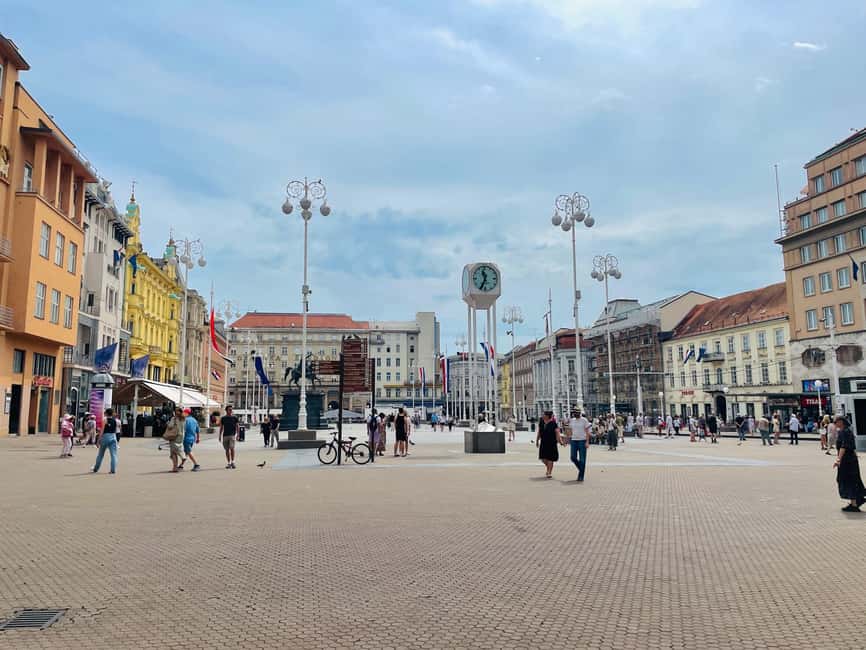
From there, you walk to Ban Josip Jelačić Square, Zagreb’s main gathering place. This is the right spot to learn how the city got its name and to understand the square’s role in daily life. It is also a useful landmark for later, since the tour returns here at the end.
The square can feel crowded at times, but that is part of its value. You are seeing Zagreb’s central meeting point rather than a preserved stage set. Keep your camera ready, but listen closely here, since the guide begins to connect the city’s past with its current social habits.
Zagreb Cathedral and the stories behind its repairs
The Cathedral of the Assumption of the Blessed Virgin Mary is one of Zagreb’s most important landmarks. The tour covers its origins, the damage and difficulties it has endured, and the work involved in its renovation.
This stop is more useful with a guide than it may first appear. A quick photograph tells you that the Cathedral is large and important. The explanation gives you a sense of why it has needed repeated attention and how its condition reflects Zagreb’s turbulent past.
The Cathedral is a photo stop and guided visit from the outside route, not a promise of an extended interior tour. If you want to see inside, ask the guide what is possible during your visit, since access can vary.
Dolac Market, Zagreb’s everyday heart
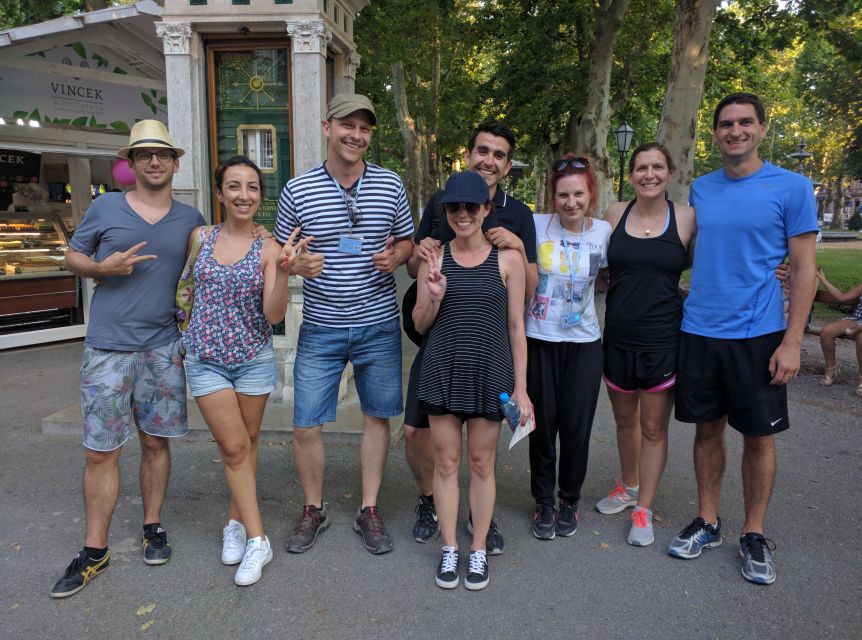
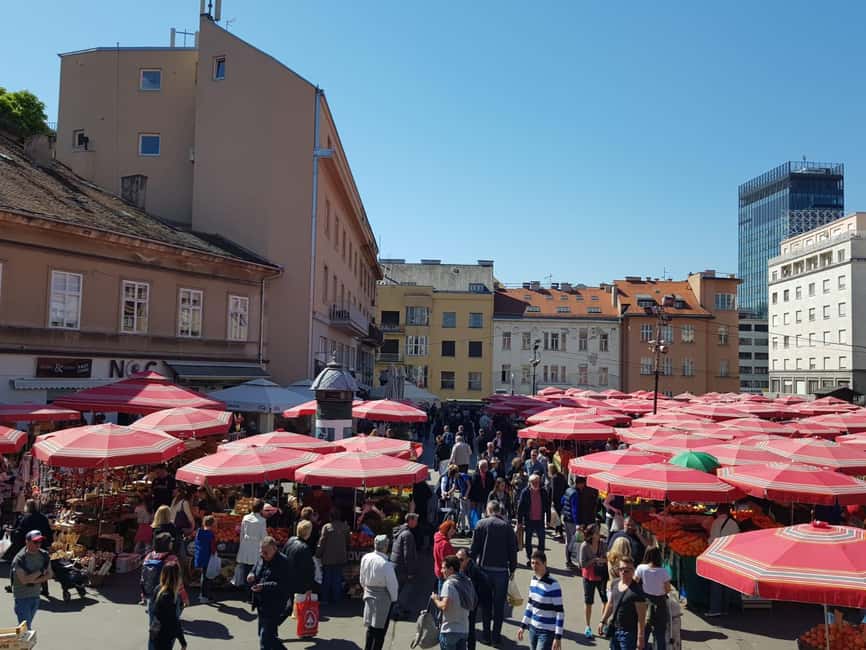
Next comes Dolac Market, often called the belly of Zagreb. The name fits. This is where the city’s daily food culture becomes visible, and the red umbrellas provide one of the most recognizable scenes in central Zagreb.
The market is especially worthwhile in the morning. It closes in the afternoon and on public holidays, so check your starting time before booking if Dolac is high on your list. When open, the market adds a welcome change of pace after the formal square and Cathedral.
Your guide also uses Dolac to explain ordinary habits and local routines. That is one of the tour’s strengths. You are not only looking at a market; you are learning how Zagreb residents shop, meet, and organize their day.
After Dolac, the route continues along Tkalčićeva Street, known for its bars and steady stream of people. The guide discusses the local philosophy of lounging and the social importance of taking time for coffee or conversation. This is a small but valuable detail. Zagreb is not a city you understand only through monuments. You also need to notice how people use its streets.
Still Zagreb, at a slower pace:
- From Zagreb: Plitvice & Rastoke Guided Day Trip with Ticket
★ 4.9 · 2,955 reviews - Zagreb: Rastoke & Plitvice Lakes Guided Tour with Ticket
★ 4.9 · 1,897 reviews - Communism & Croatian Homeland War Tour
★ 5.0 · 1,355 reviews - Best of Zagreb with the WW2 Tunnels
★ 5.0 · 973 reviews
Inside Gric Tunnel
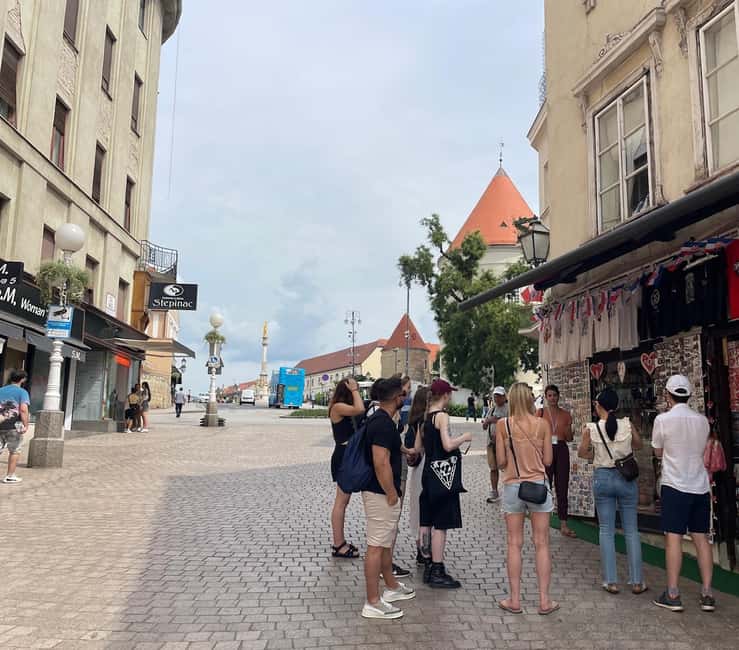
The visit to Gric Tunnel is the tour’s most unusual stop. The passage provides a break from the open-air route and adds a layer of wartime history to the walk through central Zagreb.
You spend about 20 minutes here, including a guided explanation and time for photographs. The tunnel may occasionally host an exhibition, theater performance, or another event. If that happens, it may be closed to tour visitors, so treat this stop as an important possibility rather than an absolute guarantee.
The tunnel is also a practical reason to bring a light layer, depending on the season. The supplied information does not promise a particular temperature or lighting arrangement, so comfortable shoes and sensible clothing are the safe choice.
I like that this tour includes the tunnel instead of sticking only to postcard views. It gives Zagreb a more complicated character and shows how central spaces can carry several periods of the city’s story at once.
Gradec, the Upper Town, and the city view
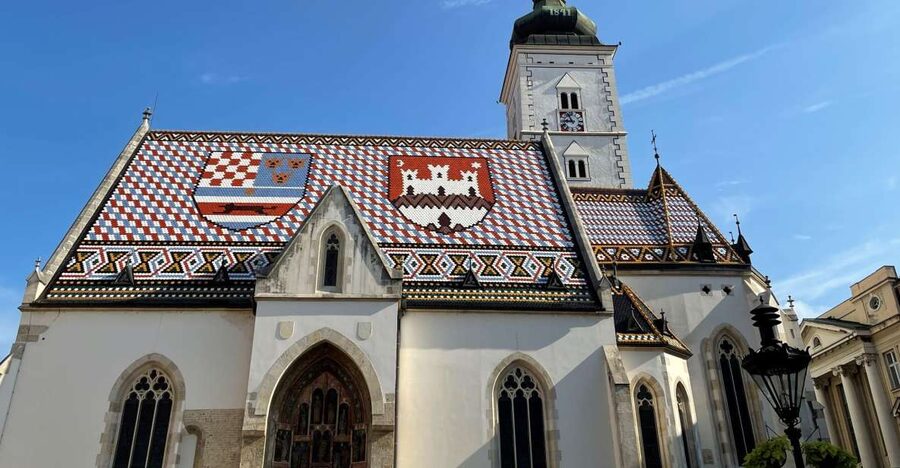
After the tunnel, you continue toward Gradec, one of the two medieval settlements that eventually formed Zagreb. The walk begins to feel different here. Streets become more historic in character, and the route rises toward the Upper Town.
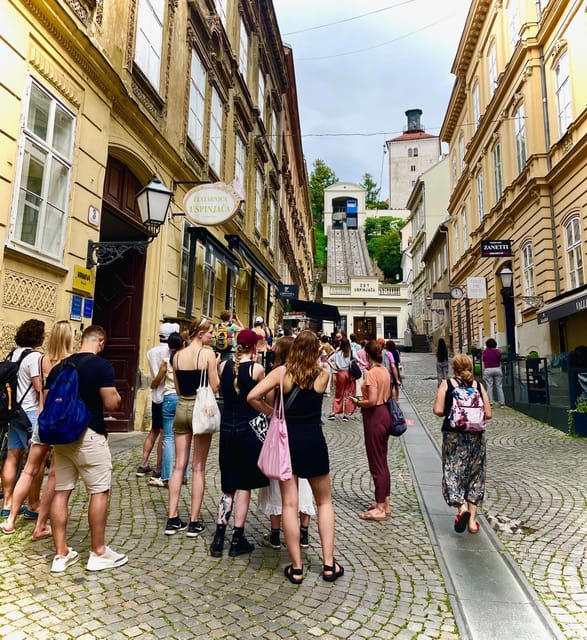
The Strossmayer Promenade is one of the best points for views across Zagreb’s rooftops. This is a short scenic stretch, but it provides a welcome pause. You can look back over the lower city and better understand how Zagreb’s separate districts fit together.
The climb and changes in pavement are worth keeping in mind. The tour is not suitable for wheelchair users, and anyone with mobility concerns should consider the uphill route before booking. Wear walking shoes, particularly if the ground is wet.
Lotrščak Tower and the closed funicular
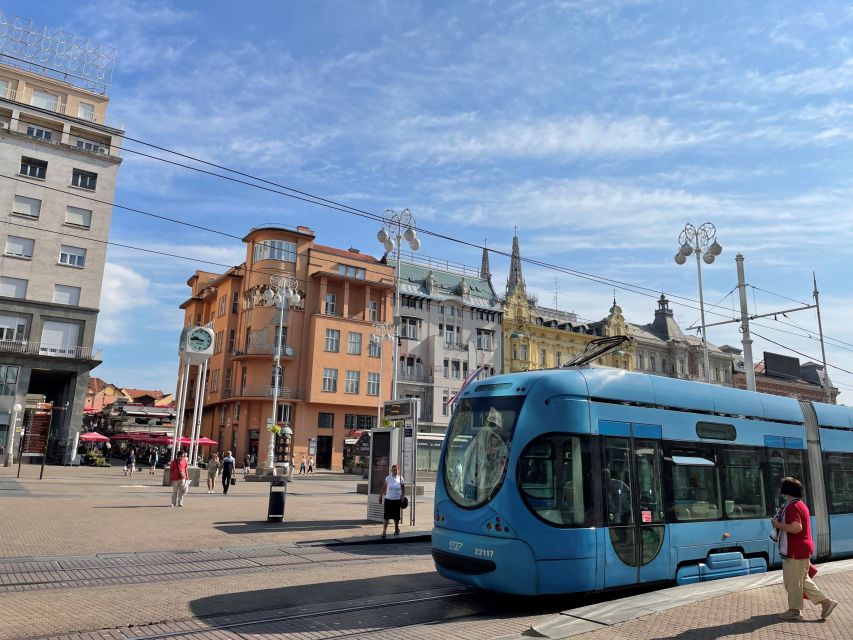
The walk brings you to Lotrščak Tower, another key landmark in the Upper Town. The guide spends about 20 minutes on this part of the route, with time for explanation and photographs.
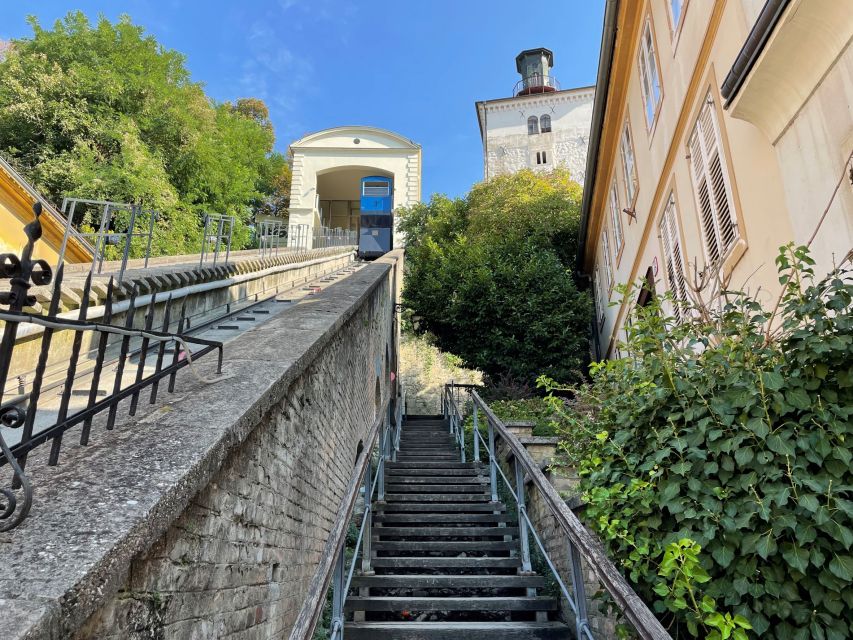
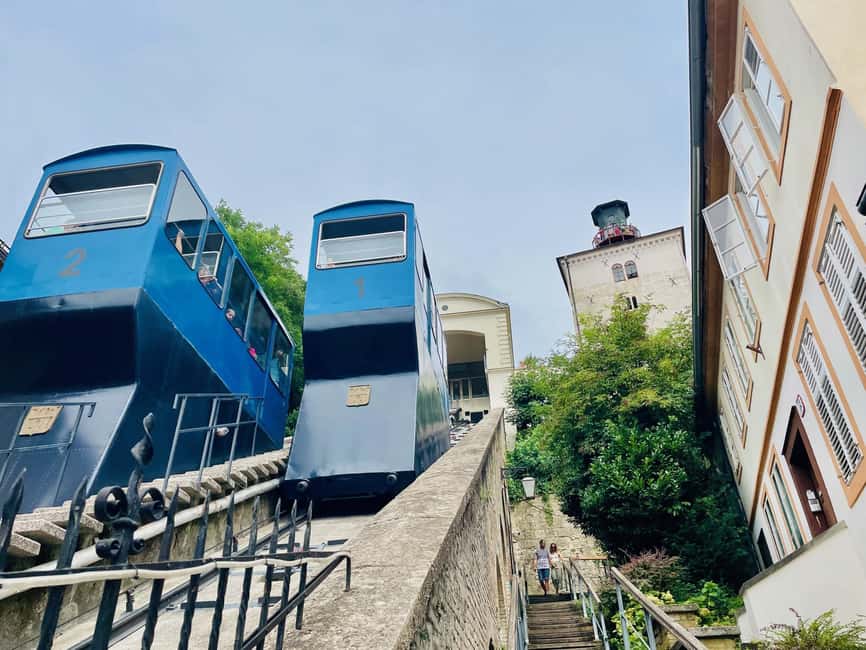
The funicular is close by and has operated for more than 135 years, making it the oldest form of public transportation in Zagreb. Under normal conditions, it is one of the city’s charming little attractions. However, the funicular is closed for renovation until March 2026.
That means you should not book this tour expecting a funicular ride at present. The route can still show you the area and explain its place in city life, but the transport experience itself is unavailable during the closure.
One review described the funicular as a quick way to see important sights, which is a fair description when it is running. It is famously short, so even after reopening it will be more of a charming city detail than a major transportation adventure.
St. Mark’s Church and the Museum of Broken Relationships
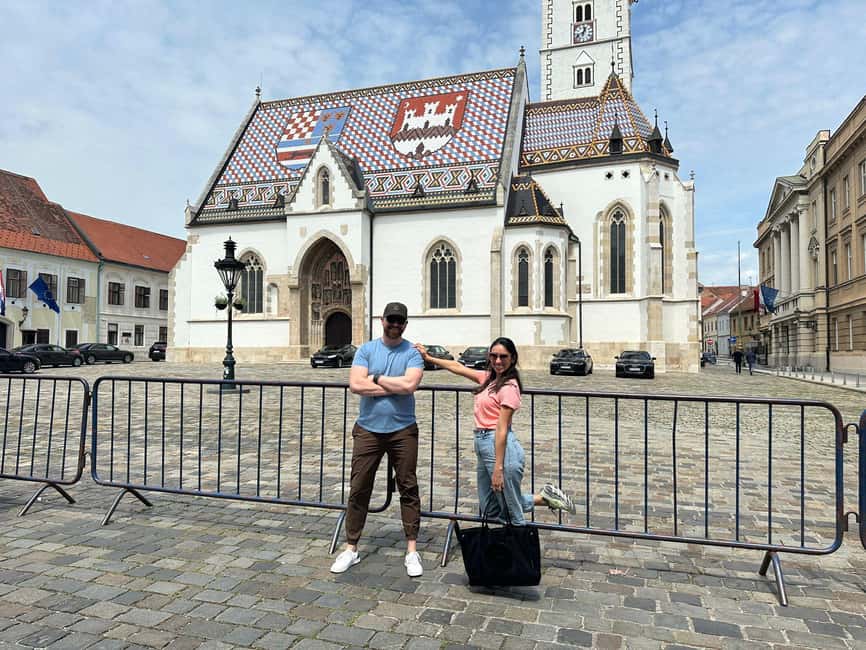
At St. Mark’s Square, you see one of Zagreb’s most photographed scenes: St. Mark’s Church with its colorful tiled roof. The roof is so recognizable that it appears on the postcard most often sent from Zagreb.
The guide explains the church and the Upper Town around it. This is a good place to pay attention to the relationship between architecture and Croatian identity, rather than treating the roof as just a pretty picture.
The route also passes the Museum of Broken Relationships. It is a pass-by stop, with about 10 minutes listed for the area, not a museum admission. If the subject interests you, save the museum for another visit because this walking tour does not include time for a full interior exploration.
That is a useful distinction. The tour covers a lot of ground in 2.5 hours, but it cannot provide extended visits inside every attraction. Think of it as a city orientation with selected stops, not a museum package.
Stone Gate, Zagreb’s oldest surviving gate
You leave Gradec through the Stone Gate, the only surviving gate from the old city walls. Inside is a small chapel with a miraculous image of Our Lady, the patron saint of Zagreb.
This stop brings together architecture, faith, and local tradition in a compact space. The gate is not grand in scale, but it carries unusual emotional weight. The guide explains its role in the old fortifications and the meaning of the chapel within.
The walk also includes stories about witchcraft and lesser-known corners of the city. These tales add a lighter, more human side to the historical material. Petra is particularly praised for mixing anecdotes, history, architecture, and humor without making the tour feel like a lecture.
Guides who make the difference
The strongest part of this experience is the guiding. The advertised language is English, and the guides are praised for clear communication and thoughtful answers.
Petra receives especially strong praise for her storytelling and ability to explain small details. Tom is noted for his patience and fluent English, including during a rainy walk. Bernarda is praised for discussing Zagreb’s history, occupations, and even personal family connections to wartime experiences. Maja brings a lifetime of local familiarity and combines historical facts with present-day advice.
The quality of a walking tour can vary with the person leading it. Here, the repeated praise for several guides suggests that the experience is not built around only one personality. Still, your exact guide will shape the tone, pace, and amount of personal detail.
The guides also offer restaurant suggestions. One recommendation specifically mentioned Ficlek and Stari, while Vinodol was praised for Croatian food. Treat these as starting points, not guarantees, and ask your guide for current advice during the walk.
Pace, group size, price, and practical value
At $23 per person, this is good value if you want a broad introduction to Zagreb. You receive a licensed local guide and a walking tour covering most of the central sights, plus the WWII tunnel. Food, drinks, museum admission, and other personal expenses are not included.
The 2.5-hour duration is long enough to cover the city’s main story without taking up an entire day. The route is also efficient for a first visit because it finishes back at the main square, where you can continue to the market, find lunch, visit a museum, or return to a favorite street.
The small-group format is another advantage. It gives you a better chance to ask questions and hear the guide, especially at busy stops. Several comments praise the personalized feel and the guides’ willingness to answer questions. One guide even helped late arrivals coordinate a way to join partway through, but you should still aim to arrive on time.
The tour runs in rain, so pack accordingly. Since Dolac Market is time-sensitive and the funicular is closed until March 2026, check the starting time and current conditions before booking.
Free cancellation is available up to 24 hours before the tour, and you can reserve now and pay later. Those options are useful if your Croatia plans are still shifting.
Who should book this tour?
I would recommend it to first-time visitors, short-stay visitors, and anyone who wants a readable introduction before exploring Zagreb independently. It suits people who enjoy history, architecture, local customs, and a few unusual stories in the same outing.
It is also a good choice if you are traveling alone or as a couple and want an easy way to get your bearings. The guides’ restaurant and sightseeing suggestions can help you make better use of the rest of your time.
I would hesitate if you need step-free access, dislike walking uphill, or want long interior visits at each landmark. The tour covers many sights, but most are guided stops and exterior views. Also reconsider your timing if Dolac Market is essential and your only available departure is in the afternoon or on a public holiday.
Should you book the Zagreb WWII Tunnels tour?
Book it if you want a well-priced overview of Zagreb with strong local storytelling. The route covers the city center’s key sights, adds the atmospheric Gric Tunnel, and finishes in a useful location. The guides are praised for warmth, humor, history, and modern local advice, which is exactly what makes a city walk worthwhile.
Just set the right expectations. You will walk for 2.5 hours, climb toward Gradec, pass several attractions rather than touring every interior, and miss the funicular ride until renovation ends in March 2026. For most first-time visitors, those limits are a fair trade for a compact, informative introduction to Zagreb.
FAQ
How long is the Zagreb city center and WWII tunnels tour?
The walking tour lasts 2.5 hours. Starting times vary, so check availability when booking.
Where does the tour begin?
The meeting point is Trg Nikola Šubić Zrinski 2 in Zrinjevac Park, next to the meteorological station on the north side of the park.
Where does the tour finish?
The tour ends back at Trg bana Josipa Jelačića, Zagreb’s main square.
Is the tour offered in English?
Yes. The live tour guide language is English.
Is the Gric Tunnel always open during the tour?
No. The tunnel may be closed if an exhibition, theater show, or similar event is taking place. In that case, the tunnel visit is not possible.
Can I ride Zagreb’s funicular during this tour?
Not currently. The funicular is closed for renovation until March 2026.
Is Dolac Market open for every tour departure?
No. Dolac Market is closed in the afternoon and on public holidays. Choose a morning departure if seeing the market is important to you.
Is the tour suitable for wheelchair users?
No. The activity is not suitable for wheelchair users. The route includes walking through the Upper Town and uphill sections.
Just added around Zagreb
- Drava Rafting Safari★ 4.5 · 18 reviews
- Toast to the Morning After: Zagreb Museum of Hangovers Visit★ 4.0 · 39 reviews
- From Split: Transfer to Zagreb with Stop at Plitvice Lakes★ 4.6 · 44 reviews
- Severin na Kupi: Canoeing and Kayaking on the Kupa River★ 4.6 · 22 reviews
- Rafting/Kayaking adventure river Kupa★ 4.4 · 21 reviews
- Private Walking Tour of Zagreb★ 4.9 · 5 reviews
- Jump into Zagreb: Walking Tour with local guide★ 4.8 · 3 reviews
- From Zagreb: Varazdin Baroque Town & Trakoscan Castle★ 4.9 · 38 reviews
Walking Tours, compared.
Walking Tour of Split and Diocletian’s Palace
Read our review →
Krka Waterfalls tour with Trogir Walking tour and Krka panoramic boat cruise
Read our review →
City Walls Early Morning or Sunset Walking Tour
Read our review →Browse the lists this tour appears in