
Reviewed · WALKING TOURS
Zagreb Small Group Guided Walking Tour with WW2 Tunnels
Zagreb reveals itself on foot. This 2.5-hour walk links the Croatian capital’s grand squares, market lanes, medieval Upper Town, and WWII tunnel in one tidy introduction. I especially like the small maximum of 16 people and the way local guides such as Petra, Tomislav, Tom, Maya, and Mia mix history with useful food and restaurant advice. The main drawback is practical: the funicular is closed for renovation until March 2026, and some walking uphill and on stairs replaces the included ride.
The price, about $24.20 per person, is fair for a licensed local guide and a compact tour that covers most central sights. I also like that the route ends at Ban Jelačić Square, right in the middle of Zagreb, so you can continue exploring on your own. Just keep your expectations realistic: this is an orientation walk, not a series of long interior visits, and Dolac Market is closed during afternoon tours and on public holidays.
In This Review
- Key points to know before you book
- Why this walk is a smart first look at Zagreb
- Starting among the plane trees at Zrinjevac
- Ban Jelačić Square and Zagreb’s city center
- The cathedral and Dolac Market
- Coffee culture on Tkalciceva Street
- Inside Grič Tunnel, a WWII reminder
- The funicular problem and the stairs ahead
- Lotrščak Tower and the noon cannon
- Gradec, St. Mark’s Church, and the best city views
- Stone Gate and the return to the main square
- What $24.20 gets you
- Who should book this Zagreb walk?
- Should you book it?
- FAQ
- How long does the Zagreb walking tour last?
- What is the price of the tour?
- Where does the tour start?
- Where does the tour end?
- How large is the tour group?
- Is the funicular ride included?
- Is Dolac Market visited on every tour?
- Can the Grič Tunnel be closed?
- Is the tour offered in English?
- Can I cancel for a full refund?
Key points to know before you book
- The tour covers Zagreb’s two medieval centers: You’ll move from the lower city toward Gradec in the Upper Town, with the city’s story unfolding along the way.
- The WWII-era Grič Tunnel is a memorable stop: It adds a darker, more modern layer to a route otherwise filled with churches, squares, and old stone gates.
- The group is limited to 16 people: That makes it easier to hear the guide and ask questions than on a large coach tour.
- The funicular is currently unavailable: Renovation is scheduled to continue until March 2026, so expect stairs instead of the short ride.
- No admission fees are included because the stops are viewed from public areas: The value comes from the guide’s explanations, local stories, and efficient route.
- The tour works best early in your Zagreb stay: It gives you a useful map of the center and ideas for restaurants and later visits.
Why this walk is a smart first look at Zagreb
Zagreb’s center is compact, but its story is not simple. The lower city has broad streets, formal parks, and public squares. Above it, the Upper Town feels older and more intimate, with stone lanes, churches, government buildings, and lookout points.
This tour makes that change in atmosphere easy to understand. You begin in Zrinjevac, walk through the social center of modern Zagreb, then climb toward Gradec and return to the main square. Along the way, the guide explains how the city formed, how locals use public spaces, and how daily life connects with older customs.
The walking pace is generally manageable. Several people found it comfortable and well planned, while one person felt the guide spent too long at certain stops. That is a fair warning. A walking tour depends heavily on the individual guide, and the same route can feel relaxed or rushed depending on how much time is spent on stories.
Guides have included Petra, Tomislav, Tom, Maya, Mia, and Thomas. The strongest guide experiences center on clear explanations, humor, patience, and genuine affection for Zagreb. Petra is especially praised for her enthusiasm and storytelling, while Tomislav is noted for history, restaurant suggestions, and an easy way with groups that include teenagers.
More Walking Tours in Zagreb
- Zagreb: Small Group Walking Tour City Center and WW2 Tunnels
★ 4.9 · 895 reviews - Zagreb: City and WWII Tunnels Walking Tour
★ 4.9 · 845 reviews - Walking tour of Zagreb
★ 5.0 · 383 reviews
Starting among the plane trees at Zrinjevac
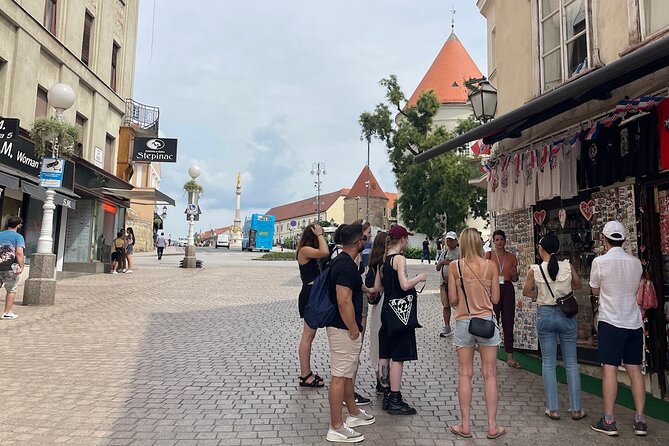
The meeting point is Zrinjevac 2, in front of the small meteorological station on the north side of Zrinjevac Park. This is a simple place to find, and the park makes a pleasant opening to the tour.
Zrinjevac is one of the lower city’s formal green spaces. Here, the guide sets out Zagreb’s beginnings, reaching back to medieval times. This opening matters because it gives you a framework for everything that follows: the relationship between the lower city and the old settlements on the hill.
The meteorological display is a small detail, but it is also a useful landmark. Arrive with enough time to locate it rather than relying on a vague meeting point in a large park.
Ban Jelačić Square and Zagreb’s city center
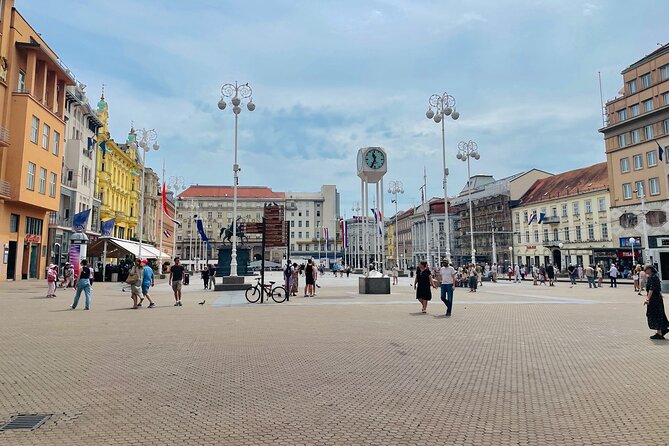
The next stop is Ban Josip Jelačić Square, the main meeting place in the city. Locals use it as a reference point, and many central streets lead from here.
Your guide explains how Zagreb got its name and why this square functions as the city’s social heart. It is a good place to pause and watch the city move around you. The stop is not about entering a museum or spending money. It is about learning how Zagreb’s public life works.
Because the tour finishes here too, you’ll recognize the square later in your stay. That is one of the quiet strengths of a good orientation walk: it turns an unfamiliar center into a set of familiar markers.
The cathedral and Dolac Market
Zagreb Cathedral is the route’s most imposing building. Its Neo-Gothic design gives it a very different feel from the smaller lanes of the Upper Town, and the guide explains its place in Zagreb’s religious and architectural story.
The stop is mainly an exterior visit, so don’t expect a long cathedral tour or guaranteed interior access. Even so, the scale and detail of the building make it an important landmark to understand early.
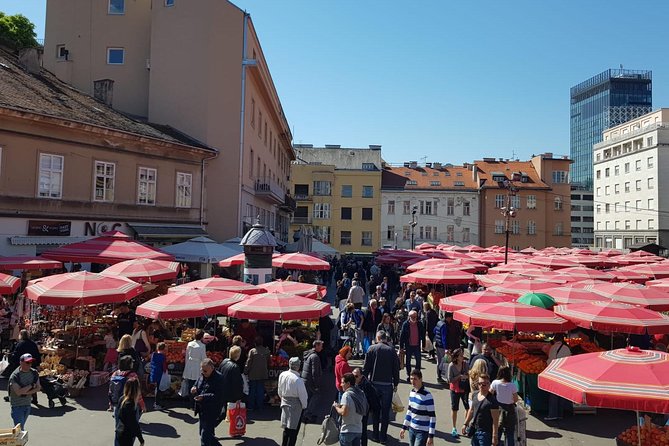
From the cathedral, you continue to Dolac Market, Croatia’s largest farmers market. During the morning, you can feel the market’s energy and learn about the Kumica statue, which honors the traditional market women associated with selling farm produce.
Dolac is not available on afternoon tours or public holidays. If the market is important to you, book a morning departure and check the operating schedule. That small adjustment can make a real difference, since the market is one of the best places on this route to connect Zagreb’s past with its food culture.
Still Zagreb, at a slower pace:
- From Zagreb: Plitvice & Rastoke Guided Day Trip with Ticket
★ 4.9 · 2,955 reviews - Zagreb: Rastoke & Plitvice Lakes Guided Tour with Ticket
★ 4.9 · 1,897 reviews - Communism & Croatian Homeland War Tour
★ 5.0 · 1,355 reviews - Best of Zagreb with the WW2 Tunnels
★ 5.0 · 973 reviews
Coffee culture on Tkalciceva Street
Tkalciceva Street is lined with bars and cafés, and the guide uses it to explain Croatia’s habit of lingering over coffee. This is more than a quick look at restaurants. It is a window into the local rhythm of conversation, social time, and public life.
The stop is short, around ten minutes, but the practical value is high. You’ll see where people go to sit, talk, and watch the street. Guides may also point out places to eat or offer restaurant suggestions for later.
Don’t confuse this stop with a food tour. You are learning about the setting and customs, not sampling a planned menu.
Inside Grič Tunnel, a WWII reminder
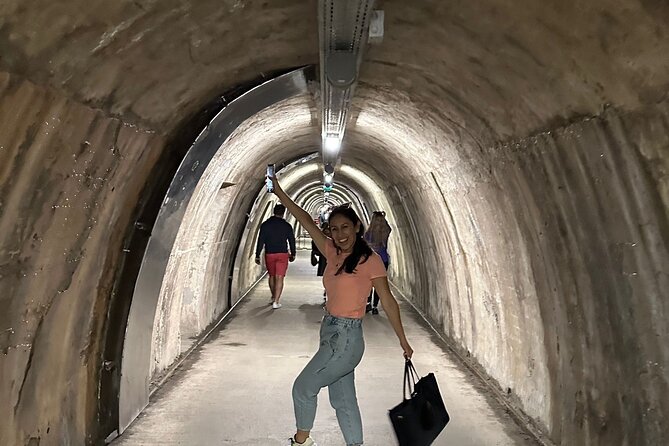
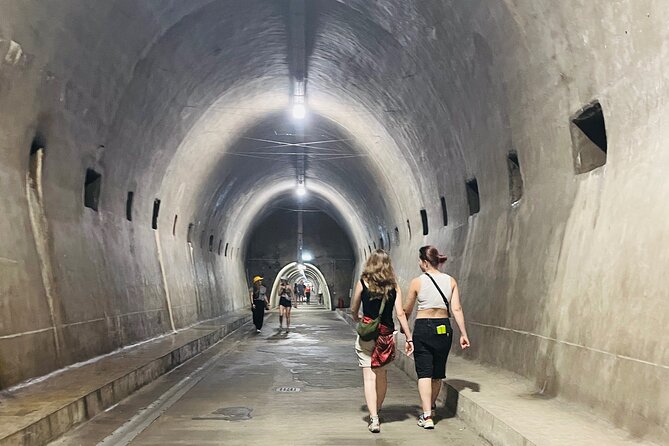
The Grič Tunnel changes the mood. Built during WWII, it runs beneath the Upper Town and gives the tour a physical link to Zagreb’s more recent past.
The tunnel is not just another old passageway. After spending time among parks, churches, and medieval gates, you step into a place shaped by wartime needs. That contrast helps you see Zagreb as a living city rather than a preserved old town.
The visit usually takes about ten minutes. It can occasionally be closed for an exhibition, theater performance, or another event. If that happens, the tunnel cannot be visited, and the route continues without it.
The tunnel may be one of the tour’s most memorable stops, especially for anyone interested in wartime history. It is also a good reason to choose this tour over a standard central-city walk.
The funicular problem and the stairs ahead
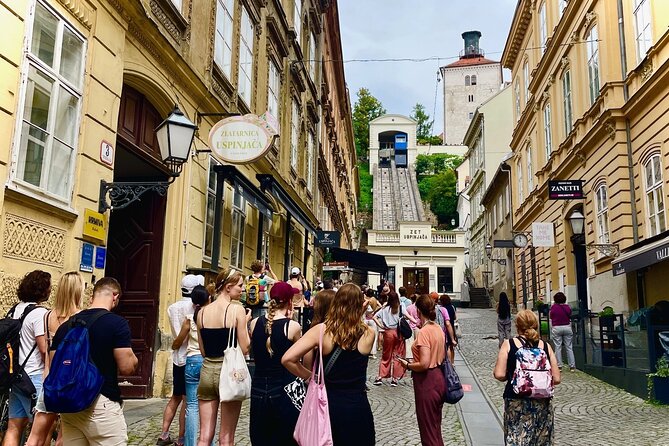
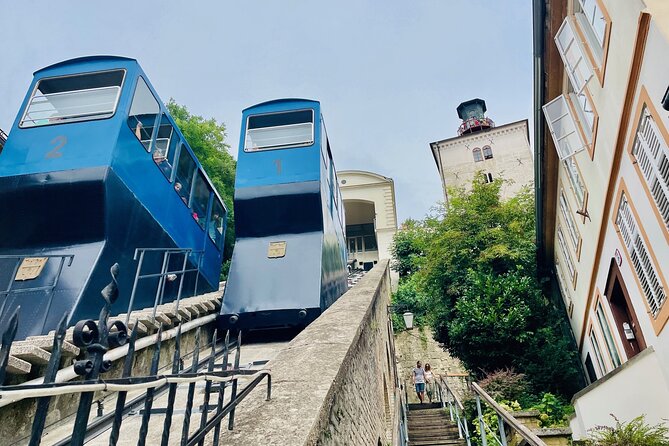
The Zagreb funicular is famous for being the shortest funicular in the world and the oldest form of public transportation in the city. The ride normally adds a bit of charm to the tour and saves your legs on the climb.
At present, however, it is closed for renovation until March 2026. That means the promised ride is not available during this period. You’ll use stairs instead, which makes comfortable shoes and a steady pace important.
The change does not ruin the route, but it does alter the experience. One person specifically noted that the stairs became more noticeable while the funicular was closed. If you have limited mobility or dislike uphill walking, ask about the current route before booking.
Lotrščak Tower and the noon cannon
At the top, Lotrščak Tower houses the Grič cannon. It fires each day at noon to mark midday.
Timing matters here. If your tour reaches the tower just before noon, you may hear the cannon fire. One guide timed the route well enough for the group to experience it, and it became a clear highlight.
The stop itself is brief, around five minutes, and the tour does not promise an extended tower visit. The appeal is the story, the cannon, and the chance to connect a daily city ritual with Zagreb’s defensive past.
If you are sensitive to loud sounds, keep the cannon in mind. It is a single, expected blast, but it is not quiet.
Gradec, St. Mark’s Church, and the best city views
The longest part of the tour takes place in the Upper Town, also called Gornji Grad or Gradec. This was one of the two medieval settlements that formed Zagreb.
Here the route slows down and gives you time to understand the old town’s shape. You walk along the Strossmayer Promenade, one of the best places on the route for views across Zagreb’s rooftops. It is a useful photo stop and a welcome change after the enclosed tunnel and narrow streets.
The guide also points out the Museum of Broken Relationships from outside. The museum is not part of the tour’s admission package, but you can return later if its unusual subject appeals to you.
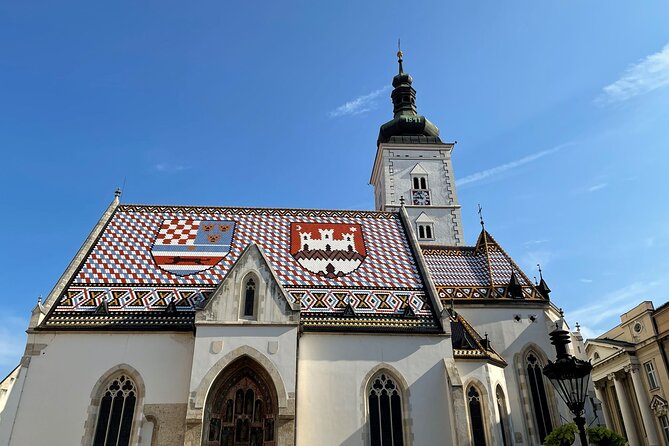
You’ll see the seats of the Croatian Parliament and Government, then reach St. Mark’s Church. Its colorful tiled roof is one of Zagreb’s most recognizable sights. The stop gives you a sense of how religion, government, and old-town life sit close together in the Upper Town.
This section is where the quality of the guide matters most. A good explanation turns a collection of attractive buildings into a story about Zagreb’s political and social center. Guides have also used this part of the route to explain local customs, Croatian food, bread, and homemade liquor used for welcoming visitors, household cleaning, or traditional remedies.
The Upper Town includes stairs and uneven walking surfaces. In rain or cold, the experience is less comfortable. Dress for the weather, since the tour requires you to remain outside for much of its length.
Stone Gate and the return to the main square
The final historic stop is the Stone Gate, known in the supplied details as Petrini Pyli. It is the only medieval city gate that survives in Zagreb.
Inside the gate is a small chapel with a picture of Our Lady, regarded as miraculous and connected with Zagreb’s identity as a Catholic city. The space is modest, so be respectful and keep your voice down if people are praying.
The tour then returns to Ban Jelačić Square. This ending is practical. You are near public transportation, central streets, cafés, and many other sights, so you can continue your day without finding your way back to a distant meeting point.
What $24.20 gets you
At about $24.20, this is a good-value introduction to Zagreb if you want context rather than just a checklist of buildings. The cost covers a licensed local guide, a small group of no more than 16 people, and 2.5 hours of guided walking.
There are no paid attraction entries built into the price. That is not a major weakness here, since the route focuses on public squares, streets, viewpoints, exteriors, the tunnel, and the funicular ride when operating.
The strongest value comes from the guide’s local interpretation. You learn how Zagreb got its name, why Dolac matters, how coffee fits into daily life, and where to eat afterward. For a first day, that information can save you time and help shape the rest of your stay.
The tour is booked an average of 28 days ahead, so planning early is sensible, especially if you want a particular date or morning market visit.
Who should book this Zagreb walk?
I would choose this tour for a first visit, a short stay, or the first full day in Zagreb. It gives you the basic map quickly and introduces the main areas without requiring a separate plan for every square and lane.
It suits adults, families with children accompanied by an adult, and older teenagers. Guides have successfully kept younger participants engaged, but the route still requires walking and stairs.
You should think twice if you want long museum visits, extensive interior access, or a slow photography walk. You may also prefer another option if you cannot manage stairs while the funicular is closed.
The tour is offered in English and uses a mobile ticket. Most people can participate, and the route is near public transportation. Free cancellation is available up to 24 hours before the start time. The experience depends on good weather, with a different date or full refund offered if poor weather causes cancellation.
Should you book it?
Yes, if you want a well-priced Zagreb orientation with history, local customs, and a WWII tunnel. The 4.9 rating from 380 reviews and 98 percent recommendation fit the tour’s main strengths: excellent local guides, a sensible route, personal stories, and a group small enough for questions.
Book a morning tour if you want Dolac Market. Confirm the funicular situation if you are booking before March 2026, and prepare for stairs. If the tunnel is closed for an event, you will miss that part, so anyone booking mainly for the tunnel should keep that possibility in mind.
For most first-time visitors, this is a useful way to get your bearings fast, understand Zagreb’s split between lower and Upper Town, and leave with a short list of places to revisit on your own.
FAQ
How long does the Zagreb walking tour last?
The tour lasts approximately 2 hours and 30 minutes.
What is the price of the tour?
The listed price is $24.20 per person.
Where does the tour start?
It starts at Zrinjevac 2 in Zagreb, in front of the meteorological station on the north side of Zrinjevac Park.
Where does the tour end?
The tour ends at Ban Jelačić Square, also called Trg bana Josipa Jelačića.
How large is the tour group?
The tour has a maximum of 16 travelers.
Is the funicular ride included?
The funicular ride is included in the tour price when the funicular is operating. It is closed for renovation until March 2026, so stairs are used instead during that period.
Is Dolac Market visited on every tour?
No. Dolac Market is closed during afternoon tours and on public holidays.
Can the Grič Tunnel be closed?
Yes. The tunnel may be closed if an exhibition, theater show, or another event is taking place there. If it is closed, the tunnel cannot be visited.
Is the tour offered in English?
Yes. The tour is offered in English, and a mobile ticket is available.
Can I cancel for a full refund?
You can cancel at least 24 hours before the experience starts for a full refund. Cancellations or changes made less than 24 hours before the start time are not refunded or accepted.
Just added around Zagreb
- Drava Rafting Safari★ 4.5 · 18 reviews
- Toast to the Morning After: Zagreb Museum of Hangovers Visit★ 4.0 · 39 reviews
- From Split: Transfer to Zagreb with Stop at Plitvice Lakes★ 4.6 · 44 reviews
- Severin na Kupi: Canoeing and Kayaking on the Kupa River★ 4.6 · 22 reviews
- Rafting/Kayaking adventure river Kupa★ 4.4 · 21 reviews
- Private Walking Tour of Zagreb★ 4.9 · 5 reviews
- Jump into Zagreb: Walking Tour with local guide★ 4.8 · 3 reviews
- From Zagreb: Varazdin Baroque Town & Trakoscan Castle★ 4.9 · 38 reviews
Walking Tours, compared.
Walking Tour of Split and Diocletian’s Palace
Read our review →

Krka Waterfalls tour with Trogir Walking tour and Krka panoramic boat cruise
Read our review →
City Walls Early Morning or Sunset Walking Tour
Read our review →Browse the lists this tour appears in