
Reviewed · WALKING TOURS
Zagreb Private City Walking Tour
Zagreb rewards curious walkers. This private city tour packs the Cathedral, Dolac Market, Upper Town, and Lotrščak Tower into about two hours, with a local guide who can adjust the conversation to your interests. I especially like the mix of major sights and everyday city life, from the food stalls at Dolac to the cafés of Tkalčićeva Street. The ride on Zagreb’s tiny funicular is another pleasing touch.
I also like the private format and flexible departure time, since your group does not have to follow a fixed public-tour schedule. Guides such as Ned, Vanka, Adam, and Ante have been praised for friendly conversation, clear English, local tips, and an easy pace. The main consideration is physical: you will walk uphill into Gradec, spend much of the tour on foot, and need a moderate fitness level.
In This Review
- Key points at a glance
- Why this two-hour Zagreb tour works well
- Starting beside Zagreb Cathedral
- Dolac Market and the practical side of Zagreb
- Tkalčićeva Street and the creek beneath the nightlife
- Climbing through Bloody Bridge and the Stone Gate
- Gradec, St. Mark’s Church, and Zagreb’s political center
- Lotrščak Tower and the noon cannon
- The 66-meter funicular ride
- Flower Square and Jelačić Square
- What the guides add to the experience
- Price, pace, and who should book
- Should you book the Zagreb Private City Walking Tour?
- FAQ
- How long does the Zagreb private walking tour last?
- How much does the tour cost?
- Is this a private tour?
- What language is the tour offered in?
- Where does pickup take place?
- Does the tour include food or drinks?
- Is the funicular ride included in the route?
- Can children join the tour?
Key points at a glance
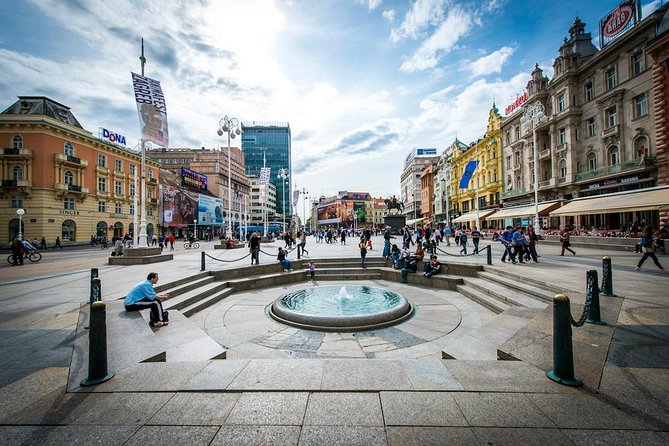
- The route links both sides of Zagreb: You see the Lower Town and Upper Town rather than only the central square.
- Dolac Market adds local flavor: Your guide can explain Croatian ingredients, homemade products, and gift ideas.
- The funicular ride is wonderfully brief: At only 66 meters, it is known as the shortest one in the world.
- Lotrščak Tower gives the best pause: You can see across Zagreb and learn about the cannon fired at noon.
- Private guiding improves the conversation: Guides can answer questions in depth instead of giving a fixed speech.
- The tour works well early in your stay: It gives you useful ideas for meals, drinks, museums, and later exploring.
Why this two-hour Zagreb tour works well
Zagreb is easy to walk, but its story is easier to grasp with a guide. The city grew from two neighboring settlements, Kaptol and Gradec, and this route shows how those places fit together. You move from the cathedral and market to the old Upper Town, then return to the broad central squares of the Lower Town.
That progression gives the tour a clear shape. You begin with religious and market life, climb through medieval streets, pause for views, and finish in the modern city center. I prefer this kind of route to a simple checklist because each stop explains something about how Zagreb developed.
At $66.23 per person, the price makes the most sense for couples, families, or small groups who want personal attention. A private tour costs more than joining a large group, but your guide can slow down for photographs, explain a point again, or answer questions about food and local customs. If two or more people share the booking, the cost can feel reasonable for a focused introduction.
The tour lasts approximately two hours. That is enough time to get your bearings without consuming a full morning, though it also means some sights are viewed from outside rather than explored at length. If you want a long museum visit or extensive time inside every church, you will need to continue on your own.
More Walking Tours in Zagreb
- Zagreb: Small Group Walking Tour City Center and WW2 Tunnels
★ 4.9 · 895 reviews - Zagreb: City and WWII Tunnels Walking Tour
★ 4.9 · 845 reviews - Walking tour of Zagreb
★ 5.0 · 383 reviews
Starting beside Zagreb Cathedral
The tour begins in the city center, with pickup offered from private accommodation. The cathedral is the first major stop and one of the clearest symbols of Zagreb. It is the city’s highest religious building and perhaps its most recognizable sight.
The visit includes a thorough look inside the cathedral. That matters because the building is not just a photo stop. Your guide can place the interior, religious role, and place in city life into a wider story. The cathedral also gives you an immediate sense of Zagreb’s Central European character.
I would schedule this tour with comfortable shoes and modest clothing suitable for entering a religious building. The provided details do not specify special clothing rules or the exact access conditions on the day, so your guide remains the best source for any last-minute instructions.
Starting here is useful for first-time visitors. You can ask your guide about the city’s layout right away, then use that explanation as you move through the rest of the route. The cathedral is also near several later stops, so little time is wasted getting from one part of the center to another.
Dolac Market and the practical side of Zagreb
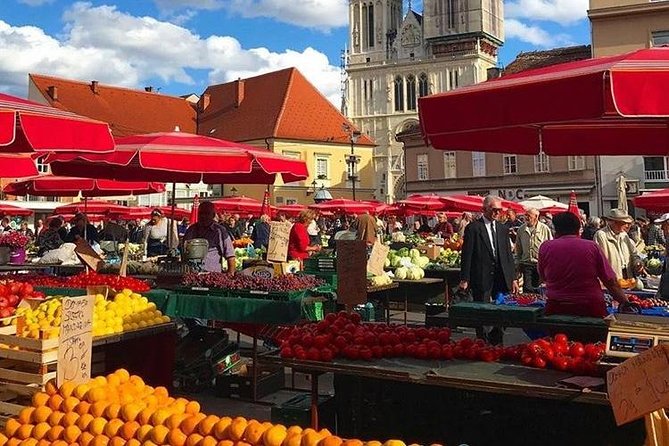
From the cathedral, you continue to Dolac Market. This open market is one of the most useful stops on the route because it connects Zagreb’s history with daily life. Fresh ingredients and homemade products are sold here, and your guide can explain local cuisine as you walk.
This is the place to ask practical questions. You might ask what Croatian food gifts travel well, which ingredients are used at home, or what to look for in a local meal. The guide can also suggest a suitable present for people back home, which is more helpful than buying the first packaged product you see.
I like that the market is not treated as a decorative stop. A short explanation about food tells you how people shop and eat, not just what a building looks like. If the market interests you, use the private format to ask for extra advice. The tour does not include food or drinks, so any purchase is your own expense.
Market conditions can vary by day and time. The tour description does not promise tastings, shopping time, or a particular selection of stalls. Think of Dolac as a guided introduction, then return later if you want to browse at length.
Tkalčićeva Street and the creek beneath the nightlife
Next comes Tkalčićeva Street, now one of the busiest streets in the center and a key nightlife area. It is lined with bars, clubs, and restaurants, making it a useful place to mark for a later meal or drink.
The more interesting part is under the pavement, in the street’s past. A creek once ran here, separating Kaptol and Gradec, the two settlements that preceded modern Zagreb. Your guide can help you see the narrow street as more than a row of restaurants. Its shape reflects an old divide between neighboring communities.
This is also a good point to ask your guide for recommendations. The information provided does not name specific restaurants, but several guides have offered local suggestions for places to eat and drink. One guide even pointed out a small spot for a very local lunch. Treat those tips as part of the tour’s value, especially if you want to avoid eating in places chosen only for their location.
Tkalčićeva can be lively, particularly around its nightlife hours. That may appeal to you if you want a sense of Zagreb after dark, but it may feel less calm than the Upper Town. The tour keeps moving, so return later if you want to sit down and enjoy the street.
Still Zagreb, at a slower pace:
- From Zagreb: Plitvice & Rastoke Guided Day Trip with Ticket
★ 4.9 · 2,955 reviews - Zagreb: Rastoke & Plitvice Lakes Guided Tour with Ticket
★ 4.9 · 1,897 reviews - Communism & Croatian Homeland War Tour
★ 5.0 · 1,355 reviews - Best of Zagreb with the WW2 Tunnels
★ 5.0 · 973 reviews
Climbing through Bloody Bridge and the Stone Gate
The route then crosses Bloody Bridge, follows Radićeva Street, and climbs toward Gradec. These names and streets give the tour its strongest old-city flavor. The walk is not a flat stroll through a modern grid. You move uphill through passages that connect the Lower Town to Zagreb’s historic upper quarter.
Bloody Bridge is tied to the former separation between Kaptol and Gradec. The supplied information does not provide a longer account of the conflicts associated with the name, so your guide will add the useful local context during the visit. This is exactly the sort of place where a private guide helps: you can ask how the two communities differed and why the route mattered.
The Stone Gate is another key stop on the climb. It is one of the best-known old entrances into Gradec and gives the walk a strong sense of arrival. You should allow time for photographs, but the tour is still only about two hours, so the stop will not become a long independent visit.
This section requires the most attention to footing and stamina. The tour notes call for moderate physical fitness, and that is worth taking seriously. You will walk uphill, use uneven old streets, and spend most of the experience standing or moving. Families can join, but children must be accompanied by an adult.
Gradec, St. Mark’s Church, and Zagreb’s political center
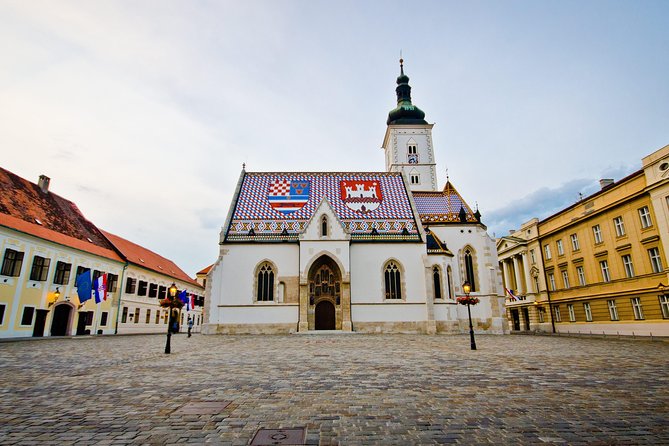
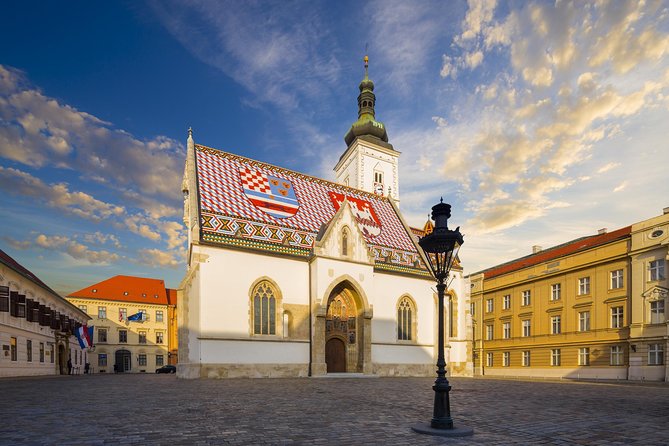
Once in the Upper Town, the route reaches Gradec’s major sights. St. Catherine’s Church brings Baroque style to the walk, while St. Mark’s Church is famous for its distinctive colorful roof. These churches help show the different architectural layers of Zagreb without requiring a long museum visit.
You also see the seats of the Croatian Parliament and Government, along with City Hall and several museums. This part of the tour explains how the old quarter remains tied to public life. It is not simply an old district preserved for photographs.
The private format is especially useful here because your questions can guide the emphasis. Ask about the roof of St. Mark’s Church, the role of the Parliament, or which museums deserve a separate visit. The guide can go deeper on a subject that catches your attention instead of rushing through a standard list.
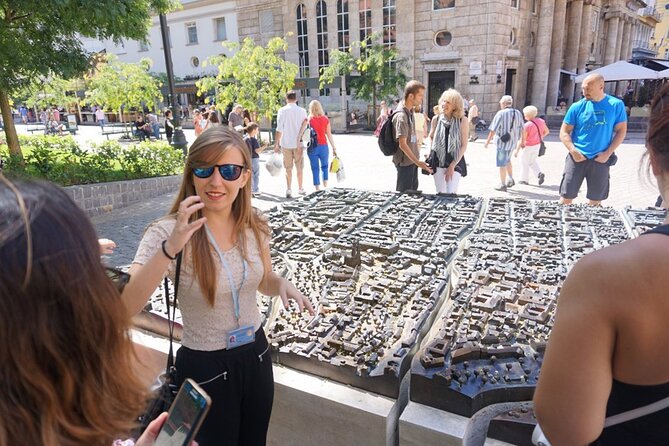
Guides have been praised for being friendly, funny, and able to move beyond a memorized script. Ned, in particular, has been described as entertaining and easy to talk with, while Vanka was praised for keeping a good pace and leaving time for pictures. Those comments point to an important benefit: the quality of a private tour often depends as much on conversation as on the route.
Lotrščak Tower and the noon cannon
Lotrščak Tower is one of the tour’s best pauses. The tower is known for the cannon fired at noon each day to mark the exact time. That small tradition gives the stop a memorable detail, especially if your timing brings you close to midday.
The tower also offers a panoramic view of Zagreb. You can look across the city, take photographs, and connect the upper streets you have just walked with the Lower Town below. I value viewpoints more when they arrive after some orientation, and this one does. By this stage, you have learned the basic shape of the city, so the view has meaning.
The tour description does not promise entry to every level of the tower or guarantee that you will hear the cannon fire. Ask your guide about the day’s timing and access. Even without a full tower visit, the area remains a useful viewpoint and a natural place to pause.
From here, you stroll along the Strossmayer Promenade. Locals favor it for romantic walks, and its position gives the route a calmer stretch before the descent. It is a pleasant contrast to Tkalčićeva Street and the formal squares below.
The 66-meter funicular ride
The descent comes by Zagreb’s funicular, which is known for being only 66 meters long. It is described as the shortest one in the world, so do not expect a long mountain railway ride. The trip is brief, but it is a fitting part of the tour because it links the Upper and Lower Towns in a way that saves your legs.
I like this transportation choice for two reasons. First, it adds a small local experience instead of making the entire route another downhill walk. Second, it gives you a physical sense of the city’s two-level layout. You leave the old upper quarter and arrive back in the central city within moments.
The funicular is a ride, not a major attraction that fills an hour. Keep your expectations in proportion. Its value is in the setting, the history, and the novelty of such a short trip.
Flower Square and Jelačić Square
The final stops are Flower Square and Jelačić Square. Flower Square is a central meeting place, while Jelačić Square is named for Ban Josip Jelačić, one of the most important figures in Croatian history.
Ending here works well because both squares are practical reference points. After the tour, you can use them to find your way around the Lower Town, return to nearby streets, or continue to a meal. Your guide finishes with more stories and curious facts, so the last minutes are not just a handoff at a random corner.
Jelačić Square also gives the tour a broad final image of Zagreb. You have moved from the cathedral, through the market and old town, and back into the city’s main public space. That makes the route easy to remember later.
What the guides add to the experience
The strongest praise centers on the guides’ manner. Ned is repeatedly described as funny, friendly, and able to answer questions without sounding tied to a script. Adam was praised for local lore, an engaging style, and pointing out a good place for a local lunch.
Vanka was noted for arriving on time, maintaining a comfortable pace, and allowing time for photos. Ante was praised for answering questions and making the tour lively. One guide also spoke Portuguese, which made conversation easier for a Portuguese-speaking participant.
Guide availability is not guaranteed, so do not book on the assumption that you will receive a particular person unless the operator confirms it. Still, these details show what to look for: an approachable guide who can explain culture, food, history, and daily life in clear English.
The tour is offered in English. The information also records a Portuguese-speaking guide, but Portuguese service is not listed as a standard feature, so confirm that directly if language matters to you.
Price, pace, and who should book
At $66.23 per person, this is a sensible choice if you value a private introduction and plan to use the advice afterward. The tour includes the private guide and all taxes, fees, and handling charges. Food, drinks, and alcoholic drinks are not included.
I would choose it for a first day in Zagreb, particularly if you want a quick orientation before exploring alone. It also suits couples, families, and small groups who prefer asking questions without strangers in the party. The flexible departure time helps you fit the tour around arrival plans or another Zagreb activity.
You should think twice if you dislike hills, old streets, or a brisk sightseeing pace. The route covers a lot in two hours, and the private setting does not remove the physical demands. You may also want a longer specialist tour if your main goal is church interiors, political history, or museums.
Pickup is offered from private accommodation, and the experience uses a mobile ticket. Confirmation is received at booking. Free cancellation is available up to 24 hours before the start time for a full refund. Changes or cancellations made inside that 24-hour window are not accepted for a refund.
Should you book the Zagreb Private City Walking Tour?
I would book this tour if you want a friendly, efficient introduction to Zagreb with room for questions. The cathedral, Dolac Market, Tkalčićeva Street, Stone Gate, Gradec, Lotrščak Tower, funicular, Flower Square, and Jelačić Square form a well-planned route.
The best reason to choose it is not simply the number of sights. It is the chance to connect Zagreb’s food, old divisions, public buildings, views, and everyday meeting places in one short walk. Book it early if your schedule is fixed, since it is often reserved well ahead of time. Skip it only if you want a slow, specialist visit or prefer exploring every stop independently.
FAQ
How long does the Zagreb private walking tour last?
The tour lasts approximately two hours.
How much does the tour cost?
The listed price is $66.23 per person.
Is this a private tour?
Yes. Only your group participates in the activity.
What language is the tour offered in?
The tour is offered in English.
Where does pickup take place?
Pickup is offered from private accommodation. The tour begins in the city center.
Does the tour include food or drinks?
No. Food and drinks are not included. Alcoholic drinks are available to purchase separately.
Is the funicular ride included in the route?
Yes. The itinerary includes a ride on Zagreb’s funicular between the Upper and Lower Towns.
Can children join the tour?
Yes, but children must be accompanied by an adult. A moderate level of physical fitness is recommended.
Just added around Zagreb
- Zagreb: VR 3D Immersive Film Experience – Voucher★ 4.6 · 9 reviews
- Zagreb: Explore with an Art Historian – Private Walking Tour★ 4.9 · 9 reviews
- Zagreb: Plitvice With Secured Tickets, Boat And Train Ride★ 4.6 · 15 reviews
- Zagreb: Private custom tour with a local guide★ 4.6 · 48 reviews
- Zagreb: Pub Crawl, 1-Hour of Unlimited Drinks, & Club Entry★ 4.1 · 86 reviews
- Zagreb: Guided City Tour with WWII Tunnels★ 4.9 · 155 reviews
- Zagreb : Must-See Attractions Walking Tour With A Guide★ 4.6 · 11 reviews
- Zagreb BIG Tour – Private Tour★ 4.8 · 48 reviews
Walking Tours, compared.
Walking Tour of Split and Diocletian’s Palace
Read our review →
Krka Waterfalls tour with Trogir Walking tour and Krka panoramic boat cruise
Read our review →
City Walls Early Morning or Sunset Walking Tour
Read our review →Browse the lists this tour appears in