
Reviewed · ZAGREB TOURS
World War II Zagreb, Croatia between communists, fascists and “ordinary” people
History gets personal here. This Zagreb walking tour looks at the years 1939 to 1948 through the people who lived under fascism, communism, occupation, fear, and pressure. I like its focus on ordinary people, not only famous leaders, and I like that the walk connects Zagreb’s newer prewar districts with the old center. The main drawback is that the published details name only one specific stop, so you may want to ask for the full route before booking.
The tour costs $34.73 per person and lasts about two to three hours. The small maximum of 12 people should make it easier to hear the guide and ask questions, while the interactive format means you will need to take part rather than simply follow along. Bring reading glasses if you need them, dress for the weather, and expect a serious subject rather than a light sightseeing stroll.
In This Review
- Key points to know before booking
- Why this Zagreb history walk is different
- Starting at Trg Žrtava Fašizma
- Mestrović Pavilion and the questions behind the tour
- From prewar Zagreb toward the historic center
- People first, famous names second
- A small group helps with a serious subject
- Is $34.73 fair value?
- Weather, walking, and what to bring
- Who will get the most from this experience?
- Booking, timing, and cancellation details
- Should you book the World War II Zagreb tour?
- FAQ
- Where does the tour start?
- Where does the tour end?
- How long does the tour last?
- How much does the tour cost?
- Is transportation included?
- Is admission to Mestrović Pavilion included?
- How large is the group?
- Does the tour operate in bad weather?
- What level of fitness is required?
- Can I cancel for a full refund?
Key points to know before booking
- The story covers 1939 to 1948, including the wartime years and the tense period that followed.
- The walk begins at Trg Žrtava Fašizma, then connects Zagreb’s modern prewar area with the historic center.
- Mestrović Pavilion is the named opening stop, where the guide introduces the central questions of the tour.
- The experience is interactive, with participation and reading involved, so it is more than a standard lecture.
- The group is limited to 12 people, a useful size for a serious discussion.
- The route ends at Studentski centar in Trešnjevka North, and transport between points is not included.
Why this Zagreb history walk is different
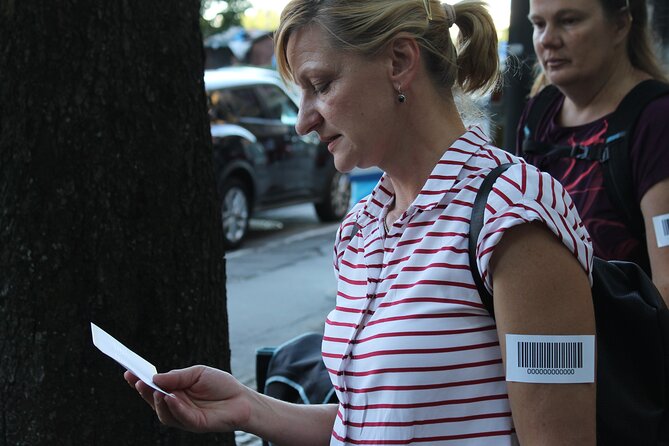
Many city tours give you dates, buildings, and a few famous names. This one is built around difficult choices. What do you do if you cannot fight? What do you do if escape is not possible? How do you judge people who lived under more than one political power?
Those questions give the tour its shape. The guide presents Zagreb during World War II as a place where life was not divided neatly into heroes and villains. Fascists, communists, resisters, collaborators, and people simply trying to protect their families all existed within the same city.
That approach suits me. It asks you to think instead of handing you an easy moral scorecard. At the same time, the subject can be emotionally heavy. If you want a cheerful overview of Zagreb’s architecture or food, choose another walk. If you want to understand how war reached into daily life, this is a more focused choice.
The period covered runs from 1939 through 1948. That wider span matters because the end of fighting did not instantly settle every political or personal conflict. The tour’s title points to the tension between communists, fascists, and people who did not fit cleanly into either camp.
A few more Zagreb trips worth comparing
- From Zagreb: Plitvice & Rastoke Guided Day Trip with Ticket
★ 4.9 · 2,955 reviews - Zagreb: Rastoke & Plitvice Lakes Guided Tour with Ticket
★ 4.9 · 1,897 reviews - Communism & Croatian Homeland War Tour
★ 5.0 · 1,355 reviews
Starting at Trg Žrtava Fašizma
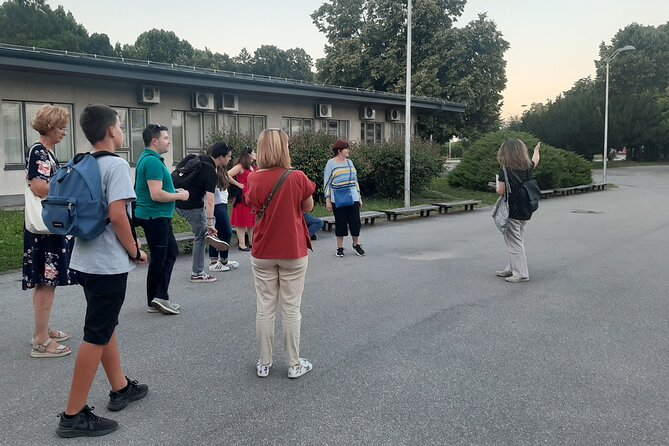
The meeting point is Trg Žrtava Fašizma, or the Square of the Victims of Fascism. This gives the walk a direct and serious opening. You are not beginning with a general introduction to Zagreb, but at a place whose name already points toward the violence and political divisions of the era.
The start is in Zagreb’s modern part, including areas built shortly before the war. That setting helps you see the city as it existed before the conflict disrupted ordinary life. Instead of treating World War II as something that happened far away, the guide places it in streets, squares, and neighborhoods people used every day.
You should arrive ready to listen and participate. The experience is described as an interactive walk, not a simple follow-the-guide outing. Bring reading glasses if you need them, since the guide specifically warns that some participation may involve reading material.
The start also gives you a useful practical advantage. Trg Žrtava Fašizma is an identifiable central meeting point, while the final location at Studentski centar is in Trešnjevka North. Since transportation to and from attractions is not included, plan your route to the meeting point and your onward journey after the walk.
Mestrović Pavilion and the questions behind the tour
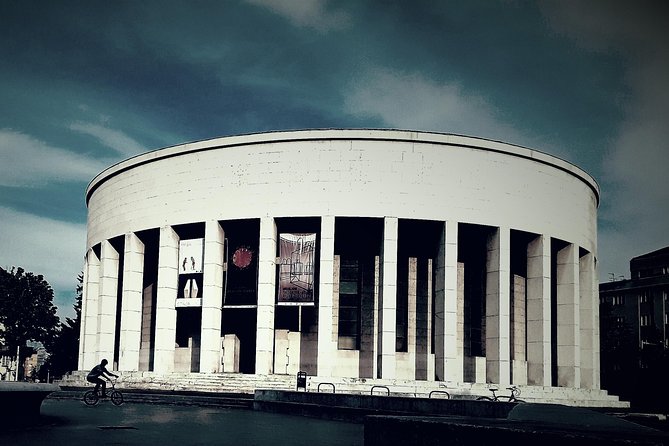
The first named stop is Mestrović Pavilion, also known as the Croatian Association of Artists. The stop lasts about 20 minutes, and admission is not included in the tour price.
The pavilion is not presented merely as a photo stop. It is where the guide begins asking you to consider how many sides a conflict can have. That is a useful way to frame Zagreb’s wartime story, since political loyalties and personal survival did not always point in the same direction.
You may be asked to think about people who could not fight and could not escape. That question brings the subject closer to everyday life. It moves the conversation away from military campaigns alone and toward fear, compromise, resistance, and the choices available to people with very little power.
The interactive method may be the tour’s strongest feature. You are expected to take part, which can make the material easier to remember. It also means the walk may feel more demanding than a standard sightseeing tour. You will not simply photograph a building, hear a few facts, and move on.
The admission note matters. The tour price is $34.73, but entrance to Mestrović Pavilion is not included. Check the current admission arrangements before you go, since the supplied information does not give a separate ticket price or confirm whether the group enters the building during the 20-minute stop.
From prewar Zagreb toward the historic center
After the opening area, the experience moves between Zagreb’s modern prewar sections and the historical center. This change in setting is important because it shows how the same political crisis affected different parts of the city.
The modern district helps establish the city as it was being built and used before the war. The historic center then brings the story closer to older public spaces and places tied to civic life. The walk is designed to connect those parts of Zagreb rather than treating them as separate sightseeing zones.
The exact names and timing of every later stop are not provided, so I would not book this expecting a fixed list of landmarks. The overview does indicate that the route includes places where residents were once assembled and taken to concentration camps. That is a grave part of the experience, and the guide’s role is to explain the relevant people and events at each stop.
You should allow the full two to three hours. One named stop takes 20 minutes, while the remaining time is used for walking, discussion, and additional locations. The route ends at Studentski centar, so this is not a loop returning to the starting square.
That point is easy to overlook. If you have a dinner reservation, train departure, or another tour, leave extra time after the stated end. You will need to make your own way onward.
Still Zagreb, at a slower pace:
- Best of Zagreb with the WW2 Tunnels
★ 5.0 · 973 reviews - Plitvice Lakes with Ticket & Rastoke Guided Tour from Zagreb
★ 5.0 · 966 reviews - Zagreb: Small Group Walking Tour City Center and WW2 Tunnels
★ 4.9 · 895 reviews - Zagreb: Skip-the-Ticket-Line Museum of Broken Relationships
★ 4.5 · 847 reviews
People first, famous names second
The tour includes historical figures and major events, but its strongest promise is a focus on individuals living through ordinary days in extraordinary conditions. That human scale can make the period easier to grasp.
A previous participant praised the guide’s ability to make history real through stories of people who tried to resist. That is the most useful clue about the guiding style. You can expect attention to personal lives and acts of resistance, rather than only a timeline of governments and armies.
The same feedback also noted that the participant had already completed two walking tours and was tired, yet still found this experience compelling. That suggests the storytelling gives the walk energy even when your feet have had enough. Still, do not confuse engaging storytelling with an easy stroll. The subject requires concentration, and the tour calls for a moderate level of physical fitness.
No guide name is provided in the available information. The experience is operated by Netragom obrt, led by Samia Zitouhni as the listed owner. You should not assume that this identifies the individual guide on every departure, so ask at booking if meeting a particular guide matters to you.
A small group helps with a serious subject
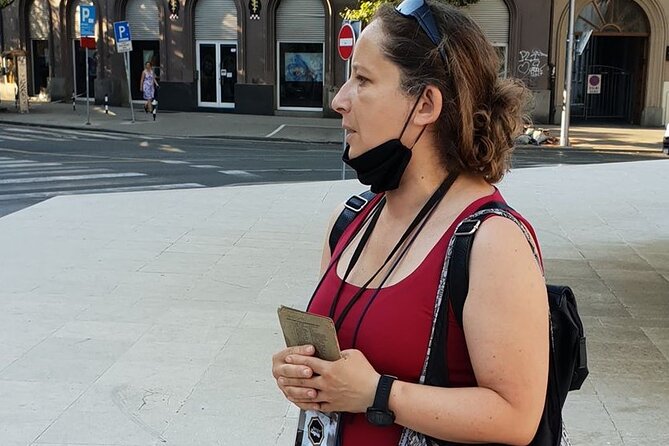
The maximum group size is 12 people. That is a sensible limit for a tour built around questions and discussion. A large crowd can make an interactive format awkward, while a smaller group gives you more room to hear the guide and respond.
I also like the fact that the walk is not described as a virtual game. The point is to consider real events and real people in real places. That may sound obvious, but it matters when the tour asks you to think about choices made under pressure.
A small group does not guarantee a private tour. You may still have different comfort levels, political views, or expectations within the group. The guide’s ability to keep the conversation respectful will matter. The available feedback gives a positive sign about the guide’s handling of the material, but there are only three ratings in total, so the five-star score is encouraging rather than a large statistical sample.
Is $34.73 fair value?
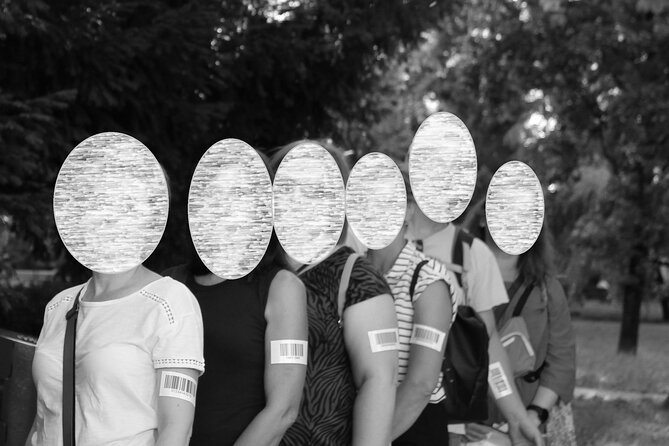
At $34.73 per person, the price is reasonable if you want a guided explanation of Zagreb’s wartime past rather than a general city walk. You are paying for a two to three hour experience, a local guide, a small group, and a route built around a specific historical subject.
The value depends on your interest. If you already know Zagreb’s World War II history well, the interactive questions and personal stories may still add something, but the price will feel less essential. If the period is unfamiliar, the guide can give you a clearer framework than reading scattered plaques or trying to assemble the story yourself.
Remember that transportation is not included, and admission to Mestrović Pavilion is not included. Those costs may be small, but they belong in your budget. The mobile ticket is convenient, since you do not need to collect a paper voucher.
The limited schedule may also affect value. The tour operates three days a week, with other days available on request. If your Zagreb visit is short, a departure that fits your schedule can be worth more than a cheaper activity you cannot attend.
Weather, walking, and what to bring
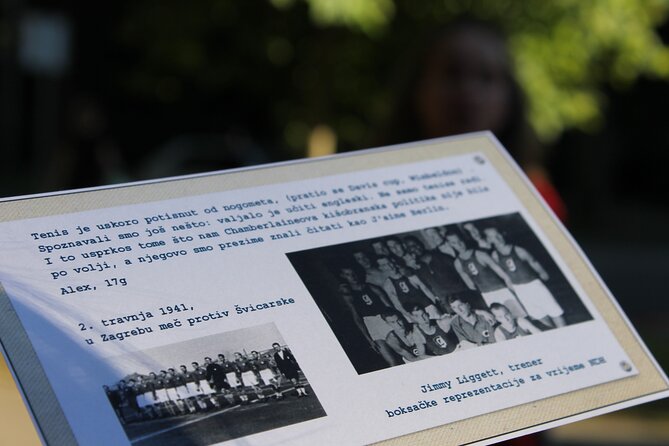
The tour operates in all weather conditions. Dress for rain, cold, heat, or wind as appropriate for your travel dates. There is no promise of indoor shelter throughout the route, and the experience is a walking tour rather than a seated presentation.
Wear practical shoes and be prepared to walk for up to three hours. The stated fitness requirement is moderate, so you do not need to be an athlete, but you should be comfortable moving between several city locations.
Bring reading glasses if you use them. This is one of the few specific preparation tips provided, and it reflects the interactive nature of the walk. You may also want a bottle of water, though that is general walking advice rather than a stated tour amenity.
The historical subject deserves practical preparation too. You may hear about residents being assembled and sent to concentration camps. If that material is likely to be upsetting, consider whether a focused wartime tour fits your mood and interests during the trip.
Who will get the most from this experience?
I would choose this tour if you enjoy social history, political history, and stories about how ordinary people respond to pressure. It should suit you especially well if you prefer a guide who asks questions instead of delivering a string of memorized facts.
It is also a good fit if you have already seen Zagreb’s main sights and want a more specific subject. The walk places the city’s modern and historic areas in the same story, giving you a different way to read streets you may otherwise pass without much thought.
You may want to skip it if your time in Zagreb is extremely limited and you only want headline attractions. The tour takes two to three hours, and its value comes from sustained attention rather than quick snapshots.
I would also think twice if you dislike audience participation. The format expects you to take part, and the opening questions are designed to involve you in the discussion. That can be rewarding, but it is not ideal for anyone seeking a silent audio-guide experience.
Booking, timing, and cancellation details
Confirmation is sent within 48 hours of booking, subject to availability. Since the tour runs three days a week, book early if your Zagreb dates are fixed. Other days may be available on request, but this is not guaranteed.
Free cancellation is available if you cancel at least 24 hours before the start time. Cancellations made less than 24 hours before the start are not refunded, and changes within that same period are not accepted. The cut-off uses Zagreb local time.
The mobile ticket is included as a feature, but transport is not. You are responsible for reaching Trg Žrtava Fašizma and arranging your journey from Studentski centar after the walk.
Should you book the World War II Zagreb tour?
Book it if you want a serious, people-centered look at Zagreb between 1939 and 1948. The strongest reasons are the small 12-person group, the interactive approach, and the guide’s reported skill at making history personal through stories of resistance and daily life.
Before booking, confirm the full route and any admission cost for Mestrović Pavilion. The published information gives a clear start, end, duration, and purpose, but not every stop along the way.
For history-minded visitors, $34.73 is a fair price for two to three hours with a local guide. For a relaxed sightseeing day, it may feel too heavy. Choose it when you want Zagreb to ask difficult questions, not simply show you pretty buildings.
FAQ
Where does the tour start?
The tour starts at Trg Žrtava Fašizma, 10000 Zagreb, Croatia.
Where does the tour end?
The tour ends at Studentski centar in Trešnjevka North, Zagreb.
How long does the tour last?
The experience lasts approximately two to three hours.
How much does the tour cost?
The listed price is $34.73 per person.
Is transportation included?
No. Transportation to and from the attractions is not included.
Is admission to Mestrović Pavilion included?
No. Admission to Mestrović Pavilion, the Croatian Association of Artists, is not included.
How large is the group?
The tour has a maximum of 12 participants.
Does the tour operate in bad weather?
Yes. It operates in all weather conditions, so you should dress appropriately.
What level of fitness is required?
A moderate level of physical fitness is recommended.
Can I cancel for a full refund?
Yes, if you cancel at least 24 hours before the experience start time. Cancellations made less than 24 hours before the start are not refunded.
Just added around Zagreb
- Zagreb: Explore with an Art Historian – Private Walking Tour★ 4.9 · 9 reviews
- Zagreb: VR 3D Immersive Film Experience – Voucher★ 4.6 · 9 reviews
- Zagreb: Plitvice With Secured Tickets, Boat And Train Ride★ 4.6 · 15 reviews
- Zagreb: Private custom tour with a local guide★ 4.6 · 48 reviews
- Zagreb: Pub Crawl, 1-Hour of Unlimited Drinks, & Club Entry★ 4.1 · 86 reviews
- Zagreb: Guided City Tour with WWII Tunnels★ 4.9 · 155 reviews
- Zagreb : Must-See Attractions Walking Tour With A Guide★ 4.6 · 11 reviews
- Zagreb BIG Tour – Private Tour★ 4.8 · 48 reviews
Zagreb Tours, compared.

Plitvice & Rastoke Guided Day Trip with Ticket
Read our review →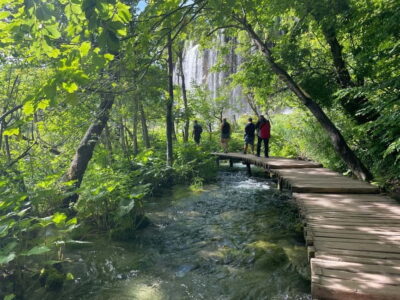
Rastoke & Plitvice Lakes Guided Tour with Ticket
Read our review →
Plitvice Lakes with Ticket & Rastoke Guided Tour from Zagreb
Read our review →
Small Group Walking Tour City Center and WW2 Tunnels
Read our review →
Skip-the-Ticket-Line Museum of Broken Relationships
Read our review →
Browse the lists this tour appears in