
Reviewed · WALKING TOURS
The Best of Zagreb Private Walking Tour
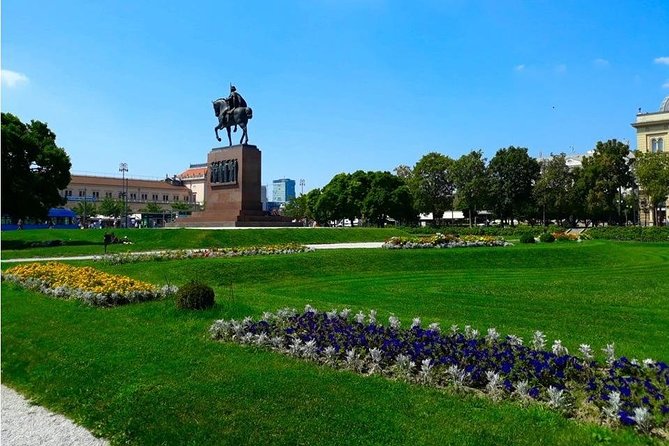
Zagreb starts with a square, then keeps unfolding. This private walk gives you a strong first look at the city, moving from Ban Jelačić Square through the market, old town, and historic streets without fighting traffic. I also like the personal format, since your guide can answer questions about Croatia, Tito, the war, food, and daily life.
The main drawback is time. Two hours goes quickly, especially with nine stops and plenty to discuss. You will see the key center, but you will not have much time for long visits inside buildings or relaxed coffee breaks. The $191.56 price is also easier to justify for a larger group than for one or two people.
In This Review
- Quick take: what makes this Zagreb walk worthwhile
- Starting at Ban Jelačić Square
- Zagreb Cathedral and the city’s spiritual center
- Dolac Market, Zagreb’s food center
- Tkalčićeva Street and an easy pause
- Stone Gate and the climb into Gradec
- St. Mark’s Square and the famous roof
- Lotrščak Tower and Zagreb’s noon cannon
- Ilica, Zagreb’s long urban spine
- Zrinjevac closes the circle
- Guides who make the difference
- Is $191.56 a fair price?
- Who should book this private walk?
- Cancellation and planning tips
- FAQ
- How long is The Best of Zagreb Private Walking Tour?
- How much does the tour cost?
- Where does the tour begin?
- Can I request pickup?
- Where does the tour end?
- Is the tour private?
- What language is offered?
- Should you book it?
Quick take: what makes this Zagreb walk worthwhile
- The route covers both Lower Town and Upper Town highlights, including Dolac Market, Stone Gate, St. Mark’s Square, and Lotrščak Tower.
- Your guide can shape the conversation, with past tours ranging from Croatian kings and local customs to Tito and the war.
- The private group format suits families and friends, with space for up to 15 people and no strangers joining you.
- The market stop adds local life, not just monuments and dates.
- You can start at Ban Jelačić Square or request central pickup, which is handy after arriving in Zagreb.
- The walk ends where it begins, making it easy to continue sightseeing on your own.
Starting at Ban Jelačić Square
The meeting point is the Manduševac Fountain on Ban Jelačić Square, Zagreb’s main public meeting place. If you are staying centrally, you can also ask for pickup at your address. That small choice matters because it saves you from crossing the city just to begin a central walking tour.
The square is a sensible starting point. It is easy to find, close to public transportation, and gives you an immediate introduction to Zagreb’s city rhythm. The Ban Josip Jelačić Monument anchors the space, while the square’s past supplies the first layer of history and local stories.
Plan to spend about 20 minutes here. That is the longest scheduled stop, and it should be. A guide can use the square to explain how Zagreb developed and point out details you might otherwise walk past. You may also hear stories about the monument, the square’s role in city life, and the historical characters connected with it.
I like starting here because you get your bearings before heading uphill. The drawback is that the square itself can feel more open and urban than the older lanes ahead. Give your guide your questions early. The best conversations on this tour appear to come when you ask about the subjects that interest you most.
More Walking Tours in Zagreb
- Zagreb: Small Group Walking Tour City Center and WW2 Tunnels
★ 4.9 · 895 reviews - Zagreb: City and WWII Tunnels Walking Tour
★ 4.9 · 845 reviews - Walking tour of Zagreb
★ 5.0 · 383 reviews
Zagreb Cathedral and the city’s spiritual center
The Cathedral of Zagreb receives about 10 minutes. It is described as the city’s most important church, with a major place in Croatian history. The short stop suggests a quick explanation and exterior viewing rather than an extended church visit.
That is useful on a first walk because the cathedral helps place Zagreb in its national setting. You are not simply looking at a grand building. You are hearing why it matters to the city and to Croatia.
Ten minutes is not enough for an unhurried look at every architectural detail. If the cathedral is a priority for you, note the location and return later on your own. The tour gives you the context and the orientation, then keeps moving.
This is a recurring feature of the route. You see many important places in a compact period, but you should not expect a long stop at each one. I would treat the tour as a well-paced introduction, not as a substitute for a full day of independent sightseeing.
Dolac Market, Zagreb’s food center
Dolac Market is one of the most useful stops because it brings the city down to ordinary business: buying ingredients, meeting friends, and thinking about lunch. It is known as the belly of Zagreb, and that nickname tells you what to expect from the visit.
You get about 10 minutes here. That is enough for your guide to explain the market’s role and point you toward Croatian food traditions, but it may feel short if you want to browse carefully or shop. If you see something you want to taste or buy, remember the location and return after the tour.
I especially like this stop for first-time visitors because food gives history a practical shape. Your guide may help connect the market to Croatian gastronomy, and a later meal will make more sense after this introduction. One guide also helped a group find a charming restaurant serving Croatian wines, so it is worth asking for dining suggestions.
Do not expect the market to function like a formal food tasting. The supplied details promise an introduction to local ingredients and food culture, not samples or a meal. Bring your appetite, but plan lunch separately.
Tkalčićeva Street and an easy pause
Tkalčićeva Street is one of Zagreb’s best-known places for coffee, drinks, and food. The tour allows around 10 minutes here, giving you a quick look at one of the city center’s social streets.
This part of the walk adds balance. After the square, cathedral, and market, you see where people go to sit, eat, and take a break. Your guide can also share unusual local-history stories tied to the street, which may be more memorable than a list of dates.
The practical point is simple: you are likely to want more than 10 minutes here. The tour is not designed as a café stop, so resist the temptation to settle in unless you are comfortable falling behind. Instead, mark the street as a good place to return later.
For families, this can be a welcome change of pace. One past tour worked well for a group with a 17-month-old child, which suggests the private setting can be more forgiving than a large group tour. Still, two hours of walking requires you to manage your own breaks.
Still Zagreb, at a slower pace:
- From Zagreb: Plitvice & Rastoke Guided Day Trip with Ticket
★ 4.9 · 2,955 reviews - Zagreb: Rastoke & Plitvice Lakes Guided Tour with Ticket
★ 4.9 · 1,897 reviews - Communism & Croatian Homeland War Tour
★ 5.0 · 1,355 reviews - Best of Zagreb with the WW2 Tunnels
★ 5.0 · 973 reviews
Stone Gate and the climb into Gradec
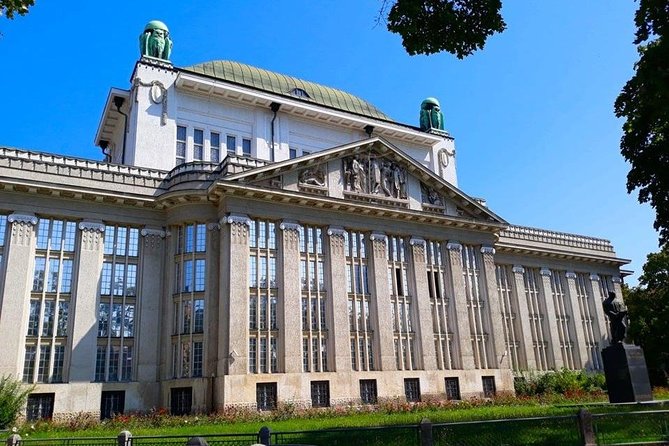
Stone Gate, or Kamenita Vrata, is described as the only surviving medieval access point to Gradec. It is also a deeply respected sacred place for local people.
The stop lasts about 10 minutes, enough for your guide to explain the gate’s role and why it carries such weight in Zagreb. This is one of the places where a guide adds real value. If you walked through without context, you might see an old passage. With an explanation, you begin to understand how the old town was entered and remembered.
The route now feels more historic and more enclosed. You are moving away from the broad central square and into the Upper Town. Wear comfortable shoes, since this is a walking route with an uphill section. The tour information does not specify steepness or the exact surface, so anyone with mobility concerns should ask the provider before booking.
St. Mark’s Square and the famous roof
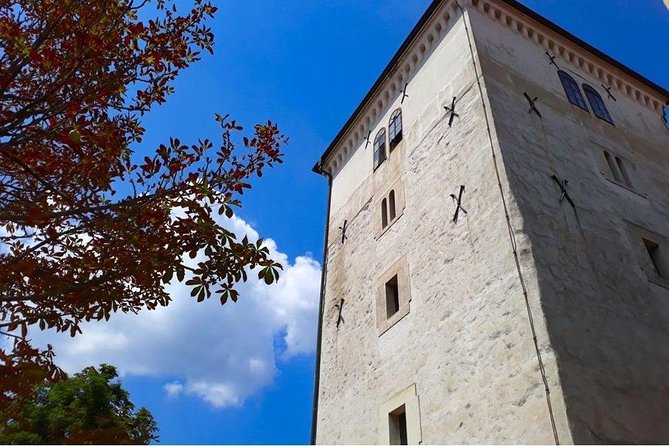
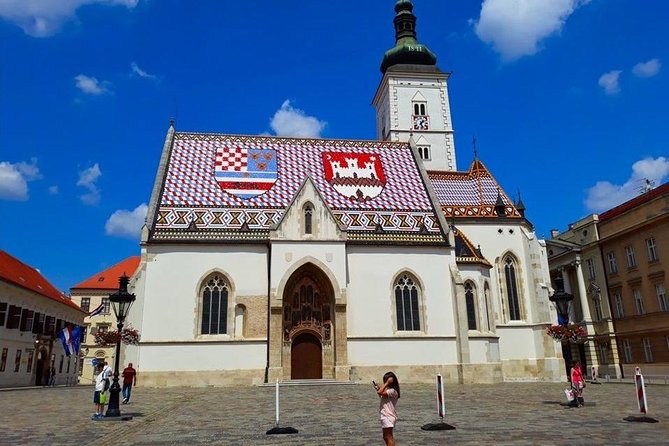
St. Mark’s Square is scheduled for about 10 minutes and is one of the most recognizable points on the walk. The colorful roof of St. Mark’s Church makes it a natural place for photographs.
The stop is especially good for a quick orientation to Zagreb’s Upper Town. Your guide can explain the setting, the church, and the importance of the square while you take pictures. The focus here appears to be the square and exterior view, so you should not assume that the tour includes a lengthy interior visit.
This is a place where the private format helps. You can ask why the church looks different from other buildings you have seen, or request a photograph without holding up a larger group. Ten minutes still passes quickly, so have your camera ready before the explanation begins.
Lotrščak Tower and Zagreb’s noon cannon
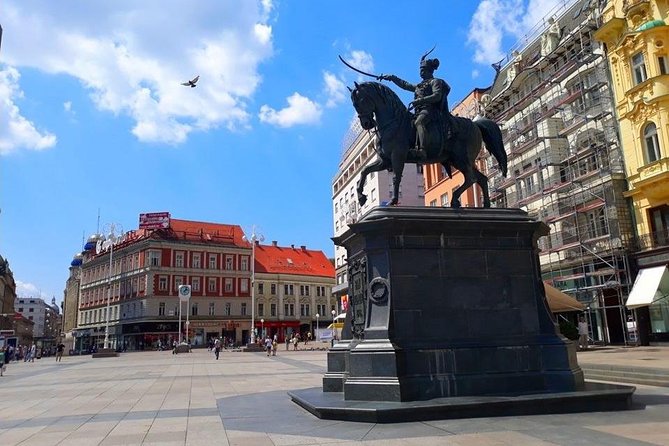
Lotrščak Tower receives another 10-minute stop. The tower is linked with Zagreb’s daily cannon report, heard at noon from the city center. The information for this tour describes the cannon as sounding every day at 12:00, so check the exact local timing with your guide if hearing it matters to you.
The suggested way to reach the tower is Zagreb’s funicular, described here as the world’s shortest public transportation. The route information does not clearly state if a funicular ride is included in the price, so treat it as a possible way to reach the tower rather than a guaranteed part of the package.
This is one of the more distinctive details on the tour. A cannon fired at noon is the kind of small city custom that gives Zagreb personality. If your tour time lines up with noon, ask your guide how the schedule works. If not, you still get the story and a look at the tower.
The 10-minute visit is brief. You should not expect a long tower visit or a broad sightseeing session from the top unless your guide confirms it. The value is the connection between the building, the sound, and the city’s daily routine.
Ilica, Zagreb’s long urban spine
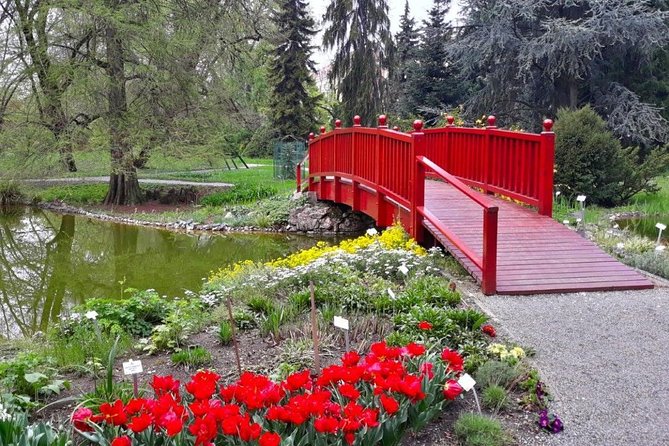
Ilica is one of Zagreb’s best-known streets, and the tour uses about 10 minutes to show you why it matters. This stop helps connect the older Upper Town with the more modern commercial center.
The street is useful as a contrast. You have just been among medieval access points, sacred sites, and government buildings. Ilica brings you back to shops, movement, and everyday city life. Your guide can point out what makes it important and add local details that are easy to miss during a quick walk.
Again, this is an introduction rather than a shopping session. You will have time to see the street, not browse every storefront. If you want to return, it is easy to do so after the tour because the walk ends back at Ban Jelačić Square.
Zrinjevac closes the circle
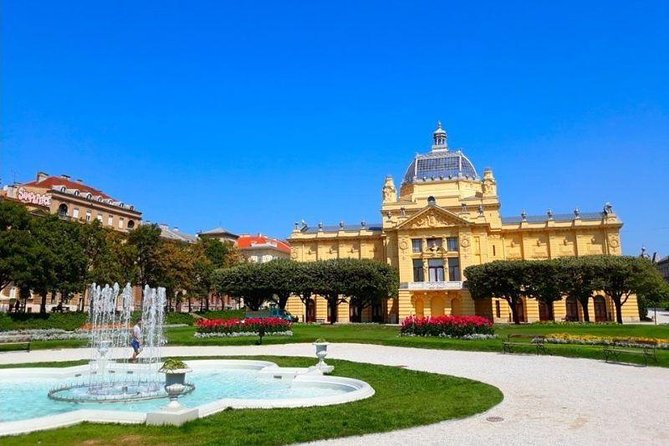
The final scheduled stop is Zrinjevac, with about 15 minutes. The phrase one square, million stories fits the tour’s approach: finish with a place that gathers public life, history, and city scenery in one setting.
This gives you a calmer ending than simply stopping at a random street corner. You can ask final questions, collect suggestions for the rest of your stay, and decide what deserves a second visit. Since the activity returns to the original meeting point, you do not need to arrange transportation from a distant endpoint.
The route covers a lot for two hours. Add the scheduled stop times and you get a rough sense of the pace: frequent explanations, short walks between places, and little room for lingering. That is good if your main goal is orientation. It is less suitable if you want to sit, shop, or enter every building.
Guides who make the difference
The guide is the central reason to choose this experience over following a map. The recorded feedback gives several names and different strengths.
Maks is praised for handling questions about Croatian history, the war, Tito, and related subjects. That matters if you want more than postcard facts. Luceja gave one family a sequential account of Croatian history, beginning with King Tomislav, while walking through the city. That style can help you connect separate monuments into one understandable story.
Ivan is described as entertaining and useful with practical tips for a stay in Zagreb. Denjan is praised for clear, precise explanations and an interesting account of the city. The guides do not seem locked into one narrow script. You can ask for history, local customs, food, or advice for the rest of your visit.
The provider offers the tour in English. Some of the available feedback also came from German- and Spanish-speaking customers, but the stated tour language is English, so do not assume another language unless you arrange it first.
Is $191.56 a fair price?
The cost is $191.56 per group of up to 15 people. That makes the math much better for a family or group of friends. Split among 10 people, it is about $19 per person. For two people, it is close to $96 per person, which is a much heavier price for a two-hour walk.
The private format is the main value. You are paying for your own guide, a flexible conversation, and a route that does not need to accommodate strangers. A large group can ask questions without worrying about holding up other people, although the short duration still limits how much the guide can cover.
Admission is listed as free at each stop. That means the price is for the guided experience rather than a package of museum or monument tickets. The tour does not list a meal, tastings, or a guaranteed funicular ticket, so budget separately for those.
I would call it good value for a group arriving in Zagreb for the first time, especially if you want a clear orientation before exploring alone. For a couple on a tight budget, a self-guided walk may make more financial sense.
Who should book this private walk?
I would choose this tour if you have only a short time in Zagreb and want the essential center explained by a local guide. It also suits families, since the private group can move at its own pace and one past booking included a very young child.
It is a good match for people who enjoy asking questions. The most praised part of the experience is not a single monument. It is the combination of clear history, local stories, practical suggestions, and the chance to discuss topics such as Croatia’s modern past.
You should think twice if you prefer long museum visits, unhurried photography, or a food-focused tour. The nine-stop route is ambitious for two hours. You will cover ground, but you will sample each place rather than settle into it.
The walk is offered in English, mobile tickets are available, service animals are allowed, and most people can participate. It is near public transportation, and centrally located pickup can be requested. If you have specific mobility needs, ask before booking because the route includes Zagreb’s Upper Town and the available details do not spell out the walking surfaces or inclines.
Cancellation and planning tips
You receive confirmation at booking, and free cancellation is available until 24 hours before the start time. Cancel later than that and the amount paid is not refunded. Changes made within 24 hours are not accepted, with cut-off times based on Zagreb’s local time.
Because the activity is booked an average of 68 days ahead, planning early is sensible during popular travel periods. For the smoothest start, give the provider your central address if you want pickup, or meet at the Manduševac Fountain on Ban Jelačić Square.
I would also arrive ready to walk, keep your camera accessible, and save your questions for the guide. Ask about restaurants, Croatian wine, the city’s modern history, or places to return after the tour. Those questions are where a private walk can become much more useful than a standard checklist.
FAQ
How long is The Best of Zagreb Private Walking Tour?
The tour lasts approximately two hours.
How much does the tour cost?
The price is $191.56 per group, with up to 15 people included.
Where does the tour begin?
It begins at the Manduševac Fountain on Ban Josip Jelačić Square in Zagreb.
Can I request pickup?
Yes. Pickup can be arranged if your address is located centrally. You can also meet the guide at the fountain on Ban Jelačić Square.
Where does the tour end?
The activity ends back at the original meeting point.
Is the tour private?
Yes. Only your group participates, with a maximum group size of 15 people.
What language is offered?
The tour is offered in English.
Should you book it?
Book this walk if you want a fast, personal introduction to Zagreb and plan to keep exploring after the guide leaves. The route covers the city’s main meeting square, cathedral, market, old town gates, St. Mark’s Square, Lotrščak Tower, Ilica, and Zrinjevac. The strongest reason to choose it is the guide’s ability to connect those places with Croatian history and practical advice.
I would especially recommend it for a group that can share the cost. Solo visitors and couples may find the price high for two hours, while a family or group of friends gets much better value. Go in expecting orientation, stories, and useful suggestions, not extended monument visits or a full food experience. That is the honest bargain here: a brisk walk that helps Zagreb make sense quickly.
Just added around Zagreb
- Zagreb: VR 3D Immersive Film Experience – Voucher★ 4.6 · 9 reviews
- Zagreb: Explore with an Art Historian – Private Walking Tour★ 4.9 · 9 reviews
- Zagreb: Plitvice With Secured Tickets, Boat And Train Ride★ 4.6 · 15 reviews
- Zagreb: Private custom tour with a local guide★ 4.6 · 48 reviews
- Zagreb: Pub Crawl, 1-Hour of Unlimited Drinks, & Club Entry★ 4.1 · 86 reviews
- Zagreb: Guided City Tour with WWII Tunnels★ 4.9 · 155 reviews
- Zagreb : Must-See Attractions Walking Tour With A Guide★ 4.6 · 11 reviews
- Zagreb BIG Tour – Private Tour★ 4.8 · 48 reviews
Walking Tours, compared.
Walking Tour of Split and Diocletian’s Palace
Read our review →
Krka Waterfalls tour with Trogir Walking tour and Krka panoramic boat cruise
Read our review →
City Walls Early Morning or Sunset Walking Tour
Read our review →Browse the lists this tour appears in