
Reviewed · HISTORICAL TOURS
Split: Private Roman History & Market Tour
Split rewards curiosity. This two-hour private tour combines Diocletian’s Palace with the Green Market, so you get Roman monuments and everyday Dalmatian life in one compact outing. I like the local food tastings, especially the chance to sample seasonal produce, olive oil, cheese, dry figs, or rakija, and I like that the tour explains customs that reach back to Illyrian times rather than treating Split as a museum set.
The main drawback is the price: $280 per person is a serious outlay for only two hours, particularly since cathedral, bell tower, museum, Temple of Jupiter, and underground Palace admission are not included. The price makes more sense if you value a private guide, want a focused introduction to Split, or are sharing the experience with family or friends.
- Diocletian’s Palace is still a living neighborhood, not simply an archaeological site.
- The Green Market adds local flavor, with tastings of fruit, vegetables, olive oil, cheese, dry figs, and rakija.
- Roman, medieval, and modern Split meet in the same streets, often within a few steps of one another.
- Local stories give the monuments meaning, from Diocletian’s fondness for salad to the lucky White Stone.
- Several classic Split symbols appear along the way, including Gregory of Nin’s golden toe and the Hajduk name.
- The tour is carbon neutral and operated by a B Corp certified company.
In This Review
- Why this short Split tour works
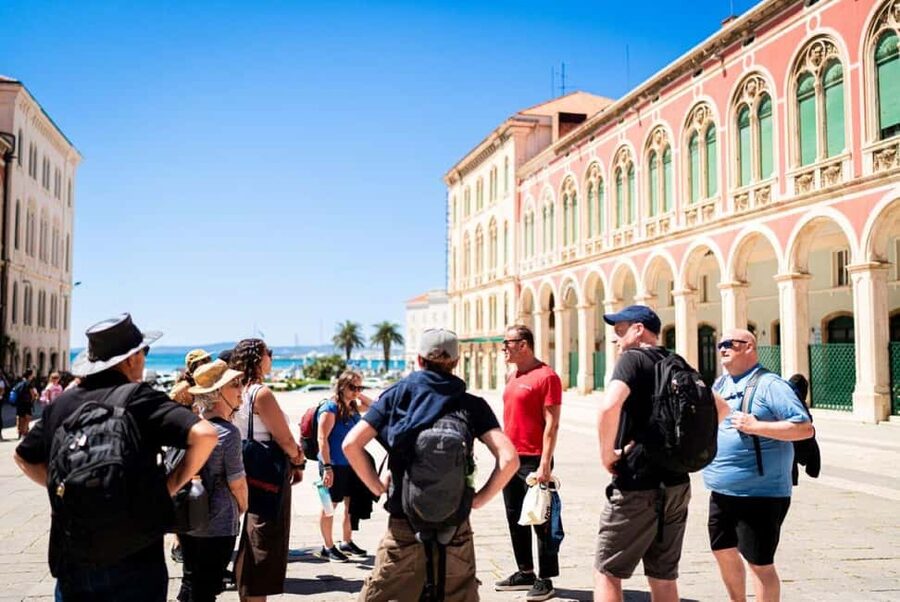
- Starting beside the Riva promenade
- Meeting Dalmatia at the Green Market
- The golden toe of Gregory of Nin
- Entering Diocletian’s Palace through the Golden Gate
- Peristil, the Vestibule, and the emperor’s private world
- What is not included inside the Palace
- Finishing along the Riva
- Is $280 per person good value?
- Who will enjoy this experience most?
- Final verdict: book it for context, not for every admission
- FAQ
- Where does the tour meet?
- How long does the experience last?
- Is the tour private?
- What food is included?
- Are Palace entrance fees included?
- Can children join the tour?
Why this short Split tour works
Split can be confusing at first. The modern city grew around a Roman emperor’s retirement palace, and the old center is not arranged like a neat open-air museum. Homes, cafés, shops, churches, stone lanes, and ancient walls all share the same space.
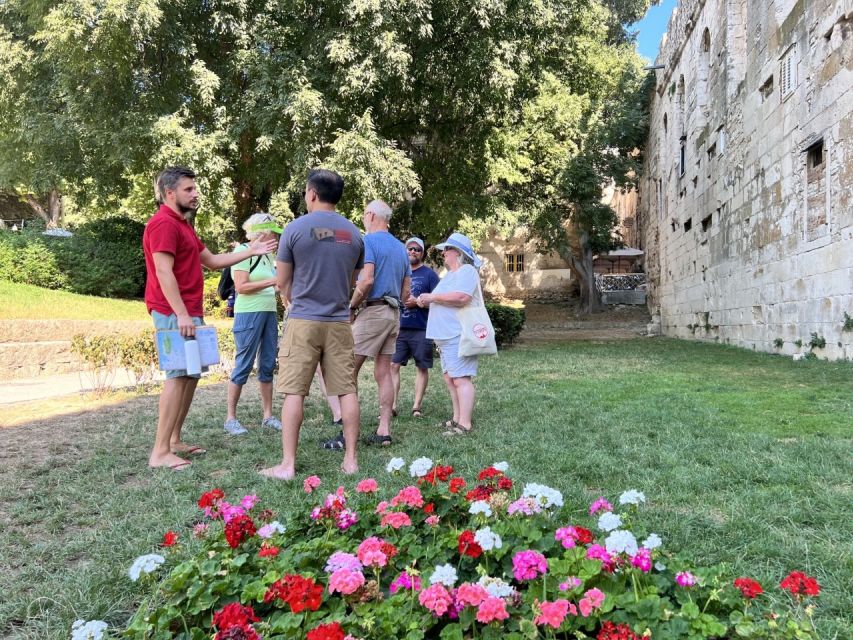
That is why a local guide helps. You are not only looking at columns and gates. You are learning how people use the Palace today, how residents buy food, which local customs still matter, and why certain names appear again and again around town.
The tour is conducted in English and is private, so the guide can keep the pace suited to your group. Previous guides included Ted and Ivan, both praised for clear explanations and strong command of the city’s story. One guide was also praised for showing beautiful corners of Split and adding plenty of local anecdotes.
Two hours is enough for a useful orientation, but not enough for every major sight inside the Palace. Think of this as a lively first look rather than a full archaeological study.
Starting beside the Riva promenade
The meeting point is at the beginning of the Riva, Split’s waterfront promenade, near the iron map of the city. This is a practical place to begin because the Riva is easy to recognize and sits beside the historic center.
Your guide starts by placing Split in its Dalmatian setting. Locals have a famously strong affection for their city, and the tour description captures that pride with a humorous warning: admire Split, and you will be warmly received. Criticize it, and you may have a harder time winning local approval.
That local pride matters because Split is not just an old Roman site. It is home. People live within and around the Palace walls, use its lanes as shortcuts, meet friends in its squares, and carry on rituals that have outlasted several empires.
The opening section should help you get your bearings quickly. You will begin to see the old town as a working part of Split rather than a backdrop for photographs.
More history tours in Split:
- Walking Tour of Split with a ‘Magister’ of History
★ 5.0 · 1,122 reviews - Split Walking Tour with Professor of History
★ 5.0 · 926 reviews - Split: History and Heritage Walking Tour
★ 4.9 · 650 reviews
Meeting Dalmatia at the Green Market
The Green Market is one of the most useful stops on this tour. Ancient walls explain where Split came from, but a market shows how the city feeds itself today.
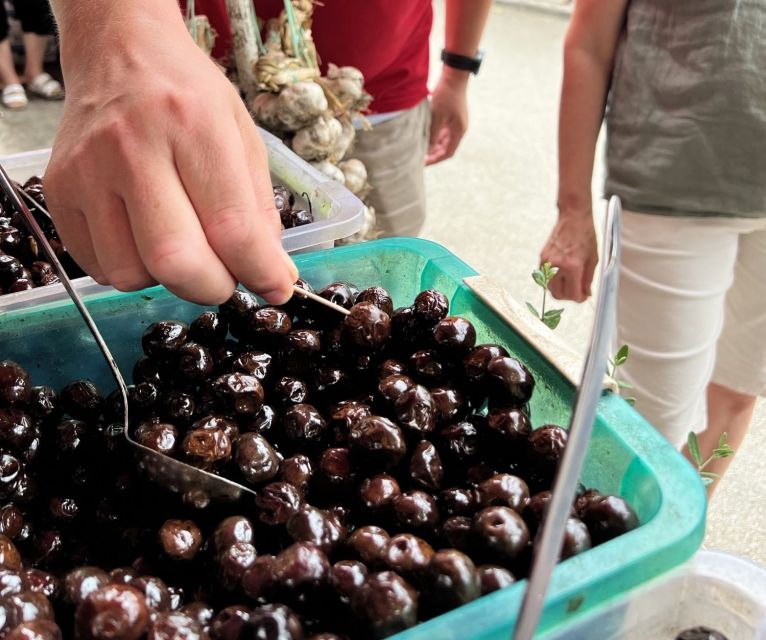
Here, you meet local vendors and learn how people in Split shop for seasonal food. Depending on what is available, tastings can include fruit, vegetables, olive oil, rakija, cheese, or dried figs. The exact selection may change with the season, which is part of the appeal. This is not a fixed tasting menu built around imported products.
The food stop also gives the guide a natural way to explain Dalmatian hospitality. The saying about reaching a Dalmatian’s heart through the stomach is not just a clever line. Food is a way to talk about family, local habits, the seasons, and social life.
I especially like this part for visitors who want more than architectural facts. You can taste something, ask how locals use it, and connect the flavor with the place. Olive oil, cheese, figs, and rakija also make the tour feel more grounded in Dalmatia than a standard walk from one monument to the next.
One practical point: the included food is a market tasting, not a guaranteed full meal. Additional food and drinks are not included. Plan to eat separately if you need lunch, especially if you are taking the tour near midday.
The golden toe of Gregory of Nin
A stop at the statue of Gregory of Nin adds a touch of local tradition to the route. Gregory of Nin, or Grgur Ninski, is a familiar figure in Split, and his golden toe has become a small ritual for visitors.
You can make a wish by touching it. The custom is simple, slightly playful, and easy to remember. It also shows how public monuments in Split can gather new meanings over time.
The statue gives the guide a chance to move beyond Roman history and show how later figures became part of the city’s identity. That shift is important. Split is not one historical period preserved under glass. Its story keeps adding layers.
The tour also introduces Hajduk, the famous Split football club. You will hear why the name appears so often, from the suburbs to the old town. Even if you are not interested in football, the subject helps explain the intense local identity attached to Split.
This is one reason a private guide can be useful. You can ask how much Hajduk matters to daily life, or simply move on if sport is not your thing. A large group tour may have less room for those side questions.
Entering Diocletian’s Palace through the Golden Gate
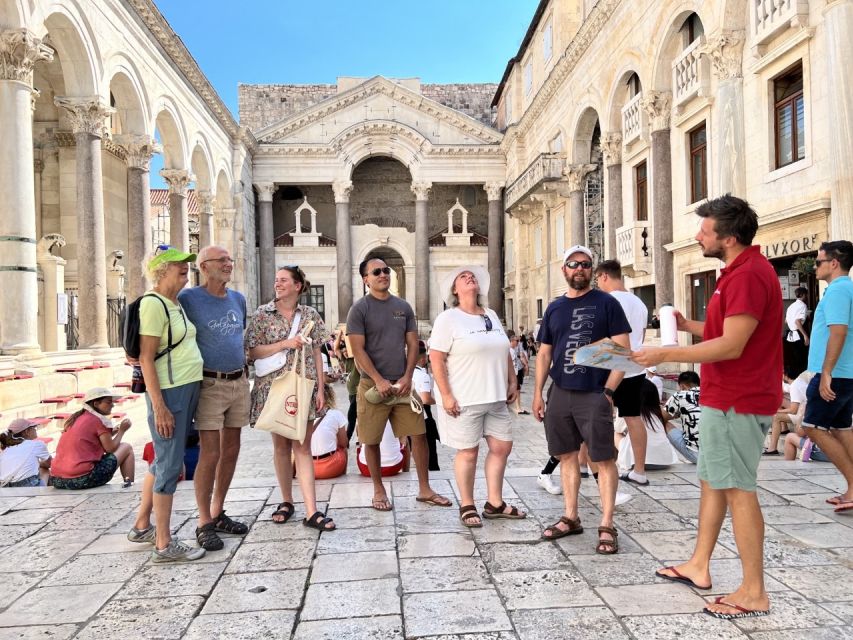
The Palace is the main event. Built for the Roman emperor Diocletian, it is more than 1,700 years old and remains one of the best-preserved Roman palace complexes in the world.
The name can be misleading. You are not walking through one empty building. You are moving through a city center formed inside and around the old imperial residence. Antique stonework sits beside medieval construction and modern homes. The result is sometimes untidy, but that is also what makes Split unusual.
The route includes the Golden Gates, one of the major entrances into the Palace. Walking through them gives you a clear sense of the site’s original scale and defensive purpose. Your guide can point out how the Palace was arranged and how its walls shaped the later city.
You will also visit the main square within the Palace walls. This is where the old imperial setting feels most theatrical, with monumental stonework framing an active public space.
The key thing to watch for is the contrast between the grand Roman plan and ordinary modern life. Laundry, doorways, cafés, and residential entrances can appear close to ancient walls. That is not a flaw to hide. It is the defining fact of Split’s old center.
A few more Split trips worth comparing
- Split: Historical & Gastro Treasures Tour with Green Market
★ 4.9 · 144 reviews
Peristil, the Vestibule, and the emperor’s private world
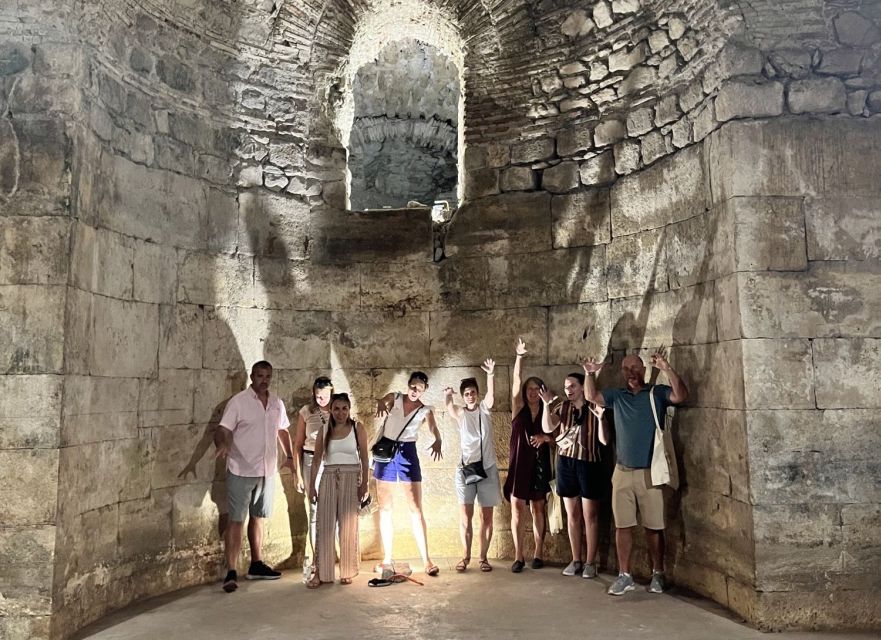
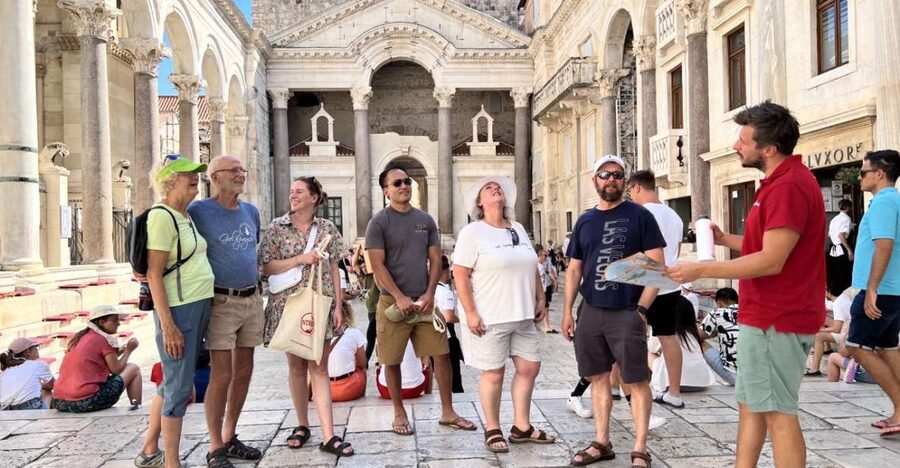
The tour continues to Peristil, the Palace’s central square. This is one of the most impressive places in Split, and the guide uses it to explain Diocletian’s world, status, and unusual retirement choice.
Diocletian was one of Rome’s most interesting emperors. Instead of remaining in political retirement somewhere else, he built a huge palace near his birthplace in Dalmatia. The complex served as a home, military site, ceremonial center, and fortified retreat.
At Peristil, you can better understand how the Palace was meant to project power. The setting was designed for ceremony, and the stone architecture still gives the square a formal feel. Yet it also functions as part of modern Split, which creates a memorable collision between imperial ambition and daily life.
The Vestibule is another highlight. This circular entry space once led toward the emperor’s apartments and offers a different kind of Roman drama. The acoustics and shape make it feel more enclosed and ceremonial than the open square outside.
A private section of the Diocletian Palace is included as part of the visit. The exact details of that section are not specified, so you should not expect every paid site in the complex to be covered. The included visit focuses on the main square, private Palace area, Vestibule, and Golden Gates.
The guide also shares stories about details hidden in the Palace walls. One tale concerns Diocletian’s fondness for salad. Another points to a piece of the mythical White Stone, said to bring happiness. These stories give you something specific to look for and keep the tour from becoming a string of dates and names.
What is not included inside the Palace
This is where the tour’s compact format requires some planning. Entrance fees to several major attractions are not included:
- The cathedral in the former imperial mausoleum
- The Palace underground
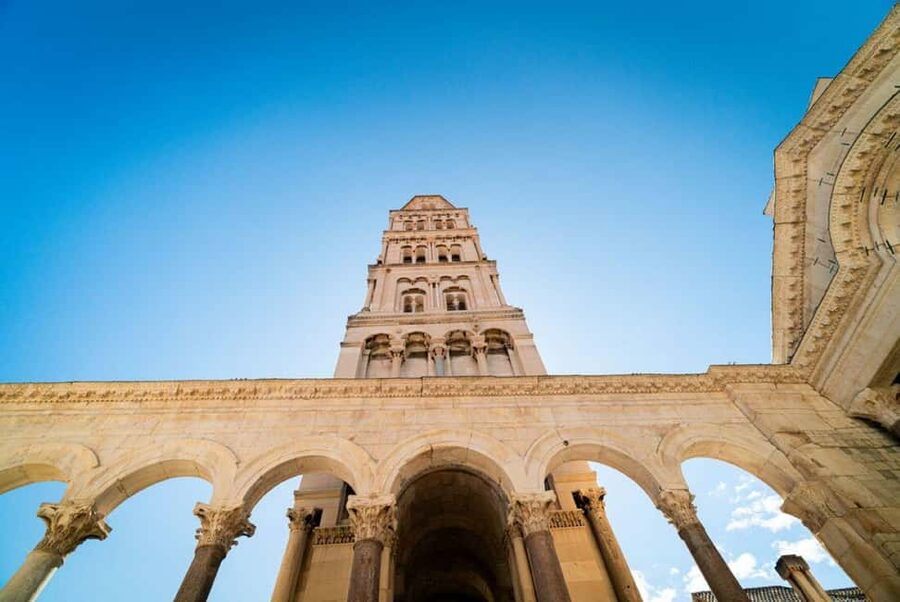
- The Bell Tower
- Museums
- The Temple of Jupiter
That does not make the walking tour poor value, but it changes how you should use it. If you want to see the underground chambers or climb the Bell Tower, schedule extra time and budget separately.
I would take this tour early in a Split visit, then return to the sites that interest you most. The guide’s overview can help you decide if the cathedral, underground, or Temple of Jupiter deserves a closer look.
If you have only one short visit to Split, the tour gives you broad context. If you have several days, it works even better as a first-day introduction.
Finishing along the Riva
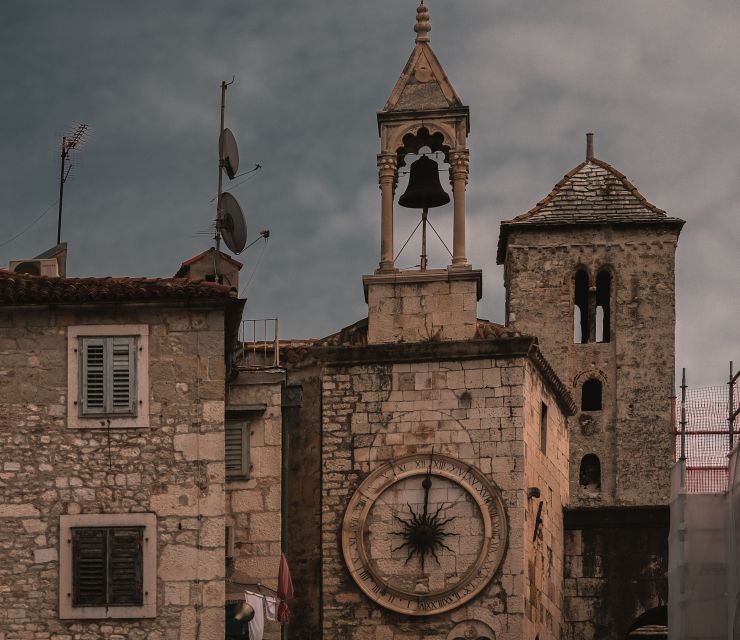
The route finishes on the Riva promenade, bringing you back to the waterfront where the tour began. This is a sensible ending because you are left in a central area with plenty of options for coffee, dinner, and an evening walk.
The guide points out favorite coffee shops and good places for Dalmatian food and entertainment. These recommendations may be one of the most useful parts of the final conversation. You are not simply released at the last monument. You get help deciding what to do next.
The Riva also gives you a moment to step back from the narrow Palace lanes. After two hours of Roman gates, market stalls, statues, and local stories, the waterfront provides a clear change of pace.
One practical tip: wear comfortable shoes. The old town route includes historic streets and stone surfaces, and the tour is a walking experience from start to finish. The provided information does not specify a route distance, so you should be prepared for regular walking rather than assume it is a mostly stationary talk.
Is $280 per person good value?
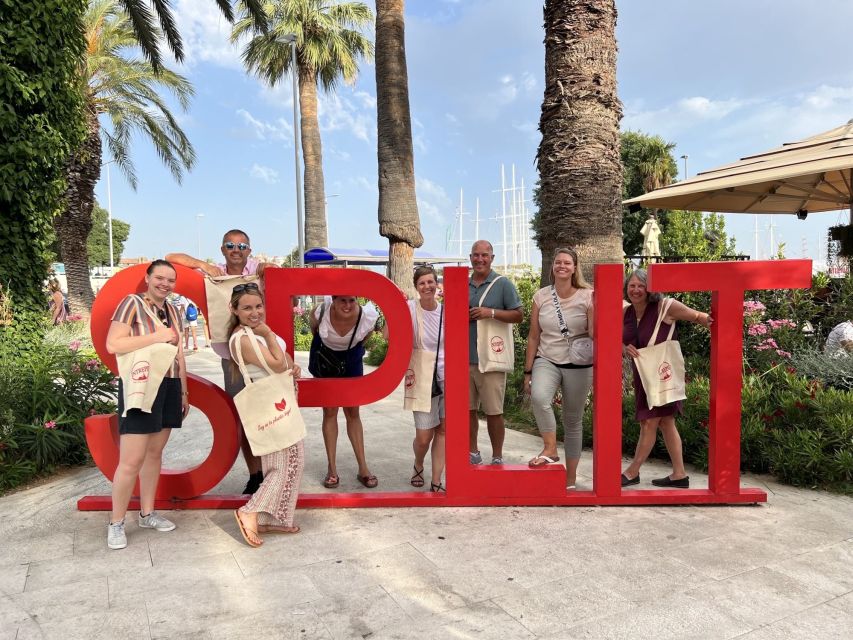
At $280 per person, this is not a budget introduction to Split. Two hours is a short duration, and several of the Palace’s paid attractions cost extra. If you are comparing it with a large group walking tour, the price will look high.
The value lies in the private format and the local focus. You are paying for an English-speaking guide dedicated to your group, a food stop at the Green Market, stories about customs and local identity, and a carefully focused visit to the central Palace areas.
The price is easier to justify for a family or small group that wants to ask questions and set its own pace. It may also suit visitors arriving in Split for a short stay who want a strong introduction without spending half a day on a general city tour.
It is less suitable if your main goal is to enter every museum and monument. Those fees are separate, and the two-hour schedule cannot cover the full Palace complex in detail.
The food tasting adds value, but you should not treat it as a replacement for lunch. Additional food and drinks are extra, and the included tasting depends on seasonal market offerings.
Who will enjoy this experience most?
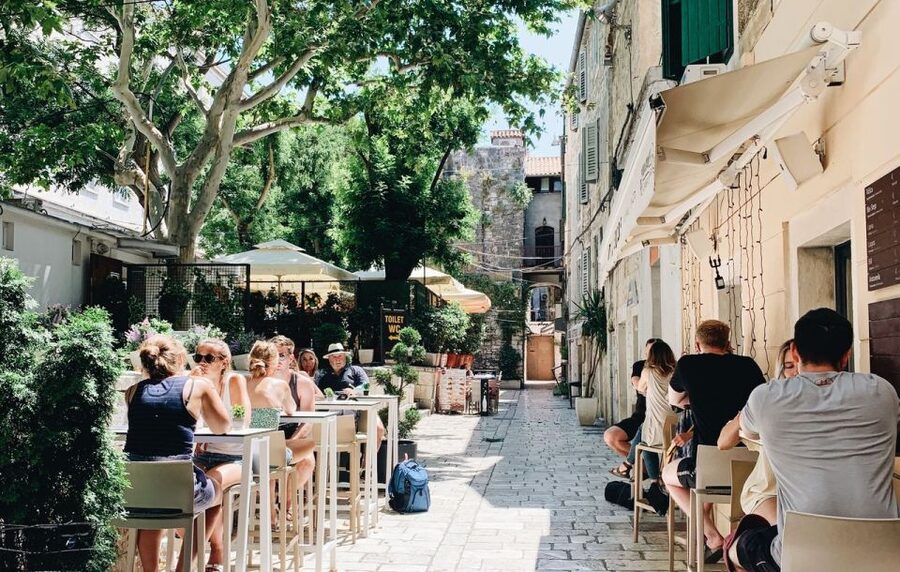
I would recommend this tour to you if you want history tied to real local life. It works especially well for first-time visitors, couples, families, and small private groups who prefer conversation over a fixed group pace.
Children can join, and children under six are free. The mix of statues, food, Roman stories, wishes, and local football gives younger visitors more variety than a purely architectural tour.
It is also a good match for visitors who care about responsible tourism. The operator describes the experience as carbon neutral and is B Corp certified, with a stated commitment to using travel for social and environmental good.
You may want something else if you prefer a long archaeological lecture, extensive interior access, or a full meal. This tour is strongest when you want a lively introduction to Split’s people, food, customs, and central Roman setting.
Final verdict: book it for context, not for every admission
Book this tour if you want to understand how Split works as a living city inside a Roman Palace. The Green Market tasting, Gregory of Nin’s golden toe, Hajduk stories, Illyrian customs, and Diocletian’s peculiar food habits give the walk more personality than a monument-only route.
Skip it if $280 per person feels too high for two hours or if your priority is visiting every paid attraction inside the Palace. In that case, a longer general tour or a self-guided visit with separate admission tickets may suit you better.
For the right audience, this is a polished and personal introduction to Split. It leaves you on the Riva with a better sense of what you have seen, what deserves a second look, and where to find your next Dalmatian meal.
FAQ
Where does the tour meet?
The meeting point is at the beginning of the Riva promenade, near the iron map of the city.
How long does the experience last?
The tour lasts two hours. Starting times depend on availability.
Is the tour private?
Yes. The experience is offered as a private group tour with a live English-speaking guide.
What food is included?
The Green Market stop includes tastings that may include fruit, vegetables, olive oil, rakija, cheese, or dry figs. Additional food and drinks are not included.
Are Palace entrance fees included?
The tour includes the main square within the Palace walls, a private section of Diocletian’s Palace, the Vestibule, and the Golden Gates. Entrance fees to the cathedral in the former mausoleum, underground Palace, Bell Tower, museums, and Temple of Jupiter are not included.
Can children join the tour?
Yes. The tour is child-friendly, and children under six may join free of charge. You should inform the operator if you are bringing a child under six.
Just added around Split
- Slatine – Island Hopping Excursion (Trogir/Blue Lagoon/Shipwreck)★ 4.0 · 24 reviews
- Krka Waterfalls & Primošten from Trogir, Seget, Čiovo & Kaštela★ 5.0 · 18 reviews
- Island Hopping Boat Excursion with Lunch (Trogir,Blue Lagoon, Šolta)★ 3.5 · 6 reviews
- From Trogir, Seget, Okrug: Krka Waterfalls & Šibenik Culture Tour★ 5.0 · 10 reviews
- From Split & Trogir: ATV Quad Tour on Island Čiovo★ 5.0 · 21 reviews
- Split: Blue Lagoon Boat Trip with Lunch, Wine and Snorkeling★ 5.0 · 3 reviews
- Split Sunset Stand Up Paddle Tour★ 5.0 · 16 reviews
- Split: Sunset Guided Kayaking Tour★ 4.8 · 71 reviews
Historical Tours, compared.
Walking Tour of Split with a ‘Magister’ of History
Read our review →
Split History and Gastro Small-Group Tour with Food and Drinks
Read our review →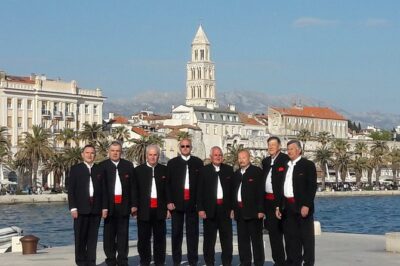
PREMIUM Emperor’s Walking Tour for History Lovers + Museum
Read our review →Browse the lists this tour appears in