
Reviewed · FOOD & DRINK
Private Split: Visit Diocletian Palace & Taste Food at the Market
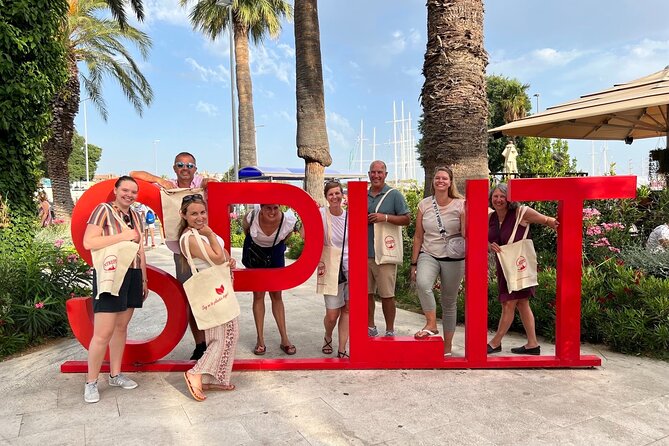
Split makes ancient Rome feel lived in. This private walking tour brings you through Diocletian’s Palace, the Green Market, and the fish market, then settles you down with a plate of Dalmatian food and a local drink. I like the mix of Roman ruins and everyday Split life, and I like that your guide can shape the walk around your questions and interests.
The best part is the local angle. You are not only looking at columns and old stone. You are also learning how people shop for fruit, seafood, cheese, and olive oil today. The main consideration is the short running time. Two hours gives you a fine introduction, but it does not leave room for every palace museum, the cathedral, the underground cellars, and the bell tower. Extra entrance fees are not included.
In This Review
- Key details before you book
- Why Diocletian’s Palace works best with a guide
- Peristil, the Palace’s grand center
- The Vestibule and the Golden Gate
- Green Market: where Split shops for lunch
- Peskarija and the smell of the Adriatic
- What you actually eat and drink
- Is two hours enough?
- Private attention and group size
- What the $148.72 price means
- Who should book this Split walk?
- Practical details for a smooth morning
- Should you book it?
- FAQ
- Where does the tour start?
- Where does the tour end?
- How long does the tour last?
- What food is included?
- Are Palace entrance fees included?
- Is the tour suitable for children?
- How many people can join the tour?
Key details before you book
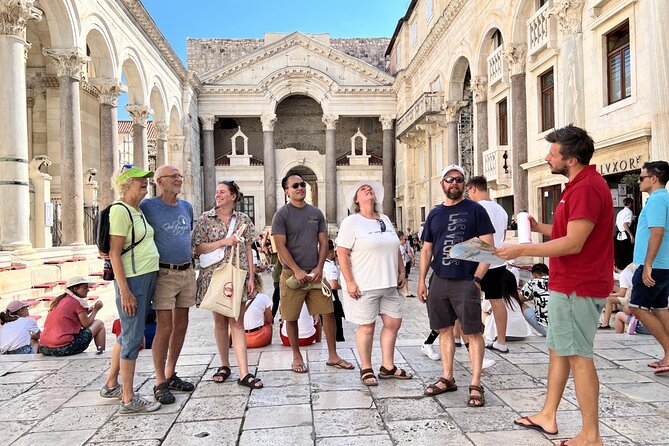
- You enter a living Roman palace: Diocletian’s Palace is not an isolated ruin. Homes, cafés, shops, and restaurants occupy its old walls.
- You taste seasonal Dalmatian food: Expect items such as pršut, sheep’s milk cheese, octopus salad, anchovies, olives, fruit, olive oil, rakija, and dried figs, depending on the season.
- You visit Split’s everyday markets: The Green Market and nearby Peskarija fish market show you how locals buy food, not just how the city looked in Roman times.
- You get a private guide for your group: The tour is limited to your party, with a maximum of 12 people, so questions are easier and the pace can feel personal.
- You see the Palace’s main ceremonial spaces: The route includes Peristil, the Vestibule, the private section of the Palace, and the Golden Gate.
- You should budget for add-on sights: The cathedral, bell tower, museums, Temple of Jupiter, and underground section require separate payment.
Why Diocletian’s Palace works best with a guide
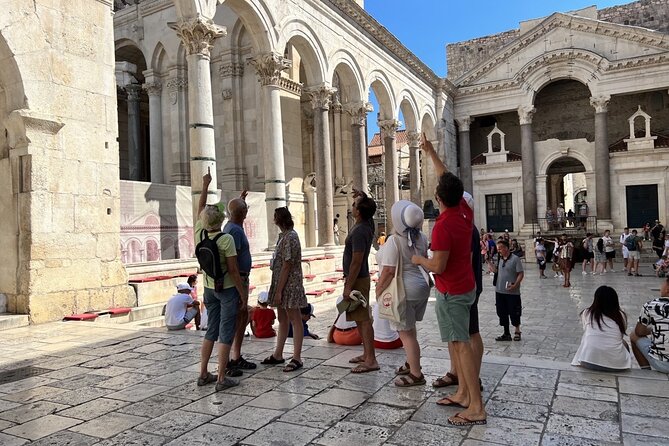
Split’s Old Town can look confusing at first. It is a maze of narrow lanes, worn Roman stone, medieval buildings, laundry, cafés, and modern shops. The city grew inside and around the Palace, so the ancient plan is still here, but it is not always easy to read without help.
Your walk begins on the Riva, Split’s broad waterfront promenade. This is a useful meeting place because it is easy to find and puts you right beside the Old Town. From there, your local English-speaking guide leads you toward the Palace and explains how the emperor Diocletian shaped the city.
Diocletian built the Palace in the fourth century as a retirement residence. The site was not simply a grand home, and it was not quite a military fort. It combined imperial apartments, ceremonial rooms, religious buildings, storage areas, and defensive walls. That mixed purpose helps explain why the Palace feels so large and varied.
I especially like that the tour treats the Palace as part of modern Split. Starting in the seventh century, people began moving into the abandoned complex. Shops and homes took over spaces once used by the emperor and his staff. That process created the unusual city you see today, where a Roman column can sit beside a café table or a family doorway.
The tour is not just a march from monument to monument. Your guide can explain how local people use the area and point out details that you might otherwise pass without noticing. Past guides have included Maja, Maya, Linda, Lindis, and VJ. Maja and Maya were praised for their archaeology background, while Linda was noted for her practical suggestions about food and places to visit.
More Food and Drink Tours in Split
- From Split: Krka Waterfalls, Food & Wine Tasting Tour
★ 5.0 · 9,326 reviews - From Split: Krka Waterfalls, Food & Wine Tasting Tour
★ 4.9 · 6,598 reviews - Split: Blue Lagoon and 3 Island Cruise with Food and Drinks
★ 4.8 · 1,969 reviews
Peristil, the Palace’s grand center
Peristil is the Palace’s main square and one of the most memorable stops. This was the ceremonial heart of Diocletian’s residence, where the emperor could appear in a setting designed to reinforce his power.
Today, the square feels less formal. People meet here, sit nearby, and pass through on their way to other parts of the Old Town. That contrast is the point. You are seeing a space that has changed purpose but never lost its central role.
Your guide can help you read the surrounding stonework and explain how Roman, medieval, and modern layers meet. Some scenes from Game of Thrones were filmed in and around the Palace, so fans of the show may recognize parts of the route. The television connection is a fun extra, but the real value is understanding the site beyond its screen appearance.
One useful feature of a private walk is the chance to stop and ask for clarification. Roman emperors, late antique architecture, medieval settlement, and modern Croatian life can make a lot to absorb in a short time. One past participant felt that the information became dense during a longer version of the tour, so do not hesitate to ask your guide to focus on the details that interest you most.
The Vestibule and the Golden Gate
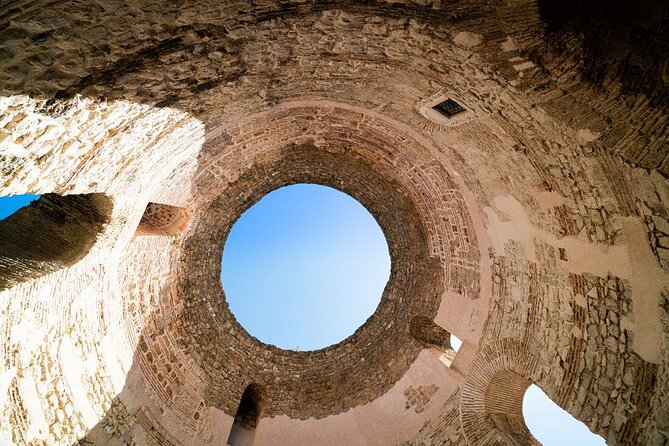
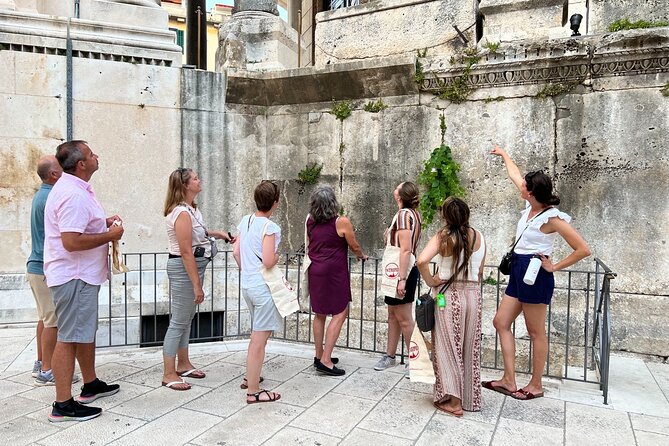
The Vestibule is one of the Palace’s most striking spaces. Its round form once served as an entrance to the emperor’s apartments. Even without entering every paid attraction, you get a feel for the scale and theatrical design of the imperial residence.
The Golden Gate gives you another important view of the Palace’s structure. It was the main northern entrance and remains one of the clearest reminders that this was a fortified complex as well as an imperial home.
The route also includes the Palace’s private section. The word private here refers to the part associated with the emperor’s personal quarters, not a separate attraction reserved only for your group. Your guide uses these spaces to explain how Diocletian lived and how the Palace functioned.
Do not expect a full archaeological tour of every room. The included walk is an introduction. The underground cellars, cathedral, bell tower, museums, and Temple of Jupiter are not included in the price. If one of those interests you, ask your guide where to go next and plan extra time after the tour.
Green Market: where Split shops for lunch
The Green Market brings you out of the imperial story and into daily life. Here, your guide explains how local people shop for seasonal produce and introduces you to traditional ingredients.
The market stop can include fruit, olive oil, rakija, cheese, and dried figs. The exact selection changes with the season, which is a strength rather than a weakness. You are tasting food that reflects what is available, rather than receiving a fixed international menu.
This is also where the tour gives you useful food context. Your guide can explain how local specialties are prepared and why food matters so much in Dalmatian culture. The idea that the way to a Dalmatian heart is through the stomach is more than a playful line. Shared plates and slow conversation are central to the region’s social life.
You may also hear about Hajduk, Split’s famous football club. Its name appears across the city, from the Old Town to the suburbs, and it is part of local identity. The stop at the statue of Gregory of Nin adds another small ritual: rubbing the statue’s golden toe is said to bring good luck.
These details make the market stop worthwhile even if you are not especially interested in food. You get a quick lesson in how Split sees itself, what people buy, and which local names and symbols matter.
Still Split, at a slower pace:
- Split: Krka Waterfalls Trip with Boat Cruise and Swimming
★ 4.8 · 10,519 reviews - Blue cave, Mamma Mia and Hvar, 5 islands speedboat tour
★ 5.0 · 7,150 reviews - Split/Trogir: Blue Cave, Mamma Mia, Hvar and 5 Island Tour
★ 4.6 · 6,320 reviews - Blue Lagoon & 3 Islands Cruise with Lunch from Split
★ 4.5 · 5,756 reviews
Peskarija and the smell of the Adriatic
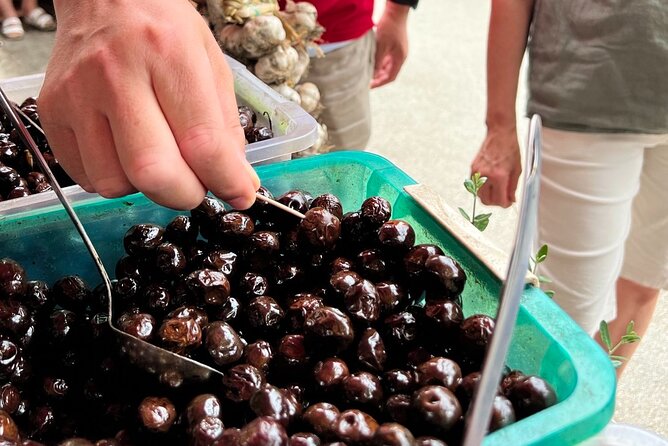
The nearby Peskarija fish market focuses on the day’s seafood. It sells freshly caught fish from the waters off Split, and the atmosphere is more direct than polished. Fishmongers call out the catch, shoppers inspect what is available, and the selection reflects the day.
This stop is brief but useful. It shows you the connection between Split’s coastal setting and its food. The market is not presented as a museum. It is a working place, and your guide helps you understand what you are seeing without getting in the way of the people who use it.
If you are sensitive to fish-market smells or prefer formal sightseeing, this may be less appealing. If you like seeing how a city feeds itself, it is one of the tour’s most authentic moments.
What you actually eat and drink
The food tasting usually comes after the Palace and market walk. It is described as a traditional Dalmatian snack, but portions can be generous. Past versions included a large plate of local specialties that some people found substantial enough to replace dinner.
Possible items include:
- Pršut, the Croatian name for dry-cured ham
- Sheep’s milk cheese
- Octopus salad
- Anchovies
- Olives
- Local bread
- Seasonal fruit
- Olive oil
- Dried figs
- Rakija, a strong local spirit
- Croatian wine, with beer sometimes available in place of wine
The exact menu can change, so you should not book this expecting one guaranteed dish. Octopus salad received particular praise, and one group returned to the small restaurant afterward. Another stop took place at Maslina, where octopus salad and homemade bread were served. A different group ate at The Olive.
Those changing locations and dishes are worth keeping in mind. The tasting is designed to introduce you to local flavors, not to provide a formal restaurant meal with a fixed printed menu. The wine is part of the experience, but additional food and drinks cost extra.
I like the meal because it gives the tour a social finish. You can sit down, ask follow-up questions, and get recommendations for the rest of your time in Split. Guides have suggested places to eat, sights to visit, and ways to continue exploring after returning to the Riva.
If you have food allergies, dietary restrictions, or strong dislikes, ask about them when booking or at the start. The supplied details do not promise a special menu, so you should not assume every preference can be accommodated.
Is two hours enough?
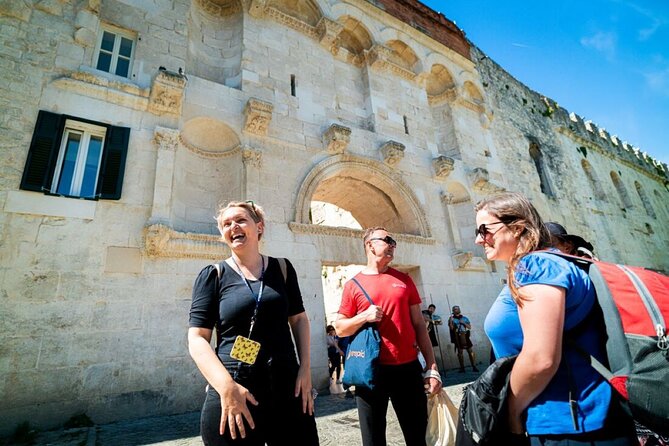
For a first look at Split, yes. You can see the central Palace areas, visit the market, learn about local food, and finish with a tasting without giving up an entire morning.
The schedule lists about one hour for Diocletian’s Palace and one hour for the Green Market and related sights. In practice, the food stop can affect the finish time. Some past departures took around three hours, and one afternoon tour did not reach the meal until about 4:30 p.m. Treat the two-hour figure as an estimate, especially if your guide is answering many questions or the food stop becomes a relaxed sit-down.
That flexibility is pleasant if you have time. It matters more if you are visiting Split from a cruise ship or have a tight connection. The tour starts at 9:00 a.m. and ends back at the Riva, but you should allow some extra time rather than scheduling an immediate departure afterward.
The route is on foot through the Old Town. Wear shoes suitable for uneven stone streets, and bring water in warm weather. The information provided does not give a detailed accessibility assessment, so ask the operator if you need specific assistance.
Private attention and group size
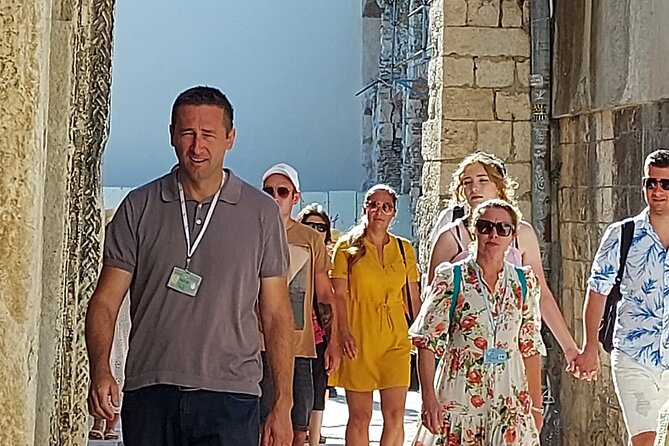
This is a private experience for your group, with a maximum of 12 people. That makes a real difference in a compact old city. You do not have to wait for a large crowd to cross a lane, and you can ask more questions than you usually can on a standard group walk.
The strongest praise has gone to the guides. Maja and Maya were former archaeologists, and one had worked on excavation and restoration connected with the Palace. That background can add useful detail when you are looking at ancient walls, altered rooms, and archaeological remains.
You may not receive one of those particular guides, so do not book solely on the expectation of a named person. Still, the pattern is encouraging: past guides were praised for clear English, good humor, patience, and strong knowledge of Split and the Roman period.
The private format also suits families. Children under six can join free, though you need to tell the operator in advance if you are bringing one. Most people can take part, according to the supplied tour information.
What the $148.72 price means
At $148.72 per person, this is not a cheap way to see Split. The price makes the most sense if you value a private guide, a small-group feel, a food tasting, and help planning the rest of your visit.
You are paying for more than a basic walk past the Palace. The tour links architecture, local customs, food shopping, and Croatian identity. It also saves you the work of figuring out how the Palace’s rooms connect and which food items are worth trying.
The value is weaker if you mainly want paid monuments. Admission to the cathedral, underground Palace, bell tower, museums, and Temple of Jupiter is not included. You will need to pay separately for those sites, and you may prefer to explore the Palace on your own if you already have a good guidebook and plenty of time.
For two people, the private price can feel high. It becomes easier to justify when split among a larger group, particularly if you want a guide who can adapt the pace and answer personal questions. The food is an added benefit, but it should not be treated as a full restaurant dinner every time.
The company describes the tour as carbon neutral and is B Corp certified. That may matter to you if you want your sightseeing dollars connected to environmental and social goals. It does not change the route itself, but it is a useful part of the company’s operating approach.
Who should book this Split walk?
I would point this tour toward you if you are visiting Split for the first time and want the Old Town to make sense quickly. It is also a good fit if you enjoy food markets, local customs, Roman history, or practical restaurant advice.
It suits:
- Couples wanting a private introduction
- Families with young children
- Food-focused visitors who prefer tasting over a formal cooking class
- History fans who want context before visiting paid Palace sites
- Cruise passengers with a free morning, provided you leave time afterward
- People who want a guide to explain Game of Thrones locations without making the entire tour about television
You may want a different plan if you need a full meal, dislike shared tasting plates, require a guaranteed dietary menu, or want a long archaeological visit inside every paid section. The tour gives you a strong first layer, not the complete Palace experience.
Practical details for a smooth morning
Meet your guide at Obala Hrvatskog narodnog preporoda 23 on the Riva at 9:00 a.m. The tour returns to the Split Riva, and your guide can explain how to get back to your hotel or where to continue on foot.
Your mobile ticket is accepted, and confirmation is provided at booking. The experience is offered in English. Tips and gratuities are not included, so plan to tip your guide if the service earns it.
Free cancellation is available up to 24 hours before the start time for a full refund. Changes or cancellations made less than 24 hours before departure are not accepted under the stated policy.
Should you book it?
I would book this tour if you want Split’s Palace to feel like a city rather than a pile of old stones. The best features are the private guide, the market visits, the chance to taste pršut and octopus salad alongside other local foods, and the practical advice you receive for the rest of your stay.
At $148.72 per person, it is best for people who value personal attention and a well-shaped introduction. If you are watching your budget or have several days in Split, you can visit much of the route independently and spend the money on the Palace’s paid sights instead.
Book it early in your stay if you can. You will leave with a better sense of where you are, what you are looking at, and what to eat next. Just keep your schedule loose, ask about the day’s tasting menu, and remember that the most important Palace rooms beyond the walking route cost extra.
FAQ
Where does the tour start?
The tour starts at Obala Hrvatskog narodnog preporoda 23 on Split’s Riva at 9:00 a.m.
Where does the tour end?
It ends back at the Split Riva. Your guide can give you directions to your hotel or offer ideas for continuing your own exploration.
How long does the tour last?
The listed duration is approximately two hours. Some past versions took closer to three hours, so allow extra time if you have a strict schedule.
What food is included?
The tasting may include seasonal items such as fruit, olive oil, rakija, cheese, dry figs, pršut, octopus salad, anchovies, olives, and local wine. The menu can change with the season.
Are Palace entrance fees included?
No. Entrance fees for the cathedral, underground section of the Palace, bell tower, museums, and Temple of Jupiter are not included.
Is the tour suitable for children?
Yes. Children under six may join free of charge, but you should inform the operator if you are bringing a child under six.
How many people can join the tour?
The experience is private for your group and has a maximum capacity of 12 people.
More Shopping Tours in Split
- Croatian cuisine cooking class with Dolac market tour
★ 5.0 · 9 reviews - Authentic Market Tour and Cooking Class in the Heart of Zagreb
★ 5.0 · 7 reviews
More Markets in Split
- Split: Historical & Gastro Treasures Tour with Green Market
★ 4.9 · 144 reviews - Split: Private Roman History & Market Tour
★ 5.0 · 9 reviews - Zagreb Walking Food Tour – Sightseeing – Dolac Market Visit
★ 5.0 · 38 reviews - Štrukli cooking class with Dolac Market Tour
★ 5.0 · 15 reviews
Just added around Split
- Walking Tour Split★ 4.7 · 61 reviews
- Unique vintage Tomos moped tour Split – Back to the ’80s★ 4.8 · 17 reviews
- Trogir: White Lagoon, Maslinica & Blue Lagoon Speedboat Tour★ 4.8 · 11 reviews
- Essential Diocletian’s Palace Tour for First-Time Visitors★ 4.8 · 19 reviews
- Split: Trogir Open Top Bus Trip + Free Split Walking Tour★ 4.1 · 17 reviews
- Trogir; Private walking tour of higlights of Trogir★ 4.7 · 3 reviews
- Trogir: Old Town Guided Walking Tour★ 4.6 · 76 reviews
- TROGIR: Blue Lagoon & 3 Islands Half-day Speedboat tour★ 4.6 · 28 reviews
Food & Drink, compared.

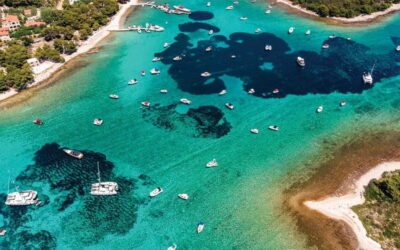
Blue Lagoon and 3 Island Cruise with Food and Drinks
Read our review →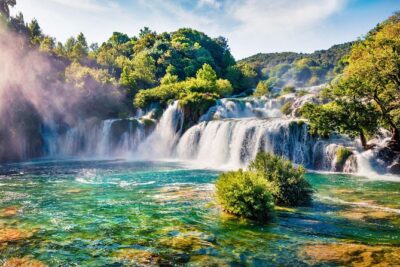
Krka National Park Tour with tour Guide & Wine tasting from Split & Trogir
Read our review →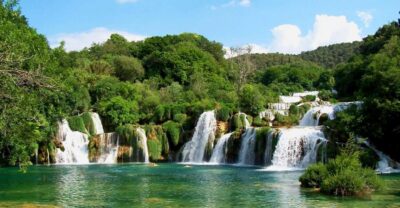
Split/Trogir: Krka National Park Day Trip with Wine Tasting
Read our review →
Full-Day Catamaran Cruise to Hvar & Pakleni Islands with Food and free Drinks
Read our review →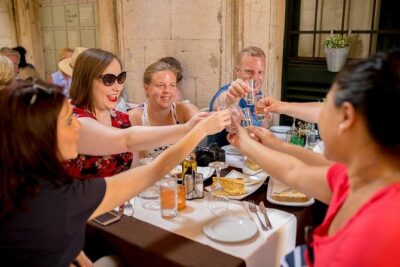
Dubrovnik Food and Drink Walking Tour with a Local Guide
Read our review →
Dubrovnik Guided Group Tour with Ston Oyster tasting from Split & Trogir
Read our review →Browse the lists this tour appears in