
Reviewed · WALKING TOURS
Pula: Historic Sites Private Walking Tour
Pula rewards a good first walk. This private two-hour tour links the city’s biggest Roman sights with its Venetian castle, market, cathedral, and old gates, so you get a clear sense of how Pula changed across the centuries. I especially like the private format, which gives you room to ask questions, and the guide’s focus on small Roman traces that are easy to miss on your own.
I also like the route’s range. You see the Arena, Augustus Temple, Roman Forum, Arch of Sergii, and Roman mosaics, then shift to later Venetian and modern-era sights. The main consideration is the walking itself: the route can include steep sections, and entry to the Arena is not included in the $136 group price.
In This Review
- Key points at a glance
- Why this two-hour route works well in Pula
- Starting at Pula Arena
- Pula Castle and its panoramic views
- Cathedral, Forum, and the Augustus Temple
- Roman mosaics and the Arch of Sergii
- Pula Market and the early 1900s
- Hercules Gate and the Twin Gate finish
- How much value do you get for $136?
- Who will enjoy this Pula walking tour?
- My verdict: should you book it?
- FAQ
- Where does the Pula walking tour start?
- How will I identify the guide?
- How long does the tour last?
- Is the Pula Arena admission included?
- Can I skip the ticket line at the Arena?
- What languages are available?
- Is this a private tour?
- How many people can join one group?
- Where does the tour finish?
- Does the tour operate in bad weather?
Key points at a glance
- A private group tour for up to 49 people: The $136 rate is charged per group, not per person, which can offer strong value for families or larger parties.
- Pula Arena is the starting point: You receive a 40-minute guided introduction, with optional entry available at your own cost.
- The Venetian castle provides broad city views: This 17th-century fortress adds a later chapter to Pula’s Roman story.
- Roman details continue beyond the major monuments: Look for mosaics, the Arch of Sergii, Hercules Gate, Augustus Temple, and traces around the Forum.
- The guide helps with practical matters: Recent feedback highlights attention to steep sections and even pointing out restroom options during the long walk.
- English and German tours are available: The tour is rain or shine and finishes near the Twin Gate on Carrarina Street.
Why this two-hour route works well in Pula
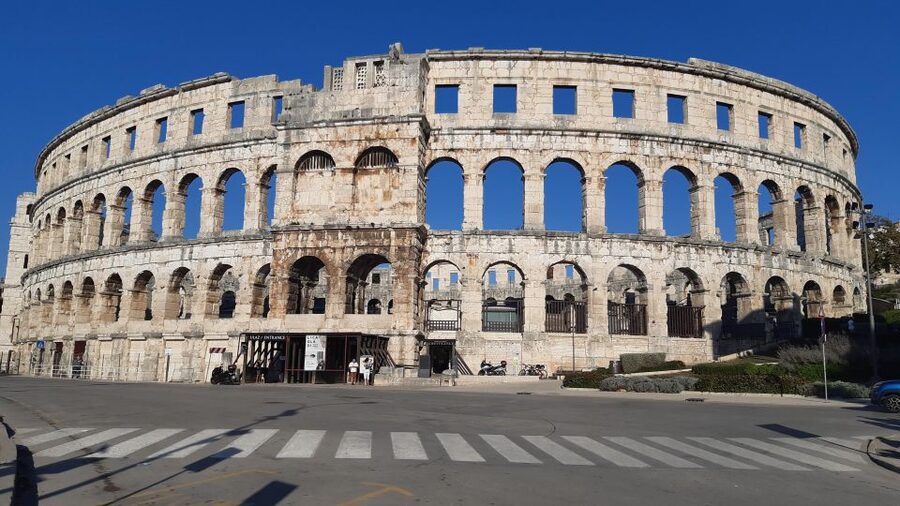
Pula can look like a collection of separate sights until someone explains how the pieces fit together. The Arena is the obvious starting point, but the city also has Roman temples, gates, mosaics, medieval and Venetian layers, a cathedral, and a market from the early 1900s.
I like that this route does not stop at the postcard view of the amphitheater. You move through the old center and see how Pula’s public spaces developed over time. That makes the walk useful on a first visit, especially if you want historical context without committing to a full-day tour.
The private setup is another advantage. You can ask about architecture, local culture, Roman engineering, or the changing role of each building. A large party may need to stay together, but you still have a dedicated guide rather than sharing the route with an unknown crowd.
The tour lasts two hours, with about 40 minutes focused on the Arena and about 80 minutes covering the rest of the center. That is enough time for a brisk overview, but not enough for long independent visits inside every monument. Think of it as a well-organized introduction, not a slow museum day.
More Walking Tours in Istria
- Pula: Historic Walking Tour with Local Guide & City Views
★ 4.8 · 143 reviews - Rovinj: Guided Walking Tour
★ 4.8 · 113 reviews - Pula walking tour
★ 5.0 · 96 reviews
Starting at Pula Arena
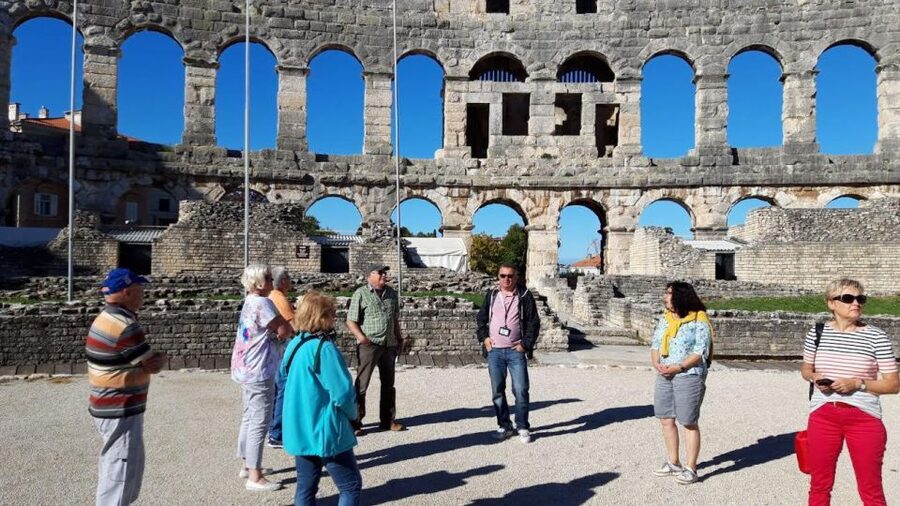
Meet your guide in front of the amphitheater entrance at Istarska ul. 50. The guide carries an umbrella and wears a blue card around the neck, which should make the meeting point easier to identify.
The Arena is the natural place to begin. Your guide gives a short but substantial introduction to its role, design, and place in Pula’s past. The 40-minute section helps you understand the scale of the building before you move into the tighter streets of the historic center.
You can also choose to go inside the Arena, but the admission ticket is extra. Tickets can be paid for on the spot, and the tour offers a way to skip the ticket line. That is useful when your time in Pula is limited, though you should budget separately for admission.
I would decide before the tour whether you want to enter. If you do, the inside visit adds value because you can connect the guide’s explanation with the actual structure. If you only want the outside view and a fast introduction, you can keep moving and spend more of the two hours on the town.
Pula Castle and its panoramic views
From the Arena, the route continues to Pula Castle, built by the Venetians in the 17th century. This change of period is one of the walk’s best features. You are not seeing Roman monuments in isolation, but following the city into a later age when Venice shaped its defenses and urban life.
The castle is also the point where the tour adds panoramic views. You get a wider look at Pula and a useful sense of how the old city sits within its surroundings. The view helps explain why this high position mattered for defense and control.
Your guide discusses the castle’s history and former inhabitants. The information is especially useful here because fortifications can otherwise feel like plain stone walls. With context, the castle becomes a record of political change, not just a viewpoint.
The main caution is physical. One recent account specifically praised the guide for noticing who could manage the steep walk and suggesting another option when needed. That tells you to take the slope seriously, even though the tour is only two hours long.
Cathedral, Forum, and the Augustus Temple
After the castle, you continue to the cathedral and then toward the Roman Forum. This section gives the route a steady rhythm: one major building, a short walk, then another layer of Pula’s past.
The Roman Forum is one of the most important stops because it shows how public life was organized in Roman Pula. The Augustus Temple is the star here, a 2,000-year-old structure that gives the square its strongest ancient presence.
I like the contrast between the Forum and the Arena. The Arena shows public spectacle on a huge scale. The temple and Forum help you think about civic life, religion, government, and daily movement through the city.
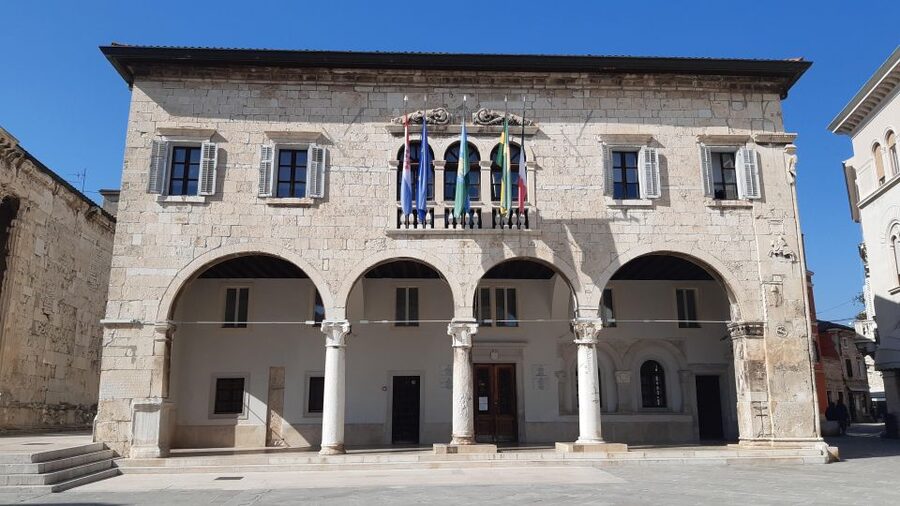
City Hall is also included in this part of the walk. Its position beside Roman remains makes the Forum a useful lesson in how later buildings can share space with much older ones. Your guide explains the architecture and cultural background rather than simply pointing out dates and names.
The tour does not promise a lengthy interior visit to each sight. You should expect explanations from the outside and a carefully paced walk through the historic core. That is a good fit if you want orientation, but less ideal if you prefer to spend half an hour studying one monument in detail.
Still Istria, at a slower pace:
- Pula: Arena Entrance Ticket
★ 4.3 · 2,590 reviews - Medulin -Kamenjak 5h boat trip with lunch & drinks on Sandra Boat
★ 5.0 · 1,621 reviews - Full-Day Boat Tour of the Medulin Archipelago from Medulin
★ 5.0 · 1,389 reviews - Vrsar: Dolphin Watching Boat Tour including Drinks
★ 4.6 · 1,227 reviews
Roman mosaics and the Arch of Sergii
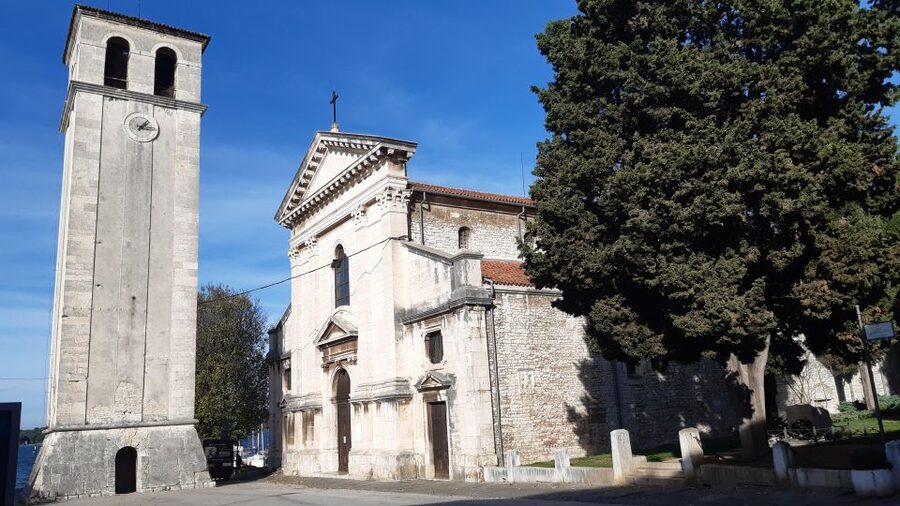
One of the route’s quieter pleasures is the chance to see Roman mosaics along the way. These smaller remains can be easy to pass without noticing. A guide who points them out gives you a better chance of seeing the Roman city beneath the modern streets.
The mosaics also add balance to the tour. The Arena and temple are grand, formal monuments. A mosaic feels more connected to ordinary buildings and everyday life, even though the available information does not specify its exact setting or design.
The Arch of Sergii brings you back to a major public landmark. It is another reminder that Roman Pula was not just a military site or arena town. Its streets and ceremonial structures reflected status, public memory, and civic pride.
This is where a private guide earns the fee. You can ask why one arch matters, how it relates to the rest of the Roman center, or what details to watch for. In a self-guided walk, you might photograph the arch and move on without seeing how it fits the larger route.
Pula Market and the early 1900s
The tour then reaches Pula Market, established in the early 1900s. This stop gives you a welcome change from temples, gates, and fortifications. It shows that Pula’s story continued long after the Roman period.
A market is also a practical way to connect history with present-day life. You see a place designed for everyday shopping rather than ceremony or defense. The tour’s focus remains historical and cultural, so do not expect a dedicated food tour, but the market adds local texture to the walk.
I appreciate this kind of stop because it keeps the tour from becoming a parade of monuments. Pula is a living town, and the market helps you see it as more than an archaeological site.
The route is still compact, so your time at the market will be part of the walking tour rather than a long browsing break. If you want to shop or stop for food, plan to return later.
Hercules Gate and the Twin Gate finish
The ancient Gate of Hercules is another smaller Roman feature that benefits from explanation. On its own, it may not command the same attention as the Arena. Within the tour, though, it helps you picture how people entered and moved through the old city.
Your guide shares details about the architecture, culture, and heritage of Pula as you go. This is the part of the walk where the smaller pieces begin to add up. The gate, mosaics, arch, temple, castle, and arena become parts of one city rather than separate photo stops.
The tour finishes at the Twin Gate, with the drop-off point listed at Carrarina ul. 8. Finishing there is practical because it leaves you in the old center, near the route’s later Roman remains and historic streets. The experience does not include transportation back to your hotel, so plan to continue on foot afterward.
How much value do you get for $136?
At $136 per group of up to 49 people, the price needs careful reading. For one or two people, it is a substantial private-tour cost. For a family or larger party, the per-person price can become much more attractive.
You are paying for a local expert guide, a private group, a structured route, and the chance to ask questions. You are not paying for entrance tickets, food, or transportation. If you want to enter the Arena, add that cost to your budget.
The strongest value comes when you have several people sharing the booking or when your time in Pula is short. The guide can help you cover the main historic center without wasting time figuring out the order yourself.
If you prefer quiet, unhurried monument visits, the value is less clear. Two hours moves quickly, and the route covers a lot. You may want to revisit the Arena, temple, or market after the tour at your own pace.
Who will enjoy this Pula walking tour?
I would choose this tour for a first visit to Pula, especially if you want the major sights explained in one sitting. It suits families, couples, and private groups who prefer a personal guide instead of a large shared walk.
It is also a good match for anyone interested in Roman sites but unsure how to read the smaller remains. The mosaics and gates become more meaningful when someone explains what you are seeing.
The tour is offered in English or German. Recent feedback particularly praised the guide’s ability to explain clearly, remain attentive to everyone in the group, point out restroom options during a long walk, and suggest an alternative for a steep section.
There is a point to clarify before booking. The activity is marked wheelchair accessible, yet it is also listed as unsuitable for people with mobility impairments. Because the route can include steep walking, contact the provider before booking if anyone in your party has limited mobility.
The tour runs rain or shine. Wear shoes suited to city walking and bring weather protection. The provider offers free cancellation up to 24 hours before the start and a reserve-now, pay-later option, which gives you some flexibility when arranging a Croatia itinerary.
My verdict: should you book it?
Book this tour if you want a clear, private introduction to Pula’s Roman and Venetian layers and value a guide who pays attention to the group. The Arena, castle, Forum, Augustus Temple, mosaics, market, Hercules Gate, and Twin Gate make a strong two-hour route.
I would think twice if you want extended time inside every monument or if steep walking is difficult. You will also need to pay separately for Arena entry. For a group sharing the $136 cost, though, the tour offers a practical way to understand Pula quickly, with enough context to make your later exploring more rewarding.
FAQ
Where does the Pula walking tour start?
It starts in front of the Amphitheater entrance at Istarska ul. 50 in Pula.
How will I identify the guide?
The guide will have a blue card around their neck and hold an umbrella.
How long does the tour last?
The tour lasts two hours.
Is the Pula Arena admission included?
No. Entry tickets are not included. You can pay for Arena admission on the spot if you want to go inside.
Can I skip the ticket line at the Arena?
Yes. The tour includes skip-the-line access for the ticket process.
What languages are available?
The live tour guide is available in English and German.
Is this a private tour?
Yes. It is organized as a private group experience.
How many people can join one group?
The listed price covers a group of up to 49 people.
Where does the tour finish?
It finishes at the Twin Gate, with the listed drop-off location at Carrarina ul. 8 in Pula.
Does the tour operate in bad weather?
Yes. The tour takes place rain or shine.
More History Tours in Istria
- Pula: Historic Sites Guided Walking Tour
★ 4.8 · 78 reviews - Olive Oil Guided Tasting and History in Pula
★ 4.5 · 34 reviews - Dubrovnik Old Town History Walking Tour
★ 5.0 · 1,684 reviews - Walking Tour of Split with a ‘Magister’ of History
★ 5.0 · 1,122 reviews
Just added around Istria
- Pula Sightseeing Walking Tour★ 5.0 · 3 reviews
- Pula Essentials Walking Tour★ 5.0 · 62 reviews
- Pula: Sunset/Night-time Illuminated Transparent Kayak Tour★ 4.0 · 9 reviews
- Pula Discover Scuba Diving Package★ 4.5 · 18 reviews
- Pula Boat Trip with Snorkeling★ 4.0 · 7 reviews
- Pula Kayak, Cliffs & Snorkeling Adventure★ 5.0 · 164 reviews
- Pula Kayaking at Blue Cave with Cliffs Tour and Snorkeling★ 5.0 · 4 reviews
- Pula Arena Amphitheater Admission Ticket★ 4.0 · 68 reviews
Walking Tours, compared.
Walking Tour of Split and Diocletian’s Palace
Read our review →
Krka Waterfalls tour with Trogir Walking tour and Krka panoramic boat cruise
Read our review →
City Walls Early Morning or Sunset Walking Tour
Read our review →Browse the lists this tour appears in