
Reviewed · TICKETS
Pula: Arena Entrance Ticket
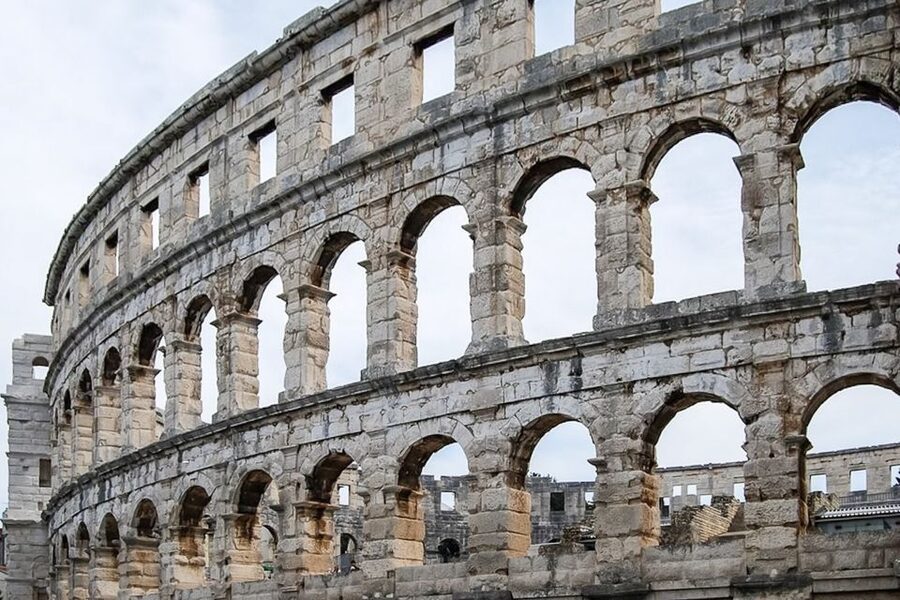
Ancient drama still fills Pula’s arena. This prepaid ticket lets you enter one of Croatia’s finest Roman monuments, walk through the seating levels, look down onto the arena floor, and visit the underground exhibition on ancient olive oil and wine production. I like the freedom to explore at your own pace, and I like that the ticket includes more than an outside view of the amphitheater. The main consideration is that the ticket is entry only: an audio guide is not included, and online booking may not always mean a completely queue-free arrival.
The Arena is easy to reach in central Pula, and a visit takes about an hour for a quick look or up to two hours if you read the information and use the QR codes. I especially like the chance to see the building without the heat and noise of the beach, though summer sun can be intense across the open site.
In This Review
- Key points to know before visiting
- Why Pula Arena deserves time on your Croatia itinerary
- Entering through the main Pula Arena gate
- Walking the arena floor and seating levels
- The underground exhibition on ancient olive oil and wine
- How long to stay, and when the visit works best
- What the $11 ticket is really worth
- Who will enjoy this visit most
- Practical tips for a smoother Arena visit
- Should you buy the Pula Arena ticket?
- FAQ
- Where do I redeem the Pula Arena entrance ticket?
- How long is the Pula Arena ticket valid?
- How long should I allow for visiting Pula Arena?
- What does the ticket include?
- Is an audio guide included?
- Is Pula Arena wheelchair accessible?
- Can I cancel the ticket?
- Can I reserve now and pay later?
Key points to know before visiting
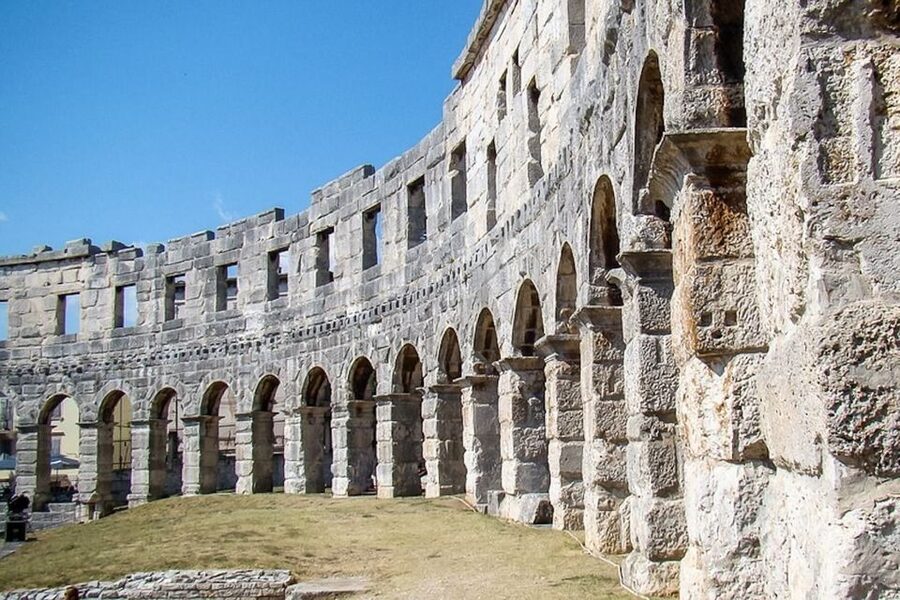
- A 2,000-year-old Roman amphitheater: Walk inside the monument rather than viewing it only from the street.
- The underground olive and wine exhibition: See reproductions of mills, presses, settling tanks, amphorae, and other equipment.
- Plan for 60 to 120 minutes: A short visit covers the main structure, while a slower visit allows time for the QR information points.
- Go early in summer: Morning visits can be quieter, cooler, and easier with children.
- Bring headphones: Information is available through QR codes, but a dedicated audio guide is not included.
- Wheelchair access is good overall: The entire site is accessible except for the lower basement gallery.
Why Pula Arena deserves time on your Croatia itinerary
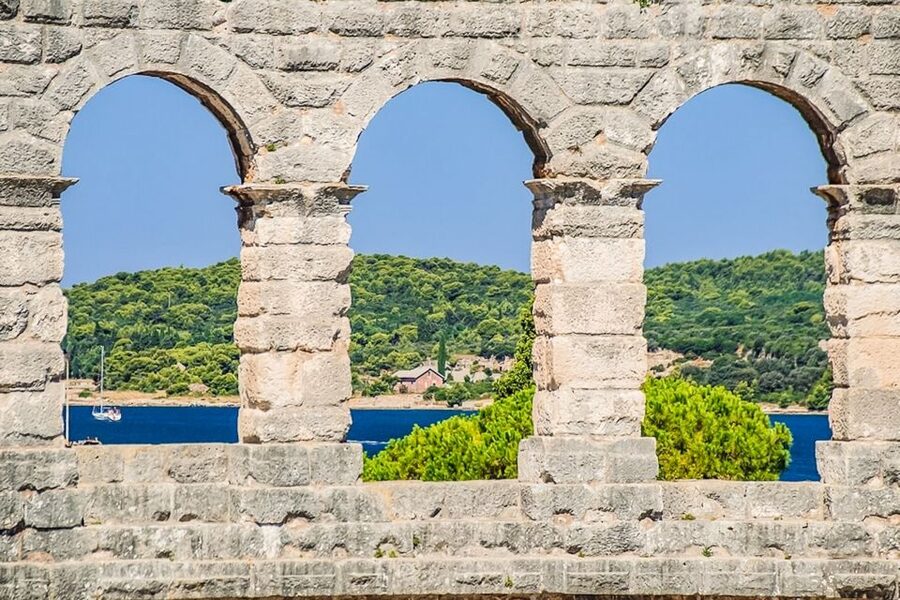
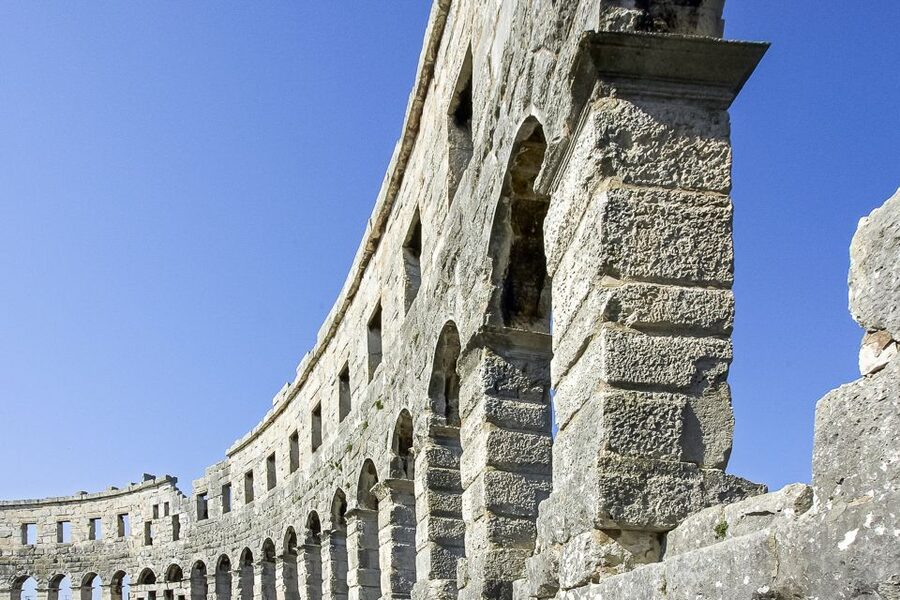
Pula’s Roman amphitheater is not a small ruin tucked behind a museum. It is a huge, highly visible building right in the city, with the sea nearby and modern Pula moving around it. That setting gives the visit unusual force. You can look at the stone seats and arena floor, then step back outside and see ordinary city life carrying on around a place built for public spectacle almost 2,000 years ago.
The building once hosted gladiatorial contests and animal hunts. You are not watching a reenactment during a standard visit, but the arena floor and surrounding seating make the old purpose clear. The scale helps you understand that these events were not private shows. They were major public gatherings for the people of Roman Pula.
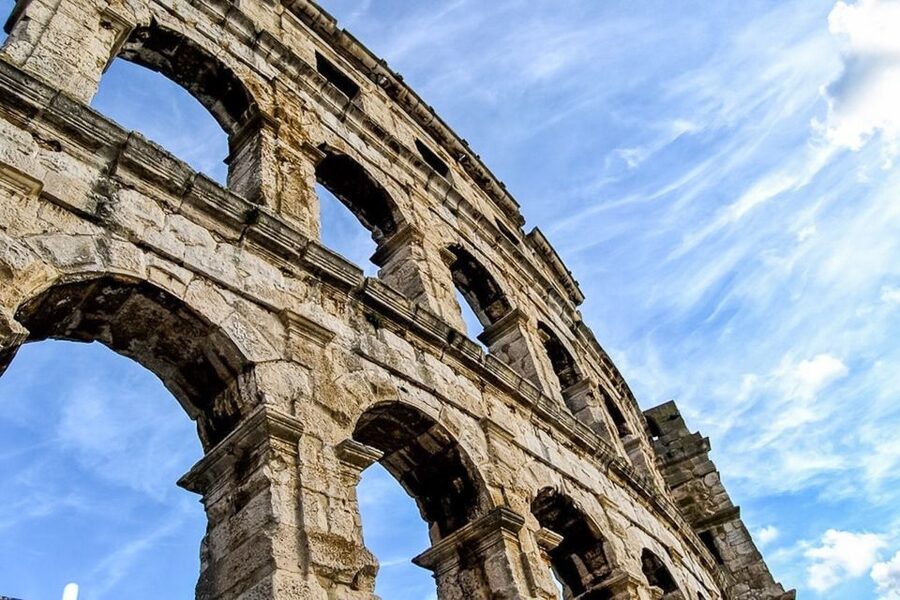
I find the experience most rewarding when you slow down. Take in the outside first, then enter and walk through the interior. From different levels, the shape changes. Some viewpoints show the complete oval and its massive walls. Others bring you closer to the stonework and the practical design of the building.
The Arena is also used today for concerts, festivals, recreation of gladiatorial contests, and other events. If a stage is being built during your visit, you may hear construction noise or see parts of the floor occupied. That can limit the atmosphere, but it also shows how the monument still has a working role in Pula rather than existing only as a protected shell.
A few more Istria trips worth comparing
- Medulin -Kamenjak 5h boat trip with lunch & drinks on Sandra Boat
★ 5.0 · 1,621 reviews - Full-Day Boat Tour of the Medulin Archipelago from Medulin
★ 5.0 · 1,389 reviews - Vrsar: Dolphin Watching Boat Tour including Drinks
★ 4.6 · 1,227 reviews
Entering through the main Pula Arena gate
You redeem the prepaid ticket at the main entrance of Pula Arena. Keep the mobile ticket ready, since it must be scanned. Some visitors have found that staff exchange the mobile voucher for a receipt at the entrance shop before entry, so allow a little time for that step rather than assuming you can walk straight through every queue.
This is one place where expectations matter. An online ticket can make arrival simpler and help you avoid buying on the spot, but it does not guarantee that you will bypass every line. At busy times, staff may still need to scan the code or issue a receipt. The practical benefit is convenience, not a promise of instant entry.
If you want the quietest possible visit, arrive early. Morning has two advantages: the open stone areas are more comfortable before the strongest sun, and large groups are less likely to be moving through the building. An early start also gives you better chances for unobstructed photographs.
At around 9:30 in the morning, the site may still feel calm. One especially early arrival at 8:00 found the Arena nearly empty for the first half hour. Opening arrangements can change, so check the available time before booking, but the general lesson is sound: go early if you dislike crowds.
Walking the arena floor and seating levels
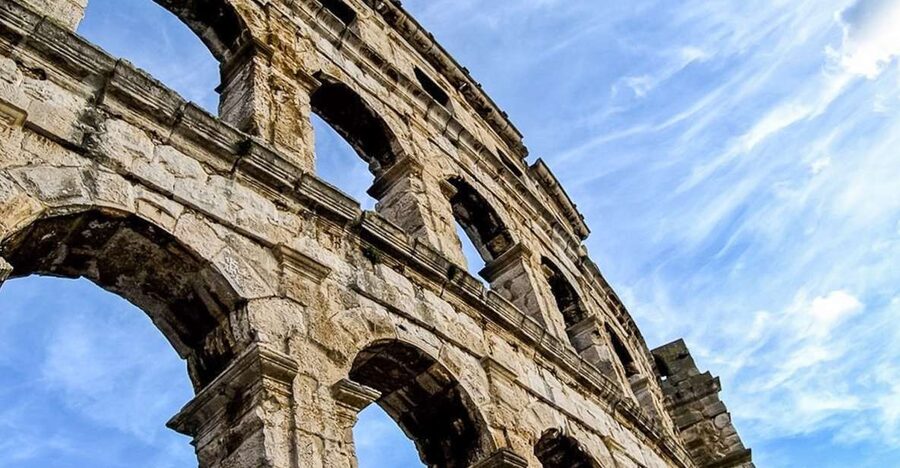
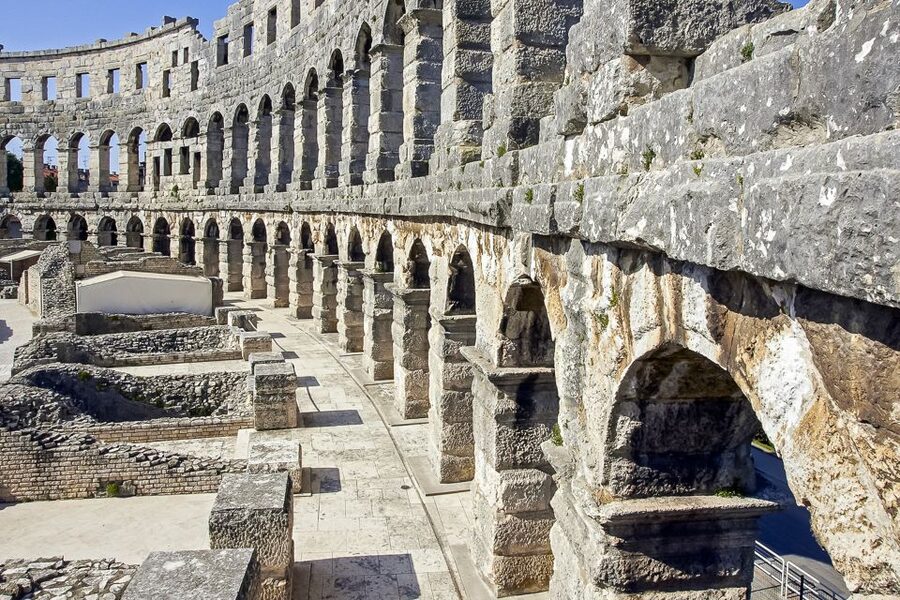
Inside, begin with the broad view. Look across the oval floor and up toward the curved rows of seats. The building’s power comes from its size and proportions, not from a long guided performance. You are free to roam and set your own pace.
The visit works well for families because children can see the structure as a real place rather than a page in a book. The arena floor gives them an immediate sense of where the action took place. You will need to explain the gladiator contests and animal hunts in an age-appropriate way, since the standard ticket does not include a family guide or live storytelling.
The stone seating areas are also a good place to pause. From there, you can study the layout and imagine the crowd gathered for an event. The experience is visual and physical: you are walking through the same type of public building that shaped daily life in the Roman world.
Information is provided at QR points around the Arena. You can scan these with your phone and follow the material at the stops that interest you. Some people find this a useful self-guided system because it lets them choose the amount of detail. It also means you should bring a charged phone and headphones.
The audio side can be inconsistent. A dedicated audio guide is not included with the ticket, and reports from different visits describe QR audio working well at times and being unavailable or unreliable at others. If learning the historical background is important to you, prepare a backup by reading about Pula Arena before arriving.
That limitation is worth noting because the monument itself is easy to understand visually, but the story behind it benefits from explanation. You can enjoy the architecture without a guide, yet the visit becomes more meaningful when you know what the underground rooms were used for and how public entertainment worked here.
The underground exhibition on ancient olive oil and wine
The underground section is the extra feature that makes an inside visit more worthwhile than simply admiring the Arena from outside. The permanent exhibition is titled Istrian Olive and Viticulture in Antiquity. It focuses on two products that have long mattered to Istria: olive oil and wine.
The exhibition includes reproductions of mills, presses, settling tanks, amphorae, and related tools. These objects shift your attention from the dramatic image of gladiators to the practical economy behind Roman life. Oil and wine had to be produced, processed, stored, and transported. The amphorae show how these goods were packaged for movement.
I like this part because it adds everyday detail to the grand monument. The arena tells you how people were entertained. The underground display helps explain how people worked, produced food, and traded goods. Together, the two sections create a fuller visit.
The basement is not simply a dark corridor beneath the seats. It was connected with the functioning of the ancient venue, and today it provides a cooler, more focused place to see the exhibition material. Give it time instead of rushing through after taking photographs outside.
The lower gallery is the one accessibility exception. Almost the whole Arena is wheelchair accessible, but the lower gallery in the basement is not. If someone in your group uses a wheelchair, you can still see most of the site, though the lowest part of the exhibition may not be possible.
Still Istria, at a slower pace:
- 3hours all inclusive Sunset&Dolphin Tour from Medulin on Sandra
★ 5.0 · 1,130 reviews - Dolphin Watching & Sunset Boat Tour With Dinner and Drinks
★ 5.0 · 1,075 reviews - Rovinj: Sunset Cruise with Swim Stop, Drinks, and Fruits
★ 4.9 · 944 reviews - Poreč: Evening Boat Trip to Discover Dolphins
★ 4.7 · 909 reviews
How long to stay, and when the visit works best
A quick visit can take about an hour. That is enough to walk around, see the arena floor, look at the seating, and visit the underground display. If you scan the QR points, read the information, and stop for photographs, plan closer to 90 or 120 minutes.
The visit is self-paced, so you do not need to fill a fixed tour schedule. That makes it easy to fit between other Pula sights. You can combine it with a walk through the city, including the Fortress, Temple of Augustus, and nearby streets, as part of a wider day in Pula. The ticket itself is valid for one day.
Summer conditions deserve practical attention. Much of the experience is open to the sun, and the stone can feel hot during the middle of the day. Wear sensible shoes, carry water, and consider a morning or late-day visit. The information points may encourage you to use your phone, but bright sun can make screens harder to read.
Rain does not make the monument uninteresting, but it can reduce comfort and photo quality. Much of the visit takes place outdoors, so check the forecast and bring suitable clothing. The underground gallery offers some shelter, but it is not a substitute for a fully indoor museum.
Concert preparation can also affect your visit. A stage or equipment may be under construction, with noise in parts of the Arena. This is not necessarily a problem, but it can interrupt the quiet mood and limit your view of the floor. If the building is hosting an event later that day, ask at the entrance what areas remain open.
What the $11 ticket is really worth
At about $11 per person, the ticket is reasonably priced for a major historic site, especially if you spend 90 minutes or two hours inside. You are paying for access to the interior, the seating areas, the arena floor, and the underground permanent exhibition. The price also supports maintenance of a monument that needs constant care.
There is one fair objection: much of the Arena can be seen from outside for free. If you only want a photograph of the façade, the ticket is unnecessary. From the street, you can understand the building’s impressive outline without paying admission.
The inside changes the calculation. You can see the scale from within, sit or stand near the seating areas, look across the floor, and visit the olive and wine exhibition. For anyone interested in Roman history, architecture, or the way ancient public buildings worked, that extra access is the point of the ticket.
The value is weaker if you plan to spend only ten minutes taking photographs. It is stronger if you use the QR points, visit the basement, and take time to look at how the structure is arranged. Families may also find the ticket worthwhile because the open layout gives children room to connect the monument with the stories of gladiators and public shows.
Who will enjoy this visit most
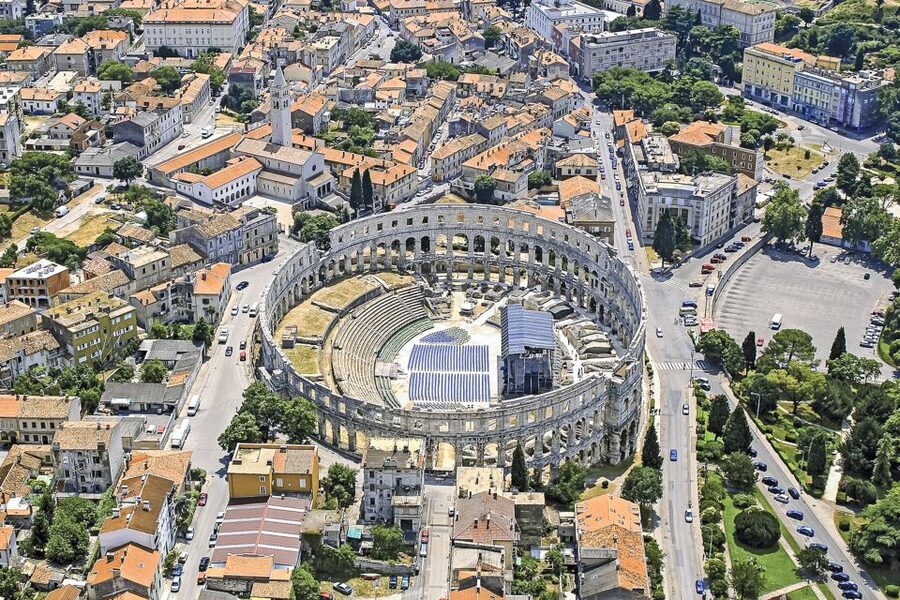
I would recommend Pula Arena to anyone staying in Pula, even if Roman history is not your main interest. The monument is easy to reach, visually striking, and simple to explore without committing to a long guided tour.
History fans will appreciate the preserved architecture and the underground display. The olive and wine material is especially useful if you want more than the usual gladiator story. It connects the monument with Istria’s agriculture and trade.
Families can make good use of the self-guided format. You can keep the visit short if younger children lose interest, or spend longer at the arena floor and QR points. The lack of a guaranteed audio guide means you may need to provide some of the explanation yourself.
This is also a good stop for people taking a break from Croatia’s beaches. Pula has plenty of sun and seaside time, but the Arena gives your day a clear connection to the region’s past. It is a substantial historic sight without requiring a full-day excursion.
I would be less enthusiastic for someone who wants a highly structured tour with a guide speaking throughout. This ticket does not include a live guide, photos with costumed actors, or an audio guide. You receive access, then create your own route.
Practical tips for a smoother Arena visit
- Arrive early, especially in July and August. The site can become hotter and busier later.
- Bring headphones for QR-based audio or information.
- Charge your phone before arrival, since QR points depend on mobile access.
- Allow 90 minutes if you want the full experience rather than a quick look.
- Check for event preparation, since stages and construction can create noise or block sections.
- Use the underground exhibition to see the tools, presses, tanks, and amphorae connected with ancient Istrian production.
- Do not assume skip-the-line access is absolute. You may still need to visit the entrance shop or ticket line for scanning and a receipt.
- Plan for sun. The Arena is wide open, and summer heat can be strong.
Should you buy the Pula Arena ticket?
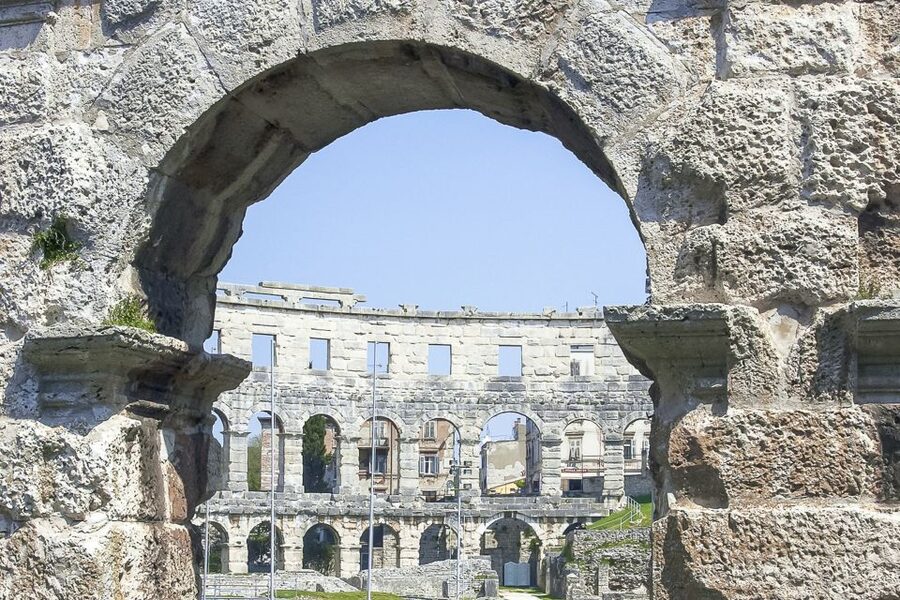
Yes, if you want to enter the monument and spend real time with it. The Arena is impressive from the outside, but the interior gives you the scale, atmosphere, and underground exhibition that make the admission worthwhile. At $11, it offers solid value for a major Pula sight.
Buy it with realistic expectations. This is not a guided tour, and the audio material may not always be available or consistent. If you arrive early, bring headphones, scan the information points, and allow up to two hours, you will get much more from the ticket than a quick photo stop.
The ticket suits history fans, families, first-time visitors to Pula, and anyone wanting a cultural break from the coast. Skip it only if you plan to view the Arena from outside or prefer a fully narrated experience with a guide.
FAQ
Where do I redeem the Pula Arena entrance ticket?
Redeem the ticket at the main entrance of Pula Arena. Staff may scan the mobile code and provide a receipt before you enter.
How long is the Pula Arena ticket valid?
The ticket is valid for one day.
How long should I allow for visiting Pula Arena?
Allow about 60 to 120 minutes. A shorter visit covers the main structure, while a longer visit gives you time for the underground exhibition and QR information points.
What does the ticket include?
It includes entrance to Pula Arena and access to the permanent underground exhibition titled Istrian Olive and Viticulture in Antiquity.
Is an audio guide included?
No. An audio guide is not included. QR information points may provide audio or other material, and you should bring headphones.
Is Pula Arena wheelchair accessible?
The site is wheelchair accessible except for the lower gallery in the basement.
Can I cancel the ticket?
Yes. You can cancel up to 24 hours in advance for a full refund.
Can I reserve now and pay later?
Yes. The booking option allows you to reserve your place and pay nothing at the time of booking.
Just added around Istria
- Pula Sightseeing Walking Tour★ 5.0 · 3 reviews
- Pula Essentials Walking Tour★ 5.0 · 62 reviews
- Pula: Sunset/Night-time Illuminated Transparent Kayak Tour★ 4.0 · 9 reviews
- Pula Discover Scuba Diving Package★ 4.5 · 18 reviews
- Pula Boat Trip with Snorkeling★ 4.0 · 7 reviews
- Pula Kayak, Cliffs & Snorkeling Adventure★ 5.0 · 164 reviews
- Pula Kayaking at Blue Cave with Cliffs Tour and Snorkeling★ 5.0 · 4 reviews
- Pula Arena Amphitheater Admission Ticket★ 4.0 · 68 reviews
Tickets, compared.

Plitvice & Rastoke Guided Day Trip with Ticket
Read our review →
Plitvice Lakes Guided Tour with Entry Tickets
Read our review →
Rastoke & Plitvice Lakes Guided Tour with Ticket
Read our review →
Plitvice Lakes with Ticket & Rastoke Guided Tour from Zagreb
Read our review →
Skip-the-Ticket-Line Museum of Broken Relationships
Read our review →
Plitvice and Rastoke day trip from Zagreb w/ticket (guar. dep.)
Read our review →Browse the lists this tour appears in