
Reviewed · WALKING TOURS
Private Walking Tour in Zagreb with Local Guide
Zagreb reveals itself one story at a time. This private walk links the city’s cathedral, market, medieval Upper Town, Stone Gate, funicular, Gric Tunnel, and coffee squares while a local guide explains how Zagreb grew over roughly 1,000 years. I like the private format, since your group can ask questions without keeping pace with strangers, and I like the focus on everyday life, not just famous buildings.
The guide also puts the city’s recent past in view. Two strong earthquakes, in March and December 2020, damaged central Zagreb, so scaffolding may still cover some buildings. The main drawback is the physical side: steep streets, stairs, and roughly two hours on foot mean you need moderate fitness. The route also includes several outdoor stops, so poor weather could affect your enjoyment.
The tour costs $28.92 per person and runs about 90 minutes to two hours. Past groups have praised guides including Samia Zitouhni, Samra, and Spomenka Sabic for their warmth, clear explanations, and willingness to answer questions. That personal touch is the main reason this walk is worth considering.
In This Review
- Key Points To Know Before You Book
- Why This Short Zagreb Walk Works
- Ban Josip Jelačić Square Starts the Story
- Zagreb Cathedral and the Kaptol District
- Dolac Market and Zagreb’s Everyday Side
- Tkalciceva Street and the Social History of a Lane
- Stone Gate and the Medieval Upper Town
- St. Mark’s Church and the Heart of Gornji Grad
- The Funicular Choice: Ride or Walk
- Gric Tunnel: Zagreb’s Unusual Underground Stop
- Petar Preradović Square and Zagreb’s Coffee Culture
- What the Guides Add
- Price, Pace, and Physical Effort
- Practical Details Before You Go
- Should You Book This Zagreb Walking Tour?
- FAQ
- How long does the private Zagreb walking tour last?
- What is the price of the tour?
- Where does the tour begin?
- Where does the tour end?
- Is this a private activity?
- Does the tour include admission tickets?
- Is the funicular included?
- Can I walk instead of taking the funicular?
- Is the tour suitable for people with limited fitness?
- What is the cancellation policy?
Key Points To Know Before You Book
- A private look at Zagreb’s two historic centers: The route connects Kaptol and the Upper Town, two areas that shaped the city’s political and religious life.
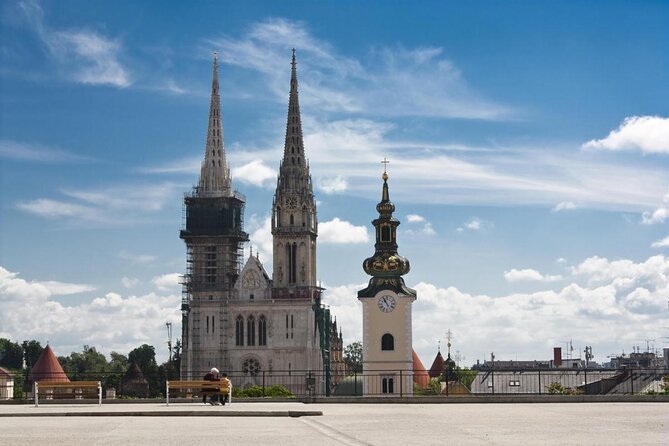
- The cathedral and earthquake damage: Zagreb Cathedral remains a major Croatian symbol, while nearby scaffolding adds a timely layer to the city story.
- Local life at Dolac Market: Morning departures may include a short stop at the city’s produce market, where seasonal food takes center stage.
- A choice at the funicular: You can ride Zagreb’s famously short funicular, at an extra cost, or walk down steep stairs through a park.
- A guide-led cultural explanation: The walk covers faith, politics, food, architecture, social life, and the people who live in Zagreb today.
- A small-group experience: Only your party takes part, making it easier to ask about Croatia, Zagreb, and the rest of your trip.
Why This Short Zagreb Walk Works
Zagreb can feel less obvious than Croatia’s coastal cities. It does not present its story in one dramatic sweep. Instead, you move between a cathedral square, a market, a narrow lane, a medieval gate, government buildings, cafés, and a tunnel.
That makes a local guide useful. You get the basic sights, but you also get the connections between them. The guide explains how religious authority, civic power, food shopping, public squares, and social life shaped the city.
I especially like the tour’s attention to people. The guide talks about Croatian culture and the community that formed here over many centuries. That gives you more than a checklist of buildings. You begin to understand why a square may have one official name and a completely different name in daily speech.
The tour is also a practical first introduction to Zagreb. A family group of eight from Iceland used it at the start of a Croatian trip and received suggestions about what to notice later in the country. That is a useful role for a city walk: it helps you get oriented before moving on.
More Walking Tours in Zagreb
- Zagreb: Small Group Walking Tour City Center and WW2 Tunnels
★ 4.9 · 895 reviews - Zagreb: City and WWII Tunnels Walking Tour
★ 4.9 · 845 reviews - Walking tour of Zagreb
★ 5.0 · 383 reviews
Ban Josip Jelačić Square Starts the Story
The meeting point is Ban Josip Jelačić Square, the large central square at Trg bana Josipa Jelačića. This is a convenient place to begin because it sits between the Lower Town and the older districts uphill.
The square gives your guide a natural starting point for explaining Zagreb’s layout. From here, the route moves toward Kaptol and the Upper Town, where the city’s older religious and political story comes into sharper focus.
Because the meeting point is in a well-known central square, you should have little trouble reaching it using Zagreb’s public transport network. Your mobile ticket is accepted for the experience, and booking confirmation is provided at the time of booking.
Zagreb Cathedral and the Kaptol District
The first major stop is Zagreb Cathedral in Kaptol. Allow about 15 minutes here, with no admission fee listed.
The cathedral is not presented simply as a church. It is described as an identity-building landmark for Croatians, which gives the stop a national meaning as well as a religious one. Your guide can place the building within the larger story of Croatia and Zagreb.
This is also where the effects of the 2020 earthquakes become impossible to ignore. Scaffolding covers parts of many central buildings, and the cathedral area helps explain how natural disasters continue to shape the city’s appearance.
Do not expect a long indoor visit or an extended architectural inspection. The stop is brief and guide-led. Its value comes from the explanation of what the cathedral means to the country and how the surrounding district developed.
Dolac Market and Zagreb’s Everyday Side
Dolac Market is a short stop of about 10 minutes, with no admission fee. It works best in the morning, when the market is active and local food is on display.
This is one of the tour’s most useful changes of pace. After the cathedral’s national and religious importance, Dolac brings you back to daily life. Seasonal food, local shopping, and familiar routines show how people use the city rather than simply admire it.
I would choose a morning start if Dolac is important to you. The description specifically says morning walks may stop here, so the market experience depends on the time of day. A later departure may offer less activity.
The stop is short, so you should not expect a full food tour or much time for shopping. Still, even ten minutes can help you connect Zagreb’s history with the practical life of its residents.
Still Zagreb, at a slower pace:
- From Zagreb: Plitvice & Rastoke Guided Day Trip with Ticket
★ 4.9 · 2,955 reviews - Zagreb: Rastoke & Plitvice Lakes Guided Tour with Ticket
★ 4.9 · 1,897 reviews - Communism & Croatian Homeland War Tour
★ 5.0 · 1,355 reviews - Best of Zagreb with the WW2 Tunnels
★ 5.0 · 973 reviews
Tkalciceva Street and the Social History of a Lane
Tkalciceva Street receives about 10 minutes. Today it is a well-known social street, but the guide asks a more interesting question: what was here before the street became a place for people to meet?
That question turns a familiar dining and café area into a lesson in urban change. The guide explains that this street did not exist in its present form not so long ago, then connects it with earlier centuries of Zagreb’s development.
This is the kind of detail that can separate a useful walking tour from a basic route between monuments. You see the same street you might visit on your own, but you also learn how its role changed.
The short time allocation means this is mainly an orientation stop. If you want to return later for a meal or coffee, note the area during the walk and come back when you have more time.
Stone Gate and the Medieval Upper Town
The stop listed as Petrini Pyli refers to Zagreb’s Stone Gate, or Kamenita vrata. The visit takes about five minutes and is free.
The Stone Gate is described as a special public place where medieval spirits seem to linger. That language points to the gate’s atmosphere, but the practical value is its connection to Zagreb’s old defensive and civic structure.
From here, the route continues into Gornji Grad, the Upper Town. Plan about 20 minutes for this section. The Upper Town is where the walk’s political and medieval themes become strongest.
The guide compares Kaptol and the cathedral with the Upper Town. Historically, Kaptol held greater rank, even though the two areas are not separated by altitude in the simple way you might expect. That distinction helps explain how Zagreb developed as two connected centers with different forms of authority.
Today, the Upper Town contains key political landmarks for the Republic of Croatia. You will hear how the area’s medieval identity survives alongside its modern role in national government.
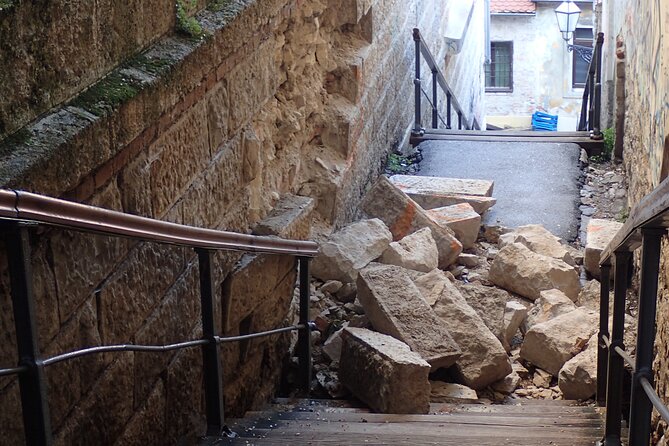
This portion requires walking uphill and across older streets. The route is not designed for someone who wants to avoid slopes or stairs. If you have limited mobility, ask about the exact route before booking.
St. Mark’s Church and the Heart of Gornji Grad
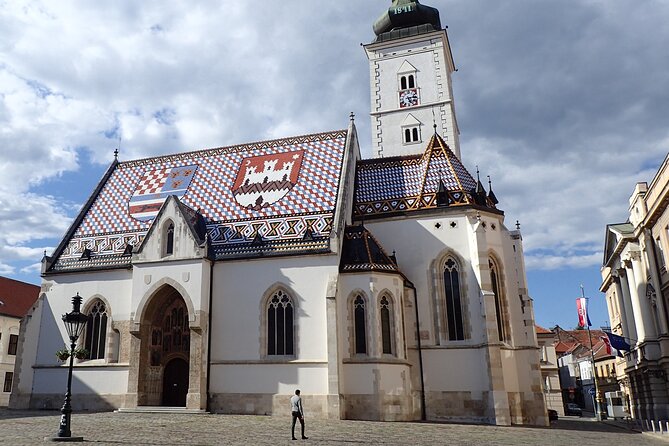
St. Mark’s Church gets about 10 minutes. The guide uses the church and its square to explain the community that lived in the Upper Town.
The stop is not only about the church’s name or appearance. It raises questions about the people who once gathered there and the people who live and work in the district now. That makes the site feel connected to real civic life rather than frozen in the Middle Ages.
You can also expect the guide to explain the importance of St. Mark’s Square within Zagreb’s political world. This is one of the places where the city’s past and the Croatian state’s present meet.
Since the tour moves quickly, you will likely receive a guided explanation rather than extensive time for independent viewing. If you enjoy taking photographs, you may need to do so while listening or return later on your own.
The Funicular Choice: Ride or Walk
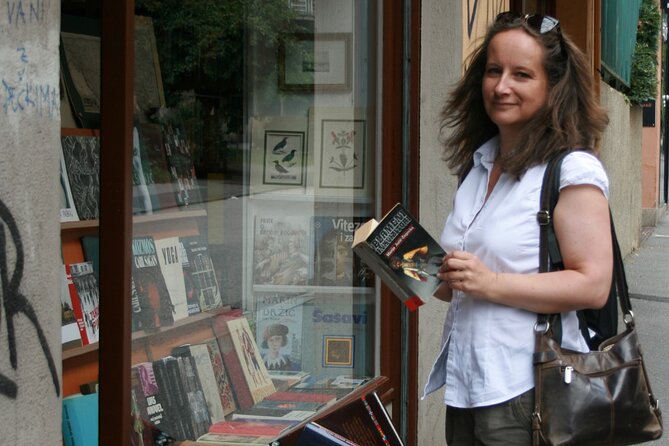
The funicular stop takes about 15 minutes and introduces one of the tour’s nicest practical choices. You can use the short railway or walk down steep stairs through a picturesque park.
The funicular fare listed for 2021 was 5 kunas per person, and admission is not included. Since that price is tied to 2021, check the current fare before your visit.
I like having the choice. If your legs are tired, the railway saves effort and gives you a small Zagreb experience. If you prefer to keep walking, the stairs and park offer a more active route downhill.
Your guide decides the exact choice with you based on fitness and willingness to walk. This is not a forced ride or a hidden extra. The cost is clearly separate, and the alternative is available.
Gric Tunnel: Zagreb’s Unusual Underground Stop
The walk then reaches Gric Tunnel for about 10 minutes. Admission is free.
The guide frames the tunnel with a playful question: is it a fairytale or a nightmare? You first form your own impression, then hear what lies behind its reputation. That approach makes this a good place for storytelling.
The tunnel gives the tour a different mood after the open squares and historic churches. It also shows that Zagreb’s story includes more than surface architecture. You get a brief look at a place with a less polished, more unusual identity.
The stop is short, so the guide’s explanation matters more than a long exploration. If enclosed spaces trouble you, keep in mind that the route includes a tunnel. The available information does not give its full length or any special facilities inside.
Petar Preradović Square and Zagreb’s Coffee Culture
The route includes about five minutes at Petar Preradović Square. Official names can be less useful here than local language: residents may use another name for the square, and some locals may not immediately recognize the formal one.
That is a small but revealing detail about city life. Places acquire everyday names, social meanings, and routines that do not always match the wording on a map.
Along with Tkalciceva Street, this square is described as one of the main stages for Zagreb’s social life. Coffee culture, people meeting, and the city’s fashionable crowd all come into the conversation.
Five minutes is enough to identify the square and explain its role, but not enough to experience its café life in full. You may want to return independently if sitting with a coffee is part of your Zagreb plans.
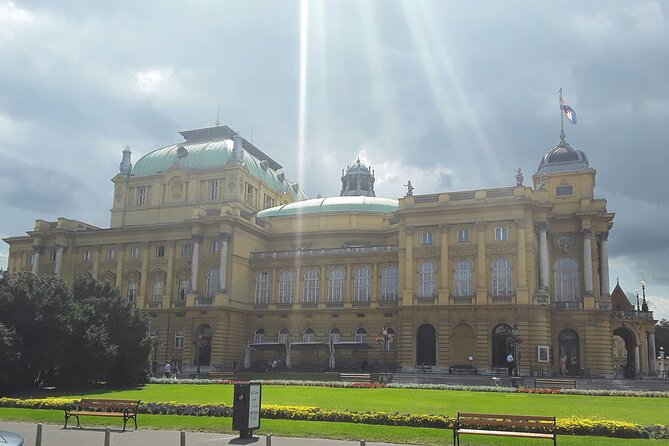
The advertised endpoint is the Croatian National Theatre at Trg Republike Hrvatske 15. The route therefore finishes in a useful central area, known by the theatre rather than only by its street address.
What the Guides Add
The strongest part of this experience is the human explanation. Samia Zitouhni is associated with several especially warm accounts of the walk, while Samra and Spomenka Sabic are also named as guides.
The feedback describes guides who answer questions, explain Croatian culture, and help you notice details for the rest of your trip. One group praised the guide for explaining how the community developed through the centuries. Another family found the walk especially enjoyable during Advent in Zagreb, when the center was full of holiday activity.
The timing can also bring unexpected city life. One walk coincided with the Croatian football team returning home, creating a chaotic but memorable day. That is a reminder that a private guide can help you understand unusual events as they happen.
Guide quality can vary from one departure to another, and the tour is not a scripted museum visit. That is part of its appeal, but it also means the exact emphasis may depend on your guide and your questions.
Price, Pace, and Physical Effort
At $28.92 per person, the tour offers solid value if you want a private introduction rather than a large group route. You are paying for a guide’s time, local context, and the freedom to ask about Croatia and your own plans.
There are no entry fees listed for the cathedral, market, Stone Gate, Upper Town, St. Mark’s Church, Gric Tunnel, or Petar Preradović Square. The funicular is the one extra cost mentioned, and riding it is optional.
The duration is approximately 90 minutes to two hours. That is long enough to cover the main old-city sights without taking half a day from your Zagreb schedule.
You should still plan for active walking. The route includes uphill sections, steep stairs, and the choice between walking downhill or taking the funicular. Moderate physical fitness is advised.
This is a private activity, so only your group participates. That suits couples, families, and small groups that want to ask questions or adjust the pace. A family of eight has taken the tour, so it can work for a larger private party too.
Practical Details Before You Go
You meet at Ban Josip Jelačić Square and finish at the Croatian National Theatre in Zagreb. Both points are in central Zagreb, and the meeting area is near public transportation.
The experience uses a mobile ticket, and confirmation arrives when you book. Service animals are allowed.
Free cancellation is available if you cancel at least 24 hours before the local start time. Canceling or changing the booking less than 24 hours ahead does not qualify for a refund.
The route is mostly outdoors, so think about weather and comfortable shoes. If you need a gentler route, ask before the walk begins, particularly because the itinerary includes the Upper Town, slopes, and stairs.
Should You Book This Zagreb Walking Tour?
I would book this tour if you want a private first look at Zagreb with a guide who can explain culture, politics, religion, food, and daily life in one compact walk.
It suits first-time visitors, families, curious couples, and anyone who prefers conversation to a fixed audio guide. It is also a good opening activity before a wider Croatia trip, since the guide can point out what deserves your attention elsewhere.
I would hesitate if you need a fully accessible route, want long visits inside buildings, or dislike walking hills and stairs. The itinerary is short at each stop, so travelers who want extensive museum time should choose a different activity.
For most visitors who want orientation, local stories, and a flexible private format, the price is fair. Choose a morning departure if Dolac Market matters to you, and check the current funicular fare if you plan to ride.
FAQ
How long does the private Zagreb walking tour last?
The tour lasts approximately 1 hour 30 minutes to 2 hours.
What is the price of the tour?
The listed price is $28.92 per person.
Where does the tour begin?
The meeting point is Ban Josip Jelačić Square, Trg bana Josipa Jelačića, in central Zagreb.
Where does the tour end?
The advertised endpoint is the Croatian National Theatre in Zagreb, at Trg Republike Hrvatske 15.
Is this a private activity?
Yes. Only your group participates in the tour.
Does the tour include admission tickets?
Admission is listed as free at the cathedral, Dolac Market, Tkalciceva Street, Stone Gate, the Upper Town, St. Mark’s Church, Gric Tunnel, and Petar Preradović Square.
Is the funicular included?
No. The funicular ticket is not included. The listed fare was 5 kunas per person in 2021, so you should check the current price.
Can I walk instead of taking the funicular?
Yes. You can choose to walk down steep stairs through a picturesque park instead of using the funicular.
Is the tour suitable for people with limited fitness?
The tour advises a moderate level of physical fitness. It includes uphill walking and steep stairs, although the funicular provides an alternative for part of the route.
What is the cancellation policy?
You can cancel for a full refund up to 24 hours before the experience’s start time. Cancellations or changes made less than 24 hours before the start are not accepted for a refund.
Just added around Zagreb
- Zagreb: VR 3D Immersive Film Experience – Voucher★ 4.6 · 9 reviews
- Zagreb: Explore with an Art Historian – Private Walking Tour★ 4.9 · 9 reviews
- Zagreb: Plitvice With Secured Tickets, Boat And Train Ride★ 4.6 · 15 reviews
- Zagreb: Private custom tour with a local guide★ 4.6 · 48 reviews
- Zagreb: Pub Crawl, 1-Hour of Unlimited Drinks, & Club Entry★ 4.1 · 86 reviews
- Zagreb: Guided City Tour with WWII Tunnels★ 4.9 · 155 reviews
- Zagreb : Must-See Attractions Walking Tour With A Guide★ 4.6 · 11 reviews
- Zagreb BIG Tour – Private Tour★ 4.8 · 48 reviews
Walking Tours, compared.
Walking Tour of Split and Diocletian’s Palace
Read our review →

Krka Waterfalls tour with Trogir Walking tour and Krka panoramic boat cruise
Read our review →
City Walls Early Morning or Sunset Walking Tour
Read our review →Browse the lists this tour appears in