
Reviewed · ZAGREB TOURS
Kumrovec: Croatian Ethno Village & Josip Broz Tito’s Birthplace
Step back into rural Croatia. Kumrovec offers something Zagreb cannot: a preserved village where old homes, workshops, gardens, and household objects remain in their original setting. I especially like the chance to visit Josip Broz Tito’s childhood home and elementary school, then see how ordinary rural life once worked through the village’s crafts and furnished houses.
I also like that this is a private tour, with pickup available and only your own group taking part. The main drawback is the price: at $328.59 per person, this is a costly half-day outing unless you value private transport, personal attention, and a slower visit. The five-hour schedule also leaves little room for adding another major sight.
In This Review
- Key Points Before You Book
- Why Kumrovec Makes a Good Half-Day Trip From Zagreb
- Entering Staro Selo and Its Original Hize
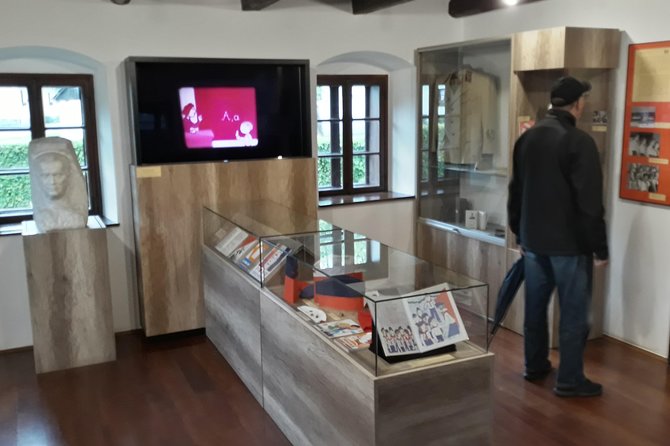
- Tito’s Childhood Home and the Story Behind It
- The School, Arboretum, and Public Memory
- Small Details That Bring the Village to Life
- What the Private Format Changes
- Who Will Enjoy This Tour Most
- Price, Timing, and Cancellation Advice
- Should You Book Kumrovec?
- FAQ
- Where does the Kumrovec tour begin?
- How long does the experience last?
- How much time is spent at Staro selo museum?
- Is museum admission included?
- Is this a private tour?
- Is pickup available?
- What language is the tour offered in?
- Does the tour include food and wine?
- Can I cancel for a full refund?
Key Points Before You Book
- Tito’s birthplace: Visit the home, school, statue, and village connected with Josip Broz Tito, the former leader of communist Yugoslavia.
- Original village setting: The old homes remain on their original sites, rather than being moved together to form a museum.
- Three-hour museum visit: Most of your time is spent inside Staro selo, Kumrovec’s open-air ethnographic museum.
- Private group format: Pickup is offered, and only your group participates.
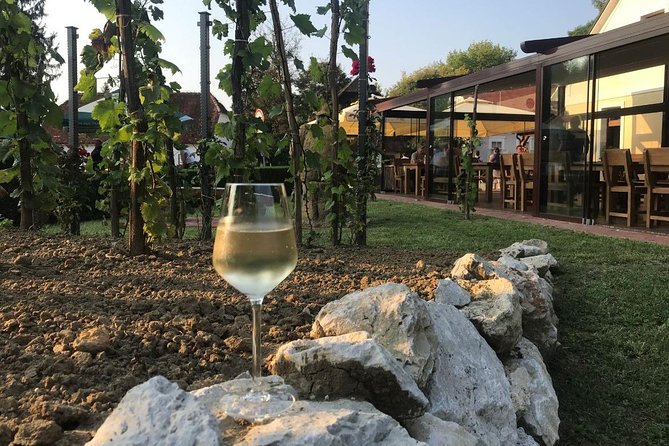
- Food and wine at the end: The visit finishes with a chance to enjoy local food and wine in Kumrovec.
- A strong but limited rating: The experience carries a 4.6 rating from five ratings, encouraging but too small a sample to treat as final proof.
Why Kumrovec Makes a Good Half-Day Trip From Zagreb
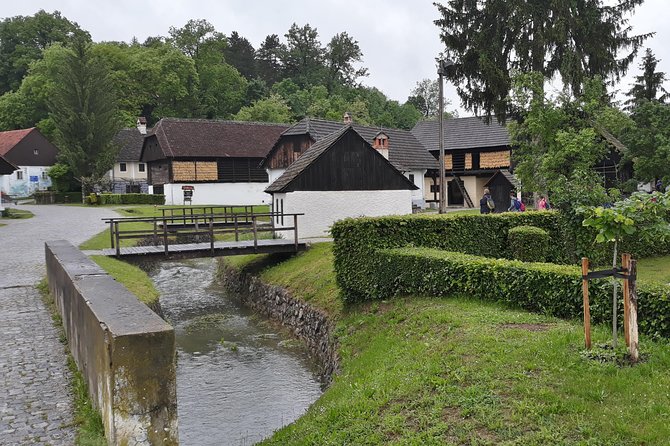
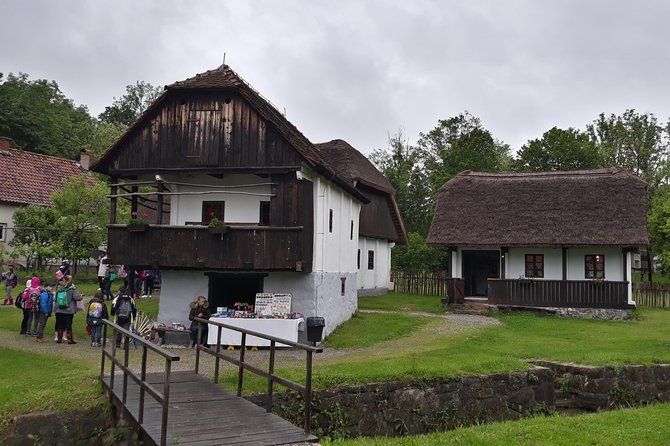
Kumrovec is a useful choice when you want history that feels physical and close at hand. Instead of walking through a large city museum filled with objects behind glass, you move through a real village lined with old houses known as hize. The buildings, gardens, tools, and workshops give you a clear sense of how rural Croatian life looked in the 19th and early 20th centuries.
The village’s story reaches back to 1435, but the strongest draw for many people is Josip Broz Tito. He was born here and later became the leader of communist Yugoslavia. That link gives Kumrovec two layers: it is both a picture of village life and a place tied to one of the most important political figures in modern Balkan history.
I like that the visit does not focus only on Tito. His home is important, but the surrounding buildings explain the work, customs, and family life of the wider community. You can see how a blacksmith worked, how crafts were practiced, and how houses were furnished for daily life. That balance keeps the visit from becoming a single-person memorial.
The timing is also sensible. Pickup begins at 9:00 a.m., and the overall outing lasts about five hours. Roughly three hours are set aside for Staro selo, leaving the rest of the time for driving and the food and wine stop. You get a focused rural excursion without giving up your entire day in Zagreb.
A few more Zagreb trips worth comparing
- From Zagreb: Plitvice & Rastoke Guided Day Trip with Ticket
★ 4.9 · 2,955 reviews - Zagreb: Rastoke & Plitvice Lakes Guided Tour with Ticket
★ 4.9 · 1,897 reviews - Communism & Croatian Homeland War Tour
★ 5.0 · 1,355 reviews
Entering Staro Selo and Its Original Hize
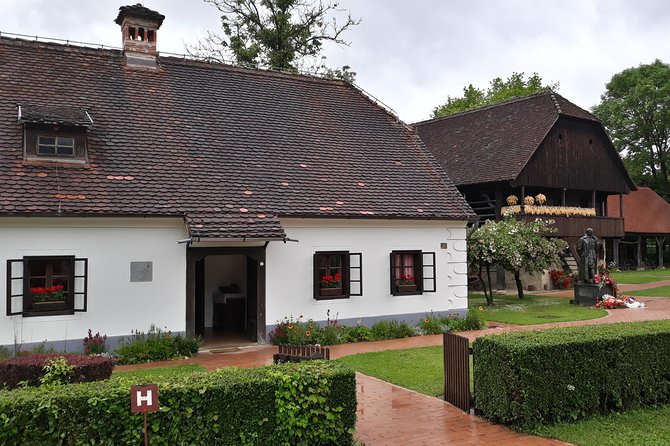
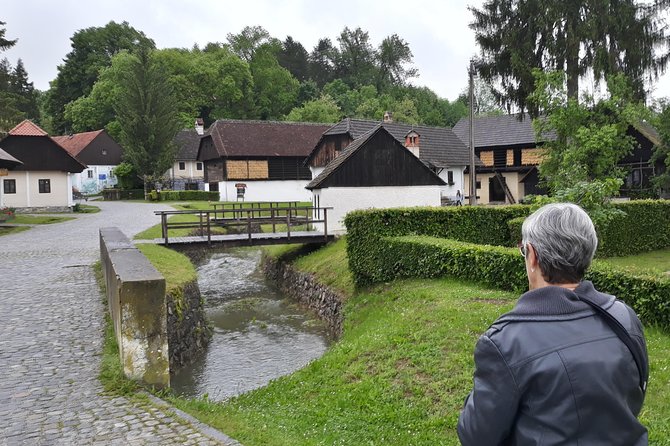
The heart of the visit is Staro selo, an open-air museum made from historic homes and working buildings. The best way to approach it is slowly. Do not rush from doorway to doorway. Look at the relationship between the houses, gardens, paths, and work areas, because the village layout helps explain how people lived together.
One especially valuable detail is that the buildings remain on their original sites. This gives Kumrovec a stronger sense of place than an exhibition assembled from houses moved in from different parts of a country. You are seeing a village that developed where it actually stood, not simply a collection of attractive old structures.
Inside the homes, you might find period furniture, tools, clothing, household goods, and displays devoted to local work. The rooms are arranged to show how people lived, rather than presenting objects as isolated antiques. That makes the museum useful for families and for anyone who wants context without reading long museum labels all day.
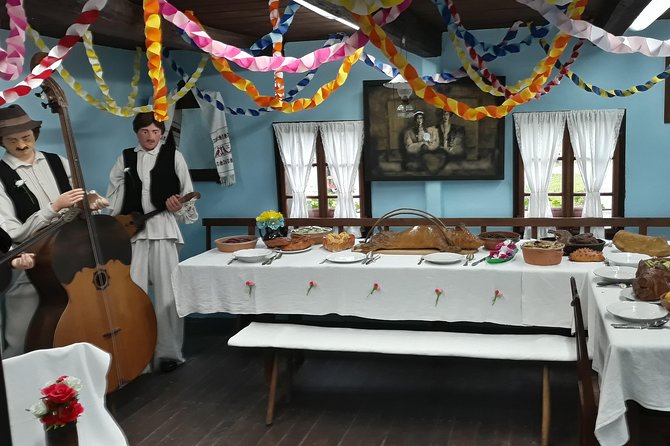
Several buildings focus on traditional occupations. A blacksmith’s workshop, craft displays, and old tools show the practical side of village life. Another display recreates a wedding, complete with musicians, clothing, and tables set for the occasion. Scenes like this help you picture social life, not just work.
The village is pedestrian-only, which makes the visit easier and calmer. You can concentrate on the houses without dealing with passing traffic. Well-kept gardens add to the appeal, especially on a pleasant day, though the experience will naturally depend in part on weather since much of it takes place outdoors.
Tito’s Childhood Home and the Story Behind It
Tito’s home gives the visit its political focus. The house is open to the public, and you can see rooms connected with his childhood. Not every piece of furniture is original, so you should not expect a perfectly untouched time capsule. Still, individual details can make the visit surprisingly personal.
One memorable object is the original cradle. Tito was one of seven siblings, and the cradle’s repeated rocking left scratches on the floor. That small mark says more than a polished display case might. It connects a future head of state with the ordinary noise and care of a large rural family.
Another room presents Tito’s public life, including gifts from foreign dignitaries. This shifts the mood from family history to international politics. You begin with a child in a village home and end up considering the leader whose funeral drew 100 heads of state.
That contrast is what makes the house worth your time. You do not need to know much about Yugoslav history before arriving. A local guide can explain why the birthplace matters and place Tito’s later career into context. If you already know the political story, the house still adds a human scale that books often lack.
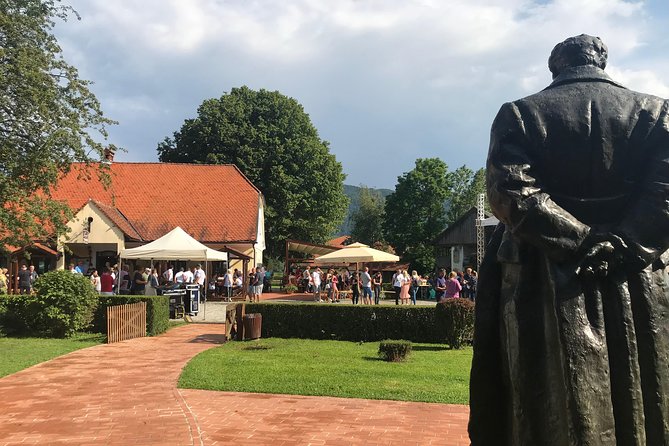
You will also see a bronze statue honoring Tito. His legacy remains complicated, and the tour is best approached as a chance to understand his connection to the village rather than as a simple celebration. The setting presents the facts and symbols, while you can decide how you view his rule.
The School, Arboretum, and Public Memory
Tito’s childhood elementary school adds another piece to the story. It shows the local setting in which his early education took place and helps you understand how small the village was compared with the international stage he later occupied.
The arboretum provides a different kind of stop. Tito hosted public figures there, so the space links the quiet village with the ceremonial side of his political life. It also breaks up the sequence of indoor displays. After moving through houses and workshops, you get a more open setting and a chance to pause.
I would pay attention to how the tour moves between private and public memory. The home tells you about family. The school points to childhood. The statue and arboretum present public commemoration. Together, these stops make the Tito material more rounded than a single room filled with portraits would be.
At the same time, the political emphasis may not suit everyone. If you have little interest in Tito or Yugoslavia, you may find the house and statue less compelling than the ethnographic displays. The good news is that the village itself offers enough material beyond Tito to make the trip worthwhile.
Still Zagreb, at a slower pace:
- Best of Zagreb with the WW2 Tunnels
★ 5.0 · 973 reviews - Plitvice Lakes with Ticket & Rastoke Guided Tour from Zagreb
★ 5.0 · 966 reviews - Zagreb: Small Group Walking Tour City Center and WW2 Tunnels
★ 4.9 · 895 reviews - Zagreb: Skip-the-Ticket-Line Museum of Broken Relationships
★ 4.5 · 847 reviews
Small Details That Bring the Village to Life
Kumrovec’s appeal comes from details that are easy to miss if you only follow the main path. Look at the thatched roofs, for example. They require replacement only about every 30 years, a reminder that preservation here involves ongoing practical work, not just locking an old building and walking away.
The gardens are carefully maintained, and the village has a clean, orderly appearance. That care matters because it lets you focus on the past without feeling that the site has been neglected. It also makes Kumrovec pleasant for people who enjoy architecture, gardening, and photography.
The souvenir shop carries more than standard postcards. You might find shirts and magnets featuring Tito, along with traditional handmade toys. The selection reflects the two sides of the village: political memory and local craft.
There are also two cafes or snack spots within the village. These give you a place to sit before or after the main visit. The tour includes a chance to enjoy local food and wine at the end, but the provided details do not specify exactly what is served or whether that part is included in the listed price. I would treat it as a pleasant closing stop, not assume it is a full meal.
What the Private Format Changes
A private tour can make a real difference at a site like Kumrovec. The museum contains many small objects and historical details, and your guide can adjust the pace to your interests. You can spend more time at Tito’s home, ask about a craft, or move faster through displays that matter less to you.
Pickup is offered for all members of your group, and the tour begins at 9:00 a.m. Since only your group participates, you avoid being folded into a large mixed party. That can be especially helpful if you want questions answered or need a little more time at certain stops.
The tradeoff is cost. At $328.59 per person, the tour is not priced like a simple museum visit. Admission to the museum is included, but the value depends mainly on the private transport and guide service. Group discounts may improve the calculation, especially if you are traveling with several people and can confirm the final group rate before booking.
For a solo visitor, the price is hard to defend unless private service is important to you. For a couple or family that prefers door-to-door arrangements and does not want to plan the journey independently, the convenience may be worth more.
Who Will Enjoy This Tour Most
I would recommend Kumrovec to people who enjoy living-history museums, rural architecture, and 20th-century European politics. Families can find plenty to look at, especially in the furnished homes, craft workshops, and recreated wedding scene.
It also suits anyone who wants a quieter contrast to Zagreb. The pedestrian village, gardens, and old homes offer a change of pace from city sightseeing. You can take in a substantial amount of history without spending the day inside a formal museum.
The tour may be less satisfying if you want dramatic scenery, a long food tour, or several attractions packed into one outing. The published plan centers on one village and gives about three hours to the museum. That focus is a strength if you like detail, but it can feel narrow if you prefer constant movement.
I would also think carefully about the weather. Much of the experience takes place outdoors among the houses and gardens. A pleasant day will make the village more enjoyable, while poor weather could make the same three-hour visit feel long.
Price, Timing, and Cancellation Advice
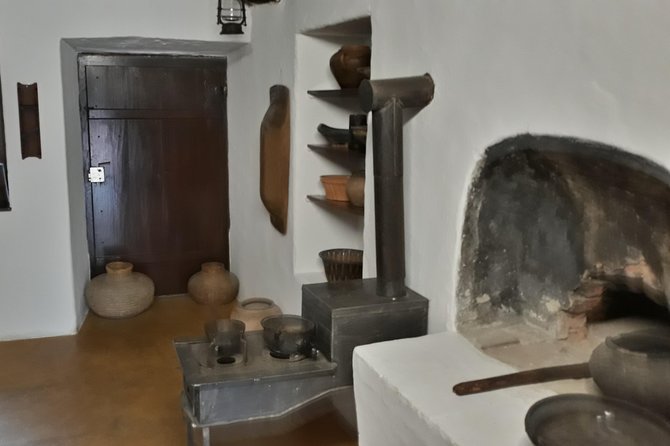
The tour costs $328.59 per person and lasts approximately five hours. Admission to Staro selo is included, and group discounts are offered. Since the food and wine portion is described as part of the visit but not clearly listed as included, confirm that point before paying.
Confirmation arrives within 48 hours of booking, subject to availability. The tour is offered in English, and pickup is available. Most people can participate, but the provided details do not give a specific accessibility assessment for every part of the historic village.
Free cancellation is available if you cancel at least 24 hours before the 9:00 a.m. start time. A cancellation made less than 24 hours before departure is not refundable, and late changes are not accepted. The cut-off follows local Croatian time, so check the clock carefully if you are booking from another time zone.
The rating is 4.6 from five ratings. That is a positive signal, but five is a small number, so I would place more weight on the actual structure of the experience: a private guide, a three-hour museum visit, included admission, and a village with original buildings.
Should You Book Kumrovec?
Book this tour if you want a private, well-focused visit to a preserved rural village and you are curious about Tito’s early life. The original house locations, traditional workshops, gardens, and household displays give the outing real substance. The local food and wine at the end are a welcome finish.
I would hesitate if $328.59 per person feels high or if you mainly want a quick photo stop. Kumrovec rewards patience. Its best moments are small ones: a worn cradle mark, a wedding table, an old tool, a thatched roof, or the shift from a child’s home to the public life of a major political figure.
For history-minded visitors staying in Zagreb, it is a worthwhile private excursion. Just confirm the food inclusions, check the weather, and make sure a three-hour museum visit matches your interests before booking.
FAQ
Where does the Kumrovec tour begin?
The tour begins with pickup in Zagreb, with a stated start time of 9:00 a.m.
How long does the experience last?
The full experience lasts approximately five hours.
How much time is spent at Staro selo museum?
The visit to Staro selo is scheduled for about three hours.
Is museum admission included?
Yes, admission to Staro selo museum is included in the tour.
Is this a private tour?
Yes. Only your own group participates in the activity.
Is pickup available?
Yes, pickup is offered for all members of your group.
What language is the tour offered in?
The tour is offered in English.
Does the tour include food and wine?
The visit ends with an opportunity to enjoy local food and wine in Kumrovec. The provided details do not clearly state whether food and wine are included in the listed price.
Can I cancel for a full refund?
Yes, if you cancel at least 24 hours before the experience begins. Cancellations made less than 24 hours before the start time are not refunded.
Just added around Zagreb
- Zagreb: Explore with an Art Historian – Private Walking Tour★ 4.9 · 9 reviews
- Zagreb: VR 3D Immersive Film Experience – Voucher★ 4.6 · 9 reviews
- Zagreb: Plitvice With Secured Tickets, Boat And Train Ride★ 4.6 · 15 reviews
- Zagreb: Private custom tour with a local guide★ 4.6 · 48 reviews
- Zagreb: Pub Crawl, 1-Hour of Unlimited Drinks, & Club Entry★ 4.1 · 86 reviews
- Zagreb : Must-See Attractions Walking Tour With A Guide★ 4.6 · 11 reviews
- Zagreb: Guided City Tour with WWII Tunnels★ 4.9 · 155 reviews
- Zagreb BIG Tour – Private Tour★ 4.8 · 48 reviews
Zagreb Tours, compared.

Plitvice & Rastoke Guided Day Trip with Ticket
Read our review →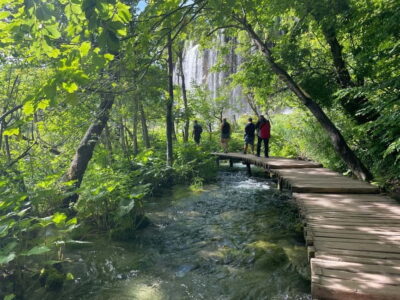
Rastoke & Plitvice Lakes Guided Tour with Ticket
Read our review →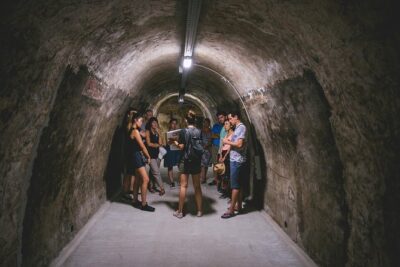
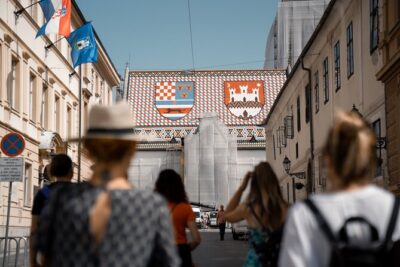
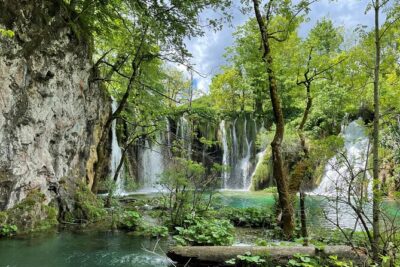
Plitvice Lakes with Ticket & Rastoke Guided Tour from Zagreb
Read our review →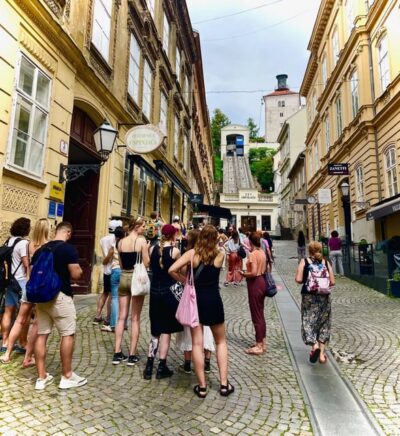
Small Group Walking Tour City Center and WW2 Tunnels
Read our review →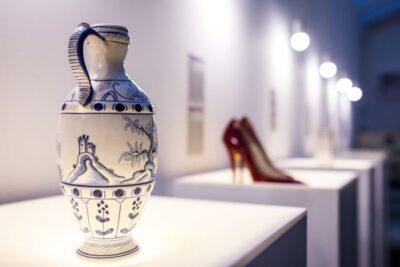
Skip-the-Ticket-Line Museum of Broken Relationships
Read our review →
Browse the lists this tour appears in