
Reviewed · WALKING TOURS
Jump into Zagreb: Walking Tour with local guide
Zagreb reveals itself one story at a time. This 150-minute walk links medieval lanes, the Dolac Market, the WWII tunnel, and the Upper Town in a compact introduction to Croatia’s capital. I especially like the market tasting and the guide’s personal stories about witches, the Black Queen, and the Dragon. The small-group or private format should also make it easier to ask questions and keep the pace comfortable.
There are two important limits right now. The funicular is closed for maintenance, and the Cathedral cannot be visited inside because of renovation. The tour also includes several hills, steps, and uneven streets, so it is not suitable for wheelchair users or people with mobility impairments.
In This Review
- Key points to know before booking
- Why this Zagreb walking tour is worth your time
- Starting at Zrinjevac and reaching Ban Jelačić Square
- Dolac Market, Zagreb’s Belly of the Town
- Tkalčićeva Street and the city’s changing past
- Inside the Gric Tunnel when access allows
- Stone Gate, a candle, and the Upper Town
- The funicular closure and the walk back toward Cvjetni trg
- A local guide makes the difference
- Timing, price, and practical comfort
- Who should book this Zagreb walk?
- Should you book Jump Into Zagreb?
- FAQ
- How long does the Zagreb walking tour last?
- How much does the tour cost?
- What language is the tour conducted in?
- Is the funicular ride included?
- Can I visit Zagreb Cathedral inside?
- Is the WWII tunnel guaranteed to be open?
- Is the tour suitable for wheelchair users?
Key points to know before booking
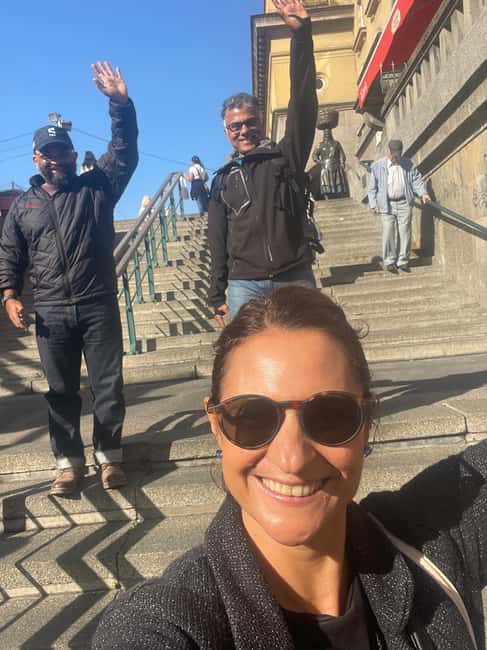
- Dolac Market gives the tour a local pulse: You see where everyday Zagreb shopping happens and taste traditional food at the city’s main farmers’ market.
- The WWII tunnel adds real historical weight: You can enter when it is open, though tunnel access is not guaranteed.
- Stone Gate remains a quiet, personal stop: You can light a candle inside this historic passage.
- The guide brings Zagreb’s legends to life: Expect stories of witches, the Black Queen, the Dragon, and figures from Croatian history.
- The price is unusually low: At $15 per person, the tour offers a useful first look at central Zagreb, with no extra tour costs.
- The route is changing slightly: The funicular ride is currently unavailable because of maintenance.
Why this Zagreb walking tour is worth your time
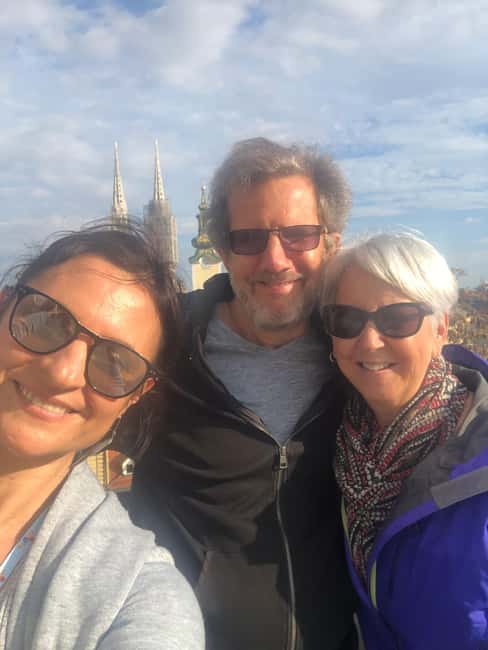
Zagreb is easy to underestimate. It does not announce itself with one huge monument or one famous old quarter. Instead, its character appears as you move from a formal park to a market, from a café street to an old tunnel, and then uphill into the Upper Town.
That makes a guided walk useful. You get the basic sights, but you also get the connections between them. A street that looks ordinary can turn out to have once been a riverbed. A gate can become a place of prayer. A scattered set of metal planets can turn a city walk into a small lesson in astronomy and art.
At $15, this is a strong-value orientation tour. You receive a live English-speaking guide, a walk through central Zagreb, a food tasting, access to key public sights, local recommendations, and small authentic gifts at the end. The guide also shares suggestions for Zagreb’s art and food scene, which is useful if you are staying in the city for more than a day.
The tradeoff is that the tour covers a lot of ground in two and a half hours. You will see many places, but this is not a slow museum visit or a long pause at every church. Think of it as an introduction that helps you decide where to return later.
More Walking Tours in Zagreb
- Zagreb: Small Group Walking Tour City Center and WW2 Tunnels
★ 4.9 · 895 reviews - Zagreb: City and WWII Tunnels Walking Tour
★ 4.9 · 845 reviews - Walking tour of Zagreb
★ 5.0 · 383 reviews
Starting at Zrinjevac and reaching Ban Jelačić Square
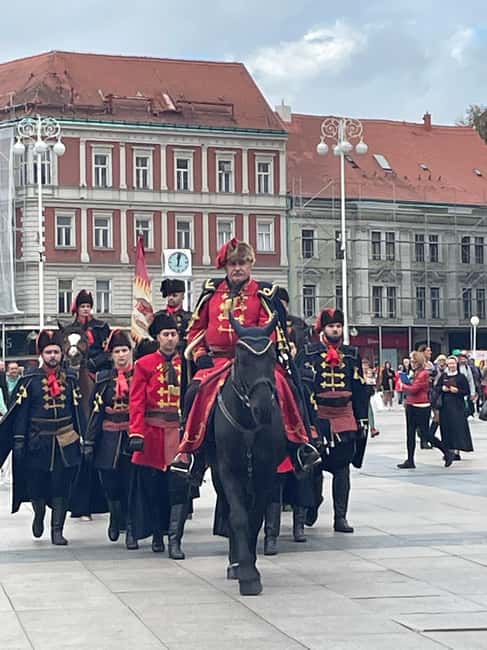
The usual meeting area is around Ruža vjetra at Trg Nikole Zrinskog 2, though the exact starting point depends on the option you book. Zrinjevac Park is a fitting place to begin. Its formal setting gives you a quick sense of Zagreb’s central planning and architecture before the route heads into narrower streets.
From there, the walk continues toward Ban Josip Jelačić Square, the main central meeting point in Zagreb. This is where the city feels most open and active, with pedestrians crossing in different directions and the surrounding streets feeding into the square.
Your guide uses this early stretch to set the scene. You learn how Zagreb’s lower and upper parts fit together, then begin to notice details you might otherwise pass without a thought.
One of those details is the Grounded Solar System. Zagreb’s sun and planets are placed in different parts of the city, so you may spot planets along the route. The idea rewards anyone who looks down side streets and keeps an eye on public art. It is a small, unusual feature, and a good example of how this tour adds something beyond the standard postcard stops.
Dolac Market, Zagreb’s Belly of the Town
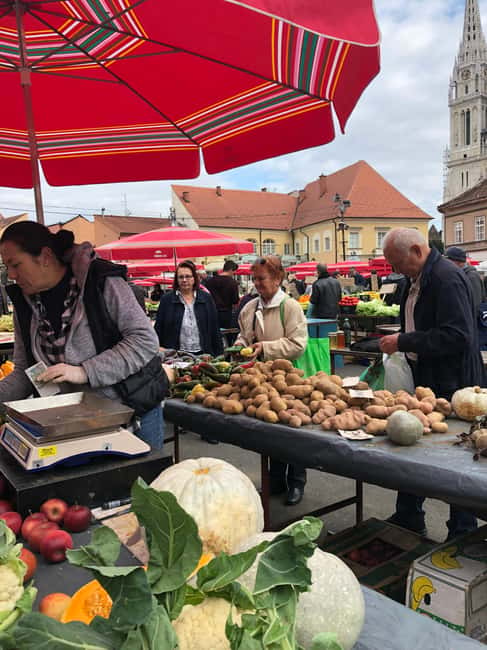
The Dolac Market is one of the best sections of the walk because it shows Zagreb as a living city rather than a collection of monuments. Locals come here for everyday shopping, and the market gives you a look at produce, food habits, and the practical side of city life.
The tour allows about 20 minutes for the market. That is enough time for an introduction and a taste of authentic Zagreb food, though not enough for a relaxed meal or a full market crawl. You should arrive ready to observe, listen, and sample rather than expecting a formal cooking class.
I like this stop because food gives the guide an easy way to explain local customs. You do not simply hear about Croatian traditions in the abstract. You connect them to what people buy and eat.
One point to keep in mind is that the market may appeal more to some people than others. If you prefer churches, architecture, or political history, the market portion could feel less exciting. Still, it provides a useful break from monuments and gives the tour a more grounded feel.
Tkalčićeva Street and the city’s changing past
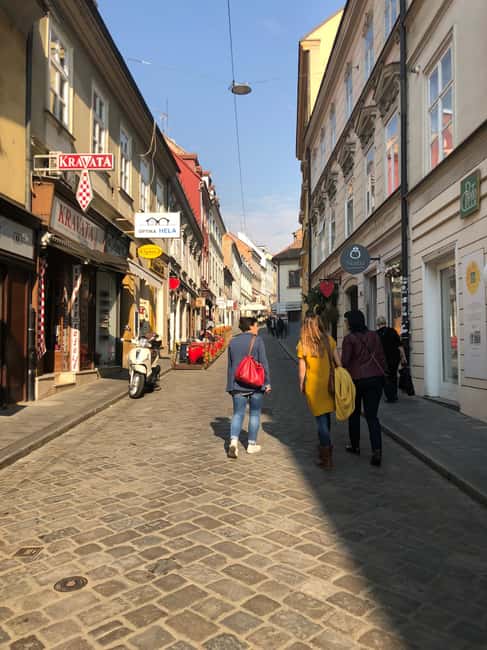
Next comes Ivana Tkalčića Street, usually called Tkalčićeva. Today it is a popular pedestrian promenade lined with cafés and places to stop, but its past is less polished. The street once followed a flowing riverbed.
That contrast makes it a good place for a guide’s explanation. You can look at the current café-lined street while imagining a very different urban setting underneath it. The route here is not just about taking photographs. It shows how Zagreb changed over time.
The guide also uses streets like this to add stories and legends. The tour includes tales of witches, the Black Queen, and the Dragon, along with information about Croatian historical figures and traditions. These stories give the walk some personality, though you should expect a mix of fact, folklore, and local storytelling rather than a formal academic lecture.
The guide’s style matters here. Elisa described her tour with Zrinka as feeling like talking with an old friend, and that warmth seems central to the experience. A guide who enjoys sharing personal enthusiasm can make a short street stop memorable. The tour has also received praise for being friendly, energetic, and attentive, with Zrinka specifically earning strong approval.
Still Zagreb, at a slower pace:
- From Zagreb: Plitvice & Rastoke Guided Day Trip with Ticket
★ 4.9 · 2,955 reviews - Zagreb: Rastoke & Plitvice Lakes Guided Tour with Ticket
★ 4.9 · 1,897 reviews - Communism & Croatian Homeland War Tour
★ 5.0 · 1,355 reviews - Best of Zagreb with the WW2 Tunnels
★ 5.0 · 973 reviews
Inside the Gric Tunnel when access allows
The Gric Tunnel is one of the most distinctive stops. Built as a WWII-era underground shelter, it offers a change of mood from open squares and café streets. The planned visit lasts about 15 minutes.
A tunnel stop is valuable because it gives Zagreb’s 20th-century past a physical setting. Instead of only hearing about wartime fears and civil defense, you walk through a place designed for shelter. It is a brief visit, but it adds weight to the city’s story.
Access depends on whether the tunnel is open. The tour includes the WWII tunnel when possible, but you should not book this experience solely for guaranteed tunnel entry. If it is closed, the guide can still explain its role, but the physical visit will not happen.
This section may also feel less comfortable for anyone who dislikes enclosed spaces. The activity information does not list a separate restriction for claustrophobia, so you should consider your own comfort before booking.
Stone Gate, a candle, and the Upper Town
The route then climbs toward Zagreb’s Upper Town. This is where the walk becomes more atmospheric, with older streets, historic passageways, and a stronger sense of the city’s past.
Stone Gate is a key stop. It is not simply an old archway to photograph. It is also a place of devotion, and you can light a candle there. That small act gives you a chance to pause after the livelier market and café sections.
The stop is scheduled for about 10 minutes. That is enough to hear the story, light a candle if you wish, and take in the setting. You should be respectful here. This is a functioning spiritual place, not just a sightseeing backdrop.
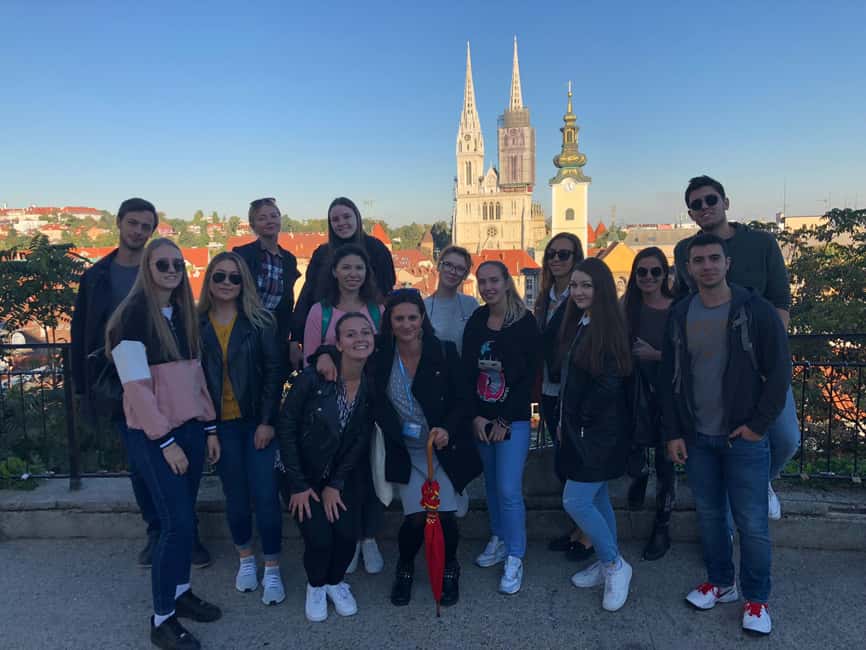
After Stone Gate, the walk continues to St. Mark’s Church. Its roof is among Zagreb’s most recognizable sights, and the church is one of the strongest visual highlights of the route. You can admire it from outside and hear about its importance.
The Cathedral is also part of the central Zagreb story, but you cannot currently go inside because of renovation. That is a real limitation if interior architecture is one of your main reasons for booking. You can still hear about the Cathedral and see it from outside, but the tour does not provide an indoor visit.
The funicular closure and the walk back toward Cvjetni trg
The original experience includes a short ride on Zagreb’s historic funicular, one of the shortest in the world. At present, the funicular is closed for maintenance, so the ride is not available.
That removes one of the tour’s most charming transport moments. It also changes the rhythm of the walk, since the funicular would normally connect the Upper Town and lower city in a quick, memorable way. You should treat the ride as a future possibility, not a current inclusion.
The route finishes around Cvjetni trg and has two possible drop-off points, including Ulica Nikole Tesle 17. This puts you back in a central part of Zagreb, with the option to continue exploring on your own.
If you are visiting in December, the guide also takes you through the Zagreb Christmas Market. That seasonal addition can make the tour feel quite different from the rest of the year, especially in the evening or around the decorated central squares. Since the market is seasonal, do not expect it outside December.
A local guide makes the difference
The strongest part of this experience is not any single landmark. It is the guide’s ability to connect places with stories.
Zrinka has been praised for her passion for Croatia and her understanding of history, art, and legends. A separate visit was described as friendly, lively, and especially attentive. Those qualities matter on a walking tour because the group spends much of its time moving between sights rather than sitting in one place.
You can ask questions as you go, especially in a private or small-group setting. That is useful if you want advice about Zagreb’s art, food, or other places to explore after the tour.
The guide also gives special authentic gifts at the end. The exact gifts are not specified, so do not book this expecting a particular souvenir. Think of it as a personal extra that adds a warm finish to the experience.
The language is English. If you need a tour in another language, this option will not meet that need.
Timing, price, and practical comfort
The tour lasts 150 minutes and costs $15 per person. For that price, the value is very good, especially because the food tasting and other tour elements are included without extra charges during the walk.
The low price does not mean you should expect a private guide unless you select a private option. Small groups are available, and private arrangements may suit you if you want more time for questions or a pace tailored to your interests.
Wear comfortable shoes. The walk includes several central streets, an uphill section to the Upper Town, and historic areas where surfaces may not be perfectly even. Bring water, check the forecast, and dress for the weather. A camera is useful, but do not let photography distract you from the guide’s stories.
Smoking is not allowed during the activity. The tour is not suitable for wheelchair users or people with mobility impairments, and the current route has no funicular ride to reduce the uphill walking.
The activity offers free cancellation up to 24 hours before departure and allows you to reserve now and pay later. Those terms are helpful if your Zagreb plans are still shifting.
Who should book this Zagreb walk?
I would recommend it to first-time visitors who want a clear introduction to the city without spending a full day on a formal tour. It also suits you if you enjoy folklore, food, street life, and small historical details more than long indoor museum visits.
The walk is particularly useful early in your stay. After seeing Dolac Market and hearing the guide’s suggestions about art and gastronomy, you can return to the places that caught your interest.
It may be less suitable if you want a slow architectural tour, guaranteed access to the Gric Tunnel, or an indoor Cathedral visit. The funicular closure is another reason to check current conditions before you book.
Should you book Jump Into Zagreb?
Yes, if you want an affordable, friendly first look at Zagreb that mixes major sights with local stories and a market tasting. The guide’s personal approach, especially Zrinka’s warm and enthusiastic style, is a major strength.
Book it with realistic expectations: you will see the Cathedral from outside, the funicular is currently closed, and tunnel access depends on opening conditions. If those limits are acceptable, $15 buys a well-packed introduction to Zagreb, with a candle at Stone Gate, food at Dolac Market, legends in the old streets, and a few personal touches you are unlikely to get from a guidebook alone.
FAQ
How long does the Zagreb walking tour last?
The tour lasts 150 minutes, or two and a half hours.
How much does the tour cost?
The price is $15 per person.
What language is the tour conducted in?
The live tour guide speaks English.
Is the funicular ride included?
The experience normally includes a ride on Zagreb’s historic funicular, but the funicular is currently closed due to maintenance, so the ride is not possible at this time.
Can I visit Zagreb Cathedral inside?
No. The Cathedral cannot currently be visited inside because of renovation. You can still see it from outside and hear about its past.
Is the WWII tunnel guaranteed to be open?
No. The Gric Tunnel is visited when it is open. Access depends on its operating conditions.
Is the tour suitable for wheelchair users?
No. The activity is not suitable for wheelchair users or people with mobility impairments. Comfortable shoes are recommended because the route involves considerable walking.
Just added around Zagreb
- Drava Rafting Safari★ 4.5 · 18 reviews
- Toast to the Morning After: Zagreb Museum of Hangovers Visit★ 4.0 · 39 reviews
- From Split: Transfer to Zagreb with Stop at Plitvice Lakes★ 4.6 · 44 reviews
- Severin na Kupi: Canoeing and Kayaking on the Kupa River★ 4.6 · 22 reviews
- Rafting/Kayaking adventure river Kupa★ 4.4 · 21 reviews
- Private Walking Tour of Zagreb★ 4.9 · 5 reviews
- From Zagreb: Varazdin Baroque Town & Trakoscan Castle★ 4.9 · 38 reviews
- From Zagreb:Discover North Croatia, Museums, Castle and City★ 5.0 · 26 reviews
Walking Tours, compared.
Walking Tour of Split and Diocletian’s Palace
Read our review →
Krka Waterfalls tour with Trogir Walking tour and Krka panoramic boat cruise
Read our review →
City Walls Early Morning or Sunset Walking Tour
Read our review →Browse the lists this tour appears in