
Reviewed · ZAGREB TOURS
Croatia, Slovenia, Bosnia & Montenegro – 8 Days Private Tour
Four countries, one very full week. This private tour links Zagreb, Ljubljana, Plitvice Lakes, Dubrovnik, Mostar, Kotor, and Budva without making you arrange cars, buses, border crossings, or local guides. I like the personal service of a private vehicle and the chance to shape the pace around your needs. I also like the mix of famous sights and smaller places such as Motovun and Opatija. The main caution is simple: this is an ambitious route, and some days give you only a short taste of each place.
You start in Zagreb and finish at Dubrovnik Airport, with a driver-guide, local guides, hotel pickup and drop-off, bottled water, and admission to listed attractions included. The $3,965.23 per-person price is high, but it covers a remarkable amount of transport and coordination across four countries. If you value ease, privacy, and expert driving more than a slow, single-country holiday, this tour deserves a close look.
In This Review
- Key points to know before booking
- Why a private vehicle makes this route work
- Day 1: Zagreb’s Upper Town and city center
- Day 2: Bled Castle and Ljubljana
- Day 3: Rovinj, Motovun, and Opatija
- Day 4: Plitvice Lakes and Zadar
- Day 5: Trogir and Split
- Day 6: Mostar and Dubrovnik
- Day 7: Kotor and Budva in Montenegro
- What the $3,965.23 price includes
- Who should book this private Croatia and Balkans tour?
- Should you book it?
- FAQ
- Where does the tour start?
- Where does the tour end?
- How long is the tour?
- What time does the tour begin?
- Is this a private tour?
- Which countries does the tour visit?
- Is transportation included?
- Are meals included?
- Are attraction admissions included?
- Can children join the tour?
Key points to know before booking
- Four countries in eight days: Croatia, Slovenia, Bosnia and Herzegovina, and Montenegro are all included, with Zagreb as the starting point and Dubrovnik as the finish.
- Private transport matters here: You avoid rental-car paperwork, unfamiliar roads, bus schedules, and the stress of several international border crossings.
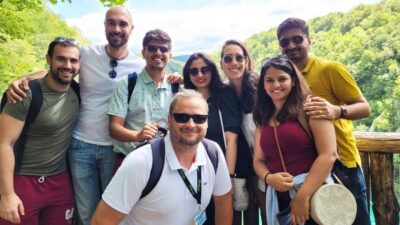
- Robert and Neven received especially strong praise: Robert adjusted activities around personal needs, while Neven was praised for airport patience, careful driving, restaurant advice, and small thoughtful touches.
- Plitvice Lakes is the natural highlight: Four hours cover waterfalls, wooden paths, an electric boat ride, and a panoramic train.
- The schedule favors breadth over depth: You see major sights in Mostar, Dubrovnik, Kotor, and Budva, but the time in some towns is brief.
- The trip ends in Dubrovnik, not Zagreb: Plan your flights carefully, since the included final transfer goes to Dubrovnik Airport.
Why a private vehicle makes this route work
This part of southeastern Europe is easy to admire and harder to organize. The route crosses several national borders, uses winding coastal roads, and links places where public transport would take extra planning. Having one driver-guide with you keeps the trip moving and lets you spend your energy looking out the window rather than checking bus departures.
The private format is especially useful for couples, families, or small groups with different walking speeds. Robert was praised for changing the day around physical ability, interests, and preferences. Neven also earned high marks for being direct about meeting times and for driving calmly on narrow and winding roads.
That personal care is a major part of the value. Neven waited through a delayed airport arrival, had water and Bajadera chocolates ready, and later surprised the group with beers suited to their tastes. These touches do not replace good sightseeing, but they can make a complicated eight-day route feel relaxed.
You should still expect plenty of time in the vehicle. The route is geographically broad, and the schedule moves from inland Croatia to Slovenia, Istria, Dalmatia, Bosnia and Herzegovina, and Montenegro. If you prefer long café breaks and several nights in each city, this pace will feel rushed.
A few more Zagreb trips worth comparing
- From Zagreb: Plitvice & Rastoke Guided Day Trip with Ticket
★ 4.9 · 2,955 reviews - Zagreb: Rastoke & Plitvice Lakes Guided Tour with Ticket
★ 4.9 · 1,897 reviews - Communism & Croatian Homeland War Tour
★ 5.0 · 1,355 reviews
Day 1: Zagreb’s Upper Town and city center
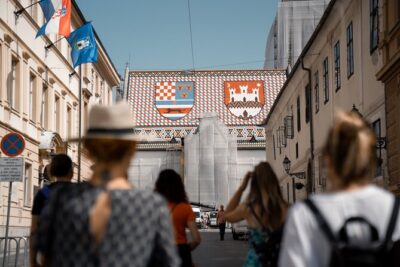
The tour begins with pickup at the Zagreb airport or from your accommodation. The first city visit lasts about four hours and focuses on central Zagreb, including Ban Jelačić Square, the Cathedral, and the medieval Upper and Lower Towns.
Zagreb is a good opening stop because it gives you an immediate sense of Croatia beyond its coast. The city has a Central European feel, with old streets, public squares, and layers of architecture from different periods. A guide can help connect the landmarks to Croatia’s politics and past instead of leaving you to simply photograph them.
Admission is free for this portion, and the timing gives you enough to get your bearings without spending the whole day indoors. If your flight arrives late, confirm exactly how the first day will be adjusted. The tour description allows a direct start from the airport, but your usable sightseeing time will depend on your arrival.
Day 2: Bled Castle and Ljubljana
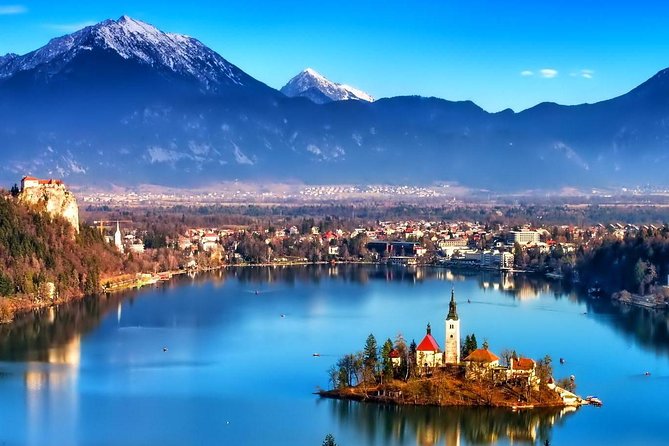
After breakfast, you cross into Slovenia for Lake Bled and Bled Castle. The castle sits on a 130-meter cliff above the lake, with views toward the water and its famous island. The site includes a Romanesque tower, Renaissance courtyards, and a museum with older artifacts.
The castle is one of the trip’s classic postcard stops, but the appeal is not only the view. Its position explains why the site mattered as a defensive and administrative center. Bring shoes suitable for uneven surfaces, since a hilltop castle and old-town streets are not the place for flimsy footwear.
The visit lasts about four hours, including the castle experience and the surrounding area. You will not have unlimited time for every lakeside activity, so think of this as a focused introduction rather than a complete Lake Bled stay.
The next stop is Ljubljana, Slovenia’s capital, where you spend the night. The two-hour visit centers on the Old Town, with its river, Baroque buildings, medieval touches, and dragon symbols. Ljubljana is compact and easy to explore on foot, so a guided introduction followed by free time can work well here.
I would pay attention to the overnight location. Staying in or near the walkable center gives you a chance to see Ljubljana after the main sightseeing period, when the streets feel less hurried. Two hours is enough for a useful orientation, but not enough for every museum or viewpoint.
Day 3: Rovinj, Motovun, and Opatija
This is one of the most varied days. You return to Croatia and head into Istria, beginning with Rovinj, a coastal town built around a rocky peninsula. Pastel houses, narrow lanes, a harbor, and the hilltop Church of St. Euphemia give the town a strong Venetian influence.
The two-hour visit is well suited to wandering. Go slowly through the lanes, then make your way toward the church for views over the sea. The town also has nearby beaches and Punta Corrente, where olive groves offer a change from stone streets.
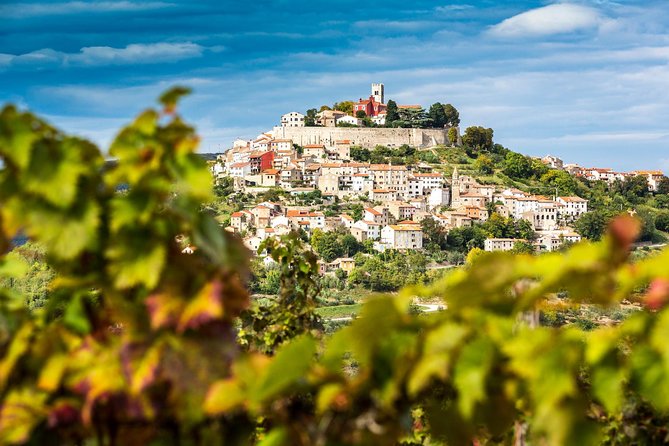
Motovun is a very different experience. This fortified medieval town rises on a 277-meter hill above the Mirna Valley. The one-hour stop includes its Venetian walls, cobbled streets, central square, historic loggia, and the Church of St. Stephen.
Motovun is known for black truffles and its annual film festival, details that give the place more personality than a quick photo stop. The hilltop setting also means this may be a demanding walk for anyone with limited mobility. Ask your guide about the easiest approach and how much uphill walking is involved.
The day ends in Opatija, a historic resort on the Kvarner coast. Its 12-kilometer Lungomare promenade, Angiolina Park, Belle Époque villas, and Maiden with the Seagull statue reflect the town’s former role as a resort for Habsburg-era visitors.
Two hours here can be a pleasant evening pause. Opatija is less about checking off monuments and more about a waterfront walk, gardens, and a meal near the sea. After two active stops, that slower mood is welcome.
Still Zagreb, at a slower pace:
- Best of Zagreb with the WW2 Tunnels
★ 5.0 · 973 reviews - Plitvice Lakes with Ticket & Rastoke Guided Tour from Zagreb
★ 5.0 · 966 reviews - Zagreb: Small Group Walking Tour City Center and WW2 Tunnels
★ 4.9 · 895 reviews - Zagreb: Skip-the-Ticket-Line Museum of Broken Relationships
★ 4.5 · 847 reviews
Day 4: Plitvice Lakes and Zadar
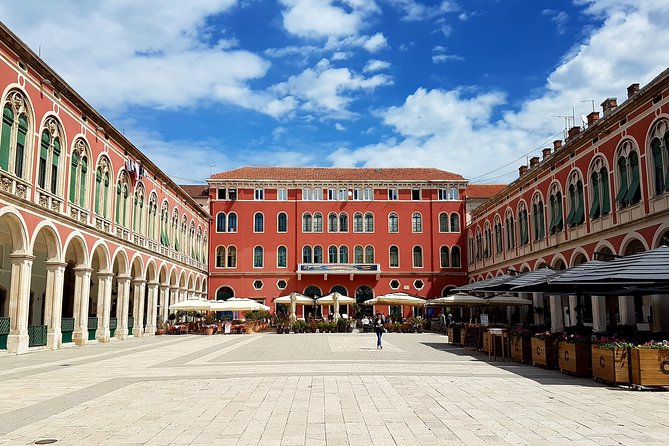
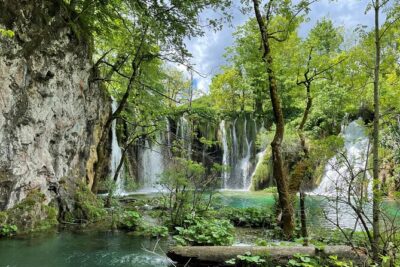
Plitvice Lakes is likely to be the most memorable natural stop. The national park contains 16 turquoise lakes connected by more than 90 waterfalls, with wooden footbridges and forest paths leading around the Upper and Lower Lakes.
The guided visit lasts about four hours and includes Veliki Slap, Croatia’s tallest waterfall at 78 meters, along with Sastavci Falls. An electric boat crosses Lake Kozjak, and a panoramic train helps cover more ground without turning the whole day into a hard hike.
The combination of walking and transport is important. Plitvice can be tiring because of uneven paths, stairs, and constant stops for views. Wear supportive shoes and keep your hands free for railings and photographs. Four hours gives you a strong overview, but the park is too large to treat as a quick roadside attraction.
Late afternoon brings you to Zadar for a two-hour visit and overnight stay. Zadar combines Roman remains, medieval streets, and newer public features beside the Adriatic. The short visit is best used for the historic center and waterfront atmosphere rather than trying to see every part of the city.
Day 5: Trogir and Split
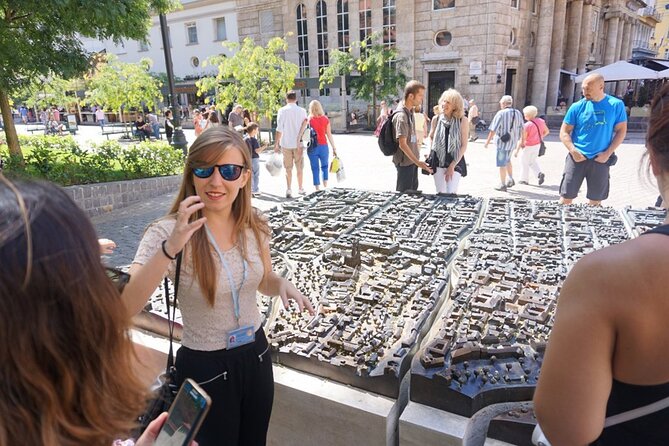
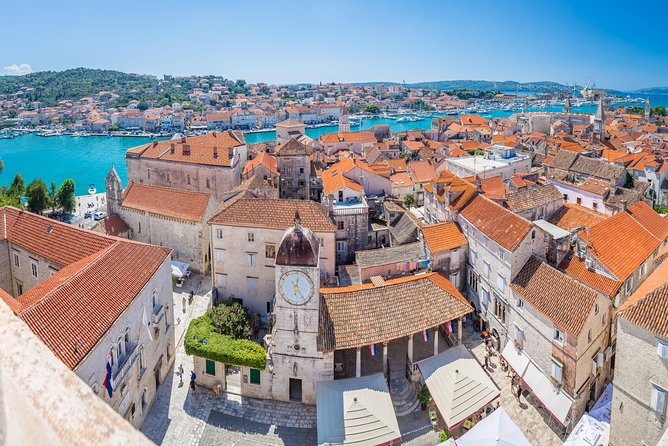
The drive along the Dalmatian coast leads to Trogir, a UNESCO-listed town on a small island. Its compact center packs together Hellenistic, Roman, medieval, and Venetian layers, making it one of the most rewarding guided walks on the route.
The three-hour visit allows time for St. Lawrence Cathedral, Radovan’s Portal, Cipiko Palace, the Kamerlengo Tower, the Renaissance Loggia, and the waterfront. St. Lawrence Cathedral was built over several centuries, from the 13th through the 16th century, and its mixture of Romanesque and Gothic forms rewards a closer look.
Trogir is small enough to explore on foot but full of details. A guide is useful here because the most important features are architectural rather than enormous. Radovan’s Portal, dated to 1240, is particularly easy to miss if you are moving too quickly.
You reach Split later in the day and spend the night in centrally located accommodation. The two-hour visit focuses on the Old Town, including the remarkable remains of Diocletian’s Palace. Split is not a museum sealed behind gates. Ancient walls, homes, shops, cafés, and lanes share the same space, giving the center a lived-in feel.
The central hotel location matters. Split’s historic core is most enjoyable when you can walk out in the evening without arranging another ride.
Day 6: Mostar and Dubrovnik
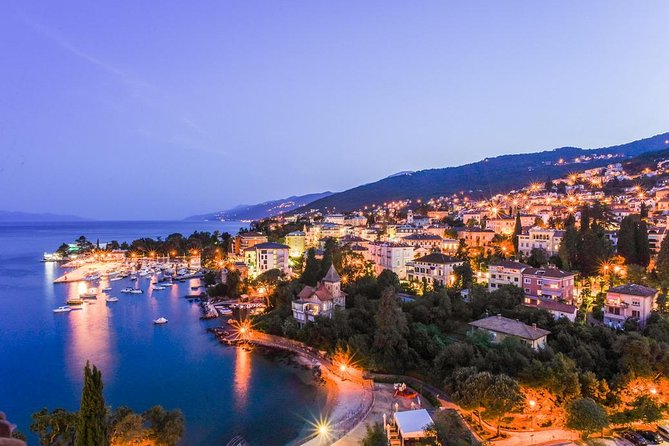
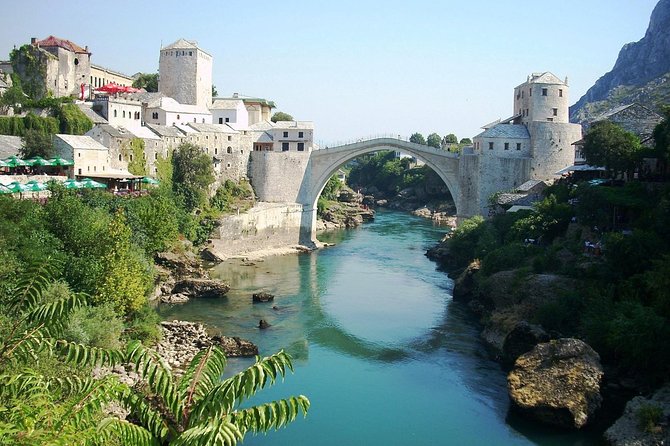
The border crossing into Bosnia and Herzegovina brings you to Mostar, a city shaped by Ottoman, European, and wartime history. The Old Bridge, or Stari Most, arches over the Neretva River and is the visual center of the four-hour visit.
The old bazaar area on Kujundžiluk Street, the Koski Mehmed Pasha Mosque, cobbled lanes, and river views provide plenty to see. The mosque’s minaret offers a broad view for those comfortable with the climb, but the guide can help you judge the effort.
Mostar also asks for a slower emotional response. Its rebuilt bridge represents connection, but the city’s war history remains part of the experience. A good guide can explain that past without reducing Mostar to a single tragic chapter.
Walking can be difficult here, especially on uneven stones and steep sections. One person on the tour found Mostar fascinating but physically demanding and suggested giving more time to Dubrovnik instead. That is useful advice: if mobility or heat is a concern, discuss the balance with your driver-guide before the day begins.
You continue to Dubrovnik in the afternoon and spend the night in or near the Old Town. Two hours is only an introduction, so your lodging location becomes important. Staying close to the historic center gives you a chance to walk the walls or explore the lanes after the organized sightseeing ends, if those activities fit your schedule and ticket arrangements.
Day 7: Kotor and Budva in Montenegro
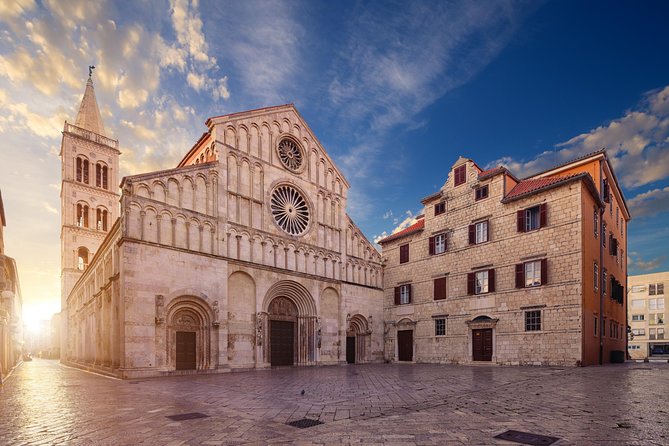
The final full day crosses into Montenegro for Kotor and Budva. Kotor’s Old Town sits within the dramatic Bay of Kotor, surrounded by steep limestone mountains. The compact Venetian center includes narrow lanes, stone buildings, and a strong sense of place.
The two-hour stop works as a walking orientation. If you want to climb far above town or spend time inside several churches and museums, you will need to ask how the schedule can accommodate that. The attraction here is the combination of old streets and the huge natural walls around the bay.
Budva follows with three hours at the city walls and along the coast. Budva is more beach-oriented than Kotor, with sandy shores, clear water, and mountain views. The old fortified center gives you a historical counterpoint to the resort atmosphere.
You return to Dubrovnik in the evening. This is another long day, and border traffic can affect timing. The private vehicle gives you flexibility, but it cannot remove delays at international crossings. Keep your plans for dinner and evening activities loose.
What the $3,965.23 price includes
At nearly $4,000 per person, this is not a budget tour. The value comes from the scale of the service: private transport, a driver-guide, local guiding, hotel pickup and drop-off, bottled water, listed admissions, and line-skipping at many popular sites.
You are paying to connect four countries without renting a car. You also avoid the cost and hassle of piecing together transfers between Zagreb, Slovenia, Istria, Plitvice, Dalmatia, Mostar, Dubrovnik, and Montenegro.
Food and drinks are not included unless specifically stated. Hotel arrangements may be available as an option, and one booking experience included hotels with good breakfasts and food overall. Confirm exactly what accommodation level and room setup are included in your chosen package before paying.
The tour has a 4.9 rating from seven reviews, which is encouraging but still a small sample. The strongest praise centers on the guides, especially their driving, flexibility, local suggestions, and personal care. That is the real product here.
Who should book this private Croatia and Balkans tour?
I would recommend it to first-time visitors who want a broad introduction and do not want to drive. It also suits couples and small groups who value privacy, airport transfers, and the ability to adjust the pace.
It is a good match for people who want major landmarks but also appreciate smaller towns such as Motovun and Opatija. Families may like the private format, since children must be accompanied by an adult and the schedule can be discussed with the guide.
I would hesitate if your ideal holiday means three or four nights in one place. Dubrovnik, Ljubljana, Split, and Kotor all reward extra time, while this route gives you an overview of each. You should also be comfortable with several walking-heavy stops, winding roads, and border crossings.
The tour starts at 9:00 a.m. and ends with a complimentary transfer to Dubrovnik Airport, about 25 minutes from the city center. You can cancel for a full refund up to six full days before the start time. Cancellations two to six days ahead receive 50 percent, while cancellations less than two days ahead are nonrefundable.
Should you book it?
Book this tour if you want the Balkans made easy, private, and broad. The best reasons are the careful driving, the ability to adjust the days, and the rare chance to connect four countries in one organized route.
Do not book it expecting a restful beach holiday or a slow cultural stay. You will see a great deal, but you will trade depth for range. If you accept that bargain, this is a strong choice for an efficient first visit, especially when Robert, Neven, or another equally attentive guide is behind the wheel.
FAQ
Where does the tour start?
The tour starts in Zagreb, Croatia, with pickup available from the airport or another agreed location.
Where does the tour end?
The tour ends with a transfer to Dubrovnik Airport, also known as DBV.
How long is the tour?
The tour lasts approximately eight days.
What time does the tour begin?
The stated start time is 9:00 a.m.
Is this a private tour?
Yes. Only your group participates in the activity.
Which countries does the tour visit?
The route covers Croatia, Slovenia, Bosnia and Herzegovina, and Montenegro.
Is transportation included?
Yes. Transportation, hotel pickup and drop-off, a driver-guide, and bottled water are included.
Are meals included?
No. Food and drinks are not included unless otherwise specified.
Are attraction admissions included?
Admissions are included for listed sites such as Bled Castle, Motovun, Plitvice Lakes, Trogir, Split, Mostar, Kotor, and Budva. Some city visits have no admission charge.
Can children join the tour?
Yes, but children must be accompanied by an adult. Most participants can take part.
Just added around Zagreb
- Zagreb: Explore with an Art Historian – Private Walking Tour★ 4.9 · 9 reviews
- Zagreb: VR 3D Immersive Film Experience – Voucher★ 4.6 · 9 reviews
- Zagreb: Private custom tour with a local guide★ 4.6 · 48 reviews
- Zagreb: Pub Crawl, 1-Hour of Unlimited Drinks, & Club Entry★ 4.1 · 86 reviews
- Zagreb: Plitvice With Secured Tickets, Boat And Train Ride★ 4.6 · 15 reviews
- Zagreb: Guided City Tour with WWII Tunnels★ 4.9 · 155 reviews
- Zagreb : Must-See Attractions Walking Tour With A Guide★ 4.6 · 11 reviews
- Zagreb BIG Tour – Private Tour★ 4.8 · 48 reviews
Zagreb Tours, compared.
Plitvice & Rastoke Guided Day Trip with Ticket
Read our review →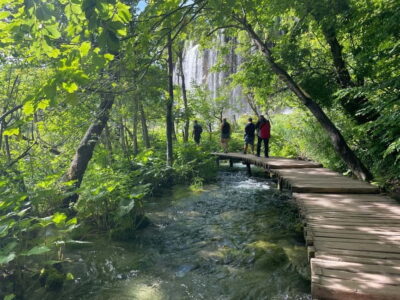
Rastoke & Plitvice Lakes Guided Tour with Ticket
Read our review →
Plitvice Lakes with Ticket & Rastoke Guided Tour from Zagreb
Read our review →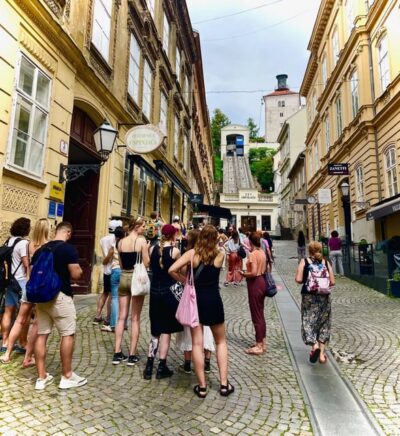
Small Group Walking Tour City Center and WW2 Tunnels
Read our review →
Skip-the-Ticket-Line Museum of Broken Relationships
Read our review →
Browse the lists this tour appears in