
Reviewed · OLD TOWN TOURS
Trogir Old Town Walking Tour
Trogir rewards a slow first walk. This guided outing makes the old town easier to read, pairing 2,300 years of history with local stories, landmarks, and daily life. I like the clear focus on the compact historic center, and I like that you can ask your guide about Croatia instead of simply following a rehearsed speech. The main consideration is that the core walk is described as about 60 minutes, so it may feel brief if you want long visits inside every sight.
I also like the friendly, personal tone praised by several people who took the tour, especially the guide Ivan, who was described as warm, funny, and easy to approach. The route includes the promenade, city square, market area, and Cathedral of St. Lawrence, but food, drinks, and wheelchair access are not included.
In This Review
- Key points to know before booking
- Why Trogir works so well on foot
- Starting at the North Gate with a local guide
- From Roman Tragurium to medieval Trogir
- Cathedral of St. Lawrence and the city square
- The market and modern life inside an old town
- Walking the promenade
- Hidden corners, questions, and the guide’s style
- Who will get the most from this $23 walk
- Timing, booking, and what to bring
- Should you book the Trogir Old Town Walking Tour?
- FAQ
- Where does the Trogir Old Town Walking Tour meet?
- How long does the tour last?
- What language is the tour conducted in?
- How much does the tour cost?
- What sights are included in the walk?
- Are food and drinks included?
- Is the tour suitable for wheelchair users?
- Can I cancel the booking?
Key points to know before booking
- Meet at the North Gate: Look for the blue umbrella at the entrance to Trogir’s old town.
- A compact history lesson: The walk connects Roman Tragurium with medieval Trogir and modern Croatian life.
- St. Lawrence Cathedral is a main landmark: Its place in the town gives the route a strong architectural focus.
- The market adds local character: You hear how an everyday trading place fits into the old town.
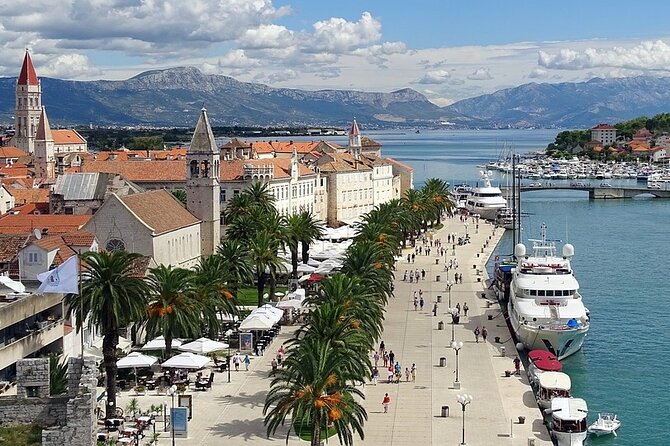
- The promenade slows the pace: The waterfront offers a useful change from narrow streets and stone buildings.
- English only: The tour is led in English and is not suitable for wheelchair users.
Why Trogir works so well on foot
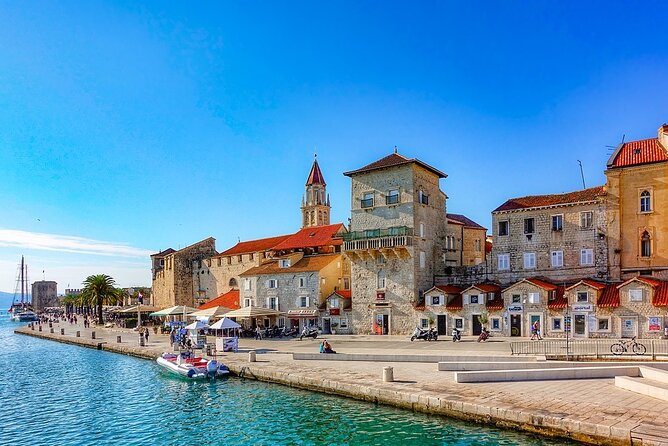
Trogir is the kind of place where a short walk can cover a long stretch of time. The old town brings together the remains of the ancient Roman settlement of Tragurium, the medieval city, and the practical rhythms of a modern Croatian town.
That mixture is the real reason to take a guided walk here. Without context, you might simply see old stone walls, a church, a square, and a waterfront. With a guide, those pieces become part of a longer story about how the city developed and how people still use it.
I like that this is not presented as a museum-only experience. The route includes the old town’s hidden corners, but it also makes room for the market and promenade. You get the grand monuments and the ordinary places where local life continues.
The tour is listed at $23 per person. That is a fair price if you want an introduction before exploring on your own. You are paying mainly for orientation, explanation, and the chance to ask questions. It is less suitable if you expect lengthy interior visits, a meal, or a full half-day program packed with attractions.
More Old Town Tours in Split
- Split: Old Town and Diocletian Palace Walking Tour
★ 4.9 · 4,727 reviews - Split: Diocletian Palace & Old Town Guided Walking Tour
★ 4.7 · 882 reviews - Diocletian’s Palace and Old Town SMALL GROUP Walking Tour
★ 5.0 · 502 reviews
Starting at the North Gate with a local guide
Your meeting point is the North Gate of Trogir’s old town. Look for the blue umbrella. This is a useful detail because the historic center can feel confusing when you first arrive, with stone lanes and several possible approaches from the waterfront.
Meeting outside the gate also gives the walk a natural beginning. You start at the edge of the old town, then move into the older core with a guide who can explain what you are seeing as the route unfolds.
The activity information describes the main walk as 60 minutes, while availability may show time slots ranging from one to four hours. You should check the exact starting time and duration when booking. The central promise is a guided old-town walk, not a fixed full-day excursion.
Several positive comments point to the guide’s manner as a major strength. Ivan received praise for being enthusiastic, smart, funny, and warm. Another person noted that the guide made the subject accessible and encouraged questions. That matters in Trogir because the best part of a short walk is often the explanation between the major stops.
From Roman Tragurium to medieval Trogir
The tour sets out to cover about 2,300 years, beginning with the Roman settlement of Tragurium and moving toward medieval Trogir. That long span gives you a useful way to understand the town rather than treating every building as an isolated object.
A Roman beginning helps place Trogir in the wider story of Dalmatia. The town did not appear all at once as a medieval postcard. Its streets and surviving remains reflect layers of settlement, power, trade, religion, and daily use.
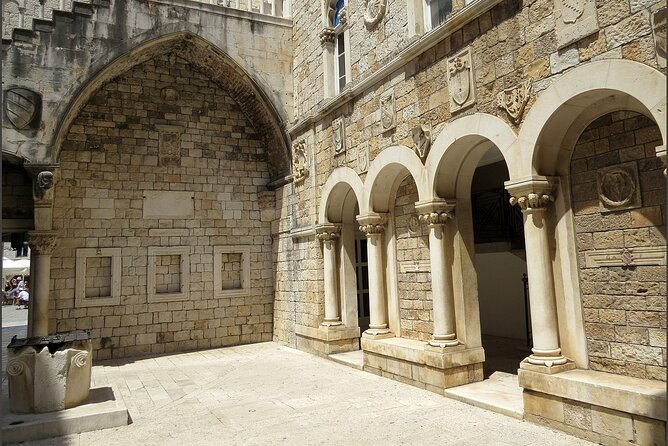
The medieval period is especially important to the character of the old town. This is when the stone lanes, civic spaces, religious buildings, and defensive features became part of the city you see today. A guide can point out how these parts relate to one another, something that is easy to miss when you walk alone.
I appreciate the time travel idea here because it gives the tour a simple shape. You begin with the ancient past, move through the medieval city, and finish by considering how the old town works today. It is a good approach for first-time visitors who want a framework before returning to explore at their own pace.
The drawback is time. A single hour cannot explain every corner in detail. If you are already familiar with Dalmatian history or want specialist architectural discussion, you may find the overview too quick. For most people, though, a short introduction can be exactly enough to make a later independent walk more rewarding.
Cathedral of St. Lawrence and the city square
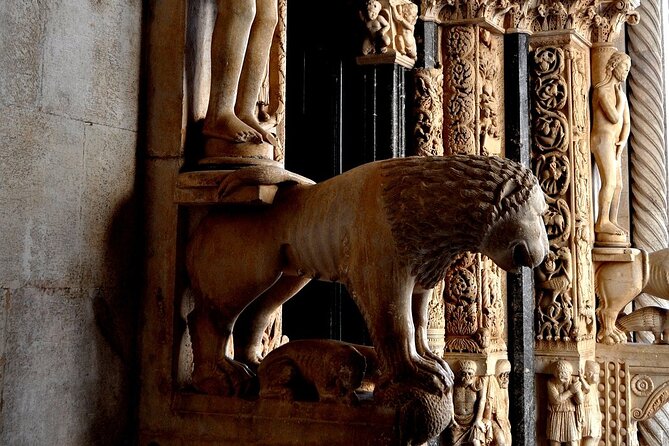
The Cathedral of St. Lawrence is one of the key sights on the route. The tour gives you a chance to see this major landmark as part of the old town rather than as a disconnected stop.
The cathedral also helps explain the importance of the city square. Religious buildings and civic spaces often tell you how a historic town organized public life, and the guide can connect the architecture to Trogir’s wider development.
The square is another strong stop because it offers a break from the tight streets. You can look at the surrounding buildings, listen to the story of the town, and get a clearer sense of how the old center was arranged.
A practical tip: bring water and sun protection. One person specifically praised the guide for seeking shaded places whenever the group stopped. That tells you the guide pays attention to comfort, but the stone old town can still feel warm, especially when you pause in open spaces.
The tour does not include food or drinks, so plan around that. You can treat the walk as a first look, then choose your own café or meal afterward. That keeps the tour flexible and avoids forcing your day around a fixed restaurant stop.
More Walking Tours in Split
- Walking Tour of Split and Diocletian’s Palace
★ 5.0 · 2,588 reviews - Krka Waterfalls tour with Trogir Walking tour and Krka panoramic boat cruise
★ 5.0 · 1,659 reviews - Split & Diocletian’s Palace Walking Tour
★ 5.0 · 1,125 reviews - Walking Tour of Split with a ‘Magister’ of History
★ 5.0 · 1,122 reviews
The market and modern life inside an old town
The local market is a useful part of the walk because it moves the experience beyond monuments. You hear a story about the market and see how an old setting supports everyday activity.
This is where the tour’s promise of local life becomes most convincing. Historic centers are not only collections of beautiful facades. They are also places where people shop, meet, work, and pass through. A market story can make the old town feel lived-in rather than frozen in the past.
I would pay attention to this section if you are interested in food culture and daily routines. The supplied information does not promise tastings or a market meal, so you should not arrive expecting a culinary tour. Instead, think of the market as a window into the city’s present.
The balance between ancient remains and modern use is one of the tour’s best ideas. You may begin by thinking of Trogir as an old settlement, then notice how the same streets remain part of normal city life.
Walking the promenade
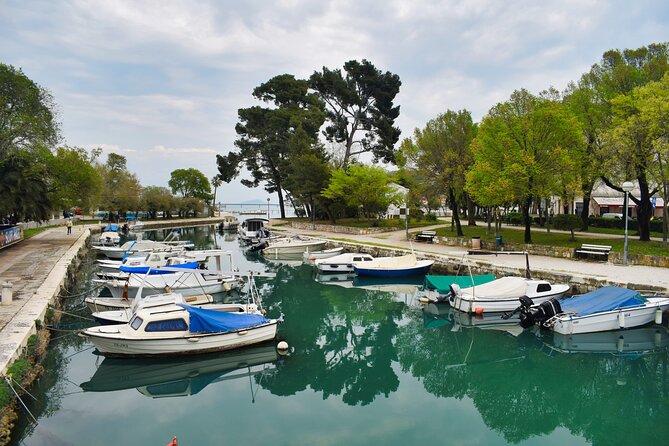
The promenade adds a different view of Trogir. After the narrow lanes and built-up historic core, the waterfront gives you room to look outward and consider the town’s position beside the sea.
The route includes a walk along the promenade, but the available information does not promise a long waterfront stay or a particular viewpoint. I would treat it as part of the overall circuit, not as a separate sightseeing cruise or scenic excursion.
Still, this change of setting improves the hour. A good walking tour needs a little variety. The promenade lets you stretch your view, while the old town provides the close-up details.
It also helps you get your bearings. After the tour, you will have a clearer sense of how the old town connects to the waterfront and where you might want to return. That is practical value, especially if Trogir is one stop in a larger Dalmatian itinerary.
Hidden corners, questions, and the guide’s style
The route promises more than the most obvious monuments. You explore hidden corners of the old town and can ask about the city and Croatia at the end.
That final question period may be the most useful part for independent visitors. Ask about local customs, places connected with the market, the meaning of a building, or how to spend the rest of your time in Trogir. The activity specifically encourages questions, and the personal reviews praise the guide for being approachable.
The best guide-led walks leave you with a better set of questions, not just a list of dates. Here, the emphasis appears to be on explaining the town in a friendly way. One person called the tour informative and strongly recommended it, while another praised the guide for making the subject interesting and accessible.
The review record is very positive overall, with a 4.8 rating from seven reviews. The praise is strongest for the guide’s knowledge, humor, warmth, and ability to keep the walk engaging. One three-star review gives only limited detail, noting the part through the old town, so there is not much information about what caused the lower score. I would read the rating as a strong sign of satisfaction, but not as a guarantee that every person will want the same pace or level of detail.
Who will get the most from this $23 walk
I would recommend this tour to first-time visitors who want a clear introduction to Trogir without spending several hours on a formal history program. It suits people who enjoy walking, asking questions, and learning how famous sights fit into local life.
It is also a good choice if you have limited time. The route focuses on the old town, so you can get an overview of the cathedral, square, market, narrow lanes, and promenade in one organized visit.
Families and mixed-age groups may appreciate the short format and conversational approach, although the information does not give a recommended minimum age or describe special activities for children. You should decide based on your group’s comfort with a guided historic walk.
Independent explorers can use it as a map in story form. Afterward, you can revisit the places that caught your attention instead of wandering without context.
I would be more cautious if you need step-free access. The tour is not suitable for wheelchair users. The information also does not specify the exact route surface, seating, group size, or how much time is spent inside the cathedral, so ask the provider if those details matter to you.
Timing, booking, and what to bring
The advertised price is $23 per person. Food and drinks are not included, and there is no transport listed, so you should plan to reach the North Gate on your own.
The meeting point is simple: North Gate, blue umbrella. Arrive with enough time to locate the gate without rushing. The old town’s layout is compact but can be unfamiliar on a first visit.
The activity is offered in English with a live guide. Starting times vary, so check availability for your chosen date. The listing gives a duration range of one to four hours, while the main description calls the walking portion 60 minutes. Confirm the specific slot before paying if the length of the experience affects your schedule.
You can cancel up to 24 hours ahead for a full refund, and the reserve-now, pay-later option lets you keep plans flexible. Those terms are useful in Dalmatia, where weather and changing day plans can affect a walking itinerary.
Bring comfortable shoes, water, and sun protection. You do not need special equipment, but you should be ready for a town walk with stops at open squares and along the waterfront.
Should you book the Trogir Old Town Walking Tour?
Book it if you want a friendly, focused introduction to Trogir and value a local guide who explains more than dates and building names. The mix of ancient settlement, medieval streets, cathedral, market, city square, and promenade gives you a well-shaped first look for $23.
I would especially choose it early in your visit, then use the remaining time to return to the places that interest you. The walk is not designed to replace a full museum day, a food tour, or a long architectural study.
Skip it if you prefer exploring entirely alone, need wheelchair access, or expect a lengthy tour with included refreshments. For most first-time visitors who want context, local perspective, and a chance to ask questions, it is a sensible and good-value way to begin in Trogir.
FAQ
Where does the Trogir Old Town Walking Tour meet?
The meeting point is at the North Gate of Trogir’s old town. Look for the blue umbrella.
How long does the tour last?
The main walking tour is described as about 60 minutes. Availability may show durations from one to four hours, so check the specific option and starting time when booking.
What language is the tour conducted in?
The live tour guide conducts the experience in English.
How much does the tour cost?
The listed price is $23 per person.
What sights are included in the walk?
The walk includes Trogir’s old town, the Cathedral of St. Lawrence, the city square, the local market area, hidden corners, and the promenade.
Are food and drinks included?
No. Food and drinks are not included.
Is the tour suitable for wheelchair users?
No. The activity is listed as not suitable for wheelchair users.
Can I cancel the booking?
Yes. You can cancel up to 24 hours in advance for a full refund. You can also reserve now and pay later to keep your plans flexible.
Just added around Split
- Slatine – Island Hopping Excursion (Trogir/Blue Lagoon/Shipwreck)★ 4.0 · 24 reviews
- Krka Waterfalls & Primošten from Trogir, Seget, Čiovo & Kaštela★ 5.0 · 18 reviews
- Island Hopping Boat Excursion with Lunch (Trogir,Blue Lagoon, Šolta)★ 3.5 · 6 reviews
- From Trogir, Seget, Okrug: Krka Waterfalls & Šibenik Culture Tour★ 5.0 · 10 reviews
- From Split & Trogir: ATV Quad Tour on Island Čiovo★ 5.0 · 21 reviews
- Split: Blue Lagoon Boat Trip with Lunch, Wine and Snorkeling★ 5.0 · 3 reviews
- Split Sunset Stand Up Paddle Tour★ 5.0 · 16 reviews
- Split: Sunset Guided Kayaking Tour★ 4.8 · 71 reviews
Old Town Tours, compared.

Plitvice Lakes with Boat Ride and Zadar Old Town Tour
Read our review →
Plitvice Lakes with Boat Ride & Zadar Old town tour
Read our review →
Dubrovnik Combo: Old Town & Ancient City Walls
Read our review →
Browse the lists this tour appears in