

Reviewed · OLD TOWN TOURS
Split: Diocletian Palace & Old Town Guided Walking Tour
Split’s Roman heart is still alive. This short walking tour brings you from the palm-lined Riva into Diocletian’s Palace, where Roman walls now hold cafés, homes, shops, and daily life. I like the clear route through the Peristyle, palace gates, cellars, and old town streets. I also like the guides’ local advice, especially the tips about small traditional businesses and places to visit after the tour. The main drawback is time: 50 minutes gives you a useful introduction, not a slow, detailed visit to every corner.
At $17 per person, this is a sensible way to get your bearings before exploring Split on your own. Guides such as Ina, Natasa, Darko, Tin, and Ena have been praised for lively explanations, humor, patience, and a strong grasp of local history. Just note that the information calls this both a paid tour and a free guided walking tour, so check the final booking terms before paying.
In This Review
- Key points to know before you book
- Starting on Split’s sunny Riva
- Entering Diocletian’s Palace through ancient gates
- The cellars and the emperor’s private spaces
- Peristyle courtyard, the palace’s grand stage
- St. Domnius Cathedral and the bell tower
- Old town lanes, Town Hall, and Fruit Square
- What the guides do well
- How much does 50 minutes give you?
- Is $17 a fair price?
- Comfort, access, and the right timing
- Who should book this Split walking tour?
- FAQ
- Where does the tour begin?
- How long does the tour last?
- What languages are available?
- What places are included?
- Does the tour include the bell tower?
- Is the tour wheelchair accessible?
- What should I bring?
- Can I cancel or pay later?
Key points to know before you book

- The tour begins on the Riva: Meet beside the open-top red bus and look for staff in red or white shirts.
- The Peristyle is the central highlight: This grand Roman courtyard gives you the clearest sense of Diocletian’s imperial project.
- Four ancient gates shape the route: You pass through the Bronze, Silver, Golden, and Iron Gates.
- The palace is a living neighborhood: Roman masonry, medieval lanes, Venetian details, homes, shops, and food businesses all share the same space.
- It is short and physically manageable: The walk lasts about 50 minutes, but you need comfortable shoes and the ability to manage uneven stones and 15 to 30 steps.
- The guide makes the difference: Ina and Natasa receive especially warm praise, while Darko and Tin are noted for humor, strong explanations, and local suggestions.
Starting on Split’s sunny Riva
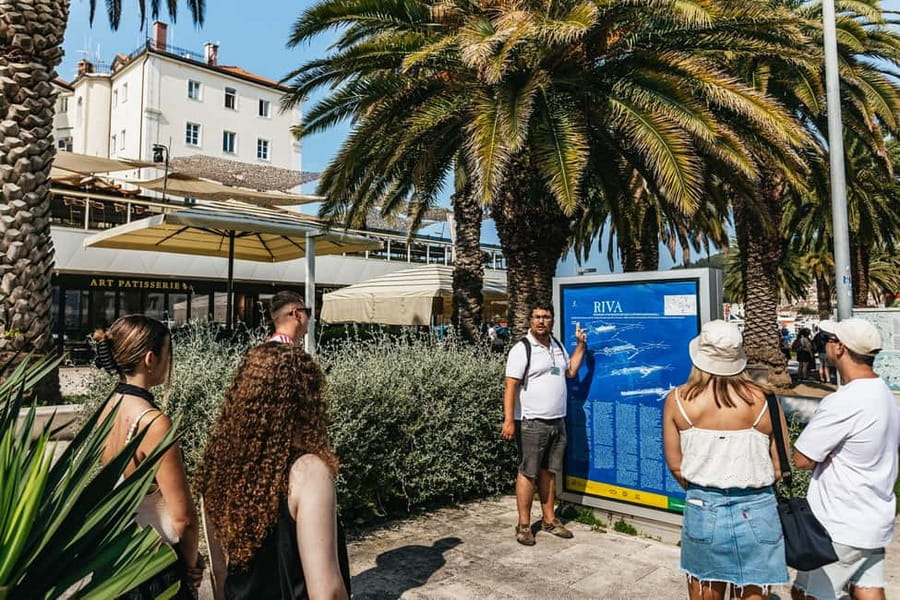
The Riva is a fitting place to begin. This broad waterfront promenade faces the Adriatic and is lined with palm trees, cafés, and the steady movement of city life. You meet at Apodos Travel Agency, beside an open-top red bus, where staff in red or white shirts connect you with the guide.
This meeting point is easy enough once you know what to look for, but it can cause a little confusion. One person had trouble finding the correct spot because the sightseeing bus was delayed. My advice is simple: arrive early, look for the red city sightseeing bus, and ask the staff in red or white shirts if you are unsure.
The Riva also gives your guide a useful opening. Split is not a museum city where ancient stones sit behind a rope. The palace forms the core of the modern center, so the tour quickly introduces the unusual fact that people still live and work inside the old imperial complex.
More Old Town Tours in Split
- Split: Old Town and Diocletian Palace Walking Tour
★ 4.9 · 4,727 reviews - Diocletian’s Palace and Old Town SMALL GROUP Walking Tour
★ 5.0 · 502 reviews - SPLIT-PRIVATE Walking Tour of Diocletian’s Palace & Old Town
★ 5.0 · 467 reviews
Entering Diocletian’s Palace through ancient gates
Diocletian built his palace in the early fourth century AD as a retirement residence and fortified complex. You enter a place designed for an emperor, but the present-day experience is less formal than the original plan. Streets run through former ceremonial spaces, and old walls are part of ordinary city life.
The route includes the Bronze, Silver, Golden, and Iron Gates, the four original entrances. Each gate gives you a different sense of how the complex was organized and protected. The Bronze Gate opens toward the waterfront, while the others connect the palace with the land and the city beyond. Your guide explains their purpose as you move through them rather than leaving you to guess at a pile of weathered stone.
That matters in Split. Without context, the palace can feel like a jumble of columns, arches, lanes, and later buildings. With a guide, you begin to see the plan beneath the changes. Roman foundations support medieval additions, Venetian touches appear in later architecture, and modern life fills the gaps.
The pace is brisk but not frantic. Several people describe this as a potted history or a quick overview, which is exactly right. If you want long pauses for architectural study or detailed archaeological discussion, you will need extra time after the tour.
The cellars and the emperor’s private spaces
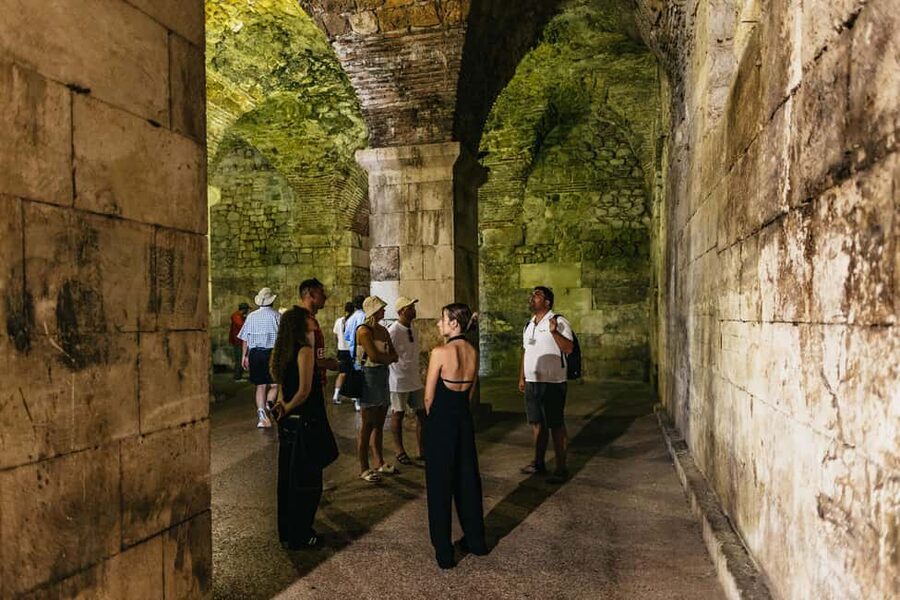
The palace cellars help you understand the building above. These underground rooms preserve the shape of the imperial residence and show how Roman engineers supported the upper level. The tour includes time in the cellars, along with an explanation of how the spaces relate to Diocletian’s former private rooms.
The palace also includes what is described as the emperor’s private observatory. This is one of the more specific inclusions, and it gives the tour a personal angle. You are not only looking at a fortress or grand public court. You are considering how an emperor planned his private retreat, his ceremonial spaces, and his daily surroundings.
The cellars can feel crowded, especially during the busy season. That is not a fault unique to this tour, but it does reinforce the value of a short route. You get the main idea without spending an hour trying to examine every wall in a packed passage.
Peristyle courtyard, the palace’s grand stage
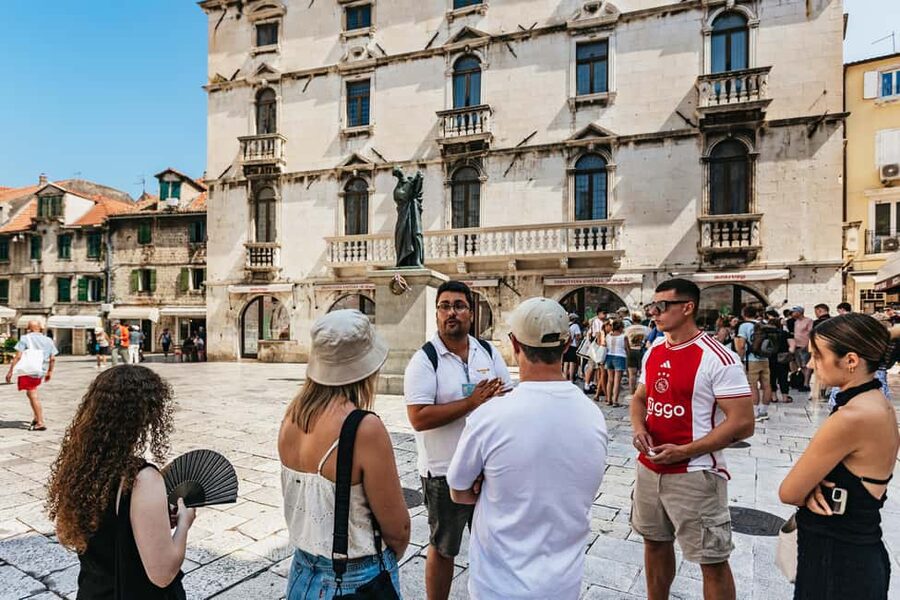
The Peristyle is the visual center of the visit. Tall columns and monumental stonework frame the courtyard, once used for imperial ceremony. It is the point where Diocletian’s power becomes easy to read: this was designed to impress people before they ever reached the emperor’s private quarters.
I would pay close attention here to the contrast between scale and daily life. The courtyard is grand, yet the surrounding old town continues right around it. People cross the same area for ordinary reasons, while visitors pause to take photographs. That mixture is one of Split’s great pleasures.
The guide’s role is especially useful in this space. A few historical facts about the columns will not explain the full impact of the courtyard. A good explanation connects the architecture to the emperor’s status, the palace plan, and the later growth of Split. Ina is repeatedly praised for making these connections clearly, while Natasa is noted for her background in art history and archaeology.
With a group of around 15, one guide kept the pace moving and made room for everyone to hear. That is worth noting because courtyards can scatter a group. You should still stay close, particularly if you stop for photographs.
More Walking Tours in Split
- Walking Tour of Split and Diocletian’s Palace
★ 5.0 · 2,588 reviews - Krka Waterfalls tour with Trogir Walking tour and Krka panoramic boat cruise
★ 5.0 · 1,659 reviews - Split & Diocletian’s Palace Walking Tour
★ 5.0 · 1,125 reviews - Walking Tour of Split with a ‘Magister’ of History
★ 5.0 · 1,122 reviews
St. Domnius Cathedral and the bell tower
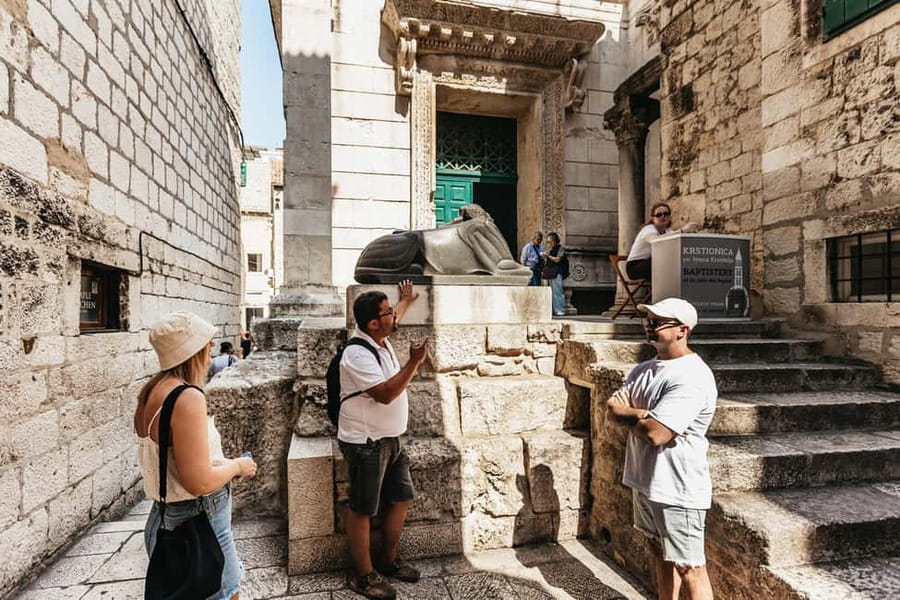
The Cathedral of St. Domnius, or Sv. Duje, adds one of the tour’s strongest historical twists. The building began as Diocletian’s mausoleum and later became a cathedral. Few places make the change from Roman imperial worship to Christian city life so plain.
The tour presents the cathedral as part of the palace story, not as an unrelated church stop. That connection helps you understand how Split changed over the centuries. A building made for an emperor took on a new religious role, while the wider palace turned into a functioning town.
The plan also includes the bell tower and panoramic views over Split and the harbor. The climb involves steps, and the general physical guidance says you must be able to handle 15 to 30 steps and uneven or cobblestone surfaces. If stairs are difficult for you, ask the guide what portion of the tower visit is practical for your group.
The supplied information describes the activity as wheelchair accessible, but that does not mean every historic surface or stairway is step-free. The route includes cobbles and steps, so tell the meeting staff about mobility needs at the start. A guide named Natasa was praised for helping a group find routes with few or no steps for wheelchairs and strollers.
Old town lanes, Town Hall, and Fruit Square
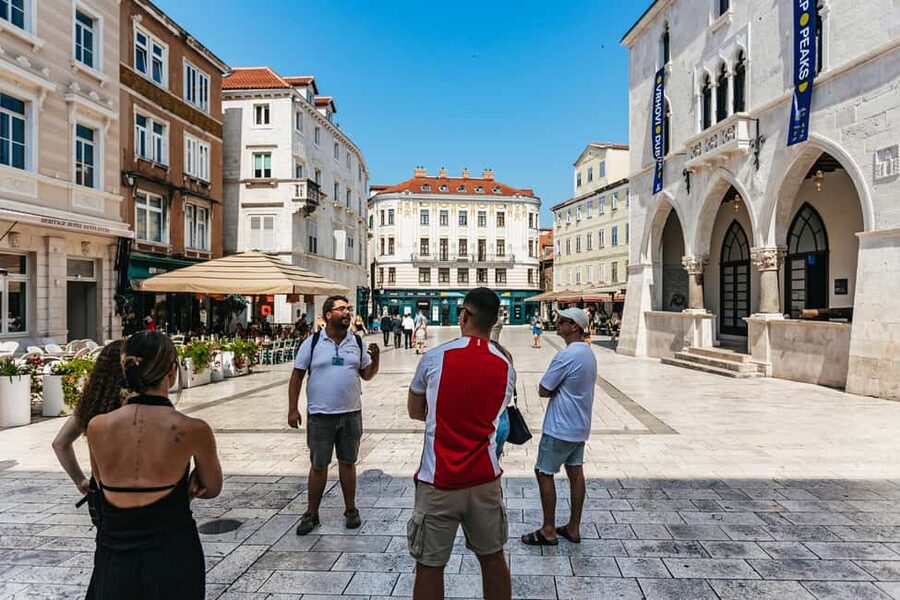
After the main palace spaces, the walk continues through the old town. This is where the tour becomes less about one Roman building and more about the city that grew around it.
The 15th-century Town Hall is one of the quieter stops. It does not have the instant drama of the Peristyle, but it helps show Split’s later civic life. The palace did not remain frozen after Diocletian. Medieval government, trade, and local life reshaped the complex.
Fruit Square adds a different mood. Its baroque monuments show the influence of later periods, including Venetian rule. The name points to the square’s old market role, while the surrounding architecture gives you a look at the city beyond its Roman beginning.
The best guides keep these changes connected. Natasa has been praised for answering questions with enthusiasm, while Darko was especially appreciated for pointing out traditional crafts and food production along the route. That kind of detail helps you notice Split as a working city rather than simply a backdrop for photographs.
What the guides do well
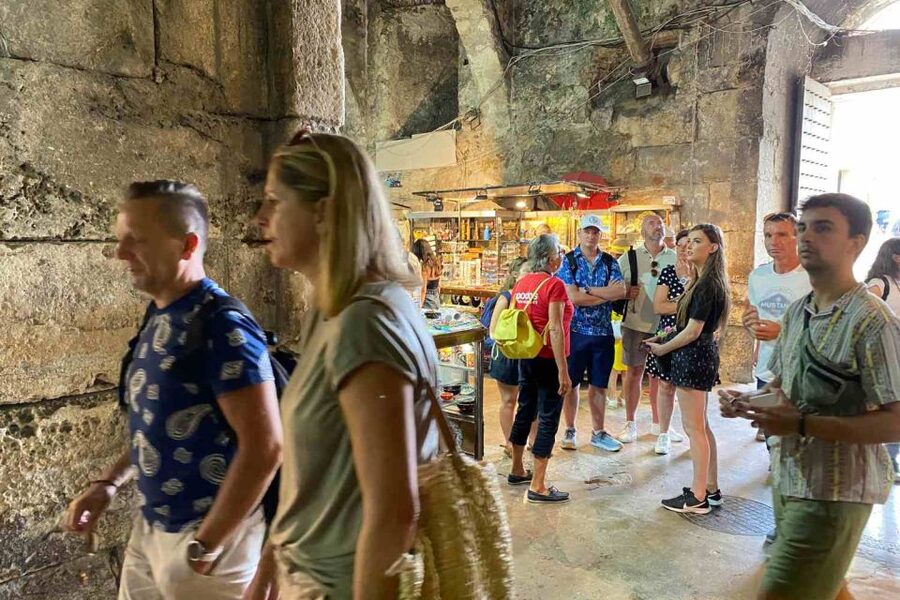
The strongest part of this experience is the guiding. The most praised guides are Ina and Natasa, though Darko, Tin, Ena, and others also receive strong marks.
Ina is often described as warm, funny, and clear. Her explanations cover the key facts without burying you under dates. She also stays after the formal walk to answer extra questions, which is useful if you are trying to decide what to see next.
Natasa brings enthusiasm and an art history background. She is a good fit if you want help reading architecture, not just hearing a sequence of names and years. Several people appreciated her patience with questions and her practical help with strollers and wheelchairs.
Darko combines historical interest with humor and local detail. Tin is praised for confident explanations, a strong command of English, and keeping an eye on people at the back of the group. Ena is described as pleasant, humorous, and well prepared.
The experience is offered in English, Spanish, and Italian. One fair criticism is the lack of a microphone for a guide in one group. If the group is spread out or the streets are noisy, stay near the guide so you do not miss the explanation.
How much does 50 minutes give you?
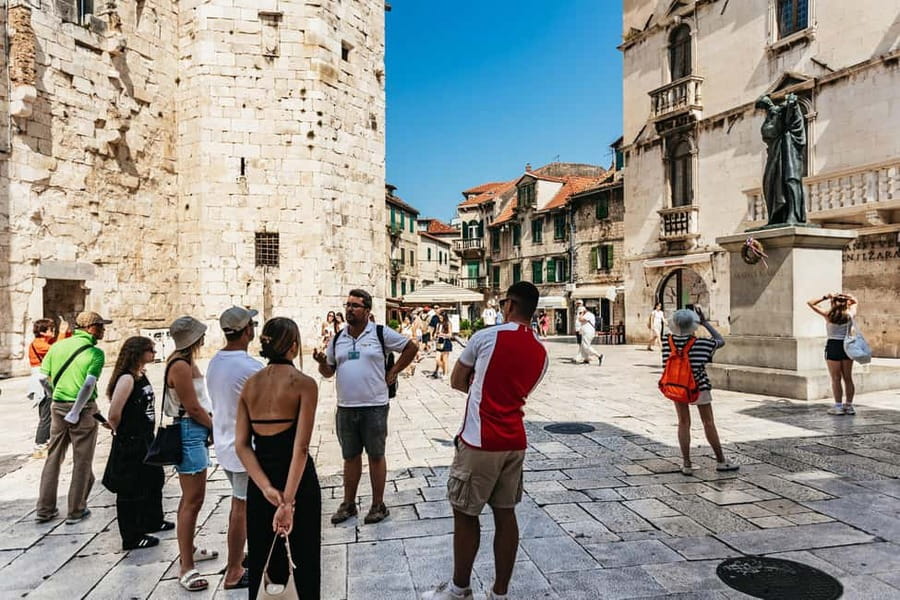
The stated duration is 50 minutes, while the palace portion is also described as about one hour. In practice, you should think of it as a compact introduction rather than a full morning visit.
That short length is a real advantage in Split’s heat. One person called it the right length for walking in hot weather, and I agree with that logic. You see the main points, hear the story that connects them, and still have most of your day available.
It is also a smart first activity. One person specifically liked doing the tour at the start of a holiday because it helped form a picture of Split. Once you understand the palace layout, returning on your own becomes easier. You can find the Riva, Peristyle, gates, cathedral, old town squares, and nearby streets without feeling lost.
The tradeoff is depth. You will not get a long archaeological lecture, extended time in every chamber, or a leisurely photo stop at each landmark. For that, use the tour as an orientation and then return to the places that caught your attention.
Is $17 a fair price?
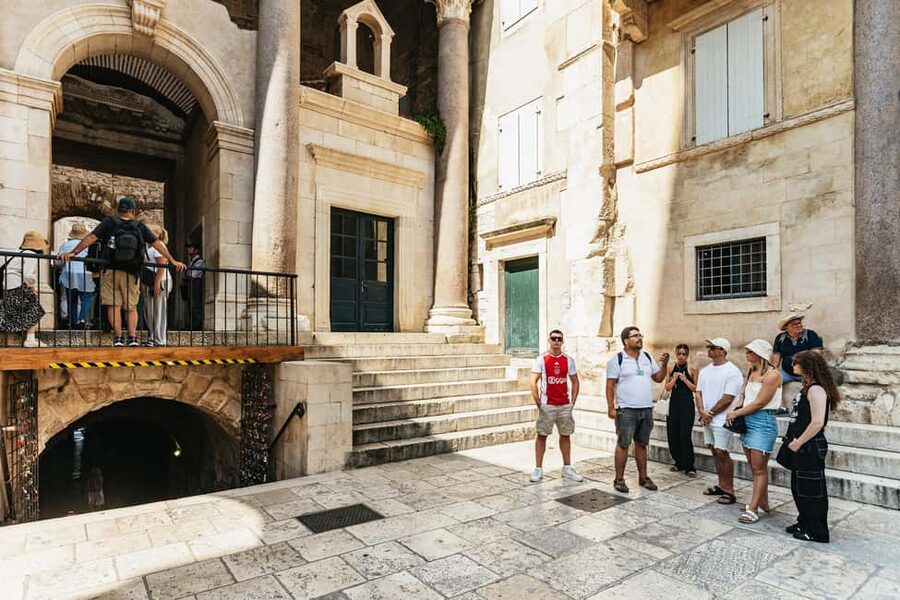
At $17 per person, the tour offers good value if you want a local explanation of the palace without committing half a day. The price covers the guided walk, the Peristyle, the palace cellars, the gates, the private observatory, the Town Hall, Fruit Square, and the stories that tie them together.
The value comes less from the number of stops than from the connection between them. You could walk past many of these places alone, but you might miss why a mausoleum became a cathedral or how Roman walls became part of a living neighborhood.
The booking terms include free cancellation up to 24 hours before the start and a reserve-now, pay-later option. Transportation, food, drinks, souvenirs, and personal expenses are not included. You make your own way to the Riva meeting point.
One wording issue deserves attention: the details call the experience a free guided walking tour in one place, while the listed price is $17. I would confirm the amount and what it covers before finalizing your reservation.
Comfort, access, and the right timing
Wear shoes with a firm sole. Split’s old town has uneven stone and cobbled surfaces, and the route includes steps. Bring water, sunglasses, and a hat in sunny weather. On a windy day, long sleeves will make the waterfront and exposed sections more comfortable.
The meeting point is outdoors, and the Riva can be bright and hot. A morning or evening start may feel easier than the middle of the day, though the exact starting times depend on availability.
The tour suits couples, solo visitors, families with older children, and anyone on a short visit. It also works for families with toddlers because the walk is brief. People using wheelchairs or strollers should contact the guide at the start and ask about the least demanding route, since historic stone and steps remain part of the setting.
Who should book this Split walking tour?
I would book it if you have limited time, want a clear first look at Diocletian’s Palace, or prefer history explained by a local rather than read from a guidebook. It is particularly useful on your first day in Split, when the palace can otherwise feel confusing.
I would skip it if you want a private, slow-paced archaeological tour or plan to spend several hours inside individual monuments. You may prefer to explore independently after reading up on the palace.
For most people, though, the balance is strong: a short route, a low price, several major sights, and guides who make room for questions. Book it early in your visit, stay close to the guide, and keep the rest of the day open for a second look at the corners you want to explore more carefully.
FAQ
Where does the tour begin?
It begins at Apodos Travel Agency on Split’s Riva promenade. Look for an open-top red bus and staff wearing red or white shirts.
How long does the tour last?
The stated duration is 50 minutes. The palace portion is also described as lasting about one hour, so plan for a short, compact walking tour.
What languages are available?
Live guiding is available in English, Spanish, and Italian.
What places are included?
The walk covers Diocletian’s Palace and Split Old Town, including the palace cellars, Peristyle courtyard, private observatory, four historic gates, St. Domnius Cathedral, the 15th-century Town Hall, and Fruit Square.
Does the tour include the bell tower?
The planned experience includes a climb of the bell tower for views over Split and the harbor. The walk involves steps, so ask the guide about access if stairs are difficult for you.
Is the tour wheelchair accessible?
The activity is listed as wheelchair accessible. However, you must be able to manage uneven and cobblestone surfaces with 15 to 30 steps. Tell the guide about your needs at the meeting point.
What should I bring?
Bring comfortable shoes, water, and a camera. Sunglasses and a hat are recommended on sunny days, and long sleeves may help on windy days.
Can I cancel or pay later?
You can cancel up to 24 hours in advance for a full refund. A reserve-now, pay-later option is also available.
Just added around Split
- Slatine – Island Hopping Excursion (Trogir/Blue Lagoon/Shipwreck)★ 4.0 · 24 reviews
- Krka Waterfalls & Primošten from Trogir, Seget, Čiovo & Kaštela★ 5.0 · 18 reviews
- Island Hopping Boat Excursion with Lunch (Trogir,Blue Lagoon, Šolta)★ 3.5 · 6 reviews
- From Trogir, Seget, Okrug: Krka Waterfalls & Šibenik Culture Tour★ 5.0 · 10 reviews
- From Split & Trogir: ATV Quad Tour on Island Čiovo★ 5.0 · 21 reviews
- Split: Blue Lagoon Boat Trip with Lunch, Wine and Snorkeling★ 5.0 · 3 reviews
- Split Sunset Stand Up Paddle Tour★ 5.0 · 16 reviews
- Split: Sunset Guided Kayaking Tour★ 4.8 · 71 reviews
Old Town Tours, compared.


Plitvice Lakes with Boat Ride and Zadar Old Town Tour
Read our review →
Plitvice Lakes with Boat Ride & Zadar Old town tour
Read our review →
Dubrovnik Combo: Old Town & Ancient City Walls
Read our review →
Browse the lists this tour appears in