
Reviewed · WALKING TOURS
Split Walking Tour with History Professor
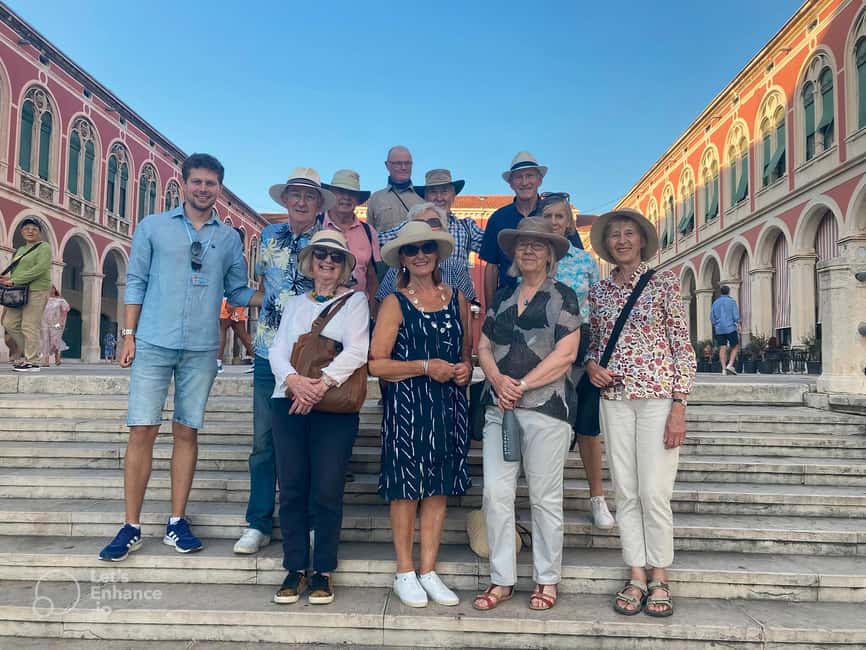
Split rewards a slower look. This two-hour walking tour pairs Diocletian’s Palace with medieval and modern Split, guided by local history professor Mario. I especially like the small-group format and the way the route reaches beyond the Roman core into Venetian, Ottoman, and Napoleonic influences. The main consideration is that several paid interiors are not included, and the tour is not suitable for wheelchair users.
Mario’s style also appeals to me. He explains the past with humor, asks questions, and keeps the experience lively rather than turning it into a long classroom lecture. At $23 per person, this is a strong value for a two-hour introduction, though you should wear good shoes and expect a fair amount of standing on old stone streets.
In This Review
- Key points to know before you book
- Why this Split walking tour is different
- Starting at the Riva and the city model
- Beneath Diocletian’s Palace
- Peristyle, Vestibule, and the heart of Roman Split
- Cathedral of Saint Domnius and the Temple of Jupiter
- The Golden Gate and Grgur Ninski
- Marmontova Street and modern Split
- Prokurative and Fruit’s Square
- Game of Thrones, legends, and local life
- How much value do you get for $23?
- Timing, clothing, and access
- Who will enjoy this tour most?
- Should you book the Split Walking Tour with History Professor?
- FAQ
- Where does the Split walking tour begin?
- How long does the tour last?
- What language is the tour in?
- How much does the tour cost?
- Are entrance fees included?
- Is the tour suitable for children and older adults?
- Is the tour wheelchair accessible?
Key points to know before you book
- A history professor leads the walk: Mario uses questions, humor, and clear explanations to make Split’s past easier to follow.
- The route goes beyond Diocletian: You see Roman, medieval, Venetian, Ottoman, Napoleonic, and modern layers of the city.
- The itinerary includes major landmarks: The Riva, palace substructures, Peristyle, Vestibule, Cathedral of Saint Domnius, Golden Gate, Marmontova Street, Prokurative, and Fruit’s Square all feature.
- Game of Thrones locations add a pop-culture angle: These references are woven into a broader look at Split rather than replacing its history.
- Some admission fees are extra: Entry to the Cathedral of Saint Domnius and Temple of Jupiter is not included.
- The price is modest for the teaching: At $23, you are paying mainly for a focused guide and a well-planned route, not a package of entrance tickets.
Why this Split walking tour is different
Many tours of Split focus almost entirely on Diocletian’s Palace. That makes sense. The palace is the city’s great anchor, with Roman walls, ceremonial spaces, and later buildings fitted into the old structure.
This walk takes a wider view. You begin with the palace, then move through the medieval center and onward into streets shaped by Venice, the Ottoman world, Napoleon, and modern urban life. That broader route helps you understand Split as a living city, not just an ancient monument.
I like this approach because the Roman remains make more sense when you see what happened afterward. Split was not frozen in the fourth century. People built homes inside the palace, shops opened along old corridors, and later rulers left their own marks. The result is a city where a Roman column can sit close to a medieval wall or a modern cafe.
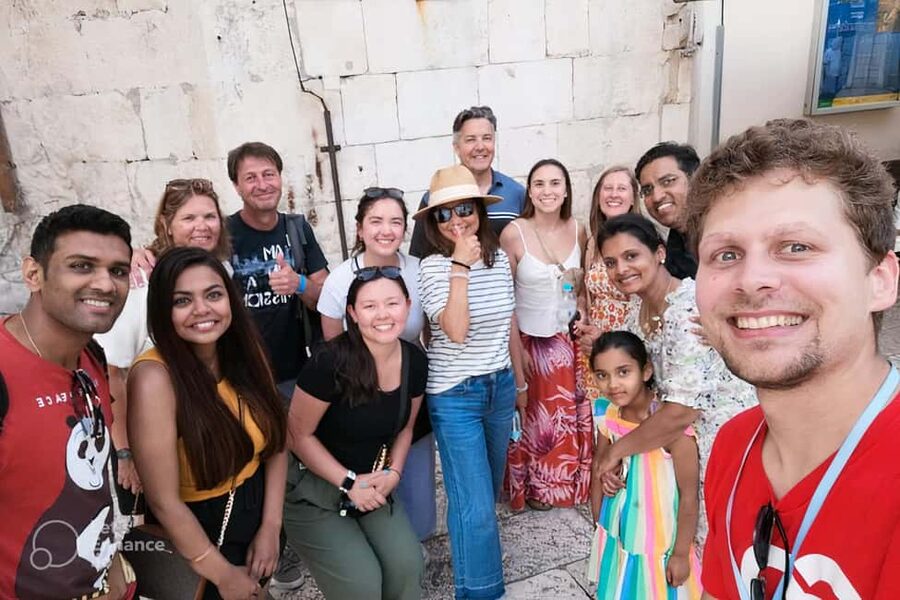
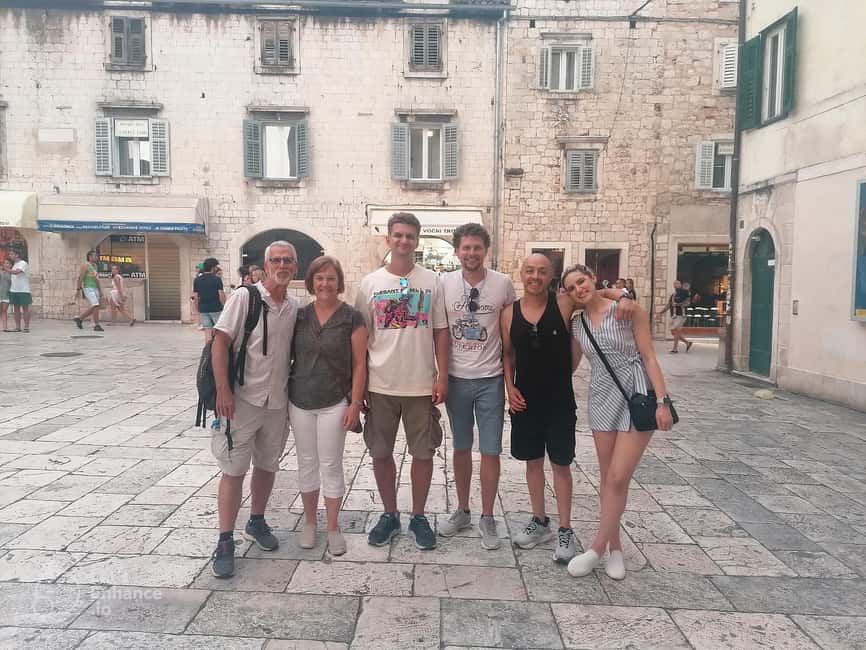
The guide is Mario, a local history professor. His strongest quality appears to be the way he teaches. He is described as personable, funny, enthusiastic, and willing to invite questions. That matters on a history tour. Dates and names can blur together, but a guide who encourages you to think about what you are seeing gives the walk more energy.
The group is intended to be small, and private tours are available by request through the provider. A smaller group usually makes it easier to hear the guide and ask about details that catch your eye.
More Walking Tours in Split
- Split: Old Town and Diocletian Palace Walking Tour
★ 4.9 · 4,727 reviews - Walking Tour of Split and Diocletian’s Palace
★ 5.0 · 2,588 reviews - Krka Waterfalls tour with Trogir Walking tour and Krka panoramic boat cruise
★ 5.0 · 1,659 reviews
Starting at the Riva and the city model
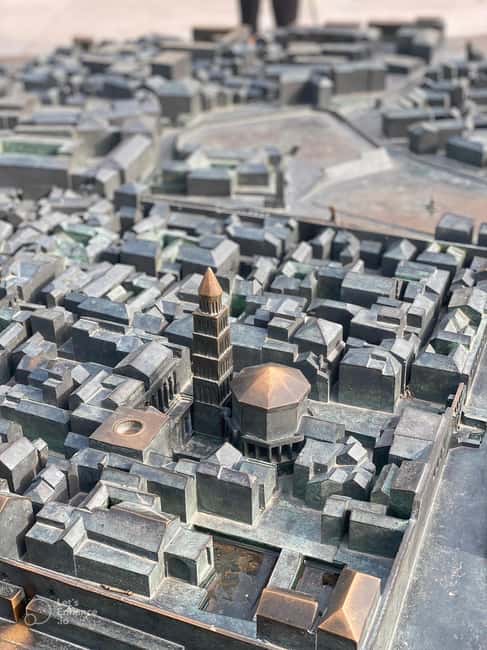
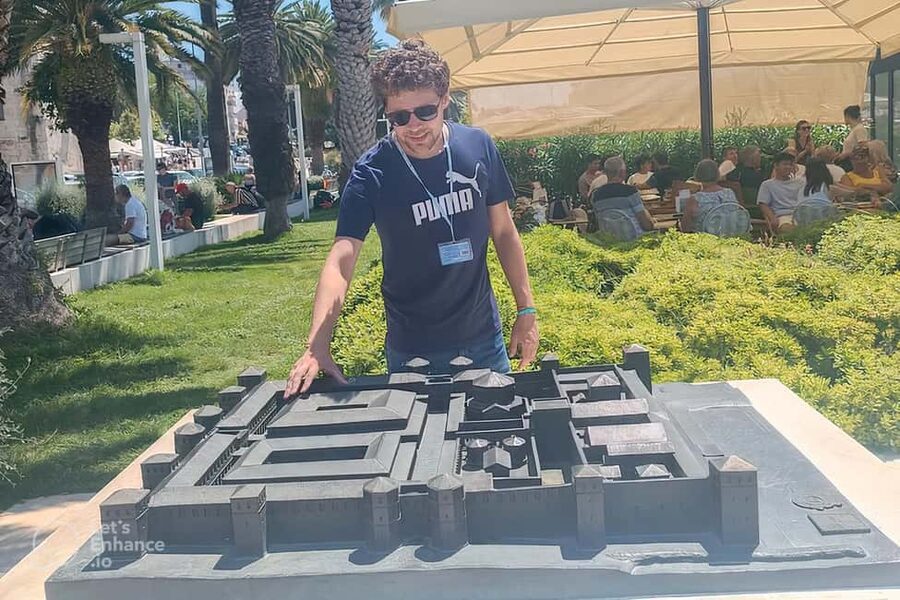
The meeting point is next to the Brass Gate of Diocletian’s Palace. The tour begins at the Riva harbor promenade, beside a model showing Split’s historic core.
This is a smart starting point. Before entering the old center, you get a chance to see how the palace, harbor, and surrounding streets fit together. The model can help you get your bearings, especially if Split is your first stop in Dalmatia.
I would pay close attention here. The palace is not an isolated building sitting beside the modern city. Its walls and gates helped shape the entire center of Split. Looking at the model first gives you a useful mental map for the rest of the walk.
The stop lasts about 10 minutes. That is enough time for an introduction without using up too much of the tour before you reach the main sites.
Beneath Diocletian’s Palace
The next stop is the palace substructures, with about five minutes scheduled here. These underground spaces show how the upper palace was supported and arranged.
The short timing is worth noting. You should not expect a long underground visit or an extended exploration of every chamber. Instead, this portion gives you the basic idea of the palace plan and helps explain the relationship between the lower and upper levels.
The substructures also make the palace feel more practical. Roman imperial architecture was not only about grand columns and ceremonial rooms. It needed storage, support, circulation, and working spaces. Seeing the lower level helps connect the formal areas above with the daily machinery of a huge residence.
If you like architectural detail, this may leave you wanting more time. Still, within a two-hour city walk, the brief stop keeps the route moving.
Peristyle, Vestibule, and the heart of Roman Split
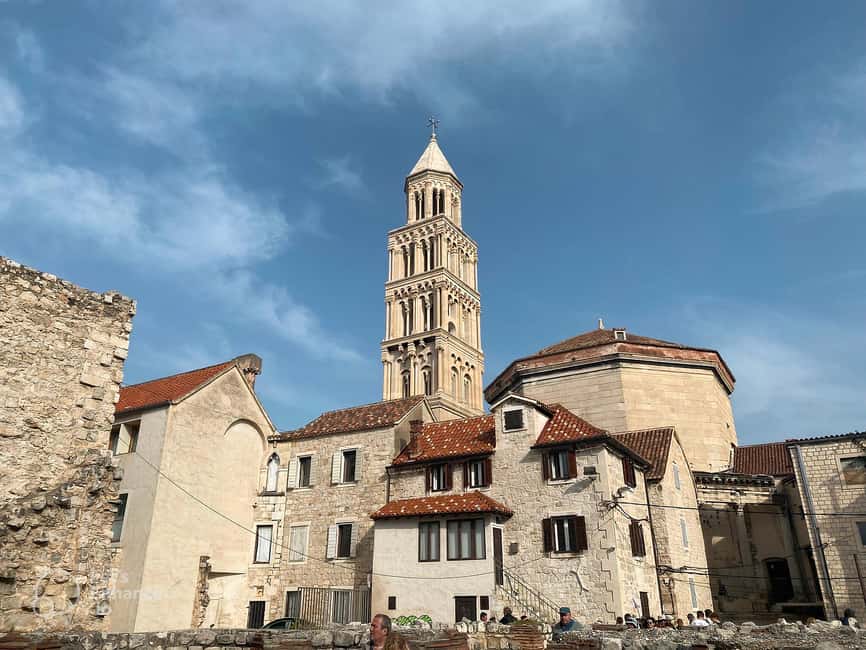
The Peristyle receives about 10 minutes. This is one of the palace’s key public spaces and one of the places where the scale of Roman rule becomes easiest to understand.
Here, Mario can help you read the space rather than simply point at it. The value of a guide is not just naming columns or walls. It is explaining how the space worked, why it mattered, and how later residents adapted it.
The route then continues to the Vestibule for another 10 minutes. This circular entrance space offers a different feel from the open Peristyle. The change in shape and atmosphere gives the walk variety, and it helps you see that the palace was made up of several carefully planned zones.
I like having both stops included. Seeing only the most famous courtyard can make a palace feel flat. Moving between the Peristyle and Vestibule gives you a better sense of the design and the movement through the complex.
These are also the places where Mario’s teaching style should help most. His use of questions and conversation can turn a stone courtyard into a place you actively interpret.
Still Split, at a slower pace:
- Split: Krka Waterfalls Trip with Boat Cruise and Swimming
★ 4.8 · 10,519 reviews - From Split: Krka Waterfalls, Food & Wine Tasting Tour
★ 5.0 · 9,326 reviews - Blue cave, Mamma Mia and Hvar, 5 islands speedboat tour
★ 5.0 · 7,150 reviews - From Split: Krka Waterfalls, Food & Wine Tasting Tour
★ 4.9 · 6,598 reviews
Cathedral of Saint Domnius and the Temple of Jupiter
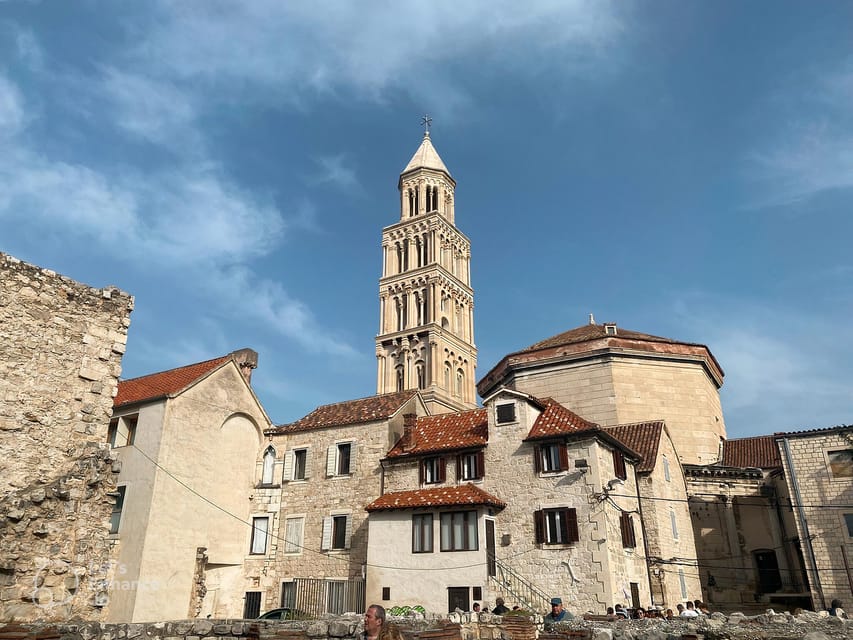
The Cathedral of Saint Domnius is scheduled for about 20 minutes, the longest single stop on the early part of the route. Admission is not included, so check the current entry arrangements before you book if seeing the interior is important to you.
The cathedral is especially useful for understanding how Split changed after the Roman period. A building connected to imperial power was later surrounded by Christian life and medieval activity. That shift is one of the central stories of Split.
The Temple of Jupiter follows, with about 10 minutes. Admission is also excluded here. The pairing of cathedral and temple gives you a compact way to consider the change from Roman religious practice to Christian worship.
You should budget for possible entrance fees if you want to go inside both sites. The $23 tour price remains reasonable, but it does not cover every attraction along the route. If you prefer to keep spending low, you can still gain useful context from the exterior explanations, though the exact access arrangements should be confirmed when booking.
The Golden Gate and Grgur Ninski
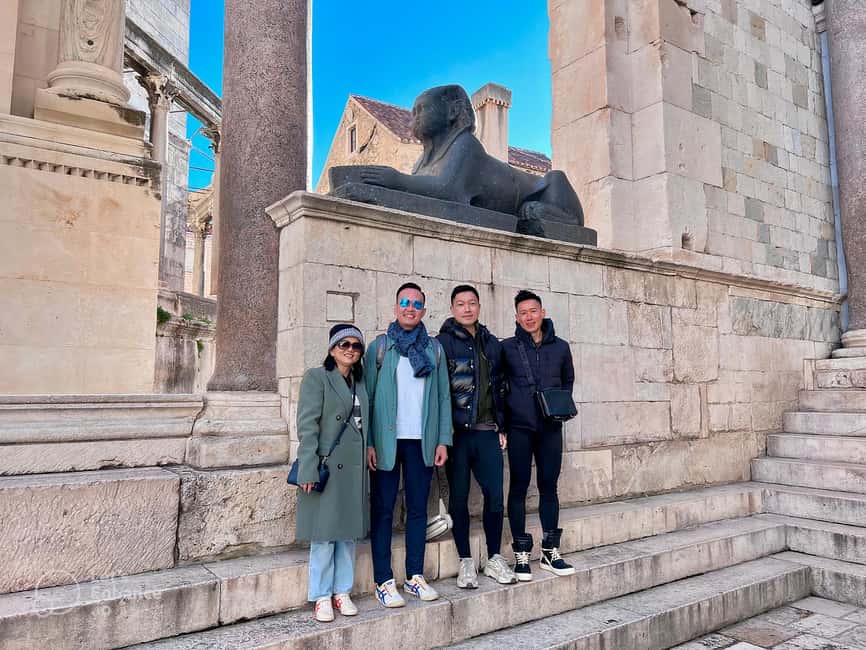
The Golden Gate gets about 10 minutes. This is one of the major entrances to Diocletian’s Palace and an important place to think about movement, defense, and ceremony.
A gate is never just a doorway in a city like Split. It connects the palace to the streets outside and shows how the imperial complex related to the wider settlement. Mario’s broader historical approach should help place the gate in that longer story.
The next stop is the statue of Grgur Ninski, also known as Gregory of Nin, with another 10 minutes. This is a good point to shift from ancient Roman power to later Croatian identity and public memory.
The statue also adds a small piece of local custom to the walk. The information provided does not promise a specific ritual or photo stop, so I would focus on the historical explanation rather than expect a scripted photo opportunity. The important point is that Split’s public spaces carry several different eras at once.
Marmontova Street and modern Split
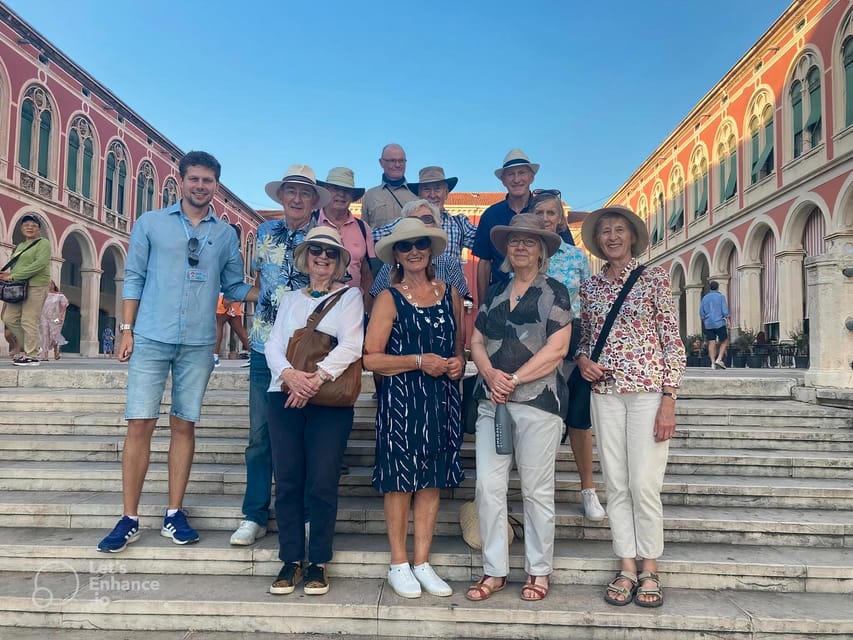
Marmontova Ulica gives the tour a modern urban counterpoint. The stop lasts about 10 minutes.
This street helps move you away from the palace as a single historic object and toward Split as a functioning city. The route’s focus on Venetian, Ottoman, and Napoleonic influence is valuable here because it shows how outside powers affected local life, streets, and public spaces over time.
The tour does not simply ask you to admire old stones. It also points you toward the city people use today. That is one of the best reasons to choose this route over a palace-only walk.
I would pay attention to how Mario connects grand political changes with ordinary local experience. A history professor can make a difference when he explains not only who ruled, but how those changes shaped the city you are walking through.
Prokurative and Fruit’s Square
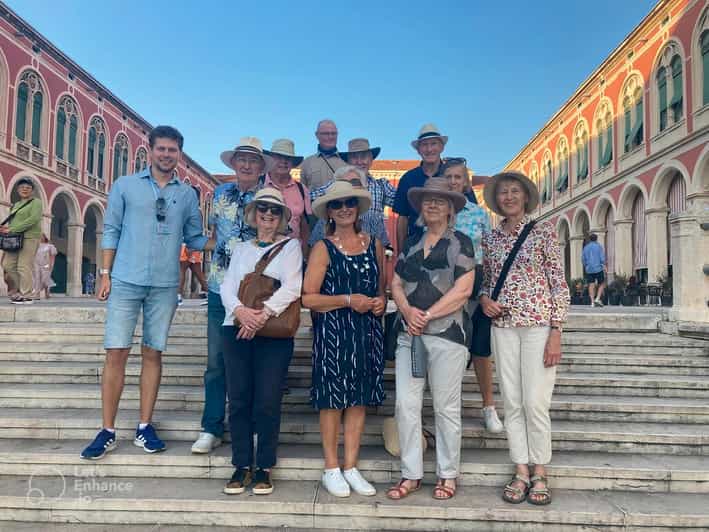
Prokurative, officially Trg Republike, is scheduled for about 10 minutes. The square brings a different visual character to the route and helps show Split’s later architectural development.
The final stop is Fruit’s Square, or Trg Brace Radic, with about 15 minutes. This longer closing stop gives Mario time to pull together the different periods you have seen.
Fruit’s Square is a fitting place to end because it belongs to the lived center of Split, where historic buildings and current city life meet. The route has moved from Roman imperial planning through medieval and later influences, then into the streets people still use.
The ending also gives you a useful chance to ask questions. If you are deciding what to explore next, this is the point to ask Mario about places you passed quickly or historical themes you want to pursue.
Game of Thrones, legends, and local life
The Game of Thrones element is a pleasant extra for fans of the series. The tour includes filming locations, but the show is not the main subject.
That balance is important. You get a pop-culture connection that can make certain alleys and walls more memorable, while the main focus remains Split’s real history. If you know the series well, the locations may add a fun layer. If you do not, you should still have a full tour because the Roman, medieval, and modern material carries the experience.
The tour also includes local legends and insights into everyday life. These details can keep the walk from feeling too formal. A city is easier to remember when its history includes stories, odd details, and the way local people relate to familiar places.
Mario’s humor matters here. The strongest comments about his guiding style describe him as charismatic, interactive, and enthusiastic. That combination should suit you if you want history explained with a human touch rather than delivered as a list of facts.
How much value do you get for $23?
At $23 per person, this is priced as an accessible city introduction rather than an expensive specialist tour. For two hours and a live English-speaking guide, I think the value is good, especially if you want an organized first look at Split.
The price does not include admission to the Cathedral of Saint Domnius or Temple of Jupiter. That is the main cost detail to keep in mind. You may also prefer to visit those interiors later, when you can spend more time there.
The real value lies in the route and the interpretation. You are not paying simply to walk past famous places. You are paying for a guide who links them together, explains the changes between eras, and adds local stories.
I would choose this tour early in a Split visit. The information can help you understand the old center before you explore alone. It can also prevent the palace from feeling like a maze of attractive but disconnected spaces.
Timing, clothing, and access
The advertised duration is two hours, while the highlights describe approximately two hours and 15 minutes. Allow a little flexibility in your plans rather than scheduling a tight connection immediately afterward.
You should wear comfortable shoes and comfortable clothing. Split’s historic center includes old stone surfaces, and a walking tour requires standing and moving between stops. There is no need for formal clothing.
The tour is suitable for all ages, but it is not suitable for wheelchair users. If mobility access is important for you, contact the provider before reserving.
The live guide speaks English. Private tours are available on request through [email protected], which may suit families or groups wanting a more personal pace.
Cancellation is free up to 24 hours in advance, and you can reserve now and pay later. Those terms are useful if your Croatian itinerary is still shifting.
Who will enjoy this tour most?
I would recommend it to you if you want more than a quick look at Diocletian’s Palace. It suits first-time visitors who want a clear introduction to Split and history fans who enjoy connecting Roman, medieval, and modern periods.
It is also a good match if you like an active guide. Mario’s approach includes questions and conversation, so you should expect to take part rather than stand silently while facts are recited.
The tour may be less suitable if you want long, unhurried visits inside every monument. The itinerary covers many locations in about two hours, and the stop at each place is limited. It is a survey of Split’s major layers, not a museum-style study of one building.
Fans of Game of Thrones will enjoy the added locations, but you should not book this only for the television connection. The historical content is the main reason to go.
Should you book the Split Walking Tour with History Professor?
I would book it if you want a compact, well-guided introduction to Split that reaches beyond the Roman palace. The $23 price is fair, the route is varied, and Mario’s humor, enthusiasm, and interactive teaching style give the walk a personal feel.
Choose another option if you need wheelchair access, dislike walking on old streets, or want every entrance fee included. Otherwise, this tour gives you a useful map of Split’s past and present, with enough local detail to make the city easier to understand afterward.
FAQ
Where does the Split walking tour begin?
The guide waits next to the Brass Gate of Diocletian’s Palace. The tour begins at the model of Split’s historic core on the Riva harbor promenade.
How long does the tour last?
The activity is listed as two hours, while the tour description refers to approximately two hours and 15 minutes. Allow some extra time in your schedule.
What language is the tour in?
The live tour guide speaks English.
How much does the tour cost?
The price is $23 per person.
Are entrance fees included?
Admission to the Cathedral of Saint Domnius and the Temple of Jupiter is excluded. The tour price does not cover those entries.
Is the tour suitable for children and older adults?
The tour is described as appropriate for all ages. Comfortable shoes and comfortable clothing are recommended.
Is the tour wheelchair accessible?
No. The activity is not suitable for wheelchair users.
More History Tours in Split
- Walking Tour of Split with a ‘Magister’ of History
★ 5.0 · 1,122 reviews - Split Walking Tour with Professor of History
★ 5.0 · 926 reviews - Split: History and Heritage Walking Tour
★ 4.9 · 650 reviews - Split History and Gastro Small-Group Tour with Food and Drinks
★ 5.0 · 375 reviews
Just added around Split
- Slatine – Island Hopping Excursion (Trogir/Blue Lagoon/Shipwreck)★ 4.0 · 24 reviews
- Krka Waterfalls & Primošten from Trogir, Seget, Čiovo & Kaštela★ 5.0 · 18 reviews
- Island Hopping Boat Excursion with Lunch (Trogir,Blue Lagoon, Šolta)★ 3.5 · 6 reviews
- From Trogir, Seget, Okrug: Krka Waterfalls & Šibenik Culture Tour★ 5.0 · 10 reviews
- From Split & Trogir: ATV Quad Tour on Island Čiovo★ 5.0 · 21 reviews
- Split: Blue Lagoon Boat Trip with Lunch, Wine and Snorkeling★ 5.0 · 3 reviews
- Split Sunset Stand Up Paddle Tour★ 5.0 · 16 reviews
- Split: Sunset Guided Kayaking Tour★ 4.8 · 71 reviews
Walking Tours, compared.
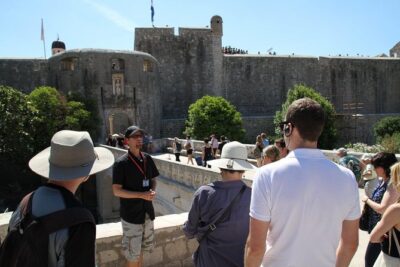
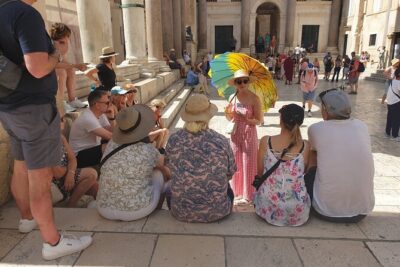
Walking Tour of Split and Diocletian’s Palace
Read our review →

Krka Waterfalls tour with Trogir Walking tour and Krka panoramic boat cruise
Read our review →
City Walls Early Morning or Sunset Walking Tour
Read our review →Browse the lists this tour appears in