

Reviewed · WALKING TOURS
Split Walking Tour: History, Legends & Tales
Split keeps its past under your feet. This 1.5-hour walking tour links the Riva waterfront with Diocletian’s Palace, ancient gates, lively squares, and stories from the city’s Roman beginnings to modern life. I like the local viewpoint, especially with guide Lucija, who can explain more than dates and stones. I also like the small-group format, which should make it easier to ask questions and keep up with the guide.
The tour is a smart first look at Split because it gives you a useful map of the Old Town before you explore alone. The main drawback is that entrance tickets are not included, so you will need to pay separately if you want to visit cultural or religious sites after the walk. The route is also not suitable for wheelchair users and calls for comfortable shoes.
In This Review
- Key points at a glance
- Why this is a useful first walk in Split
- Meeting the guide beside the Split model
- The Riva: Split’s waterfront introduction
- Diocletian’s Palace and 1,700 years of change
- Vestibul: a round chamber with a clear purpose
- Peristil: the palace’s grand central space
- The Golden Gate and the palace entrances
- People’s Square and Fruit Square
- What the 90-minute length really means
- What the $28 price includes
- Who should book this experience
- Practical details before you go
- My verdict: a friendly way to get oriented
- FAQ
- How long does the Split Walking Tour last?
- What language is the tour conducted in?
- Where does the tour start?
- Where does the tour end?
- Which main sights are included in the walking route?
- Are entrance tickets included?
- What should I bring?
- Can children join the tour?
- What happens if bad weather cancels the tour?
Key points at a glance
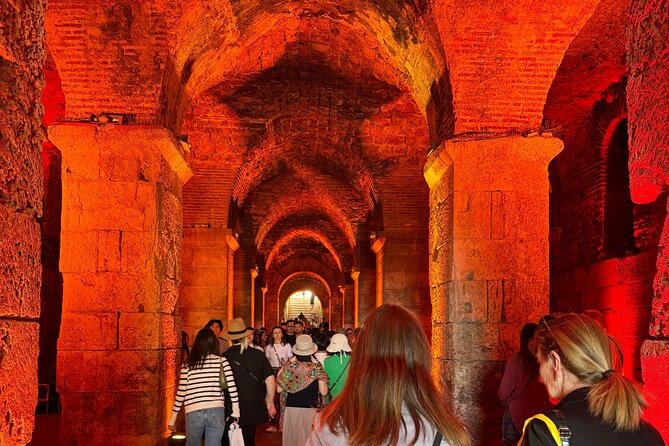
- Local insight from Lucija: The guide was born and raised in Split and can answer questions about present-day life as well as the city’s past.
- A strong first-day orientation: The route covers the Riva, Diocletian’s Palace, Vestibul, Peristil, Golden Gate, People’s Square, and Fruit Square.
- A compact 90-minute format: You get a focused introduction without giving up half a day of sightseeing.
- Small-group setting: The experience is designed so you can enjoy the walk and ask questions along the way.
- Palace history without a museum ticket: You see the main outdoor spaces and receive information about places you can visit later at your own pace.
Why this is a useful first walk in Split
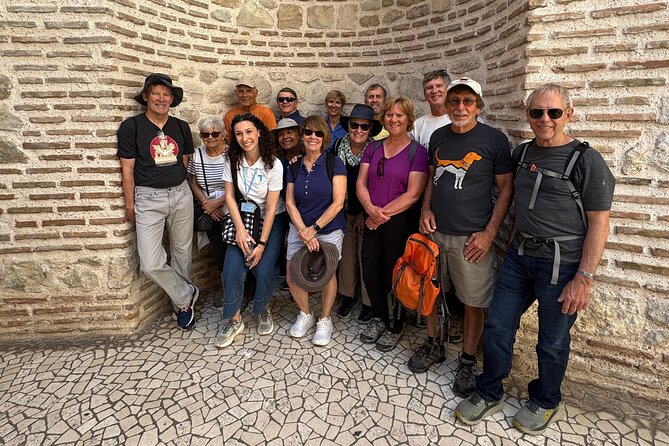
Split is easiest to understand once you realize that Diocletian’s Palace is not simply a single monument. It is an old city area woven into modern streets, shops, homes, cafés, and public spaces.
That can be confusing on your first visit. A palace wall may look like a city gate, a Roman column may sit beside a modern business, and a narrow lane can lead to a major square without warning. This walk gives those pieces an order.
I like the tour’s basic idea: begin with the city as it is today, then trace it back to Emperor Diocletian and his enormous residence. You are not asked to spend hours in one building. Instead, you move through the streets and see how the old structure still shapes daily life.
The guide’s local connection adds useful perspective. Lucija grew up in Split, and the strongest praise for her centers on her warmth, clear explanations, and ability to answer questions about life in the city beyond the formal historical account.
The tour operates in English. It is suitable for most people, but you should expect to walk over cobbled streets and remain on your feet for the full 90 minutes.
More Walking Tours in Split
- Split: Old Town and Diocletian Palace Walking Tour
★ 4.9 · 4,727 reviews - Walking Tour of Split and Diocletian’s Palace
★ 5.0 · 2,588 reviews - Krka Waterfalls tour with Trogir Walking tour and Krka panoramic boat cruise
★ 5.0 · 1,659 reviews
Meeting the guide beside the Split model
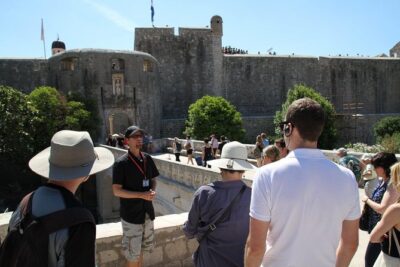
The meeting point is at Obala Hrvatskog narodnog preporoda 22, beside the model of Split. Your guide waits there with a Tour4You sign, making the starting point easier to identify.
This is a sensible place to begin because the waterfront, known as the Riva, is close by. Arrive ready for a walking tour rather than a bus excursion. There is no transport between stops, and the experience ends back at the same meeting point.
The scheduled duration is 1.5 hours. Starting times vary, so you need to check availability when booking. That short length works well if you have just arrived in Split, have limited time before a boat departure, or want an introduction before returning to the palace on your own.
The Riva: Split’s waterfront introduction
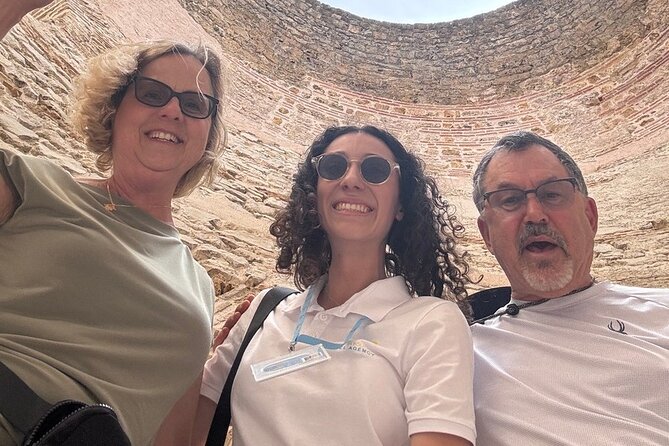
The first guided stop is the Riva, Split’s waterfront promenade. It gives you a quick sense of how the city faces the sea and how the old center connects with the modern waterfront.
I find a waterfront opening helpful because it gives you a broad point of reference before you enter the tight lanes of the Old Town. From here, the guide can place the palace and central squares within the wider shape of Split.
Do not expect a long pause here. The Riva is the opening chapter, not the main historical site. Its value is orientation: you begin with open space, then move toward the dense Roman core.
Diocletian’s Palace and 1,700 years of change

The walk then turns to Diocletian’s Palace, the central subject of the experience. Diocletian chose Split as the location for his luxurious residence, and the palace complex has remained part of the city for more than 1,700 years.
The important point is that you will not see the palace as an empty archaeological ruin. Its walls and architecture are mixed into the Old Town. People still pass through the area, and present-day Split exists within the historic structure.
That is where a guide earns the fee. Without explanation, you may notice impressive stonework but miss how the complex changed from imperial residence to a living city. The tour focuses on that transformation, from Diocletian’s era to modern Split.
The palace is also a UNESCO World Heritage Site, giving the walk added importance for anyone interested in Roman architecture and long-term urban change. You will receive an explanation of the main complex, but entrance tickets to cultural and religious sites are not part of the $28 price.
Still Split, at a slower pace:
- Split: Krka Waterfalls Trip with Boat Cruise and Swimming
★ 4.8 · 10,519 reviews - From Split: Krka Waterfalls, Food & Wine Tasting Tour
★ 5.0 · 9,326 reviews - Blue cave, Mamma Mia and Hvar, 5 islands speedboat tour
★ 5.0 · 7,150 reviews - From Split: Krka Waterfalls, Food & Wine Tasting Tour
★ 4.9 · 6,598 reviews
Vestibul: a round chamber with a clear purpose
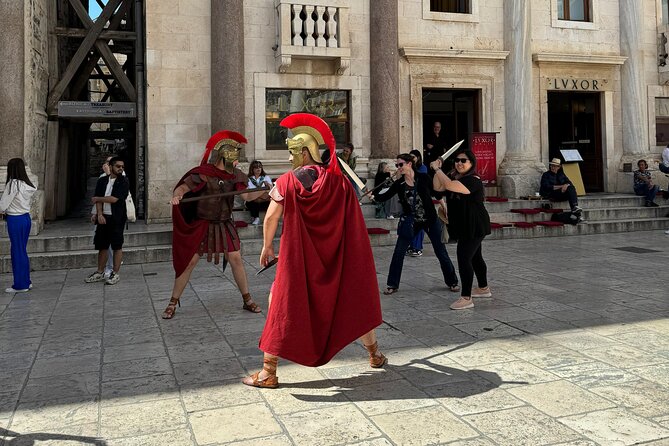
Vestibul is one of the named stops inside the palace area. Its shape and position help explain how the palace was organized and how visitors moved toward important interior spaces.
This is one of the places where a guide’s explanation matters more than a quick photograph. You might find the structure striking on its own, but the story of how it worked within Diocletian’s residence gives the space more meaning.
The stop is guided rather than a self-led pass-through. That makes it a good chance to ask questions, especially if you want to understand how the palace functioned as both a private residence and a major imperial complex.
Peristil: the palace’s grand central space

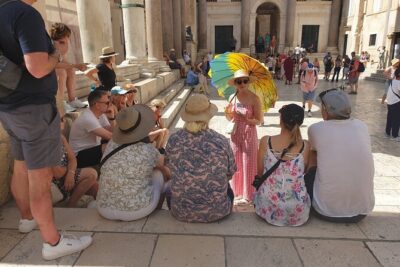
Peristil is another major stop and likely one of the most memorable parts of the route. The name refers to a colonnaded court, and this open space shows the scale and formality of Diocletian’s palace design.
The guide uses the square to explain the palace’s ceremonial character and its place in the wider complex. You can expect history and architectural interpretation here, rather than simply a list of dates.
Peristil also shows why Split is best explored on foot. You move from narrow stone passages into a larger court, then back into the layered streets of the Old Town. That changing sense of space is difficult to appreciate from a quick map or a drive-by sightseeing stop.
Since the tour does not include entrance tickets, you should ask the guide which nearby interiors are worth visiting later. The tour provides information so you can decide what to see at your own pace.
The Golden Gate and the palace entrances
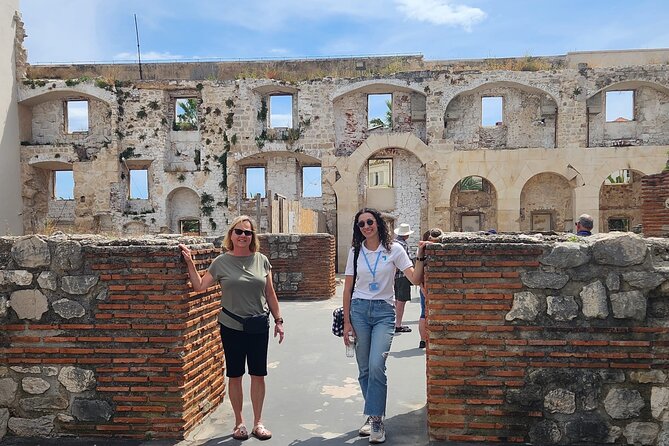
The Golden Gate is one of Split’s best-known landmarks and an important part of the palace’s original defensive system. Its scale helps you picture how the palace was approached and protected.
This stop is especially useful if you plan to explore outside the tour. Once you understand the main gates, you can use them as reference points when walking through the Old Town. Split’s lanes can feel irregular at first, but the palace entrances provide a simple framework.
You will learn about the architecture and history during the guided stop. The experience does not promise a separate interior visit, so think of the Golden Gate as an outdoor explanation and orientation point.
Comfortable shoes matter here. The route includes cobbled streets, and old paving can be tiring even on a short walk. Flat, secure footwear is a better choice than anything designed only for appearance.
People’s Square and Fruit Square

The route leaves the palace core for People’s Square and Fruit Square. These spaces help show how Split grew beyond the original imperial residence and developed into a city of public gathering places.
People’s Square gives you another view of the Old Town’s civic side. It is a useful contrast with Peristil, which belongs more clearly to the palace setting. The guide connects the city’s older foundations with later changes and more recent events.
Fruit Square adds another layer to the route. Its name and setting bring you into the everyday character of central Split, where public squares are not just historical displays but part of the city’s normal rhythm.
The information provided for these stops does not give exact details about every building or story you will hear. That is one reason the local guide matters. Lucija’s value is not limited to prepared facts. Her local background allows room for questions about Split today, which one of the strongest comments about the tour specifically praised.
What the 90-minute length really means
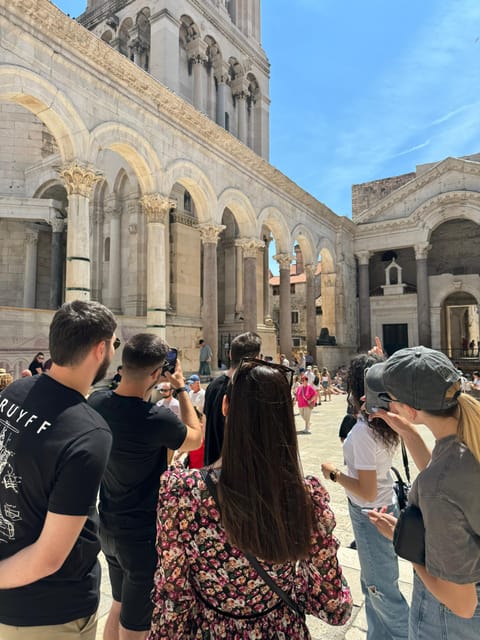
A 90-minute tour is long enough to cover the main landmarks but short enough to fit into a busy day. I would choose it for a first morning in Split, especially if I wanted a framework before exploring the palace’s smaller lanes and paid sites alone.
You should keep your expectations realistic. This is an overview, not a full archaeological study or a slow visit to every interior. The route covers several stops, so some explanations will be focused and brief.
That is a strength if you want momentum. It may feel too quick if you prefer extended photography, long pauses, or detailed architectural analysis at each location.
The small-group format should help balance the pace. You are not simply following a guide at a distance. The description emphasizes enjoying each step of the way, and the strong comments about Lucija point to a friendly experience with room for curiosity.
What the $28 price includes
At $28 per person, the tour’s value comes from the guide and the structure, not from included admissions. You are paying for an English-speaking licensed guide, a planned route through the most important central sights, and local context that can be difficult to gather from signs alone.
I think that is fair for a compact introduction, particularly if Split is new to you. The tour helps you avoid spending your first hours wandering without knowing what you are seeing.
The price is less attractive if you already know the palace well or mainly want independent time for photographs. You can walk through many outdoor areas without joining a tour, though you would not receive the same organized explanation.
Budget extra money if you plan to enter cultural or religious sites after the walk. Those tickets are not included. The guide will give you enough information to consider those visits later, but the tour itself stays focused on the guided walk.
Who should book this experience
I would recommend this tour to a first-time visitor who wants a clear introduction to Split without committing to a long excursion. It also suits anyone who enjoys history but wants a local voice and some connection to present-day life.
Families can join, but children must remain with an adult throughout the tour. The short duration may work well for older children, though the cobbled route and standing time still matter.
English speakers are the natural audience because the tour is conducted in English. It is suitable for most people, but it is not suitable for wheelchair users according to the activity information.
You may want a different plan if you need step-free access, dislike walking on uneven surfaces, or want a tour built around interior admissions. In that case, check the route and access needs before booking.
Practical details before you go
Wear comfortable shoes. That is the most important preparation because the tour moves through historic streets and cobbled surfaces.
The guide waits beside the model of Split at Obala Hrvatskog narodnog preporoda 22 with a Tour4You sign. The walk returns to that same point, so you do not need to arrange separate transport back to the start.
Confirmation is sent immediately after booking. You can reserve now and pay later, which helps if you are still arranging your Split schedule.
Free cancellation is available up to 24 hours before the tour for a full refund. The experience depends on weather, and if poor conditions cause cancellation, you can reschedule or receive a full refund.
My verdict: a friendly way to get oriented
I would book this tour if I were arriving in Split for the first time and wanted the Old Town to make sense quickly. The route covers the key outdoor landmarks, and the local perspective from Lucija adds a personal layer that a guidebook cannot provide.
The tour is especially appealing because it combines palace history with questions about modern Split. Its five-star score from nine ratings is supported by repeated praise for Lucija’s kindness, clear knowledge of the city, and ability to answer questions beyond the usual historical material.
Book it early in your stay, then use the rest of your time to revisit the palace, consider the paid interiors, and explore the squares at your own speed. Skip it if you already know Diocletian’s Palace well or need wheelchair access.
FAQ
How long does the Split Walking Tour last?
The tour lasts 1.5 hours.
What language is the tour conducted in?
The live tour guide conducts the experience in English.
Where does the tour start?
It starts at Obala Hrvatskog narodnog preporoda 22. The guide waits beside the model of Split while holding a Tour4You sign.
Where does the tour end?
The tour ends back at the original meeting point.
Which main sights are included in the walking route?
The route includes the Riva, Diocletian’s Palace, Vestibul, Peristil, the Golden Gate, People’s Square, and Fruit Square.
Are entrance tickets included?
No. Entrance tickets to cultural and religious sites are not included. The guide provides information so you can visit suitable sites later at your own pace.
What should I bring?
Bring comfortable shoes for walking over cobbled streets.
Can children join the tour?
Yes. Children can join, but they must be accompanied by an adult throughout the tour.
What happens if bad weather cancels the tour?
If poor weather causes cancellation, you can choose to reschedule or receive a full refund. You can also cancel up to 24 hours in advance for a full refund.
More History Tours in Split
- Walking Tour of Split with a ‘Magister’ of History
★ 5.0 · 1,122 reviews - Split Walking Tour with Professor of History
★ 5.0 · 926 reviews - Split: History and Heritage Walking Tour
★ 4.9 · 650 reviews - Split History and Gastro Small-Group Tour with Food and Drinks
★ 5.0 · 375 reviews
Just added around Split
- Slatine – Island Hopping Excursion (Trogir/Blue Lagoon/Shipwreck)★ 4.0 · 24 reviews
- Krka Waterfalls & Primošten from Trogir, Seget, Čiovo & Kaštela★ 5.0 · 18 reviews
- From Trogir, Seget, Okrug: Krka Waterfalls & Šibenik Culture Tour★ 5.0 · 10 reviews
- Island Hopping Boat Excursion with Lunch (Trogir,Blue Lagoon, Šolta)★ 3.5 · 6 reviews
- From Split & Trogir: ATV Quad Tour on Island Čiovo★ 5.0 · 21 reviews
- Split: Blue Lagoon Boat Trip with Lunch, Wine and Snorkeling★ 5.0 · 3 reviews
- Split Sunset Stand Up Paddle Tour★ 5.0 · 16 reviews
- Split: Sunset Guided Kayaking Tour★ 4.8 · 71 reviews
Walking Tours, compared.
Walking Tour of Split and Diocletian’s Palace
Read our review →


Krka Waterfalls tour with Trogir Walking tour and Krka panoramic boat cruise
Read our review →
City Walls Early Morning or Sunset Walking Tour
Read our review →Browse the lists this tour appears in