
Reviewed · WALKING TOURS
Split: Jewish Heritage & Diocletian’s Palace Walking Tour
Split has more stories than stones. This two-hour walking tour links Jewish heritage with Diocletian’s Palace, the city synagogue, Jewish cemetery, Jupiter’s Temple, and the statue of Grgur Ninski. I like that it goes beyond the usual Roman sights, and I like the chance to hear directly from local Jewish people about life and culture in Split. The main drawback is the price: at $176 per person, this is costly for a walking tour, especially since food and drinks are not included.
The small group, limited to eight people, helps keep the experience personal. The English-speaking guide can shape the walk around your interests, which fits the strong praise for a tour that felt well suited to its participants. Still, you should allow for a possible timing wrinkle: the activity is advertised as two hours, while the route details mention a 2.5-hour walking segment.
In This Review
- Key points to know before booking
- Why Split’s Jewish story changes the usual city walk
- Starting at South Tours Travel Agency
- Walking through Diocletian’s Palace
- The city synagogue and religious spaces
- The Jewish cemetery and community memory
- Jupiter’s Temple and the statue of Grgur Ninski
- What the two-hour format means
- Is $176 per person good value?
- Who will enjoy this Split walking tour most?
- Booking advice and final verdict
- FAQ
- Where does the tour start?
- Where does the tour finish?
- How long does the experience last?
- What language is the tour offered in?
- How many people can join the group?
- What landmarks are included?
- Will I learn about Jewish life in Split?
- Is food included?
- What should I wear?
- Can I cancel for a full refund?
Key points to know before booking
- Jewish history is the main reason to choose this walk: You get a focused look at one of Europe’s oldest Jewish communities, rather than only a standard city tour.
- The route covers major Split sights: Expect Diocletian’s Palace, the Jewish cemetery, city synagogue, Jupiter’s Temple, and Grgur Ninski’s statue.
- Local Jewish voices add a personal layer: You may speak with Jewish people from Split and hear about their culture and experiences.
- Eight people is the maximum: The small group should make it easier to ask questions and stay engaged with the guide.
- The price is high for two hours: You are paying for a specialized subject and personal access, not a meal or transportation.
- Dress modestly: Religious spaces require suitable clothing, so plan your outfit with the synagogue in mind.
Why Split’s Jewish story changes the usual city walk
Most first walks through Split focus on grand architecture, Roman remains, and the busy lanes inside Diocletian’s Palace. This tour uses those same places to tell a more specific story: how Jewish life developed and continued in the city.
That focus matters because Jewish heritage can be easy to miss when you look only at the largest monuments. A guide can point out the connection between community life and the old city’s streets, religious buildings, and cemetery. You are not simply collecting photographs. You are learning to read Split through the experience of a long-established minority community.
I especially like the chance to speak with local Jewish people. The supplied description does not promise a formal lecture or a set performance. Instead, it suggests conversation about culture and personal experience. That can give the walk a human scale, though the exact format may vary with the day’s group and local availability.
The tour is conducted in English by a local guide. One of the clearest pieces of praise attached to this experience is that the guide gave an excellent introduction to Split and adjusted the content to suit the group’s interests. That is important here. A specialized tour works best when you can ask why a place matters, not just when it was built.
More Walking Tours in Split
- Split: Old Town and Diocletian Palace Walking Tour
★ 4.9 · 4,727 reviews - Walking Tour of Split and Diocletian’s Palace
★ 5.0 · 2,588 reviews - Krka Waterfalls tour with Trogir Walking tour and Krka panoramic boat cruise
★ 5.0 · 1,659 reviews
Starting at South Tours Travel Agency
The meeting point is South Tours Travel Agency. From there, you set out on foot and return to the same place at the end.
Starting and finishing at one office keeps the logistics simple. You do not need to arrange a taxi between sights, and the route is designed as a continuous city walk. Since the tour lasts roughly two hours, you can fit it into a morning or afternoon without giving up an entire day.
You should wear comfortable shoes. The experience is entirely on foot, with sightseeing, guided walking, and photo stops. The information provided does not specify the exact surface conditions or number of stairs, so I would avoid treating this as a formal accessibility guarantee.
The group limit of eight is one of the better practical features. A small group makes it easier to hear the guide in narrow streets and easier to ask about sensitive subjects. It also gives conversations with local Jewish people a better chance of feeling natural instead of rushed through a crowd.
Walking through Diocletian’s Palace
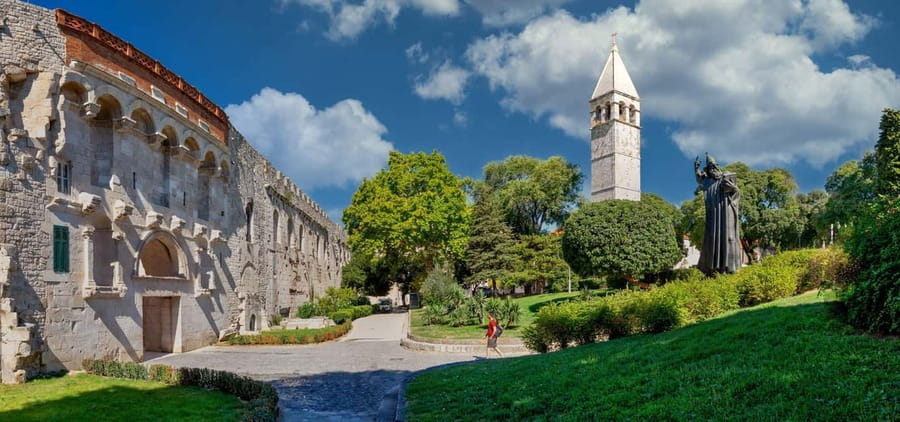
Diocletian’s Palace is the visual center of the tour. Here, the guide connects the old palace setting with the story of Jewish life in Split.
The palace is not treated only as a grand architectural stop. It becomes the backdrop for a wider account of how communities have used the city over time. That approach is useful if you have already seen the main palace courtyards or plan to explore them independently. You gain a second way to understand the same streets.
You can expect a guided walk with pauses for sightseeing and photographs. The exact order of stops is not specified, so the route may be adjusted by the guide. That flexibility can work in your favor, especially if you have a particular interest in religious history or local culture.
The palace portion also provides the broadest introduction to Split. One five-star assessment described the experience as an excellent first look at the city. I can see why: you receive the standard orientation of a city walk, but with a subject that gives the route more purpose.
The city synagogue and religious spaces
The city synagogue is one of the most important stops for the tour’s main theme. Rather than treating Jewish life as a footnote, the visit places the synagogue within the center of the story.
You should dress modestly for this part of the walk and for other religious spaces. This is not just a polite suggestion. Clothing that works for a hot day at the beach may not be suitable inside a place of worship. Pack a light layer or choose shoulders and knees that are covered if possible.
The supplied details do not state whether entry inside the synagogue is guaranteed or how long you will spend there. You should therefore think of it as a planned landmark on the walking route, not assume a long interior visit. Your guide can explain what access is available on the day.
This stop is particularly useful if you want more than architecture. The synagogue links the physical city with continuing community life. The opportunity to hear from local Jewish people can make that link clearer and more personal.
Still Split, at a slower pace:
- Split: Krka Waterfalls Trip with Boat Cruise and Swimming
★ 4.8 · 10,519 reviews - From Split: Krka Waterfalls, Food & Wine Tasting Tour
★ 5.0 · 9,326 reviews - Blue cave, Mamma Mia and Hvar, 5 islands speedboat tour
★ 5.0 · 7,150 reviews - From Split: Krka Waterfalls, Food & Wine Tasting Tour
★ 4.9 · 6,598 reviews
The Jewish cemetery and community memory
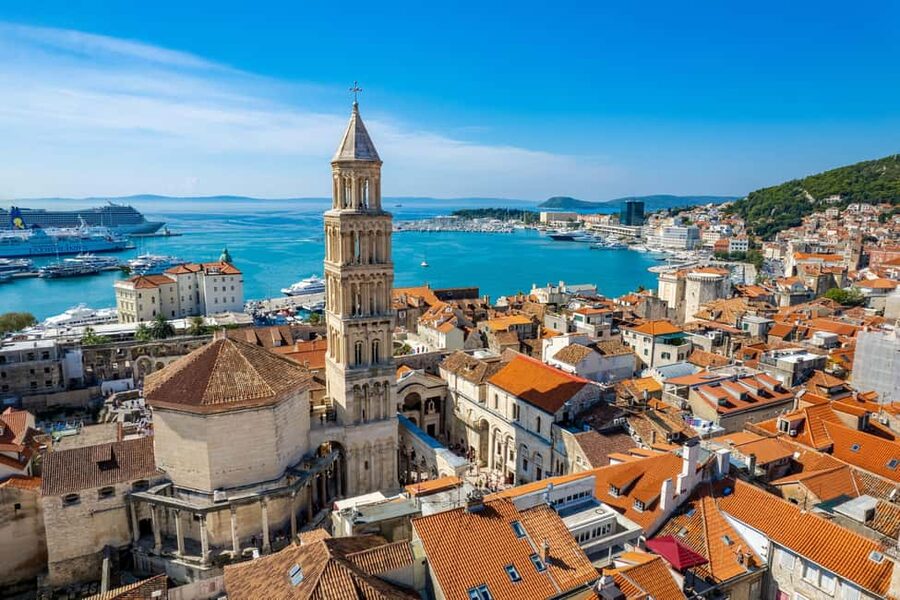
The Jewish cemetery adds a quieter and more reflective stop. It shifts the tour away from the palace’s public spaces and toward remembrance, family, and the long presence of the Jewish community in Split.
Cemeteries reward patience. You may spend less time taking photographs and more time listening to the guide explain what the place represents. The information available does not identify particular graves, dates, or notable people, so I would not book this tour expecting a detailed genealogy lesson. Its value is broader: it shows that Jewish life in Split has roots that reach beyond one building or one period.
This is also where the tour’s modest-clothing advice matters most. Treat the cemetery and synagogue as places of respect, not just stops on a sightseeing checklist. A careful guide should help you understand the setting without turning it into a rushed photo opportunity.
Jupiter’s Temple and the statue of Grgur Ninski
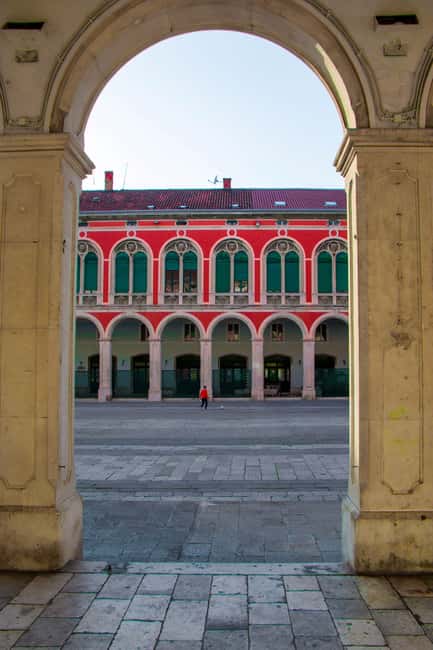
The route also includes Jupiter’s Temple and the statue of Grgur Ninski. These stops widen the tour beyond Jewish sites and give you a fuller look at Split’s well-known landmarks.
Jupiter’s Temple brings another religious tradition into the walk. Placed alongside the synagogue and Jewish cemetery, it helps show how different layers of belief and public life appear within a compact historic center. The tour is not presented as a narrow visit to one building. It is a city walk shaped by Jewish history but supported by several major sights.
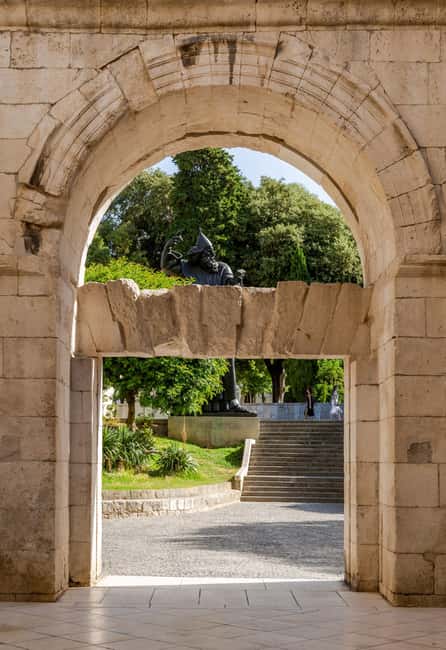
Grgur Ninski’s statue offers a recognizable landmark and a natural photo stop. The available information does not give a specific ritual or story connected with the statue, so the guide’s explanation will be important. You can expect it to function as one of the route’s popular sightseeing points rather than the main focus.
These landmarks are a practical bonus. If you are new to Split, the tour helps you cover several key places while learning a more specialized story. If you have already seen them, the Jewish heritage angle may give familiar sights a fresh meaning.
What the two-hour format means
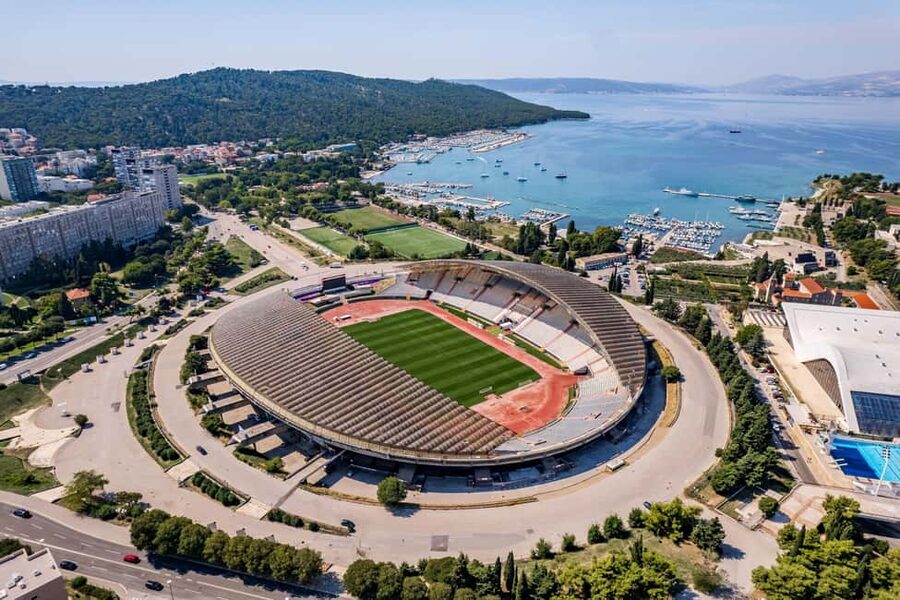
The advertised duration is two hours, with availability depending on the starting time you choose. Elsewhere, the route is described as a 2.5-hour walking and sightseeing segment. Because of that mismatch, I would leave a little extra room in your schedule and confirm the expected finish when booking.
Two hours is enough for a focused introduction, but not enough for a slow, detailed examination of every landmark. You will need to listen while walking and keep moving between stops. The advantage is that the tour remains manageable, especially on a busy day in Split.
The format suits you if you want a clear overview before exploring further on your own. It may feel too brief if you hope to spend a long time inside the synagogue, examine cemetery details, and discuss every period of Jewish life in Split.
The guide speaks English, and the group is limited to eight participants. That combination should help with questions and conversation. The experience does not include food or beverages, so plan a coffee, meal, or snack separately.
Is $176 per person good value?
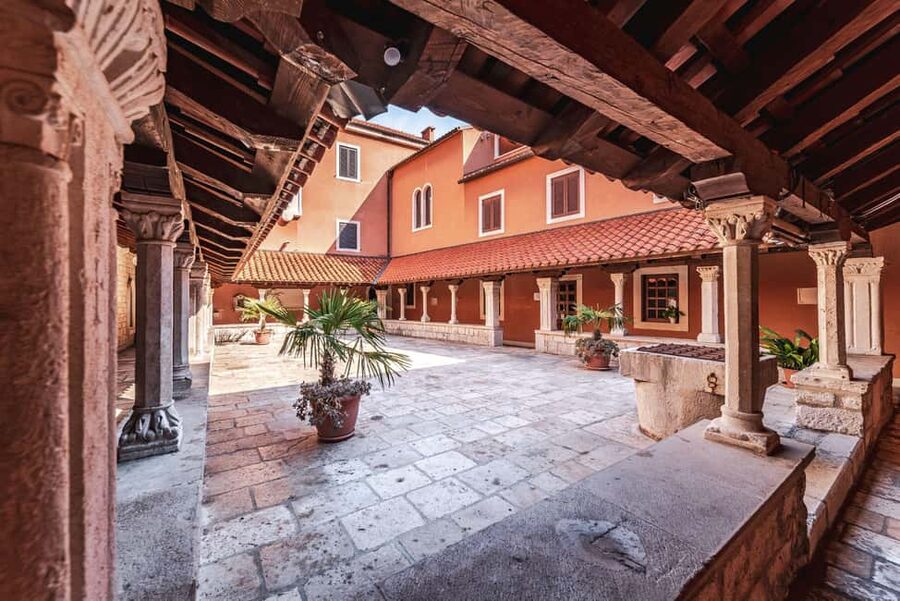
At $176 per person, this is an expensive walking tour. You are not paying for transport, meals, entrance extras listed separately, or a full-day program. The price needs to be justified by the specialist subject, small group, local guide, and access to personal community perspectives.
For the right audience, those features may make the cost worthwhile. If Jewish heritage is a major reason for your trip, or if you prefer a thoughtful local introduction over a large general sightseeing group, the tour offers something you may not find on a standard palace walk.
For a first-time Split visitor who mainly wants the lowest-cost orientation, the value is weaker. You can see many popular landmarks on your own or through a less specialized city tour. The premium here pays for focus and intimacy.
I would book it when the Jewish story is central to your interests, when you value a group of eight or fewer, and when you want a guide who can respond to your questions. I would skip it if your priority is simply covering Split’s sights as cheaply as possible.
Who will enjoy this Split walking tour most?
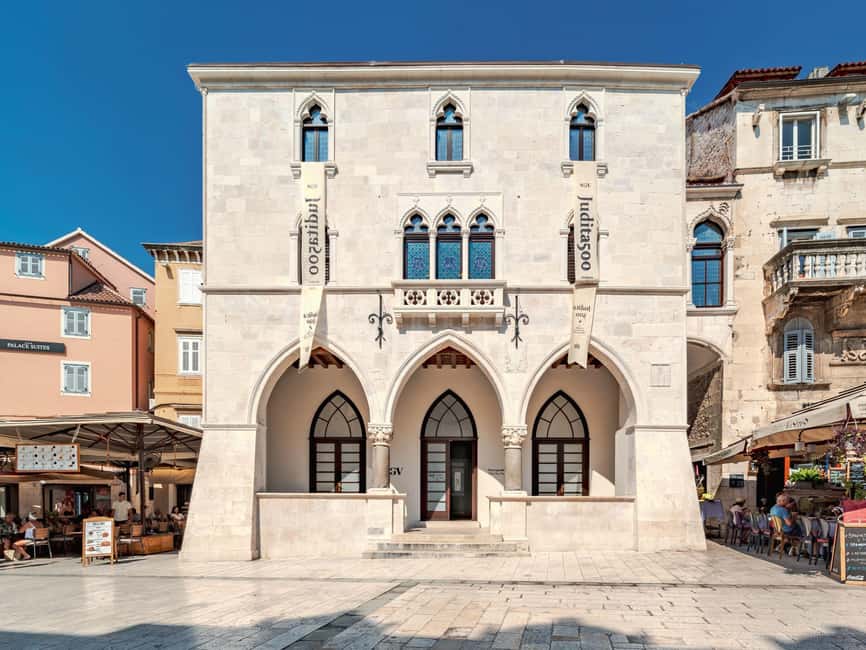
This experience suits history-minded visitors, people with a personal connection to Jewish heritage, and anyone who prefers local culture over a fast list of monuments. It also works well as an opening activity because it introduces several central sights and gives you context for later independent walks.
It may be a good choice for couples, solo visitors, or small family groups who enjoy conversation. The limited group size should make the experience less anonymous than a large city tour.
You should think twice if you dislike religious or cemetery visits, need a highly precise two-hour schedule, or want a tour built around food. Food and drinks are not included, and the subject requires a respectful pace.
The perfect five-star score from three published bookings includes praise for the tour being the best experience of a trip and for matching the group’s interests closely. That kind of response points to the tour’s strongest feature: personal attention. It is not a generic walk with a Jewish label added afterward.
Booking advice and final verdict
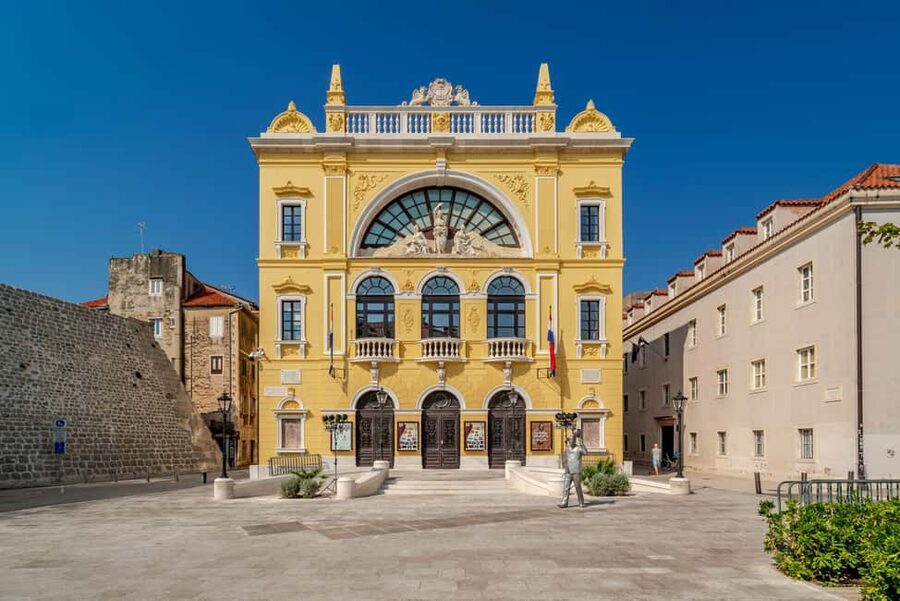
This tour is worth booking if you want Split explained through Jewish community life, not only through palace walls. The synagogue, cemetery, conversations with local Jewish people, and connections to major landmarks give the experience a clear identity.
The high price is the serious caution. Before paying, confirm the starting time and expected length because the details describe both a two-hour activity and a 2.5-hour walking segment. Wear modest clothing, use comfortable shoes, and leave time afterward in case the walk runs toward the longer estimate.
I would recommend it to a curious, culturally focused visitor who values a small group and a strong guide. I would not recommend it as the best bargain introduction to Split. For the right interests, though, it offers a more personal view of the city than a standard palace tour.
FAQ
Where does the tour start?
The tour starts at South Tours Travel Agency in Split.
Where does the tour finish?
You return to South Tours Travel Agency at the end of the walk.
How long does the experience last?
The activity is advertised as two hours. The route details also mention a 2.5-hour walking segment, so confirm the expected timing when booking.
What language is the tour offered in?
The tour is conducted in English by a live local guide.
How many people can join the group?
The group is limited to eight participants.
What landmarks are included?
The route includes Diocletian’s Palace, the Jewish cemetery, the city synagogue, Jupiter’s Temple, and the statue of Grgur Ninski, along with other Split sights.
Will I learn about Jewish life in Split?
Yes. The tour focuses on the history and culture of Jewish people in Split and includes an opportunity to speak with local Jewish people about their culture and experiences.
Is food included?
No. Food and beverages are not included.
What should I wear?
Wear modest clothing suitable for religious spaces.
Can I cancel for a full refund?
Yes. You can cancel up to 24 hours in advance for a full refund. You can also reserve now and pay later, keeping your plans flexible.
More History Tours in Split
- Walking Tour of Split with a ‘Magister’ of History
★ 5.0 · 1,122 reviews - Split Walking Tour with Professor of History
★ 5.0 · 926 reviews - Split: History and Heritage Walking Tour
★ 4.9 · 650 reviews - Split History and Gastro Small-Group Tour with Food and Drinks
★ 5.0 · 375 reviews
Just added around Split
- Slatine – Island Hopping Excursion (Trogir/Blue Lagoon/Shipwreck)★ 4.0 · 24 reviews
- Krka Waterfalls & Primošten from Trogir, Seget, Čiovo & Kaštela★ 5.0 · 18 reviews
- Island Hopping Boat Excursion with Lunch (Trogir,Blue Lagoon, Šolta)★ 3.5 · 6 reviews
- From Trogir, Seget, Okrug: Krka Waterfalls & Šibenik Culture Tour★ 5.0 · 10 reviews
- From Split & Trogir: ATV Quad Tour on Island Čiovo★ 5.0 · 21 reviews
- Split: Blue Lagoon Boat Trip with Lunch, Wine and Snorkeling★ 5.0 · 3 reviews
- Split Sunset Stand Up Paddle Tour★ 5.0 · 16 reviews
- Split: Sunset Guided Kayaking Tour★ 4.8 · 71 reviews
Walking Tours, compared.
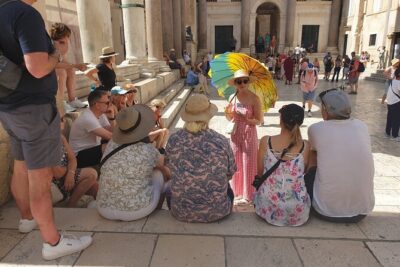
Walking Tour of Split and Diocletian’s Palace
Read our review →
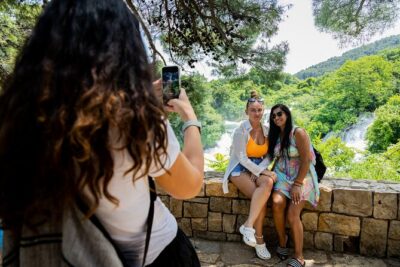
Krka Waterfalls tour with Trogir Walking tour and Krka panoramic boat cruise
Read our review →
City Walls Early Morning or Sunset Walking Tour
Read our review →Browse the lists this tour appears in