
Reviewed · FOOD & DRINK
Sites & Bites Private Food and History Tour of Zagreb
Come hungry, leave well fed. This private Zagreb tour joins local food with the city’s key sights, moving from Zrinjevac and Ban Josip Jelačić Square to Dolac Market, the Upper Town, Lotrščak Tower, and St. Mark’s Church. Along the way, you taste pastries, cured meats, Pag cheese, olive oils, pumpkin seed oil, wine, liqueurs, and other Croatian specialties before sitting down to a traditional lunch.
I like the way the food stops give the history a real purpose, and I like that the private format lets your guide adjust the pace and answer your questions. Guide Karlo is especially praised for his warm manner, local suggestions, and strong ties with food vendors. The main drawback is the price, $203.70 per person, which is a serious spend for a half-day tour, and the amount of food may be too much if you arrive after breakfast.
The tour lasts about five to six hours and begins at 9 a.m. at Zrinjevac 2. You cover a fair stretch of central Zagreb on foot, with the short funicular ride included, so comfortable shoes and an empty stomach are wise.
In This Review
- What makes this Zagreb tour worth considering
- Starting beneath the plane trees at Zrinjevac
- Ban Josip Jelačić Square and Zagreb coffee culture
- Zagreb Cathedral and the changing face of the city
- Dolac Market, where Zagreb’s food story becomes real
- Opatovina, Tkalčićeva, and Zagreb’s social side
- Bloody Bridge and the Grič Tunnel
- The shortest funicular and the Upper Town
- Lotrščak Tower and the Strossmayer promenade
- St. Mark’s Church and lunch in the old town
- What you will taste during the day
- The guide and the private-tour advantage
- Timing, walking, and practical details
- Who should book Sites & Bites?
- Should you book this Zagreb food tour?
- FAQ
- Where does the Sites & Bites tour begin?
- What time does the tour start?
- How long does the tour last?
- Where does the tour end?
- Is this a private tour?
- Is the funicular ride included?
- Is lunch included?
- What drinks are included?
- Is Grič Tunnel always part of the route?
- Can I cancel for a full refund?
What makes this Zagreb tour worth considering
- Food appears throughout the morning: Tastings are spread across shops, market stalls, and the final restaurant rather than saved for one sitting.
- Karlo adds a personal touch: He is praised for his humor, local pride, restaurant advice, and communication before and after the tour.
- Dolac Market gets proper attention: You taste pumpkin seed oil, cheese, wine, and learn about Croatian market customs.
- The route links Lower and Upper Town: You see the cathedral, Bloody Bridge, Grič Tunnel, the funicular, Lotrščak Tower, and St. Mark’s Church in one outing.
- Lunch is a real meal: The final stop includes Croatian dishes such as štrukli, Slavonian stew, and seasonal stuffed peppers or sarma.
- It is private: Only your group takes part, making it easier to ask questions or linger over a favorite bite.
Starting beneath the plane trees at Zrinjevac
The meeting point is next to the meteorological station in Zrinjevac, one of Zagreb’s handsome central parks. Your guide begins with an overview of the city, its food traditions, and the influences that shaped Croatian cooking.
That opening matters because Croatian food is not one single style. The country’s regions have their own ingredients and customs, and the tour uses tastings to show those differences in a practical way. You are not simply told that olive oil or cheese matters here. You get to taste it, compare it, and hear where it comes from.
The early start also works in your favor. Several stops involve tasting rather than a single formal meal, and the final lunch comes later. I would treat breakfast as optional at best. Several people describe the food as generous enough to carry them through the rest of the day.
More Food and Drink Tours in Zagreb
- Taste Zagreb Food Tour
★ 5.0 · 256 reviews - Zagreb: Restaurants, Food & Old Town Walking Tour
★ 5.0 · 191 reviews - Zagreb: Restaurants, Food & Old Town Walking Tour
★ 4.7 · 170 reviews
Ban Josip Jelačić Square and Zagreb coffee culture
From Zrinjevac, the route continues to Ban Josip Jelačić Square, Zagreb’s main square. Here, the guide explains the square and shares details about Croatian coffee culture before leading you toward the first substantial tasting stops.
This is a useful beginning to the city tour because you get both orientation and local context. The square is not treated as a quick photo stop. Instead, it becomes a place to understand how Zagreb works as a social center.
The food focus soon turns to Croatian olive oil and truffles. I particularly like this pairing because it moves beyond the familiar idea that Croatia is only about grilled meat or seafood. You learn about Istrian and Dalmatian olive oils, taste them with homemade bread, and hear about the role of truffles in Croatian cuisine.
The samples are not all served in one place. That means you spend the morning moving through the city and meeting people connected with the products. The tradeoff is that timing can feel less predictable than on a standard sightseeing route, since market and shop visits naturally take different amounts of time.
Zagreb Cathedral and the changing face of the city
The cathedral is a short sightseeing pause, listed at about 20 minutes. It is noted for combining several architectural styles, making it a useful marker of Zagreb’s changing religious and architectural story.
This stop is more about looking and listening than eating. After the early tastings, the change of pace is welcome. Your guide can place the cathedral within the wider story of Zagreb, while you take in one of the city’s most recognizable buildings.
The tour does not treat every landmark as a long interior visit. That is important to understand before booking. The emphasis is on seeing major places, hearing their stories, and connecting them to local life, not on spending a full hour inside each site.
Dolac Market, where Zagreb’s food story becomes real
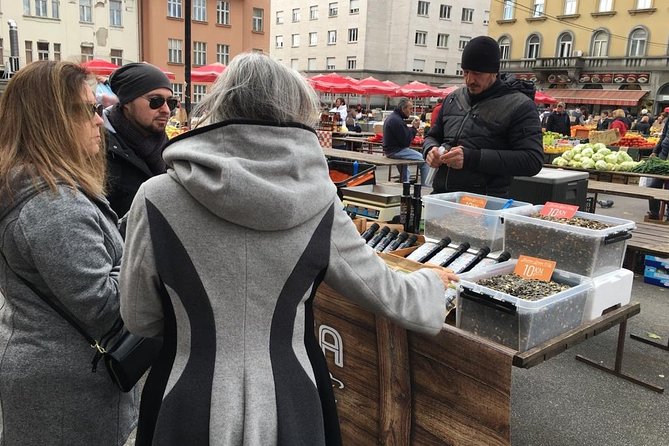
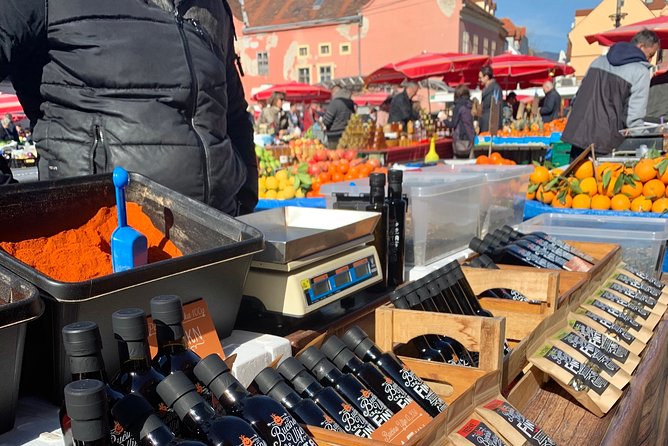
Dolac Market is the food heart of the route. This open market is where you meet farmers, see everyday Croatian produce, and taste pumpkin seed oil. The covered section follows, with more discussion of food customs and market traditions.
For me, this is one of the strongest parts of the experience. A restaurant can serve you a finished dish, but a market shows the ingredients and the people behind it. You get a clearer sense of what local food means when you taste an oil at the market and then learn how it is used.
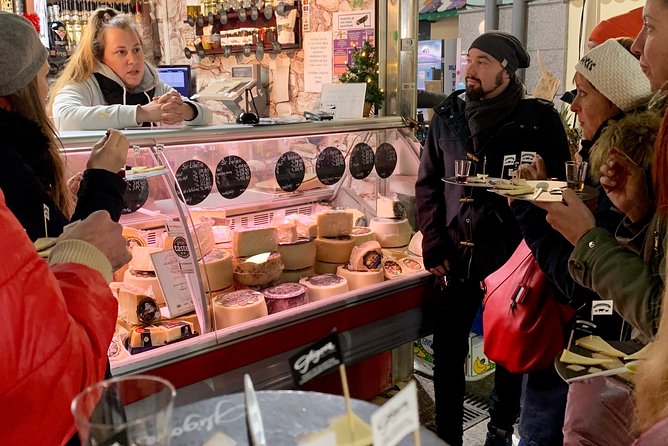
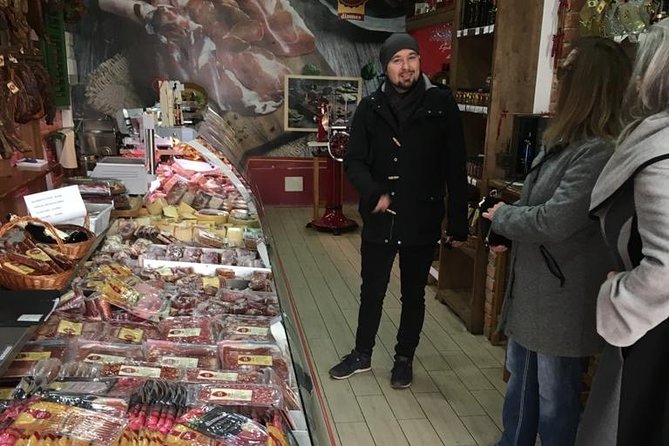
The cheese tasting is another highlight. Pag cheese, made on the island of Pag, is served with wine, and the tour also includes Croatian cured meats such as prosciutto, kulen, and smoked ham. Homemade bread, olives, and sweet and savory spreads round out the table.
The food is high quality, but this is not a light nibble tour. By the time you leave Dolac, you may already have sampled pastries, charcuterie, cheese, bread, oils, wine, and other local products. Bring an appetite and pace yourself. You can always take smaller portions early so you still have room for lunch.
Still Zagreb, at a slower pace:
- From Zagreb: Plitvice & Rastoke Guided Day Trip with Ticket
★ 4.9 · 2,955 reviews - Zagreb: Rastoke & Plitvice Lakes Guided Tour with Ticket
★ 4.9 · 1,897 reviews - Communism & Croatian Homeland War Tour
★ 5.0 · 1,355 reviews - Best of Zagreb with the WW2 Tunnels
★ 5.0 · 973 reviews
Opatovina, Tkalčićeva, and Zagreb’s social side
At the statue of Petrica Kerempuh, the guide explains Opatovina, a popular meeting area, and talks about Croatia’s beer scene. The stop is brief, around 10 minutes, but it adds a modern note after the market’s traditional foods.
The route then reaches Tkalčićeva Street, one of Zagreb’s best-known places for restaurants and casual evening life. You receive suggestions for places to eat, which can be especially useful if you have more time in the city.
This practical advice is one reason the private format earns its keep. You can tell Karlo what kind of food or atmosphere you want, and his recommendations can help shape the rest of your stay. His follow-up suggestions for restaurants and activities are repeatedly praised, so I would arrive with a short list of questions.
Bloody Bridge and the Grič Tunnel
Krvavi Most, or Bloody Bridge, is a small but memorable stop. Your guide explains how it got its name, turning an easy-to-miss passage into a piece of Zagreb’s story.
Next comes Grič Tunnel, a World War II legacy beneath the Upper Town. The walk through the tunnel is short, around 15 minutes, and gives the sightseeing portion a different texture. You move from market streets and café areas into a structure linked to the city’s wartime past.
The tunnel may occasionally be closed for events. If that happens, the route may need a small adjustment. This is one of the few stated uncertainties in the plan, so do not count on the tunnel as an essential part of the day.
The shortest funicular and the Upper Town
The funicular takes you up toward Zagreb’s historic Upper Town. The ride lasts only about 10 minutes as part of the scheduled stop, and admission is included.
Calling it the world’s shortest funicular gives this small ride a playful place in the tour. More importantly, it saves you from treating the move uphill as a separate logistical task. You get a quick transport experience and arrive ready for the Upper Town sights.
Because this is a walking route with many stops, the funicular also breaks up the morning. You have already covered markets, squares, and narrow historic streets before reaching the lookout area.
Lotrščak Tower and the Strossmayer promenade
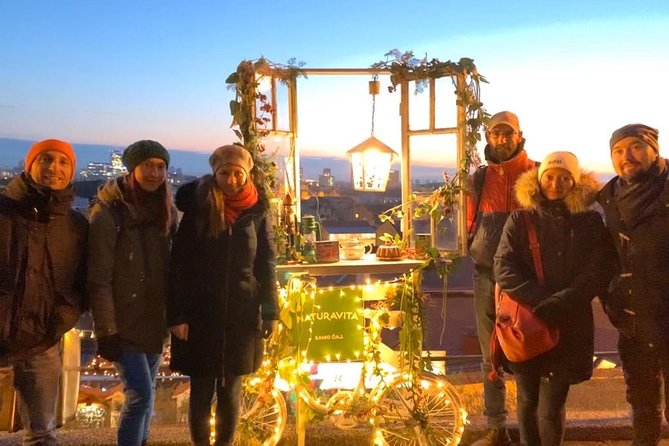
Lotrščak Tower is the main Upper Town landmark on the route. Your guide explains its medieval role as a watchtower, then takes you along the romantic Strossmayer promenade for views across Zagreb toward the south bank of the Sava River.
This is the clearest point for pausing to look at the city as a whole. The view gives some scale to the neighborhoods you have just crossed, while the tower supplies the defensive history behind the Upper Town.
The stop is scheduled for about 30 minutes. That is enough for photos and an explanation, but it is not a long tower visit. If you want an in-depth museum-style treatment of the site, you may need more time elsewhere in your Zagreb plans.
St. Mark’s Church and lunch in the old town
The final sightseeing stop is St. Mark’s Church, where the colorful tiled roof makes an immediate photo subject. The area also places you near the Croatian Parliament and Government, so the guide explains the political role of the Upper Town.
You also get suggestions for Zagreb museums, including the Museum of Broken Relationships. That kind of advice is handy because the tour ends with a better sense of what to do next, rather than simply leaving you at the last landmark.
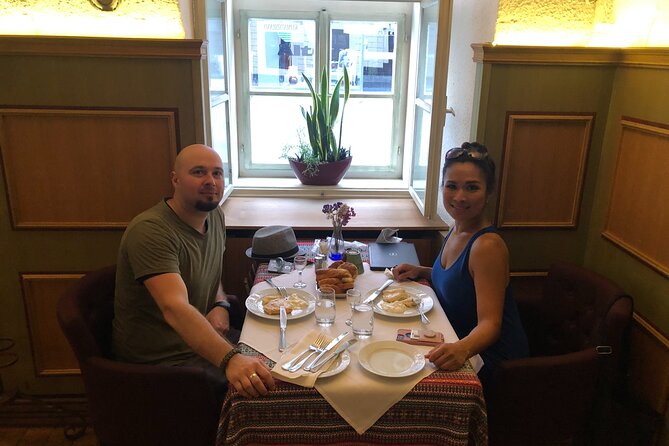
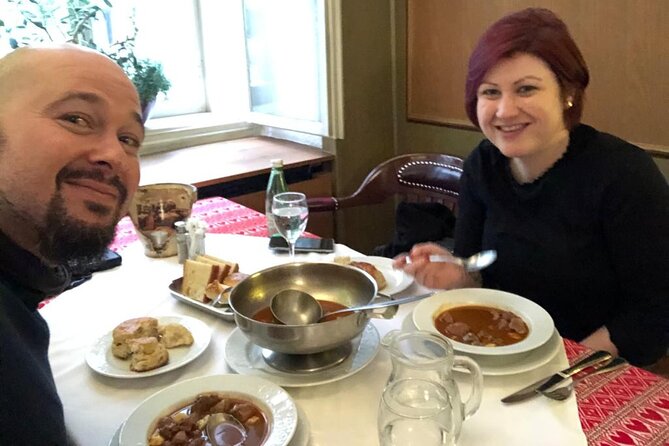
Lunch follows in a traditional restaurant and takes about two hours. The planned meal includes Croatian dishes such as štrukli, Slavonian stew, and a seasonal stuffed pepper or sarma. Rakija and gemišt are also included, along with wine and other drinks during the day.
The lunch is not an afterthought. It gives you a chance to sit down after the walking and tastings, and it brings several regional food ideas together in a proper meal. The portions are described as abundant, so let the guide help with ordering and do not overfill yourself at the first few stops.
What you will taste during the day
The sample menu covers a wide spread of Croatian food:
- Pastries at the start
- Prosciutto, kulen, smoked ham, homemade bread, and olives
- Pag cheese and other local cheeses
- Istrian and Dalmatian olive oils
- Pumpkin seed oil
- Truffles and truffle-related products
- Croatian wines, rakija, and gemišt
- Sweet and savory spreads
- A three-course traditional lunch
The strength here is variety. You get salty cured meat, firm sheep cheese, bread, oils, sweets, spirits, wine, and cooked dishes. If you are curious about how Croatian food differs by region, this is a useful introduction.
It is also a good tour for cautious eaters because the tastings let you try small amounts before committing to a full dish. Still, dietary needs are not described in the information provided, so you should raise any concerns when booking or before the tour begins.
The guide and the private-tour advantage
Karlo receives the strongest praise for being personable, funny, well informed about Zagreb and Croatia, and proud of his work. The warmest descriptions say that he quickly feels more like a friend showing you his hometown than a guide delivering a script.
That personal approach matters on a food tour. You want someone who can explain how a product is made, where it comes from, and why it matters locally. Karlo is also praised for building relationships with vendors, butchers, olive oil sellers, farmers, and restaurant staff. Those connections help the food stops feel more personal than a string of anonymous samples.
The tour is private, so only your group participates. This is useful if you want to ask many questions, move at a slower pace, or focus on food history rather than taking equal time at every landmark.
The downside is cost. At $203.70 per person, this is not a bargain walking tour. But the price includes lunch, snacks, alcoholic drinks, coffee or tea, the funicular ticket, and fees and taxes. You are also paying for a private guide and several tastings. If you would otherwise book a food tour and a sightseeing tour separately, the combined value is easier to justify.
Timing, walking, and practical details
The tour begins at 9 a.m. at Zrinjevac 2 and ends back at the meeting point. It lasts roughly five to six hours, with the lunch portion taking about two hours.
You should plan for a morning spent moving between central Zagreb landmarks, market areas, Upper Town streets, and the tunnel. The provided information says most participants can take part, the route is near public transportation, and service animals are allowed.
The mobile ticket is convenient, and confirmation is received at booking. Free cancellation is available until 24 hours before the start time. Changes or cancellations made within 24 hours are not accepted for a refund.
This works best near the beginning of your Zagreb stay. Karlo’s food and restaurant advice can shape later meals, and the route gives you a useful map of the central sights. Since the tour is commonly booked well ahead, with an average booking lead time of 86 days, reserve early if your dates are fixed.
Who should book Sites & Bites?
I would choose this for a first visit to Zagreb if you want food and sightseeing handled in one well-organized day. It suits couples, families, and small private groups who enjoy trying many things and asking questions along the way.
It is also a strong choice for food-minded people who want more than a list of landmarks. The tastings explain Croatian ingredients through direct contact with markets and vendors, while the lunch gives you a fuller taste of traditional cooking.
I would think twice if you prefer a low-cost city walk, dislike alcohol, have a small appetite, or want long museum visits. The schedule is full, the food is plentiful, and the price only makes sense if you value the private guide, the included meal, and the range of tastings.
Should you book this Zagreb food tour?
Yes, if you want an easy first look at Zagreb with plenty to eat. The strongest reasons are the private format, the market visit, the traditional lunch, and Karlo’s detailed local recommendations.
Book it early in your stay, arrive hungry, and keep the rest of your day light. At $203.70 per person, it is a splurge, but the combination of food, drinks, landmarks, transport, and personal guiding gives you more than a basic half-day walk.
FAQ
Where does the Sites & Bites tour begin?
It begins at Zrinjevac 2, 10000 Zagreb, next to the meteorological station.
What time does the tour start?
The start time is 9 a.m.
How long does the tour last?
The experience lasts approximately five to six hours.
Where does the tour end?
The tour ends back at the meeting point.
Is this a private tour?
Yes. Only your group participates in the activity.
Is the funicular ride included?
Yes. The admission ticket for the funicular railway is included.
Is lunch included?
Yes. A three-course lunch is included, with traditional dishes such as štrukli, Slavonian stew, and seasonal stuffed peppers or sarma.
What drinks are included?
Coffee or tea and alcoholic beverages are included. The food program includes Croatian wine, rakija, and gemišt.
Is Grič Tunnel always part of the route?
The tunnel may occasionally be closed because of events, so that portion of the route is not guaranteed every time.
Can I cancel for a full refund?
Yes. You can cancel at least 24 hours before the local start time for a full refund. Cancellations or changes made less than 24 hours before the start time are not accepted for a refund.
More History Tours in Zagreb
- Authentic Croatian Food & Heritage Walk in a Small Group
★ 5.0 · 36 reviews - Zagreb History Walking Tour
★ 5.0 · 7 reviews - Dubrovnik Old Town History Walking Tour
★ 5.0 · 1,684 reviews - Walking Tour of Split with a ‘Magister’ of History
★ 5.0 · 1,122 reviews
Just added around Zagreb
- Zagreb: Explore with an Art Historian – Private Walking Tour★ 4.9 · 9 reviews
- Zagreb: VR 3D Immersive Film Experience – Voucher★ 4.6 · 9 reviews
- Zagreb: Plitvice With Secured Tickets, Boat And Train Ride★ 4.6 · 15 reviews
- Zagreb: Private custom tour with a local guide★ 4.6 · 48 reviews
- Zagreb: Pub Crawl, 1-Hour of Unlimited Drinks, & Club Entry★ 4.1 · 86 reviews
- Zagreb : Must-See Attractions Walking Tour With A Guide★ 4.6 · 11 reviews
- Zagreb: Guided City Tour with WWII Tunnels★ 4.9 · 155 reviews
- Zagreb BIG Tour – Private Tour★ 4.8 · 48 reviews
Food & Drink, compared.
Blue Lagoon and 3 Island Cruise with Food and Drinks
Read our review →
Krka National Park Tour with tour Guide & Wine tasting from Split & Trogir
Read our review →
Split/Trogir: Krka National Park Day Trip with Wine Tasting
Read our review →
Full-Day Catamaran Cruise to Hvar & Pakleni Islands with Food and free Drinks
Read our review →
Dubrovnik Food and Drink Walking Tour with a Local Guide
Read our review →
Dubrovnik Guided Group Tour with Ston Oyster tasting from Split & Trogir
Read our review →Browse the lists this tour appears in