
Reviewed · OLIVE OIL TASTINGS
Pula: House of Istrian Olive Oil Museum and Guided Tasting
Olive oil has a secret life. At the House of Istrian Olive Oil in central Pula, you learn how this everyday kitchen staple became a major part of Istrian culture, trade, and food. I especially like the five-oil tasting, which lets you compare premium extra virgin oil with a typical supermarket version. I also like the clear mix of films, exhibits, and guided tasting, so the visit feels useful rather than just decorative.
The main drawback is that the experience depends heavily on your interest in food and production methods. If you only want a quick taste and a souvenir bottle, the $35 price may feel high. But if you want to understand why one olive oil costs more than another, this is a smart indoor stop, especially on a rainy day in Pula.
In This Review
- Key points about the Pula olive oil experience
- Starting in central Pula with the story of Istrian oil
- Two films explain old and modern production
- What happens during the five-oil tasting
- Why the dessert pairing works
- The shop and what you can take home
- Language choices and how the visit feels
- Is $35 a good value in Pula?
- Who should book this experience?
- Booking details worth knowing before you go
- Should you book the House of Istrian Olive Oil?
- FAQ
- Where is the House of Istrian Olive Oil located?
- How much does the experience cost?
- What is included in the visit?
- How many olive oils do you taste?
- Is a supermarket olive oil included for comparison?
- What languages are available?
- Can you visit the shop after the tasting?
- Can you cancel the booking?
Key points about the Pula olive oil experience
- Roman trade is part of the story: You learn how olive oil was made in Roman times and exported from Istria.
- Five extra virgin oils are tasted: The tasting focuses on aroma, flavor, texture, and appearance.
- A supermarket oil provides contrast: This helps you notice the difference between ordinary cooking oil and higher-quality extra virgin oil.
- Two short films show old and new methods: You see both traditional production and present-day olive oil making.
- A sweet dessert finishes the tasting: One selected olive oil is paired with a dessert, showing that olive oil is not limited to savory dishes.
- The shop goes beyond oil: You can browse Istrian brandies, truffles, lavender cosmetics, and souvenirs.
Starting in central Pula with the story of Istrian oil
The House of Istrian Olive Oil is located in the center of Pula, making it easy to add to a day of sightseeing. You do not need to travel out into the countryside to get a taste of Istria’s farming traditions. That matters if your schedule is short, or if the weather has turned wet.
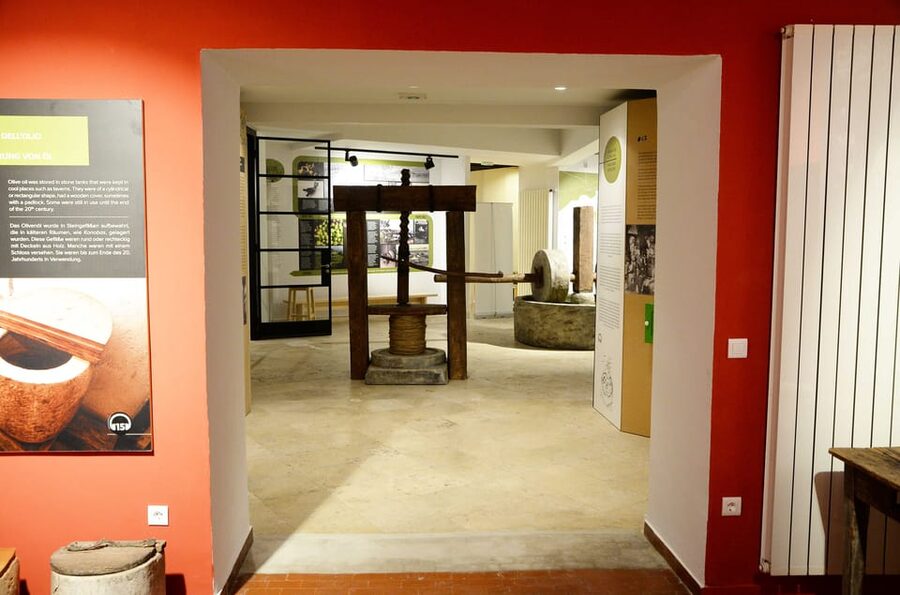
The visit begins with the story of olive oil in Istria. You learn how the Romans produced it, how the oil moved through the region, and where it was exported. This gives the tasting some needed context. Instead of treating olive oil as a luxury product with a fancy label, the experience shows how long it has been tied to work, trade, and daily life.
I like this opening because it connects Pula’s ancient Roman past with a product you can still buy in the region today. The city is famous for its Roman monuments, but olive oil adds a more ordinary and practical side to that story. People needed oil for food, trade, lamps, and household use. The visit helps you see how important the product was before modern supermarkets and global shipping.
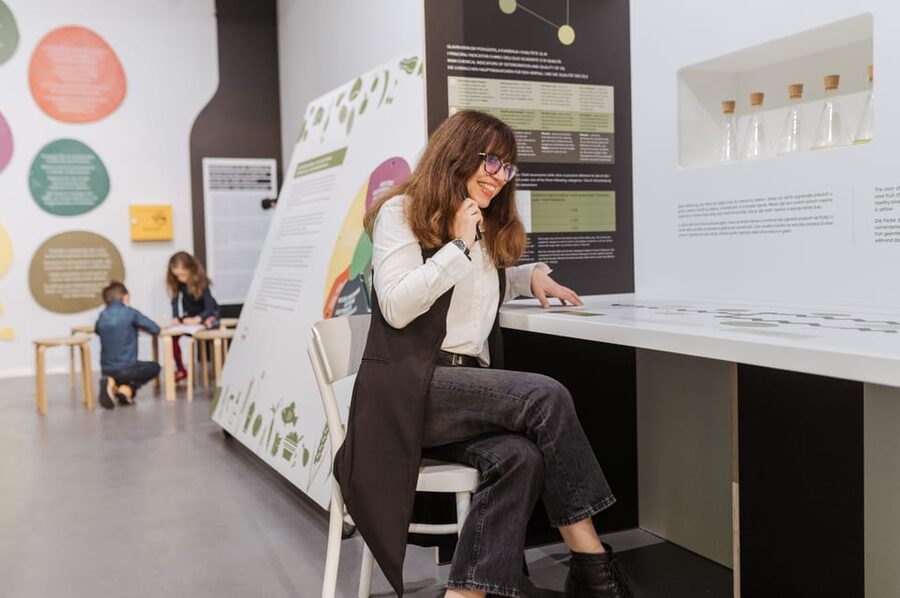
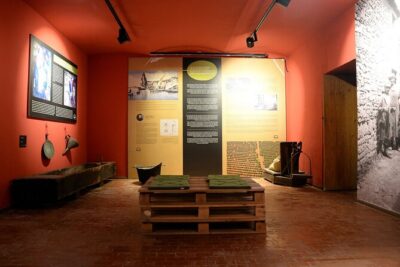
The exhibits are designed to be entertaining as well as informative. The displays are not described as a huge museum collection, so you should expect a focused visit rather than a full-day cultural institution. That is a benefit for most people. You get a clear introduction without having to wade through endless panels.
More Food and Drink Tours in Istria
- Istria: Guided Tour of Inner Istria with Food Tasting
★ 5.0 · 67 reviews - Olive Oil Guided Tasting and History in Pula
★ 4.5 · 34 reviews - Istrian hill top cities tour with truffle and olive oil tasting
★ 5.0 · 18 reviews
Two films explain old and modern production
Two short films are part of the visit. One shows traditional olive oil production, while the other explains how oil is made today.
This comparison is one of the most useful parts of the experience. Traditional production helps you picture the labor and tools involved before modern machinery. The present-day film then shows how the process has changed. Together, they give you a basic understanding of how olives become oil, without asking you to read a technical manual.
The films also prepare you for the tasting. Once you know that harvesting and production methods affect the final product, it becomes easier to understand why quality varies. The point is not simply that one bottle costs more. The point is that production choices can affect what reaches your plate.
The films are short, which keeps the pace moving. You will not spend the whole visit sitting in front of a screen. Instead, they act as a bridge between the history section and the hands-on tasting room.
What happens during the five-oil tasting
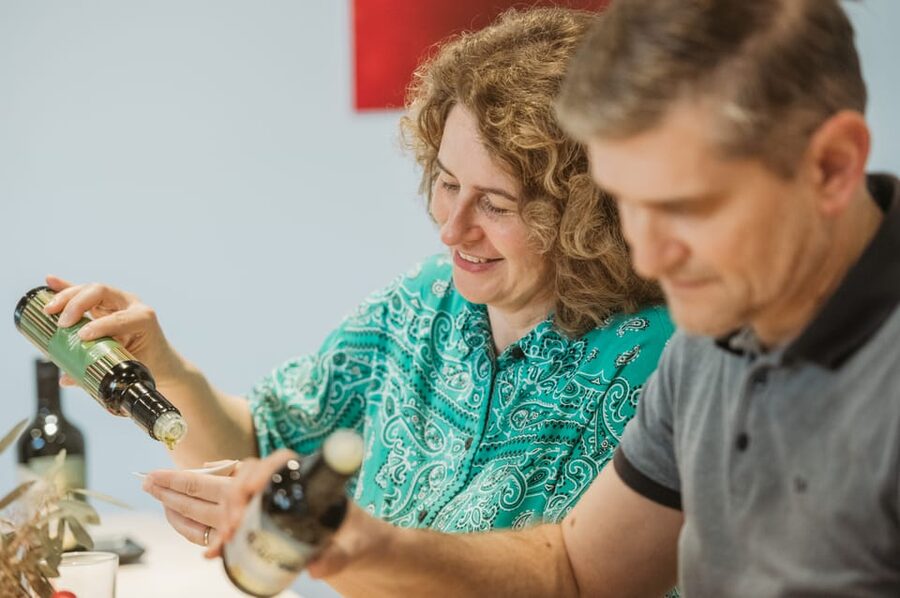
The tasting is the heart of the experience. You sit in the tasting room and examine five extra virgin olive oils from Istria. You are guided through the main qualities to notice: aroma, taste, texture, and appearance.
This is much more useful than taking a small sip and simply deciding if you like it. You learn to pay attention to the oil’s character. Some oils may seem fresh and lively, while others may feel flatter or less balanced. The goal is to give you a vocabulary for judging oil, not to tell you that there is only one correct flavor.
The comparison with a typical supermarket olive oil is especially helpful. Many people buy olive oil by habit, price, or packaging. A side-by-side tasting makes the differences easier to notice. You can compare the smell, mouthfeel, and finish while the information is still fresh.
The experience also explains positive and negative qualities in olive oil. That is important because the phrase extra virgin does not automatically tell you everything you want to know about flavor. You learn how good oil should present itself and how unpleasant qualities may signal a lower-quality product.
One useful result is that you leave with a better chance of making an informed purchase. You may not become an oil expert after one session, but you should understand more about what you are paying for. The lesson can continue at home when you open the next bottle from a shop shelf.
Why the dessert pairing works
The final tasting includes a sweet dessert paired with a selected olive oil. This is a small but memorable change of direction. Most people think of olive oil with bread, salad, grilled fish, or vegetables. A dessert pairing shows that the ingredient can work in a sweeter setting too.
The pairing is not just a novelty. It encourages you to think about olive oil as a flavor, not only as a cooking fat. A well-chosen oil can add fruitiness, pepper, smoothness, or a slightly bitter note. Those qualities can change how a dessert tastes.
You should not expect a full meal. The dessert is an addition to the guided tasting, not a substitute for lunch. If you arrive hungry, plan to eat elsewhere in Pula. The value here is the lesson and the comparison, with a small sweet finish.
More olive oil tastings in Pula:
- E Bike Tour with wine and olive oil tasting in Vodnjan
★ 5.0 · 4 reviews - Split: Krka Waterfalls With Boat Cruise, Wine and Olive Oil
★ 4.3 · 1,507 reviews - Wine, food and olive oil by PhD student
★ 5.0 · 111 reviews - Hvar: Island tour with Wine and Olive Oil Tasting
★ 4.9 · 77 reviews
The shop and what you can take home
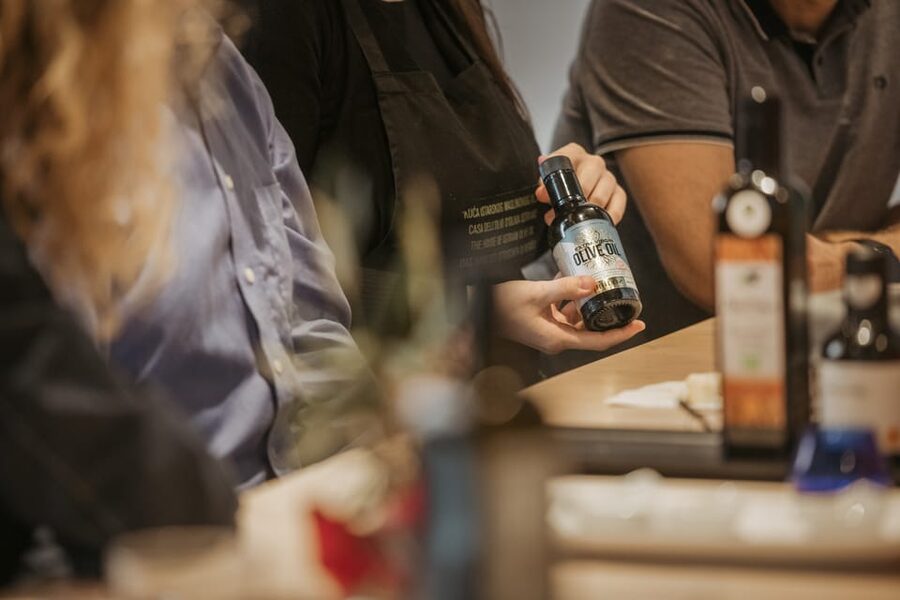
After the tasting, you can visit the shop. It carries a wide selection of Istrian extra virgin olive oils, along with brandies, truffles, lavender-based cosmetics, and souvenirs.
This is a practical ending because you can use what you learned immediately. You have just compared several oils, so you are in a better position to choose a bottle based on taste rather than label design alone. If you are looking for a food gift from Istria, olive oil is easier to pack and use than many local specialties, though you should check your own luggage and airline rules before buying large quantities.
The other products give the shop broader appeal. Someone in your group may care more about truffles, brandy, or lavender cosmetics than olive oil. That variety also makes the stop useful for souvenir shopping, though you should not feel pressured to buy anything. The educational part of the visit works even if you leave empty-handed.
Language choices and how the visit feels
An audio guide is available in 12 languages. The guided tasting is offered in English and German. This gives the experience some flexibility, though the live presentation is not listed in every language.
If you speak English or German, the guided section should be the easiest way to follow the explanations and ask questions. One staff member was able to speak some German and was described as friendly and willing to help. The guide also answered questions with enthusiasm, which matters during a tasting because you may want clarification about a particular flavor or production method.
The exhibits and films add support for the spoken explanations. Even if you miss a phrase, the visual material helps keep the visit understandable. Still, if you need a language other than English or German, check how the 12-language audio guide applies to the exact parts of the experience before booking.
Is $35 a good value in Pula?
The price is $35 per person. That is not the cheapest indoor attraction in Pula, so value depends on how much you care about food, local products, and guided explanation.
For that price, you receive the museum visit, an audio guide option, a guided tasting of five extra virgin olive oils, and a dessert pairing. You are paying for more than a sample at a shop counter. The tasting teaches you how to assess quality, and the films and exhibits explain why Istrian oil has a long place in the region’s economy and cuisine.
I think the price is reasonable for someone who wants a structured food experience. It is less attractive if you only want to taste one oil or buy a souvenir. The visit earns its cost through comparison. Tasting five oils side by side gives you information that is hard to get from reading bottle labels.
The value also improves if you plan to buy oil afterward. A better understanding of aroma, texture, and negative qualities can help you avoid buying solely on appearance or marketing. You may even use the lesson when shopping for olive oil after returning home.
Who should book this experience?
I would recommend it to food-minded visitors, couples, solo visitors, and families with older children who can pay attention during short films and a tasting. It is also a good option for anyone who wants an indoor activity in central Pula.
The experience suits you particularly well if you enjoy learning how local products are made. It gives you a link between Roman trade, traditional production, modern methods, and present-day food culture. That is a lot of useful context for a visit centered on one ingredient.
It may be less suitable if you want a long outdoor activity, a full meal, or a broad survey of Istrian cuisine. The focus stays firmly on olive oil. The shop includes other products, but the main visit does not turn into a general food tour.
I also think it works well as a shorter cultural stop between major Pula sights. Since the location is in the center, you can fit it into a sightseeing day without committing to a distant excursion. The exact duration is not provided, so allow enough time for the exhibits, films, tasting, questions, and shop browsing rather than trying to squeeze it between two tightly timed activities.
Booking details worth knowing before you go
You can reserve your place and pay later, which helps if your Pula schedule is still changing. You can also cancel up to 24 hours in advance for a full refund.
The experience is provided by Idea Istra d.o.o. The listed price is $35 per person. Because language options differ between the audio guide and live tasting, confirm the language arrangement that best fits your needs when you book.
A rainy day is an especially good time to use this visit. The exhibits, films, tasting room, and shop give you a useful indoor plan without sending you far from the center.
Should you book the House of Istrian Olive Oil?
Book it if you want more than a quick sample and would like to understand what makes Istrian extra virgin olive oil different. The strongest parts are the five-oil comparison, the clear explanation of quality, and the link between Roman production and modern methods.
Skip it if your interest in olive oil is low or if $35 feels too much for a food-focused indoor visit. For most curious eaters, though, it is a practical and enjoyable Pula stop. You leave with a better palate, a little more local context, and a much sharper eye for the bottle you buy next.
FAQ
Where is the House of Istrian Olive Oil located?
It is located in the center of Pula, in Istria County, Croatia.
How much does the experience cost?
The price is $35 per person.
What is included in the visit?
The experience includes an audio guide available in 12 languages, a guided tasting of five extra virgin olive oils, and a sweet dessert paired with a selected olive oil.
How many olive oils do you taste?
You taste five extra virgin olive oils during the guided tasting.
Is a supermarket olive oil included for comparison?
Yes. The tasting includes olive oil typically found in a supermarket so you can compare it with higher-quality Istrian oils.
What languages are available?
The audio guide is available in 12 languages. The guided tasting is offered in English and German.
Can you visit the shop after the tasting?
Yes. The shop sells Istrian extra virgin olive oils, brandies, truffles, lavender-based cosmetics, and souvenirs.
Can you cancel the booking?
Yes. You can cancel up to 24 hours in advance for a full refund. You can also reserve your place and pay later.
More Museums and Galleries in Pula
- Blue Lagoon & Underwater Museum from Split with Lunch & Drinks
★ 4.5 · 1,122 reviews - Zagreb: Skip-the-Ticket-Line Museum of Broken Relationships
★ 4.5 · 847 reviews - Zagreb: Nikola Tesla Technical Museum Ticket
★ 4.5 · 520 reviews - Split: Game of Thrones Museum Entrance Ticket
★ 3.8 · 385 reviews
More Food and Drink Tours in Pula
- From Split: Krka Waterfalls, Food & Wine Tasting Tour
★ 5.0 · 9,326 reviews - From Split: Krka Waterfalls, Food & Wine Tasting Tour
★ 4.9 · 6,598 reviews - Split: Blue Lagoon and 3 Island Cruise with Food and Drinks
★ 4.8 · 1,969 reviews - Krka National Park Tour with tour Guide & Wine tasting from Split & Trogir
★ 5.0 · 1,625 reviews
Just added around Pula
- Pula Sightseeing Walking Tour★ 5.0 · 3 reviews
- Pula Essentials Walking Tour★ 5.0 · 62 reviews
- Pula: Sunset/Night-time Illuminated Transparent Kayak Tour★ 4.0 · 9 reviews
- Pula Boat Trip with Snorkeling★ 4.0 · 7 reviews
- Pula Kayak, Cliffs & Snorkeling Adventure★ 5.0 · 164 reviews
- Pula Discover Scuba Diving Package★ 4.5 · 18 reviews
- Pula Kayaking at Blue Cave with Cliffs Tour and Snorkeling★ 5.0 · 4 reviews
- Pula Arena Amphitheater Admission Ticket★ 4.0 · 68 reviews
Olive Oil Tastings, compared.
Krka Waterfalls With Boat Cruise, Wine and Olive Oil
Read our review →



Biking Vidova – Skrip & museum of olive oil – Splitska – Postira
Read our review →
Istrian hill top cities tour with truffle and olive oil tasting
Read our review →Browse the lists this tour appears in