
Reviewed · WALKING TOURS
Experience Split History Walking Tour With Local Historian
Split’s old center is a Roman palace still in use. This two-hour walk makes that unusual fact easy to grasp, guiding you through Diocletian’s Palace, medieval squares, the Riva, and several tucked-away corners with a local historian. I especially like the small group limit of 12 and the use of 3D images that help you picture buildings as they once looked.
I also like the way the tour connects grand monuments with ordinary Split life, including the local pomalo attitude, food tips, and stories about how people adapted the palace over centuries. The main caution is practical: this is a walking tour over old stone surfaces, narrow lanes, and steps, so it is not suitable for wheelchair users or people with mobility impairments.
In This Review
- Key points to know before you book
- Why two hours is a smart introduction to Split
- Starting at the Golden Gate with Gregory of Nin
- Inside Diocletian’s Palace and across Peristil
- Jupiter’s Temple, the Vestibule, and the cathedral
- The palace cellars and 3D views of Roman Split
- Riva promenade and Split’s pomalo way of life
- Fruit Square and People’s Square
- The short stops that reward close attention
- Boris and the guide’s teaching style
- Who gets the best value from this tour?
- Should you book the Split history walk?
- FAQ
- How long does the Split History Walking Tour last?
- Where does the tour begin?
- Where does the tour finish?
- What languages are available?
- Is food included in the price?
- Is the tour suitable for wheelchair users?
Key points to know before you book
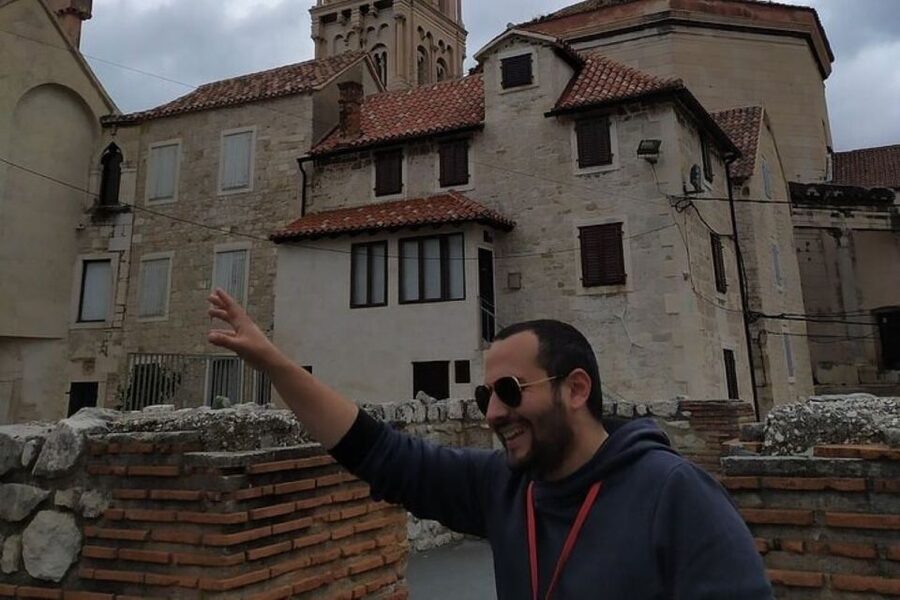
- Boris brings strong historical depth: He is praised for clear explanations, patience with questions, and useful advice about where to eat and what to see afterward.
- The group is capped at 12 people: A group of five can feel almost private, while the maximum still keeps the price below that of a private guide.
- You enter through the Golden Gate: This gives the tour a fine Roman opening and makes the palace feel like a place you are entering, not just a monument you are viewing.
- 3D reconstructions make ruins easier to read: The display book helps you picture missing walls, rooms, and original uses.
- The route covers Roman, medieval, and modern Split: You see Peristil, Jupiter’s Temple, the cellars, Riva, Fruit Square, and People’s Square.
- Comfortable shoes matter: Expect uneven paving, narrow passages, and a fair amount of standing in the open sun.
Why two hours is a smart introduction to Split
At $37 per person, this is priced as a midrange small-group city walk. I think the value is strongest if you are new to Split and want a clear framework before exploring on your own. You are not paying only for a list of monuments. You are paying for the links between them: Roman imperial power, Christian worship, medieval trade, modern cafés, and daily life inside a former palace.
The group limit matters here. Diocletian’s Palace is not arranged like a museum with one obvious route. It is a maze of lanes, shops, homes, restaurants, churches, and archaeological remains. A guide can point out details you would likely pass without noticing, while a small group gives you a better chance to ask questions.
The tour runs for two hours and is offered in English or Croatian. It begins at the Golden Gate and finishes at Narodni trg, also called People’s Square. That ending is useful because you are already in the center, with the rest of the old town within easy reach.
The pace is described as easy, but the walking surface is not always easy. Bring water, wear shoes with a firm sole, and use a hat or cap on a sunny day. There is no hotel pickup, and food and drinks are not included.
More Walking Tours in Split
- Split: Old Town and Diocletian Palace Walking Tour
★ 4.9 · 4,727 reviews - Walking Tour of Split and Diocletian’s Palace
★ 5.0 · 2,588 reviews - Krka Waterfalls tour with Trogir Walking tour and Krka panoramic boat cruise
★ 5.0 · 1,659 reviews
Starting at the Golden Gate with Gregory of Nin
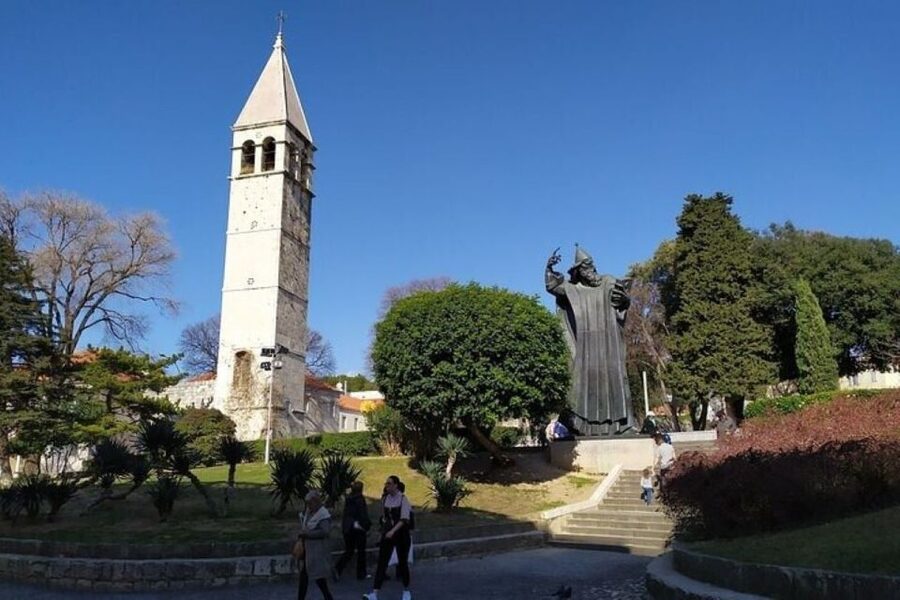
Meet at the Golden Gate, the northern entrance to Diocletian’s Palace. It is directly opposite the enormous statue of Gregory of Nin, an eight-meter-high figure that is hard to miss. This is a practical meeting point, but it also gives the guide two strong visual aids for the opening explanation.
You begin with basic facts about Split and Croatia, then learn why the Golden Gate was built, what purpose it served, and how important it was to the palace. The idea of entering through a Roman gate helps you picture the original arrangement more clearly. The emperor and empress would have used this entrance, and you follow the same route into the palace complex.
The statue of Gregory of Nin brings the story forward into Croatia’s medieval past. The guide explains who he was and why his figure matters to Split. You may also hear about the familiar local custom of touching the statue’s toe, though the supplied tour details focus mainly on its size and historical importance.
This opening lasts about 15 minutes at the gate, followed by roughly eight minutes with Gregory of Nin. It is a useful start because you get your bearings before the route moves into tighter streets.
Inside Diocletian’s Palace and across Peristil
Once inside, the palace becomes less like a single archaeological site and more like a working city block. That is one of Split’s great pleasures. Modern life runs through ancient walls, and the guide helps you read the layers instead of treating the Roman remains as isolated ruins.
The centerpiece is Peristil, the main palace square. Give this stop time. Its monumental surroundings show the scale and ambition of Diocletian’s retirement residence, and the square remains one of the most powerful spaces in Split.
The tour spends about 15 minutes here, enough to discuss the square’s design, purpose, and later changes. You will hear stories and legends tied to the palace, along with facts about how the site changed after Roman rule. The guide’s goal is not simply to tell you that something is old. It is to explain how each generation found a new use for it.
The palace visit itself is listed at about 10 minutes, with an additional 10 minutes at Peristil. That timing gives you a broad introduction rather than a detailed archaeological study. If you want every inscription and architectural phase explained, you will need to return later or hire a longer specialist tour.
Jupiter’s Temple, the Vestibule, and the cathedral
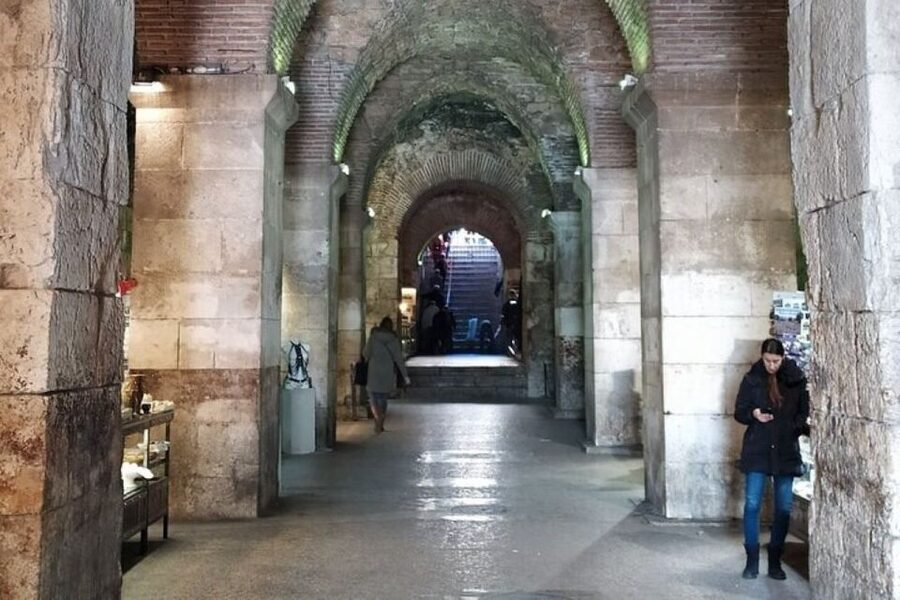
Jupiter’s Temple is another important stop. The building reflects Diocletian’s connection with Roman religion and imperial authority, while its later history shows how the old palace was reshaped for Christian worship. The guide also covers the Cathedral of Saint Domnius, located in what was once Diocletian’s mausoleum.
That change in use is one of the most interesting parts of the palace story. A building created for an emperor became part of a Christian cathedral complex. You get a direct lesson in how Split’s past was not erased, but reused and altered.
The cathedral segment lasts around 10 minutes. The tour does not include a separate ticket for paid interiors, so check the details of any additional entry you want to make after the walk. The tour is designed to explain the major places from the route, not replace a full cathedral visit.
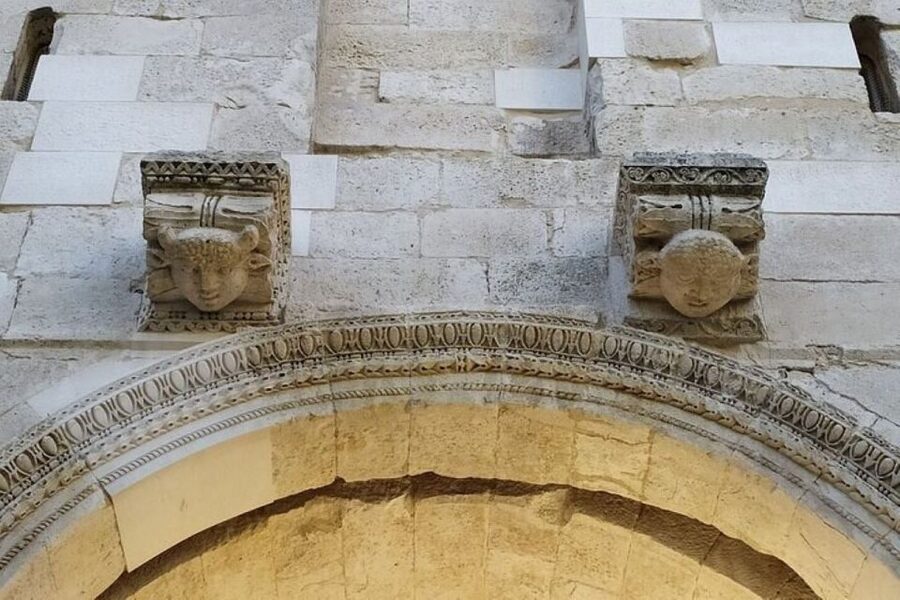
The Vestibule receives another 10 minutes. This circular entrance space once formed part of the imperial apartments and still gives a strong sense of transition. The guide uses the architecture, stories, and visual material to explain what the area meant in the palace plan.
A short stop is also reserved for a less obvious location. The exact point is presented as a secret stop, which adds a little curiosity without turning the whole tour into a treasure hunt.
Still Split, at a slower pace:
- Split: Krka Waterfalls Trip with Boat Cruise and Swimming
★ 4.8 · 10,519 reviews - From Split: Krka Waterfalls, Food & Wine Tasting Tour
★ 5.0 · 9,326 reviews - Blue cave, Mamma Mia and Hvar, 5 islands speedboat tour
★ 5.0 · 7,150 reviews - From Split: Krka Waterfalls, Food & Wine Tasting Tour
★ 4.9 · 6,598 reviews
The palace cellars and 3D views of Roman Split
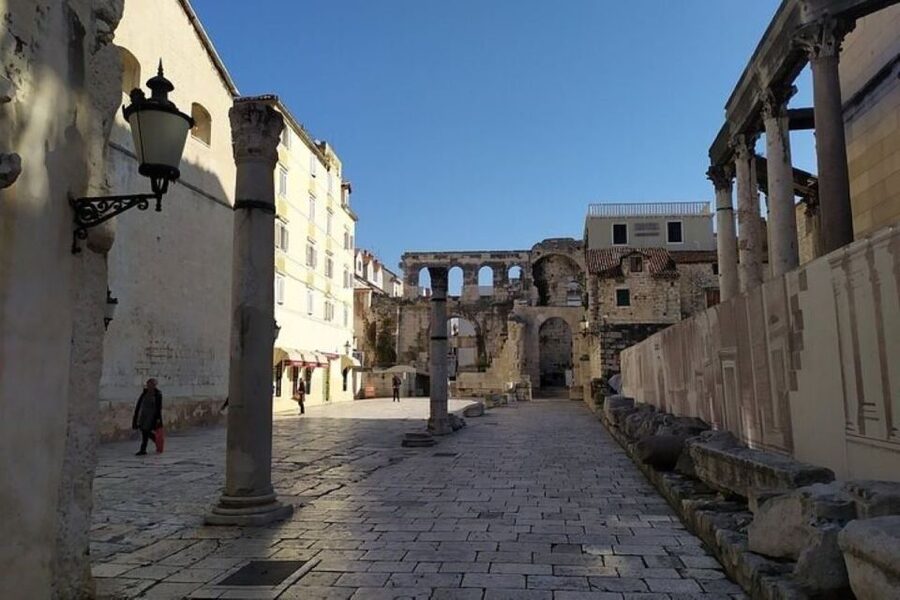
The central substructures, often called Diocletian’s Cellars, help explain the palace above them. Their layout reflects the rooms and spaces on the upper level, so the underground area can act like a plan you can walk through.
This is where the 3D reconstruction images are especially useful. Ancient ruins often demand a lot from your imagination. A picture showing the original walls, rooms, or decoration can make the remaining stone easier to understand.
The cellars receive about 10 minutes on the route. That is enough to introduce their purpose and point out why they matter, but not necessarily enough for a detailed exploration of every corridor. You may want to return afterward if you enjoy archaeology or if the underground rooms catch your interest.
The cellars also offer a good contrast with the streets above. Underground, you see the palace as a planned imperial project. Above ground, you see how Split gradually built a town inside and around it. That contrast is central to the tour’s value.
Riva promenade and Split’s pomalo way of life
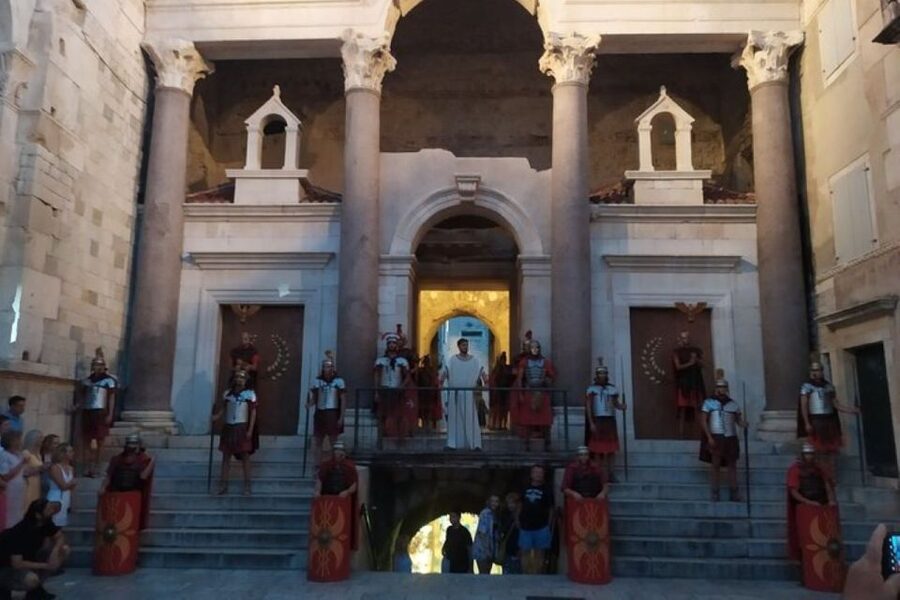
After the enclosed palace spaces, the route reaches Riva, Split’s waterfront promenade. The stop is short, about five minutes, but the change in mood is important. Here the guide explains the connection between the Roman and medieval parts of the city and introduces the local pomalo way of life.
Pomalo is often translated as taking things slowly or not rushing. In Split, it is more than a slogan. It helps explain the social rhythm of the city, where a coffee, a conversation, and time outdoors can matter as much as checking off sights.
This portion keeps the tour from becoming a parade of emperors and dates. You hear about everyday topics and local habits, giving you a better sense of how to behave and what to notice during the rest of your stay. The guide also offers food suggestions. One recommendation for ice cream was singled out as especially useful, and the guide’s advice helped some participants choose places to visit after the walk.
That sort of practical local guidance can be worth a good part of the $37 fee. It saves you from treating Split as a backdrop and helps you use the city as locals do.
Fruit Square and People’s Square
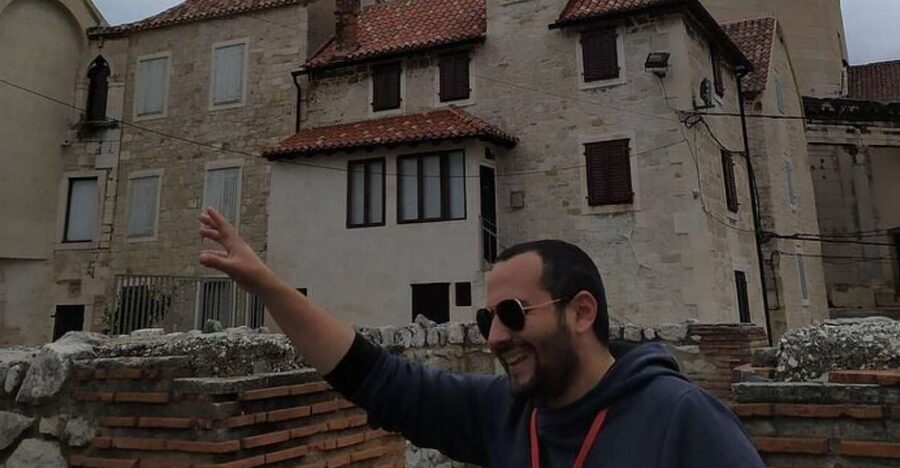
Fruit Square, or Voćni trg, is the first of two medieval squares on the later part of the walk. The guide explains the architecture and the events connected with the square, helping you see how Split grew beyond the Roman palace.
The square gets about 10 minutes. That is enough for a focused explanation, though you may want to linger afterward for photographs and a closer look at the surrounding buildings. Its name and changing role open a window onto trade and daily activity in medieval Split.
The final stop is People’s Square, or Narodni trg, where the tour ends. This was a key public space in the medieval and later city, and its buildings show how Split developed around the palace rather than leaving the Roman walls behind.
Ending here is convenient. You are still in the old center, and the guide can point out places worth returning to. The route gives you a useful time line: Roman palace, Christian adaptation, medieval town, and modern civic life.
The short stops that reward close attention
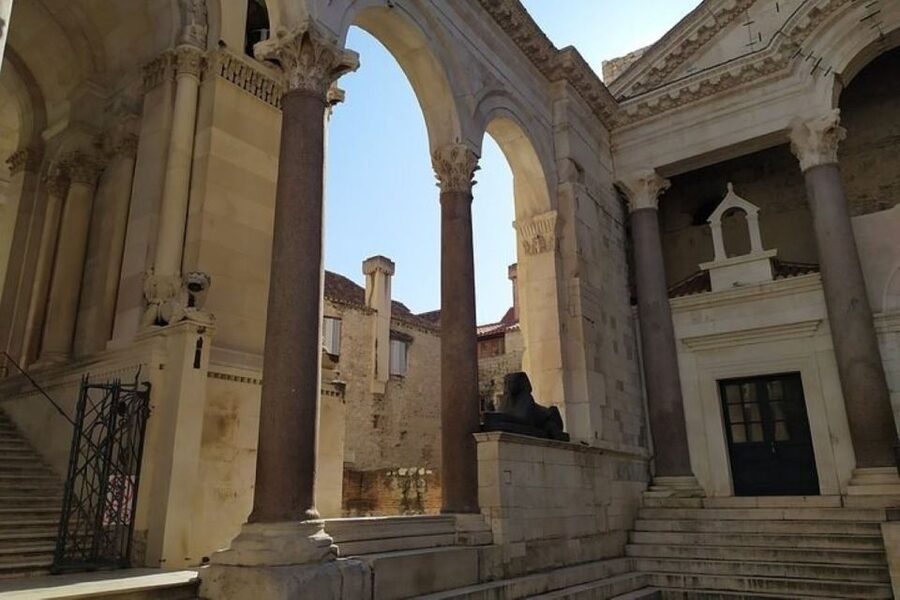
Several brief stops add personality to the walk. One concerns a very narrow church, another a narrow street, and another the lost head of a sphinx. A secret garden is also part of the storytelling.
These are quick moments, including one listed at only two minutes, so do not expect long visits at each location. Their value is in showing you how much of Split is easy to overlook. A wide monument such as Peristil announces itself. A narrow lane or missing statue head requires someone to direct your attention.
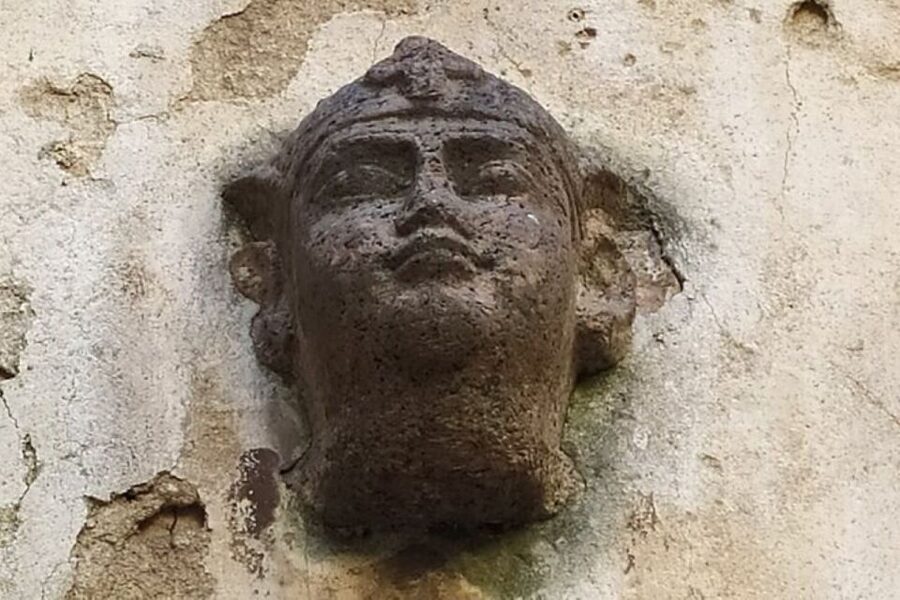
The lost sphinx head is a particularly memorable example of how Roman material has been moved, reused, damaged, and interpreted over time. The narrow church and street offer a different lesson: Split’s old center is compact and full of odd corners that do not fit neatly into a standard monument list.
I like this mix of major sights and small discoveries. It keeps the walk from feeling like a lecture delivered beside famous buildings. Still, if you prefer long visits inside each monument, the number of stops may feel brisk.
Boris and the guide’s teaching style
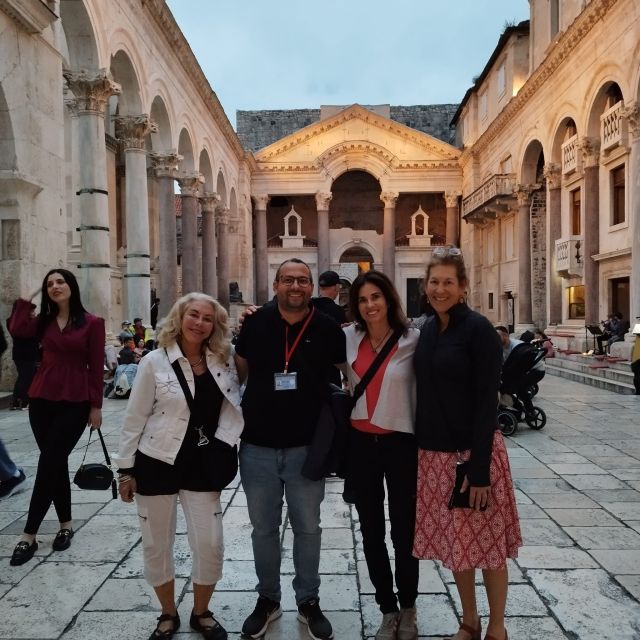
Boris is the guide associated with the most praised versions of this walk. He is described as kind, open to questions, and especially strong on palace history and Croatian culture. He also holds a master’s degree in history, which helps explain why the tour covers more than dates and architectural labels.
A strong guide is essential in Split because the same stone can tell several stories. Boris explains what existed before the palace, why Diocletian built it, and how local Croat communities adapted the complex over time. He also discusses religion, culture, and Split’s sense of community.
His approach appears conversational rather than rigid. Questions are welcome, and the use of 3D images and pictures gives the explanations a visual aid. If you learn best by asking, the small group limit works in your favor.
The tour has received a perfect 5 out of 5 rating from 28 reviews, with praise focused on the guide’s historical command, friendly manner, clear presentation, and practical recommendations. That is a consistent pattern rather than a single lucky comment. Still, a great guide cannot change the physical conditions of the old center, so prepare for stone paving and standing.
Who gets the best value from this tour?
I would choose this walk early in a Split visit. It gives you a map in your head, explains the main eras, and leaves you with ideas for a second look at the cathedral, cellars, or food spots.
It suits you best if:
- You want a small group instead of a large city walk.
- You enjoy history but prefer stories and clear explanations to a long academic lecture.
- You want to understand how Roman ruins became part of daily Split life.
- You value a local guide’s advice about food and places to revisit.
- You can walk comfortably on uneven stone and narrow streets.
- You have only a short time in Split and want to cover the old center efficiently.
It is less suitable if you use a wheelchair, have limited mobility, or want an extensive interior visit at every monument. It is also not a food tour, and the two-hour format leaves little time for meals or long photo breaks.
The price feels fair for a licensed local guide, a maximum of 12 participants, a two-hour route, and visual reconstruction material. Reserve now and pay later is available, and you can cancel up to 24 hours ahead for a full refund. Those terms are useful if your Croatian schedule may change.
Should you book the Split history walk?
Book it if you want Split to make sense quickly. The route covers the city’s essential Roman and medieval sights, but its real strength is the connection between those monuments and modern local life.
I would especially recommend it for a first morning or first afternoon in town. You can then return to the cellars, cathedral, squares, or recommended food stops with a better sense of what you are seeing.
Skip it only if you need step-free access, want a slow specialist archaeology tour, or prefer to explore entirely alone. For most independent visitors who want context without giving up time to wander, this is a well-focused and good-value introduction to Split.
FAQ
How long does the Split History Walking Tour last?
The tour lasts two hours.
Where does the tour begin?
It begins at the Golden Gate, the northern gate of Diocletian’s Palace, opposite the eight-meter-high statue of Gregory of Nin.
Where does the tour finish?
The walk finishes at Narodni trg, also known as People’s Square.
What languages are available?
The live guide is available in English and Croatian.
Is food included in the price?
No. Food and drinks are not included, though the guide may offer local food recommendations during the tour.
Is the tour suitable for wheelchair users?
No. The tour is not suitable for wheelchair users or people with mobility impairments. Comfortable shoes are recommended, and water or a hat is useful on sunny days.
More History Tours in Split
- Walking Tour of Split with a ‘Magister’ of History
★ 5.0 · 1,122 reviews - Split Walking Tour with Professor of History
★ 5.0 · 926 reviews - Split: History and Heritage Walking Tour
★ 4.9 · 650 reviews - Split History and Gastro Small-Group Tour with Food and Drinks
★ 5.0 · 375 reviews
Just added around Split
- Slatine – Island Hopping Excursion (Trogir/Blue Lagoon/Shipwreck)★ 4.0 · 24 reviews
- Krka Waterfalls & Primošten from Trogir, Seget, Čiovo & Kaštela★ 5.0 · 18 reviews
- Island Hopping Boat Excursion with Lunch (Trogir,Blue Lagoon, Šolta)★ 3.5 · 6 reviews
- From Trogir, Seget, Okrug: Krka Waterfalls & Šibenik Culture Tour★ 5.0 · 10 reviews
- From Split & Trogir: ATV Quad Tour on Island Čiovo★ 5.0 · 21 reviews
- Split: Blue Lagoon Boat Trip with Lunch, Wine and Snorkeling★ 5.0 · 3 reviews
- Split Sunset Stand Up Paddle Tour★ 5.0 · 16 reviews
- Split: Sunset Guided Kayaking Tour★ 4.8 · 71 reviews
Walking Tours, compared.
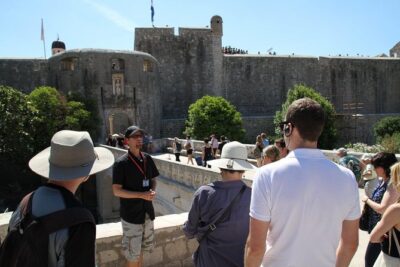
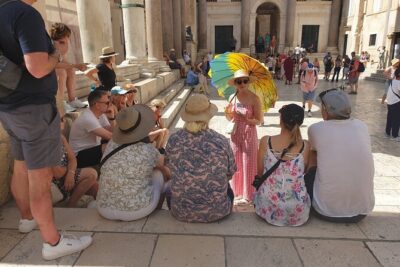
Walking Tour of Split and Diocletian’s Palace
Read our review →

Krka Waterfalls tour with Trogir Walking tour and Krka panoramic boat cruise
Read our review →
City Walls Early Morning or Sunset Walking Tour
Read our review →Browse the lists this tour appears in