
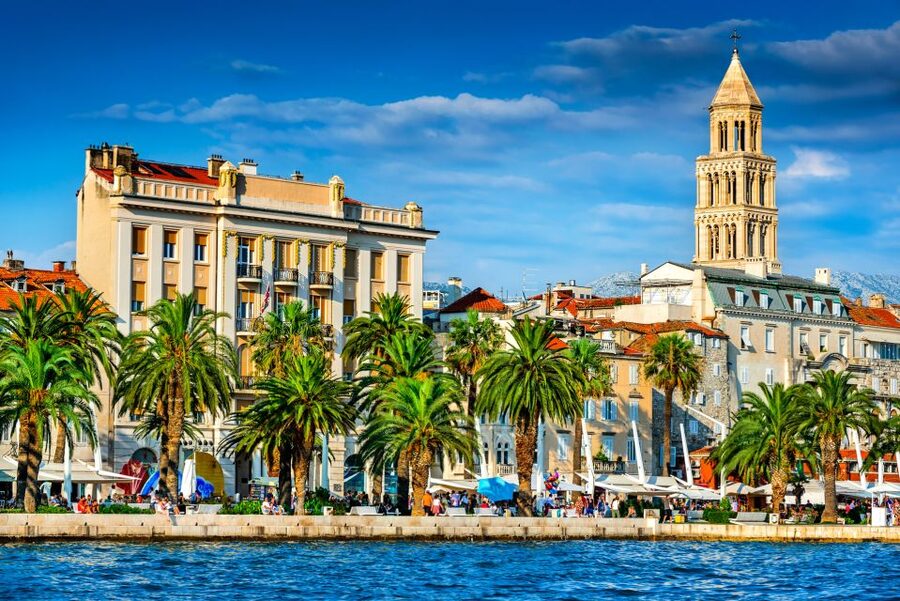
Reviewed · OLD TOWN TOURS
Discover The Old Town Split 1.5h walking Small group tour
Ancient stone, modern life. This 90-minute walk through Split’s Old Town brings Roman ruins, medieval lanes, cafés, and the harbor together in one compact introduction. I especially like the way the palace is not treated as a sealed archaeological site. You walk through streets where daily life continues among Roman walls, souvenir shops, and busy squares. I also like the local touch: guides such as Aneka, Marko, Ina, Toni, and Roko have been praised for adding humor, personal stories, and practical tips. The main consideration is that entrance fees are not included, so some interior monuments require extra payment.
You meet near the Riva promenade, close to the former palace of Emperor Diocletian, and spend the tour on foot. Comfortable shoes matter, since Split’s old lanes can be uneven and the route includes narrow streets. The tour is not wheelchair accessible, and children must stay with an adult. At $29 per person, it offers good value if you want a clear first look at Split without spending half a day on a formal sightseeing program.
In This Review
- Key points at a glance
- Starting on Split’s Riva promenade
- Meeting Diocletian beside the harbor
- Walking through the palace cellars
- The Peristyle courtyard and Roman scale
- The Cathedral of St Doimus and a Roman mausoleum
- Medieval lanes, shops, and everyday Split
- The guide makes the difference
- Is $29 a fair price?
- Timing, comfort, and practical limits
- Who should book this Split walk?
- Should you book it?
- FAQ
- How long is the walking tour?
- What language is the tour conducted in?
- Where does the tour meet?
- How early should I arrive?
- What sights are included in the walk?
- Are monument entrance fees included?
- Is the tour wheelchair accessible?
- Are children allowed on the tour?
- Can I cancel the booking?
Key points at a glance
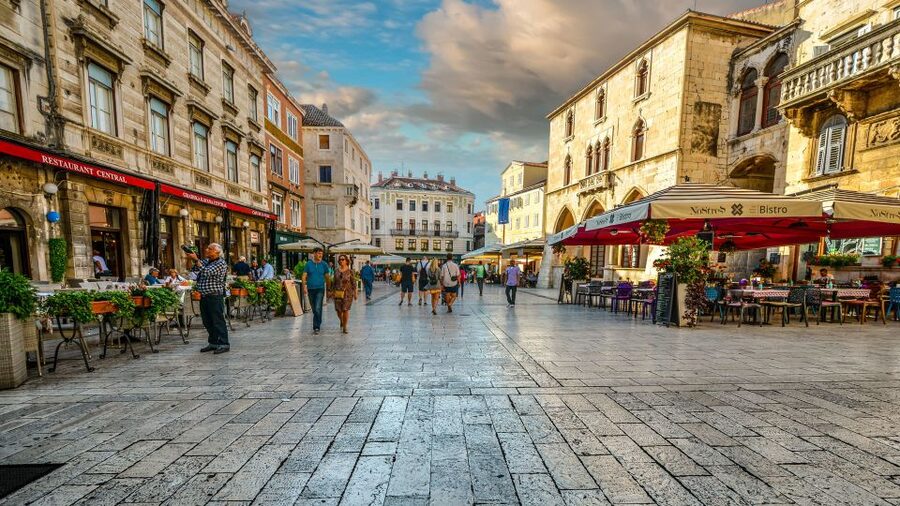
- Roman ruins woven into city life: Diocletian’s Palace is not isolated behind fences. Its remains form the framework of Split’s Old Town.
- A 90-minute introduction: The route gives you a useful first orientation before independent exploring, lunch, or a boat trip.
- Peristyle and palace cellars: You see two of the most striking Roman spaces connected with Diocletian’s complex.
- Cathedral of St Doimus: The cathedral occupies the former mausoleum of the emperor, a powerful example of how Split reused its Roman past.
- Local guides add character: Aneka, Marko, Ina, Toni, Roko, and others have been praised for humor, local advice, and strong storytelling.
- Good price, limited inclusions: The guide is included, but monument admission is optional and costs extra.
Starting on Split’s Riva promenade
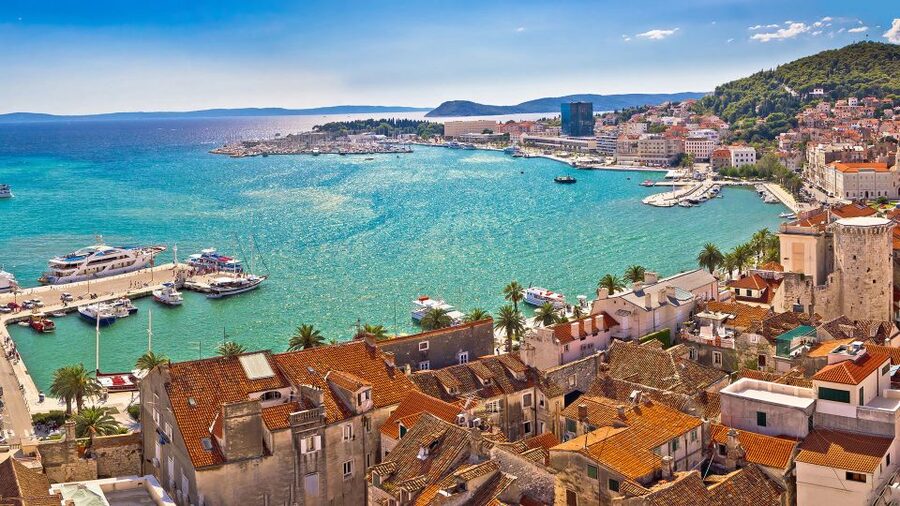
The tour begins at the local supplier’s office at Obala Hrvatskog narodnog preporoda 21, 21000 Split. This is on the famous Riva promenade, the broad waterfront walkway that gives you an easy starting point and a useful sense of direction.
Look for the local supplier’s sign and staff wearing matching shirts. You should arrive 15 minutes before departure for check-in. There are two listed meeting and finish points, the supplier’s Visit Split-Grayline office and the ATM, Auro Domus location, so check your booking details carefully before setting off.
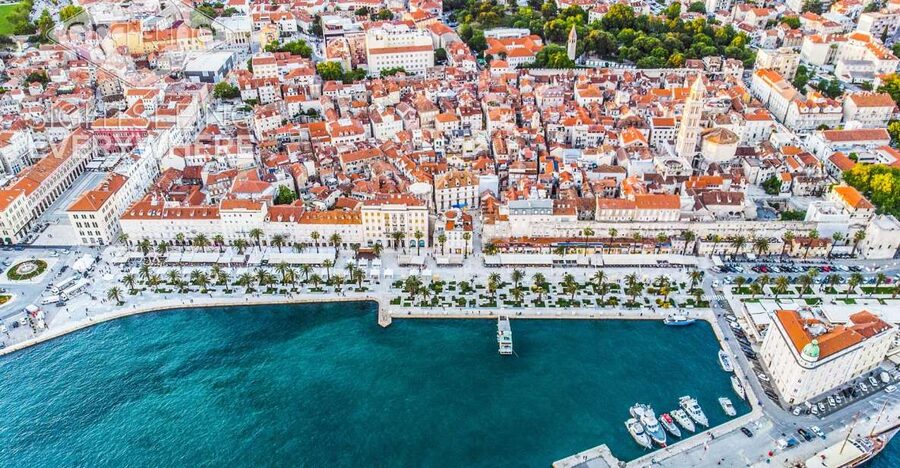
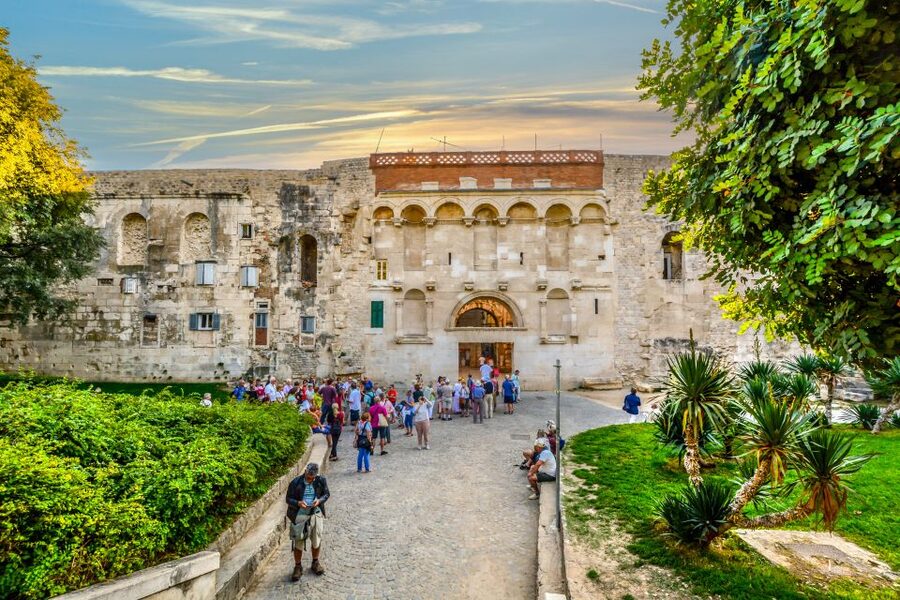
The harbor-side meeting point makes sense. Split’s Old Town grew around Diocletian’s palace, and the palace faces the water. Before you even enter the old streets, you can see why this location mattered to a Roman emperor. The waterfront also makes the meeting point easier to find than a tucked-away lane in the historic center.
This is a walking tour in the proper sense. There is no coach, shuttle, or transport between sights. That keeps the experience simple, but it also means you need sensible footwear and must be ready to walk at an easy pace over old paving.
More Old Town Tours in Split
- Split: Old Town and Diocletian Palace Walking Tour
★ 4.9 · 4,727 reviews - Split: Diocletian Palace & Old Town Guided Walking Tour
★ 4.7 · 882 reviews - Diocletian’s Palace and Old Town SMALL GROUP Walking Tour
★ 5.0 · 502 reviews
Meeting Diocletian beside the harbor
The first major theme is the palace of Emperor Diocletian. Built as the emperor’s retirement residence, the complex remains one of the most imposing Roman structures in the city. You do not simply look at a distant ruin. The palace forms much of the Old Town around you.
That is the special feature of Split. Roman walls became medieval homes, shops, passages, and public spaces. A column or stone arch may appear beside a café. A narrow lane may follow the old shape of the palace. The result can feel confusing if you explore alone, especially on a first visit. A guide helps you separate the Roman structure from the later additions.
I like this opening because it gives you a clear frame for the rest of the walk. Instead of seeing Split as a collection of attractive stone streets, you begin to understand the city as a place built in layers. The emperor’s palace is the oldest major layer, but it is not the only one.
The guide also sets the tone. Past tours have benefited from personalities such as Roko, who mixed Roman and Croatian history with present-day details, and Toni, who began with an overview from the Riva before leading the group inside. That blend is useful. You get facts, but you also get a basic sense of how Split functions now.
Walking through the palace cellars
The palace cellars are one of the clearest places to understand the original Roman plan. They helped support the rooms above and preserved the layout of the palace in a way that makes the upper structure easier to picture.
The tour includes a look at the cellars, though entrance fees to monuments are not included. That distinction matters. The guide can explain the site and show you the relevant areas, but you may need to pay separately if you want to enter a monument or paid section.
I would ask at the start which areas are included in the walking route and which require an additional ticket. That small question can save confusion later, especially if you are visiting Split on a tight budget.
The cellars can also be a welcome change from the summer heat. Much of the Old Town is exposed to strong Mediterranean sun, while lower stone spaces may feel cooler. Still, do not assume the whole walk will be shaded. One guide, Robin, made a point of finding shade or a place to sit when possible, but this depends on the route, group, and weather.
The Peristyle courtyard and Roman scale

The Peristyle courtyard is one of the tour’s key stops. It gives you a stronger sense of Roman scale than the narrow lanes do. Here, the palace feels less like a collection of reused walls and more like a formal imperial complex.
Your guide can connect the courtyard to the emperor’s original residence and explain how the surrounding spaces functioned. The exact amount of time spent here may vary, particularly if the group is interested in architecture, religion, local customs, or modern Split.
This is where a small group helps. With fewer people, it is easier to hear the guide and ask questions. Several past groups were very small, including one with only two couples and another with five people. A larger group of 19 also enjoyed the route, but the experience will naturally feel less intimate when the streets are crowded.
The tour is advertised as 1.5 hours, and that is the schedule you should plan around. Some guides have continued beyond that time when the group wanted more detail. Marko once extended the walk beyond two hours because he had so much to explain. Treat any extra time as a bonus, not a promise. If you have a dinner reservation or ferry to catch, allow plenty of space after the stated finish time.
More Walking Tours in Split
- Walking Tour of Split and Diocletian’s Palace
★ 5.0 · 2,588 reviews - Krka Waterfalls tour with Trogir Walking tour and Krka panoramic boat cruise
★ 5.0 · 1,659 reviews - Split & Diocletian’s Palace Walking Tour
★ 5.0 · 1,125 reviews - Walking Tour of Split with a ‘Magister’ of History
★ 5.0 · 1,122 reviews
The Cathedral of St Doimus and a Roman mausoleum
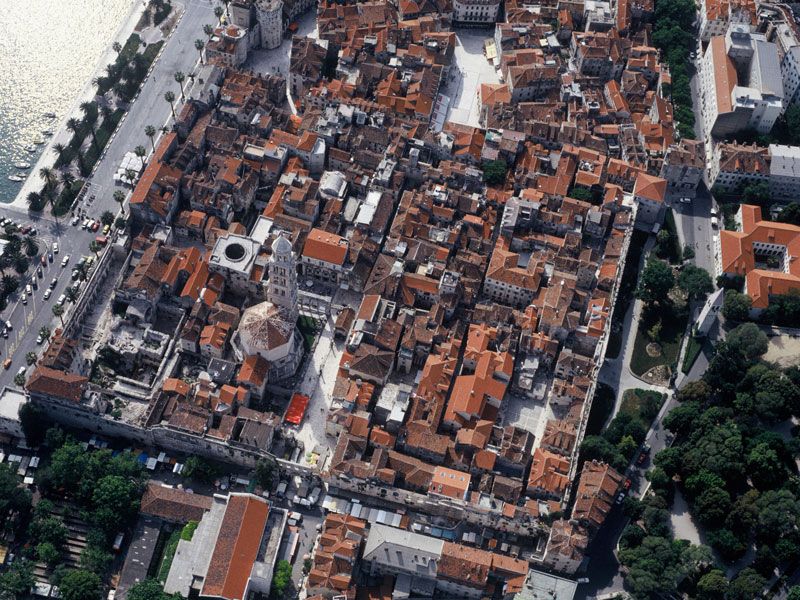
The Cathedral of St Doimus occupies the former mausoleum of Diocletian. This is one of the most memorable examples of Split’s layered past, because a building made for the Roman emperor later became a Christian cathedral.
The guide explains this change as part of the city’s wider story. You are not only seeing a cathedral. You are seeing how later generations adapted an imperial monument instead of clearing it away. That gives the building extra meaning, even before you consider its religious role.
Admission to monuments is optional and not included in the $29 price. If you want to go inside paid areas, bring room in your budget. The walking tour still has value without buying every ticket, since the guide’s explanation helps you understand what you are seeing from the outside and along the public route.
Ina, who also worked as an archaeologist, was praised for showing how Split changed from Roman times through the medieval period. That sort of background is especially helpful at the cathedral. Without context, it is easy to see only a handsome stone building. With context, you can follow the transition from imperial tomb to Christian place of worship.
Medieval lanes, shops, and everyday Split
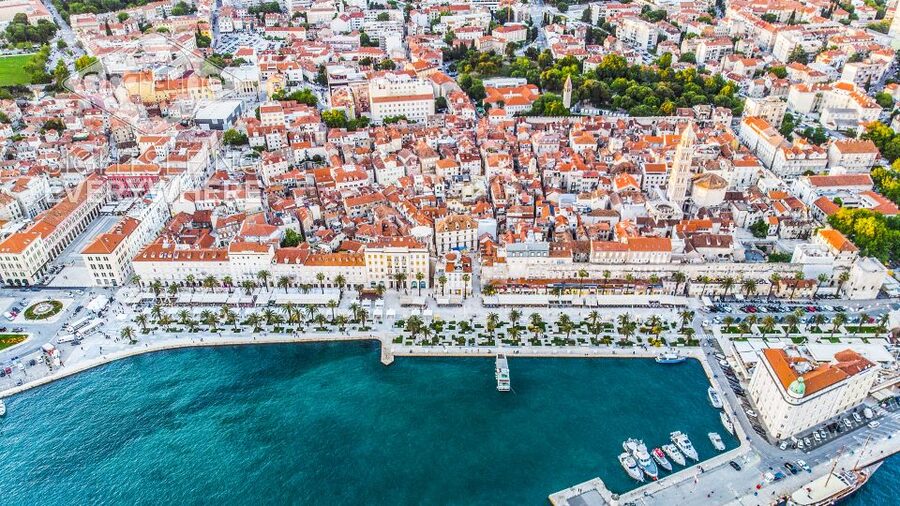
After the grand Roman spaces, the walk moves through the charming medieval side of the city. This part is less about one famous monument and more about how people use the Old Town.
You pass narrow, picturesque streets lined with cafés and souvenir stores. The shopping can feel tourist-oriented, but it is also part of the present-day character of the center. The palace is not an empty museum. It is a living neighborhood where old stone walls frame modern commerce.
I like this portion because it keeps the tour from becoming a string of dates and names. You get a feel for the Mediterranean atmosphere, with small squares, foot traffic, cafés, and lanes that open and close as you walk. The guide can point out details you might otherwise miss, including places to return to later.
Several guides have added local suggestions after the formal route. Roko recommended a restaurant for dinner, and Anita offered local perspective along with the historical background. Those tips can be more useful than a long list of monuments, especially if this is your first evening in Split.
Do not expect a quiet archaeological park. The Old Town is an active urban center. Souvenir shops, café tables, and other walking groups are part of the setting. That is a drawback if you want uninterrupted ruins, but it is a strength if you want to see how Roman remains still shape ordinary city life.
The guide makes the difference
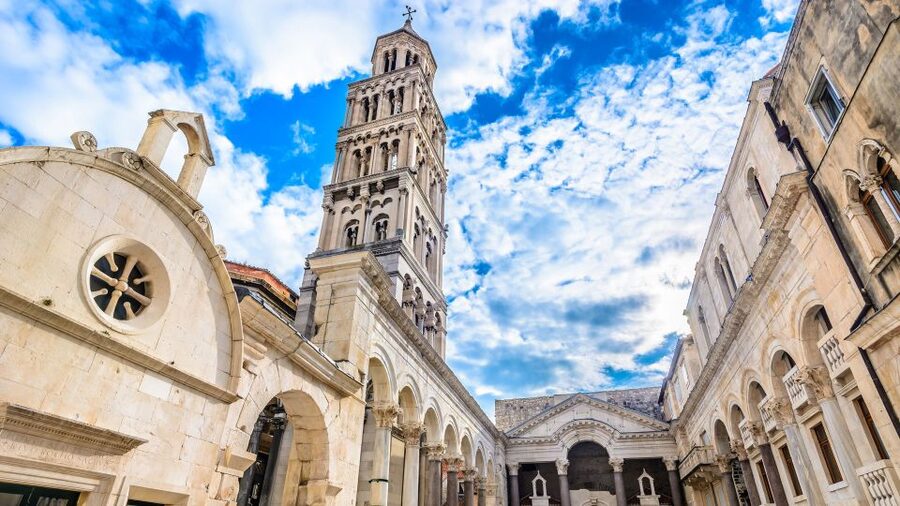
The strongest part of this experience is the guide. The tour is not built around transport, special equipment, or a long list of included admissions. Its value comes from the person explaining Split in front of you.
Past guides have been praised for several qualities:
- Aneka combined local knowledge, clear communication, humor, and a friendly manner.
- Anita made the tour interesting while answering questions about the city.
- Marko was described as both informative and personable.
- Ina brought an archaeological background to the Roman and medieval sections.
- Toni mixed older history with present-day facts and practical orientation.
- Roko added local enthusiasm, pop-culture details, and restaurant advice.
- Daniella was singled out for making the past feel alive and passing along useful discounts.
You cannot choose the guide with certainty, but the range of positive feedback suggests a reliable standard across the local team. I would still remember that a walking tour depends on personal chemistry. One guide may focus more on architecture, another on local life, and another on stories and humor.
A particularly useful sign is the way guides have adjusted to the group. One guide tailored the talk to the group’s interests and looked for shade or places to sit. Another combined the Old Town route with a Game of Thrones-themed walk when only one person had booked, even providing a partial refund. That kind of flexibility may occur, but it is not guaranteed, so book this as a general Old Town tour rather than expecting a themed upgrade.
Is $29 a fair price?
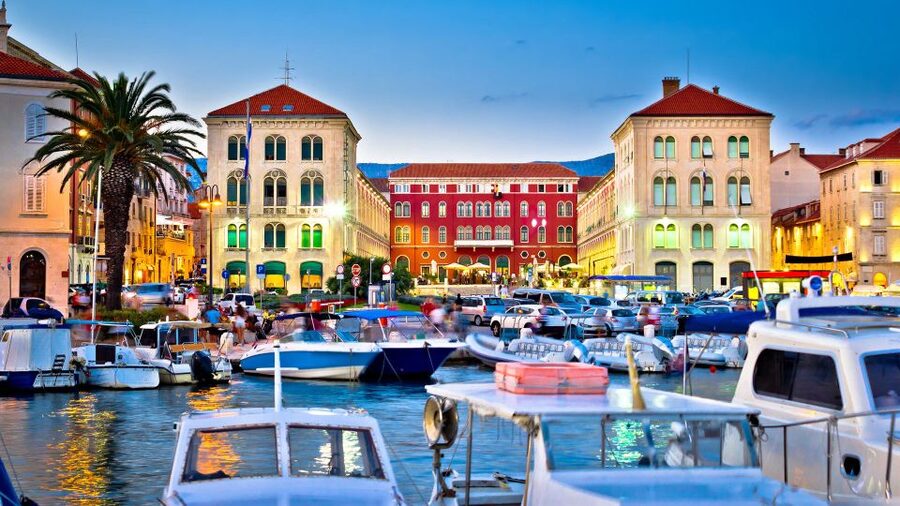
At $29 per person, the tour is reasonably priced for a licensed local guide and 90 minutes of focused sightseeing. You are paying for orientation, explanation, and the chance to ask questions, not for entry to every monument.
The value is strongest if you are new to Split and want to understand the Old Town before exploring independently. A guide can show you the connection between the palace, the cellars, the Peristyle, the cathedral, and the medieval streets in one sitting. That can prevent you from wandering past important remains without realizing what they are.
The value is weaker if you already know Diocletian’s Palace well or prefer to move at your own pace. The Old Town is compact, and independent walking costs nothing beyond any admission tickets you choose to buy.
The small-group format also matters. A quiet group can ask questions and hear the guide clearly. A full group may be less personal, especially in narrow lanes. Even so, the 90-minute length keeps the commitment modest and makes the price easier to justify.
Timing, comfort, and practical limits
The tour is offered at several possible starting times, subject to availability. Morning departures may be more comfortable in hot weather, while later times can fit better around a ferry or other plans. The exact start time is not fixed in the information provided, so check availability before booking.
Wear comfortable shoes. This is not a polished-floor museum visit, and the old streets can be hard on thin soles. Bring water, especially during the warmer months, although the guide may try to place the group in shade.
The tour is in English and uses a live local guide. Children must be accompanied by an adult. Pets are not allowed.
The route is not suitable for wheelchair users. If you have limited mobility, ask the supplier for current route details before paying, since the narrow lanes, old paving, and steps or restricted areas may make the walk difficult.
Cancellation is flexible: you can cancel up to 24 hours before departure for a full refund. You can also reserve now and pay later, which is useful if your Croatian schedule depends on weather or ferry plans.
Who should book this Split walk?
I would recommend it to first-time visitors, cruise passengers with a short stay, couples, families with older children, and anyone who wants the main Roman sights explained without committing to a half-day excursion.
It is also a good first activity in Split. After the walk, you can return to the palace cellars, spend more time at the cathedral, eat in the Old Town, or browse the lanes with a clearer sense of what you are seeing.
History fans should appreciate the Roman-to-medieval focus, especially if Ina or another guide with an archaeological interest leads the group. Food-minded visitors may also benefit from the local restaurant suggestions offered by guides such as Roko and Anita.
I would hesitate if you use a wheelchair, dislike walking on uneven paving, or want guaranteed monument entry. I would also look elsewhere if you want a long, specialist lecture on Roman architecture. This is a friendly introduction, not an academic seminar.
Should you book it?
Book this tour if you want a short, well-priced introduction to Split’s layered center and value a local voice over a self-guided walk. The Roman palace, Peristyle, cellars, cathedral, and medieval lanes make a strong 90-minute route, while the guides add humor and useful local advice.
Skip it if you already know Diocletian’s Palace, need a fully accessible route, or want all admission fees covered. For most first visits, though, $29 is a sensible price for getting your bearings and learning why Split’s Old Town feels like a Roman monument that never stopped being a city.
FAQ
How long is the walking tour?
The scheduled tour lasts 90 minutes, or 1.5 hours.
What language is the tour conducted in?
The live tour is conducted in English.
Where does the tour meet?
The meeting point is the local supplier’s office at Obala Hrvatskog narodnog preporoda 21 on Split’s Riva promenade. Look for the supplier’s sign and staff wearing shirts with the same sign.
How early should I arrive?
Arrive 15 minutes before departure for check-in.
What sights are included in the walk?
The route covers Split’s Old Town, the remains of Diocletian’s Palace, the palace cellars, the Peristyle courtyard, the Cathedral of St Doimus, and medieval streets and squares.
Are monument entrance fees included?
No. Entrance to monuments is optional, and admission fees are not included in the tour price.
Is the tour wheelchair accessible?
No. The tour is not suitable for wheelchair users.
Are children allowed on the tour?
Yes, but children must be accompanied by an adult.
Can I cancel the booking?
Yes. You can cancel up to 24 hours before departure for a full refund. You can also reserve now and pay later.
Just added around Split
- Slatine – Island Hopping Excursion (Trogir/Blue Lagoon/Shipwreck)★ 4.0 · 24 reviews
- Krka Waterfalls & Primošten from Trogir, Seget, Čiovo & Kaštela★ 5.0 · 18 reviews
- Island Hopping Boat Excursion with Lunch (Trogir,Blue Lagoon, Šolta)★ 3.5 · 6 reviews
- From Trogir, Seget, Okrug: Krka Waterfalls & Šibenik Culture Tour★ 5.0 · 10 reviews
- From Split & Trogir: ATV Quad Tour on Island Čiovo★ 5.0 · 21 reviews
- Split: Blue Lagoon Boat Trip with Lunch, Wine and Snorkeling★ 5.0 · 3 reviews
- Split Sunset Stand Up Paddle Tour★ 5.0 · 16 reviews
- Split: Sunset Guided Kayaking Tour★ 4.8 · 71 reviews
Old Town Tours, compared.


Plitvice Lakes with Boat Ride and Zadar Old Town Tour
Read our review →
Plitvice Lakes with Boat Ride & Zadar Old town tour
Read our review →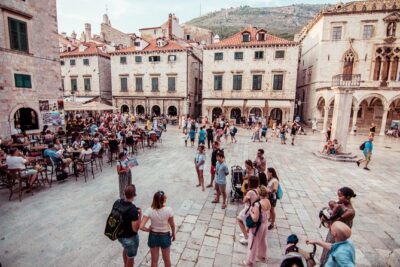
Dubrovnik Combo: Old Town & Ancient City Walls
Read our review →
Browse the lists this tour appears in