
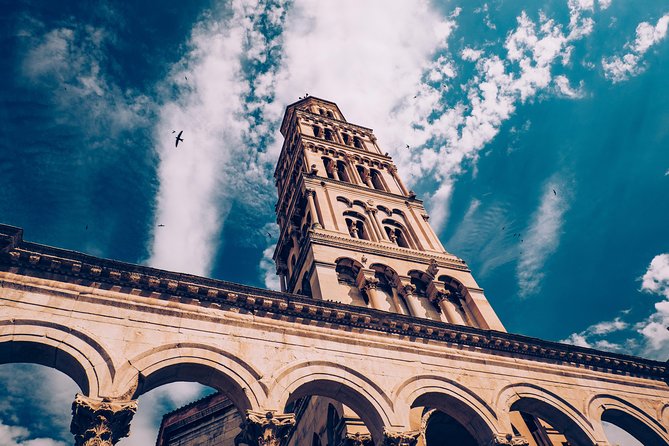
Reviewed · HISTORICAL TOURS
Diocletian Palace in Split and Trogir Private Heritage Tour
Ancient Croatia fits neatly into one day. I like the way this private tour links Diocletian’s Palace and Trogir with a look at Salona, giving you Roman ruins, medieval streets, and Croatian culture without arranging separate transport. I also like the private format, air-conditioned vehicle, and local guide, though the $309.89 per-person price is high, especially once optional entrance fees are added.
This is a good choice if you want a flexible introduction rather than a large group march through Split. Henry has tailored the day successfully for families with children as young as five, while Jelena has earned praise for her enthusiasm and clear explanation of Split and Croatian culture. The main catch is the rigid non-refundable booking policy, so you should commit only when your plans are firm.
In This Review
- Key points to know before booking
- Why this private heritage tour works
- Starting in Split at Diocletian’s Palace
- The Peristyle, where Roman Split feels most powerful
- Salona adds Roman ruins beyond the city center
- Trogir’s UNESCO-listed historic center
- The guide can make or break the day
- Transport, pickup, and the practical side
- Is $309.89 per person a fair price?
- Who should book it?
- Should you book the Split and Trogir heritage tour?
- FAQ
- Where does the tour begin and end?
- How long does the tour last?
- Is this a private tour?
- Is transportation included?
- Is the tour offered in English?
- Is lunch included?
- What entrance fees should I expect?
- Can I cancel or change the booking?
Key points to know before booking
- Three major historic areas in one outing: Split, Salona, and Trogir are combined into a single private day.
- A local licensed guide handles Split: You get guided time at Diocletian’s Palace and in the downtown area.
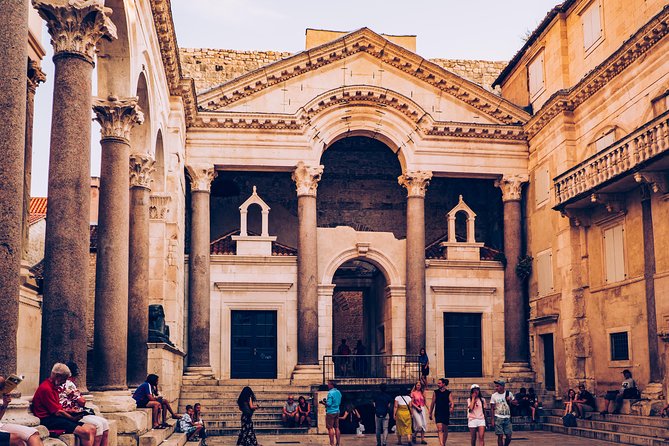
- The Peristyle is the visual centerpiece: This open Roman courtyard is among the world’s best-preserved late ancient structures.
- Trogir adds a different mood: Its historic center offers a compact UNESCO-listed setting after Split’s busy palace streets.
- Private transport saves planning time: Pickup and drop-off are available in Split and outside central Split.
- Budget for extras: The palace substructures cost €5, with optional €5 admissions for the mausoleum and Jupiter’s Temple, and €5 for St. Lawrence’s Cathedral.
Why this private heritage tour works
Split is easy to visit on your own, but it is not always easy to understand on your own. Diocletian’s Palace is not an isolated ruin behind a gate. It is part of the living center of the city, with homes, shops, cafés, lanes, and churches built into and around the ancient complex.
That makes a guide useful. You can look at old stone for hours without knowing what you are seeing. A local licensed guide can explain how the Roman palace became the core of modern Split, point out major features, and connect the remains to Croatia’s wider past.
I like the private setup because it gives your group room to ask questions. If your children want a shorter explanation, you can keep moving. If you care about Roman architecture, medieval church history, or local customs, you can spend more time on those subjects instead of following a fixed crowd.
The transport also matters. Split, Salona, and Trogir are close enough to combine, but arranging taxis or buses for a short visit to each site can eat into a four to six-hour outing. Here, a driver takes care of the connections in an air-conditioned vehicle with Wi-Fi.
The stated duration is approximate, so you should think of this as a flexible half-day to longer half-day experience. The exact pace will depend on pickup location, traffic, how much time you spend at each site, and which paid areas you enter.
More history tours in Split:
- Walking Tour of Split with a ‘Magister’ of History
★ 5.0 · 1,122 reviews - Split Walking Tour with Professor of History
★ 5.0 · 926 reviews - Split: History and Heritage Walking Tour
★ 4.9 · 650 reviews
Starting in Split at Diocletian’s Palace
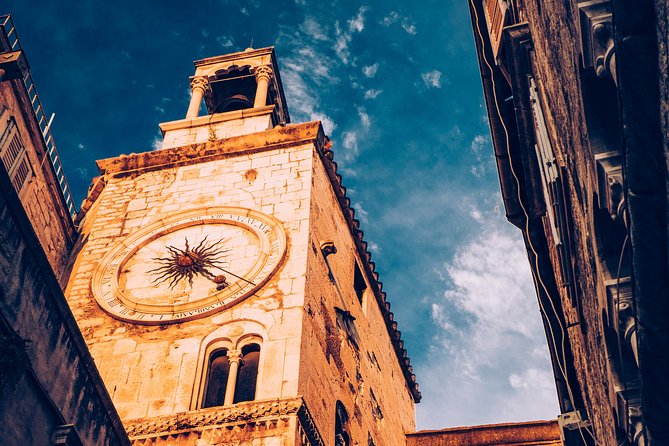
The tour begins with about two hours in Split, including Diocletian’s Palace and the downtown area. This is the strongest part of the day for anyone who wants context, because the palace is both an ancient monument and the heart of present-day Split.
Emperor Diocletian ordered the complex to be built as his retirement residence. The result was far more than a simple villa. It included monumental spaces, defensive walls, ceremonial areas, and religious structures. Over time, later residents used the old Roman buildings as foundations for homes and public spaces.
That layered use is what makes Split so unusual. You are not only looking at ruins. You are walking through a city center shaped by Roman planning and altered over many centuries.
A guide can help you notice details that are easy to pass. You might find Roman stone beside later construction, old walls incorporated into modern buildings, and narrow passages that make more sense once you understand the original plan. I would pay close attention to the transition between the palace and the rest of downtown, since that is where the ancient and modern city feel most closely joined.
The tour includes guided time with a local licensed guide for Diocletian’s Palace and central Split. That is an important distinction. The private driver handles transport, but the palace portion is led by a guide whose job is to explain the site rather than simply get you there.
Families may find this format easier than a long public walking tour. Henry has been praised for tailoring the experience to a family with five and seven-year-old children, which suggests that the private format can adjust to a younger group’s attention span.
You should still expect walking over old surfaces and through historic streets. The supplied information does not give a detailed accessibility description, so anyone with mobility concerns should ask the provider before booking.
The Peristyle, where Roman Split feels most powerful
The Peristyle receives about an hour and is the architectural high point of the Split visit. This grand court was part of Diocletian’s palace complex and is described as one of the best-preserved examples of late ancient architecture in the world.
The space works because it gives you a clear sense of scale. After moving through the tighter streets of central Split, you reach a ceremonial area designed to impress. The surrounding stone, columns, and monumental proportions make it easier to picture how the palace once functioned as an imperial residence.
This is also where a guide can add real value. A quick photograph shows the shape of the courtyard, but an explanation can clarify its role, its connection to the emperor, and how later generations adapted the site.
The Peristyle itself is treated as a separate stop, and the entry fee is not included. The supplied information lists no admission cost for the general Split and Trogir visits, but it does list €5 for the palace substructures. Optional admission to the mausoleum and Jupiter’s Temple is another €5.
Ask your guide which paid areas fit your interests and available time. If you want the fullest palace experience, these additions may be worth the modest fee. If you prefer to keep the visit focused on the outdoor spaces and main streets, you can control your spending.
I would allow a little breathing room here. The Peristyle is not a place to rush through in a few minutes. Even with a busy schedule, this is the point where I would pause, look upward, and let the scale of the old palace register.
Salona adds Roman ruins beyond the city center
The tour also includes Salona as part of its Split-area heritage program. Salona was the major Roman center in the area, and its ruins give you a different view of Roman life from the palace in Split.
Diocletian’s Palace shows imperial power in a dense urban setting. Salona, by contrast, lets you consider the wider Roman settlement and the remains beyond Split’s modern streets. That contrast is one of the best reasons to include all three destinations in one outing.
The supplied schedule gives two hours to Split, one hour to the Peristyle, and two hours to Trogir, but it does not provide a separate time allocation for Salona. You should confirm the exact Salona timing when you book or when the operator confirms your pickup. The day is listed as approximately four to six hours, so the order and length of visits may change.
This is where the private format is especially useful. A set group tour might have to follow one timetable. A private guide and driver can explain how Salona fits into the day and help your group decide how to use the available hours.
The family feedback about Henry specifically highlights Split, Salona, and Trogir together. That makes his ability to give the sites a connected story one of the tour’s strongest features.
A few more Split trips worth comparing
- Split: Krka Waterfalls Trip with Boat Cruise and Swimming
★ 4.8 · 10,519 reviews - From Split: Krka Waterfalls, Food & Wine Tasting Tour
★ 5.0 · 9,326 reviews - Blue cave, Mamma Mia and Hvar, 5 islands speedboat tour
★ 5.0 · 7,150 reviews - From Split: Krka Waterfalls, Food & Wine Tasting Tour
★ 4.9 · 6,598 reviews
Trogir’s UNESCO-listed historic center
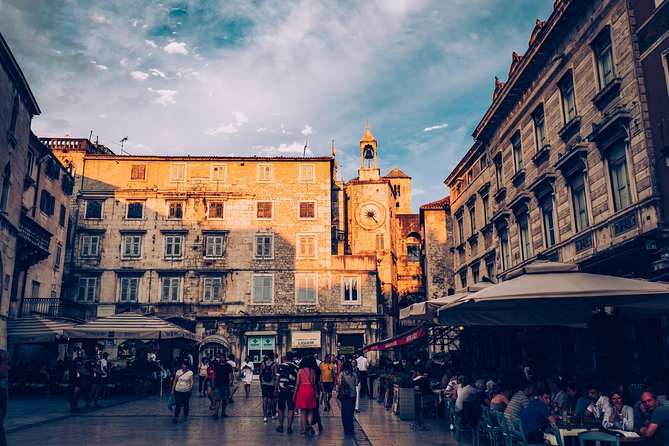
Trogir receives about two hours, and that is enough time to get a solid first look at its historic center. The town is described as a real treasure and a UNESCO World Heritage Site, and its appeal comes from its compact historic setting.
After Split’s broad Roman palace complex, Trogir offers a different kind of visit. You get a concentrated old center where the pleasure comes from walking through historic streets and seeing how the town has preserved its character.
The tour includes admission to Trogir at no additional cost, but St. Lawrence’s Cathedral is optional and costs €5. I would consider this fee if you want a closer look at one of the town’s key religious buildings. If your priority is simply to walk through the historic center, you can skip the interior and keep the visit less expensive.
Two hours should give you time to see the central sights at an easy pace, though the exact experience depends on how much time has already been used in Split and Salona. Because this is a private tour, you can tell the guide if Trogir is the part of the day you most want to savor.
I like the pairing of Split and Trogir. Split is larger, more layered, and more urban. Trogir feels more contained. Seeing both helps you compare two important historic centers rather than treating Croatia’s past as one single type of monument.
The guide can make or break the day
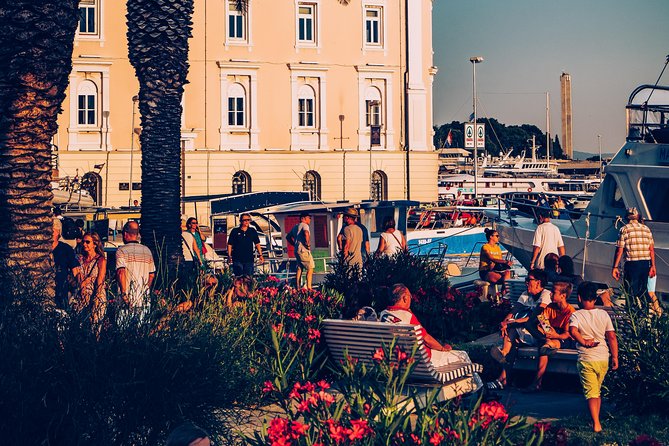
The strongest praise for this experience centers on the guides. Henry is noted for adapting the tour to a family with young children and for knowing his history. Jelena is praised for being enthusiastic and thorough while explaining Split and Croatian culture.
Those details matter more than a long list of stops. A guide who can adjust the pace, explain difficult ideas plainly, and connect architecture with local life gives you more than transportation and photographs.
The tour is offered in English, with an English-speaking driver and a local licensed guide for Diocletian’s Palace and Split downtown. You should expect the guide and driver roles to be distinct, even though the driver may provide historical commentary during the transfers.
Since this is a private activity, only your group participates. That suits families, couples, and small groups who want to ask questions without holding up strangers. It also makes the tour a better fit if your interests are specific or if you need a little flexibility.
The perfect 5 rating from 12 published reviews and 100 percent recommendation point to a very strong record, but the sample is small. I would treat that as encouraging rather than as a guarantee that every group will have the same guide or pacing.
Transport, pickup, and the practical side
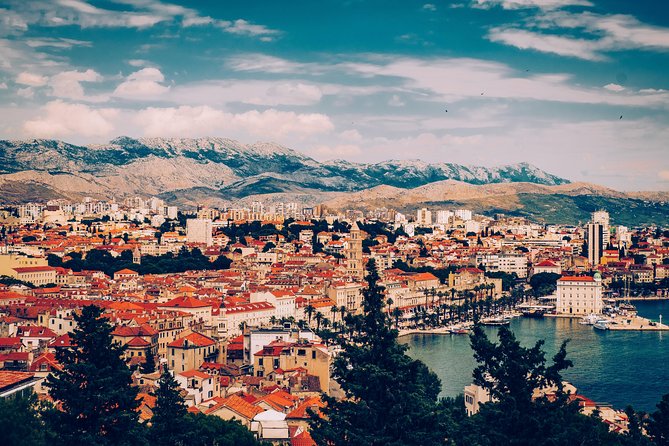
Pickup and drop-off are offered from Split and locations outside downtown Split. You need to provide your exact pickup point after confirmation, so have your hotel or accommodation details ready.
The vehicle is air-conditioned and includes Wi-Fi. That is useful in warm weather and during the short transfers between sites. It also removes the need to coordinate several local rides during a limited half-day schedule.
The tour is listed as four to six hours, approximately. I would keep the rest of your day flexible rather than booking a tight lunch reservation or another timed attraction immediately afterward.
Lunch is not included. Stops are made at local restaurants where you can eat at your own expense, but the provided details do not promise a particular restaurant, menu, or lunch duration. Ask the guide about the day’s meal plan if food is important to you.
Dress is smart casual. Since the tour includes historic religious sites and optional cathedral access, modest clothing is the sensible choice. Comfortable walking shoes are also a practical idea, although the operator does not provide a detailed footwear requirement.
Most people can participate, but specific accessibility details are not supplied. If you need step-free access, special seating, or other assistance, confirm those points before paying.
Is $309.89 per person a fair price?
At $309.89 per person, this is not a budget sightseeing option. You are paying for a private vehicle, pickup and drop-off, an English-speaking driver, a local licensed guide, and the ability to keep the day limited to your own group.
For a family or group that would otherwise need several taxis, separate guides, and careful timing, the price may make sense. The convenience has real value, especially when you want Split, Salona, and Trogir in one day.
For a solo visitor or couple, the cost is harder to justify. Split’s central sights can be visited independently, and the included entry to the main city areas keeps self-guided costs low. The private tour becomes more attractive if you place a high value on explanation, transport, and a tailored pace.
You should also add the optional admissions to your mental budget:
- Palace substructures: €5 per person
- Mausoleum and Jupiter’s Temple: optional, €5 per person
- St. Lawrence’s Cathedral in Trogir: optional, €5 per person
Lunch is also extra. None of these fees is large on its own, but they make the final cost higher than the headline price.
Who should book it?
I would choose this tour if you want an efficient introduction to the Split area and prefer a private guide to independent research. It suits families particularly well, since Henry’s tailored approach shows how the day can work for young children.
It also fits first-time visitors who want the major historic sites explained in plain English. You get a useful mix of Roman imperial architecture, wider Roman remains at Salona, and a compact UNESCO-listed town in Trogir.
I would hesitate if you want a slow, unstructured day or if your budget is tight. You may also prefer a different plan if you want extensive time inside every paid monument, since the schedule has several major places to cover in four to six hours.
The non-refundable policy deserves serious attention. Once booked, the experience cannot be changed or refunded for any reason, so wait until your transportation and accommodation plans are settled.
Should you book the Split and Trogir heritage tour?
Book it if you value private transport, a local guide, and a clear story connecting Split, Salona, and Trogir. The best parts are the personal pace, the strong guide feedback about Henry and Jelena, and the chance to see three important historic areas without managing the connections yourself.
Skip it if you are comfortable exploring Split independently and would rather spend the $309.89 on several smaller activities. For those who do book, confirm the Salona timing, ask which optional admissions fit the schedule, and keep the afternoon open for delays.
FAQ
Where does the tour begin and end?
Pickup and drop-off are available from Split and locations outside downtown Split. You need to provide your exact pickup location after confirmation.
How long does the tour last?
The experience lasts approximately four to six hours.
Is this a private tour?
Yes. Only your group participates in the activity.
Is transportation included?
Yes. The tour includes round-trip private transport in a comfortable, air-conditioned vehicle with Wi-Fi.
Is the tour offered in English?
Yes. It includes an English-speaking driver and a local licensed guide for Diocletian’s Palace and Split downtown.
Is lunch included?
No. Lunch is at your own expense, with stops at local restaurants available during the day.
What entrance fees should I expect?
The palace substructures cost €5 per person. The mausoleum and Jupiter’s Temple are optional at €5 per person, and St. Lawrence’s Cathedral in Trogir is also optional at €5 per person.
Can I cancel or change the booking?
No. The experience is non-refundable and cannot be changed for any reason.
Just added around Split
- Walking Tour Split★ 4.7 · 61 reviews
- Unique vintage Tomos moped tour Split – Back to the ’80s★ 4.8 · 17 reviews
- Trogir: White Lagoon, Maslinica & Blue Lagoon Speedboat Tour★ 4.8 · 11 reviews
- Essential Diocletian’s Palace Tour for First-Time Visitors★ 4.8 · 19 reviews
- Split: Trogir Open Top Bus Trip + Free Split Walking Tour★ 4.1 · 17 reviews
- Trogir; Private walking tour of higlights of Trogir★ 4.7 · 3 reviews
- Trogir: Old Town Guided Walking Tour★ 4.6 · 76 reviews
- TROGIR: Blue Lagoon & 3 Islands Half-day Speedboat tour★ 4.6 · 28 reviews
Historical Tours, compared.

Walking Tour of Split with a ‘Magister’ of History
Read our review →
Split History and Gastro Small-Group Tour with Food and Drinks
Read our review →
PREMIUM Emperor’s Walking Tour for History Lovers + Museum
Read our review →Browse the lists this tour appears in