
Reviewed · WALKING TOURS
Split; Private Morning Walking Tour in Split
Split wakes early, and its stones reward early walkers. This private two-hour tour takes you through Diocletian’s Palace, its cellars, old squares, market, and waterfront before the day gets hectic. I like the calm morning start, and I like that a private group of up to 10 can ask questions and shape the conversation around local life. The main consideration is simple: two hours goes quickly in a city this layered, so several stops receive only a short visit.
I also like the way the tour connects ancient monuments with present-day Split. You see the emperor’s mausoleum, then hear about local food, nightlife, dining, and things to do around Dalmatia. The tour has earned a perfect 5 rating from eight reviews, with particular praise for guides Kristina and Christina, who were described as personal, informative, and clear.
In This Review
- Key points at a glance
- Why a morning walk works well in Split
- Entering 1,700 years of Diocletian’s Palace
- Beneath the palace in Diocletian’s Cellars
- Cathedral of Saint Domnius and Peristil
- From the Golden Gate to a secret stop
- People’s Square and Split’s everyday rhythm
- Pazar, the Green Market, and local food
- A stroll along the Riva
- Finishing with the model of Split
- How the two-hour schedule feels
- Guide quality and language choices
- Is $129 good value?
- Who should book this Split walk?
- Final verdict: book it for a smart first look at Split
- FAQ
- Where does the Split private walking tour start?
- How long does the tour last?
- How many people can join the private group?
- What languages are available?
- What places are included?
- Is the Green Market part of the experience?
- What is included in the price?
- Can I cancel for a full refund?
- Do I need to pay when I book?
- What should I bring?
Key points at a glance

- Early start, lighter crowds: Morning timing helps you see the old center with less noise and pressure.
- A private group for up to 10: The $129 price can be good value for a small family or group traveling together.
- Diocletian’s Palace below and above ground: You visit the palace streets and the preserved cellars beneath them.
- A local stop at Pazar: Split’s Green Market adds everyday Dalmatian life to the ancient sights.
- English and German guiding: You can choose between the two stated tour languages.
- History tied to practical advice: The conversation includes food, nightlife, and other activities in Split and the wider area.
Why a morning walk works well in Split
Split’s old center is not a museum sealed behind glass. It is a working part of the city, with people passing through ancient lanes, shopping for food, eating in squares, and heading to the waterfront. That makes an early walking tour especially useful. You get the main historical frame before the streets become harder to navigate.
The meeting point is the model of Split’s historic core. That is a sensible place to begin because you can see the shape of the old city before entering it. I would use this first moment to get oriented: the palace, the old town, the market area, and the Riva all make more sense once you understand how they fit together.
The tour is private, so you are not trying to keep up with a large mixed group. If you are traveling with family or friends, the flat group price is worth considering. At the full limit of 10 people, $129 works out to $12.90 per person. For two people, the same price becomes $64.50 each, so the value depends heavily on your group size.
More Walking Tours in Split
- Split: Old Town and Diocletian Palace Walking Tour
★ 4.9 · 4,727 reviews - Walking Tour of Split and Diocletian’s Palace
★ 5.0 · 2,588 reviews - Krka Waterfalls tour with Trogir Walking tour and Krka panoramic boat cruise
★ 5.0 · 1,659 reviews
Entering 1,700 years of Diocletian’s Palace
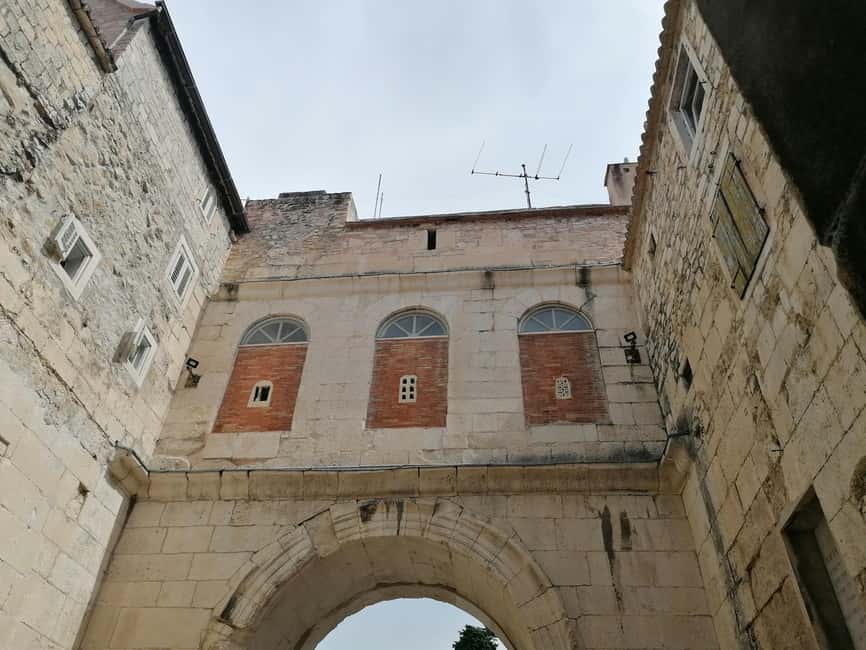
The central attraction is Diocletian’s Palace, built for the Roman emperor Diocletian at the turn of the fourth century. The important thing to understand is that this is not one isolated ruin. The palace forms the core of Split’s old town, and its streets and buildings have continued to serve city life for centuries.
You will stop for sightseeing and photographs, while the guide explains how the ancient complex relates to present-day Split. I like this approach because it keeps the palace from becoming a list of dates and stones. Every street, building, and square has a story, and the tour is designed to connect those pieces.
The schedule gives about 10 minutes to the palace itself. That is enough for an introduction and some context, but not enough for a slow architectural study. If you want to linger over details, take your own photographs, or read every sign, you may need to return later.
Beneath the palace in Diocletian’s Cellars
The cellars offer one of the clearest ways to understand the palace above. You enter preserved lower spaces with the guide, then see how the underground structure relates to the emperor’s former residence.
A 10-minute guided visit is brief, but the cellars are an important part of the tour because they give physical depth to the story. After seeing them, the upper streets feel less like a random maze. You begin to see the old palace as a planned complex with layers below the modern city.
This is also one of the places where a guide adds real value. Without explanation, an underground passage can look like a series of old stone rooms. With context, you can better understand why the spaces survived and how they fit into the palace plan.
Cathedral of Saint Domnius and Peristil
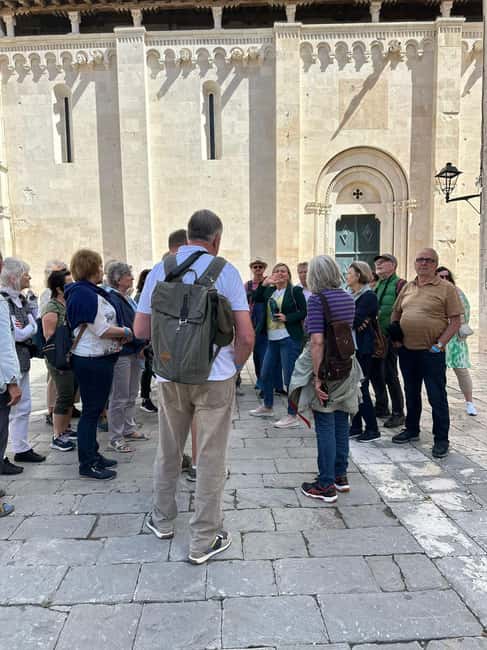
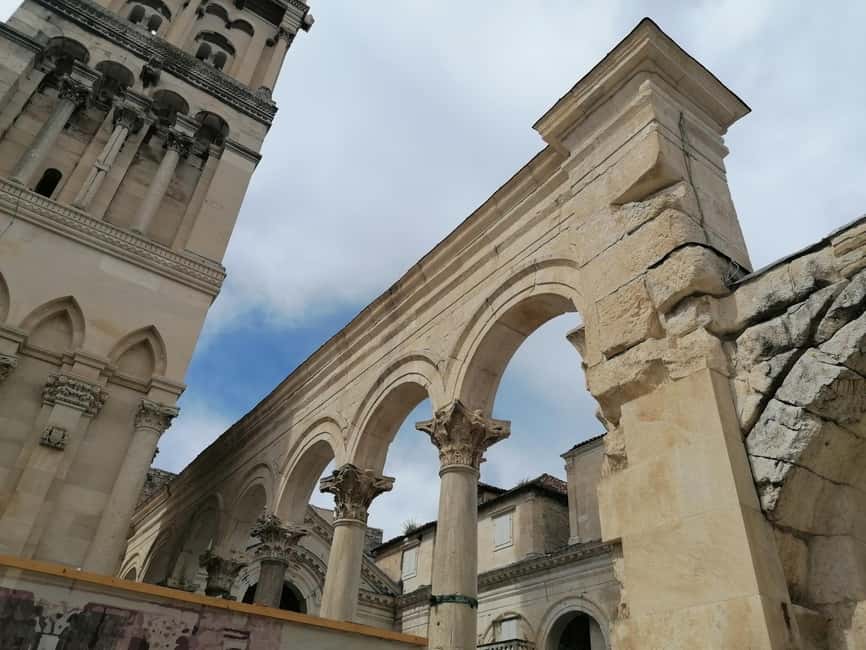
The Cathedral of Saint Domnius, or Sveti Duje, was originally the mausoleum of Diocletian. That change in use is one of Split’s most striking historical turns. A structure created for an emperor became the city’s cathedral, linking Roman power with the later Christian life of Split.
The guided cathedral stop lasts about 10 minutes. I would listen closely here, since the building’s importance comes from both its original purpose and its later role. The short visit should give you the key facts without taking up too much of the morning.
Peristil receives about 15 minutes. This square is one of the main spaces within the palace and a good place to pause, look around, and understand the scale of the complex. The extra time compared with some other stops makes sense because you can take photographs, study the surrounding buildings, and hear how the square has functioned through different periods.
The tour’s strongest historical section is probably this sequence: palace, cellars, cathedral, and Peristil. Together, these stops explain the basic structure of Split’s old center in a way that is easier to remember than a string of disconnected monuments.
Still Split, at a slower pace:
- Split: Krka Waterfalls Trip with Boat Cruise and Swimming
★ 4.8 · 10,519 reviews - From Split: Krka Waterfalls, Food & Wine Tasting Tour
★ 5.0 · 9,326 reviews - Blue cave, Mamma Mia and Hvar, 5 islands speedboat tour
★ 5.0 · 7,150 reviews - From Split: Krka Waterfalls, Food & Wine Tasting Tour
★ 4.9 · 6,598 reviews
From the Golden Gate to a secret stop
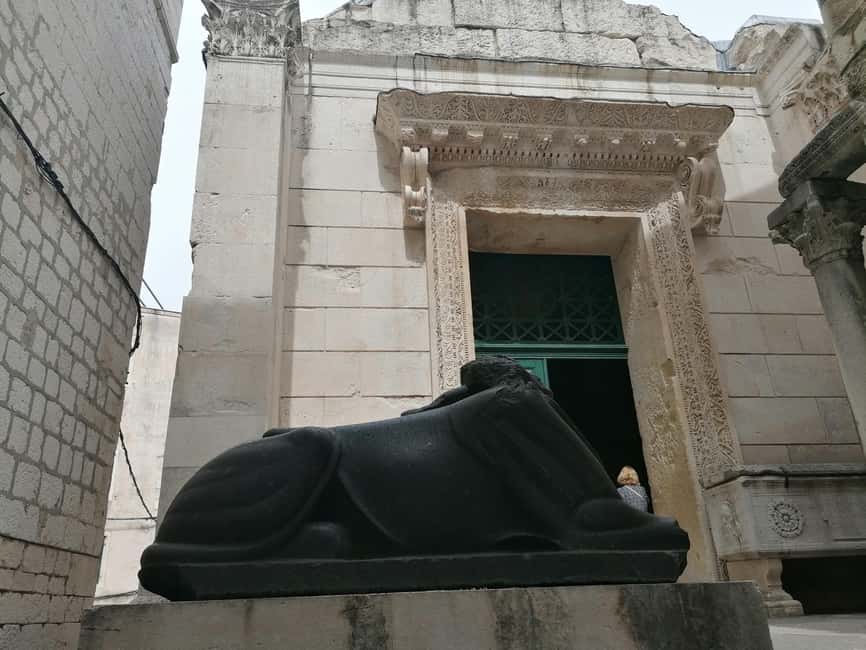
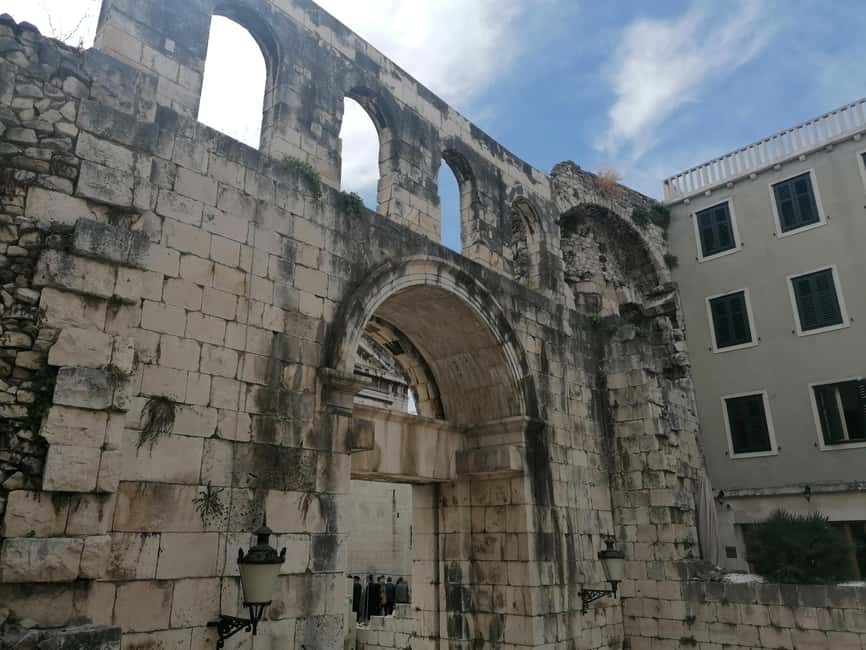
The Golden Gate receives about 15 minutes for a photo stop and sightseeing. This is one of the city’s key entrances, so it helps you picture how people once entered the palace. The guide can also use it to explain the relationship between the old defensive layout and the city streets you are walking through now.
The schedule then allows 20 minutes at a secret stop. No details are provided about its exact location or character, so you should treat this as a pleasant surprise rather than plan around a particular attraction. The extra time suggests a more relaxed pause, but you will need to ask the guide what makes the place special when you arrive.
That uncertainty is not necessarily a weakness. Some people enjoy having one part of the walk revealed along the way. If you prefer a tightly defined sightseeing plan, though, this is the one section you cannot preview in detail.
People’s Square and Split’s everyday rhythm
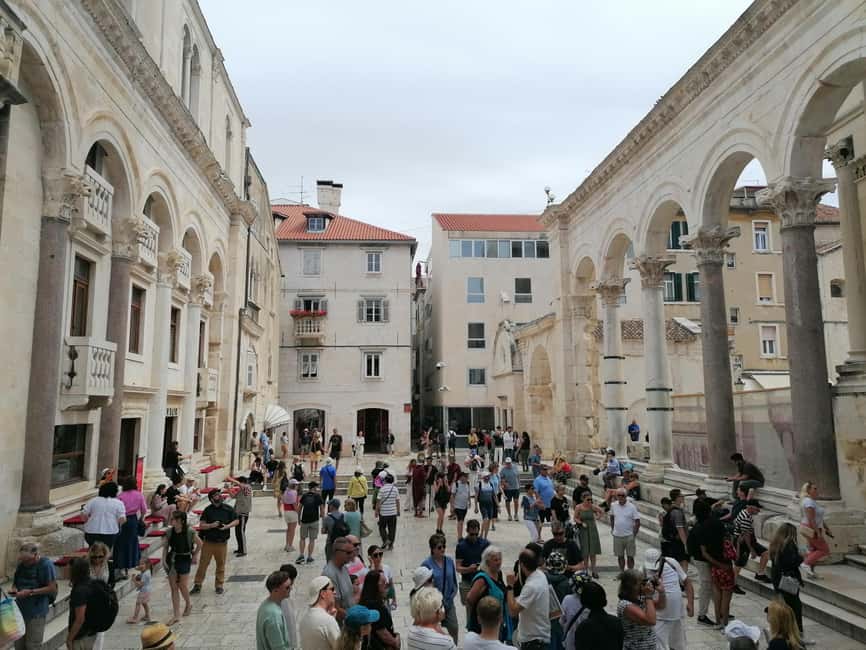
People’s Square receives about 15 minutes for sightseeing and shopping. This is where the tour moves more clearly from Roman history into the city’s lived present. The old center is not only about grand monuments. It is also about the public spaces where people meet, pass through, shop, and spend time.
The guide discusses both past and present, along with culture and local customs. That balance matters. You get more than an ancient-history lesson, yet the modern conversation remains connected to the places around you.
The tour also includes advice about dining out, nightlife, and additional activities in Split and the wider area. I would save your practical questions for this part of the walk. Ask where the guide would eat, what kind of evening you want, and which parts of the region deserve more time. The information may help you plan the rest of your stay.
Pazar, the Green Market, and local food

The Green Market, known locally as Pazar, is one of the most useful stops for understanding everyday Dalmatia. This is where locals buy and sell products from the surrounding soil. It gives the walk a welcome change of pace after the palace’s formal monuments and stone architecture.
The market is not just a place to take a quick photograph. Look at what is being sold, notice the connection between the city and nearby growing areas, and ask the guide about local products. The supplied details do not promise tastings or purchases, so you should not expect a food tour. Personal expenses are not included.
Still, I consider Pazar an important part of the experience. Ancient buildings explain where Split came from. The market helps show how the city functions now. That combination gives you a better sense of Split than a monument-only walk would.
A stroll along the Riva

The Riva promenade provides the waterfront finish to the sightseeing portion. After the narrow streets and enclosed palace spaces, the open promenade offers a different view of the city and a good place for photographs.
The scheduled stop is about 10 minutes. That is enough for a short stroll and a few pictures, but not a long waterfront break. If you want to sit by the water, linger over coffee, or enjoy the promenade at a slower pace, plan to return on your own.
The Riva also helps you understand the tour’s idea of feeling how the city breathes. You move from imperial rooms to market stalls, public squares, and the waterfront. The walk is not simply about looking backward. It shows how old spaces continue to support ordinary urban life.
Finishing with the model of Split
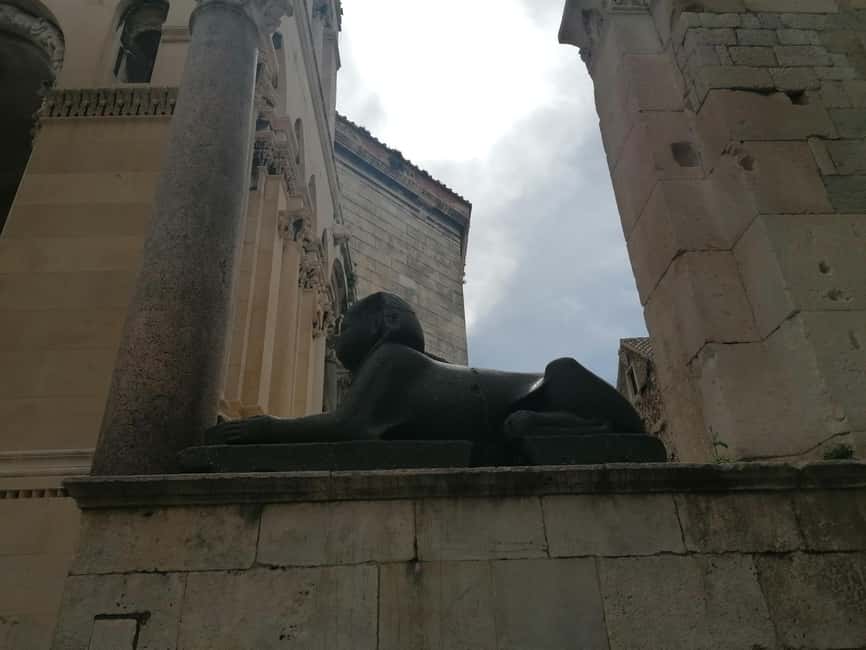
The experience ends with a break at the model of Split, the same general landmark used as the starting location. This gives you a final chance to ask questions and review what you have seen.
I like the practical value of ending with a model. After walking through the palace, the old center may still seem complicated. A final look at the city’s layout can help you place the cellars, cathedral, squares, market, and Riva in relation to one another.
The schedule assigns 10 minutes to this break. Use it to ask about places you missed, restaurants, nightlife, nearby activities, or the wider Dalmatian area. The guide’s role is not limited to reciting history. The tour specifically includes advice for the rest of your visit.
How the two-hour schedule feels
The listed stops add up to a brisk morning, with many visits lasting between 10 and 20 minutes. You will keep moving, but the private format should make it easier to pause when a question matters to you.
The tour is best viewed as a well-organized introduction, not a full archaeological study. You will see the major points, understand the basic story, and gain useful local direction. You will not have long, unhurried time at every monument.
Bring water. Comfortable walking shoes would also be sensible, although only water is specifically required. The tour takes place in the old city, and the focus is walking rather than transport, so plan your morning accordingly.
Guide quality and language choices
The available languages are English and German. The guide is licensed, and the experience is offered as a private group rather than a shared walk.
The strongest praise in the available feedback is directed at the guides’ ability to explain history clearly and personally. Tanja specifically described her walk with Kristina as informative and personal, while Andrea praised Christina for having extensive knowledge and explaining it well. The names appear with slightly different spellings, so I would confirm your guide’s name when booking if that matters to you.
That positive feedback fits the tour’s design. The guide has room to discuss both history and modern Split, and a private group can ask questions without holding up a large crowd.
Is $129 good value?
The price is $129 for a group of up to 10 people. The main included service is the licensed guide. Personal expenses, including anything you choose to buy at Pazar or elsewhere, are not included.
For a group of six to 10, this is a strong value for a private introduction to Split. You get a guide focused on your party, a morning start, and coverage of the palace, cellars, cathedral, squares, market, and Riva. For one or two people, the per-person cost is much higher, and a shared walking tour could be cheaper if available.
The value also depends on how much you care about local explanation. If you only want to photograph the palace and wander independently, you may not need a private guide. If you want the city’s ancient and modern sides explained in clear English or German, the price is easier to justify.
Who should book this Split walk?
I would recommend it to first-time visitors who want a clear orientation before exploring alone. It also suits families, couples traveling with friends, and anyone who prefers a private conversation to a large group.
It is a good fit if you want to avoid the heaviest morning crowds, learn the basic story of Diocletian’s Palace, and receive practical ideas for food, evenings, and further activities. The private format is especially attractive when several people can share the cost.
I would hesitate if you want long interior visits, extensive time at each monument, or a highly specialized archaeological tour. The two-hour limit means the pace is purposeful, and the stops are short. I would also think twice if your group consists of only one person and price is your main concern.
Final verdict: book it for a smart first look at Split
Book this tour if you want a calm, private introduction to Split that joins major Roman sites with the market, waterfront, and modern city. The morning timing, licensed guide, and small-group setting are the best reasons to choose it.
The perfect 5 rating from eight reviews, with praise for Kristina and Christina’s clear and personal explanations, supports its appeal. Just keep your expectations in line with the two-hour format: this is a strong first chapter, not the whole book. If you use the walk to get oriented, ask practical questions, and then return to your favorite places later, the $129 group price can be worthwhile.
FAQ
Where does the Split private walking tour start?
It starts at the model of the historical core of the city of Split.
How long does the tour last?
The walking tour lasts two hours.
How many people can join the private group?
The price covers a private group of up to 10 people.
What languages are available?
The live tour guide is available in English and German.
What places are included?
The tour includes Diocletian’s Palace, Diocletian’s Cellars, the Cathedral of Saint Domnius, Peristil, the Golden Gate, a secret stop, People’s Square, the Riva promenade, and the model of Split.
Is the Green Market part of the experience?
Yes. The tour visits Split’s Green Market, known locally as Pazar, where locals buy and sell products native to Dalmatian soil.
What is included in the price?
A licensed tour guide is included. Personal expenses are not included.
Can I cancel for a full refund?
Yes. You can cancel up to 24 hours in advance for a full refund.
Do I need to pay when I book?
No. The reserve-now, pay-later option allows you to keep your plans flexible and pay nothing at the time of booking.
What should I bring?
Bring water.
Just added around Split
- Slatine – Island Hopping Excursion (Trogir/Blue Lagoon/Shipwreck)★ 4.0 · 24 reviews
- Krka Waterfalls & Primošten from Trogir, Seget, Čiovo & Kaštela★ 5.0 · 18 reviews
- Island Hopping Boat Excursion with Lunch (Trogir,Blue Lagoon, Šolta)★ 3.5 · 6 reviews
- From Trogir, Seget, Okrug: Krka Waterfalls & Šibenik Culture Tour★ 5.0 · 10 reviews
- From Split & Trogir: ATV Quad Tour on Island Čiovo★ 5.0 · 21 reviews
- Split: Blue Lagoon Boat Trip with Lunch, Wine and Snorkeling★ 5.0 · 3 reviews
- Split Sunset Stand Up Paddle Tour★ 5.0 · 16 reviews
- Split: Sunset Guided Kayaking Tour★ 4.8 · 71 reviews
Walking Tours, compared.
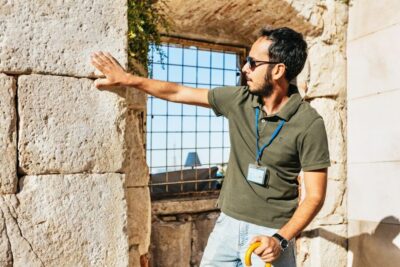
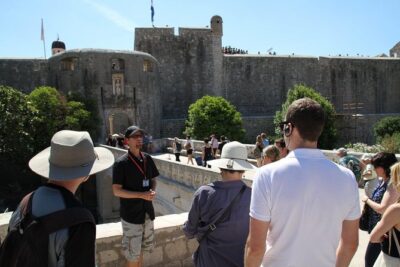
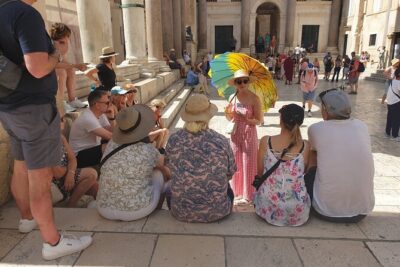
Walking Tour of Split and Diocletian’s Palace
Read our review →
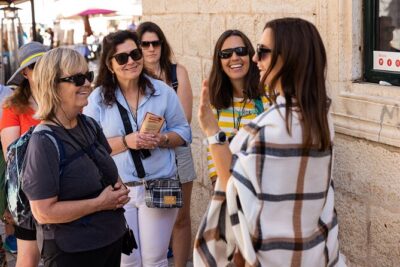

Krka Waterfalls tour with Trogir Walking tour and Krka panoramic boat cruise
Read our review →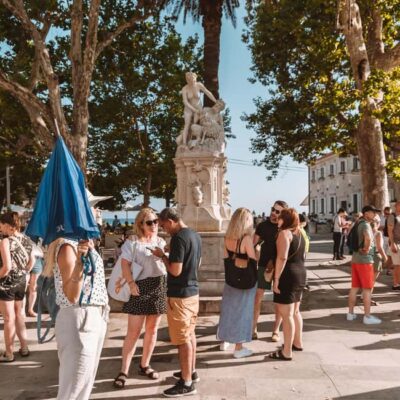
City Walls Early Morning or Sunset Walking Tour
Read our review →Browse the lists this tour appears in