
Reviewed · WALKING TOURS
Split highlights – Evening walking tour
Ancient stone comes alive after sunset. This compact Split walk brings you through Diocletian’s Palace, lively squares, the Riva promenade, and a hilltop view, all with an English-speaking local guide. I like the small maximum of eight people, which should make it easier to ask questions and hear the stories. I also like the route’s mix of Roman remains and everyday Split life, from football talk on Pjaca to klapa singing in the Vestibule.
The main drawback is timing. The Palace can still be busy in the evening, and the final walk to Prva Vidilica Na Marjanu adds an uphill stretch after about an hour in the old town. The Cathedral entrance is not included, so you should treat this as an outdoor orientation tour rather than a complete archaeological visit.
In This Review
- Key points at a glance
- Why this two-hour evening walk works
- Entering Split through the Golden Gate
- The Peristyle and a 3,500-year-old sphinx
- Saint Domnius and the Roman mausoleum
- The Vestibule and the sound of klapa
- Pjaca and the everyday city
- Prokurative and the open view toward the harbor
- Riva, Split’s outdoor living room
- The climb to Prva Vidilica Na Marjanu
- How the guides shape the experience
- Price, timing, and who gets the best value
- Should you book the Split evening walk?
- FAQ
- How long does the Split highlights evening tour last?
- What time does the tour begin?
- Where does the tour meet?
- Where does the tour finish?
- Is admission to the Cathedral of Saint Domnius included?
- What happens if bad weather cancels the tour?
Key points at a glance
- A strong first-evening introduction: The 7:00 pm start gives you a useful sense of direction soon after arriving in Split.
- A small-group setting: The tour accepts no more than eight people, a good size for questions and conversation.
- Roman Split meets modern Split: You move from palace gates and a 3,500-year-old sphinx to cafés, football talk, and the Riva.
- Three guides are praised by name: Bosko Papic, Pavle, and Luka are each described as warm, engaging, and closely connected to Split.
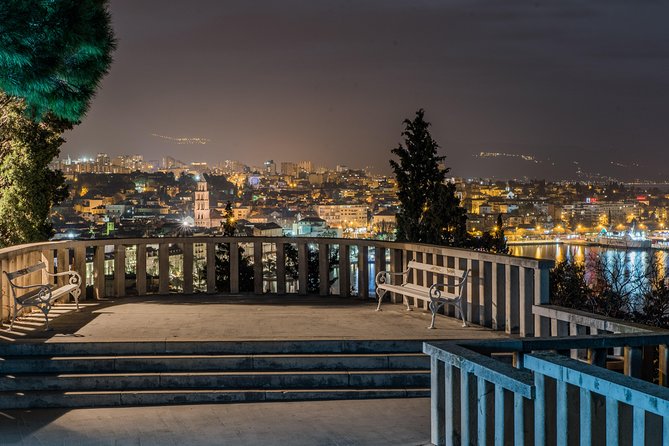
- The final viewpoint is a real payoff: Prva Vidilica Na Marjanu offers a broad view of Split after a 15-minute walk from the old town.
- Good value for a short tour: At $39.74 per person, the price makes the most sense if you want context, orientation, and local advice rather than paid entry to several sights.
Why this two-hour evening walk works
Split is easier to understand once you realize that the old town is not simply a preserved Roman monument. Diocletian’s Palace became part of the living city. Homes, shops, cafés, churches, passageways, and public squares occupy the old walls, so a good walk should explain both the emperor’s project and the people who live inside it.
That is the strength of this experience. In roughly 90 minutes to two hours, you get a broad introduction without spending an entire day indoors. You begin at the Golden Gate at 7:00 pm and finish at the fountain at the start of the Riva promenade, with the optional-feeling final viewpoint included in the route at Prva Vidilica Na Marjanu.
I would especially consider booking it near the start of your stay. Pavle is praised for helping people find their way around and for bringing the city to life through historical details and anecdotes. Bosko Papic is also praised for restaurant tips and insight into daily life in Split. That kind of local guidance can be more useful than another list of monuments.
The tour is offered in English and includes a licensed local guide. It does not include personal purchases or other expenses. The price is $39.74 per person, which is fair for a small-group walking tour with a local guide, though less attractive if you only want to look at the main sights without much explanation.
More Walking Tours in Split
- Split: Old Town and Diocletian Palace Walking Tour
★ 4.9 · 4,727 reviews - Walking Tour of Split and Diocletian’s Palace
★ 5.0 · 2,588 reviews - Krka Waterfalls tour with Trogir Walking tour and Krka panoramic boat cruise
★ 5.0 · 1,659 reviews
Entering Split through the Golden Gate
The Golden Gate is the natural place to begin. This was the main entrance to Diocletian’s Palace, and the story connected with it is simple but memorable: Emperor Diocletian entered through these gates when he retired and then chose to remain in the palace.
Your guide uses the gate to set up the larger question of why this place became a home rather than just an imperial retreat. That is a better opening than starting with a string of dates. You begin with a person, a choice, and a building complex that still shapes the center of Split.
Above the gate is the statue of Grgur Ninski, the Croatian bishop Grgur. Rubbing the statue’s toe is linked with good luck, so your guide may point out the polished spot and explain its place in local custom. The stop lasts about 15 minutes, with no admission charge.
The meeting point is Dioklecijanova 7, at the Golden Gate. Arrive with enough time to find the gate, since the old town has many narrow routes and the evening crowds can make a quick meeting less simple than it sounds.
The Peristyle and a 3,500-year-old sphinx
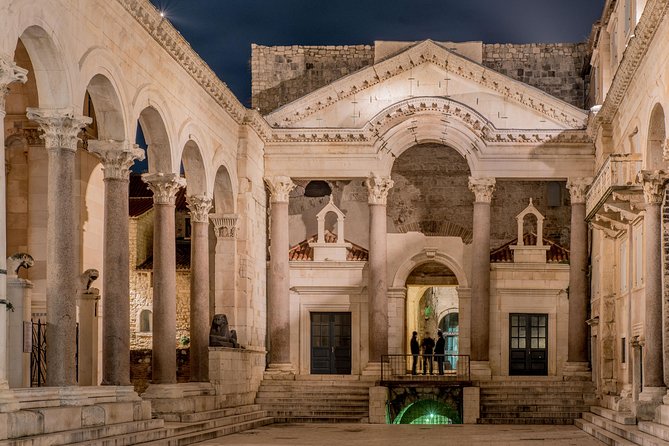
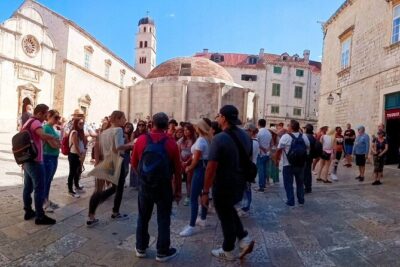
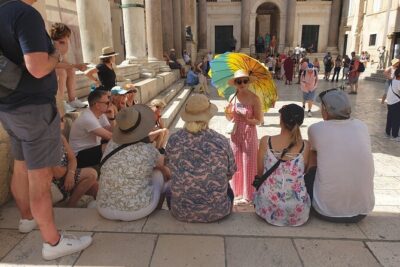
The Peristyle is the geographical and spiritual center of the Palace. It is also the place where the scale of Diocletian’s plan becomes easiest to grasp. The square is framed by major Roman and later buildings, giving you a strong sense of how old structures were reused rather than cleared away.
A 3,500-year-old sphinx guards the square. That detail adds an unexpected Egyptian note to a Roman imperial setting. It also gives your guide a chance to explain how Diocletian presented power through architecture, materials, ceremony, and symbols gathered from across the empire.
Allow about 20 minutes here. You will want to look up, not just ahead. Columns, stonework, steps, and the changing edges of the square make this one of the best places to pause and let the setting register.
The evening hour helps with the heat, especially in warmer months, but it does not guarantee quiet. The Palace remains a working part of Split, and the square can be busy. That is not a flaw in the place, but it does mean you should expect an active public space rather than a silent ruin.
Saint Domnius and the Roman mausoleum
The Cathedral of Saint Domnius occupies what was once Diocletian’s mausoleum. The building is described as the oldest building in the world in which a cathedral is situated, a striking example of how Christian Split took over and reshaped an imperial Roman site.
The Romanesque bell tower in front adds another period to the story. Here, the value of a guide is clear. Without context, you might see a cathedral, a tower, and ancient stone. With context, you can follow the change from emperor’s tomb to Christian cathedral and then to the active center of a medieval and modern city.
This stop lasts about 10 minutes. Admission to the cathedral is not included, so do not expect an interior visit as part of the $39.74 price. If entering matters to you, ask the guide about current arrangements, but the supplied details only confirm that the ticket is separate.
That limitation is worth noting. The tour gives you the building’s place in Split’s story, but visitors who want to examine the cathedral interior, treasury, or bell tower will need to make separate plans.
Still Split, at a slower pace:
- Split: Krka Waterfalls Trip with Boat Cruise and Swimming
★ 4.8 · 10,519 reviews - From Split: Krka Waterfalls, Food & Wine Tasting Tour
★ 5.0 · 9,326 reviews - Blue cave, Mamma Mia and Hvar, 5 islands speedboat tour
★ 5.0 · 7,150 reviews - From Split: Krka Waterfalls, Food & Wine Tasting Tour
★ 4.9 · 6,598 reviews
The Vestibule and the sound of klapa
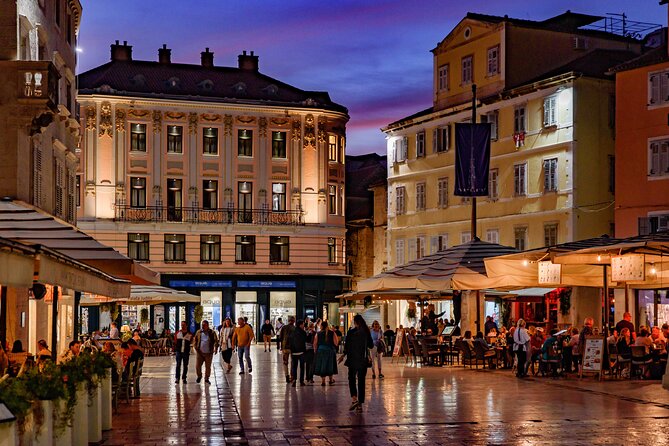
The Vestibule is a round hallway leading toward the emperor’s chambers. Its shape creates unusual acoustics, and the stop includes the chance to hear local klapa singing there.
Klapa is a traditional style of Croatian a cappella singing, and the setting matters. Rather than hearing a performance in a modern concert room, you hear voices in a space built for imperial movement and ceremony. It is a short moment, but it connects architecture with local culture in a direct way.
The visit takes about 10 minutes and has no separate admission charge. I would consider this one of the more distinctive parts of the walk because it is not just a view or a historical explanation. The sound of the place becomes part of the experience.
Keep your expectations sensible. The details do not promise a full concert or a scheduled performance of a particular length. The point is the atmosphere and the connection between the Vestibule’s shape and klapa singing.
Pjaca and the everyday city
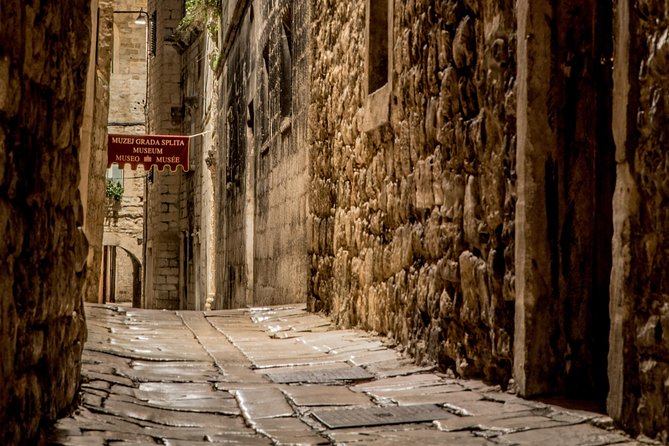
Pjaca is the central stage of city life. It is where people meet, pause, watch, and catch up. The description of football discussions is telling: this is not only a historic square for photographs. It is a social room for Split.
A guide can help you notice that difference. You may have just been looking at Roman imperial power and ecclesiastical architecture. At Pjaca, the focus shifts to how the city works now. That change keeps the tour from becoming a procession of old stones.
The stop lasts about 10 minutes and is free. It is also a useful place to listen to the guide’s local observations. Bosko Papic is praised for offering restaurant suggestions and insight into life in Split, while Pavle is praised for historical information and anecdotes. The small group should make this part more conversational than a large coach tour.
Prokurative and the open view toward the harbor
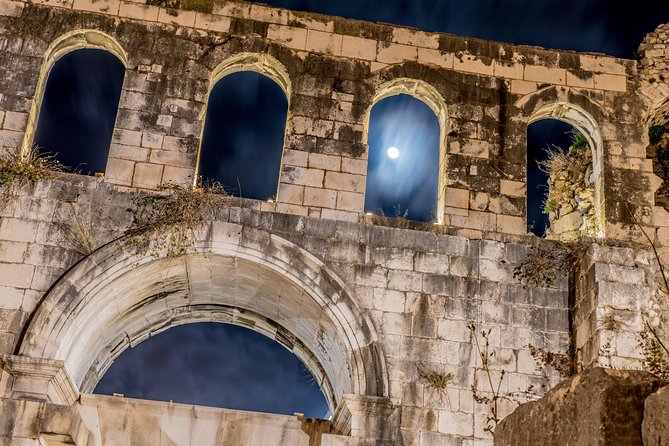
Prokurative, officially Republic Square, recalls Venice’s Saint Mark’s Square. Its open southern side points toward the harbor and the Riva, creating a welcome shift after the enclosed lanes and courtyards of the Palace.
You get a wider sense of the city here. Instead of looking only at walls and monuments, you can connect the old center with the waterfront. The 10-minute stop is free, and it gives the guide room to compare the square’s design with Venetian influence without turning the walk into a long architecture lecture.
This is also a good point to notice how quickly Split changes character. The old town is dense and inward-looking. Prokurative opens the view and prepares you for the final waterfront section.
Riva, Split’s outdoor living room
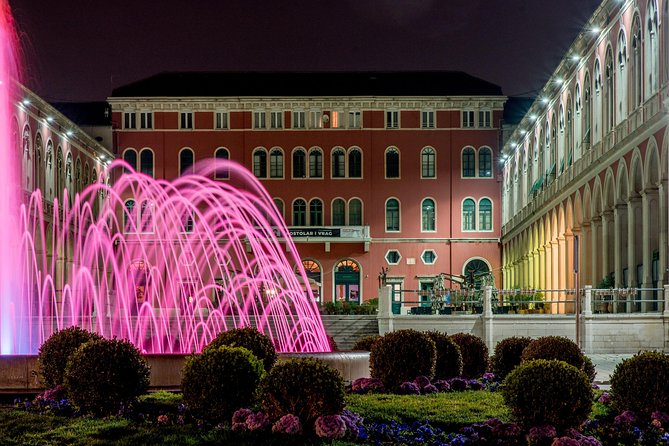
The Riva promenade is described as Split’s living room, and the comparison is easy to understand. This is the city’s main public stage, where daily life, special events, and casual meetings gather beside the harbor.
The tour ends formally at Vodoskok, Trg Franje Tuđmana, in front of the fountain at the beginning of the Riva promenade. That is a practical finish because you are close to restaurants, waterfront views, and the public life of central Split.
The Riva stop lasts about 10 minutes. It is not a long waterfront stroll, so do not book this tour expecting an extended promenade walk. Instead, the guide gives you a sense of why the Riva matters and where you are in relation to the Palace.
If you want a restaurant recommendation, this is a sensible time to ask. Bosko’s local dining tips are one of the useful details associated with the experience, though you should make your own final choice based on your plans and budget.
The climb to Prva Vidilica Na Marjanu
The final stop adds the best visual finish: Prva Vidilica Na Marjanu, a terrace with a broad view over Split. It is about 15 minutes on foot from the old town, so this is not a viewpoint reached by vehicle.
That walk changes the pace. After close streets and historic buildings, you gain distance and see the city as a whole. The view is the reward for making the extra effort, and it helps tie together the Palace, Riva, harbor, and surrounding parts of Split.
The climb is also the tour’s main physical consideration. Most people can participate, but the experience is a walking tour with a final uphill section. Wear shoes suited to uneven city surfaces and bring water, particularly in warm weather. The tour requires good weather, so poor conditions can lead to a different date or a full refund.
The viewpoint stop is planned for about 15 minutes. That is enough for photographs and orientation, but not a long sunset picnic. The exact light will depend on the season and the evening’s weather.
How the guides shape the experience
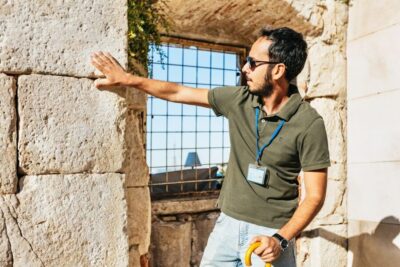
A local guide matters here because Split’s history is layered into ordinary streets. The experience includes an English-speaking licensed guide, and three guide names receive especially strong praise: Bosko Papic, Pavle, and Luka.
Bosko is praised as a Split native who combines historical knowledge with charm, restaurant suggestions, and personal insight into Croatia. Pavle is praised for historical information, anecdotes, and helping people understand the city’s layout. Luka is praised for explaining the history of his beloved home town with enthusiasm.
You cannot necessarily choose one of these guides when booking, so treat the names as examples of the style you may encounter rather than a promise. The common thread is a personal connection to Split, which is exactly what helps this route feel more grounded.
The group limit of eight is a major plus. It should be easier to hear the guide in the Peristyle, ask questions at Pjaca, and keep the group together through the old town. One booking even resulted in a private-feeling experience because only one group had reserved, though that level of privacy cannot be guaranteed.
Price, timing, and who gets the best value
At $39.74 per person, this is not the cheapest way to see Split’s main sights, since most stops are free to enter. You are paying primarily for the guide’s explanations, route planning, local perspective, and the convenience of covering several important places in one evening.
I think the value is strongest for three kinds of people:
- First-time visitors: You get a quick map of central Split and useful orientation for later exploring.
- Short-stay visitors: The route covers major sights without taking up a whole day.
- History-minded walkers: The Palace, mausoleum, cathedral, sphinx, and Vestibule make more sense with a guide.
It is less suitable if you want long interior visits, a quiet archaeological tour, or a slow meal built into the evening. The Cathedral ticket is extra, personal purchases are not included, and the old town may still be crowded.
The average booking point is 38 days before the tour, which suggests that planning ahead is sensible during busy periods. Confirmation is provided at booking, and free cancellation is available up to 24 hours before the 7:00 pm start. Changes or cancellations made within 24 hours are not refunded. Service animals are allowed, public transportation is nearby, and most people can take part.
Should you book the Split evening walk?
I would book this tour if you want a clear, friendly introduction to Split soon after arrival. The route covers the Palace’s essential outdoor sights, adds the Riva and Pjaca, and finishes with a view that gives you the city’s shape. The strongest reasons to choose it are the small group, the local guide, and the useful mix of ancient monuments and current city life.
I would skip it if your priority is entering every major building or exploring at your own slow pace. The Cathedral admission is separate, the Palace can be busy, and the walk to Prva Vidilica Na Marjanu adds some effort.
For most first-time visitors, the timing is smart. Start at 7:00 pm, learn where the main streets and squares fit together, ask about food and local customs, then use the Riva and Palace as familiar ground for the rest of your stay.
FAQ
How long does the Split highlights evening tour last?
The tour lasts approximately 1 hour 30 minutes to 2 hours.
What time does the tour begin?
The tour starts at 7:00 pm local time.
Where does the tour meet?
The meeting point is the Golden Gate at Dioklecijanova 7, Split, Croatia.
Where does the tour finish?
The tour finishes at Vodoskok, Trg Franje Tuđmana, in front of the fountain at the beginning of the Riva promenade.
Is admission to the Cathedral of Saint Domnius included?
No. Admission to the Cathedral of Saint Domnius is not included in the tour price.
What happens if bad weather cancels the tour?
Because the experience requires good weather, you will be offered a different date or a full refund if it is canceled due to poor conditions.
Just added around Split
- Walking Tour Split★ 4.7 · 61 reviews
- Unique vintage Tomos moped tour Split – Back to the ’80s★ 4.8 · 17 reviews
- Trogir: White Lagoon, Maslinica & Blue Lagoon Speedboat Tour★ 4.8 · 11 reviews
- Essential Diocletian’s Palace Tour for First-Time Visitors★ 4.8 · 19 reviews
- Split: Trogir Open Top Bus Trip + Free Split Walking Tour★ 4.1 · 17 reviews
- Trogir; Private walking tour of higlights of Trogir★ 4.7 · 3 reviews
- Trogir: Old Town Guided Walking Tour★ 4.6 · 76 reviews
- TROGIR: Blue Lagoon & 3 Islands Half-day Speedboat tour★ 4.6 · 28 reviews
Walking Tours, compared.
Walking Tour of Split and Diocletian’s Palace
Read our review →

Krka Waterfalls tour with Trogir Walking tour and Krka panoramic boat cruise
Read our review →
City Walls Early Morning or Sunset Walking Tour
Read our review →Browse the lists this tour appears in