

Reviewed · WALKING TOURS
Split: Group or Private Walking Tour with Art Historian
Split rewards slow walking. This two-hour tour with art historian Josipa connects Diocletian’s Palace, Roman streets, medieval lanes, and local neighborhoods without dressing the city up with touristy tricks. I like the way it combines major sights with small details, and I like that Josipa can shape the conversation around your interests.
The tour costs $32 per person, a fair price for a private or small-group walk led by a licensed local guide. The main consideration is physical: there are unavoidable steps, uneven historic streets, and no entry into paid monuments, so you will need to buy those tickets separately if you want to go inside.
In This Review
- Five things that make this Split walk worthwhile
- Why an art historian changes the way you see Split
- Meeting Josipa at Strossmayer Park
- Gregory of Nin and the Golden Gate
- Sv. Martin, the Silver Gate, and Peristyle
- Jupiter’s Temple and Street Let Me Pass
- Vestibul, Triklinij, and the Roman cellars
- Riva and the modern face of Split
- Fruit Square, People’s Square, and the fish market
- Republic Square and the walk toward Varoš
- What the $32 price includes
- Who should book this two-hour walk?
- Should you book Josipa’s Split walking tour?
- FAQ
- How long does the Split walking tour last?
- What language is the tour conducted in?
- Where does the tour begin?
- How will I recognize the guide?
- Does the tour enter Diocletian’s Cellars, Jupiter’s Temple, or the Cathedral?
- Is the tour suitable for wheelchair users?
- Can I cancel the booking for a refund?
Five things that make this Split walk worthwhile
- Art historian Josipa leads the walk: Her work connects with ongoing archaeological fieldwork, giving the tour a strong focus on buildings, objects, and evidence rather than just dates.
- The route covers Split’s essentials: You see the Golden Gate, Peristyle, Jupiter’s Temple, the cellars, Riva, the squares, and several other central sights.
- You leave the usual path: The walk includes Sv. Martin, Triklinij, Street Let Me Pass, and Varoš, places that can be easy to miss when you explore alone.
- The palace is still part of daily life: Roman walls now frame cafés, shops, homes, markets, and narrow lanes, and the guide explains how old spaces changed purpose.
- The finish is in authentic Varoš: The oldest parts of this neighborhood show how Roman structures were reused over the centuries.
- The format stays personal: Choose private guiding for a custom route or a small group for conversation without the feel of a large procession.
Why an art historian changes the way you see Split
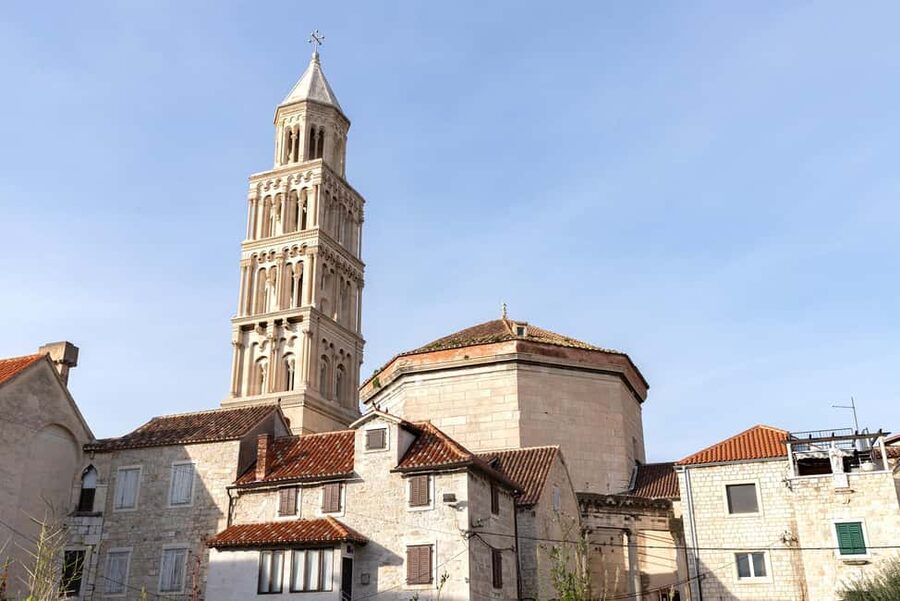
Split is not a museum behind glass. Diocletian’s Palace forms the heart of the modern city, and people still move through its gates, squares, lanes, and waterfront. That can make the past easy to overlook. You see a worn stone, a column, or a strange fragment built into a wall, then hurry on to the next café.
Josipa’s approach is meant to slow that process down. Rather than handing you a long list of emperors and construction dates, she helps you read the city’s physical clues. You learn to notice where Roman planning survives, where medieval changes begin, and how later residents adapted ancient rooms to ordinary life.
That approach matters in Split because the city’s story is layered. Roman, medieval, and modern details sit close together, sometimes in the same structure. A guide who understands art and archaeology can explain not only what you are looking at, but also why it looks that way.
The tour is conducted in English. It suits you best if you enjoy asking questions and looking closely. One of the strongest points is the chance to discuss details that usually receive little space in a standard city introduction.
More Walking Tours in Split
- Split: Old Town and Diocletian Palace Walking Tour
★ 4.9 · 4,727 reviews - Walking Tour of Split and Diocletian’s Palace
★ 5.0 · 2,588 reviews - Krka Waterfalls tour with Trogir Walking tour and Krka panoramic boat cruise
★ 5.0 · 1,659 reviews
Meeting Josipa at Strossmayer Park
The walk begins at the Strossmayer Fountain, in the center of Strossmayer Park. Locals also call the park Djardin. It sits just above the Golden Gate and close to the statue of Bishop Gregory of Nin.
This is a sensible starting point. You meet outside the palace walls, in a small green space, then approach the Roman complex with some room to get your bearings. Look for Josipa holding the yellow and blue Aspalathos Guided Tours sign.
Arrive with a little spare time. Summer traffic can be heavy when you come into Split, and the stated maximum wait at the meeting point is 10 minutes. The walk takes place rain or shine, so check the forecast and bring suitable footwear and rain protection when needed.
The route includes several steps. It is not suitable for wheelchair users or people with mobility impairments, and the activity information also says it is not suitable for people with hearing impairments. If any of those concerns apply to you, contact the provider before booking.
Gregory of Nin and the Golden Gate
The first stops introduce two important pieces of Split’s public and Roman identity. At the statue of Gregory of Nin, you get a quick look at one of the city’s most recognizable meeting points. The stop lasts about five minutes, so expect a brief explanation rather than a long lecture.
From there, Josipa takes you to the Golden Gate for around 10 minutes. This is one of the strongest places to begin reading Diocletian’s Palace as a planned Roman complex. The gate gives you a sense of how people entered the palace and how defensive architecture shaped movement through the city.
The route does not simply point out the gate and move on. Josipa explains the surrounding structure and encourages you to notice the traces left by later changes. That is where the art historian’s training adds value. You start with a famous sight, then look past the postcard view.
Sv. Martin, the Silver Gate, and Peristyle
The stop at Sv. Martin lasts about five minutes and brings you to one of the less obvious points on the route. This is the sort of short visit that can disappear from a self-guided walk, especially when you are trying to fit the palace, cathedral, waterfront, and market into one morning.
Next comes the Silver Gate, with another five minutes of guided sightseeing. Seeing more than one gate helps you understand the palace as a working urban plan instead of a collection of isolated monuments. Each opening controlled access and connected the interior to the surrounding city.
The tour then reaches Peristyle, with about 10 minutes set aside for the main square. This is likely to be one of the busiest parts of the walk, and it deserves the time. Here, columns, stone paving, and monumental scale make the Roman design easier to grasp.
You will also hear how the square fits into the later city. Split’s special character comes from this overlap: an imperial Roman setting that became part of a living medieval and modern town. Josipa’s role is to show you both layers at once.
Still Split, at a slower pace:
- Split: Krka Waterfalls Trip with Boat Cruise and Swimming
★ 4.8 · 10,519 reviews - From Split: Krka Waterfalls, Food & Wine Tasting Tour
★ 5.0 · 9,326 reviews - Blue cave, Mamma Mia and Hvar, 5 islands speedboat tour
★ 5.0 · 7,150 reviews - From Split: Krka Waterfalls, Food & Wine Tasting Tour
★ 4.9 · 6,598 reviews
Jupiter’s Temple and Street Let Me Pass
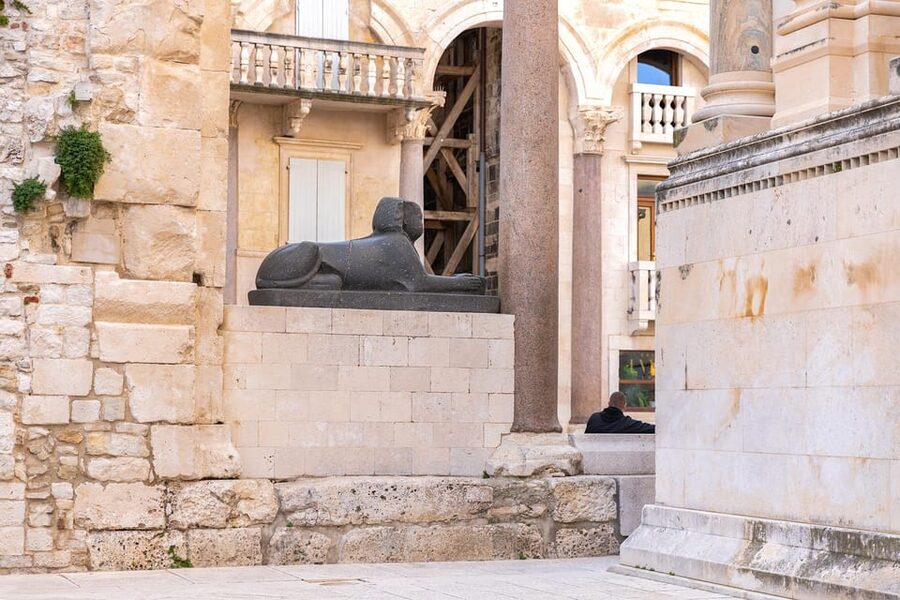
Jupiter’s Temple receives about 10 minutes of guided attention. The tour passes the site but does not include admission to paid attractions. That distinction is important: you get the guide’s explanation and practical advice, but you do not enter the temple as part of the $32 tour.
If you want to go inside paid sites later, Josipa can explain how to do so on your own. This keeps the walking tour moving and prevents the price from rising with multiple admission fees, but you should budget separately for any interiors you plan to visit.
Street Let Me Pass is a five-minute stop with a name that captures the narrowness of Split’s old lanes. The route here gives you a useful change of scale after the open space of Peristyle. You move from imperial ceremony to the tight passages of everyday urban life.
I like this contrast. It shows that Split is not only about grand columns and palace walls. The city also makes you adjust your pace, share narrow routes, and look up at details that would be easy to miss in a hurry.
Vestibul, Triklinij, and the Roman cellars
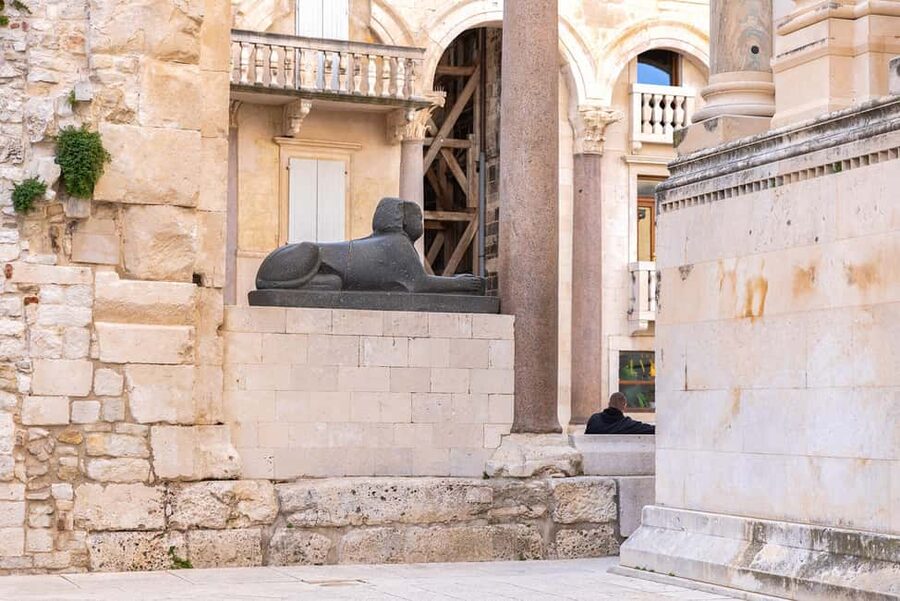
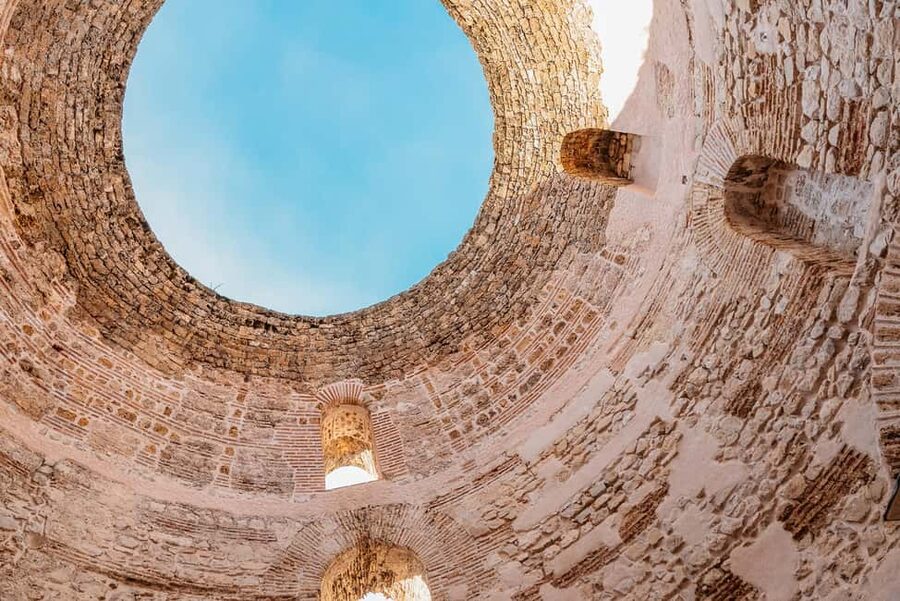
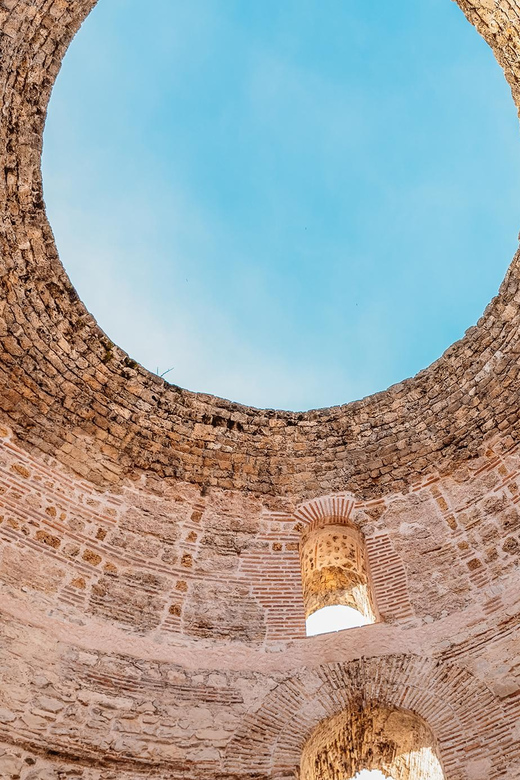
Vestibul gets about 10 minutes and includes time for photos. Its circular form and strong architectural presence make it one of the more memorable visual stops. Here, Josipa can help you connect the shape of the space with the palace’s wider design.
The five-minute visit to Triklinij adds another less familiar reference point. It is useful for you if you want more than the standard checklist of Peristyle, cathedral, and waterfront. These shorter stops also keep the walk moving, with no single place taking over the entire morning.
The route then reaches Diocletian’s Cellars for around 10 minutes. Again, the tour passes the paid site rather than entering it. The cellars are important because they reveal how the palace was organized and preserved, and Josipa gives you the background needed to decide if you want to return for a paid visit.
This is one of the tour’s practical strengths. You do not have to choose every admission before you understand what it contains. You first get the setting and the story, then decide how to spend your own time and money.
Riva and the modern face of Split
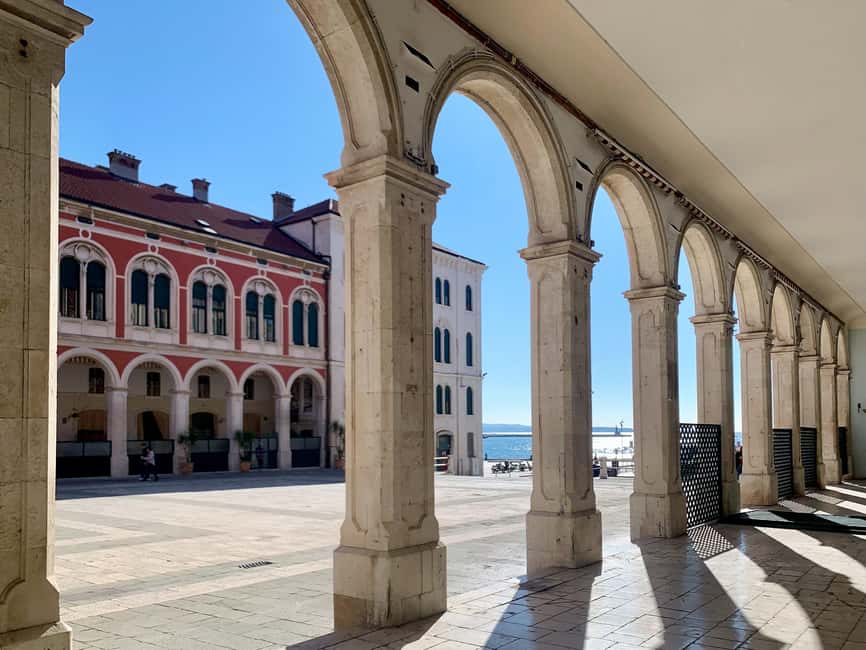
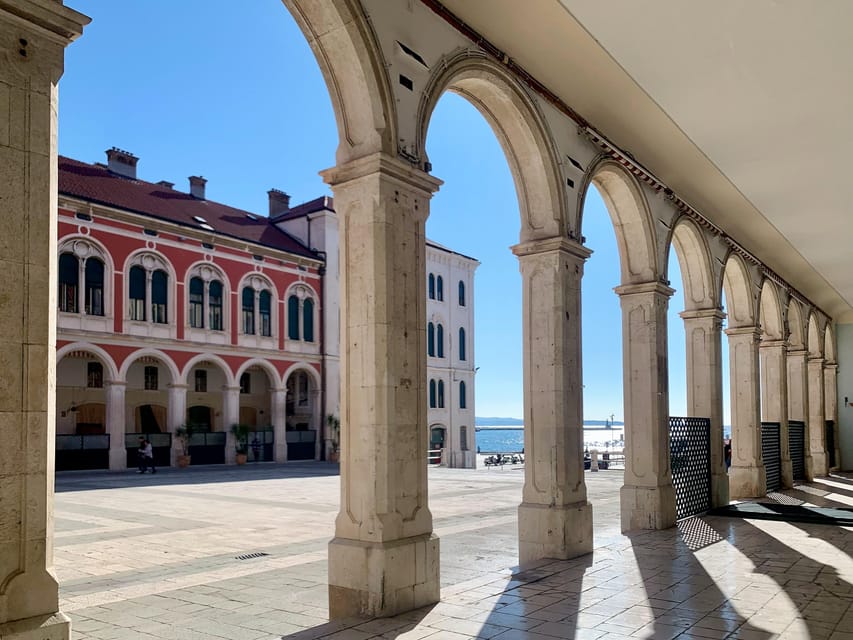
After the palace, the route opens toward Riva, Split’s waterfront promenade. The stop lasts about 10 minutes. This change of scene helps you see how the old center connects to the city’s public life today.
Riva is more than a place for a quick photograph. It gives you a chance to compare the enclosed palace streets with the open edge of the harbor. Josipa also uses the transition to explain how Split developed beyond the Roman walls.
A model of Split receives about five minutes. It can help you make sense of the city’s layout after walking through it at ground level. Maps and models are especially useful here because the historic center folds several periods into a compact area.
If you are visiting Split early in your stay, this portion of the walk should help with orientation. You can use the waterfront and old-town squares as reference points for later meals, shopping, or independent sightseeing.
Fruit Square, People’s Square, and the fish market

Fruit Square, or Voćni trg, receives a short guided visit. Its location and surrounding buildings show how Split’s public spaces changed as the city grew beyond the original palace plan. The square is a good reminder that the old town is not frozen in the Roman period.
People’s Square gets about 10 minutes, giving Josipa more time to explain the civic side of the center. The route here helps you compare spaces created for imperial power with places shaped by later public life.
The Split Fishmarket is another five-minute stop. This is a useful local detail because it shifts attention away from monuments and toward the ordinary systems that keep a city working. You will not spend long there, but it adds texture to the walk.
For me, these stops make the tour feel more grounded. You see the famous palace, then learn how the surrounding city functions as a real place. That balance is more useful than a tour that treats Split as a string of ancient ruins.
Republic Square and the walk toward Varoš
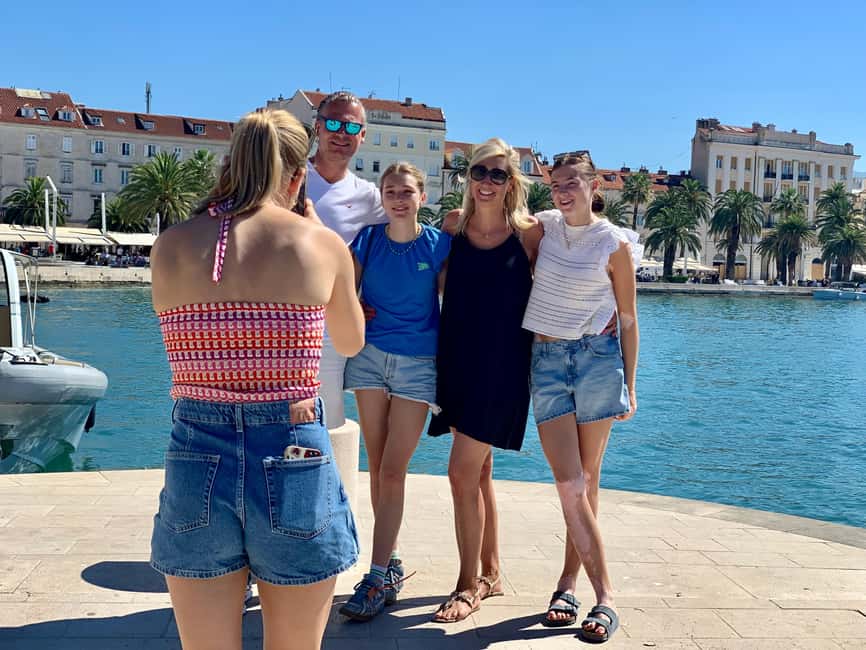
Republic Square receives around 10 minutes and gives the route a broad, open ending before it turns toward the older neighborhood of Varoš. The square is one of the central spaces included on the route, and Josipa uses it to connect the palace area with later urban development.
The experience is described as ending in Varoš, one of Split’s oldest and most authentic neighborhoods. The final drop-off locations are listed as Trg Šperun and Republic Square. The meeting information also says the activity ends back at the meeting point, so check the exact end point shown when you reserve.
Varoš is a fitting finish. Its preserved Roman-era elements have been reused over many centuries, and the neighborhood shows how people adapted old structures instead of clearing them away. You get a more intimate look at Split after spending much of the tour around its grandest monuments.
That ending also gives you a useful choice. If you want to continue exploring, you can ask Josipa for local advice about where to go next and when to visit other parts of Split or Croatia. The tour specifically promises practical suggestions, not just historical commentary.
What the $32 price includes
At $32 per person, the cost is reasonable if you value a strong guide and a small, conversational setting. The fee includes Josipa, a licensed local guide and the owner of Aspalathos Guided Tours. It does not include admission to the Substructures, Cathedral, Jupiter’s Temple, or other paid sites.
That pricing structure works well for an introductory walk. You pay for interpretation, orientation, and access to a carefully planned route, then choose your own paid visits later. If you already have a detailed plan for entering several monuments, remember to add those ticket costs.
The private option should appeal to couples, families, and small parties with specific interests. You can ask for more attention to architecture, archaeology, local life, or particular periods. The small-group option should offer a lower-cost way to keep the walk personal, with time for questions and conversation.
The tour has a rating of 4.9 from seven reviews, with special praise for Josipa’s friendly, cheerful, approachable manner. One detailed account highlights her ability to answer many questions, find an efficient route through Split’s alleyways, and point out things that are easy to miss. That is exactly the kind of guide you want in a city where a few wrong turns can cost you time.
Who should book this two-hour walk?
I would choose this tour if you are visiting Split for the first time and want the city to make sense before exploring alone. It is also a good match if you prefer history explained through buildings and streets rather than a fast recitation of dates.
You should be comfortable walking for two hours, handling steps, and moving over historic surfaces. The rain-or-shine policy makes sensible shoes and weather protection important.
This may not be the right choice if you want long interior visits. The tour passes paid attractions but does not enter them. It is also not designed for wheelchair users, people with mobility impairments, or people with hearing impairments.
Free cancellation is available up to 24 hours before the tour for a full refund, and you can reserve now and pay later. Starting times vary, so check availability for the date you want.
Should you book Josipa’s Split walking tour?
Book it if you want the famous sights plus the clues that explain how Split grew around them. The best reasons are Josipa’s art history background, her ability to answer questions, the private or small-group format, and the route’s finish in Varoš.
Skip it if your priority is entering every major paid monument during the same outing. In that case, use this walk as an introduction and return independently with admission tickets.
At $32, this is a solid choice for getting your bearings and learning how to look at Split. You should leave with more than photographs: you should understand why Roman walls, medieval lanes, working markets, and modern cafés all share the same city block.
FAQ
How long does the Split walking tour last?
The tour lasts two hours. Starting times vary, so check availability for your chosen date.
What language is the tour conducted in?
The live tour is conducted in English.
Where does the tour begin?
It begins at the Strossmayer Fountain in the center of Strossmayer Park, also called Djardin. Search for Strossmayer Park or Strossmayerova Fountain on your map.
How will I recognize the guide?
Josipa will be holding a yellow and blue Aspalathos Guided Tours sign.
Does the tour enter Diocletian’s Cellars, Jupiter’s Temple, or the Cathedral?
No. The tour passes these paid sites and includes explanations, suggestions, and instructions for visiting them later on your own.
Is the tour suitable for wheelchair users?
No. The activity includes unavoidable steps and is not suitable for wheelchair users or people with mobility impairments.
Can I cancel the booking for a refund?
Yes. You can cancel up to 24 hours in advance for a full refund. You can also reserve now and pay later.
Just added around Split
- Slatine – Island Hopping Excursion (Trogir/Blue Lagoon/Shipwreck)★ 4.0 · 24 reviews
- Krka Waterfalls & Primošten from Trogir, Seget, Čiovo & Kaštela★ 5.0 · 18 reviews
- Island Hopping Boat Excursion with Lunch (Trogir,Blue Lagoon, Šolta)★ 3.5 · 6 reviews
- From Trogir, Seget, Okrug: Krka Waterfalls & Šibenik Culture Tour★ 5.0 · 10 reviews
- From Split & Trogir: ATV Quad Tour on Island Čiovo★ 5.0 · 21 reviews
- Split: Blue Lagoon Boat Trip with Lunch, Wine and Snorkeling★ 5.0 · 3 reviews
- Split Sunset Stand Up Paddle Tour★ 5.0 · 16 reviews
- Split: Sunset Guided Kayaking Tour★ 4.8 · 71 reviews
Walking Tours, compared.
Walking Tour of Split and Diocletian’s Palace
Read our review →


Krka Waterfalls tour with Trogir Walking tour and Krka panoramic boat cruise
Read our review →
City Walls Early Morning or Sunset Walking Tour
Read our review →Browse the lists this tour appears in