
Reviewed · WALKING TOURS
Split City Walking Tour
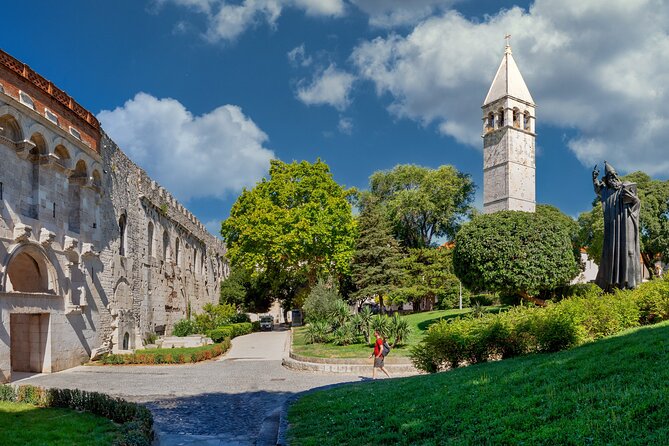
Split’s old center is a Roman palace you can walk through. This two-hour tour makes that unusual setting easier to understand, with stops at the Cathedral of Saint Domnius, Jupiter’s Temple, the Peristyle, Trg Braće Radić, and Benedictine monastery remains. I like the choice of morning or evening departures, and I like that the group is capped at 15 people.
The guide is the real reason to consider it. Past tours have featured guides such as Ana, praised for her warmth, clear explanations, and passion for Split. One booking even became a private tour for two people. The main drawback is simple: at $94.12 per person, this is not a bargain if you only want a quick stroll and a few photographs.
In This Review
- Key points to know before booking
- Why Split makes a walking tour worthwhile
- The Cathedral of Saint Domnius and a remarkable change of use
- Jupiter’s Temple and the Roman side of Split
- The Peristyle, the palace’s main stage
- Trg Braće Radić and the living city around the ruins
- A guide-led experience, not a self-guided audio walk
- Morning or evening: which departure fits better?
- Is $94.12 a fair price?
- Group size, clothing, and other practical points
- Who should book the Split walking tour?
- FAQ
- How long does the Split City Walking Tour last?
- What language is the tour offered in?
- Where does the tour begin?
- Where does the tour end?
- Is hotel pickup and drop-off included?
- What happens if the tour does not meet its minimum number of participants?
- Should you book it?
Key points to know before booking
- You walk through a real Roman palace: Diocletian’s Palace is not just a fenced monument. Its old spaces form the core of modern Split.
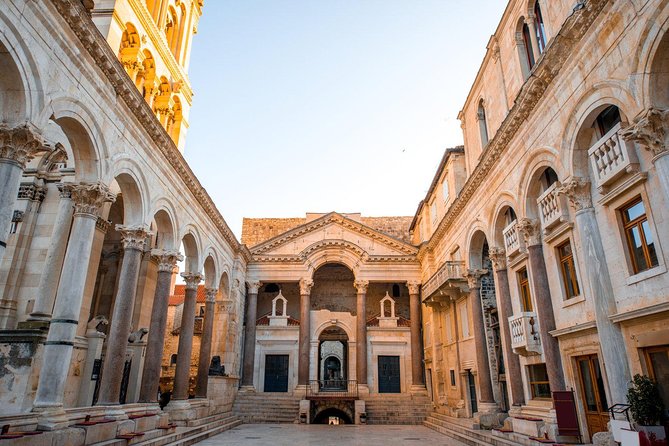
- The Peristyle is the tour’s central scene: This former palace courtyard links the city’s Roman past with its living streets.
- The former mausoleum became a cathedral: Saint Domnius offers one of the tour’s most striking examples of old and new sharing the same building.
- Small groups make questions easier: The maximum group size is 15, with the possibility of an even smaller group.
- Morning and evening times help with planning: You can fit the walk around your wider Split schedule.
- Dress properly for religious sites: Knees and shoulders must be covered, or entry may be refused.
Why Split makes a walking tour worthwhile
Split is easiest to understand on foot. The old center grew inside and around the palace built for Roman emperor Diocletian, so you are not simply moving from one isolated monument to another. Streets, homes, shops, churches, and ancient stonework occupy the same compact setting.
That makes a guide useful. Without context, the palace can feel like a maze of handsome stone lanes. With a good explanation, the layout begins to make sense. You can connect the emperor’s former quarters with the Peristyle, see how a Roman mausoleum became a Christian church, and recognize the remains of Roman worship beside later religious buildings.
I especially like the tour’s modest length. Two hours gives you a strong first look without taking over your day. You can use it near the beginning of your stay to get your bearings, or choose the evening option after a day of sightseeing. The route is entirely on foot, so wear shoes that can handle old paved surfaces and make sure you are comfortable walking for the full outing.
The tour begins at Ul. kralja Tomislava 15, 21000 Split and finishes at Diocletian’s Palace in central Split. Hotel pickup and drop-off are not included. That is not a major problem for most people staying in or near the center, but you should plan your own way to the starting point.
More Walking Tours in Split
- Split: Old Town and Diocletian Palace Walking Tour
★ 4.9 · 4,727 reviews - Walking Tour of Split and Diocletian’s Palace
★ 5.0 · 2,588 reviews - Krka Waterfalls tour with Trogir Walking tour and Krka panoramic boat cruise
★ 5.0 · 1,659 reviews
The Cathedral of Saint Domnius and a remarkable change of use
The first listed stop is the Cathedral of Saint Domnius, where you see one of the clearest examples of Split’s layered past. The building began as the mausoleum of the Roman emperor Diocletian and was later transformed into a Christian church.
That change is more interesting than a standard cathedral visit because the building’s purpose shifted so sharply. A structure made for an emperor’s burial became a place of Christian worship. Your guide can give this transformation meaning instead of leaving you to notice only the age of the stone.
The planned stop lasts about 10 minutes, and admission is listed as free. That short time suits the overall tour, which aims to introduce the main sights rather than offer an extended religious or architectural study.
You should pay attention to the practical clothing rule here. Places of worship and some museums require covered knees and shoulders for both men and women. Shorts and sleeveless tops may lead to refused entry. Smart casual clothing is requested, so bring a light layer or choose longer shorts and sleeves if you are touring in warm weather.
The cathedral stop may feel brief if you want a detailed look at every feature. I see that as a tradeoff rather than a flaw. The tour is designed to give you a clear framework for Split, not to replace a longer visit on your own.
Jupiter’s Temple and the Roman side of Split
Jupiter’s Temple is scheduled for about 15 minutes. This is where the Roman character of the old center becomes especially clear. The temple gives you a direct link to the religious world of the palace and to the beliefs that shaped life during Diocletian’s time.
The stop is described as a magical place of Roman heritage, but the useful point is how it fits into the larger story. You are not seeing an unrelated ruin. You are seeing part of the emperor’s palace complex and its ceremonial world.
I would use this part of the walk to ask questions. A small group gives you a better chance to hear the guide and ask for clarification without holding up a large crowd. The maximum is 15 people, and the strong feedback about the guides suggests that the human side of the tour is one of its best features.
The scheduled time is enough for an introduction, photographs, and a short explanation. It is not enough for a long archaeological lecture. If Roman religion is your main interest, you may want extra time at the site after the walk, but the tour should give you the essential connection between Jupiter’s Temple and the palace.
The Peristyle, the palace’s main stage
The Peristyle is the heart of the experience. This former palace courtyard is listed for about 15 minutes, along with remarkable spaces within the old emperor’s quarters.
This is where the tour’s different strands meet. You see the scale of the Roman complex, the formal character of its central space, and the way later Split grew around it. The Peristyle is not presented as a detached ruin. It is part of the city’s daily setting, which gives the visit a more immediate feel.
I like the way the guide’s role matters here. The courtyard can look impressive on its own, but the details help you read it. A good guide can explain how it related to the emperor’s rooms and why this part of the palace mattered. One guide was praised for covering the palace’s story without lingering too long in one area. That is exactly the right approach for a two-hour walk.
The Peristyle may be the busiest-feeling stop, especially during popular visiting times, though the supplied information does not promise a quiet visit. The evening departure could suit you if you prefer to explore after the day’s heat and activity, while a morning departure may work better if you want to continue sightseeing afterward.
Still Split, at a slower pace:
- Split: Krka Waterfalls Trip with Boat Cruise and Swimming
★ 4.8 · 10,519 reviews - From Split: Krka Waterfalls, Food & Wine Tasting Tour
★ 5.0 · 9,326 reviews - Blue cave, Mamma Mia and Hvar, 5 islands speedboat tour
★ 5.0 · 7,150 reviews - From Split: Krka Waterfalls, Food & Wine Tasting Tour
★ 4.9 · 6,598 reviews
Trg Braće Radić and the living city around the ruins
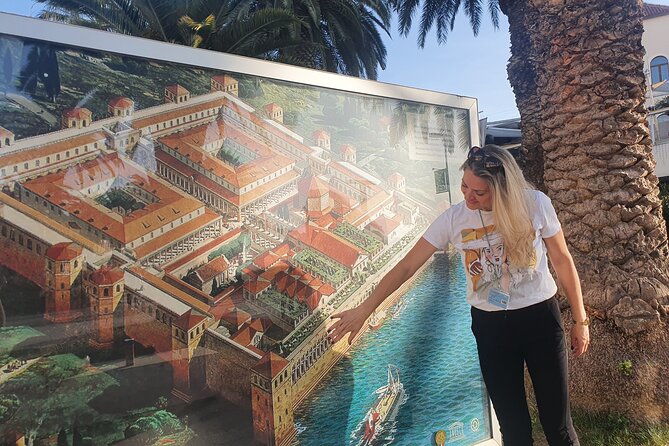
The highlights also include Trg Braće Radić, a square that helps move the experience beyond the main Roman monuments. This is important because Split is not only an archaeological site. It is a working city with public spaces, movement, and a lively street atmosphere.
A walking tour can show you how the old center functions as part of modern Split. You get more than a sequence of grand buildings. You see the relationship between ancient remains and the city around them.
The information provided does not give a fixed time for this square, so you should not expect a separate long stop with a detailed schedule. Instead, it appears as part of the broader walk through the center. That can be a strength if you want a natural sense of the city rather than a checklist of monuments.
The same applies to the Benedictine monastery remains. They add another layer to the route and help show how different periods occupy the same central area. You may find these remains especially useful if you like seeing how Roman, medieval, and later religious structures overlap, although the tour details do not promise a full interior visit or extended access.
A guide-led experience, not a self-guided audio walk
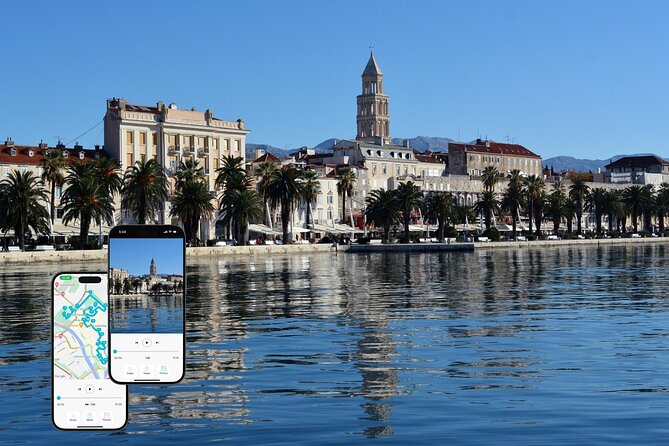
The tour includes a local guide and is offered in English. That matters in Split because the setting rewards explanation. A guide can point out the connection between individual sites and the former palace rather than leaving you to piece together the story from signs.
The best comments about the experience focus on the guides’ energy and personal attention. Ana is described as warm, informed, and passionate about the sites, history, and city. Another guide was praised for being upbeat and for making the palace’s story memorable. One outing became a private experience for a couple because only two people booked.
You should not assume every departure will be private. The stated maximum is 15 people, so the normal experience can still be a small-group tour rather than a one-on-one visit. That size is a sensible middle ground: large enough to operate regularly, but small enough for the guide to manage questions and keep the group together.
I would choose this tour if you prefer a human explanation to an audio guide. It suits you if you enjoy asking why a building changed purpose, how palace spaces fitted together, or what you are looking at in a square. It may be less appealing if you prefer to set your own pace, stop for long photographs, or spend most of your time inside one monument.
Morning or evening: which departure fits better?
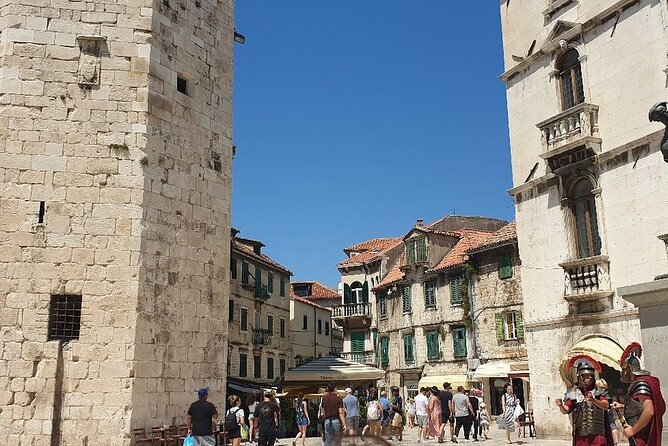
The choice of time is one of the tour’s practical strengths. A morning walk can help you understand Split before you explore more of the center on your own. It also leaves the rest of the day open.
An evening walk can work well if your daytime schedule is full. It lets you see the center when the city’s public spaces are active and gives the tour a different mood. The provided information does not promise sunset views, special lighting, or a meal, so you should choose the evening time for convenience and atmosphere rather than for a guaranteed spectacle.
Either way, allow time to reach the meeting point at Ul. kralja Tomislava 15. The tour does not include hotel transportation. The end point is Diocletian’s Palace, so you finish in the very area you have been studying, rather than being returned to a hotel or a distant transport hub.
A mobile ticket makes carrying your booking simple. Confirmation is received at the time of booking, which is useful when you are arranging a tightly planned visit.
Is $94.12 a fair price?
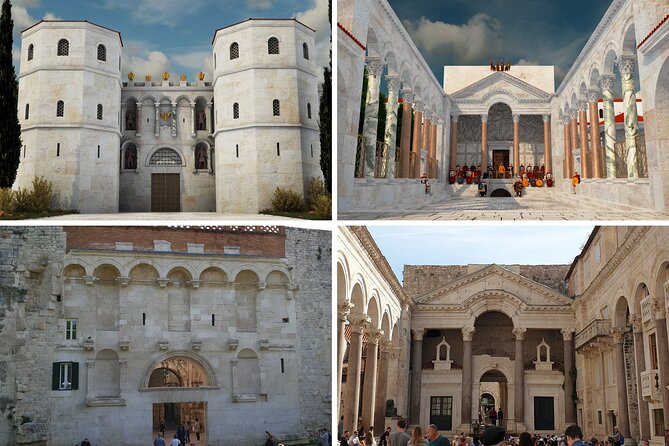
At $94.12 per person, the price is high for a two-hour walking tour if you judge it only by duration. There are no listed admissions, transfers, food, or hotel pickup included. You are paying mainly for the local guide, the small-group format, and the organized interpretation of Split’s central sights.
That can still be fair for the right visitor. If you have only a short stay, a strong guide can save you time and help you understand what you are seeing. The possibility of personalized attention is also valuable, especially if the group stays small. The high overall rating of 4.8 from five submitted ratings supports the idea that the guiding is the main attraction.
The value is weaker if you already know Diocletian’s Palace well or plan to wander independently with plenty of time. Since the listed stops have free admission, you could visit the area without paying for entry. The question is not access. It is whether you want a local person to organize the story and lead you through it.
For a first visit, I would compare the price with your schedule. If two hours of clear orientation will help you use the rest of your time better, the cost may make sense. If you are traveling on a tight budget, a self-guided walk may be the better choice.
Group size, clothing, and other practical points
The tour accepts a maximum of 15 participants. It requires a minimum number to operate, so a departure can be canceled if too few people book. In that case, you will be offered another date or experience, or receive a full refund.
Most people can participate, and service animals are allowed. The meeting area is near public transportation, but hotel pickup and drop-off are not part of the package.
The clothing rule deserves more attention than it usually gets. Wear smart casual clothing with knees and shoulders covered. This applies to both men and women, and it matters because you may be refused entry to a place of worship or selected museum if you ignore the rule.
You can cancel for a full refund up to 24 hours before the local start time. Cancellations or changes made less than 24 hours before the tour are not refunded or accepted. That gives you some flexibility, but it is worth checking your plans before the final day.
Who should book the Split walking tour?
I would recommend this experience to a first-time visitor who wants a clear introduction to Split in two hours. It is also a good fit for you if you like Roman sites but want to understand their later use, or if you prefer a guide who can bring buildings and squares together into one story.
It suits couples, solo visitors, and small groups who value conversation and personal attention. The morning and evening choices make it easier to fit around a wider itinerary, and the central finish leaves you in a useful part of town.
I would hesitate if you want a low-cost walk, a long cathedral visit, or complete freedom to wander. The tour moves at a planned pace, and the listed stop times are short. You should also avoid booking it in clothing that leaves your shoulders and knees uncovered.
FAQ
How long does the Split City Walking Tour last?
The tour lasts approximately two hours.
What language is the tour offered in?
The tour is offered in English.
Where does the tour begin?
It begins at Ul. kralja Tomislava 15, 21000, Split, Croatia.
Where does the tour end?
It ends at Diocletian’s Palace in Grad, Split.
Is hotel pickup and drop-off included?
No. Hotel pickup and drop-off are not included.
What happens if the tour does not meet its minimum number of participants?
If the tour is canceled because the minimum number is not met, you will be offered a different date or experience, or receive a full refund.
Should you book it?
Book this tour if you want a well-paced introduction to Split’s palace center, with a local guide explaining how Roman and Christian history share the same streets. The cathedral, Jupiter’s Temple, and Peristyle provide a strong core, while Trg Braće Radić and the Benedictine remains add more of the city beyond the headline monuments.
The price asks you to value the guide rather than admission tickets. For a first visit, that can be worthwhile, especially if you find a small group and a guide with Ana’s energy and care. If you are comfortable exploring independently, save the money and take your time. Otherwise, this is a focused way to get Split’s complicated center to make sense.
Just added around Split
- Walking Tour Split★ 4.7 · 61 reviews
- Unique vintage Tomos moped tour Split – Back to the ’80s★ 4.8 · 17 reviews
- Trogir: White Lagoon, Maslinica & Blue Lagoon Speedboat Tour★ 4.8 · 11 reviews
- Essential Diocletian’s Palace Tour for First-Time Visitors★ 4.8 · 19 reviews
- Split: Trogir Open Top Bus Trip + Free Split Walking Tour★ 4.1 · 17 reviews
- Trogir; Private walking tour of higlights of Trogir★ 4.7 · 3 reviews
- Trogir: Old Town Guided Walking Tour★ 4.6 · 76 reviews
- TROGIR: Blue Lagoon & 3 Islands Half-day Speedboat tour★ 4.6 · 28 reviews
Walking Tours, compared.
Walking Tour of Split and Diocletian’s Palace
Read our review →


Krka Waterfalls tour with Trogir Walking tour and Krka panoramic boat cruise
Read our review →
City Walls Early Morning or Sunset Walking Tour
Read our review →Browse the lists this tour appears in