
Reviewed · WALKING TOURS
Split: city center private walking tour 2 h
Split keeps its past in plain sight. This private two-hour walk brings you from the Riva waterfront into Diocletian’s Palace, medieval squares, markets, and narrow city streets, with a licensed guide shaping the pace around your interests. I especially like the personal format and the chance to see the Palace cellars, a striking Game of Thrones filming location. The main caution is timing: the listed stops add up to more than two hours, so you may need to keep moving or confirm the exact pace before booking.
I also like that the tour finishes back near the Riva, where you can continue exploring without arranging transport. Guides such as Zrinka, also referred to as Zinka, and Yvonna have been praised for their friendly style, clear explanations, humor, and excellent French. Still, this is mainly a historic center tour, not a long wandering route through every alley of Split.
In This Review
- Key points to know before booking
- Why Split is best understood on foot
- Meeting on Riva and getting your bearings
- Riva, Green Market, and the everyday side of Split
- Inside the Palace cellars
- Peristil and the imperial center
- Golden Gate and the statue of Gregory of Nin
- People’s Square and the medieval center
- Fishmarket and the return to Riva
- Is $141 good value for a private group?
- Timing, walking, and practical limits
- Who will enjoy this Split walk most?
- Should you book it?
- FAQ
- How long is the Split private walking tour?
- Where does the tour meet?
- What languages are available?
- Are entrance fees included?
- What should I wear to enter the cathedral?
- Is this a private group tour?
Key points to know before booking
- Diocletian’s Palace is the heart of the tour: You see the cellars, Peristil, the former imperial mausoleum, the Golden Gate, and nearby old-town squares.
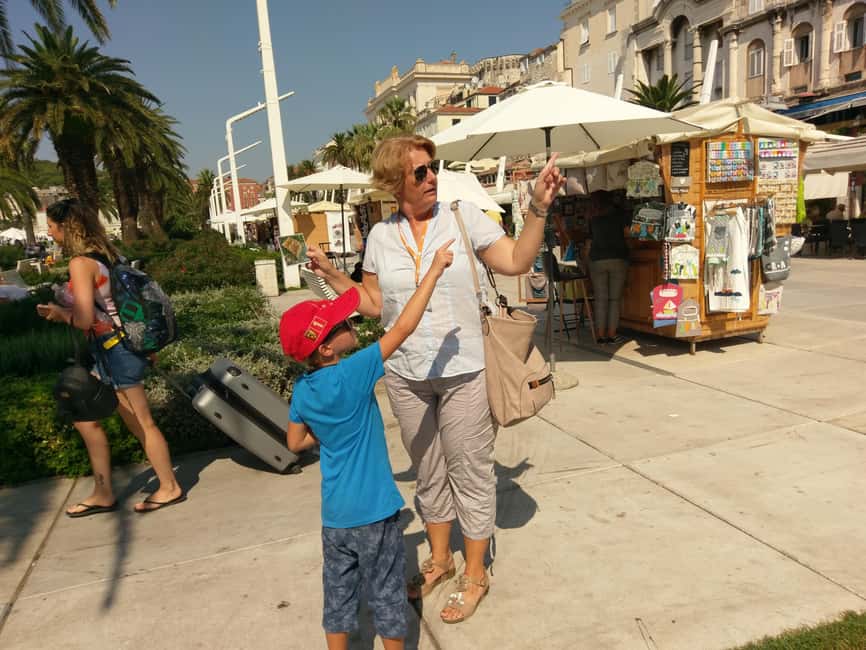
- A private group can suit your pace: The guide can tailor the walk to your interests, with space for questions and local suggestions.
- The route includes more than palace ruins: You also visit the Green Market, Fishmarket, People’s Square, Fruit Square, Old Town Hall, and Riva.
- The cellars cost extra: Entrance fees to the Palace cellars and Cathedral of St. Duje are not included in the $141 group price.
- Comfortable shoes matter: Expect uneven surfaces, stairs, and plenty of standing and walking, even though the activity is marked wheelchair accessible.
- Language choice is useful: The tour is offered in English, French, and Croatian.
Why Split is best understood on foot
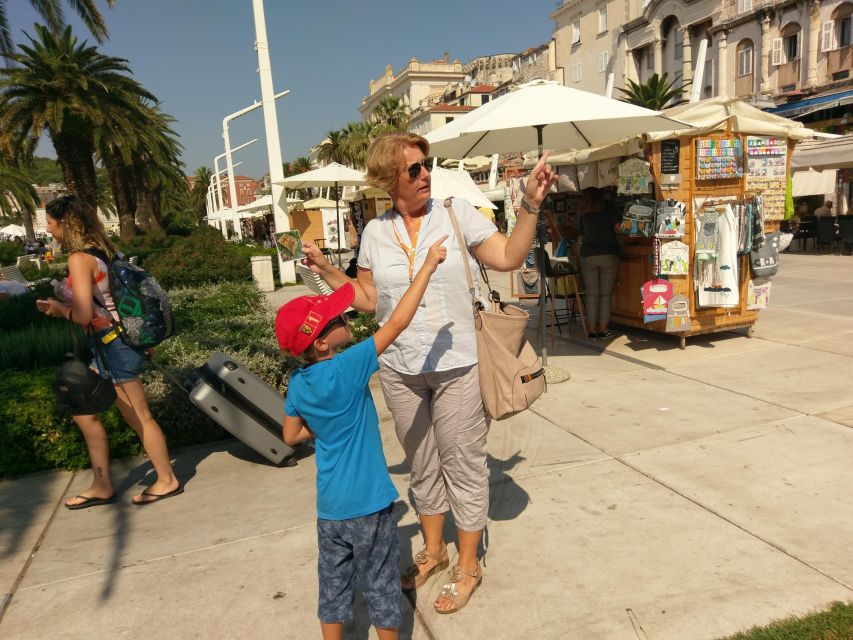
Split is not a museum city where the past sits behind glass. Its old center is part of daily life. People shop, eat, pass through courtyards, and meet for coffee inside and around buildings that began with a Roman emperor.
That is what makes this walk useful. You are not simply looking at old stones. You are learning how Diocletian’s Palace became the framework for a living city over roughly 1,700 years.
Split is the main urban, cultural, and transport center of Dalmatia. Its historic core is protected as a UNESCO World Heritage site, but the city does not feel frozen in time. Shops, markets, restaurants, cafés, and public squares fill the same area as Roman walls and medieval buildings.
I would book this early in a Split visit. A guide can help you understand the basic layout first, then you can return later for a meal, a market purchase, or a closer look at a place that caught your eye.
More Walking Tours in Split
- Split: Old Town and Diocletian Palace Walking Tour
★ 4.9 · 4,727 reviews - Walking Tour of Split and Diocletian’s Palace
★ 5.0 · 2,588 reviews - Krka Waterfalls tour with Trogir Walking tour and Krka panoramic boat cruise
★ 5.0 · 1,659 reviews
Meeting on Riva and getting your bearings
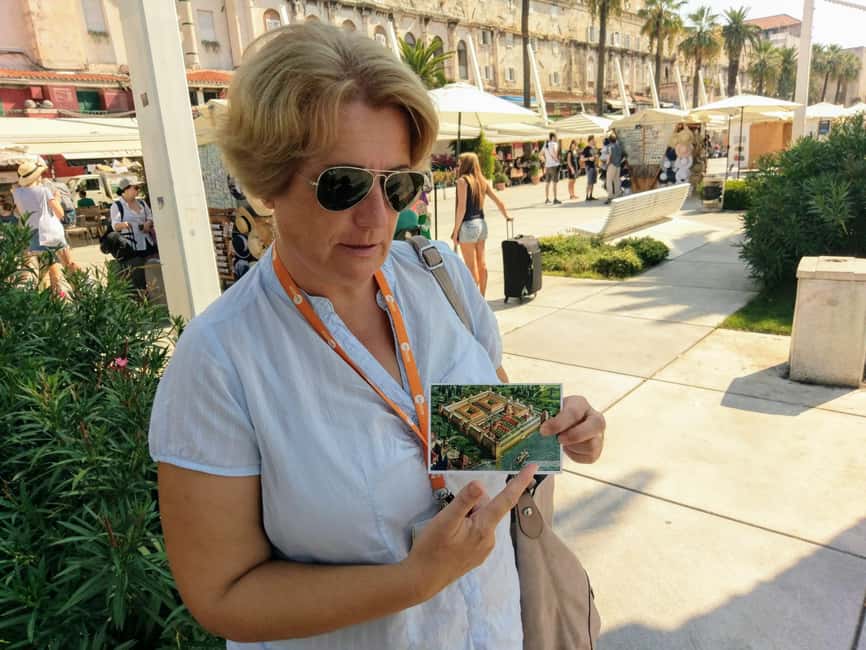
The meeting point is on the Riva promenade, in front of the entrance to the cellars of Diocletian’s Palace at Obala Hrvatskog narodnog preporoda 15b. A model of Split’s historic center is used as the starting location.
This is a sensible place to begin. The Riva is easy to recognize, and the model gives you a quick visual sense of the old city before you enter it. You can see how the Palace fits into the wider center instead of treating it as an isolated monument.
The tour also returns to this same area. That helps you plan the rest of your day. You can stay by the waterfront, walk back toward the old center, or use the Riva as a simple reference point.
There are no transfers included, so you need to reach the meeting point yourself. If you arrive by bus, car, or cruise transfer, allow enough time to find the promenade and the Palace entrance. The meeting address is precise, but central Split can still feel confusing the first time you enter it.
Riva, Green Market, and the everyday side of Split
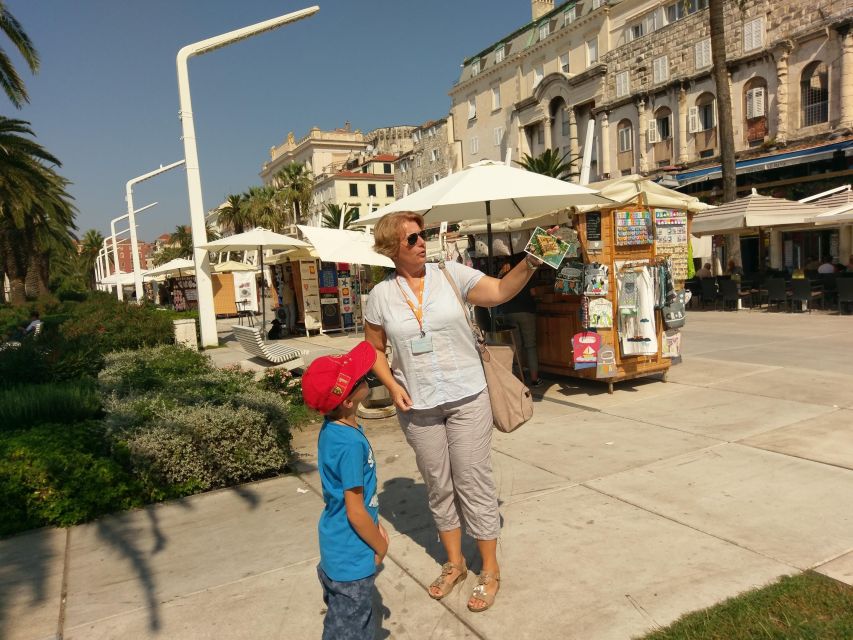
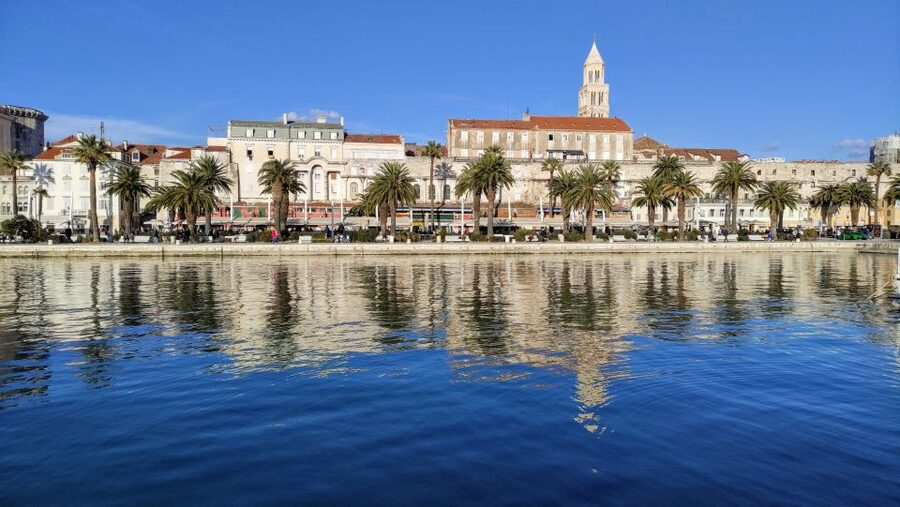
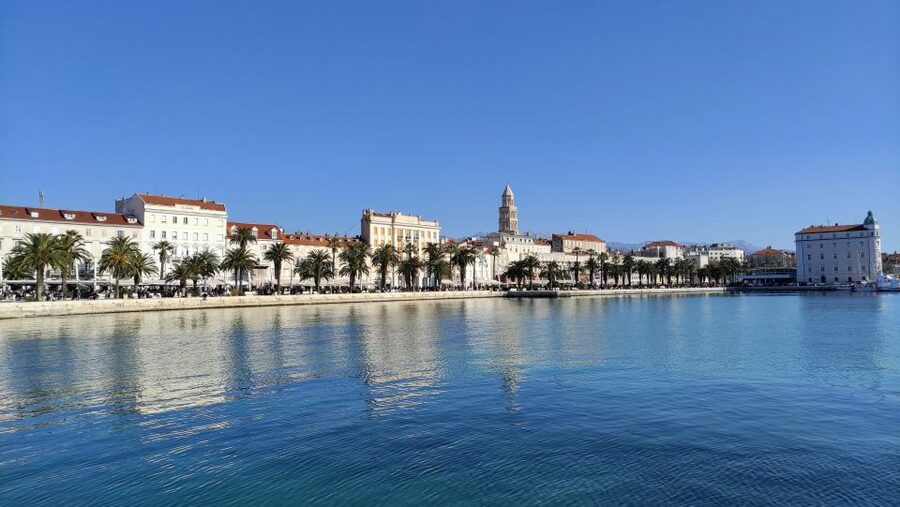
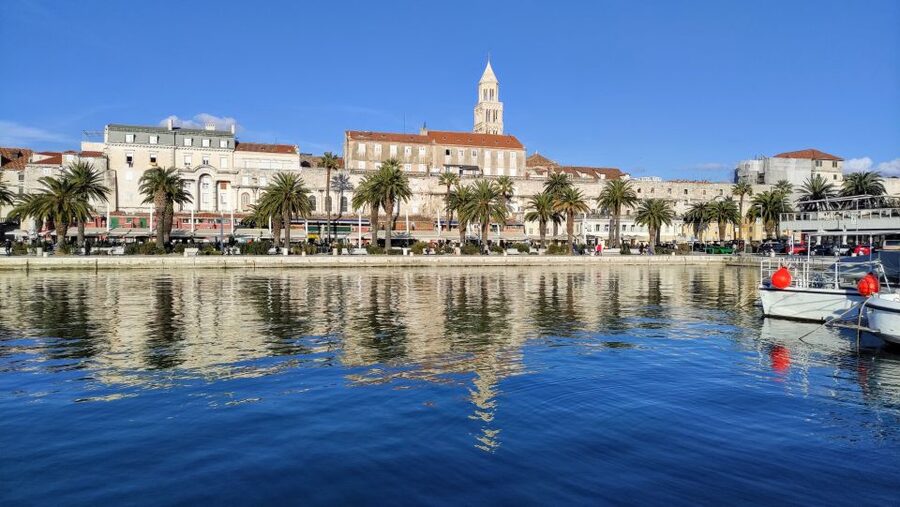
The Riva is more than a scenic waterfront. It is one of the city’s main social spaces, lined with cafés and restaurants and used as a starting point for life in the old center.
Beginning or ending here gives the tour a pleasant contrast. The Palace can feel dense and enclosed, with stone passages and courtyards. The Riva opens the view and lets you pause in a more relaxed setting.
The Green Market is scheduled for a short visit of about 10 minutes, including time for shopping. This is one of the more useful stops if you want to connect historic Split with present-day life. Markets show what people buy, eat, and carry home, not just what emperors built.
The timing is brief, so think of this as an introduction rather than a full market visit. If you want to shop carefully, you may need to return after the tour. The same advice applies to the Fishmarket later in the route.
Inside the Palace cellars
The cellars of Diocletian’s Palace are the tour’s central attraction. Their original architectural purpose was to support and raise the imperial residential area above them.
That practical role helps explain the whole Palace. You are not just walking through underground rooms. You are seeing the foundation that made the upper imperial complex possible.
The cellars are also connected with Game of Thrones, since they were used as a filming location. That detail may be especially appealing if you recognize the setting, but the rooms are worth seeing even if you have never watched the show. Their stone construction and preserved form give you a clearer sense of the Palace’s scale than a quick look at the exterior.
Entrance to the cellars is not included in the tour price. You should budget for that separate fee, although the exact amount is not provided here. Ask when booking or before the walk begins so there are no surprises.
The guide’s role matters most in this section. Without context, the cellars can seem like a series of stone chambers. With a good explanation, you can understand how the Roman plan shaped the city above.
Still Split, at a slower pace:
- Split: Krka Waterfalls Trip with Boat Cruise and Swimming
★ 4.8 · 10,519 reviews - From Split: Krka Waterfalls, Food & Wine Tasting Tour
★ 5.0 · 9,326 reviews - Blue cave, Mamma Mia and Hvar, 5 islands speedboat tour
★ 5.0 · 7,150 reviews - From Split: Krka Waterfalls, Food & Wine Tasting Tour
★ 4.9 · 6,598 reviews
Peristil and the imperial center
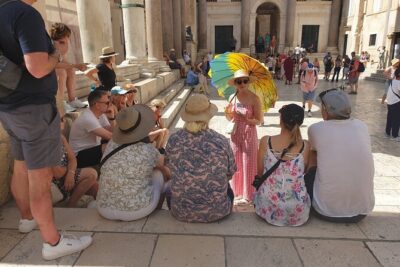
From the cellars, you walk up to Peristil, one of the most important spaces in the Palace. It was designed for Emperor Diocletian and for the cult of the living son of Jupiter.
This is where the imperial setting becomes easier to picture. The space links religion, ceremony, and power in a compact area. A guide can point out how the surrounding buildings worked together and why this courtyard has remained a key public space.
The planned visit lasts about 15 minutes. That is enough for an explanation and photographs, but not a long architectural study. If Peristil interests you most, use your private format to ask questions while you are there.
The Cathedral of St. Duje is next to this part of the Palace. St. Duje is the patron saint of Split, and the cathedral was originally Diocletian’s mausoleum. It is often described as the oldest cathedral in the world, though the wording depends on how the term cathedral is defined.
Entrance to the cathedral is extra. You must also cover your shoulders and knees to enter, so dress with that requirement in mind. The tour can still explain the building from outside if you are not dressed for entry.
Golden Gate and the statue of Gregory of Nin
The Golden Gate is one of the route’s photo stops. It gives you another view of how the Palace controlled movement through its walls and how the Roman structure still guides foot traffic today.
The planned stop is about 10 minutes, including guided explanation. That is a good amount of time for photographs and orientation, though you should not expect a long pause.
Nearby, the statue of Gregory of Nin provides another short stop and photo opportunity. The itinerary allows about 10 minutes here. The sequence gives you a break from architectural details and introduces a major Croatian cultural figure through a memorable public monument.
I like this part of the walk because it keeps the route varied. You move from imperial remains to religious buildings and then to monuments that belong to later Croatian history. Split makes more sense when these periods are seen together.
People’s Square and the medieval center
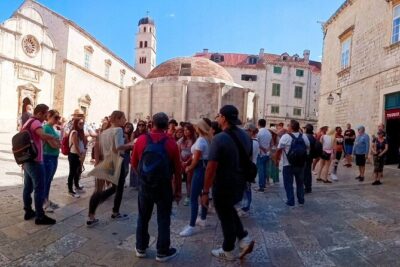
People’s Square, known as Pjaca, comes from the period of Venetian rule. It shows how Split grew beyond the original Palace walls and developed a medieval urban center around them.
The square includes time for a visit, photographs, and shopping. Unlike the cellars, this is a place where you can watch modern Split going about its day while standing among later historic buildings.
The Old Town Hall is scheduled as a short five-minute photo stop. That is enough for a quick explanation and a picture, but not a full interior visit. You may want to ask the guide to point out details that you could easily miss while walking through the square.
Fruit Square is given about 15 minutes. It is another chance to see the medieval and Venetian layers of the city, with time for a short visit and photographs. The tour’s value here is not just the square itself. It is the way the guide connects this later urban space to the Roman Palace next door.
One criticism is worth keeping in mind. A three-star assessment described the walk as having less actual street and alley walking than expected. That is a fair concern if you want a long, loose stroll through the old center. The route does include several squares and markets, but much of the time is spent at major sights with explanations.
Fishmarket and the return to Riva
The Fishmarket is the final substantial stop, with about 10 minutes for a visit. Like the Green Market, it adds a daily-life element to the historic route.
You may find this more interesting than another formal monument because it shows how Split’s center works as a real neighborhood. Still, the brief timing means you should not plan a full shopping trip during the tour.
The walk returns to the model of Split’s historic core near the Riva. That makes the finish practical. You can remain by the waterfront, head back into the Palace, or continue toward one of the markets and squares you only saw briefly.
Is $141 good value for a private group?
The price is $141 for a group of up to 20 people. That can be good value if you are sharing it with family or friends, since the cost is per group rather than per person.
For two people, the price works out to about $70.50 each. For a group of 10, it is about $14.10 each, and for 20 people it is about $7.05 each. The larger your party, the stronger the value becomes.
The licensed guide is included, but entrance fees to the cellars and Cathedral of St. Duje are not. You should include those costs when comparing this with a standard group walk.
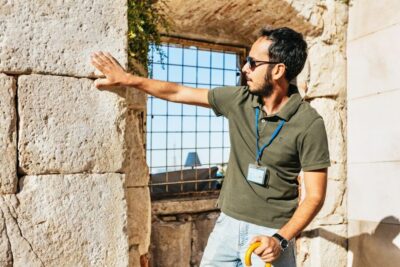
The private setup is the main reason to pay more. You can ask for explanations suited to your interests, request a slower pace when possible, and get local advice for the rest of your visit. Guides praised for warmth and humor, including Zrinka or Zinka and Yvonna, can make a major difference to how much you take in.
The tour has a rating of 4.6 from 22 ratings, with especially strong praise for friendly guides, clear explanations, French-language ability, and useful advice about Split. That pattern suggests the guide is the biggest part of the value, not the sheer number of stops.
Timing, walking, and practical limits
The advertised duration is two hours. At the same time, the listed stop times total roughly 150 minutes before allowing for movement between locations. Some visits may overlap, and timing can change, but you should clarify this point if you have a strict schedule.
This matters if you are fitting the tour between a cruise arrival, a meal reservation, or another activity. The tour is likely to feel brisk if every listed stop is covered within two hours.
Wear comfortable shoes. You will walk on uneven surfaces and may use stairs, especially around the Palace and its cellars. The activity is marked wheelchair accessible, but the uneven historic surfaces and route timing are worth discussing with the provider in advance if mobility is a concern.
The tour is available in English, French, and Croatian. French-speaking visitors have particularly strong reasons to consider it, since the guides praised in the feedback were described as speaking French perfectly and giving helpful advice for the rest of a trip.
Free cancellation and reserve-now, pay-later options are offered, but the supplied booking details give two different cancellation deadlines: one says 24 hours in advance, while another says 14 days before the tour. Check the exact terms at checkout before relying on the shorter deadline.
Who will enjoy this Split walk most?
I would recommend it to first-time visitors who want a clear introduction to Split without joining a large public group. Families and friend groups can also get good value from the flat group price.
It suits you particularly well if you care about:
- Roman and medieval buildings
- Diocletian’s Palace and its cellars
- A guide who can answer questions
- French, English, or Croatian commentary
- A flexible private pace
- Markets, squares, and local orientation
It may be less suitable if your main goal is a long, unstructured walk through side streets and alleyways. One piece of feedback specifically wanted more street walking, and that is a useful warning. This is a focused historic-center tour with set stops, not a free-form neighborhood ramble.
It is also not ideal if you want every admission included. The cellars and cathedral require separate entrance fees, and the cathedral has a dress code.
Should you book it?
Book this private Split tour if you want the Palace explained by a personable guide, especially when splitting the $141 price among several people. The route gives you the essential historic center, from the Riva and markets to the cellars, Peristil, Golden Gate, Pjaca, Fruit Square, and Fishmarket.
I would confirm three things before paying: the total cost of entrance fees, the actual cancellation deadline, and how the guide will fit the listed stops into two hours. If you want a friendly, tailored introduction to Split and do not mind a brisk route, this is a strong choice. If you want slow wandering through every alley, book something with a longer duration instead.
FAQ
How long is the Split private walking tour?
The advertised duration is two hours. The listed stop times add up to roughly 150 minutes, so you should confirm the exact pacing if you have a tight schedule.
Where does the tour meet?
You meet on the Riva promenade in front of the entrance to the cellars of Diocletian’s Palace, at Obala Hrvatskog narodnog preporoda 15b, 21000 Split, Croatia.
What languages are available?
The tour is offered in English, French, and Croatian.
Are entrance fees included?
No. Entrance fees to the Cathedral of St. Duje and the cellars of Diocletian’s Palace are not included.
What should I wear to enter the cathedral?
Your shoulders and knees must be covered to enter the Cathedral of St. Duje. Comfortable shoes are also recommended because the route includes uneven surfaces and walking.
Is this a private group tour?
Yes. It is a private group experience for up to 20 people, with a licensed guide and a route that can be tailored to your interests and pace.
Just added around Split
- Slatine – Island Hopping Excursion (Trogir/Blue Lagoon/Shipwreck)★ 4.0 · 24 reviews
- Krka Waterfalls & Primošten from Trogir, Seget, Čiovo & Kaštela★ 5.0 · 18 reviews
- From Trogir, Seget, Okrug: Krka Waterfalls & Šibenik Culture Tour★ 5.0 · 10 reviews
- Island Hopping Boat Excursion with Lunch (Trogir,Blue Lagoon, Šolta)★ 3.5 · 6 reviews
- From Split & Trogir: ATV Quad Tour on Island Čiovo★ 5.0 · 21 reviews
- Split: Blue Lagoon Boat Trip with Lunch, Wine and Snorkeling★ 5.0 · 3 reviews
- Split Sunset Stand Up Paddle Tour★ 5.0 · 16 reviews
- Split: Sunset Guided Kayaking Tour★ 4.8 · 71 reviews
Walking Tours, compared.
Walking Tour of Split and Diocletian’s Palace
Read our review →


Krka Waterfalls tour with Trogir Walking tour and Krka panoramic boat cruise
Read our review →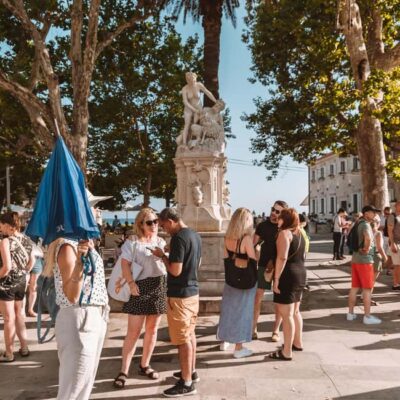
City Walls Early Morning or Sunset Walking Tour
Read our review →Browse the lists this tour appears in