
Reviewed · WALKING TOURS
Private Split Walking tour with a Photo session
Split’s ancient center becomes your photo studio. This private 2.5-hour walk combines the city’s Roman core with its lively squares, waterfront, and a professional lifestyle photographer, Ivan Gudić. I like the private pace, which lets you pause for questions and pictures, and I like the way the tour connects grand monuments with ordinary city life. The main concern is the price: at $300.73 per person, it makes the most sense for couples, families, or small groups who will value both the guide and the photographs.
The route is easy to follow, begins at the Riva, and ends back at the starting point. Jelena received especially warm praise for her clear English, punctuality, and friendly approach, while one disappointing no-show makes it wise to confirm your booking and contact details before arriving.
In This Review
- Key points to know before booking
- Why this private walk works well in Split
- Starting at the Riva, Split’s outdoor living room
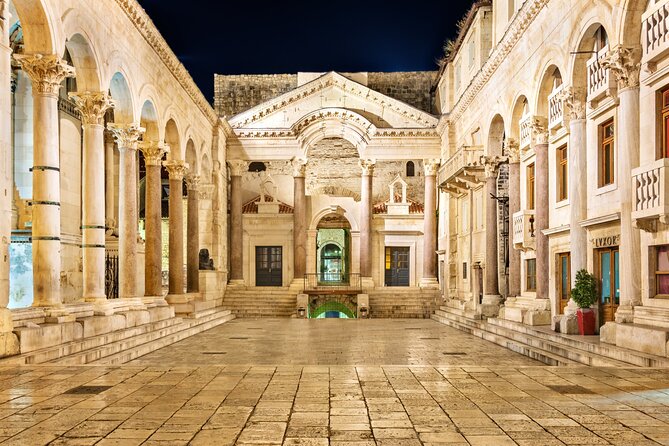
- Diocletian’s Palace, where the past still has a front door
- The Vestibule and its remarkable sound
- Cathedral of Saint Domnius and the layered center of Split
- Gregory of Nin, the toe that keeps getting rubbed
- People’s Square and the public life of old Split
- Fruit’s Square and Venetian-era Split
- Prokurative, Split’s grand western finish
- What the $300.73 price really buys you
- Timing, meeting point, and who should book
- Should you book the Split photo tour?
- FAQ
- How long is the private Split walking tour?
- Where does the tour start and finish?
- Is the tour private?
- Is a photographer included?
- Is lunch included?
- Can I cancel for a full refund?
Key points to know before booking
- Roman palace, living city: Diocletian’s Palace is not a museum sealed behind glass. Split’s daily life runs through its ancient walls.
- A private guide and photographer: Your group has a live guide plus professional lifestyle photographer Ivan Gudić.
- Eight compact stops: The route covers the Riva, Palace, Vestibule, Cathedral, Gregory of Nin, People’s Square, Fruit’s Square, and Prokurative.
- Flexible pace: Private touring gives you more room for questions, portraits, and photo stops than a large group walk.
- Good use of a short morning: The tour lasts about two and a half hours, leaving the rest of your day open.
- Check the cathedral fee: The details give both an included admission note and a separate price of 25 kuna, or about 3.50 euros, so confirm this before you go.
Why this private walk works well in Split
Split is compact, but it is not simple. Roman walls support medieval homes. Ancient columns sit beside cafés. Laundry hangs above stones walked by emperors, merchants, priests, and modern residents. A good guide helps you see those layers instead of simply pointing at old buildings.
This experience gives you that context while also producing photographs of your time in town. That combination is useful if you want more than a standard sightseeing stroll. You can listen to the story of Diocletian, then pause for a portrait in a Roman passage or a city square.
The private format matters here. Split’s old center has narrow lanes and irregular spaces, so a large group can feel awkward. With only your party, you can set the pace, ask for more explanation at a favorite stop, or spend less time somewhere that does not interest you.
The tour is offered in English and includes a live guide and Ivan Gudić as the professional photographer. The strongest feedback focuses on the guide’s manner. Jelena is described as punctual, easy to reach on WhatsApp, easy to understand, and willing to offer extra advice for time in Split. That last point can be very helpful when you have only one day in port.
One prior booking ended with no guide at the meeting point because the operator said it had not received the confirmation. It is a single serious warning, not a reason to dismiss the experience, but I would save the confirmation, check the meeting details, and contact the provider before the tour.
More Walking Tours in Split
- Split: Old Town and Diocletian Palace Walking Tour
★ 4.9 · 4,727 reviews - Walking Tour of Split and Diocletian’s Palace
★ 5.0 · 2,588 reviews - Krka Waterfalls tour with Trogir Walking tour and Krka panoramic boat cruise
★ 5.0 · 1,659 reviews
Starting at the Riva, Split’s outdoor living room
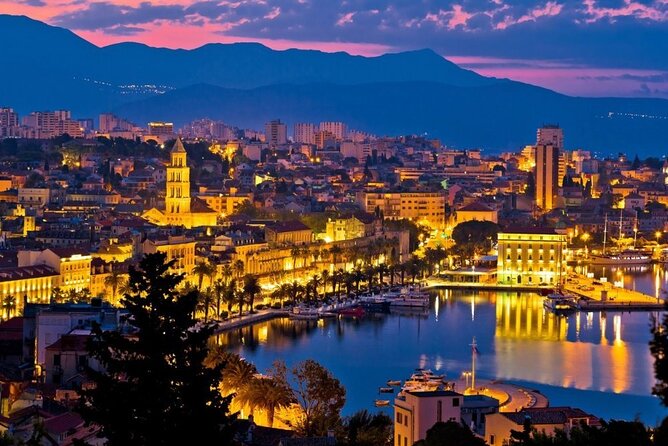
The walk begins near a bronze model of Split at the start of the Riva promenade. This is a practical meeting place because the waterfront is one of the city’s easiest landmarks to find.
The Riva is more than a row of palm trees and sea views. Locals use it as a public sitting room and a stage for concerts, holidays, city celebrations, carnival events, and New Year gatherings. The promenade is about 250 meters long and 55 meters wide, with cafés and restaurants along the water.
Your first ten minutes help set the tone. You get the basic shape of the city, learn where the historic center begins, and see how much modern Split depends on this public space. If you arrive early, the Riva also gives you a simple place to wait, though the tour information does not promise a specific café or indoor meeting point.
For photographs, the waterfront offers a natural opening scene. You can expect this part to be brief rather than a full harbor walk. The main purpose is orientation and a first set of images before you move into the Roman center.
Diocletian’s Palace, where the past still has a front door
The Palace receives about 30 minutes, making it the longest stop on the route. That is appropriate. This is the heart of Split and the place where the tour’s history becomes easiest to understand.
Diocletian built the complex as both a luxurious retirement residence and a military camp. It was divided by two main streets into four sections. The southern part held the emperor’s apartments and spaces for official and religious ceremonies. The northern section served guards, servants, storage, and military needs.
The rectangular complex measures roughly 215 by 180 meters. Four large corner towers, four gates, and smaller wall towers gave it the feel of a fortified settlement, while the imperial rooms had the comfort expected of a Roman ruler.
What makes the Palace especially valuable is its continued use. You are not only looking at a ruin. The ancient structure forms part of the town’s streets and buildings, so the tour can explain Roman planning while you watch present-day Split move around it.
A private guide can adjust the explanation to your interests. If you care about Roman engineering, you can ask about the layout and defenses. If you prefer human stories, you can focus on Diocletian’s decision to retire here and on the later changes that turned an imperial residence into a living city.
The drawback is that the Palace is not presented as a quiet archaeological site. The area can feel busy, and the mix of homes, shops, restaurants, and historic remains can make the original plan hard to read without guidance. That is exactly where a local guide earns the fee.
The Vestibule and its remarkable sound

The Vestibule gets about ten minutes, but it is one of the route’s most memorable spaces. From the outside it is rectangular. Inside, its ground plan is circular, creating a strong contrast as you pass through.
This was the entrance to the residential section of the Palace. In its original form, it had semicircular niches for statues, a large cupola decorated with colorful mosaic, and bright pale walls. The cupola is gone, but the room still gives you a clear sense of imperial scale.
Its later life is just as surprising. The space was used for homes, gardens, and poultry raising until relatively recent times. That detail brings the Palace down from the world of emperors and into the practical life of Split’s residents.
The Vestibule is also valued for its acoustics. Traditional Dalmatian a cappella groups often sing there, using the rounded chamber to carry their voices. The tour information does not guarantee a performance, so treat this as a possible feature rather than a promised concert.
For photography, the circular interior and doorway create strong architectural frames. Ten minutes is enough for a look and several photographs, though you may wish the schedule allowed longer if singing is taking place.
Still Split, at a slower pace:
- Split: Krka Waterfalls Trip with Boat Cruise and Swimming
★ 4.8 · 10,519 reviews - From Split: Krka Waterfalls, Food & Wine Tasting Tour
★ 5.0 · 9,326 reviews - Blue cave, Mamma Mia and Hvar, 5 islands speedboat tour
★ 5.0 · 7,150 reviews - From Split: Krka Waterfalls, Food & Wine Tasting Tour
★ 4.9 · 6,598 reviews
Cathedral of Saint Domnius and the layered center of Split

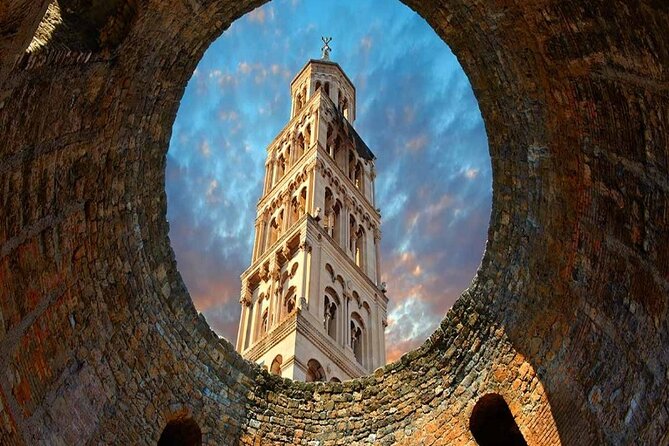
The Cathedral of Saint Domnius is a remarkable example of a building changing purpose across time. It occupies the former mausoleum of Diocletian, the Roman emperor associated with the persecution of Christians. In the seventh century, that mausoleum became a Christian cathedral.
Inside, Roman, medieval, and modern traditions share the same structure. The cathedral contains altars connected with Saint Domnius and Saint Anastasius, martyrs executed near Solin. Its walnut doors, carved by Andrija Buvina of Split, are another major feature.
The stop is scheduled for about 15 minutes. That gives you a useful introduction, but not a long independent visit. If you want to study the doors, altars, and interior closely, you may need to return later.
There is a fee issue to check. The information gives admission as 25 Croatian kuna, or about 3.50 euros, and says the ticket also covers the Temple of Jupiter and the Crypt of Saint Lucy. Elsewhere, this stop is marked as included, so the details are not fully consistent. Ask the operator before departure whether your ticket is covered or whether you should bring money for admission.
This is one of the tour’s strongest history stops because the change from imperial mausoleum to Christian cathedral is easy to grasp. You do not need a long lecture to understand the irony and importance of the building.
Gregory of Nin, the toe that keeps getting rubbed

Outside the Golden Gate stands Ivan Meštrović’s large statue of Gregory of Nin. Gregory was a medieval bishop who argued for the use of Croatian in Catholic services rather than Latin. The issue was practical as well as cultural: worshippers could understand the words being spoken.
The statue was made in 1929 to mark a thousand years since Gregory’s defense of Croatian culture. Its most famous feature is the polished big toe. Local custom says rubbing it brings good luck or grants a wish.
The visit takes about ten minutes and adds a welcome touch of humor after the weightier Palace and Cathedral. You can hear how language, faith, and national identity overlap in Croatian history, then take part in one of Split’s simplest rituals.
The statue is outside, near one of the Palace’s main gates, so this is also a helpful point for understanding how the Roman complex connects with the later city.
People’s Square and the public life of old Split
Narodni Trg is officially the People’s Square, though locals call it Pjaca. It was first recorded in the 13th century as Saint Lawrence’s Square and became the first settled area outside Diocletian’s Palace.
The square was once a center of political power. The Old Town Hall, now an exhibition center, served as the seat of city government. Palaces belonging to families such as Cambi, Pavlović, Nakić, Ciprianis, and Karepić line the area.
You get about 15 minutes here. That is enough to look at the Gothic town hall, hear how the square developed, and notice how its role continues. Bars, restaurants, and shops now fill the same space where civic business and noble life once shaped the city.
I like this stop because it keeps the tour from becoming only a Roman history lesson. You see the medieval and later city taking form beyond the Palace walls. It also gives the photographer a more social setting, with façades, doorways, and open public space.
Fruit’s Square and Venetian-era Split
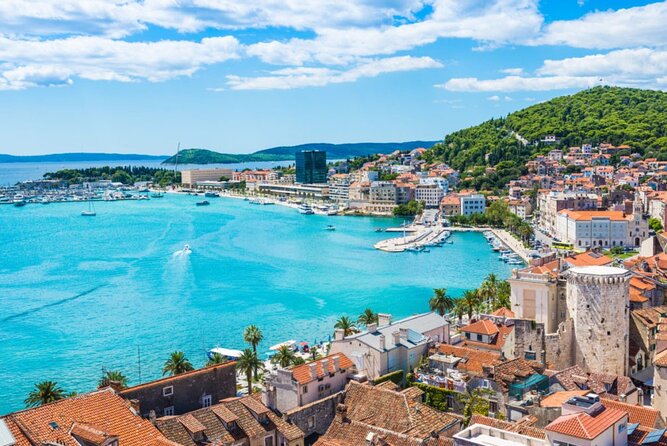
Fruit’s Square, officially Trg Brace Radic, is smaller but crowded with stories. Its most obvious landmark is the octagonal Venetian tower, built in the 15th century as part of the town’s defenses.
Across from it is the former Milesi family palace, known for its Baroque façade. The building is described as one of Dalmatia’s best examples of that style. In front of the palace is a monument to Marko Marulić, a Split citizen and major Croatian writer and intellectual of the 15th century.
The square is also linked to Ivan Meštrović through the monument. That gives you a second chance to connect the modern sculptor with Split’s older cultural figures.
This ten-minute stop is compact and visually strong. You can expect a quick explanation of the tower, palace, and statue rather than a long architectural study. It is a good place for photographs with a more decorative city backdrop.
Prokurative, Split’s grand western finish
The final stop is Prokurative, officially Republic Square, just west of the Riva. Its neo-Renaissance buildings and repeated arches recall Venice, especially Saint Mark’s Square.
Antonio Bajamonti, one of Split’s best-known mayors, began the project in the mid-19th century. He wanted the city to show its strong Italian cultural ties, so the design uses Venetian-style colonnades along with references to ancient and Renaissance art.
Bajamonti also built a theater here, though it was later destroyed by fire. Today the square remains a setting for cultural events and the city’s pop music festival, with bars and restaurants around its edges.
The tour allows about ten minutes at Prokurative. It is a fitting closing scene because it brings you back toward the Riva and shows another version of Split: not Roman, not medieval, but shaped by later Mediterranean ambitions.
What the $300.73 price really buys you
At $300.73 per person, this is expensive for a two-and-a-half-hour walking tour if you only want historical commentary. The value depends on how much you want the private format and professional photographs.
You are paying for a live guide, a private group, and Ivan Gudić as a professional lifestyle photographer. For a couple who wants meaningful holiday portraits, that can be worthwhile. For a larger family or group sharing the private booking, the cost per person may feel easier to justify.
The tour also saves you time. It covers the major central sights without taking the entire day, and the route ends back at the meeting point. You can then eat lunch, visit another site, return to the Cathedral if you want more time, or continue exploring on your own.
Lunch is not included. Cathedral-related admission may also require a separate payment, so include those costs when comparing the tour with a basic walking tour.
Timing, meeting point, and who should book
The start is at Obala Hrvatskog narodnog preporoda, near the beginning of the Riva and the bronze city model. The meeting point is intended to be easy to find, and the end is back at the same place.
The published operating information lists Monday hours from 9:00 a.m. to 8:30 p.m. The experience is often reserved about 13 days ahead, so booking roughly two weeks before your visit is sensible, especially if you need a particular time.
This tour suits you best if:
- You want a private introduction to Split rather than a large group walk.
- You care about having professional photographs of your visit.
- You have about half a day and want the rest of the day free.
- You enjoy Roman, medieval, religious, and local cultural history together.
- You appreciate a guide who can offer extra suggestions for the rest of your stay.
It may not suit you if you want a long, detailed interior visit at every monument, or if $300.73 per person feels too high for a short walk. The route is also not designed as a full-day archaeological tour.
Most participants can take part, and service animals are allowed. The activity is near public transportation. Free cancellation is available up to 24 hours before the start, but late cancellations are not refunded. Poor weather or failure to reach the minimum group size can lead to a new date, another experience, or a full refund.
Should you book the Split photo tour?
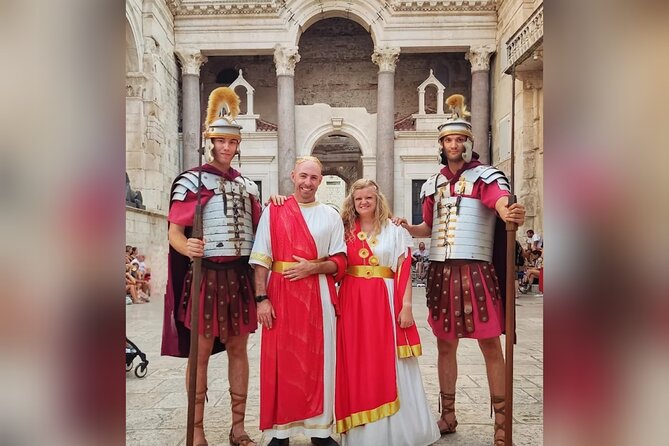
I would book this if you are traveling as a couple, family, or small private group and want both a well-explained first look at Split and polished photographs to take home. Jelena’s friendly, clear guiding style received especially strong praise, and the possible Roman costume photo idea adds a playful touch for people who enjoy a bit of theater.
I would hesitate if you mainly want the cheapest way to see Diocletian’s Palace. The price is high for the duration, and the Cathedral admission details need clarification. Confirm the booking before arrival, ask about the cathedral ticket, and make sure you are comfortable paying for the photo service as well as the guiding.
For the right group, this is less a basic walking tour than a short private portrait session set inside one of Europe’s most unusual historic centers.
FAQ
How long is the private Split walking tour?
The tour lasts approximately 2 hours and 30 minutes.
Where does the tour start and finish?
It starts at Obala Hrvatskog narodnog preporoda in Split, near the beginning of the Riva by a bronze model of the city. The activity ends back at the meeting point.
Is the tour private?
Yes. Only your group participates in the private activity.
Is a photographer included?
Yes. The experience includes a live guide and private professional lifestyle photographer Ivan Gudić.
Is lunch included?
No. Lunch is not included in the tour price.
Can I cancel for a full refund?
Yes, if you cancel at least 24 hours before the experience start time. Cancellations made less than 24 hours in advance are not refunded.
More Photography Sessions in Split
- Private rafting on Cetina river with caving & cliff jumping,free photos & videos
★ 5.0 · 66 reviews - Private Vacation Photography Experience in Split, Croatia
★ 5.0 · 47 reviews - Split Private Tour with Professional Photos
★ 5.0 · 16 reviews - Split: Photographer for your holidays!
★ 4.8 · 14 reviews
Just added around Split
- Walking Tour Split★ 4.7 · 61 reviews
- Unique vintage Tomos moped tour Split – Back to the ’80s★ 4.8 · 17 reviews
- Trogir: White Lagoon, Maslinica & Blue Lagoon Speedboat Tour★ 4.8 · 11 reviews
- Essential Diocletian’s Palace Tour for First-Time Visitors★ 4.8 · 19 reviews
- Split: Trogir Open Top Bus Trip + Free Split Walking Tour★ 4.1 · 17 reviews
- Trogir; Private walking tour of higlights of Trogir★ 4.7 · 3 reviews
- Trogir: Old Town Guided Walking Tour★ 4.6 · 76 reviews
- Trogir: Blue Lagoon, Maslinica, and Solinska Bay Boat Tour★ 4.9 · 88 reviews
Walking Tours, compared.
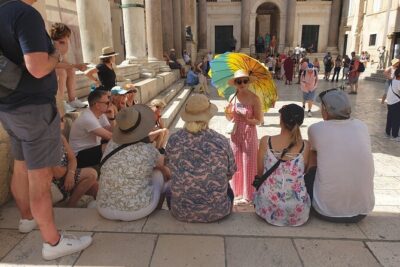
Walking Tour of Split and Diocletian’s Palace
Read our review →
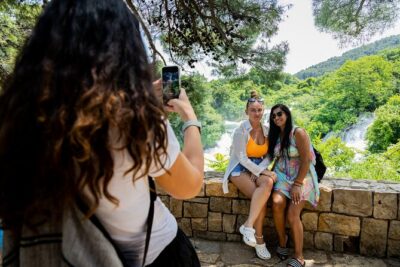
Krka Waterfalls tour with Trogir Walking tour and Krka panoramic boat cruise
Read our review →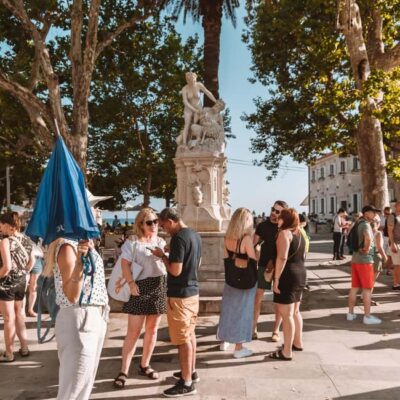
City Walls Early Morning or Sunset Walking Tour
Read our review →Browse the lists this tour appears in