
Reviewed · DAY TRIPS
Day trip to Nin and Zadar
Two Adriatic towns, one long day. This 13-hour trip from Zagreb gives you a practical way to reach Nin and Zadar without renting a car or arranging several separate visits. The route combines old churches, Roman remains, sandy beaches, healing mud, a working salt museum, and Zadar’s famous Sea Organ.
I especially like the small maximum group of 12, which should make the long ride and walking stops more manageable. I also like that private air-conditioned transport and most admission fees are included, so the advertised price of $333.29 covers more than just a seat in a van. The main drawback is the schedule: Nin and Zadar are far from Zagreb, so you should expect a full, tiring day with limited free time.
The guide can make or break a trip like this. Domagoj receives especially strong praise for being friendly, informative, flexible, and sympathetic. That matters here because the appeal is not just seeing the sights, but understanding why these modest coastal towns matter to Croatian history and culture.
In This Review
- Key points to know before booking
- Why Nin and Zadar make a good pair
- Nin: a small town with an unusual setting
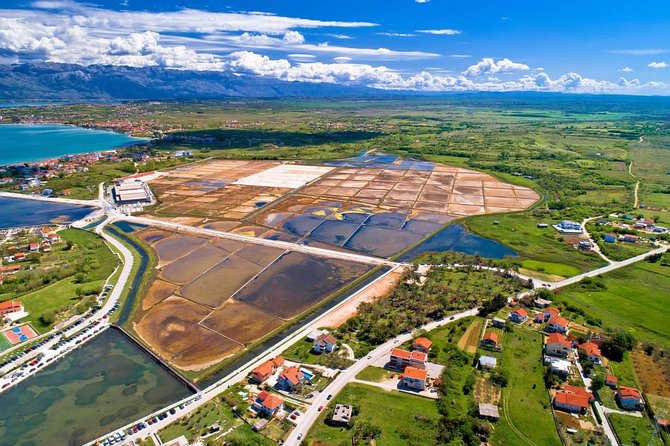
- Solana Nin: where salt becomes the main attraction
- St. Nicholas Church and Nin’s Croatian story
- Zadar: Roman remains, medieval churches, and a modern waterfront
- St. Donatus: Zadar’s most unusual church
- Cathedral of St. Anastasia and Zadar’s religious center
- The Sea Organ: Zadar’s best final stop
- Transport, group size, and the reality of a 13-hour day
- Is $333.29 a fair price?
- Who should book this day trip?
- Should you book it?
- FAQ
- Where does the tour start?
- Does the tour provide pickup and drop-off?
- How long does the experience last?
- What is the maximum group size?
- Is transportation included?
- Are admission fees included?
- Is lunch included?
- Does the tour visit both Nin and Zadar?
- Are service animals allowed?
- What happens if the tour is canceled because of bad weather?
Key points to know before booking
- Nin gives you several experiences in one stop: sandy beaches, healing mud, old churches, and a historic saltworks.
- Solana Nin includes admission: you can visit the salt museum and salt house without paying another fee on the spot.
- Zadar packs major sights into a walkable old city: expect the Roman Forum, St. Donatus, the cathedral, and the Sea Organ.
- The group is capped at 12 people: this is more personal than a large coach excursion and suits anyone who values direct contact with a guide.
- The tour starts at 8:00 a.m. and lasts about 13 hours: plan for a long day, with lunch not included.
- Domagoj is a major strength: his warm manner and flexibility are particularly useful on an ambitious route like this.
Why Nin and Zadar make a good pair
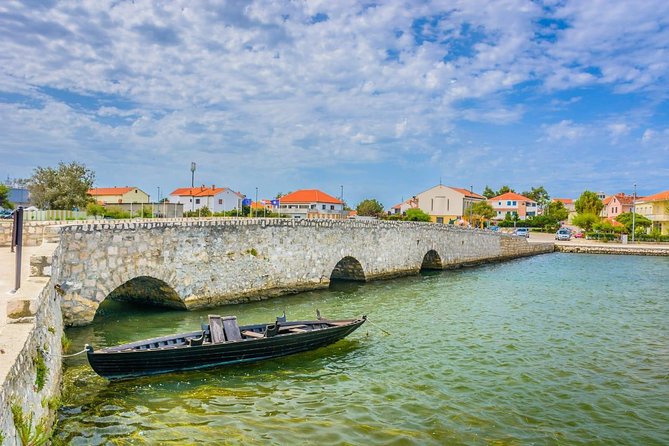
Nin and Zadar are close enough to combine, but they offer different moods. Nin is small, low-key, and tied closely to salt production, sandy beaches, and early Croatian religious history. Zadar is larger and more urban, with Roman remains, medieval churches, and modern public art along the waterfront.
That contrast gives the day a useful rhythm. You begin with a town where the setting is part of the story, then move to a city whose past appears in stone at nearly every turn. You are not spending the whole day looking at similar churches or repeating the same type of old-town walk.
The route also solves a common problem. From Zagreb, reaching this part of the coast independently takes planning, driving, and a willingness to spend many hours behind the wheel. With private transportation and pickup and drop-off in Zagreb, you can leave the route planning to someone else.
Still, do not mistake this for a relaxed coastal holiday. The advertised duration is about 13 hours, and the itinerary includes roughly three hours in Nin, three hours in Zadar, 90 minutes at Solana Nin, and several shorter church visits. Add the road time between Zagreb and the coast, and this is best treated as a concentrated introduction rather than a slow exploration.
More Day Trips in Zagreb
- From Zagreb: Plitvice & Rastoke Guided Day Trip with Ticket
★ 4.9 · 2,955 reviews - Plitvice and Rastoke day trip from Zagreb w/ticket (guar. dep.)
★ 5.0 · 804 reviews - From Zagreb: Plitvice Lakes Guided Group Day Trip
★ 4.6 · 613 reviews
Nin: a small town with an unusual setting
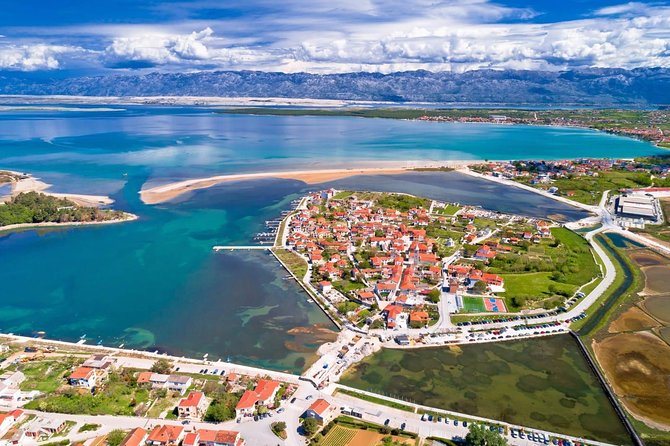
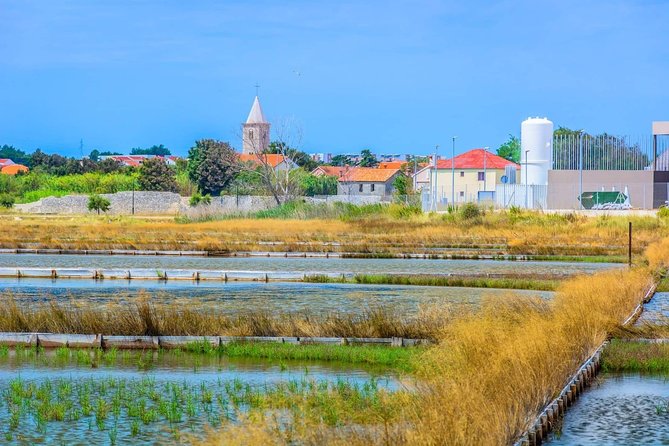
Nin sits in a lagoon in Zadar County, on the Adriatic coast. The setting is a key part of its appeal. Instead of a dense waterfront city, you get a smaller place surrounded by shallow coastal water and sandy beaches.
The three-hour Nin visit gives the guide enough time to introduce the town and its cultural landmarks without making you rush through every stop. You can expect to hear about Nin’s role in Croatian history and see several churches connected with the town’s past.
One nearby attraction is Queen’s Beach, known for its healing mud. The information provided for the tour does not promise a mud treatment or a swimming stop, so you should think of this as a chance to see and learn about the area rather than a guaranteed beach day. Bring sensible walking shoes, and if you hope to spend time outdoors, check the weather before leaving.
Nin may appeal most to you if you prefer places with a strong sense of location. The lagoon, sand, and small-town scale give the visit a different feel from Zadar’s stone streets and waterfront promenade.
Solana Nin: where salt becomes the main attraction
The visit to Solana Nin lasts about an hour and a half and includes admission. This is one of the more unusual parts of the day because it focuses on traditional salt production rather than another standard monument.
Solana Nin is both a salt factory and a museum space. The saltworks is described as more than 1,500 years old, with archaeological findings linked to the Liburnians, an ancient people of the eastern Adriatic. Between 70,000 and 100,000 people visit Solana Nin each year, which gives you an idea of its importance as a local attraction.
The salt museum and salt house help explain how salt has shaped work and trade in the area. You are not simply looking at an old building. You are seeing an industry tied to the natural conditions of the lagoon and the coast.
I like this stop because it adds a practical layer to the day. Churches and Roman ruins tell you about rulers, religion, and public life. The saltworks shows how people made a living from the coast. That is often the sort of detail that makes a place easier to remember.
The only limitation is that the tour information does not spell out exactly how much of the facility is guided or how much time is spent outdoors. Your experience may depend on the guide’s explanation and the operating conditions on the day. Since admission is included, at least you will not need to weigh an extra entry fee after arriving.
St. Nicholas Church and Nin’s Croatian story

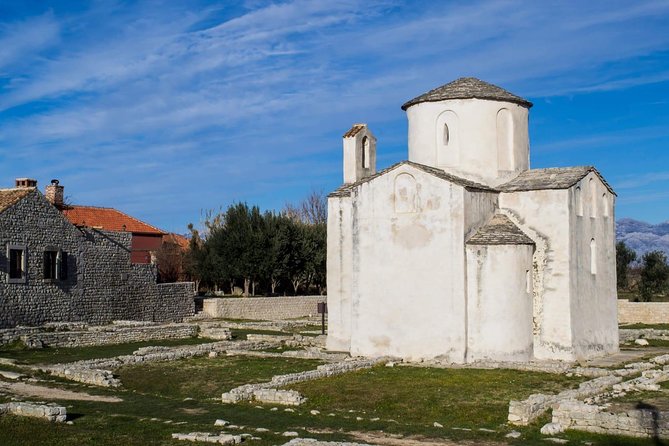
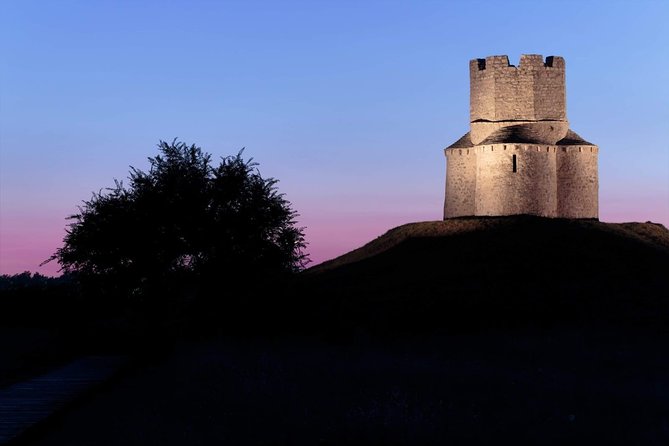
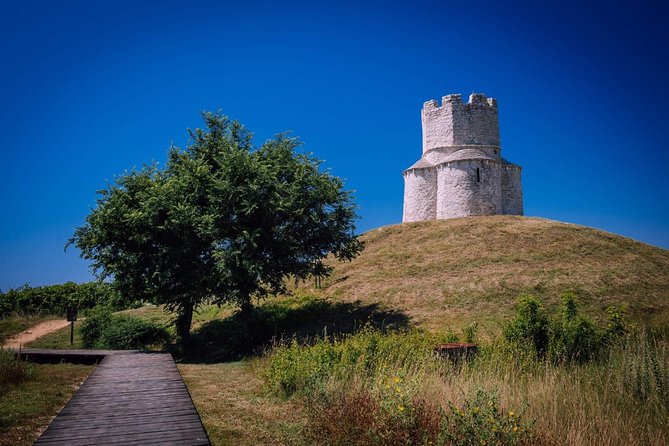
The Church of St. Nicholas is a brief 15-minute stop, but its importance is greater than the time suggests. It sits in the Prahulja field and is described as one of Nin’s most recognizable symbols.
The church is connected with the Croatian dynasty and with the town’s place in Croatian history. A short stop here works well in the wider schedule. You get a focused explanation, a chance to see the building, and then move on before the day becomes too slow.
Do not expect a long interior visit or a full church tour from 15 minutes. This is a photo and context stop, not a deep architectural study. If you are especially interested in early Croatian churches, you may wish you had more time. For most people, the brief visit provides a useful link between Nin’s quiet setting and its national importance.
Still Zagreb, at a slower pace:
- Zagreb: Rastoke & Plitvice Lakes Guided Tour with Ticket
★ 4.9 · 1,897 reviews - Communism & Croatian Homeland War Tour
★ 5.0 · 1,355 reviews - Best of Zagreb with the WW2 Tunnels
★ 5.0 · 973 reviews - Plitvice Lakes with Ticket & Rastoke Guided Tour from Zagreb
★ 5.0 · 966 reviews
Zadar: Roman remains, medieval churches, and a modern waterfront
Zadar receives about three hours, enough for a guided introduction to the old city and its main monuments. For centuries it was the capital of Dalmatia, and today it remains the regional center.
The city’s appeal comes from layers. Roman remains sit near medieval religious buildings, while the waterfront features modern public art. You can move through very different periods in a short walk, which makes Zadar a strong companion to the smaller, more rural-feeling Nin.
The Roman Forum, dating from the first century, is one of the major sights included in the city visit. Even without a long stop, the forum helps you understand Zadar as an important ancient settlement rather than simply a pretty coastal town.
Three hours is useful but not generous. You should expect a guided overview rather than time to explore every lane, museum, and shop. If you want a long meal, independent shopping, or a museum visit, the schedule may feel tight. The trade-off is that you get a clear first look at several important sites in a single afternoon.
St. Donatus: Zadar’s most unusual church
The Church of St. Donatus receives about 20 minutes and is one of the visual highlights of Zadar. Built in the ninth century, it is a round pre-Romanesque building and one of Croatia’s best-known early medieval monuments.
Its shape makes it instantly different from the later churches on the route. Rather than a conventional long nave, the circular form gives the building a strong, compact presence. A 20-minute stop should give you time to understand its role and take in the exterior, though the available information does not specify whether the visit includes a full interior tour.
I find this kind of short stop worthwhile on a day trip. You do not need an hour to recognize the building’s unusual design, especially when the guide supplies the historical setting. If church architecture is your main interest, note that the time is limited and the tour covers several other major sights.
Cathedral of St. Anastasia and Zadar’s religious center
The Cathedral of St. Anastasia is another 20-minute visit. It is a three-nave Romanesque church and the largest church in Dalmatia.
The cathedral was built in two main phases during the 12th and 13th centuries. That places it in a different period from St. Donatus, so the two visits work well together. St. Donatus introduces an early medieval circular design, while the cathedral gives you a larger Romanesque church with a more familiar basilica plan.
The short stop should be enough for an introduction to the building and its importance. As with St. Donatus, do not expect an unhurried religious art tour. The value here is the chance to compare two important churches in one compact visit, with the guide helping you notice differences that might otherwise pass quickly.
The Sea Organ: Zadar’s best final stop
The Sea Organ is given about 30 minutes, making it the longest of the short Zadar attractions. It sits on the western part of the waterfront and uses the movement of the sea to create sound.
This is a clever piece of public design because it depends on natural motion rather than a scheduled performance. Waves, coastal movement, and changing water levels produce the tones through pipes built into the waterfront. The result is not a concert with a fixed start time. It is an open-air sound experience shaped by the sea.
Thirty minutes gives you time to stop, listen, and watch the waterfront. The exact sound will vary, so this is one place where patience helps. You may hear subtle tones rather than a dramatic melody.
I like ending the Zadar portion here. After Roman ruins and old churches, the Sea Organ shows that the city is still creating new ways to use its waterfront. It also gives the day a less formal finish. You are not simply ending at another monument, but at a place where the Adriatic itself becomes part of the experience.
Transport, group size, and the reality of a 13-hour day
Private transportation in an air-conditioned vehicle is included, along with pickup and drop-off in Zagreb. That is a major practical benefit for this route. The distance makes public transport awkward for a same-day visit, and self-driving would require handling the roads, parking, timing, and return journey yourself.
The maximum group size is 12. That is small enough for a more direct relationship with the guide, but it is not a private tour for just one person or family. The size should still make it easier to hear explanations and ask questions than on a large coach.
The start time is 8:00 a.m. You should be ready on time because the route has several scheduled stops and a long return to Zagreb. The vehicle is air-conditioned, which matters during warm Croatian weather, especially after walking around Nin and Zadar.
Lunch is not included. You will need to budget for your own meal, and the schedule may affect how much time you have to choose where to eat. Since the tour includes several hours of sightseeing, carry water and a small snack unless your guide provides a planned meal break. The supplied information confirms that lunch is excluded, but it does not give a specific restaurant or lunch duration.
Most admission fees are covered, including Solana Nin and the listed church visits. That makes the cost easier to predict and reduces the need to stop for small payments during the day.
Is $333.29 a fair price?
At $333.29 per person, this is not a cheap excursion. The value depends on what you need.
You are paying for a full-day route from Zagreb to the coast, private transportation in an air-conditioned vehicle, pickup and drop-off, a small group, a guide, and most entrance fees. If you would otherwise rent a car, pay fuel and parking, arrange admission, and navigate two destinations alone, the package can make practical sense.
The price is harder to justify if you only want to see Zadar or if you prefer spending several days on the coast. A single day cannot give you the same freedom as staying in Zadar or Nin. You will get an efficient overview, but not much spare time.
The tour offers group discounts, which may improve the value for people booking together. It is also booked an average of 34 days in advance, so you should not assume you can leave it until the last minute during a busy travel period.
Who should book this day trip?
I would recommend it to you if Zagreb is your base and you want a guided introduction to two coastal destinations without changing hotels. It also suits solo visitors who want company and a clear plan. Domagoj’s friendly, flexible style is a particular plus for anyone taking a first international solo trip.
The route works well for people who enjoy history but do not want a full day inside museums. You get Roman remains, early Croatian churches, Romanesque architecture, a salt museum, and modern waterfront design, all in one outing.
It may not suit you if you dislike long drives, need a slow pace, or want a full beach day. Queen’s Beach and the healing mud are included as part of the Nin experience, but the information does not promise extended beach time, swimming, or a treatment. Families and older visitors should also consider the 13-hour duration, even though most people can participate and service animals are allowed.
Free cancellation is available up to 24 hours before the start time. The experience depends on good weather and a minimum number of participants. If poor weather or low enrollment forces a cancellation, you can choose another date or receive a full refund.
Should you book it?
Book this tour if you want the easiest way to connect Zagreb with Nin and Zadar in one ambitious day. The strongest reasons are the small group, included transportation and admissions, and the range of stops, from the ancient saltworks to the Sea Organ.
Skip it if you are already staying on the coast or if you want unhurried time by the sea. For everyone else, this is a smart overview of northern Dalmatia, provided you arrive ready for an early start, a long ride, and a packed schedule.
FAQ
Where does the tour start?
The tour starts in Zagreb, with a scheduled start time of 8:00 a.m.
Does the tour provide pickup and drop-off?
Yes. Pickup and drop-off in Zagreb are provided.
How long does the experience last?
The tour lasts approximately 13 hours.
What is the maximum group size?
The tour has a maximum of 12 travelers.
Is transportation included?
Yes. Private transportation in an air-conditioned vehicle is included.
Are admission fees included?
Most admission fees are included. The listed visits to Solana Nin, St. Nicholas Church, St. Donatus, the Cathedral of St. Anastasia, and the Sea Organ include admission.
Is lunch included?
No. Lunch is not included in the tour price.
Does the tour visit both Nin and Zadar?
Yes. The itinerary includes visits to both Nin and Zadar.
Are service animals allowed?
Yes. Service animals are allowed.
What happens if the tour is canceled because of bad weather?
If poor weather causes a cancellation, you will be offered a different date or a full refund.
Just added around Zagreb
- Zagreb: Explore with an Art Historian – Private Walking Tour★ 4.9 · 9 reviews
- Zagreb: VR 3D Immersive Film Experience – Voucher★ 4.6 · 9 reviews
- Zagreb: Plitvice With Secured Tickets, Boat And Train Ride★ 4.6 · 15 reviews
- Zagreb: Private custom tour with a local guide★ 4.6 · 48 reviews
- Zagreb: Pub Crawl, 1-Hour of Unlimited Drinks, & Club Entry★ 4.1 · 86 reviews
- Zagreb: Guided City Tour with WWII Tunnels★ 4.9 · 155 reviews
- Zagreb : Must-See Attractions Walking Tour With A Guide★ 4.6 · 11 reviews
- Zagreb BIG Tour – Private Tour★ 4.8 · 48 reviews
Day Trips, compared.

Montenegro Full-Day Trip from Dubrovnik with Optional Boat Trip
Read our review →
Plitvice & Rastoke Guided Day Trip with Ticket
Read our review →
Krka National Park Day Trip with Boat Ride & Swimming
Read our review →
Blue Cave, Vis & Hvar Full-Day Trip by Speedboat
Read our review →
Split/Trogir: Krka National Park Day Trip with Wine Tasting
Read our review →
Plitvice and Rastoke day trip from Zagreb w/ticket (guar. dep.)
Read our review →
Split/Trogir: Krka National Park Day Trip & Boat to Skradin
Read our review →Browse the lists this tour appears in