
Reviewed · CYCLING TOURS
Back to Socialism Bike Tour
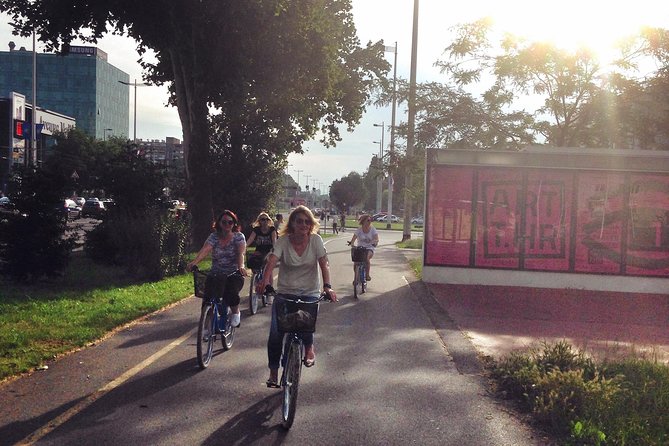
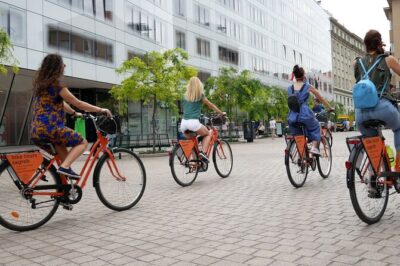
Zagreb’s most revealing sights may be across the river. The small-group bike ride connects the city’s elegant Lower Town with New Zagreb’s socialist urban planning, while the chance to hear personal stories about Tito-era Yugoslavia, recent earthquakes, and modern Croatia gives the tour real local texture. I also like that morning and afternoon departures make it easy to fit into a short stay.
The route is especially strong for anyone curious about how cities work. You get professional guiding, a provided bike and necessary gear, and a maximum group size of 12. The main drawback is that this is not a standard old-town sightseeing ride, so visitors looking mainly for Zagreb’s headline monuments may find parts of the route less familiar and less immediately pretty.
With a 4.9 rating from 49 reviews and a 100 percent recommendation rate, this $49 experience offers a thoughtful way to see more than the central streets. Plan on about two and a half hours, and remember that good weather is required.
In This Review
- Key points to know before you book
- Why this bike ride shows a different Zagreb
- Meeting at Trg bana Josipa Jelačića
- Nikola Tesla’s Zagreb connection
- The State Archives and Zagreb’s Art Nouveau style
- Museum of Contemporary Art and the move south
- Park Bundek: greenery beside concrete
- New Zagreb and the practical side of socialism
- Returning through Zagreb’s Lower Town
- What the guide adds to the ride
- Is $49 a fair price?
- Who will enjoy this experience most?
- Practical booking advice for Zagreb
- Should you book the Back to Socialism Bike Tour?
- FAQ
- Where does the Back to Socialism Bike Tour start?
- Where does the tour end?
- How long does the bike tour last?
- What is included in the price?
- How large is the tour group?
- What happens if the weather is poor?
Key points to know before you book
- The route crosses the Sava River: You move from historic central Zagreb into New Zagreb, where socialist-era planning and large-scale urban design become the focus.
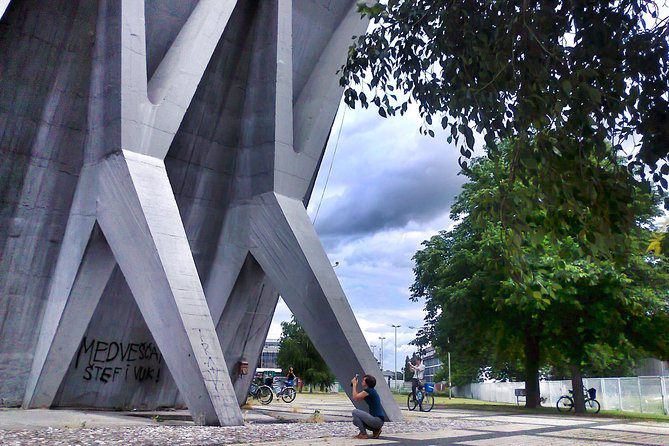
- The State Archives is an Art Nouveau highlight: This early stop adds architectural detail before the tour shifts toward postwar city planning.
- Park Bundek provides a green pause: Its trees and open space contrast with the concrete forms of New Zagreb.
- The guide shapes the experience: Personal knowledge about Tito, Yugoslavia, Croatia’s current government, COVID, and earthquake recovery adds more than a simple sightseeing ride.
- The ride is capped at 12 people: That keeps the group manageable, though the booking requires at least two people.
- The meeting point is central: You start and finish at Blue Bike Zagreb, inside the courtyard at Trg bana Josipa Jelačića 15.
Why this bike ride shows a different Zagreb
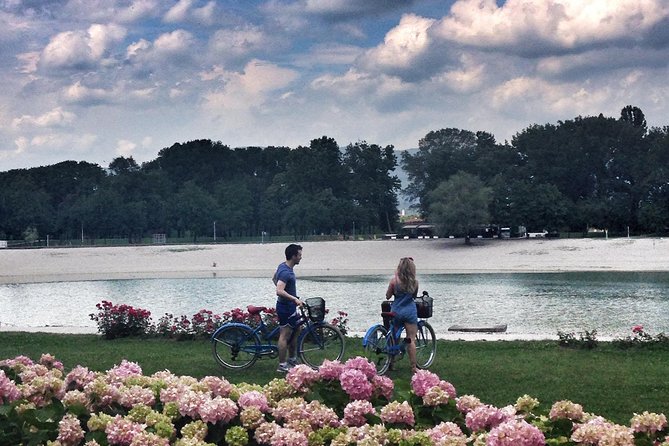
Zagreb is easy to picture as a tidy Central European capital, with grand squares, leafy parks, and a handsome Lower Town. That is only half the story. The Back to Socialism Bike Tour uses the bicycle to connect two very different parts of the city and explain why they look so different.
The first part takes place around the historic center and the Lower Town. Here, you see the orderly urban design and decorative architecture associated with Zagreb’s late 19th-century growth. Then the route heads over the Sava River to New Zagreb, where the city was planned on a much larger scale during the socialist period.
That change is the point. You are not simply collecting monuments. You are watching Zagreb shift from a compact Central European city to a planned district shaped by Yugoslavia’s postwar ideals. The guide can explain how public space, housing, transport, and large institutions fit together.
I like this kind of tour because it gives you a framework for the rest of your stay. Afterward, a block of apartment towers or a broad open plaza is less likely to look like anonymous concrete. You have some idea why it was built and what social purpose it was meant to serve.
The tour also reaches beyond architecture. The guide discusses Yugoslavia under Josip Broz Tito, the differences between that government and present-day Croatia, and the way Zagreb has changed through COVID and recent earthquakes. Those details make the ride feel tied to real life rather than locked in the past.
More bike rides around Zagreb:
- Zagreb Highlights Bike Tour
★ 5.0 · 208 reviews - Classic Zagreb Bike Tour
★ 5.0 · 193 reviews - Zagreb: 3–Hour Classic Bike Tour
★ 4.6 · 139 reviews
Meeting at Trg bana Josipa Jelačića
Your starting point is Blue Bike Zagreb at Trg bana Josipa Jelačića 15, the main square in central Zagreb. The bike shop is inside the courtyard, so walk through the doorway and look for the operator’s place on the right.
This is a useful meeting point because the square is central and close to public transportation. It also gives you an easy landmark if you are still finding your way around Zagreb.
Allow enough time to locate the courtyard before the scheduled departure. The tour ends at the same meeting point, which simplifies the rest of your day. You can return to your hotel, continue exploring the Lower Town, or use the square as a base for lunch and further sightseeing.
The experience is offered in English. A local professional guide leads the ride, and the necessary biking gear is supplied. Children must be accompanied by an adult, and at least two people are required per booking.
Nikola Tesla’s Zagreb connection
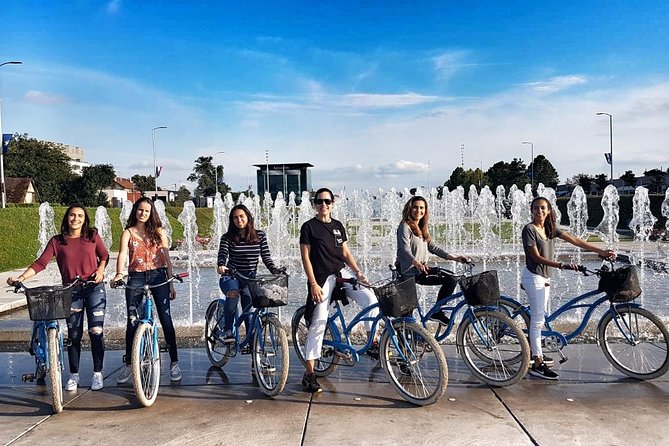
The first major stop is the Nikola Tesla statue, with about 20 minutes set aside. The tour presents Tesla as Zagreb’s own genius, an engaging way to connect a globally famous inventor with Croatia.
This stop is not only about posing for a photograph. It helps establish one of the tour’s larger themes: Zagreb has important local stories that can be missed if you stick to the usual central-city checklist.
The time here should be enough for an explanation, photographs, and a few questions without making the tour feel stuck in one place. If you already know Tesla’s connection to the region, this may be a brief stop, but it still works as an early introduction to the city’s identity.
The State Archives and Zagreb’s Art Nouveau style
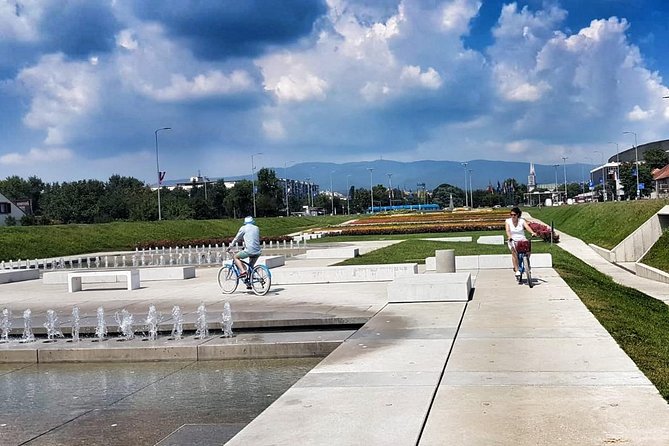
The State Archives receives another 20-minute visit. Its main appeal is the building itself, a striking example of Art Nouveau architecture.
This is where the tour’s two halves begin to connect. You first see the decorative, carefully designed city associated with Zagreb’s older development. Later, you compare it with the broad, functional planning of socialist New Zagreb.
I appreciate that the stop focuses on architecture rather than treating the building as a quick background for a photograph. Art Nouveau is easy to overlook when you are moving through a city, especially if you are focused on churches, markets, or major squares. A guide can point out what makes the building notable and show how Zagreb’s style fits into its wider urban story.
The 20-minute stop also keeps the pace moving. You get enough time to look closely, but the tour does not turn into a long architectural lecture.
A few more Zagreb trips worth comparing
- From Zagreb: Plitvice & Rastoke Guided Day Trip with Ticket
★ 4.9 · 2,955 reviews - Zagreb: Rastoke & Plitvice Lakes Guided Tour with Ticket
★ 4.9 · 1,897 reviews - Communism & Croatian Homeland War Tour
★ 5.0 · 1,355 reviews - Best of Zagreb with the WW2 Tunnels
★ 5.0 · 973 reviews
Museum of Contemporary Art and the move south
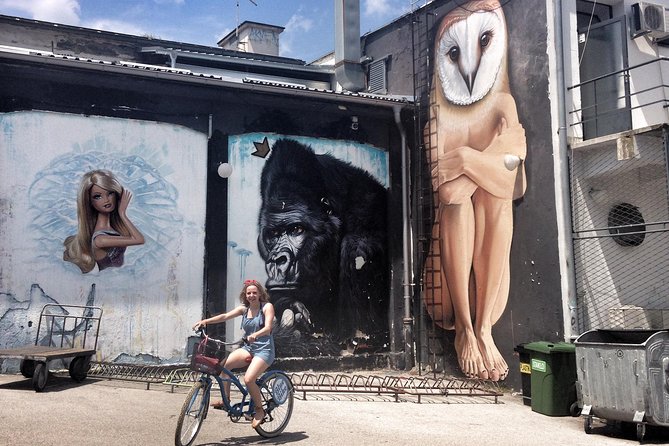
The route then continues to the Museum of Contemporary Art, one of Zagreb’s newest museums. The scheduled stop lasts about 20 minutes.
The museum is important here as a marker of modern Zagreb. It signals that the city’s cultural story did not end with the old center or the socialist period. The route is gradually moving toward New Zagreb, where newer cultural institutions sit among large planned districts and open public spaces.
You should not expect a full museum visit during this tour. With only 20 minutes assigned, the stop is best understood as an exterior and urban-planning visit rather than a substitute for exploring the museum’s collection. If contemporary art is a priority for you, you may want to return separately, depending on your schedule.
That limited time is also useful. The tour keeps its main attention on how the city is arranged, not on trying to squeeze in a rushed museum admission.
Park Bundek: greenery beside concrete
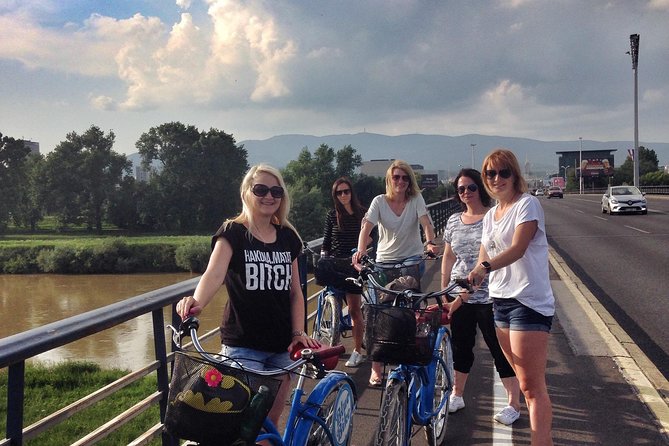
Park Bundek is given about 30 minutes, making it one of the longer pauses on the route. Its greenery creates a clear contrast with the brutalist and socialist architecture associated with New Zagreb.
This is an important break in both scenery and pace. After riding through more built-up areas, you get space to appreciate how parks and open land were used within a large planned district. The contrast helps you see that socialist urban planning was not only about concrete apartment blocks. It also involved shared outdoor areas and public space.
I find this sort of stop valuable because it gives the architectural discussion some breathing room. You are not standing in front of one more building while trying to remember a date or political detail. Instead, you can look at the relationship between broad public areas, housing, and the city around you.
The park also makes the ride more varied. If every stop were an archive, museum, or monument, the experience would feel like a moving classroom. Bundek gives you a more relaxed stretch and a chance to reset before the return through the center.
New Zagreb and the practical side of socialism
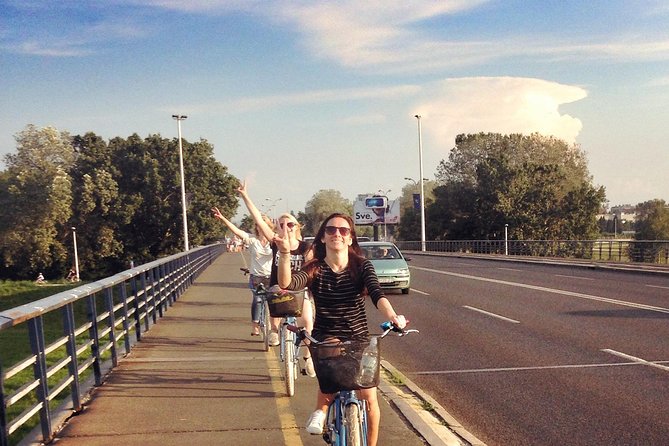
Crossing the Sava River is the tour’s key transition. On the other side, New Zagreb presents a very different idea of how a city should function.
The guide discusses urban planning from the last 40 or 50 years, including the ways socialism shaped this part of Zagreb. The emphasis is not simply on praising or criticizing the system. Instead, you get a chance to look at what worked, what changed, and how the area functions today.
One especially useful idea is that socialism sometimes produced highly functional urban design. That can be easy to miss if you approach New Zagreb only as a collection of large buildings. The tour encourages you to consider spacing, access, public facilities, and the relationship between homes and open areas.
The route also gives the guide room to explain Tito’s approach to government and how it differs from Croatia’s present administration. Political context can be hard to absorb from a museum label, but it makes more sense when tied to the streets and districts built during that period.
The group is limited to 12 people, which matters here. In a large group, discussion about a complicated political past can become rushed or one-sided. A smaller party gives you a better chance to ask how the city changed and how people experienced those changes.
Returning through Zagreb’s Lower Town
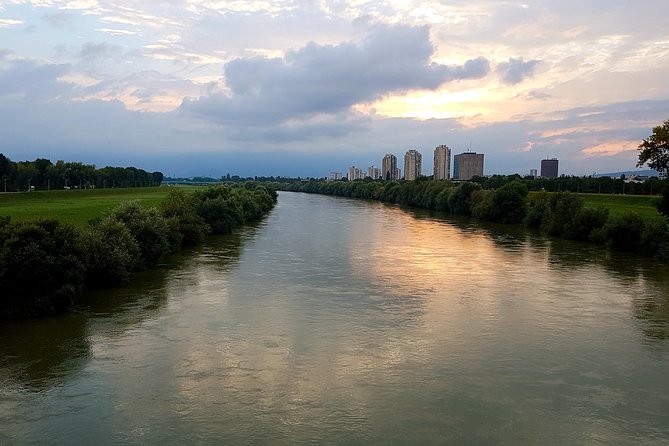
The final major section returns to the Lower Town for about 45 minutes. This is the longest stop, and it brings the route back to Zagreb’s more familiar Central European character.
The Lower Town is known for its formal streets, green horseshoe parks, and attractive architecture. By this point, you have seen the city’s older planning ideas and its socialist-era expansion, so the return feels more meaningful than it would at the start.
The green horseshoe parks are particularly useful for understanding late 19th-century Zagreb. Their arrangement shows how public greenery was built into the city rather than added as an afterthought. You can compare this formal urban design with the much broader spaces of New Zagreb.
This part of the ride also gives you time to ask follow-up questions. The guide can connect the earlier stops, clarify details about Zagreb’s development, or discuss how earthquakes and COVID affected the city in recent years. One of the strongest features of the experience is this link between physical places and personal experience.
The tour then finishes back at the Blue Bike Zagreb meeting point. The full experience lasts approximately two hours and 30 minutes, though the exact pace can depend on the group, traffic, and weather.
What the guide adds to the ride
The quality of this experience depends heavily on the guide. The route has a clear theme, but it needs explanation to make the connections work.
A guide such as Alida can add a personal view of Zagreb, including how the city has operated through recent disruptions. That kind of insight is useful because it moves beyond dates and building styles. You hear how the city’s past still affects daily life and public discussion.
The tour is also suited to questions. One booking experience involved only one participant, which allowed the rider to help shape the route. You should not assume you will have a private one-person tour, but the group limit of 12 gives the format a personal scale.
The listed inclusions describe the experience as a private tour, while the general conditions set a maximum of 12 people. If the exact group arrangement matters to you, confirm it when booking. Either way, the limited capacity is a benefit compared with a large bus excursion.
Is $49 a fair price?
At $49 per person, this is not the cheapest way to see Zagreb, but the price is reasonable if you want interpretation rather than simple transportation.
You are paying for about two and a half hours, a professional local guide, the bicycle, and the necessary biking gear. There is no hotel pickup, and food and drinks are not included, so you should budget for those separately if needed.
The value is strongest for visitors who would not otherwise make it to New Zagreb. A standard walking route can cover the central squares and historic streets, but it is less likely to take you across the Sava River and explain socialist urban planning in context.
The ride also covers several distinct parts of Zagreb in one outing. You see Tesla, Art Nouveau, a contemporary museum, Park Bundek, New Zagreb, and the Lower Town without arranging separate transport between them.
I would consider the tour good value for a first or second day in Zagreb, especially if architecture, politics, and city planning interest you. If you only want famous sights and a relaxed spin through the center, you may get more from a simpler city bike ride.
Who will enjoy this experience most?
I would choose this tour if you like understanding how a place developed, not just photographing its prettiest buildings. It suits curious visitors who want context about socialism, Yugoslavia, Tito, modern Croatia, and the practical design of cities.
It is also a strong choice for anyone who has already seen Zagreb’s central highlights. The route introduces a less familiar side of the capital and helps you understand why the city changes so sharply after the river.
Cycling makes the most sense for people comfortable spending two and a half hours on a bike. The tour is listed as suitable for most visitors, but the provided information does not describe the cycling distance, bike model, or level of physical effort. Ask the operator if you have concerns about fitness or riding comfort.
Families can book, but children must be accompanied by an adult. A minimum of two people is required, so solo visitors should check availability rather than assume they can reserve one place.
The experience requires good weather. If poor weather causes cancellation, you are offered another date or a full refund. For that reason, I would avoid placing it on the final few hours of a short Zagreb stay.
Practical booking advice for Zagreb
The tour is offered in the morning or afternoon, so you can fit it around a museum visit, meal, or arrival schedule. Morning may work well if you want to use the rest of the day for central Zagreb. An afternoon departure can be convenient after a slow start or a morning at the market.
Confirmation normally arrives at booking. If you reserve within 12 hours of departure, confirmation arrives as soon as possible and depends on availability.
You can cancel for a full refund up to 24 hours before the start time. Changes or cancellations made inside that 24-hour window are not accepted for a refund, so keep the local cut-off time in mind.
Since the ride begins and ends at Trg bana Josipa Jelačića, you do not need to arrange hotel transport. The central meeting point is one of the tour’s quiet practical advantages.
Should you book the Back to Socialism Bike Tour?
Book it if you want Zagreb explained through its buildings, parks, political changes, and urban design. The combination of the Lower Town, Sava River crossing, New Zagreb, Park Bundek, and personal commentary about Yugoslavia gives you a broader picture than a standard city-center ride.
I would be less likely to recommend it if your main goal is a gentle ride past only the most famous sights. The tour asks you to pay attention to planning and politics, and some of the stops are meaningful because of their context rather than their postcard appeal.
For most curious visitors, the $49 price is justified by the guide, equipment, small maximum group, and access to parts of Zagreb you might not reach alone. Choose a day with a weather backup, arrive early at the courtyard meeting point, and take this tour near the start of your stay so the rest of Zagreb makes more sense.
FAQ
Where does the Back to Socialism Bike Tour start?
It starts at Zagreb Bike Tours at Blue Bike Zagreb, Trg bana Josipa Jelačića 15 in Zagreb. The location is inside the courtyard, through the doorway and to the right.
Where does the tour end?
The experience ends back at the same meeting point in central Zagreb.
How long does the bike tour last?
The tour lasts approximately two hours and 30 minutes.
What is included in the price?
A local professional guide and all necessary biking gear are included. Food, drinks, and hotel pickup and drop-off are not included unless specifically stated.
How large is the tour group?
The activity has a maximum of 12 participants. A minimum of two people is required per booking.
What happens if the weather is poor?
The experience requires good weather. If it is canceled because of poor weather, you can choose a different date or receive a full refund.
Just added around Zagreb
- Zagreb: Explore with an Art Historian – Private Walking Tour★ 4.9 · 9 reviews
- Zagreb: VR 3D Immersive Film Experience – Voucher★ 4.6 · 9 reviews
- Zagreb: Plitvice With Secured Tickets, Boat And Train Ride★ 4.6 · 15 reviews
- Zagreb: Private custom tour with a local guide★ 4.6 · 48 reviews
- Zagreb: Pub Crawl, 1-Hour of Unlimited Drinks, & Club Entry★ 4.1 · 86 reviews
- Zagreb: Guided City Tour with WWII Tunnels★ 4.9 · 155 reviews
- Zagreb : Must-See Attractions Walking Tour With A Guide★ 4.6 · 11 reviews
- Zagreb BIG Tour – Private Tour★ 4.8 · 48 reviews
Cycling Tours, compared.
Quad Biking Off Road Tour starting 10 minutes drive from Split
Read our review →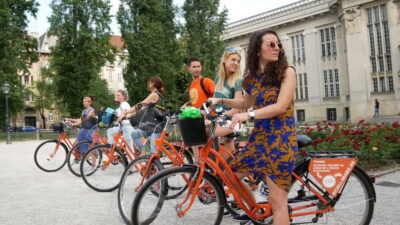

Browse the lists this tour appears in