

Reviewed · HISTORICAL TOURS
Zadar: Hidden Gems and History Tour
Zadar reveals itself slowly. This two-hour walk pairs lesser-seen corners with the city’s major monuments, giving you a useful first look at Dalmatia’s historic coastal capital. I especially like the stop at the food market, where local produce adds a taste to the sightseeing, and the final views from Queen Jelena Madijevka Park.
The main consideration is pace. You cover many important places in only two hours, so this is an overview rather than a leisurely archaeological study. Still, the small group of up to 10 should make it easier to hear the guide and ask questions, and the $29 price is fair for a guided introduction.
In This Review
- Key points to know before you book
- Starting beside Zadar’s Greeting to the Sun
- Roman remains and the Forum
- St. Donatus, Zadar’s circular landmark
- St. Mary’s convent and the medieval center
- Bell towers, arches, and Romanesque details
- A local taste at Zadar’s food market
- People’s Square and a less-charted corner
- Three eastern entrances to the Old Town
- Finishing at Queen Jelena Madijevka Park
- What $29 buys you
- Guide quality and language choices
- Who should book this Zadar walk?
- Practical planning advice
- Should you book it?
- FAQ
- Where does the Zadar Hidden Gems and History Tour begin?
- How long does the tour last?
- What languages are available?
- How many people can join the group?
- Is food included?
- Can I cancel the tour for a refund?
Key points to know before you book
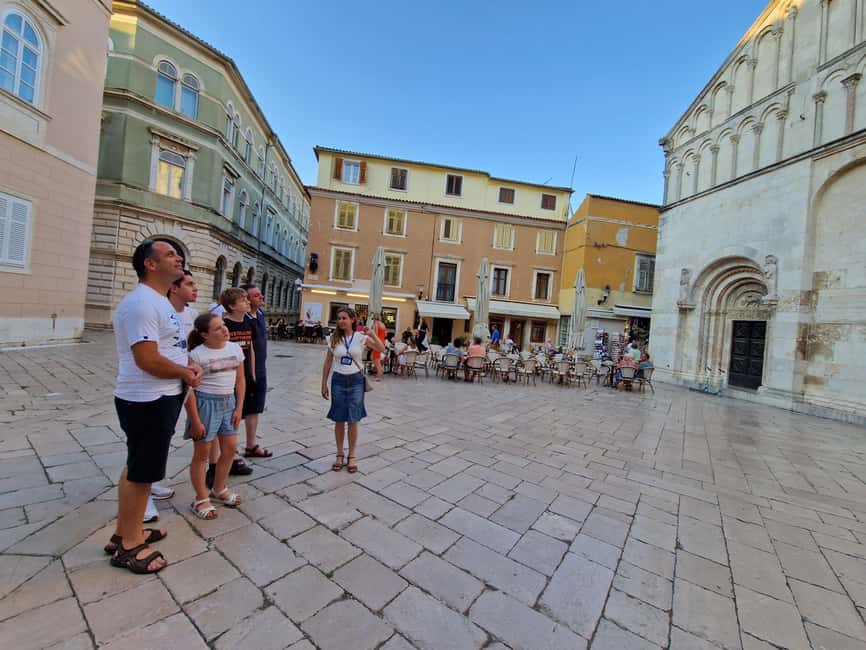
- Starts at the Greeting to the Sun: The tour begins beside Zadar’s modern light installation, then moves into the city’s ancient core.
- Covers 3,000 years in two hours: Roman, medieval, and more recent layers appear one after another.
- Includes places you might miss alone: The route includes a less-charted spot near People’s Square and three former eastern entrances.
- Tastes local produce: The food market stop gives the tour a small but welcome connection to everyday Zadar.
- Ends with a view: Queen Jelena Madijevka Park provides a calm finish and good photo opportunities.
- English and Spanish guides: The tour is available in both languages, with a live guide rather than an audio recording.
Starting beside Zadar’s Greeting to the Sun
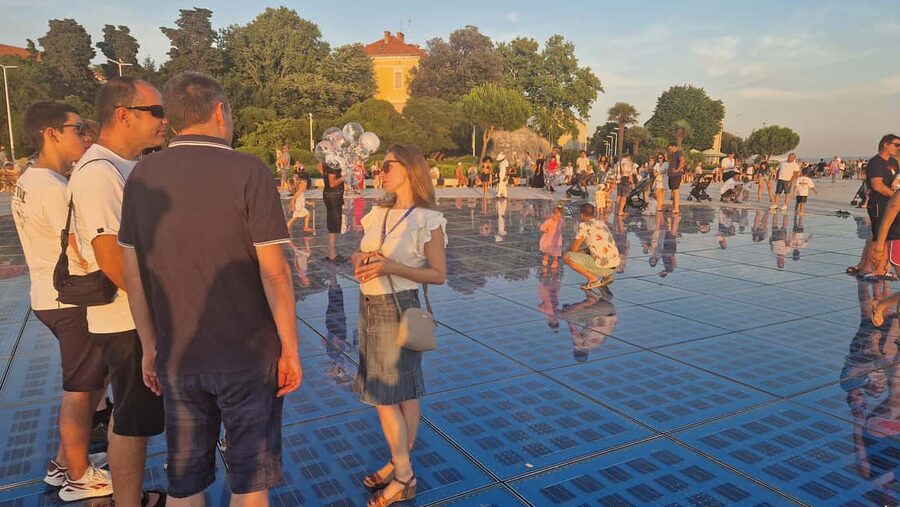
The meeting point is the Greeting to the Sun, one of Zadar’s most recognizable modern installations. It is a practical place to begin because you can identify it easily, and the tour immediately sets up a contrast between present-day Zadar and the city beneath its streets.
From here, you walk toward the Old Town and begin tracing about 3,000 years of history. That long time span is the real strength of this experience. You are not looking at isolated ruins one by one. You are seeing how Roman, medieval, and later parts of the city sit close together.
The opening also gives you a quick sense of the tour’s style. This is a walking route through public streets and historic spaces, not a museum visit with long indoor stops. Wear shoes that are comfortable for walking, and keep your camera ready because several stops are chosen for their details and views.
More history tours in Zadar:
- Zadar: Virtual Reality Guided History Walking Tour
★ 4.4 · 86 reviews - Zadar: Private Walking Tour Through 3,000 Years of History
★ 4.7 · 71 reviews - Zadar: Private walking tour through history and modern time
★ 5.0 · 10 reviews
Roman remains and the Forum
The first major historical stop is the Roman Forum. Its surviving remains help explain Zadar’s role in the ancient world and give the rest of the walk a firm starting point.
You should not expect a complete Roman city preserved in one piece. Instead, you will see fragments and ruins that make more sense when a guide explains their purpose and setting. This is where the tour’s local storytelling matters most. Written signs can give dates and names, but a live guide can connect the stones to the city’s later development.
The Forum is also a good early stop because it anchors you geographically. Once you understand where the Roman center lay, the surrounding churches and streets become easier to read. You will be walking through a city shaped by repeated rebuilding, rather than through a single period preserved behind barriers.
St. Donatus, Zadar’s circular landmark
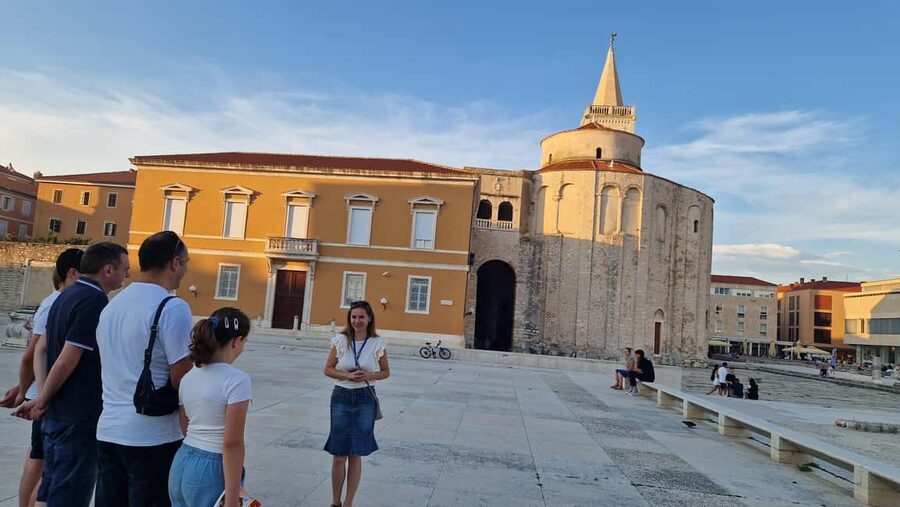
Next comes the Church of St. Donatus, built in the ninth century. Its unusual round form makes it one of Zadar’s clearest visual symbols, even if you know little about the city before arriving.
The church is important not only because of its age, but also because it shows how distinctive early medieval architecture can be. A quick exterior look can leave you with a postcard image. A guide’s explanation gives you a better reason to notice its shape and place within the older city.
The tour information does not promise an interior visit, so plan on learning about St. Donatus from the outside unless your guide says otherwise. That is a useful distinction if you are hoping to spend time inside historic buildings. This walk focuses on the city’s streets, structures, remains, and stories.
St. Mary’s convent and the medieval center
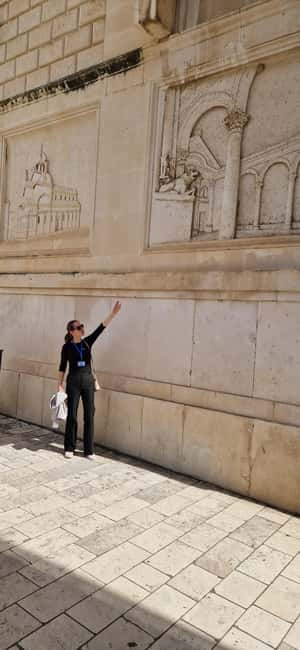
The route continues near St. Mary’s convent, another important part of Zadar’s religious and cultural story. The stop adds variety after the open Roman Forum and the large form of St. Donatus.
A convent can be easy to pass without understanding why it matters. Here, the guide explains its importance and places it within the wider development of the Old Town. That is one of the advantages of taking this walk early in your stay. You start noticing that Zadar’s history is not kept in one museum or one famous church. It appears in ordinary-looking corners.
Because the whole tour lasts two hours, the stop is likely to be concise. If you want a long examination of church art, religious institutions, or medieval architecture, you will need separate time afterward. For an introduction, though, this is a useful layer in the story.
A few more Zadar trips worth comparing
- Zadar: Plitvice Lakes Guided Day Tour with Tickets
★ 4.9 · 3,148 reviews - Zadar: Kornati Boat Trip with Lunch and Swim Stops
★ 4.5 · 1,498 reviews - Zadar: Plitvice Lakes with Boat Ride and Zadar Old Town Tour
★ 4.9 · 1,368 reviews - Zadar: Kornati and Telašćica Full-Day Boat Trip with Lunch
★ 4.1 · 1,193 reviews
Bell towers, arches, and Romanesque details
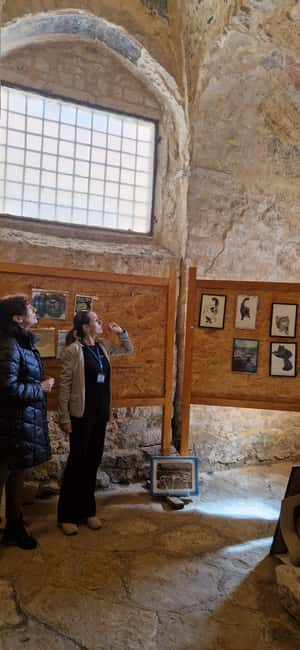
As you pass St. Anastasia’s bell tower, the route moves through another set of visual markers. Bell towers are among the easiest features to photograph, but their meaning can be less obvious when you are walking independently. The guide helps turn the building from a background feature into part of Zadar’s religious and civic history.
The walk then reaches the Melia Aniana arch. This is the kind of stop that supports the tour’s promise of places you might not notice on your own. It is not necessarily the most famous sight in town, so having someone point it out saves you from walking straight past.
You also stop for photographs of the Romanesque apses of St. Chrysogonus. These curved architectural forms are among the more refined details on the route. They reward a slower look, especially if you enjoy architecture more than collecting famous names.
This part of the walk should appeal to anyone who likes visual clues. You are not only hearing dates. You are being asked to look at curves, stonework, towers, arches, and the way older structures fit into the present-day streets.
A local taste at Zadar’s food market
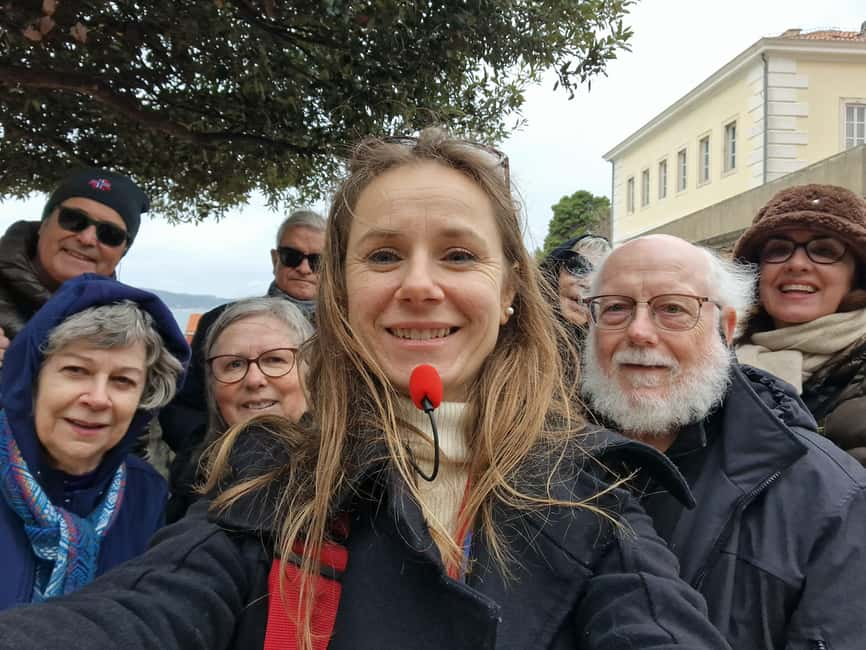
The food market is a welcome change of rhythm. After several historic stops, you get a chance to see local produce and taste some of it.
The tasting is modest rather than a full food tour. The information provided does not specify the exact items, so you should not book this expecting a large meal or a fixed menu. Think of it as a small local touch that adds flavor to a history walk.
I like this part because markets show a city in use. Ancient stones tell you about the past, while produce and daily commerce connect you with the present. The stop also breaks up the architecture-heavy route and gives you a chance to pause.
If food is your main reason for booking, choose a dedicated culinary tour instead. If you want a short taste alongside history, this inclusion improves the value of the experience without changing its main purpose.
People’s Square and a less-charted corner
The walk continues to People’s Square, a central public space with an important place in Zadar’s urban life. Squares are often where a city’s history and daily routine meet, and this stop gives you a chance to understand how the Old Town functions beyond its monuments.
Near the square, the guide takes you to a place described as one of the city’s less-charted sights. This is a strong reason to choose a guided walk over simply following a map. Maps usually point you toward major churches, gates, and plazas. They do not always explain the smaller corners that give a place its local character.
The exact nature of this stop is not specified, which may be part of its appeal. You should expect a discovery rather than a famous landmark with a long queue. Keep your expectations sensible, though. The value lies in the story and setting, not necessarily in a grand monument.
This is also a good point to ask questions. Since the group is capped at 10 people, you have a better chance of speaking with the guide than you would on a large coach-style walk.
Three eastern entrances to the Old Town
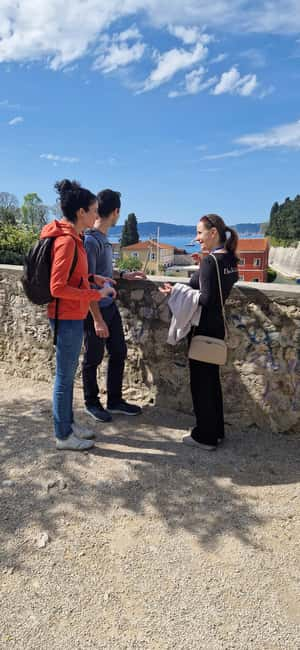
One of the most unusual parts of the route is the look at the remains of three eastern entrances to Zadar’s Old Town. Gates and entrances reveal how a city was organized and protected, but they are easy to overlook once roads and modern buildings take over.
Seeing three entrances together gives you a clearer sense of how people moved into the historic center. You can compare their locations and imagine the edge of the old city without needing a long lecture on military architecture.
This stop is especially useful if you enjoy urban history. You are not just touring individual monuments. You are learning how the city worked as a place with boundaries, access points, and changing layers of construction.
Again, the tour’s short duration means the explanation will be selective. You will gain a clear outline, but you will not cover every political event or architectural detail connected with the entrances.
Finishing at Queen Jelena Madijevka Park
The final stop is Queen Jelena Madijevka Park, where the tour ends with scenic views and photo opportunities. Finishing here is smart. After a steady walk through streets and ruins, the park offers a little space and a more relaxed setting.
The ending also gives the route a visual payoff. You begin with a modern installation, pass through ancient and medieval Zadar, and finish in a green public space with picturesque sights. That progression makes the tour feel like a compact introduction to the city rather than a string of unrelated stops.
Because the tour ends here, you can decide what to do next without needing to return to the starting point. You might continue exploring on foot, find a meal, or simply stay for photographs. The information does not specify exactly where the guide leaves you within the park, so confirm the precise endpoint if you have a tight schedule afterward.
What $29 buys you
At $29 per person, this is reasonably priced for a two-hour guided walk with a local tasting. You are paying for a live explanation of the city, a route that includes several easy-to-miss places, and a small food sample.
The value is strongest if you are new to Zadar. A first walk can help you understand the layout of the Old Town and decide which churches, ruins, parks, or market areas deserve a longer return visit. It can also prevent the common problem of seeing the main sights without understanding how they connect.
The value is less clear if you already know Zadar well or prefer to explore at your own pace. Two hours can feel brisk when the route includes the Forum, St. Donatus, St. Mary’s convent, St. Anastasia’s bell tower, the Melia Aniana arch, St. Chrysogonus, the market, People’s Square, three eastern entrances, and Queen Jelena Madijevka Park.
Still, the small group makes the price more attractive. With no more than 10 participants, this should feel more personal than a mass walking tour. One five-star rating specifically praised the guide’s professionalism and said the guest ended up having the guide to herself. That is not something you can count on, but it shows how intimate the experience can become when bookings are light.
Guide quality and language choices
The available guide languages are English and Spanish. If you prefer Spanish, María is a name to look for when booking or confirming your tour. Her explanation of the city was praised for its detail and the experience was described as very interesting.
Another rating described the guide as professional and well informed. Along with two brief five-star ratings, the published score is five out of five from four ratings. That is a small sample, so I would not treat it as proof that every departure will be identical. It does suggest that the guide is one of the experience’s strongest elements.
A live guide also makes this walk more adaptable than an audio route. You can ask about a building, clarify a date, or get help deciding what to see next. The exact level of interaction depends on the group and guide, but a cap of 10 gives you a good chance of being heard.
Who should book this Zadar walk?
I would recommend it most strongly to:
- First-time visitors who want a clear introduction to the Old Town
- History fans who enjoy Roman and medieval remains
- People who like architecture, especially churches, arches, apses, and bell towers
- Visitors who want local produce included without booking a full food tour
- Cruise or short-stay visitors who need a compact two-hour experience
- Spanish-speaking visitors who prefer a live tour in Spanish
You may want something else if you need extensive time inside monuments, a serious food itinerary, or a slow photography walk. The route covers a lot, and its purpose is to connect the pieces rather than study one site in detail.
The tour may also suit families, but the supplied information does not give a recommended minimum age or describe child-specific activities. I would judge that choice based on your children’s comfort with a two-hour historic walking route.
Practical planning advice
The tour is two hours, with starting times available according to the booking calendar. Since the route is on foot and includes many outdoor stops, check the forecast and dress for walking conditions.
The meeting point is the Greeting to the Sun installation, and the guide is identified in the tour photos. Arrive with enough time to locate the installation rather than rushing in at the start.
You can cancel up to 24 hours before the tour for a full refund, and the reserve-now, pay-later option keeps your plans flexible. Those terms are useful in Zadar, where weather and ferry schedules can affect a short stay.
The tour is offered in English and Spanish. There is no transport included, so you should plan to reach the starting point independently. The food tasting is included, but the details of the produce are not fixed in the available information.
Should you book it?
Book this tour if you want a well-priced first walk through Zadar that combines major sights with smaller stops, a market tasting, and a scenic finish. The best reason to choose it is not any single monument. It is the way the route links Roman remains, medieval churches, old entrances, public squares, local food, and modern Zadar in one compact outing.
Skip it if you already know the Old Town or want a specialized food, architecture, or archaeological tour. For most first-time visitors, though, two hours and $29 is a sensible trade: you get orientation, context, and a few places you might otherwise miss.
FAQ
Where does the Zadar Hidden Gems and History Tour begin?
The tour begins at Zadar’s Greeting to the Sun installation.
How long does the tour last?
The walking tour lasts two hours.
What languages are available?
The tour is offered with a live guide in English or Spanish.
How many people can join the group?
The group is limited to 10 participants.
Is food included?
Yes. The tour includes a tasting of local produce at the Zadar food market.
Can I cancel the tour for a refund?
Yes. You can cancel up to 24 hours in advance for a full refund.
Just added around Zadar
- Zrmanja river & 3 Croatian seas boat tour★ 4.6 · 23 reviews
- Zadar: Ugljan and Preko Islands SpeedBoat Tour —with Drinks★ 4.9 · 81 reviews
- Zadar Private Walking Tour: German★ 5.0 · 16 reviews
- From Zadar: Romantic Sunset Sailboat Tour★ 5.0 · 5 reviews
- Zadar: Three Islands Private Boat Tour★ 5.0 · 80 reviews
- Zadar: Island-Hopping, Swimming & Snorkeling SpeedBoat Tour★ 5.0 · 33 reviews
- ✪ Zadar: Speedboat Tour to 3 Islands with Refreshing Drinks★ 4.7 · 14 reviews
- Zadar: Golden Hour Cruise RIB Tour Island Dinner Stop & Swim★ 4.8 · 73 reviews
Historical Tours, compared.


Walking Tour of Split with a ‘Magister’ of History
Read our review →

Split History and Gastro Small-Group Tour with Food and Drinks
Read our review →
PREMIUM Emperor’s Walking Tour for History Lovers + Museum
Read our review →Browse the lists this tour appears in