
Reviewed · WALKING TOURS
Zadar Private Walking Tour: German
Zadar’s old town is history with sea music. This private German-language walk connects Roman ruins, medieval churches, city walls, and modern art installations in a compact 1.5-hour route. I like the private format, which lets you ask questions and shape the conversation around your interests. I also like the chance to see Zadar through a local guide’s stories, not just through dates and building names.
The price is $114 per group of up to 10 people, so it can be good value for a family or small group. The main consideration is time: 90 minutes moves quickly, and entry to St. Donatus Church and the Cathedral of St. Anastasia is not included. If you want a slow visit inside every monument, you will need extra time afterward.
In This Review
- Key points before you book
- Why this short Zadar walk works
- Starting at Nova vrata and the city walls
- Cathedral of St. Anastasia and St. Donatus
- The Roman Forum and Zadar’s oldest center
- Široka ulica and People’s Square
- Five Wells Square, St. Simon, and Land Gate
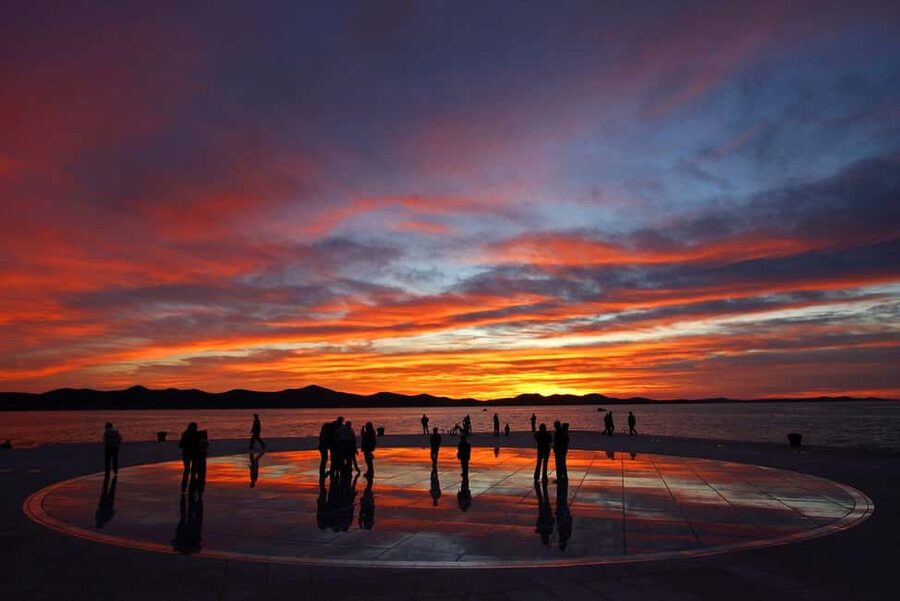
- Sea Organ and Greeting to the Sun
- What the private German format adds
- Practical details and who should book
- Should you book this Zadar tour?
- FAQ
- How long does the Zadar private walking tour last?
- What language is the tour conducted in?
- How many people can join the private group?
- What is included in the price?
- Are entrance fees to St. Donatus Church and the cathedral included?
- Is the walking tour wheelchair accessible?
- Where does the tour start?
- Can the tour be changed to match my interests?
Key points before you book
- German-speaking private guide: The tour is designed for your group alone, with the chance to ask personal questions along the way.
- Two thousand years in 90 minutes: The route moves from Roman remains to Venetian fortifications and contemporary waterfront art.
- Strong local focus: The guide can discuss Zadar’s culture, daily life, food, and possible outings beyond the old town.
- Martina receives especially warm praise: German-speaking guide Martina is described as friendly, attentive, clear, and able to handle spontaneous requests.
- A full old-town circuit: The walk includes the Roman Forum, St. Donatus, the Sea Organ, Greeting to the Sun, People’s Square, Five Wells Square, and Land Gate.
- Accessible private experience: The activity is listed as wheelchair accessible, though the route includes historic streets and outdoor monuments.
Why this short Zadar walk works
Zadar can look simple at first glance. You stroll along the waterfront, pass a church, see a few old stones, and perhaps wonder what ties it all together. A good guide supplies that thread. This tour gives you a fast but useful outline of the city, from its Roman core to its later walls and present-day public art.
I particularly like the way the route joins famous sights with ordinary city spaces. People’s Square and Široka ulica, known locally as Kalelarga, help you see Zadar as a living town rather than an open-air museum. The Roman Forum and St. Donatus explain the ancient center, while the Sea Organ and Greeting to the Sun show how the waterfront has been given a new role.
The private setup matters. You do not have to wait for a large group, and you can ask about subjects that interest you, such as architecture, local customs, food, or nearby excursions. The tour can be adjusted to your wishes, so tell the guide early if you want more time on Roman remains, church history, modern Zadar, or local life.
The 1.5-hour length is both a strength and a limit. It is short enough to fit before dinner, a ferry, or another activity. It is also too brief for a detailed interior visit at both St. Donatus and the cathedral, especially since admission is not included. Think of this as a well-guided introduction, not a full museum day.
More Walking Tours in Zadar
- Zadar: Guided Walking Tour
★ 4.8 · 445 reviews - Zadar City Tour 120min Walk
★ 5.0 · 203 reviews - Zadar Walking Tour sponsored by Gligora Cheese and deli.
★ 5.0 · 119 reviews
Starting at Nova vrata and the city walls
The meeting point is on Ulica Nova vrata, near the old town’s historic entrance. This is a practical starting point because the tour quickly places you among Zadar’s defensive structures and major urban landmarks.
The route includes the Zadar City Walls and the 16th-century fortifications, recognized as a UNESCO monument. These walls are more than a photo stop. They help explain how Zadar was protected and how the city’s shape developed over time.
Your guide can put the stonework into a wider story, linking the fortifications with the city gates and the changing powers that controlled this important Adriatic port. You will walk rather than ride, so wear comfortable shoes. Historic paving can be uneven, and the tour packs several stops into a short period.
Because the tour is private, you can ask the guide to pause for photographs or clarify the difference between ancient, medieval, and later defensive structures. A larger group often makes such questions awkward. Here, they are part of the point.
Cathedral of St. Anastasia and St. Donatus
The Cathedral of St. Anastasia is one of the route’s major religious landmarks. The guided stop helps place the cathedral within Zadar’s long religious and civic story, even if you do not pay to enter.
Admission to the cathedral is not included, so treat the outdoor explanation as an introduction. If the interior matters to you, ask the guide about adding a visit after the walking tour or plan to return on your own. The same advice applies to the Church of St. Donatus.
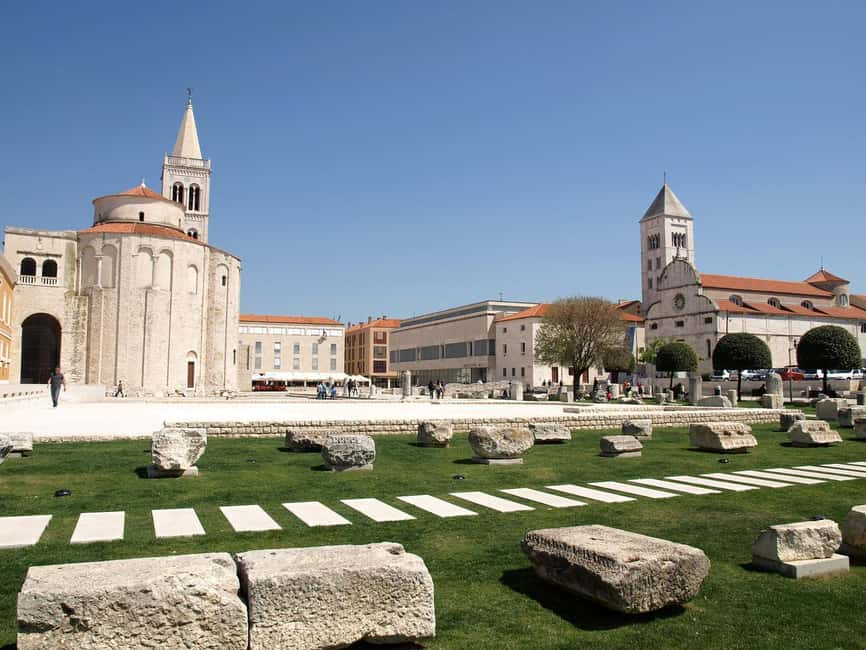
St. Donatus is one of Zadar’s most recognizable buildings. Its unusual round form makes it easy to spot, but a guide can explain why it matters and how it relates to the Roman Forum beside it. The tour includes the church, but entry is extra.
The timetable may not allow a long interior visit. I would use this part of the walk to understand the setting, then decide if you want to pay for entry later. That approach keeps the private tour moving while leaving room for a more focused visit when you are not watching the clock.
The Roman Forum and Zadar’s oldest center
The Roman Forum is the historical anchor of the walk. Here, ancient remains sit in the middle of the modern old town, giving you a clear sense of how Zadar was built layer by layer.
The guide’s role is especially useful at an archaeological site like this. Stones and columns do not explain themselves, and it is easy to miss how the forum once functioned as a public center. The tour promises a walk through roughly 2,000 years of history, and this is where the Roman part becomes most visible.
The forum also makes a strong pairing with St. Donatus. Ancient fragments, a monumental church, and surrounding streets occupy the same compact area. You can see the city’s past without spending an hour crossing between separate sites.
The stop is described as including a class, so expect explanation rather than a quick photograph. If ancient history is your main interest, tell the guide. Since this is a private group, the amount of detail can better match your level.
Still Zadar, at a slower pace:
- Zadar: Plitvice Lakes Guided Day Tour with Tickets
★ 4.9 · 3,148 reviews - Zadar: Kornati Boat Trip with Lunch and Swim Stops
★ 4.5 · 1,498 reviews - Zadar: Plitvice Lakes with Boat Ride and Zadar Old Town Tour
★ 4.9 · 1,368 reviews - Zadar: Kornati and Telašćica Full-Day Boat Trip with Lunch
★ 4.1 · 1,193 reviews
Široka ulica and People’s Square

Široka ulica is the main street through the old town and a useful place to shift from monuments to daily life. You will see how the historic center functions as a place for walking, meeting, shopping, and moving between major sights.
People’s Square adds another layer. As the Main Square, it connects civic life with the old town’s architecture. The tour uses it to show that Zadar’s history is not confined to ruins or churches. Public squares often reveal how a city still uses its old center, and this stop gives you that everyday perspective.
I like these two stops because they break up the sequence of formal landmarks. Without them, a walking tour can become a parade of names. With them, you get a better feel for the streets between the monuments.
The guide can also respond to practical questions here. One German-language review praised Martina for sharing ideas about further outings around Zadar, while another described her as able to arrange a spontaneous tasting of the local Maraschino liqueur. That does not mean a tasting is part of the tour, but it suggests a useful approach: ask Martina or your guide about local food and follow-up ideas if time allows.
Five Wells Square, St. Simon, and Land Gate
Five Wells Square is another stop tied to the city’s defenses and water supply. The name itself points to a practical part of old urban life, and the square helps connect the fortifications with the needs of people living inside them.
The Church of St. Simon broadens the religious side of the route beyond the cathedral and St. Donatus. You will not spend long at every church during a 90-minute walk, but the guide can help you understand how these buildings fit into Zadar’s compact center.
The route ends at Land Gate, one of the city’s notable entrances. This gives the walk a satisfying defensive and geographic frame, beginning near Nova vrata and reaching another major gateway. It also helps you see the old town as a fortified place rather than a random collection of attractive streets.
These stops are best for context. You may not receive an extended interior tour or a long pause at each location, but you will leave with a clearer mental map. That is valuable if you plan to explore on your own afterward.
Sea Organ and Greeting to the Sun
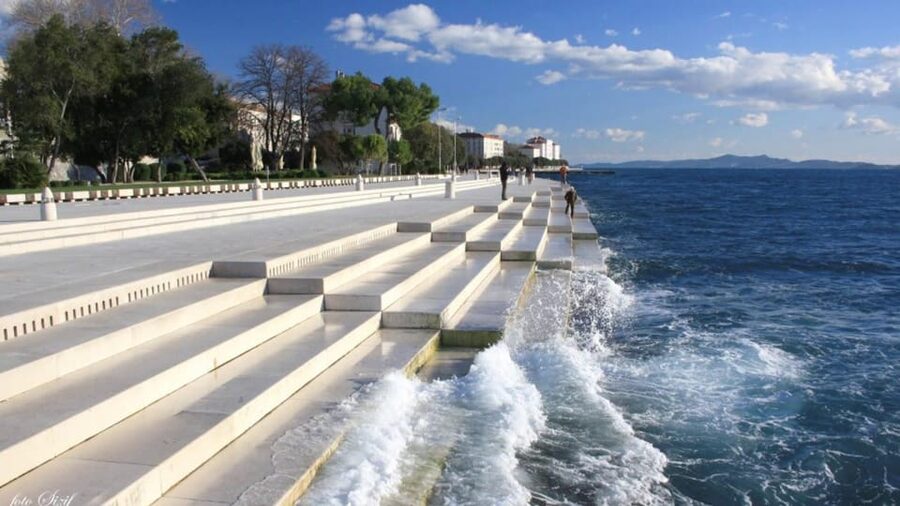
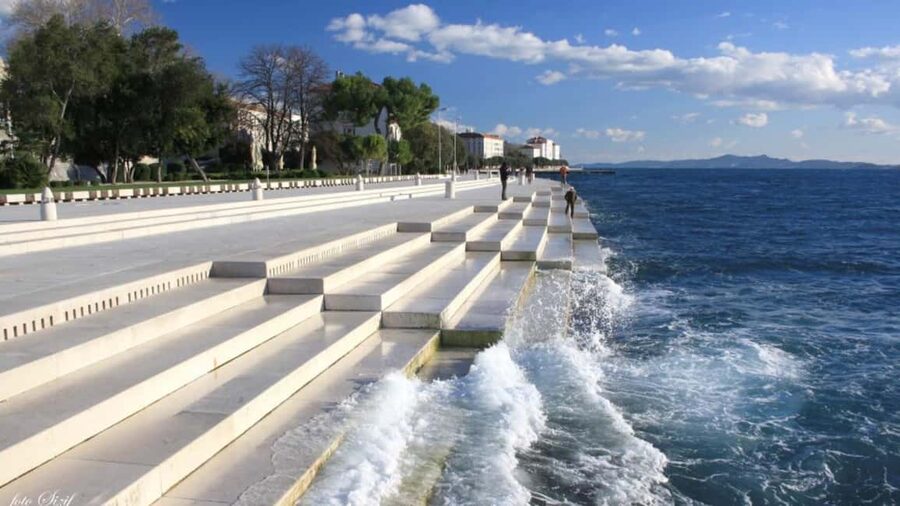
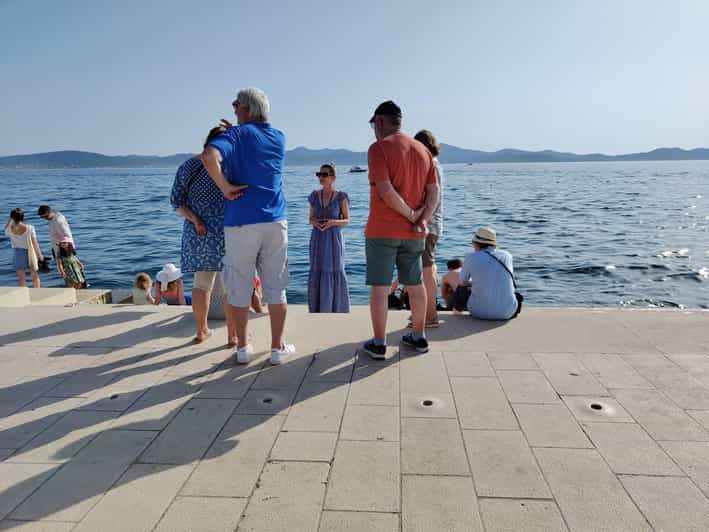
The waterfront is where old Zadar meets modern design. The Sea Organ and Greeting to the Sun are the tour’s most contemporary stops, and they give the walk a different rhythm after the churches, forum, and walls.
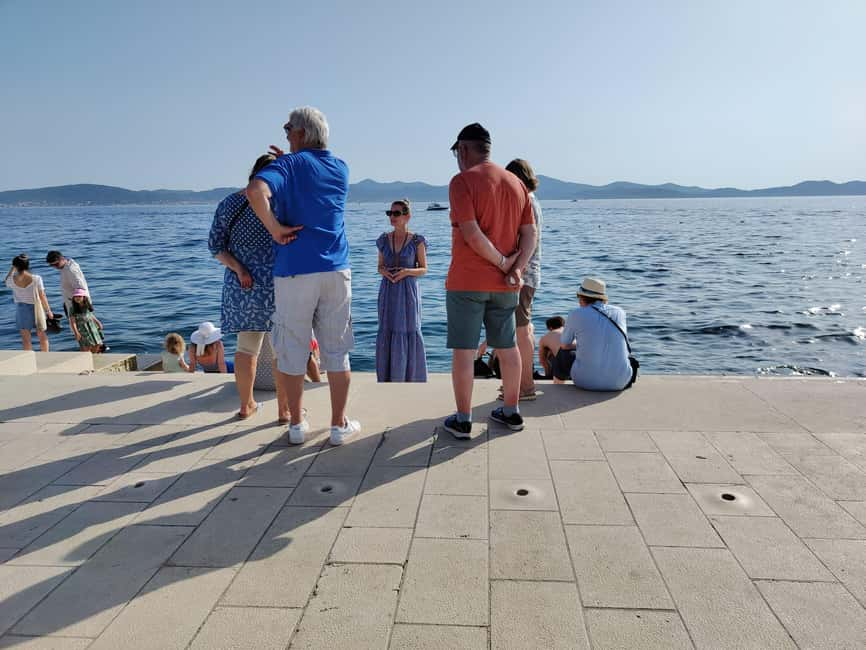
The Sea Organ uses the movement of the water to create sound. It is not a standard monument that you simply look at. You listen, watch the shoreline, and notice how the installation turns the Adriatic into part of the city’s public space.
Greeting to the Sun adds a visual element to the waterfront. Together, these installations show how Zadar has used modern art to give new purpose to its seafront. The guide can explain what you are seeing and connect it with the city’s older identity.
Timing matters here. The tour has only 1.5 hours, and the waterfront can invite you to linger. If you want time to sit by the Sea Organ or wait for the best evening effect at Greeting to the Sun, plan to return after the tour. The guide’s explanation gives you the framework, while a later visit lets you enjoy the site at your own pace.
What the private German format adds
The German-language option is the central reason to choose this experience. A clear explanation in your strongest language can make a major difference when the subject shifts between Roman history, church architecture, military defenses, and local customs.
The feedback about Martina is unusually specific. She is described as friendly, attentive, and passionate about her work, with excellent German and explanations that are lively and easy to understand. Another German-speaking group found the meeting point easy to reach and appreciated receiving ideas for other excursions.
You should still treat guide assignment as something to confirm when booking. Martina is named in the feedback, but the supplied information does not promise that she will lead every departure. The guaranteed feature is a German-speaking private guide.
The private group limit is up to 10 people. For two people, the $114 total price is a fairly substantial outlay. For eight to ten people, the per-person cost becomes much more attractive, especially compared with booking several separate activities. You are paying for direct attention, language support, and flexibility, not just for walking past the sights.
Practical details and who should book
The tour lasts 90 minutes, and starting times depend on availability. Check the time before booking, especially if you have a cruise departure, ferry connection, meal reservation, or another scheduled visit.
The activity is listed as wheelchair accessible. Still, you are moving through an old fortified center with historic streets and outdoor monuments. If you use a wheelchair or have mobility concerns, discuss the exact route with the provider before arrival, since the information supplied does not describe the surface conditions at every stop.
Cancellation is free up to 24 hours before the start time, and you can reserve now and pay later. That flexibility is useful when your coastal schedule may change. It does not remove the need to check availability and confirm the meeting details.
I would recommend this tour for:
- German-speaking couples, families, or groups who want a private introduction to Zadar
- First-time visitors who want a clear old-town map before exploring alone
- People who enjoy history but also want local-life context
- Groups of several people who can share the $114 price
- Anyone who wants to ask about food, Maraschino, or further outings in a relaxed setting
I would be more cautious if you want long interior visits, extensive archaeological detail, or a slow photography walk. The route covers many sights, and admission to St. Donatus and the cathedral costs extra.
Should you book this Zadar tour?
Book it if you want a short, private orientation in German that covers Zadar’s major old-town sights without wasting time. The combination of Roman Forum, St. Donatus, city walls, main squares, Land Gate, Sea Organ, and Greeting to the Sun gives you a strong first look at the city.
The best value comes when several people share the group price or when you care about having a guide focused on your questions. If Martina leads your tour, her warm, flexible approach is a welcome bonus, particularly for German-speaking visitors who want more than a memorized list of dates.
Skip it if you prefer to wander alone or plan to spend most of your time inside the cathedral and St. Donatus. For everyone else, this is a practical way to get Zadar’s story straight before you set off for a second look on your own.
FAQ
How long does the Zadar private walking tour last?
The tour lasts 1.5 hours, or 90 minutes. Starting times depend on availability.
What language is the tour conducted in?
The tour is conducted in German by a live German-speaking guide.
How many people can join the private group?
The price covers one private group of up to 10 people.
What is included in the price?
A private German-speaking tour guide is included.
Are entrance fees to St. Donatus Church and the cathedral included?
No. Entry to St. Donatus Church and the Cathedral of St. Anastasia is not included.
Is the walking tour wheelchair accessible?
Yes. The activity is listed as wheelchair accessible.
Where does the tour start?
The starting location is Ulica Nova vrata in Zadar.
Can the tour be changed to match my interests?
Yes. The tour can be customized according to your wishes and interests, so you should share your preferences with the local guide.
Just added around Zadar
- Zrmanja river & 3 Croatian seas boat tour★ 4.6 · 23 reviews
- Zadar: Ugljan and Preko Islands SpeedBoat Tour —with Drinks★ 4.9 · 81 reviews
- From Zadar: Romantic Sunset Sailboat Tour★ 5.0 · 5 reviews
- Zadar: Three Islands Private Boat Tour★ 5.0 · 80 reviews
- Zadar: Island-Hopping, Swimming & Snorkeling SpeedBoat Tour★ 5.0 · 33 reviews
- ✪ Zadar: Speedboat Tour to 3 Islands with Refreshing Drinks★ 4.7 · 14 reviews
- Zadar: Golden Hour Cruise RIB Tour Island Dinner Stop & Swim★ 4.8 · 73 reviews
- Zadar: Scenic trip to mountains, caves and rivers★ 5.0 · 34 reviews
Walking Tours, compared.
Walking Tour of Split and Diocletian’s Palace
Read our review →


Krka Waterfalls tour with Trogir Walking tour and Krka panoramic boat cruise
Read our review →
City Walls Early Morning or Sunset Walking Tour
Read our review →Browse the lists this tour appears in