Reviewed · SPLIT TOURS
Storytelling World War II in Split Tour
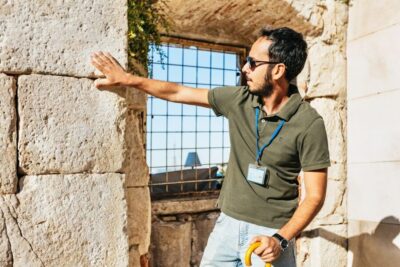
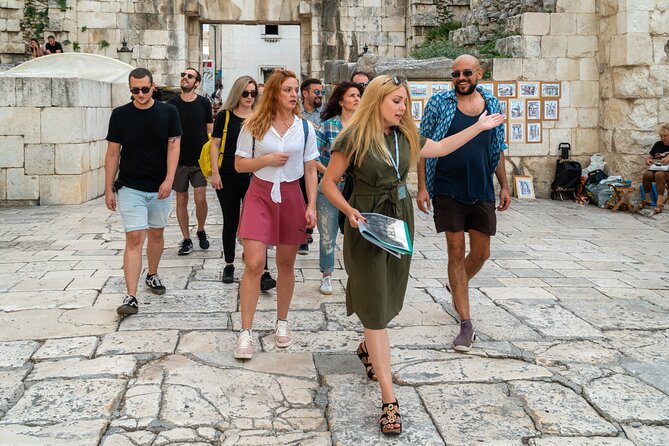
History hides in plain sight here. This two-hour walking tour connects Split’s ancient streets with the war years through local stories, old photographs, and the sharp eye of guide Ina Nikolic. I like the way it shows how World War II affected an actual city, not just a distant battlefield. I also like the use of archival images from the Museum of the City of Split, which let you compare wartime Split with the streets in front of you.
The main drawback is the pace. You spend a fair amount of time standing at each stop rather than walking continuously, so comfortable shoes and patience matter. At $60.01 per person, this is not a cheap orientation walk, but the small group limit of 15 and Ina’s depth of local knowledge make it worthwhile for anyone who wants more than a standard Roman palace tour.
In This Review
- Key points to know before you book
- Why World War II in Split deserves its own tour
- Starting on the Riva: how the war reached Split
- Green Market and the story of Split’s worst bombing
- The Eastern Gate and Diocletian’s Palace under attack
- Narodni Trg, where civic life turned frightening
- Marmontova Ulica and the city’s main street
- Prokurative: prisons, executions, and the final stop
- Ina Nikolic’s storytelling and the use of photographs
- Price, timing, and group size
- Who will get the most from this Split history tour?
- Should you book Storytelling World War II in Split?
- FAQ
- How long is the Storytelling World War II in Split Tour?
- Where does the tour begin?
- Where does the tour end?
- Is pickup available?
- What language is the tour offered in?
- How many people can join the tour?
Key points to know before you book
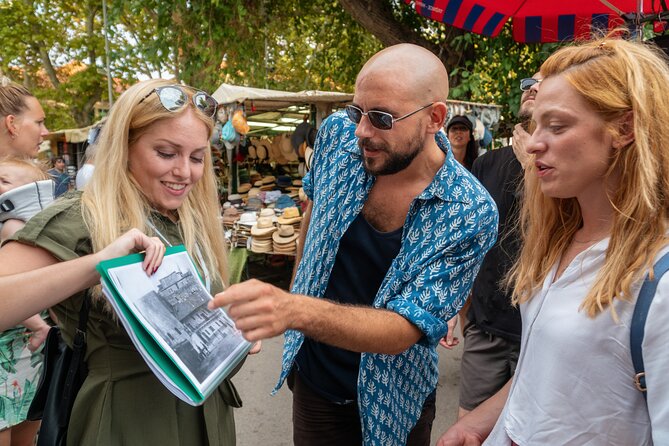
- Archival photos give the tour its edge: Ina uses wartime images from the Museum of the City of Split’s archive, including photographs and aerial maps that help you see what changed.
- The tour stays in central Split: You begin on the Riva and finish at Prokurative, with no long transfer between locations.
- Ina is the heart of the experience: Her storytelling covers World War II, Jewish history in Split, and links to the wars of the 1990s.
- Expect standing more than steady walking: The route has seven stops, but several are 15-minute talks in open public spaces.
- The group is capped at 15 people: That is a useful size for asking questions and seeing the photos.
- Ferry-port pickup is available: You can also arrange a meeting point in central Split, which helps if your group is arriving separately.
Why World War II in Split deserves its own tour
Most first-time visits to Split focus on Diocletian’s Palace, Roman ruins, seafood, and the waterfront. Those are good reasons to come, but they can make the city feel frozen in antiquity. This tour adds the difficult, more recent story of Split.
The route shows how the war touched ordinary civic spaces: a market, a main square, a palace entrance, a major street, and a waterfront promenade. You are not taken to a remote museum or a battlefield. Instead, you pause where daily life continued under pressure.
That approach is especially useful in Split because the old center is layered. Roman walls, medieval squares, modern shops, and wartime memories occupy the same few blocks. Ina uses that setting well. She brings the past into focus without asking you to imagine an entirely different place.
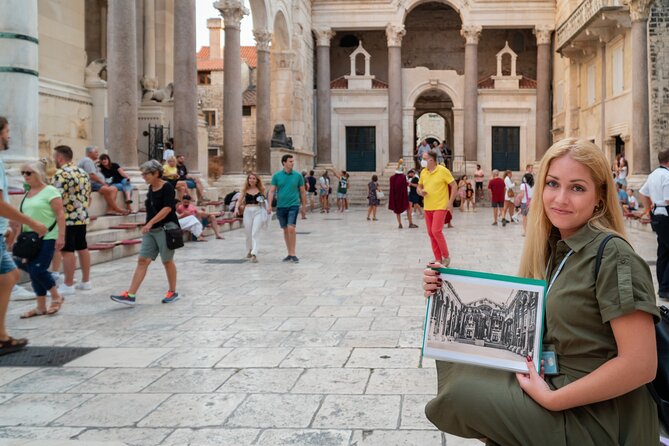
The photographs are central to the experience. They are not permanent displays in a museum gallery, so you would not normally encounter them during a casual visit. Seeing one while standing at the same location gives the history a physical reference point. An aerial map can also make the old center easier to understand, especially when modern buildings and busy streets have changed your view.
A few more Split trips worth comparing
- Split: Krka Waterfalls Trip with Boat Cruise and Swimming
★ 4.8 · 10,519 reviews - From Split: Krka Waterfalls, Food & Wine Tasting Tour
★ 5.0 · 9,326 reviews - Blue cave, Mamma Mia and Hvar, 5 islands speedboat tour
★ 5.0 · 7,150 reviews
Starting on the Riva: how the war reached Split
The tour begins on the Split Riva at Obala Hrvatskog narodnog preporoda 27. This is a practical meeting point in the center, close to the waterfront and easy to connect with the main old-town sights.
The opening talk explains when, where, and why the war began in Split. That framing matters. Rather than launching straight into isolated tragedies, Ina establishes the local setting first. You get a starting point for understanding the city’s position during the conflict.
The Riva is also a fitting place to begin because it gives your group room to gather before moving into tighter streets. The first stop lasts about 15 minutes and has no admission charge, like every location on this walk.
You should expect to stand while listening. The first stop sets the pattern for the day: short movements, then focused storytelling. If you prefer a tour with constant motion, this may feel slow. If you want time to ask questions and look at photographs, the format works well.
Green Market and the story of Split’s worst bombing
From the waterfront, the route moves to the Green Market, the town’s open-air produce market. Here, Ina tells you about what is described as the most horrific bombing in Split.
This stop gives the war a human scale. A market is an everyday place, connected with food, work, and routine. Learning what happened there makes it harder to think of bombing as an abstract military event.
The Green Market also helps break up the ancient-monument focus of a normal Split walk. You are seeing a working part of the city rather than only a celebrated landmark. The talk lasts about 15 minutes, so there is enough time for the story to develop without turning the stop into a long lecture.
Bring water if you are visiting in warm weather. The tour takes place outdoors, and the standing format means you may notice the heat more than you would on a sightseeing bus.
The Eastern Gate and Diocletian’s Palace under attack
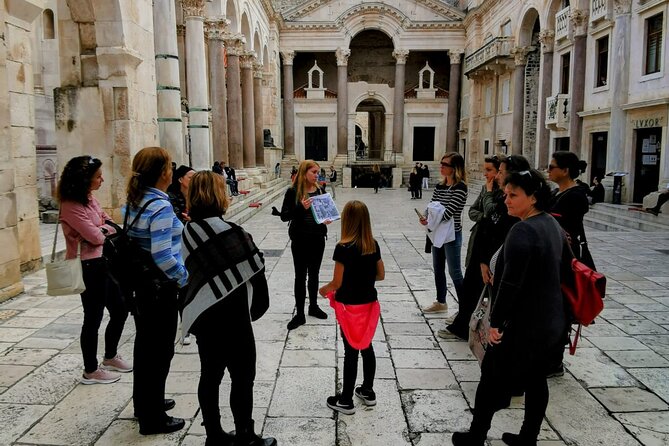
The next stop is the Eastern, or Silver, Gate of Diocletian’s Palace. The stop itself is brief, about five minutes, but its importance is clear: this was the eastern entrance to the Roman emperor’s palace.
At the gate, Ina explains how the war affected this part of the old center. The value here comes from the contrast. You may have already admired the gate as a Roman monument, but the tour asks you to consider it as a structure that also faced danger in the twentieth century.
The route then continues into the Peristyle, the grand central space of Diocletian’s Palace. This stop lasts about 15 minutes and looks at which parts of the palace were attacked during the war.
The Peristyle is one of Split’s most impressive spaces, but its beauty can make recent events easy to overlook. Ina’s photographs and explanations add another layer without taking away from the Roman setting. You can appreciate the columns and stonework while also learning how vulnerable this old center became during the conflict.
If you have already taken a standard palace tour, this section should feel different rather than repetitive. The focus is not on Roman daily life or imperial architecture. It is on damage, survival, and the way a modern war passed through an ancient town.
Still Split, at a slower pace:
- From Split: Krka Waterfalls, Food & Wine Tasting Tour
★ 4.9 · 6,598 reviews - Split/Trogir: Blue Cave, Mamma Mia, Hvar and 5 Island Tour
★ 4.6 · 6,320 reviews - Blue Lagoon & 3 Islands Cruise with Lunch from Split
★ 4.5 · 5,756 reviews - Split: Old Town and Diocletian Palace Walking Tour
★ 4.9 · 4,727 reviews
Narodni Trg, where civic life turned frightening
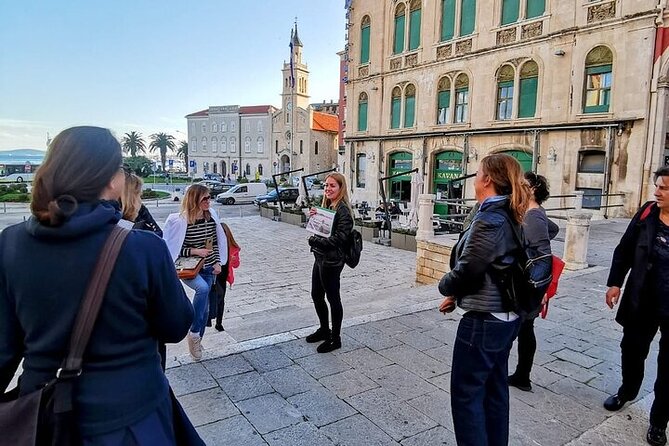
Narodni Trg, the main square of Split, is the next major pause. The talk here covers terrible events that took place in the square during the war.
This is one of the places where local storytelling has real value. A general account of World War II can explain dates and armies, but a square tells you where people gathered, worked, waited, and watched events unfold. Ina’s job is to connect those broad events to this particular place.
The stop takes about 15 minutes. Her photographs help you picture the square during the war years and compare it with the present-day view. That then-and-now element was one of the strongest features of the tour for me because it gives you something concrete to study while listening.
The square is also a natural place for questions. Ina is happy to discuss details and has been praised for explaining the subject clearly. She also brings Jewish history into the tour, a part of Split’s wartime story that many general city walks leave out.
Marmontova Ulica and the city’s main street
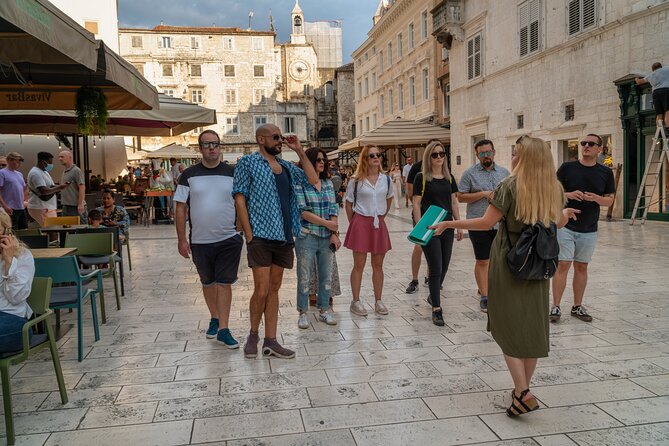
Marmontova Ulica is a shorter stop, about five minutes. It is one of the city’s main streets and another witness to wartime events.
Do not expect a long lecture here. The point is to show that the war was not confined to one damaged building or one dramatic square. Main streets also carried the marks and pressures of the period.
This stop is a good example of the tour’s overall method. Ina uses familiar places and changes your understanding of them. You may walk along Marmontova later in your visit and remember that its importance is not only commercial or architectural.
Because the route includes several short talks, you never need to walk far before receiving another piece of the story. That keeps the tour manageable for most people, though again, you will spend more time listening while stationary than covering miles on foot.
Prokurative: prisons, executions, and the final stop
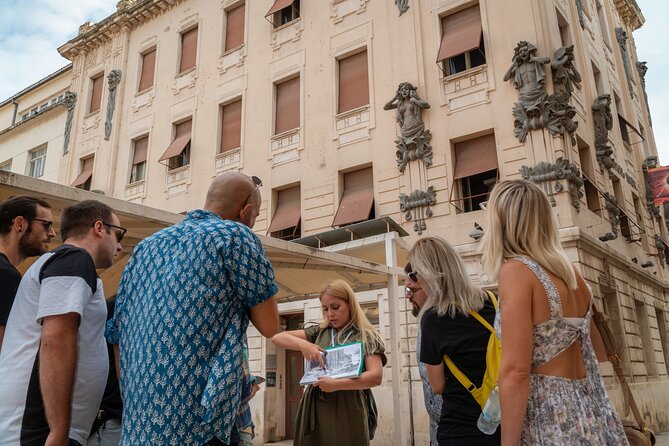
The tour ends at Republic Square, known as Prokurative, near the promenade and the old historic center. The final talk covers prisons and executions during the war.
It is a grim ending, but an appropriate one. The tour does not soften the violence or turn the period into a collection of picturesque stories. At the same time, the material is presented as local history, with attention to people and places rather than shock for its own sake.
Finishing at Prokurative is convenient. You remain close to central Split, so you can continue toward the waterfront, find a restaurant, or return to your accommodation without arranging a separate transfer. The end point also makes sense for a tour that has moved from public streets and markets to the darker side of wartime control.
Ina may run longer than the scheduled time when questions and discussion continue. That can be a pleasant bonus, but plan a little flexibility after the tour instead of booking something immediately afterward.
Ina Nikolic’s storytelling and the use of photographs
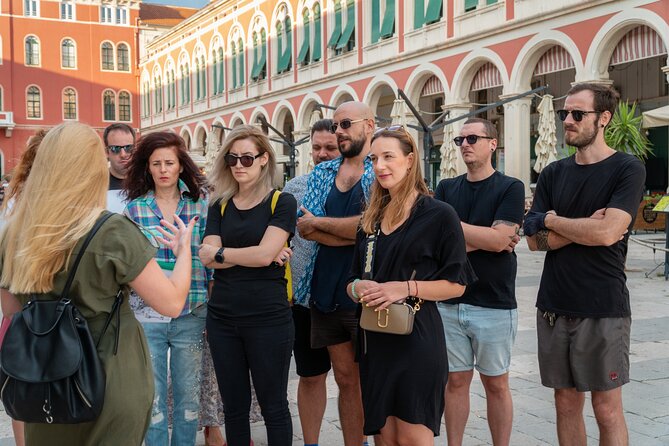
Ina Nikolic is a licensed local guide, and her enthusiasm shapes the experience. The strongest part of her approach is the connection between evidence and place. She does not simply describe old events, she shows you photographs and aerial maps while you stand in the locations being discussed.
Her storytelling also reaches beyond a narrow military account. The tour includes Jewish history in Split, and she connects the World War II period with the wars of the 1990s. That wider frame can help you see Croatian history as a continuing local story rather than a sealed chapter that ended in 1945.
She is also willing to answer questions and offer suggestions for the rest of your trip. Her friendly manner makes the serious subject easier to approach, especially for families or younger visitors with an interest in history.
One useful detail: a 16-year-old joined the tour with a parent and found it engaging. That suggests the presentation is accessible without being watered down. Still, the material includes bombing, prisons, and executions, so parents should decide if those subjects suit their children.
Price, timing, and group size
The price is $60.01 per person for about two hours. Since the route uses public streets and free-access sites, you are paying mainly for the guide’s research, storytelling, photographs, and interpretation rather than entrance fees.
That makes the value depend on your interests. If you only want to see Split’s main landmarks, a standard city walk may cost less and cover more general sights. If you want a focused account of the city during World War II, this tour offers material you are unlikely to gather by walking alone.
The group limit is 15 people. That is small enough to keep the discussion personal, though the quality of your experience will still depend on where you stand and how easily you can see the photographs. Stay near Ina when the group gathers.
The tour is offered in English. Pickup can be arranged at Split’s ferry port, Obala kneza Domagoja, and the meeting point can suit group members in the city center. Confirmation is sent within 48 hours of booking, subject to availability.
Most people can take part, and service animals are allowed. The route is near public transportation. Since much of the tour involves standing, I would still choose supportive shoes and avoid scheduling it when you are already worn out from a full day of sightseeing.
Who will get the most from this Split history tour?
I would choose this tour if you have a serious interest in World War II, local history, Jewish history, or the way modern events shape old cities. It is also a good choice if you have already seen Diocletian’s Palace and want a fresh reason to return to its streets.
Families with older children and teenagers can benefit from the visual material and direct storytelling. History buffs will appreciate that the tour goes beyond the usual tourist script, while casual visitors may enjoy the shorter route and the clear connections between stops.
I would be more cautious if you want a relaxed walk with plenty of time for photographs, shopping, or coffee. The tour is focused and sometimes heavy. You should also know that it is not a long-distance walk packed with landmarks. It is a series of outdoor talks, with standing at each location.
At $60.01, I see it as a specialist tour rather than a basic introduction to Split. You are paying for access to a less visible part of the city’s past and for Ina’s ability to make the places meaningful.
Should you book Storytelling World War II in Split?
Book it if you want to understand how World War II touched Split itself. The strongest reasons are Ina Nikolic’s personal storytelling, the archive photographs, and the route through places you will likely visit anyway.
Skip it if your main goal is Roman architecture, shopping, or a fast overview of the old town. For everyone else, especially history-minded visitors, this is a thoughtful two hours with a clear local focus. Leave room in your schedule for questions, wear comfortable shoes, and stay close enough to see the photographs. Free cancellation is available if you cancel at least 24 hours before the start time.
FAQ
How long is the Storytelling World War II in Split Tour?
The tour lasts approximately two hours.
Where does the tour begin?
It begins at Obala Hrvatskog narodnog preporoda 27 in central Split, on the Riva.
Where does the tour end?
The tour ends at Republic Square, also called Trg Republike or Prokurative, near Split’s historic center and promenade.
Is pickup available?
Yes. Pickup is offered at Split ferry port, at Obala kneza Domagoja. A flexible meeting point in central Split can also suit group members.
What language is the tour offered in?
The tour is offered in English.
How many people can join the tour?
The maximum group size is 15 people.
Just added around Split
- Walking Tour Split★ 4.7 · 61 reviews
- Unique vintage Tomos moped tour Split – Back to the ’80s★ 4.8 · 17 reviews
- Essential Diocletian’s Palace Tour for First-Time Visitors★ 4.8 · 19 reviews
- Trogir: White Lagoon, Maslinica & Blue Lagoon Speedboat Tour★ 4.8 · 11 reviews
- Split: Trogir Open Top Bus Trip + Free Split Walking Tour★ 4.1 · 17 reviews
- Trogir; Private walking tour of higlights of Trogir★ 4.7 · 3 reviews
- Trogir: Old Town Guided Walking Tour★ 4.6 · 76 reviews
- TROGIR: Blue Lagoon & 3 Islands Half-day Speedboat tour★ 4.6 · 28 reviews
Split Tours, compared.

Krka Waterfalls Trip with Boat Cruise and Swimming
Read our review →

Blue cave, Mamma Mia and Hvar, 5 islands speedboat tour
Read our review →
Split/Trogir: Blue Cave, Mamma Mia, Hvar and 5 Island Tour
Read our review →
Blue Lagoon & 3 Islands Cruise with Lunch from Split
Read our review →