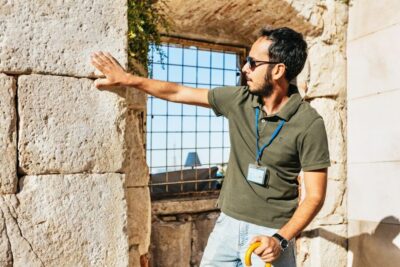
Reviewed · SPLIT TOURS
Split: Diocletian’s Palace Virtual Reality Experience
See the palace before the centuries changed it. This short VR experience recreates Diocletian’s Palace in 305 A.D., when the Roman emperor’s enormous retirement residence was new, complete, and far different from the weathered ruins you see today. I especially like the clear visual contrast between the ancient palace and modern Split, and the fact that the narration is offered in six languages. The air-conditioned room is also a welcome break from hot Dalmatian streets.
The main catch is time. The film lasts about 12 to 15 minutes, so this is an introduction rather than a full tour or detailed history lesson. At $15 per person, it offers good value if you want a vivid preview before exploring the real palace, but it may feel brief if you expect a substantial museum visit.
In This Review
- Key points to know before you go
- Why seeing the palace in 305 A.D. matters
- Arriving near the Golden Gate
- The 12 to 15-minute virtual journey
- Choosing your language
- What the real ruins look like afterward
- Is $15 a fair price?
- Who will enjoy this most?
- Where the experience falls short
- Practical tips for planning your visit
- Should you book the Diocletian’s Palace VR experience?
- FAQ
- Where does the Diocletian’s Palace VR experience begin?
- Where does the activity end?
- How long does the VR presentation last?
- What year does the virtual reconstruction show?
- What languages are available?
- Is admission to the real palace ruins included?
- How much does the experience cost?
- Can children take part?
- Can I cancel the booking?
Key points to know before you go

- The palace is shown as it looked in 305 A.D., giving you a useful picture of its original Roman form.
- The presentation lasts about 12 to 15 minutes, making it easy to fit into a morning or afternoon in Split.
- Narration is available in English, Croatian, German, Italian, Spanish, and French.
- The VR room is air-conditioned, a practical advantage during a hot summer visit.
- The experience is only about 50 meters from the Golden Gate, near the Greg of Nin statue.
- Children must be at least 8 years old, and the real palace ruins are not included in the $15 admission.
Why seeing the palace in 305 A.D. matters
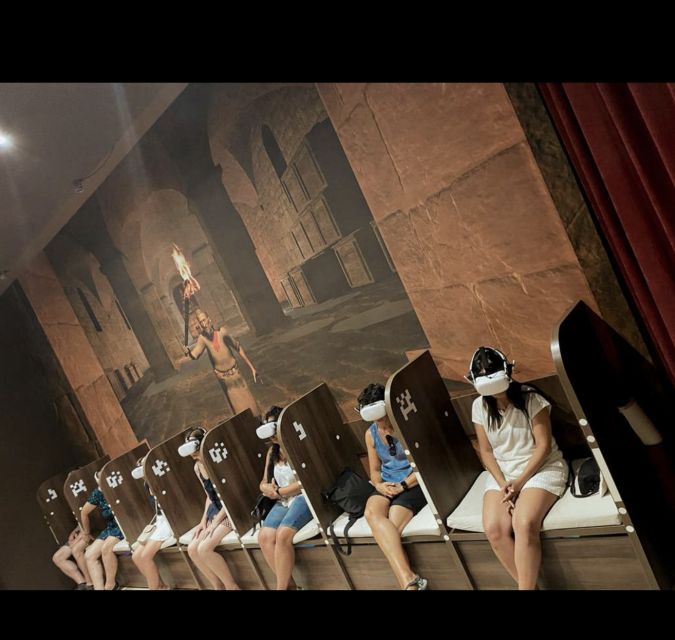
Diocletian’s Palace can be hard to understand when you first walk through it. It is not an isolated archaeological site with wide-open lawns and tidy signs. Modern Split has grown into and around the Roman complex, so cafés, homes, shops, streets, and later stonework all share the same space.
That is part of the palace’s charm, but it can also make the original design difficult to picture. The VR presentation solves that problem by showing the building in its imperial prime. You get a sense of the palace as a planned Roman residence, not simply as a collection of columns, walls, and basement rooms.
The date matters, too. Diocletian’s Palace was built for the emperor’s retirement in 305 A.D. The experience uses that moment as its setting, taking you back to the era when the complex was new. Instead of looking at a surviving fragment and guessing what once stood beside it, you see a recreation of the larger whole.
I find this most useful before visiting the ruins. Once you have seen the original version, the real palace becomes easier to read. A partial wall or ancient passage is no longer just an old stone surface. It becomes part of a much larger Roman plan.
A few more Split trips worth comparing
- Split: Krka Waterfalls Trip with Boat Cruise and Swimming
★ 4.8 · 10,519 reviews - From Split: Krka Waterfalls, Food & Wine Tasting Tour
★ 5.0 · 9,326 reviews - Blue cave, Mamma Mia and Hvar, 5 islands speedboat tour
★ 5.0 · 7,150 reviews
Arriving near the Golden Gate
Diocletian’s Dream is located about 50 meters from the Golden Gate, one of the main entrances to the old palace area. It is also about a one-minute walk from the Greg of Nin statue, the famous bronze figure whose toe is polished by people touching it for luck.
That central location makes this a simple stop to add to a day in Split. You do not need transport to a separate attraction, and the activity ends where it begins. I would place it early in your visit, ideally before spending much time among the ruins. The visual reconstruction can give you a basic map in your head before you start walking.
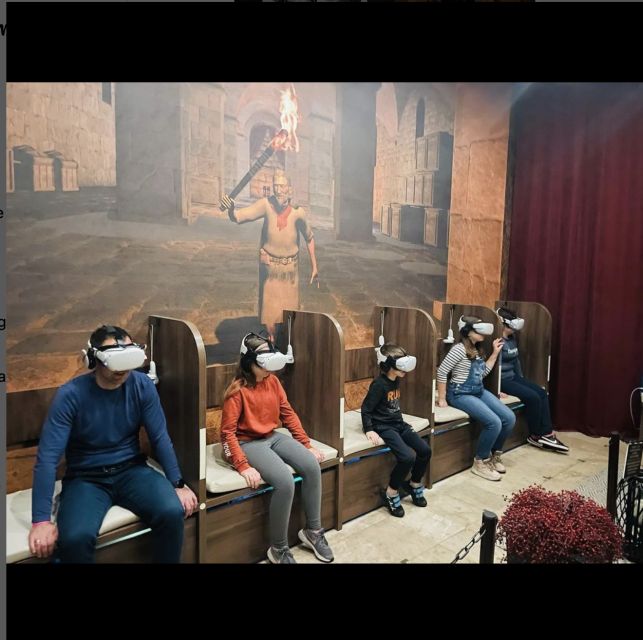
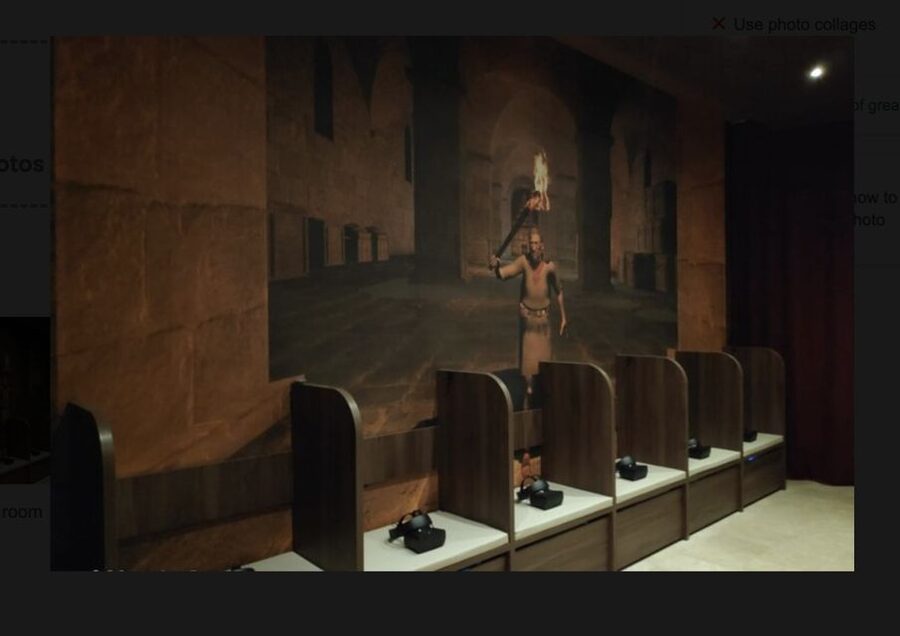
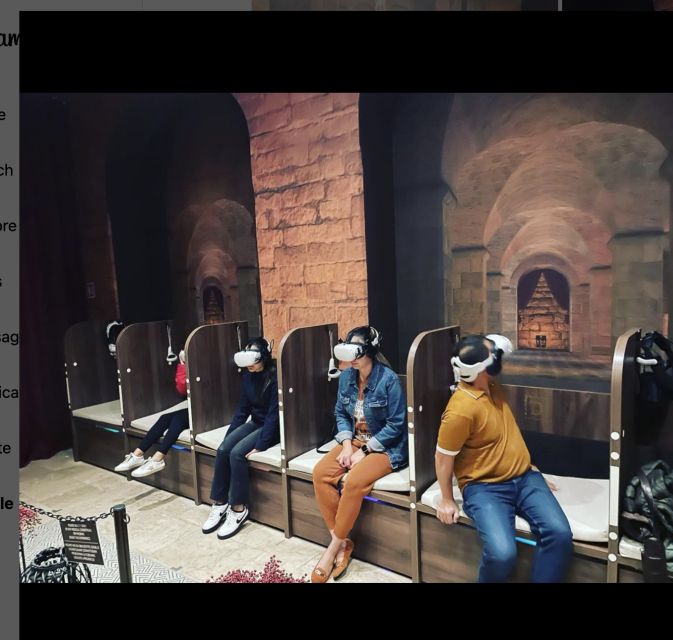
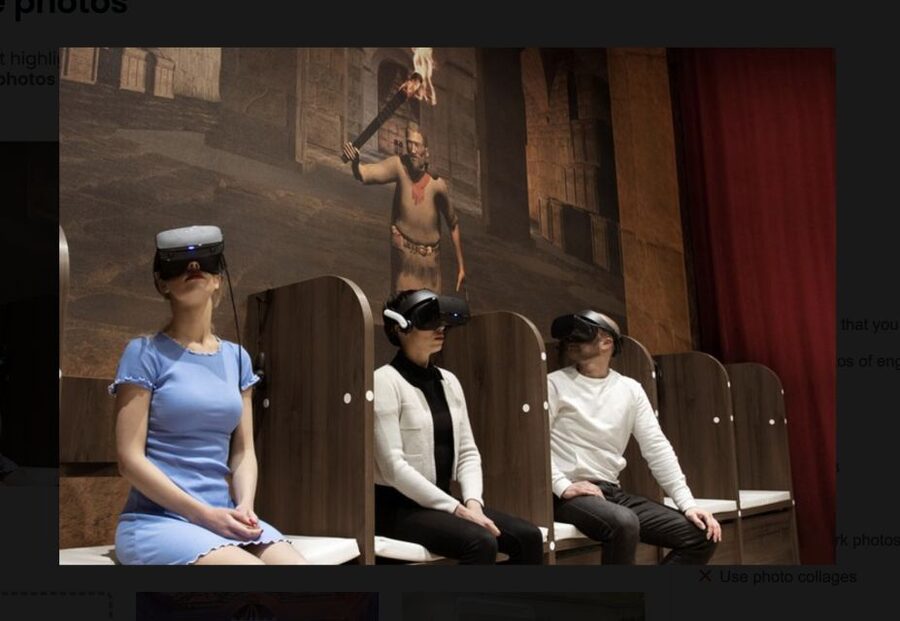
You enter a modern viewing room rather than an archaeological chamber. This is worth knowing because the setting is practical, not ancient. You are stepping away from the stone streets into an air-conditioned space, putting on the VR equipment, and watching a prepared presentation.
Food and drinks are not allowed, and you should not arrive intoxicated. Those rules are ordinary for an equipment-based attraction, but they are useful to know before you enter.
The 12 to 15-minute virtual journey
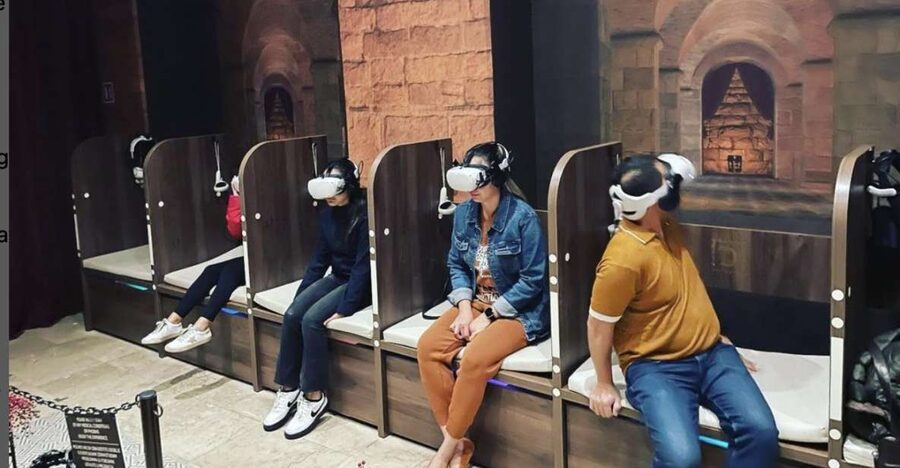
The heart of the activity is a short VR film about Diocletian, the palace, and Split’s Roman past. The equipment brings the recreated setting around you, giving you a view of the palace as it might have appeared in its golden era.
The presentation is not a conventional walking tour. You are not physically moving from one palace room to another, and you are not spending an hour examining individual architectural details. Instead, the short format gives you an overall impression of the complex and its place in Roman life.
That distinction is important. If you want a broad visual introduction, the format works well. If you want a detailed explanation of construction methods, religious customs, political events, or every surviving structure, you will need a separate walking tour or guide.
One of the enjoyable features is the changing viewpoint. The experience can take you above the scene, giving you a wider look at the palace and its layout. That higher perspective helps with scale, since the real ruins are spread through the center of Split and can otherwise feel like disconnected pieces.
The film also tries to keep the tone entertaining. It is not presented as a dry lecture, which makes it suitable for families and for anyone who wants history in a quick, visual form. Still, the short running time limits how much background it can provide. You will come away with a clearer picture, but not a complete account of Diocletian’s life.
Choosing your language
Narration is available in English, Croatian, German, French, Spanish, and Italian. This is one of the strongest practical features of the activity, especially for mixed-language groups.
You can focus on the pictures without trying to read small signs or keep up with a guide speaking another language. The language choice also makes the experience more useful for children or family members who would not follow an English walking tour comfortably.
The information is designed for a general audience. That makes it easy to follow, but it also means the historical treatment is fairly light. I would think of it as a visual starting point rather than a scholarly presentation.
If you are keen on Roman history, use the VR film to set up your visit, then spend more time outside looking at the actual remains. The combination gives you both the broad picture and the surviving details.
Still Split, at a slower pace:
- From Split: Krka Waterfalls, Food & Wine Tasting Tour
★ 4.9 · 6,598 reviews - Split/Trogir: Blue Cave, Mamma Mia, Hvar and 5 Island Tour
★ 4.6 · 6,320 reviews - Blue Lagoon & 3 Islands Cruise with Lunch from Split
★ 4.5 · 5,756 reviews - Split: Old Town and Diocletian Palace Walking Tour
★ 4.9 · 4,727 reviews
What the real ruins look like afterward
The best part of the experience may come after the headset is removed. You step back outside and see Diocletian’s Palace in its present form, with a new idea of what the stones once belonged to.
This change in perspective is especially useful in the palace’s less complete areas. The reconstructed film shows the complex as a functioning Roman residence. The ruins then show you what survived, what was altered, and what has been absorbed into later Split.
I like the pairing because it avoids a common problem with ancient sites: seeing impressive remains without knowing how they fit together. Here, the VR presentation gives you the missing context first. The outdoor visit then becomes more than a search for famous photo spots.
For the best use of your time, I would do the VR activity before entering or exploring the palace ruins. The real ruins entry is not included, so you will need to arrange and pay for that separately. The two activities are close together, but they are separate experiences.
You can also reverse the order and use the film as a recap. That works if you have already walked around the palace and want to see a possible reconstruction afterward. Still, the first approach is likely to help you get more from the ancient site.
Is $15 a fair price?
The admission costs $15 per person. The activity is short, so the price needs to be judged against what it provides, not against the length of a normal guided tour.
You are paying for a focused visual reconstruction, a comfortable viewing room, multilingual narration, and a new way to understand one of Split’s main sights. You are not paying for palace admission, a walking guide, or a long museum visit.
For me, the price makes sense if you already plan to spend time at Diocletian’s Palace. The VR film can make the ruins easier to understand, and that added context can improve the rest of your visit. It is also a handy choice when you need a short indoor activity during the heat of the day.
The value is weaker if you are looking for a full afternoon of history. At 12 to 15 minutes, the presentation is over quickly. Several aspects of Diocletian’s life and Split’s past can only receive a brief treatment in that time.
Think of the ticket as a visual orientation, not a replacement for exploring the palace. If you want both, the $15 cost is reasonable. If you only want a long, detailed history lesson, this will probably feel too limited.
Who will enjoy this most?
This experience suits first-time visitors who find the palace confusing at ground level. It is also a good choice for people who enjoy technology, families with children aged 8 and older, and anyone wanting a break from walking in the sun.
It works particularly well for:
- Families who want a short activity with a clear story
- Visitors who prefer pictures and animation to a long lecture
- People visiting Split for only a day
- Anyone planning to explore the palace ruins afterward
- Groups that need narration in English, Croatian, German, Italian, Spanish, or French
Children under 8 are not permitted. Older children may enjoy the changing viewpoints and the sense of being above the palace, though the brief historical explanation may be more useful to school-age children and adults.
The activity also suits visitors who have already taken a walking tour. A walking tour can explain what remains on site, while this presentation shows how the full palace may have looked. Combining the two gives you different types of information rather than repeating the same material.
Where the experience falls short
The short length is the clearest limitation. Fifteen minutes is enough to create a strong impression, but not enough to examine the palace structure in detail or provide a complete biography of Diocletian.
You should also keep your expectations in check about the phrase virtual tour. This is a recreated film experience, not a free-roaming exploration where you choose every room and route. The focus is on the visual story and the overall appearance of the palace.
That does not make it a poor activity. It simply defines the product more accurately. You are watching a compact historical presentation with VR equipment, not replacing an archaeologist or local guide.
Some people may also find the modern viewing room less atmospheric than the old palace itself. The air conditioning is welcome, but the setting does not add Roman character. The reward comes from the images and the perspective you gain afterward.
Practical tips for planning your visit
Book the experience as part of your palace visit, not as a stand-alone replacement for it. Since the activity begins and ends near the Golden Gate, you can continue directly into the old palace area when the film finishes.
Arrive with enough time to locate Diocletian’s Dream near the Golden Gate and the Greg of Nin statue. The meeting point is central, but Split’s old streets can be busy and confusing, especially when you are trying to find a particular doorway.
Choose your preferred narration language before starting. The available choices are English, Croatian, German, Italian, Spanish, and French.
Allow extra time after the VR presentation for the actual ruins. The $15 ticket covers the Diocletian’s Dream entrance only. Palace ruins entry is not included.
If your schedule is uncertain, you can reserve a place and pay later. Cancellation is allowed up to 24 hours before the activity for a full refund, which gives you some flexibility when planning a day in Split.
Should you book the Diocletian’s Palace VR experience?
I would book it if you want a quick, entertaining way to understand Split’s most important ancient site before seeing the remains in person. The palace reconstruction, overhead views, multilingual narration, and cool indoor room make it a sensible $15 add-on.
I would skip it if you want a long guided visit or detailed architectural study. The presentation is short, and the real value comes from using it alongside the palace ruins rather than instead of them.
For most first-time visitors, the best plan is simple: watch the VR presentation first, then walk through Diocletian’s Palace while the recreated image is still fresh. That way, the broken walls and later buildings begin to make sense as parts of a Roman imperial residence.
FAQ
Where does the Diocletian’s Palace VR experience begin?
It begins at Diocletian’s Dream, about 50 meters from the Golden Gate entrance to the palace and a one-minute walk from the Greg of Nin statue.
Where does the activity end?
The experience ends back at the same meeting point, Diocletian’s Dream.
How long does the VR presentation last?
The presentation lasts approximately 12 to 15 minutes.
What year does the virtual reconstruction show?
The experience takes you back to 305 A.D., when Diocletian’s Palace was in its original Roman era.
What languages are available?
Narration is available in English, Croatian, German, Italian, Spanish, and French.
Is admission to the real palace ruins included?
No. The ticket includes entrance to Diocletian’s Dream, but entry to Diocletian’s Palace ruins is not included.
How much does the experience cost?
The price is $15 per person.
Can children take part?
Children must be at least 8 years old. The experience is not suitable for children under 8.
Can I cancel the booking?
Yes. You can cancel up to 24 hours in advance for a full refund. You can also reserve and pay later, keeping your plans flexible.
Just added around Split
- Slatine – Island Hopping Excursion (Trogir/Blue Lagoon/Shipwreck)★ 4.0 · 24 reviews
- Krka Waterfalls & Primošten from Trogir, Seget, Čiovo & Kaštela★ 5.0 · 18 reviews
- Island Hopping Boat Excursion with Lunch (Trogir,Blue Lagoon, Šolta)★ 3.5 · 6 reviews
- From Trogir, Seget, Okrug: Krka Waterfalls & Šibenik Culture Tour★ 5.0 · 10 reviews
- From Split & Trogir: ATV Quad Tour on Island Čiovo★ 5.0 · 21 reviews
- Split: Blue Lagoon Boat Trip with Lunch, Wine and Snorkeling★ 5.0 · 3 reviews
- Split Sunset Stand Up Paddle Tour★ 5.0 · 16 reviews
- Split: Sunset Guided Kayaking Tour★ 4.8 · 71 reviews
Split Tours, compared.

Krka Waterfalls Trip with Boat Cruise and Swimming
Read our review →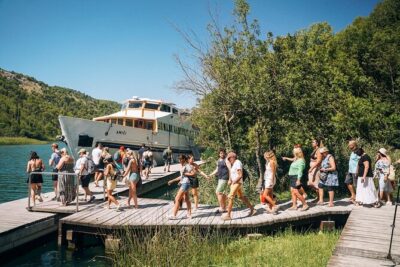
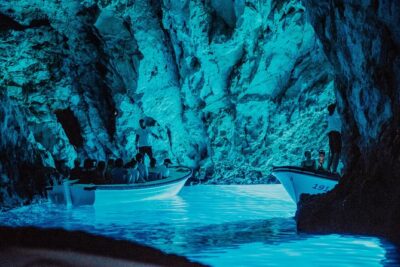
Blue cave, Mamma Mia and Hvar, 5 islands speedboat tour
Read our review →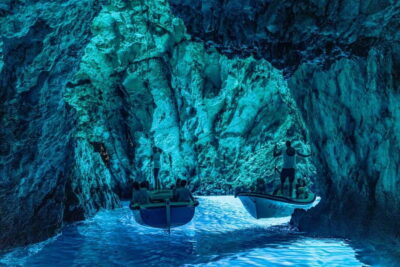
Split/Trogir: Blue Cave, Mamma Mia, Hvar and 5 Island Tour
Read our review →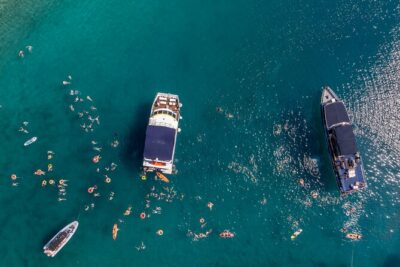
Blue Lagoon & 3 Islands Cruise with Lunch from Split
Read our review →