
Reviewed · TICKETS
Pula Arena Amphitheater Admission Ticket
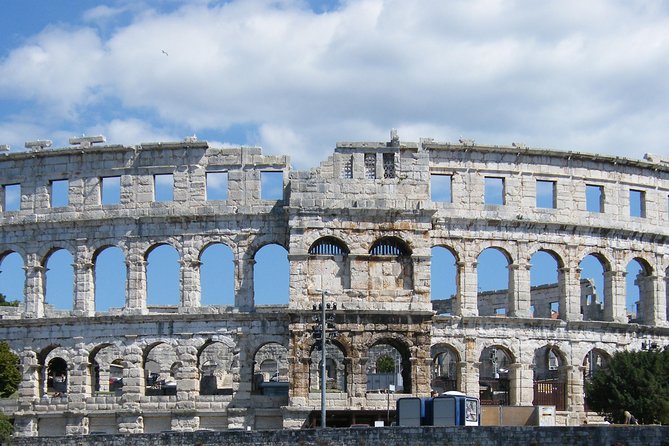
Pula’s Roman arena is hard to miss. This prepaid ticket gives you flexible entry to one of Croatia’s most impressive ancient sights, where you can walk the stone passageways, inspect the four levels, and picture gladiatorial contests inside the vast oval. I like the freedom to visit at your own pace, and I like that the ticket removes the worry of buying admission on arrival. The main drawback is simple: this is not a guided tour, and the voucher may need to be exchanged for an admission ticket at the entrance.
The Arena works best when you slow down. Look beyond the grand arches to the lower rooms, where displays explain ancient olive-oil production, and take time to view the structure from inside and outside. At about $15.38 per person, it is fair value if you care about Roman architecture, though some people may find the price a little high for a visit that lasts about an hour.
In This Review
- Key points to know before visiting Pula Arena
- Why Pula Arena deserves your time
- Entering the amphitheatre with a prepaid ticket
- What to see on the four floors
- The lower rooms and ancient olive-oil production
- Choosing the right time to visit
- How much value do you get for $15.38?
- Who will enjoy this visit most?
- Small problems to avoid at the entrance
- Is the Pula Arena ticket worth booking?
- FAQ
- How much does the Pula Arena admission ticket cost?
- How long does a visit to Pula Arena take?
- Is this a guided tour?
- What does the ticket include?
- Are food and drinks included?
- Is transportation included?
- Can I visit at any time?
- Do I need to exchange a voucher for an admission ticket?
- Does the ticket include a gladiator show?
Key points to know before visiting Pula Arena
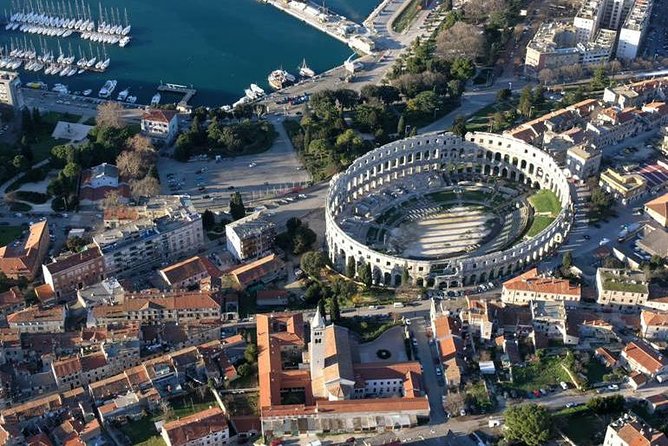
- Four levels of Roman architecture: Walk through the enormous outer walls and explore the surviving structure at your own pace.
- A flexible visit: Your ticket is valid during the amphitheatre’s opening hours, so you can fit it around a day in Pula.
- The underground rooms matter: Look below the arena for displays connected with ancient olive-oil production.
- A voucher may not be the final ticket: You may need to exchange your booking voucher at the entrance.
- Allow about one hour: That is enough for a steady visit, though anyone interested in Roman engineering may want longer.
- Check the closing time carefully: Last entry is one hour before the site closes.
Why Pula Arena deserves your time
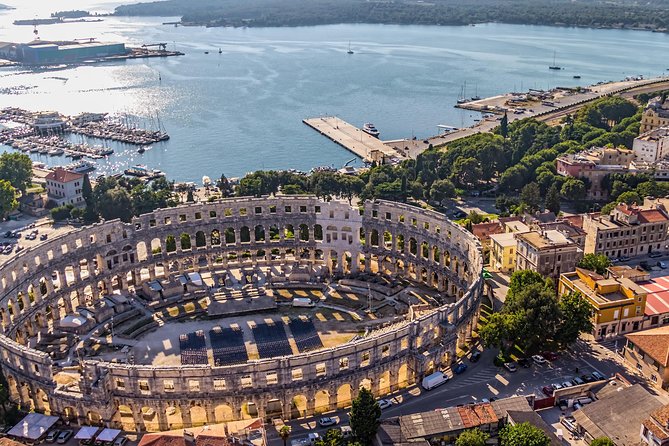
Pula is often called Croatia’s answer to Rome, and the Arena explains why. The amphitheatre sits just outside the old city walls, about 200 metres to the northeast, in line with the Roman street and land division system. You do not need to hunt for it. Its tall pale stone walls are one of the first things you notice in the city.
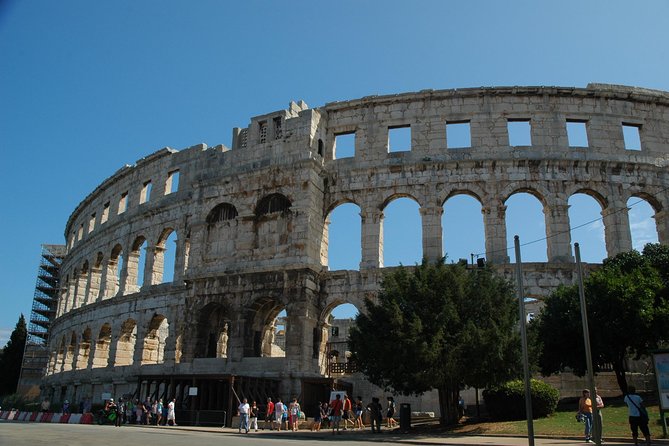
The scale is the first surprise. The outer wall measures about 132.5 metres along one central axis and 105.1 metres along the other, with a maximum height of roughly 32.45 metres. That is not a small provincial ruin. It is a major Roman building, and much of its form remains clear even after many centuries.
I like the way the Arena gives you both a grand view and small details. From outside, the repeated arches make the building feel almost too large for the surrounding streets. Inside, the arena floor, stone tiers, passageways, and lower rooms help you understand how the building worked.
The site is often compared with Rome’s Colosseum, but Pula’s setting gives it a different mood. It is less about a huge urban complex and more about one powerful structure that you can study without rushing from room to room. If you have visited the Colosseum, you may find the comparison useful. If you have not, Pula provides an easier first look at a Roman amphitheatre.
A few more Pula trips worth comparing
- Medulin -Kamenjak 5h boat trip with lunch & drinks on Sandra Boat
★ 5.0 · 1,621 reviews - Full-Day Boat Tour of the Medulin Archipelago from Medulin
★ 5.0 · 1,389 reviews - 3hours all inclusive Sunset&Dolphin Tour from Medulin on Sandra
★ 5.0 · 1,130 reviews
Entering the amphitheatre with a prepaid ticket
This experience is designed for a straightforward visit rather than a formal excursion. The admission fee and taxes are included, but transportation, food, and drinks are not. You make your own way to the Arena and decide how long to stay.
The booking provides a voucher. At the entrance, that voucher may be exchanged for the actual admission ticket. This process has generally been easy, but the voucher wording can be less clear than a standard ticket. Keep it ready on your phone or in printed form, and allow a little time for the exchange if there is a queue.
Prebooking is most useful if you want the reassurance of having admission arranged before reaching Pula. It does not necessarily mean you walk straight past everyone. A queue can still form, and the voucher does not turn the experience into a skip-the-line guided visit.
The maximum group size is listed as 15 people, but this is a self-guided admission product, not a scheduled group tour. You explore independently, and there is no named guide leading you through the building.
What to see on the four floors
Start with the outside walls. The amphitheatre’s arches and stonework give you the clearest sense of its size, especially when you stand back far enough to see the full height. The structure was built according to the Roman grid outside Pula’s city walls, a practical choice that also helped create room for a building of this scale.
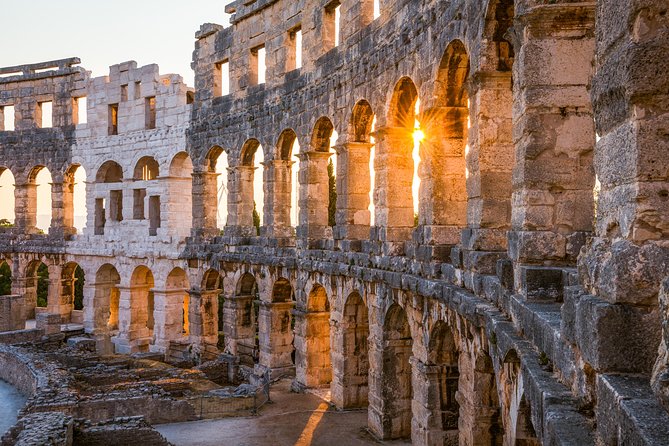
Once inside, walk slowly rather than treating the Arena as a quick photo stop. The ticket allows you to visit the four floors, and each level gives a different view of the architecture. From higher points, you can better understand the oval plan and the arrangement of the seating area. From lower sections, you get closer to the stone passages and the working parts of the building.
The arena is especially good for visitors who like to read a place through its design. Repeated arches, thick walls, and long corridors show how Roman builders handled crowds, movement, and a large public spectacle. You may not receive a detailed explanation at every point, so bring your curiosity and take time with any information panels available on site.
The setting adds to the appeal. The surrounding views include water, which gives the old stone a striking backdrop. That mix of Roman construction and coastal scenery is a major reason the Arena feels different from an inland ruin.
The lower rooms and ancient olive-oil production
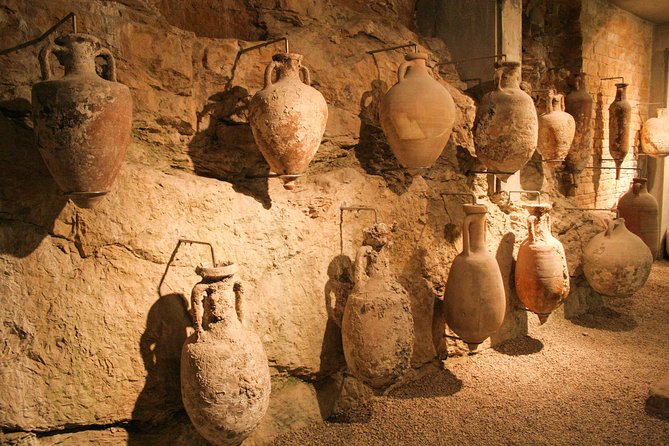
Do not leave after seeing the main arena. The lower area contains an exhibition connected with ancient olive-oil production, and it gives the visit a more local and practical side.
The outer walls attract attention because they are monumental. The olive-oil rooms remind you that ancient buildings were not only places for grand events. They were also tied to everyday work, trade, food, and agriculture. That small shift in focus makes the visit more rewarding.
I would make the lower rooms a priority, especially if you have already seen Roman amphitheatres elsewhere. The dramatic arches may look familiar, but the olive-oil display adds a detail connected with Istria and the wider life of the region.
One hour is enough to see the arena, walk the main levels, and visit this lower exhibition at a steady pace. If you read every panel, stop often for photographs, or care about construction details, plan to use as much of your opening-hour window as possible.
Still Pula, at a slower pace:
- Dolphin Watching & Sunset Boat Tour With Dinner and Drinks
★ 5.0 · 1,075 reviews - Pula: Kayaking,Snorkeling, Cliff jumping Tour with Wetsuit
★ 4.8 · 861 reviews - BOAT & KAYAK! Sea Adventure – Snorkeling & Cliff Jumps
★ 5.0 · 808 reviews - Pula: National Park Brijuni Island Visit & Dolphin Cruise
★ 4.5 · 788 reviews
Choosing the right time to visit
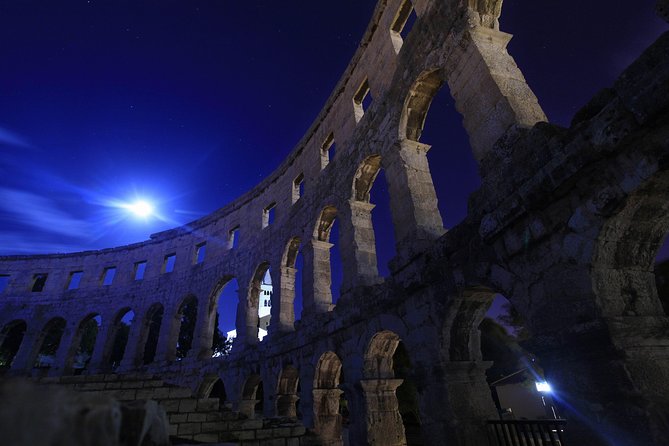
The ticket is valid anytime during the amphitheatre’s opening hours, which is one of its best features. You are not tied to a fixed departure or a guide’s schedule. That makes it easy to visit early, late in the day, or between other stops in Pula.
The published hours vary by date:
- September 1 to September 30: 8:00 a.m. to 9:00 p.m.
- October 1 to October 31: 8:00 a.m. to 8:00 p.m.
- November 1 to December 31: 9:00 a.m. to 9:00 p.m.
Additional seasonal information gives different hours for several periods: July and August, 8:00 a.m. to 11:00 p.m.; May and June, 8:00 a.m. to 9:00 p.m.; September, 8:00 a.m. to 9:00 p.m.; April, 8:00 a.m. to 8:00 p.m.; October, 9:00 a.m. to 7:00 p.m.; and November through March, 9:00 a.m. to 5:00 p.m.
Because these published times do not match perfectly, check the current hours before you set out. The practical rule is more important than the exact seasonal table: last entry is one hour before closing, and you should arrive at the entrance no later than one hour before the end of working hours.
An early visit can be a smart choice. A Monday morning visit around 9:30 a.m. was described as having very few people, even though crowds had been expected. Early hours also give you a better chance to look through the walls and lower rooms without feeling hurried.
Evening can work well during the longer summer hours, and the stone may look especially attractive later in the day. There may also be gladiator performances on some evenings, but those are separate events. This admission ticket does not include a gladiator show, so check the event schedule if that is part of your plan.
How much value do you get for $15.38?
At about $15.38 per person, this is not the cheapest sight in Pula, but the price is reasonable for one of the city’s defining monuments. You are paying for access to a very large and well-preserved Roman structure rather than a short viewing platform or a single small gallery.
The value depends on how you visit. If you rush through in 20 minutes and skip the lower rooms, the ticket may feel expensive. If you take an hour to walk the four floors, study the construction, and visit the olive-oil exhibition, the price makes more sense.
Prebooking also has practical value. You know the admission cost in advance, and you have a reservation to present at the entrance. That can make a busy sightseeing day easier, though you should not assume the voucher guarantees instant entry.
The main thing you do not receive is personal interpretation. There is no guide explaining the games, the Roman building methods, or the daily life connected with the amphitheatre. If you want a story-led visit, you would need to arrange a separate guide or use the information provided at the site.
Who will enjoy this visit most?
I would recommend the Arena to anyone interested in Roman architecture, ancient public buildings, or Pula’s identity. It is also a strong choice for families who prefer to move at their own speed, since the visit is short, open-ended, and easy to fit into a larger day.
Photographers will appreciate the repeated stone arches and the contrast between the old walls and the water beyond. History-minded visitors should spend extra time below the arena, where the olive-oil production display adds more than the usual gladiator story.
The ticket also suits independent sightseers who dislike fixed itineraries. You can visit before other attractions, return during a long opening period, or choose an early morning slot without joining a group.
It may disappoint you if you expect a guided tour, a staged performance, or a large set of interactive exhibits. The strength of this product is access, not entertainment. You need to bring your own pace and interest.
The site is near public transportation, and service animals are allowed. Most people can participate. Transportation to and from the attraction is not included, so you will need to arrange your own route through Pula.
Small problems to avoid at the entrance
The biggest practical issue is understanding what you have purchased. In some cases, the booking voucher must be exchanged for an admission ticket at the Arena. The exchange has been simple, but unclear voucher information has caused confusion.
Keep your confirmation available and ask at the entrance where to redeem it. If there is a problem with the reservation, contact the supplier’s bookings department by phone. The supplied information specifies calls only, not text messages.
The experience is non-refundable and cannot be changed for any reason. That makes checking the date, opening hours, and seasonal closing time especially important before you pay.
Also separate the ordinary admission from special events. A negative test or health passport was once associated with the gladiator show, not with standard Arena entry. The gladiator performance is not included in this ticket.
Is the Pula Arena ticket worth booking?
Yes, for most first-time visitors to Pula. The Arena is the city’s major ancient sight, its walls are unusually complete, and the visit offers more than a quick look at a famous façade. I especially like the freedom to explore four floors and the extra olive-oil display below.
Book it if you want a flexible, independent visit and feel comfortable reading the site without a guide. Arrive at least an hour before closing, allow around one hour inside, and confirm the current hours because the published seasonal schedules vary.
Skip this particular ticket if you need transportation, a personal guide, or a performance included in the price. In that case, standard admission is still worth considering, but this product may not match what you want. For a straightforward look at one of Croatia’s largest Roman monuments, though, it is a sensible addition to a Pula day.
FAQ
How much does the Pula Arena admission ticket cost?
The listed price is $15.38 per person.
How long does a visit to Pula Arena take?
The visit lasts approximately one hour, although you can stay within the opening hours and explore at your own pace.
Is this a guided tour?
No. This is a self-guided admission ticket. You explore the amphitheatre independently.
What does the ticket include?
The ticket includes entrance to the Pula amphitheatre, along with all fees and taxes.
Are food and drinks included?
No. Food and drinks are not included.
Is transportation included?
No. Transportation to and from the attraction is not included. The Arena is near public transportation.
Can I visit at any time?
You can visit anytime during the amphitheatre’s opening hours. The last entrance is one hour before closing.
Do I need to exchange a voucher for an admission ticket?
Yes, the booking voucher may need to be exchanged for the actual admission ticket at the entrance.
Does the ticket include a gladiator show?
No. A gladiator show is not included in this admission ticket. Separate evening performances may be available, depending on the schedule.
Just added around Pula
- Pula Sightseeing Walking Tour★ 5.0 · 3 reviews
- Pula Essentials Walking Tour★ 5.0 · 62 reviews
- Pula: Sunset/Night-time Illuminated Transparent Kayak Tour★ 4.0 · 9 reviews
- Pula Discover Scuba Diving Package★ 4.5 · 18 reviews
- Pula Boat Trip with Snorkeling★ 4.0 · 7 reviews
- Pula Kayak, Cliffs & Snorkeling Adventure★ 5.0 · 164 reviews
- Pula Kayaking at Blue Cave with Cliffs Tour and Snorkeling★ 5.0 · 4 reviews
- Private Sunset Dolphin Excursion with Dinner and Animation★ 5.0 · 13 reviews
Tickets, compared.

Plitvice & Rastoke Guided Day Trip with Ticket
Read our review →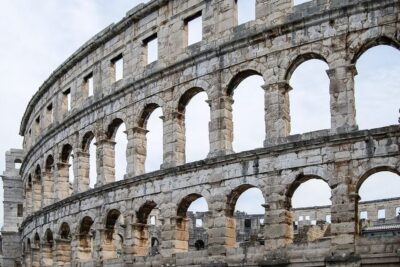

Plitvice Lakes Guided Tour with Entry Tickets
Read our review →
Rastoke & Plitvice Lakes Guided Tour with Ticket
Read our review →
Plitvice Lakes with Ticket & Rastoke Guided Tour from Zagreb
Read our review →
Skip-the-Ticket-Line Museum of Broken Relationships
Read our review →
Browse the lists this tour appears in