
Reviewed · CYCLING TOURS
Marjan Park & Split City Bike Tour
Split is best seen on two wheels. This three-hour ride combines shady Marjan Park with old-city sights, harbor views, and stories from local guides who know where the city feels most like itself. I like the mix of nature and history, and I like that the route gets you away from the thickest crowds without skipping Split’s main landmarks.
The tour costs about $60.07 per person and includes a good bike, helmet, bottled water, photos, insurance, and a licensed English-speaking guide. I also like the small-group limit of 16 people, plus guides such as Simon, Kazi, Basko, Lovre, Toma, Sven, Tomas, and Andreij, who have been praised for adding personal touches. The main drawback is the climb up Marjan Hill. It is manageable for people with moderate fitness, but a regular bike can make the uphill section feel serious, especially in hot weather.
In This Review
- Key Things to Know Before You Ride
- Why a Bike Is a Smart Way to See Split
- Marjan Park: Shade, Stone, and Island Views
- Matejuška Shows Split’s Everyday Side
- Riva and the Palace of Diocletian
- Guides Make the Difference
- Bikes, Safety, and Physical Effort
- Choosing the Best Time of Day
- Is $60.07 a Fair Price?
- Who Should Book This Ride?
- Final Take: A Strong First Look at Split
- FAQ
- How long does the Marjan Park and Split City Bike Tour last?
- How much does the tour cost?
- What is included in the tour?
- Where does the tour start and finish?
- How difficult is the cycling?
- How many people can join the tour?
- What happens if bad weather cancels the tour?
Key Things to Know Before You Ride
- Marjan Hill supplies the tour’s best views, with island panoramas, wooded paths, small beaches, old churches, and hermit caves.
- The ride mixes city streets with a real uphill section, so comfortable clothing and moderate fitness matter.
- Matejuška feels local and relaxed, with fishing boats, cold drinks, conversation, and occasional impromptu music.
- Diocletian’s Palace is more than a photo stop, since your guide points out original sections of the 1,700-year-old complex.
- Evening departures can be especially appealing, bringing cooler temperatures and golden-hour light.
- The route can feel personal, with guides adjusting the ride to the group and adding local stories about Croatian culture and sport.
Why a Bike Is a Smart Way to See Split
Split’s old center is compact, but the city’s best viewpoints and quieter corners sit beyond the palace walls. A walking tour can explain Diocletian’s Palace well, yet it will not take you through Marjan Park’s shaded roads or up toward the hilltop views.
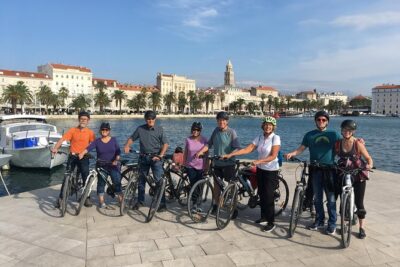
This ride gives you a useful first look at the city. In about half a day, you see the Riva promenade, green market, Matejuška, Marjan Park, and the palace area. You also get a bit of exercise, which may be welcome after a long ferry ride or a morning spent sitting in cafés.
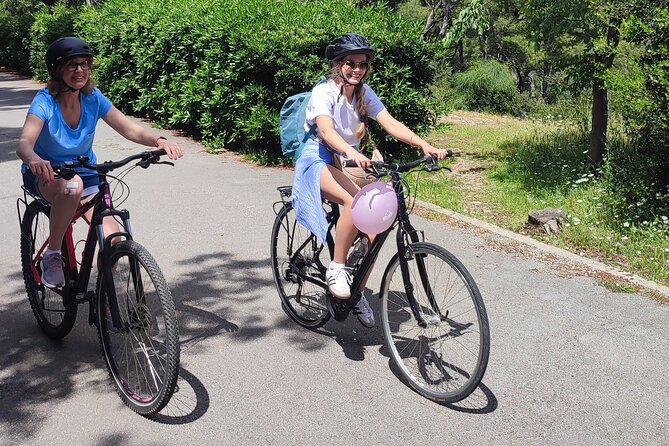
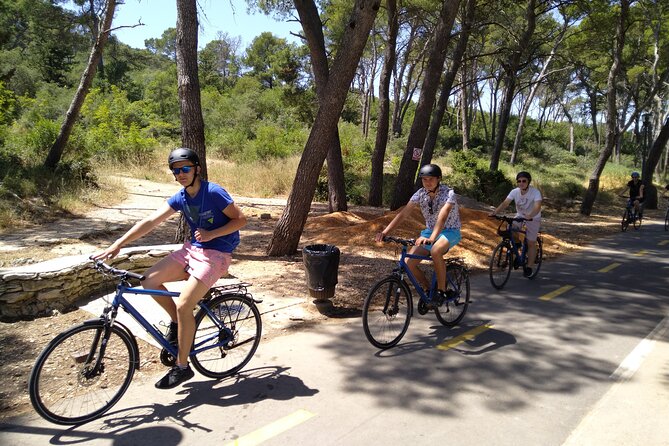
I especially like the contrast. One moment you are riding below pine trees with the city behind you. Later, you are beside the waterfront, then moving past market stalls and Roman-era stone. Split can feel like several different places packed into one small area, and the bicycle helps connect them.
The route is not a race. The point is to stop, listen, look around, and let the guide explain what you are seeing. That makes this more than a simple bike rental with a route map.
More bike rides around Split:
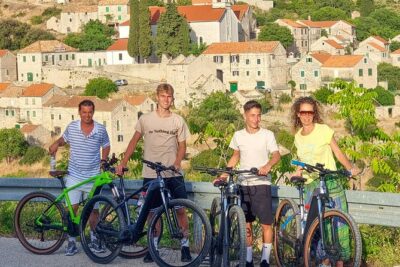
- City Bike Tour of Split
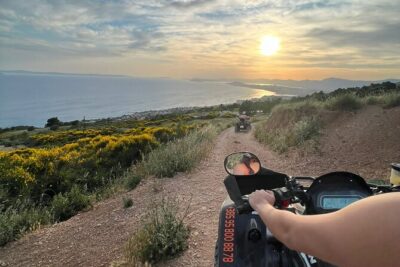
★ 5.0 · 331 reviews - Quad Biking Off Road Tour starting 10 minutes drive from Split
★ 5.0 · 144 reviews - Split 3-Hour Guided Bike Tour
★ 4.8 · 117 reviews
Marjan Park: Shade, Stone, and Island Views
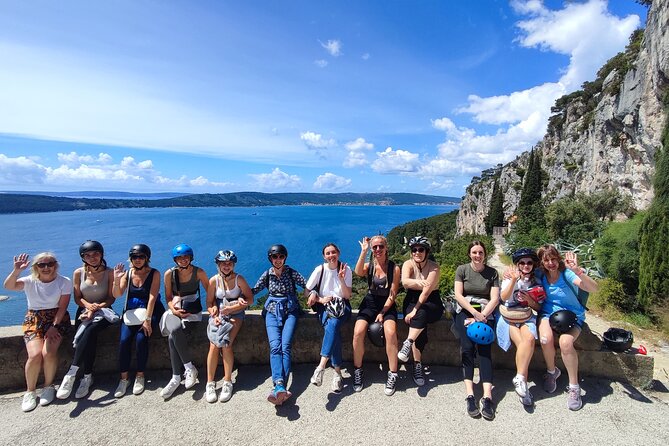
Marjan Park receives roughly two hours of the tour, making it the main event. The park sits just beyond central Split and gives you a break from traffic, pavement, and crowds.
The ride passes small beaches, historic structures, old churches, and stone-covered caves. These details give Marjan a particular character. It is not just a green area for cycling. The hill has long been tied to Split’s religious life, local leisure, and views across the Adriatic.
As you climb, you pass Saint Jerome Church and a hermit’s cave. The route then opens toward views of the islands. This is the point where the bike becomes especially useful. You can cover more ground than you would on foot, yet still stop easily when the view deserves a pause.
The uphill section deserves honest attention. One person who regularly cycles found the route comfortable but still pointed out that an electric bike would make the climb easier. That is good advice. You do not need athlete-level fitness, but you should be comfortable riding uphill for part of the tour.
The supplied guidance calls for a moderate fitness level. Bring sunscreen, sunglasses, a hat, comfortable shoes, and light clothing. Bottled water is provided, but warm-weather cyclists may still want to pace themselves and use the rest stops wisely.
The reward is more than a single lookout. You get changing views as the route rises, along with the quieter feeling of being outside central Split. I would consider Marjan the strongest reason to choose this tour instead of a city-only bicycle ride.
Matejuška Shows Split’s Everyday Side
After the park, the ride reaches Matejuška Pier for about 20 minutes. This is a short stop, but it gives the tour a different mood.
Matejuška is tied to the city’s fishing tradition and local social life. It is a place for a cold drink, a chat, and sometimes an impromptu concert. From the pier, you also get a good view back toward the old parts of Split.
I like this stop because it is not built around a grand monument. The appeal is the atmosphere and the connection to ordinary city life. You see where people gather, relax, and meet friends, rather than only the places marked in guidebooks.
The stop is brief, so do not expect a long break or a full meal. Think of it as a chance to look across the harbor, hear a local story, and catch your breath before returning toward the center.
Riva and the Palace of Diocletian
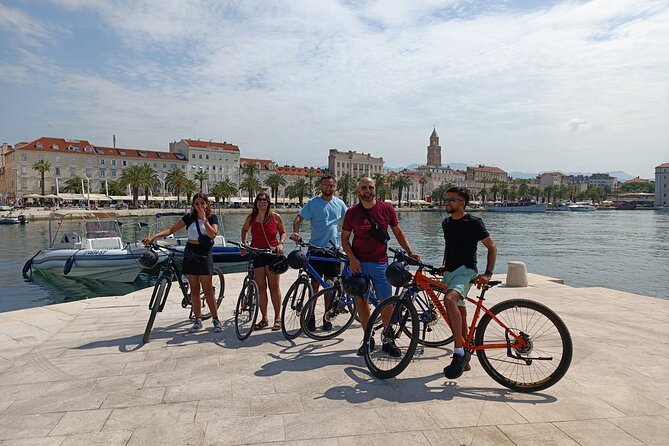
The final major portion of the ride moves through the Riva promenade and past the green market before reaching Diocletian’s Palace. This section places Split’s modern public life beside its Roman past.
The palace was built around 1,700 years ago for Emperor Diocletian, the last emperor of a unified Roman Empire. You do not enter a remote archaeological site. The palace is woven into the city, with people living, shopping, eating, and walking among ancient walls and later additions.
Your guide points out original sections and explains how the palace fits into present-day Split. That context matters. Without it, the old stone can look like a collection of impressive fragments. With a local guide, you get a clearer sense of how the palace shaped the streets and public spaces around it.
The green market adds another useful layer. It shows Split as a working city, not only a historic center designed for sightseeing. The Riva, meanwhile, gives you the classic waterfront view and an easy way to understand how the center faces the sea.
If you follow Game of Thrones, you may also enjoy the small filming references included along the way. They are an extra, not the main reason to book. The palace and the city’s Roman foundations deserve attention even if you have never watched the show.
A few more Split trips worth comparing
- Split: Krka Waterfalls Trip with Boat Cruise and Swimming
★ 4.8 · 10,519 reviews - From Split: Krka Waterfalls, Food & Wine Tasting Tour
★ 5.0 · 9,326 reviews - Blue cave, Mamma Mia and Hvar, 5 islands speedboat tour
★ 5.0 · 7,150 reviews - From Split: Krka Waterfalls, Food & Wine Tasting Tour
★ 4.9 · 6,598 reviews
Guides Make the Difference
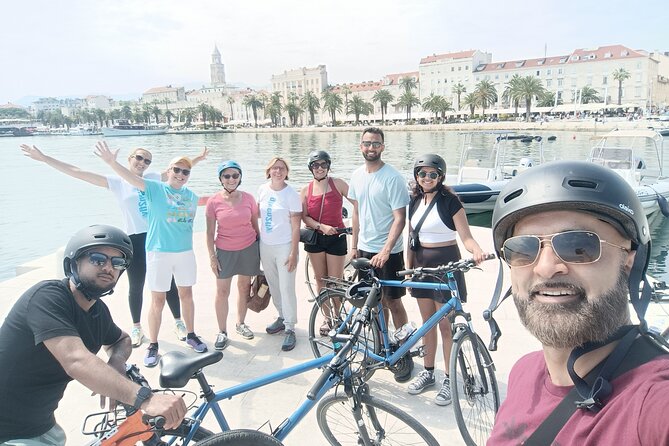
A guided bicycle tour depends heavily on the person leading it. The information provided names several guides, and the strongest praise centers on their warmth, local pride, and willingness to shape the ride around the group.
Simon is noted for his enthusiasm about Split’s natural beauty and for sharing Croatian culture. Kazi is described as friendly and eager to explain historical and cultural details. Basko has added local stories about Croatian sporting culture and, on one ride, spent extra time with the group.
Lovre is especially associated with evening rides, when the lower heat and golden light make photography easier. Toma has been praised for presenting favorite local places, while Sven has adjusted the route to suit the group and pointed out strong sightseeing stops. Tomas and Andreij also receive credit for friendly hosting and well-chosen routes.
The practical lesson is simple: this is not a fixed, silent procession behind a guide. The best version of the tour has room for questions, personal stories, and small changes based on the group’s pace and interests.
That also means the exact feel can vary by departure and guide. One outing may focus more on history, another on local culture, sport, views, or photography. I see that as a strength, provided you are looking for a human guide rather than a tightly scripted audio tour.
Bikes, Safety, and Physical Effort
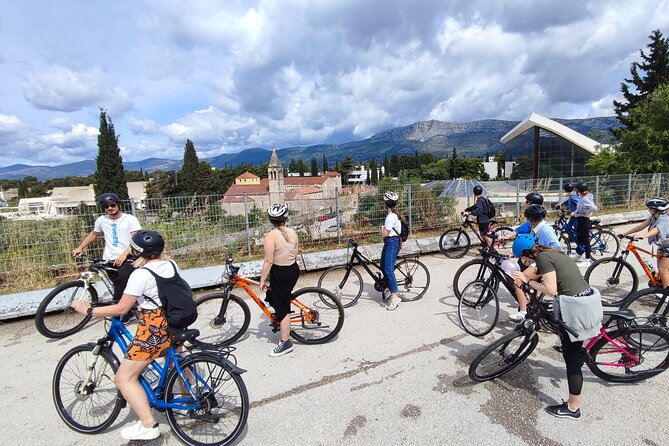
The tour supplies high-quality bicycles and helmets, along with accident insurance and bottled water. Photos from the ride are included as well, which is useful when you want a record of the views without asking someone else to take pictures every few minutes.
The bikes described in the experience are traditional bicycles, not electric bikes. That distinction matters on Marjan Hill. Regular cyclists should find the ride reasonable, but the climb may be tiring for anyone who rarely cycles or who is unused to warm Mediterranean weather.
The tour asks for moderate physical fitness. You should be comfortable riding for several hours, handling city streets, and managing an uphill stretch. Comfortable shoes are important, and loose but practical clothing will serve you better than beachwear or stiff sightseeing clothes.
The ride is limited to 16 people. That is not a private tour, but it is small enough for the guide to communicate with the group and make adjustments. A smaller group also makes stopping at viewpoints and moving through the city less awkward.
One unusual detail from the experience is that a ride may include a swim in the Adriatic as a bonus. Do not treat that as a guaranteed part of the itinerary, but if your guide and group include it, you may want to bring suitable swimwear or be prepared for an unexpected cooling-off stop.
Choosing the Best Time of Day
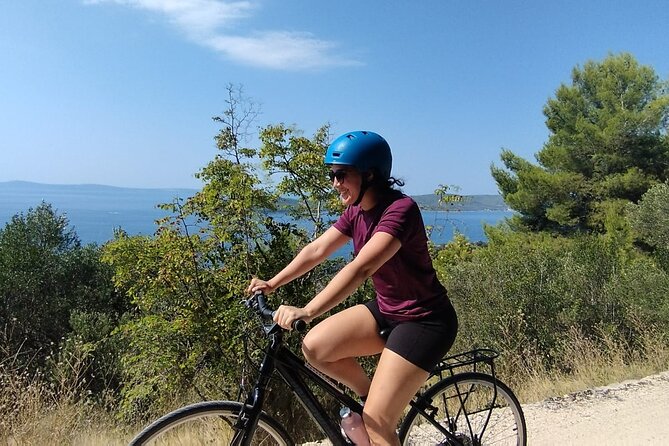
The timing can shape your experience more than you might expect. An evening departure has several clear advantages in summer. Temperatures are lower, the light can turn warm and soft, and Marjan’s views may look especially good near sunset.
One evening ride finished just as darkness arrived, and the golden-hour light produced especially attractive photos. That timing also makes the uphill section less punishing than it can be in the middle of the day.
A daytime tour may work better if you want maximum daylight for sightseeing and photography. It may also suit people with fixed dinner plans or an early departure from Split. The experience lasts about three hours, so check your schedule before booking.
Weather matters. The activity requires good conditions, and poor weather can lead to a different date or a full refund. You can cancel for a full refund if you do so at least 24 hours before the local start time. Changes or cancellations inside that window are not accepted for a refund.
Is $60.07 a Fair Price?
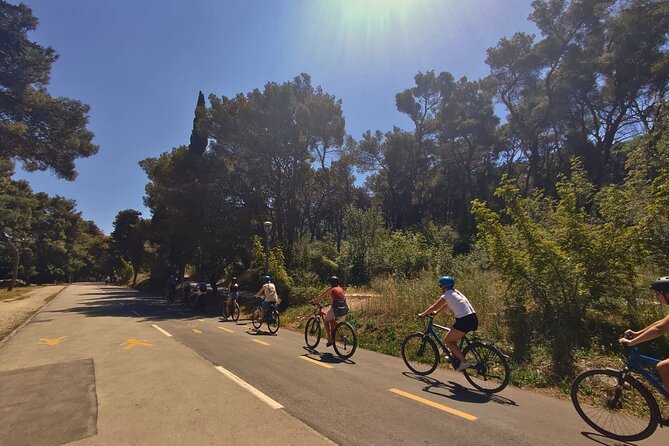
At about $60.07 per person, this is not the cheapest way to see Split. You are paying more than a basic bicycle rental, but you are also getting a licensed English-speaking guide, bicycle, helmet, bottled water, insurance, and photos.
The value depends on how much guidance you want. If you already know Split well and only want to pedal around independently, renting a bike will cost less and give you more control. If this is your first time in the city, the guide can save you from spending time figuring out where to go and what you are looking at.
The route covers several kinds of sightseeing in three hours: a major natural area, a local harbor, the waterfront, the market, and the palace. That makes the price easier to justify for a first day in Split, particularly if you prefer active sightseeing.
I would also count the views as part of the value. Marjan Park is the part that would be hardest to experience efficiently without a bike or a fair amount of walking. You are paying for access to that wider view of the city, not only for transportation between landmarks.
Who Should Book This Ride?
I would recommend it to first-time visitors who want orientation without spending a full day indoors or moving from one crowded monument to another. It is also a good fit if you enjoy local stories, scenic stops, and a bit of exercise.
Regular cyclists should be comfortable with the route. Casual cyclists can still enjoy it, but the Marjan climb may require a slower pace. If hills are a concern, ask about an electric bike before booking, since one cycling account specifically noted that an e-bike would make the ascent easier. The supplied information does not confirm that e-bikes are available, so do not assume one will be provided.
This may not be the right choice if you want a completely flat ride, a private group, or a detailed palace interior tour. The tour passes and explains the palace area, but its appeal comes from the full city circuit and Marjan Park rather than an extended archaeological visit.
The 16-person limit suits people who like some company but do not want a large coach group. It is also a useful option for active couples, friends, and families with older children who can manage the physical demands.
Final Take: A Strong First Look at Split
I would book the Marjan Park & Split City Bike Tour if I had three hours and wanted to see both the city’s famous sights and its quieter edges. The biggest strengths are the views from Marjan, the easy mix of nature and Roman history, and the guides’ ability to add personal stories.
Choose an evening departure if heat worries you or if you want softer light for photos. Choose it with realistic expectations about the hill, wear sun protection, and remember that this is an active tour rather than a slow sightseeing bus.
At $60.07, it offers solid value for a guided half-day, especially when you count the equipment, insurance, water, and local route knowledge. For most reasonably fit visitors, it is a lively and useful introduction to Split.
FAQ
How long does the Marjan Park and Split City Bike Tour last?
The tour lasts approximately three hours.
How much does the tour cost?
The listed price is $60.07 per person.
What is included in the tour?
The tour includes a licensed English-speaking guide, high-quality bicycles, helmets, photos, accident insurance, and bottled water.
Where does the tour start and finish?
The tour starts at Plinarska ul. 25, 21000 Split, Croatia, and finishes back at the same meeting point.
How difficult is the cycling?
The tour requires a moderate level of physical fitness. It includes city streets and a climb up Marjan Hill.
How many people can join the tour?
The maximum group size is 16 people.
What happens if bad weather cancels the tour?
If poor weather causes a cancellation, you will be offered a different date or a full refund.
Just added around Split
- Walking Tour Split★ 4.7 · 61 reviews
- Unique vintage Tomos moped tour Split – Back to the ’80s★ 4.8 · 17 reviews
- Trogir: White Lagoon, Maslinica & Blue Lagoon Speedboat Tour★ 4.8 · 11 reviews
- Essential Diocletian’s Palace Tour for First-Time Visitors★ 4.8 · 19 reviews
- Split: Trogir Open Top Bus Trip + Free Split Walking Tour★ 4.1 · 17 reviews
- Trogir; Private walking tour of higlights of Trogir★ 4.7 · 3 reviews
- Trogir: Old Town Guided Walking Tour★ 4.6 · 76 reviews
- TROGIR: Blue Lagoon & 3 Islands Half-day Speedboat tour★ 4.6 · 28 reviews
Cycling Tours, compared.
Quad Biking Off Road Tour starting 10 minutes drive from Split
Read our review →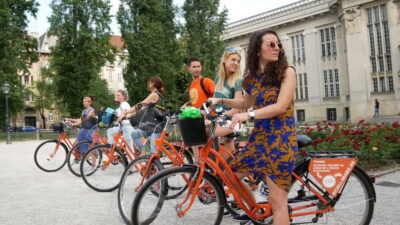

Browse the lists this tour appears in