
Reviewed · WALKING TOURS
Zadar: Guided City Walking Tour
Zadar rewards slow feet and curious ears. This two-hour Old Town walk packs in major sights, from the 16th-century Land Gate to the Sea Organ, while a certified local guide adds context about Croatia, Zadar, and daily life today. I especially like the chance to taste Maraschino cherry liqueur, and the guides receive repeated praise for their clear explanations, humor, and friendly manner. The main consideration is pace: two hours is enough to see a lot, but you may not have much time to linger at every church or archaeological site.
The route works well for first-time visitors who want to get their bearings without committing to a long excursion. Guides such as Tonka and Andrija have earned warm praise for answering questions and keeping the walk enjoyable. Still, this is a walking tour, so come ready for a moderate stroll through historic streets, with comfortable shoes and an appetite for a small local taste.
In This Review
- Key points at a glance
- Why this two-hour route works in Zadar
- Starting among the Five Wells
- The Land Gate and Zadar’s defensive wall
- St. Simeon’s Church and the walk along Kalelarga
- People’s Square and the city’s civic heart
- A taste of Maraschino cherry liqueur
- Roman remains and St. Donatus Church
- St. Anastasia’s Cathedral and its bell tower
- The Sea Organ, where the waves make the music
- Greeting to the Sun and modern Zadar
- The guides and the quality of explanation
- Who will get the most from this walk?
- Practical value at $24 per person
- Should you book the Zadar walking tour?
- FAQ
- How long is the Zadar walking tour?
- How much does the tour cost?
- Where does the tour begin?
- How do I find the guide?
- Where does the tour end?
- What languages are offered?
- Is Maraschino liqueur included?
- Which major sights are covered?
- Is the walk difficult?
- Can I reserve now and pay later?
- What is the cancellation policy?
Key points at a glance
- Start at Five Wells Square: Find the guide holding an orange umbrella and begin beside one of Zadar’s important historic gathering places.
- See the Land Gate and UNESCO fortifications: The 16th-century entrance offers an immediate look at Zadar’s defensive past.
- Walk along Kalelarga: Zadar’s main street links several important squares and sights.
- Taste Maraschino: The cherry liqueur adds a local flavor that a standard sightseeing walk often misses.
- Hear the Sea Organ: Waves create the sound here, so the waterfront stop changes with the sea.
- Finish with modern Zadar: The Greeting to the Sun installation brings light and design into the city’s ancient setting.
Why this two-hour route works in Zadar
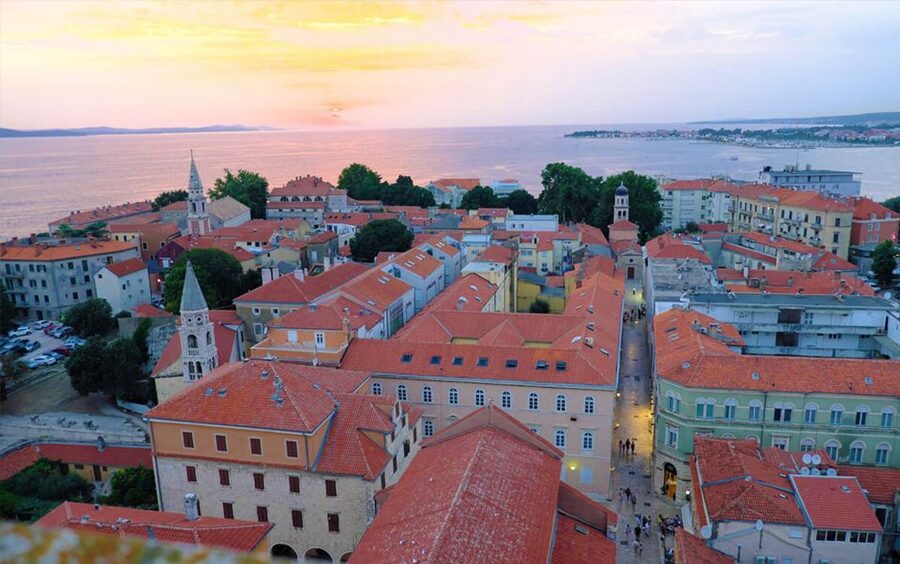
Zadar’s Old Town is compact, but its story is layered. Roman remains, medieval churches, Venetian-era defenses, wartime history, and modern public art all appear within a relatively small area. That makes a walking tour a sensible choice. You can move from one period to another without wasting time on transport.
At $24 per person, the price is reasonable if you want more than a list of names and dates. The value comes from the guide’s explanation of how the sights connect. A good guide can make the Land Gate more than a photogenic arch, the Roman Forum more than scattered stones, and the Sea Organ more than an unusual waterfront bench.
The tour includes two hours of guidance by a certified local guide with more than 500 tour experiences. That does not guarantee the same guide each time, but the named guides praised in the feedback, including Tonka and Andrija, suggest a strong local team. The best comments focus on clear information, a steady walking speed, humor, and the ability to answer questions.
More Walking Tours in Zadar
- Zadar: Guided Walking Tour
★ 4.8 · 445 reviews - Zadar City Tour 120min Walk
★ 5.0 · 203 reviews - Zadar Walking Tour sponsored by Gligora Cheese and deli.
★ 5.0 · 119 reviews
Starting among the Five Wells
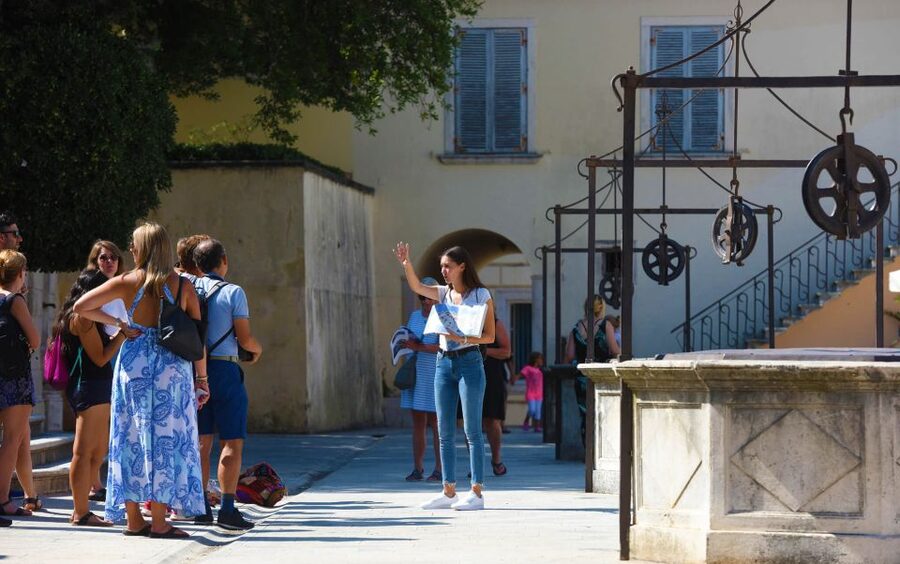
The walk begins at Five Wells Square. Look for the guide with an orange umbrella, a useful detail in a busy historic center where several groups may be gathering.
Starting here gives the tour an immediate sense of place. You are not beginning with a generic introduction far from the action. The square leads naturally into Zadar’s old defenses and streets, and the guide can set up the story of the city before the route reaches its most famous monuments.
The meeting point is also practical because the tour ends back here. You do not need to arrange a second meeting location or work out how to return from the waterfront. Since the activity is entirely focused on the Old Town, you can also use it as a first look before exploring the area on your own.
The Land Gate and Zadar’s defensive wall

The first major stop is the Land Gate, built in the 16th century. This was a historic entrance into Zadar, and it offers a strong introduction to the city’s defensive system.
The fortifications are part of a UNESCO World Heritage Site, which gives this stop more weight than a quick photo opportunity. Your guide can help explain why the entrance mattered and how the walls shaped movement into the city. The gate also gives you a visual sense of Zadar as a protected urban center, not simply a collection of churches and squares.
I like the order here. You begin with the city’s outer defense, then move inward through its streets and public spaces. That makes the Old Town easier to understand as a functioning place with military, religious, commercial, and civic roles.
St. Simeon’s Church and the walk along Kalelarga
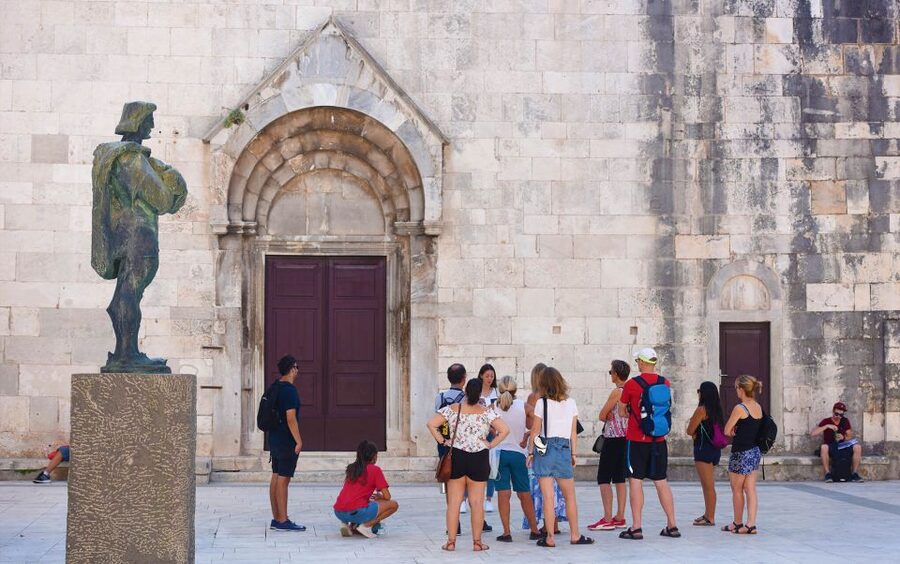
The route continues to St. Simeon’s Church before turning onto Kalelarga, the main street through town. Churches can blur together on a busy European sightseeing day, so the guide’s explanation matters here. You can expect the stop to focus on the church’s place in Zadar’s religious and civic story rather than simply hearing its name and moving on.
Kalelarga adds a different mood. Instead of pausing at one monument, you walk through a street that has long served as a central route across the Old Town. This is where the tour’s local focus becomes useful. A guide can point out how the street fits into everyday Zadar, not just how it appears on a history panel.
The walk is described as moderate. That means you should be comfortable on foot for the full two hours, though the route is not presented as a strenuous hike. The steady pace praised in the feedback is good news if you want time to listen and take photographs without feeling rushed from one stop to the next.
Still Zadar, at a slower pace:
- Zadar: Plitvice Lakes Guided Day Tour with Tickets
★ 4.9 · 3,148 reviews - Zadar: Kornati Boat Trip with Lunch and Swim Stops
★ 4.5 · 1,498 reviews - Zadar: Plitvice Lakes with Boat Ride and Zadar Old Town Tour
★ 4.9 · 1,368 reviews - Zadar: Kornati and Telašćica Full-Day Boat Trip with Lunch
★ 4.1 · 1,193 reviews
People’s Square and the city’s civic heart
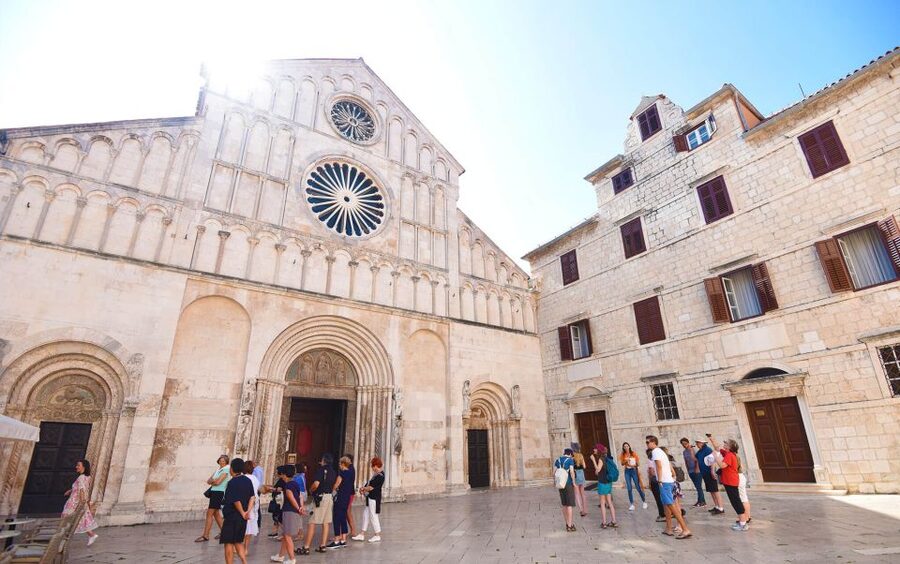
People’s Square brings you into Zadar’s public and civic world. Historic buildings here include the Town Guard and the Town Lodge, two structures that help show how the city was governed and how public life was organized.
This stop balances the churches and military architecture earlier in the route. You are not seeing Zadar only through religion and defense. The square points to administration, law, meetings, and the ordinary business of a city.
I would pay attention to the guide’s explanations here, since civic buildings can be less immediately dramatic than a Roman column or a famous church tower. Their importance becomes clearer when you understand how the square functioned. The feedback consistently praises guides for adding facts about Croatia as well as Zadar, so this is one of the places where broader context may make the difference.
A taste of Maraschino cherry liqueur
The Maraschino tasting is a small part of the tour, but it gives the route a welcome local touch. This famous Zadar cherry liqueur is not simply another stop on a checklist. Tasting something associated with the city gives you a sensory link to the place, much like hearing the Sea Organ later does.
The tasting is included in the $24 price, so you do not need to budget separately for it. It also breaks up the walking with something informal and social. If you enjoy learning about a destination through food and drink, this will likely be one of the tour’s most memorable details.
Keep your expectations in proportion. This is a tasting, not a full food tour, and the supplied details do not promise a meal or several local products. Think of it as a short introduction to one of Zadar’s best-known specialties.
Roman remains and St. Donatus Church
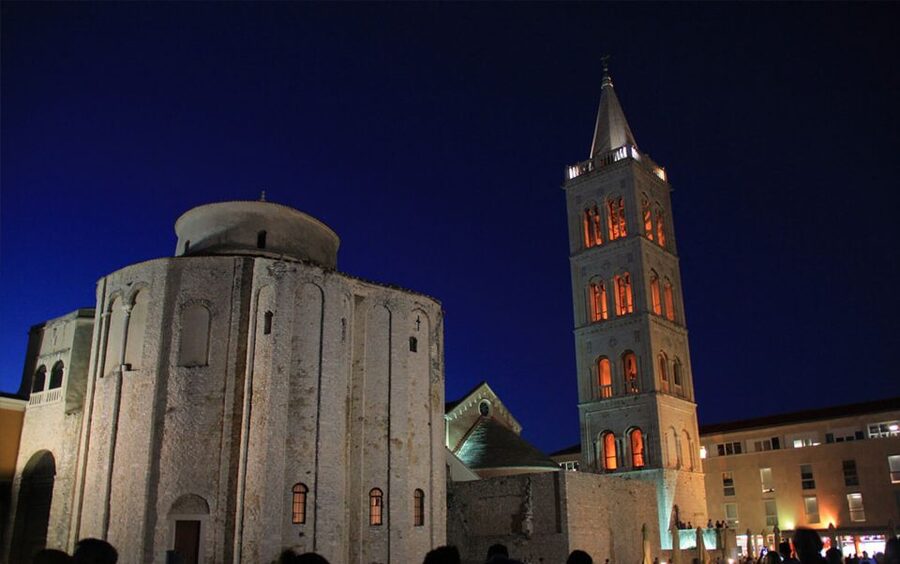
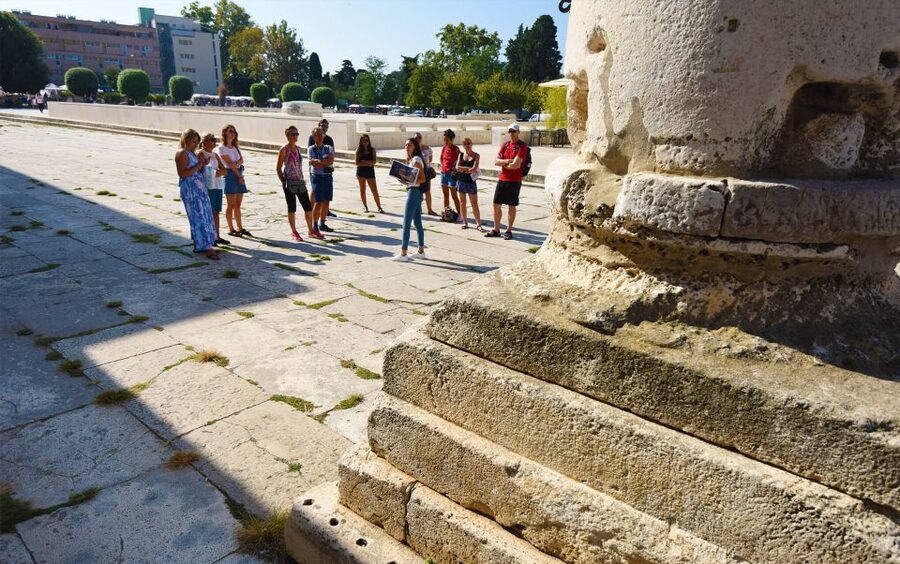
The route then reaches the Roman Forum, where archaeological remains spread across the historic center. This is one of the most important places on the walk because it shows that Zadar’s story began long before its medieval churches and later fortifications.
The Forum is not presented as a single intact building. Instead, you see remains across an open archaeological area, with the guide helping you make sense of what survives. That interpretation is important. Without context, ancient stones can be difficult to read, especially when later buildings surround them.
At the center is St. Donatus Church, the iconic rotunda and one of Zadar’s most recognizable landmarks. Its round form gives the Forum a strong visual focus. The church also shows how different eras overlap in the Old Town: Roman remains below and around you, with a major medieval structure rising nearby.
The itinerary returns to the Roman Forum in its description, but you should understand this as one part of the route rather than two separate visits. The guide may discuss the area in stages as the walk moves toward St. Donatus and the cathedral.
St. Anastasia’s Cathedral and its bell tower
The tour continues to St. Anastasia’s Cathedral, whose bell tower is the highest building in the Forum and in all of Zadar. That makes the tower easy to spot and gives the guide a useful way to explain the city’s skyline.
You should not assume that climbing the tower is part of this activity. The information provided describes the bell tower as a sight along the walking route, not an included ascent. The same applies to interior visits. The tour focuses on guided sightseeing around the Old Town, so check the exact plan if entering a church is especially important to you.
Even from street level, the cathedral area adds another layer to the route. After the Roman Forum and St. Donatus, the cathedral helps show how Zadar’s center continued to develop as a religious and civic heart.
The Sea Organ, where the waves make the music
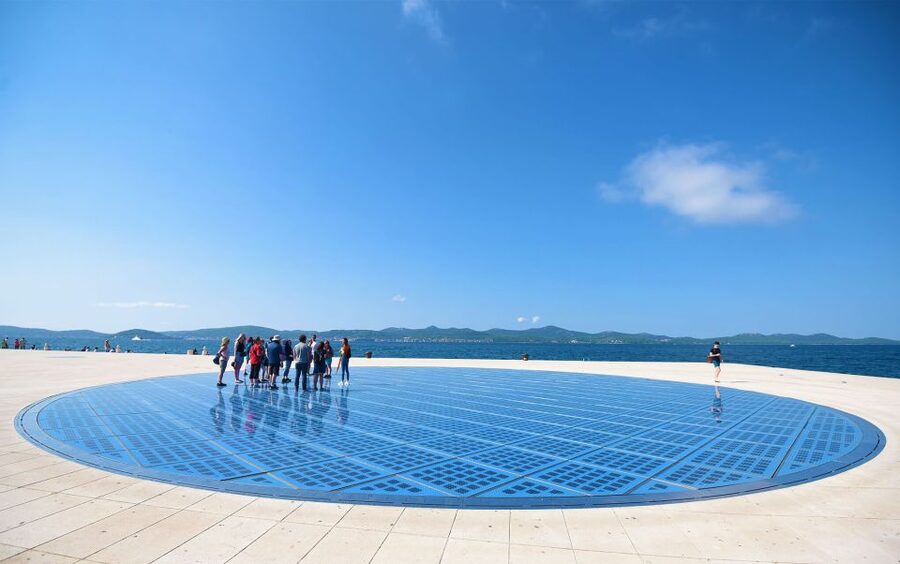
The waterfront is the tour’s most unusual stop. The Sea Organ uses the movement of the waves to produce sound, creating music that changes with the water and weather.
This is not a performance with a set start time. You sit, listen, and notice how the installation responds to the sea. I like that the experience asks you to slow down after the denser run of historic sights. It is a rare public artwork that depends on nature rather than replacing it.
The guide is expected to explain why the Sea Organ matters, but you also get time to experience it directly. That balance is important. Too much commentary would get in the way, while no explanation would leave you unsure what you are hearing.
The waterfront is also tied to Zadar’s famous sunset reputation. Alfred Hitchcock once praised Zadar’s sunset as the world’s most beautiful, comparing it favorably with Key West. The tour does not promise a sunset departure or a special evening schedule, so treat that reference as context rather than a guarantee. If your tour happens near sunset, the location gives you a good reason to remain by the water afterward.
Greeting to the Sun and modern Zadar
Next to the Sea Organ, the Greeting to the Sun installation begins to shine after dark. Its lights continue through the night, creating a sharp contrast with the ancient Forum and medieval churches inland.
This final waterfront pairing is one of the tour’s strongest ideas. The Sea Organ uses waves and sound, while Greeting to the Sun uses light and design. Together, they show a modern side of Zadar that does not erase the older city around it.
The timing matters. If your walk takes place during daylight, you may learn how the installation works but not see its full nighttime effect. If the route reaches the waterfront after sunset, you get the complete visual experience. The details do not promise a specific departure time, so you should not book solely for the lights unless you can confirm the schedule.
The guides and the quality of explanation
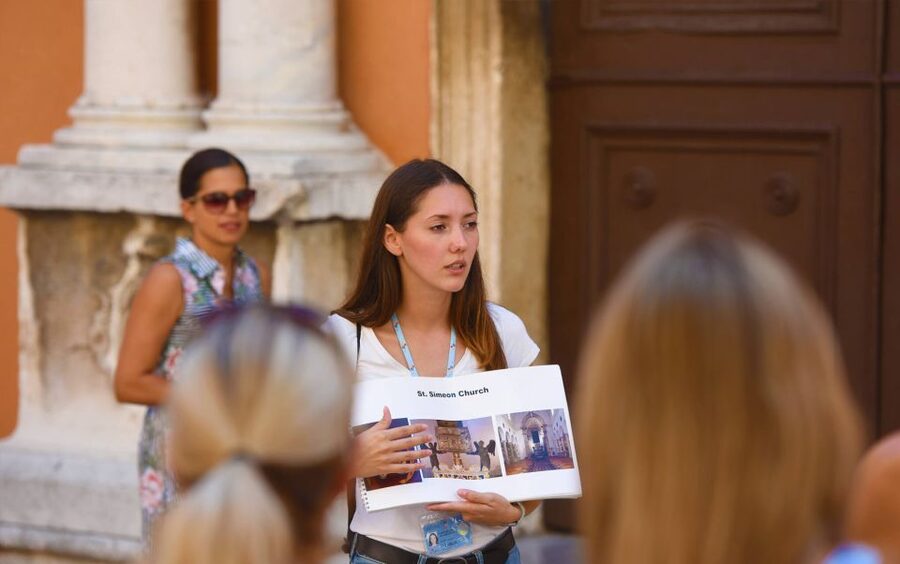
The strongest praise centers on the guides. Phil valued clear information and a good pace. Steve described the guide as well informed and humorous, with useful facts about both Zadar and Croatia. Jennifer praised Tonka for combining historical details with photos, local treats, and practical tips.
Those details tell you what kind of tour this is likely to be at its best: not a rushed recitation, but a friendly walk shaped by questions and conversation. Andrija is also singled out as a local guide who made Zadar’s history accessible.
Guide names can change, so you should not book on the assumption that Tonka or Andrija will lead your departure. Still, the repeated praise for friendliness, explanation, and local insight is a meaningful sign. The tour is offered in English and Spanish, giving you a choice of language when booking.
Who will get the most from this walk?
I would choose this tour if you are visiting Zadar for the first time and want a clear introduction before exploring alone. It covers the major sights without taking up a full day, and the return to Five Wells Square makes it easy to continue sightseeing afterward.
It also suits anyone who likes a mix of history, local culture, and modern design. You get churches and Roman remains, but also Maraschino, the Sea Organ, and Greeting to the Sun. That range prevents the walk from feeling like a parade of old stones.
Families and casual sightseers may appreciate the two-hour length and moderate pace, though the supplied information does not specify a children’s program or family discount. The tour may be less suitable if you want extensive time inside each church, a dedicated food tour, or a slow photography walk. The route covers a lot, so each stop receives an introduction rather than a long study.
Practical value at $24 per person
At $24, you are paying for a guided overview rather than admission to a series of attractions. The package includes two hours of Old Town guidance and the Maraschino tasting. There is no listed transport, meal, or separate attraction admission included.
That is still solid value if you use the guide to orient yourself. A good first-day walk can save time later because you learn where the main sights are and how they relate to each other. It can also help you decide which places deserve a longer return visit.
Booking is flexible: you can reserve now and pay later, and cancellation is allowed up to 24 hours in advance for a full refund. That is useful if your Dalmatian plans are still shifting. Meet at Five Wells Square, look for the orange umbrella, and remember that the tour ends at the same place.
Should you book the Zadar walking tour?
Book it if you want an efficient, friendly introduction to Zadar with real local color. The combination of Roman remains, churches, fortifications, Maraschino, and wave-made music gives you a rounded first look for a fair price.
Skip it if you prefer exploring at your own speed or need long interior visits at every monument. The two-hour moderate walk is designed to cover ground and explain the city, not to provide extended time at each stop.
For most first visits, I would book this early in your stay. Use the walk to understand Zadar’s layout, listen closely at the Forum and Sea Organ, and save the waterfront for a return visit at sunset if your tour time does not match the evening light.
FAQ
How long is the Zadar walking tour?
The guided walking tour lasts two hours.
How much does the tour cost?
The price is $24 per person.
Where does the tour begin?
The tour begins at Five Wells Square in Zadar’s Old Town.
How do I find the guide?
Look for the guide holding an orange umbrella at Five Wells Square.
Where does the tour end?
The activity ends back at the Five Wells Square meeting point.
What languages are offered?
The tour is available in English and Spanish.
Is Maraschino liqueur included?
Yes. A tasting of Zadar’s famous cherry liqueur, Maraschino, is included.
Which major sights are covered?
The route includes the Land Gate, St. Simeon’s Church, Kalelarga, People’s Square, the Roman Forum, St. Donatus Church, St. Anastasia’s Cathedral bell tower, the Sea Organ, and Greeting to the Sun.
Is the walk difficult?
It is described as a moderate walk through the Old Town.
Can I reserve now and pay later?
Yes. You can reserve your place and pay nothing today.
What is the cancellation policy?
You can cancel up to 24 hours in advance for a full refund.
Just added around Zadar
- Zrmanja river & 3 Croatian seas boat tour★ 4.6 · 23 reviews
- Zadar: Ugljan and Preko Islands SpeedBoat Tour —with Drinks★ 4.9 · 81 reviews
- Zadar Private Walking Tour: German★ 5.0 · 16 reviews
- From Zadar: Romantic Sunset Sailboat Tour★ 5.0 · 5 reviews
- Zadar: Three Islands Private Boat Tour★ 5.0 · 80 reviews
- Zadar: Island-Hopping, Swimming & Snorkeling SpeedBoat Tour★ 5.0 · 33 reviews
- ✪ Zadar: Speedboat Tour to 3 Islands with Refreshing Drinks★ 4.7 · 14 reviews
- Zadar: Golden Hour Cruise RIB Tour Island Dinner Stop & Swim★ 4.8 · 73 reviews
Walking Tours, compared.

Walking Tour of Split and Diocletian’s Palace
Read our review →


Krka Waterfalls tour with Trogir Walking tour and Krka panoramic boat cruise
Read our review →
City Walls Early Morning or Sunset Walking Tour
Read our review →Browse the lists this tour appears in