
Reviewed · WALKING TOURS
The Ultimate Zadar Walking Tour
Zadar rewards slow looking. This 100-minute walk links Roman ruins, medieval churches, Venetian defenses, a local market, and the city’s famous waterfront sounds. I especially like the small-group limit of 25 people and the chance to ask a local guide questions instead of simply following a flag through town. The $23.66 price also feels fair for a focused introduction to central Zadar.
I also like the route’s mix of old and new. You move from the Forum and St. Donat to the Sea Organ and Greeting to the Sun, then through food stalls, squares, and a leafy city park. Guides such as Jurica and Jadica have been praised for being friendly, funny, patient, and clear. The main consideration is timing: six o’clock may not line up with sunset, and the tour covers many places in less than two hours, so some stops receive more explanation than exploration.
In This Review
- Key points to know before booking
- Why this Zadar walk works well for a first visit
- Starting at Five Wells Square
- The Forum and Zadar’s Roman beginning
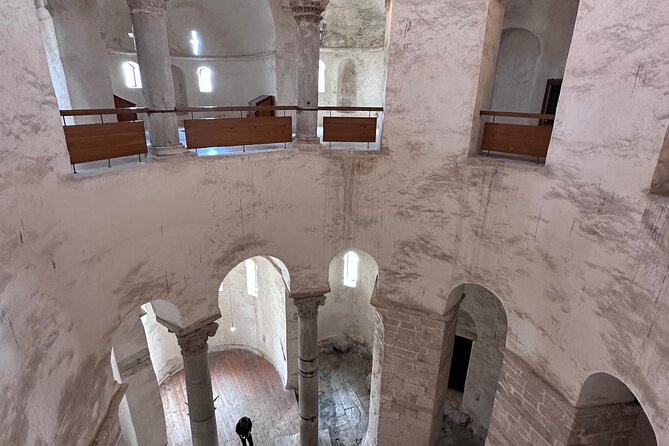
- St. Donat and the Cathedral of St. Anastasia
- The Sea Organ: Zadar’s best sound effect
- Greeting to the Sun and the evening light
- Trznica Zadar and the city’s everyday appetite
- Narodni Trg and St. Simon’s Church
- Five Wells Square and Venetian defense
- Queen Jelena Madijevka Park and the final stop
- The guides make the difference
- Is $23.66 good value?
- Practical details and who should book
- Should you book The Ultimate Zadar Walking Tour?
- FAQ
- How long does The Ultimate Zadar Walking Tour last?
- What time does the tour start?
- Where does the tour begin?
- Where does the tour end?
- Is the tour offered in English?
- What is included in the price?
- Are food and drinks included?
- Is cheese and wine tasting included?
- How large is the group?
- Can I cancel for a full refund?
Key points to know before booking
- Roman Zadar in one compact walk: Begin with the Forum, St. Donat, and the Cathedral of St. Anastasia.
- Modern waterfront attractions included: Hear the Sea Organ and see the solar-powered Greeting to the Sun.
- A local-food stop adds flavor: Pass through Trznica Zadar, where fresh produce, cheese, and meats may be available.
- Venetian defenses tell a military story: Five Wells Square helps explain why Zadar resisted Ottoman attacks.
- Guides are a major strength: Jurica and Jadica are praised for friendly conversation, clear explanations, and patience with late arrivals.
- The price is straightforward: At $23.66 per person, the tour includes guiding but not food, drinks, tastings, or hotel pickup.
Why this Zadar walk works well for a first visit
Zadar’s old center is compact, but it packs several centuries into a small area. You can pass Roman stones, a ninth-century church, a medieval cathedral, Renaissance monuments, a Venetian entrance, and modern public art within one afternoon or evening.
That density is exactly why a guided walk helps. Without context, the Forum can look like a pleasant patch of old stone, and Five Wells Square can seem like an attractive fountain feature. A good guide connects those pieces to the city’s founding, religious life, water supply, and defenses.
I like the balance here. This is not only a march through old buildings. The route includes the Sea Organ and Greeting to the Sun, two modern attractions that give Zadar a very different feel. You also pass through the central market, where the city’s daily life is easier to see than it is around the polished waterfront.
The advertised group limit is 25 people. That is not a private walk, but it is small enough to keep questions possible and avoid the feel of a huge procession. The experience is offered in English and uses a mobile ticket.
More Walking Tours in Zadar
- Zadar: Guided Walking Tour
★ 4.8 · 445 reviews - Zadar City Tour 120min Walk
★ 5.0 · 203 reviews - Zadar Walking Tour sponsored by Gligora Cheese and deli.
★ 5.0 · 119 reviews
Starting at Five Wells Square
The meeting point is Five Wells Square, Trg pet bunara 1. This is a useful place to begin because the square itself carries a strong story about Zadar’s Venetian period and its defenses.
The five wells were connected to the city’s water supply and formed part of a sixteenth-century entrance area. The monument is described as the most important Venetian monument in Dalmatia, together with the fortification walls, and it is included on the UNESCO Heritage Site list.
Your guide explains why Zadar was so difficult to conquer. The city faced repeated Ottoman attempts, yet its walls and defensive design held firm. The wells also show how basic needs shaped urban planning. Water was not a decorative concern in a fortified city. It was part of survival.
The square is also a practical meeting point because the tour ends nearby in Perivoj kraljice Jelene Madijevke, the park of Queen Jelena Madijevka. Confirm the exact meeting spot in your phone before setting out, since the meeting information also names the Sea Organ as an endpoint.
The Forum and Zadar’s Roman beginning
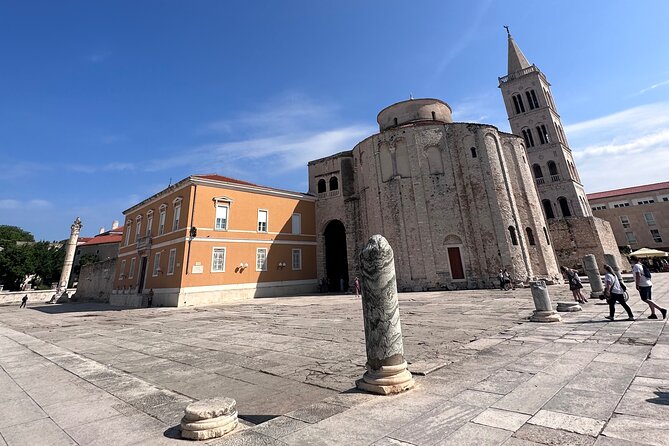
The Forum is the intellectual anchor of the walk. This is where Zadar’s city center began more than 2,000 years ago, when the settlement developed as a Roman urban center.
You can expect about 20 minutes here, the longest single stop on the route. That makes sense. The Forum has remains from the ancient city, but its importance grows when you understand how later buildings were placed around it.
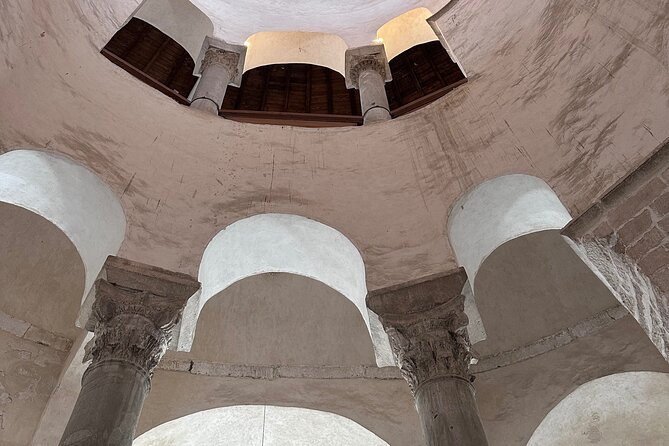
St. Donat, built in the ninth century, is one of the city’s best-known buildings. St. Maria, dating from the eleventh century, adds another layer to the square. Together, the ancient remains and later churches show how Zadar kept building over earlier foundations rather than abandoning its old center.
I like this part for orientation. A short history of Zadar, from its Roman beginnings through modern times, gives you a framework for the rest of the walk. One guide was praised for explaining the city from its Roman roots to the present instead of treating each monument as an isolated object.
The limitation is familiar with any short city walk: the Forum deserves more time than 20 minutes if you want architectural detail, interior visits, or a close look at every stone. The tour gives you the essential story and helps you decide where to return later.
St. Donat and the Cathedral of St. Anastasia
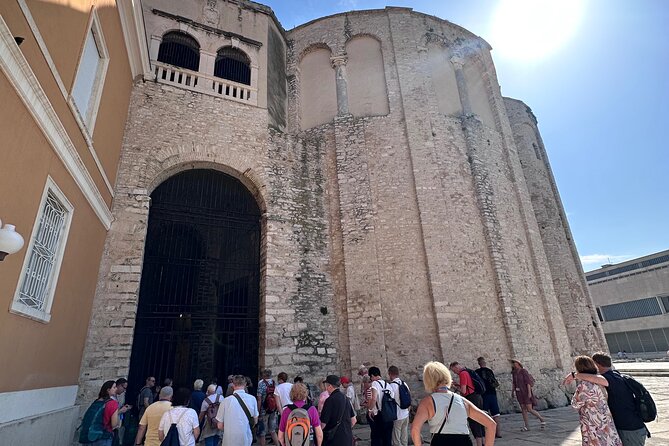
The route gives you two different views of Zadar’s religious architecture. St. Donat is an early medieval church dating from the ninth century, while the Cathedral of St. Anastasia dates from the thirteenth century.
The cathedral is the largest church in Dalmatia and was built in the Romanesque style. You spend about ten minutes here, enough to understand its place in the city and appreciate its design, but not enough for an extended religious-art visit.
I find this contrast useful. St. Donat represents an earlier period when the city was shaping its medieval identity. The cathedral shows a later and larger expression of religious power. Together, they make the city’s development easier to read.
Admission to the stops is listed as free, but that does not mean every possible interior activity is included. The tour price covers the guide, not optional purchases or food and drinks. If entering a church is important to you, ask the guide about the available access that day.
Still Zadar, at a slower pace:
- Zadar: Plitvice Lakes Guided Day Tour with Tickets
★ 4.9 · 3,148 reviews - Zadar: Kornati Boat Trip with Lunch and Swim Stops
★ 4.5 · 1,498 reviews - Zadar: Plitvice Lakes with Boat Ride and Zadar Old Town Tour
★ 4.9 · 1,368 reviews - Zadar: Kornati and Telašćica Full-Day Boat Trip with Lunch
★ 4.1 · 1,193 reviews
The Sea Organ: Zadar’s best sound effect
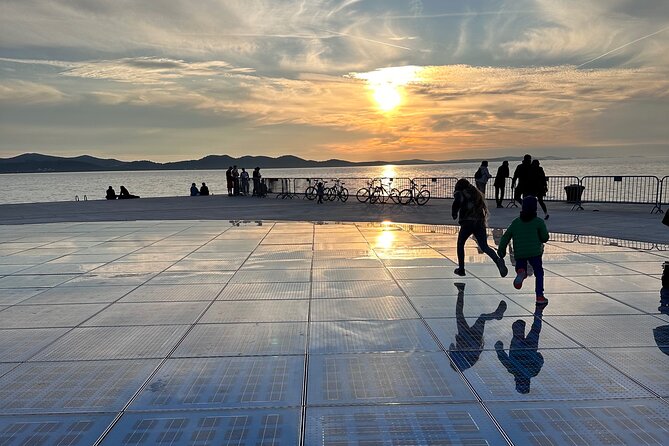
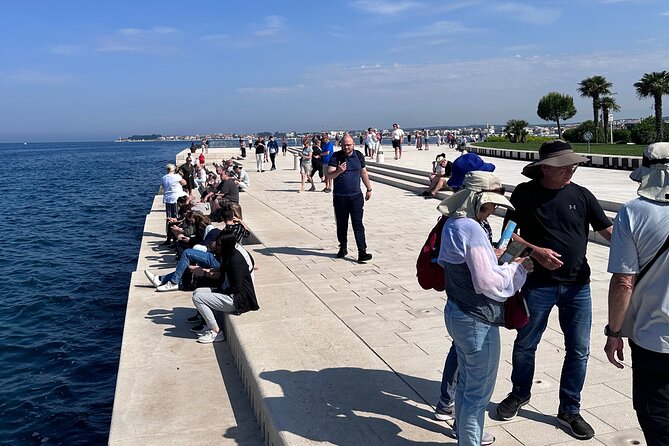
At the Sea Organ, the Adriatic becomes part of the performance. The installation uses the movement of the water to create sound, so the experience changes with the sea.
The scheduled stop lasts about ten minutes. That is enough time to listen, take in the waterfront, and understand the idea behind the installation. It is not a concert with a fixed program. The water supplies the rhythm, and the sound can be quiet, uneven, or more noticeable depending on conditions.
This is one of the tour’s strongest modern touches. After ancient ruins and churches, the Sea Organ shows how Zadar has continued to shape public space in creative ways. It also gives the walk a sensory break. You are not only looking at monuments. You are listening to the coast.
The endpoint information names the Sea Organ, while the tour description also says the walk ends in Queen Jelena Madijevka Park. A past experience finished near Greeting to the Sun, so you should confirm the final stopping place with the guide if you need to meet someone or catch transport.
Greeting to the Sun and the evening light
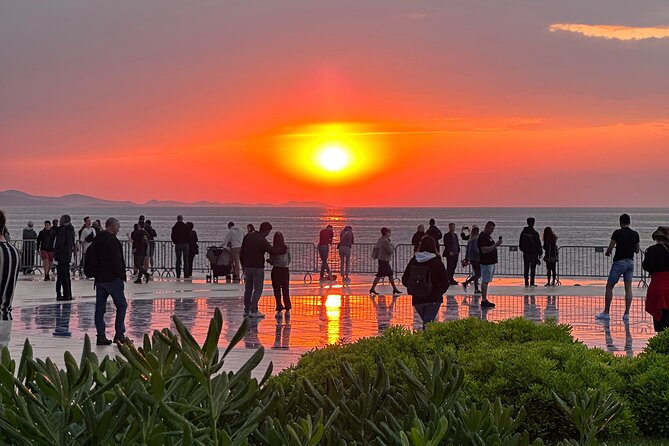
Greeting to the Sun is built around solar energy. The installation collects energy during the day and uses it for a light display at night. It also contains additional symbolic elements that the guide can point out.
A ten-minute stop lets you understand the concept and see the installation, but the full night display may not yet be active when the tour begins at 6:00 pm. The exact effect depends on the season and sunset time. If you want the strongest chance of seeing the lights, ask how the evening schedule fits the date of your tour.
This is also where the tour’s timing deserves attention. Zadar is famous for its sunset, and one guide specifically encouraged visitors not to miss it. A six o’clock start may work beautifully in some seasons, but in others you may be walking during the best sunset minutes or finishing after them. Check the sunset time before booking and decide which matters more: guided context or an uninterrupted waterfront evening.
Trznica Zadar and the city’s everyday appetite
The market stop brings you away from monuments and into ordinary Zadar life. Trznica Zadar sells fresh food, including fruits and vegetables, and the tour passes close to places where you can buy local goods.
Bargaining is allowed, which adds a small but practical cultural lesson. You can look at what is in season, ask questions, and notice what local shoppers are buying. The stop lasts about ten minutes, so it is more of an introduction than a full food tour.
The experience also passes near cheese and wine tasting. Tastings are not included in the $23.66 price, so bring extra money if you want to sample or purchase something. Food and drinks are excluded as well.
One particularly useful detail is that a guide included free tastings of local cheese and meats during the walk. That may depend on the guide, the market, or the day, so treat it as a possible bonus, not a guaranteed part of the admission. You should not book this tour expecting a full meal or a formal tasting session.
Narodni Trg and St. Simon’s Church
Narodni Trg, or the People’s Square, has been Zadar’s main square since the sixteenth century. Renaissance monuments surround the space, and one special church dating from the eleventh century adds to its character.
The ten-minute visit works best as a snapshot of civic Zadar. The Forum represents the ancient center, while Narodni Trg shows how public life shifted through later centuries. Your guide can help you read the square as a place of government, gathering, and daily movement rather than just another attractive plaza.
St. Simon’s Church offers a more unusual story. It holds the body of St. Simeon, who, according to Christian tradition, held the infant Jesus and recognized that the child would bring light to the world.
The story of how St. Simeon’s body came to Zadar and remained there is part of the church’s appeal. The stop is less about wandering through a large building and more about hearing the tradition connected to the city. If you enjoy religious history and local legends, this may be one of the most memorable explanations on the walk.
Five Wells Square and Venetian defense
Although Five Wells Square is the listed starting point, it is also one of the key historical sights on the route. The sixteenth-century entrance and defensive system explain more about Zadar’s survival than a pretty photograph can.
The wells were considered costly when they were built, even by many Venetians. That detail makes the monument more human. Public works often look inevitable after the fact, but people argued about their price at the time, just as they do now.
The fortifications are tied to Zadar’s resistance against Ottoman attacks. Your guide can show how the walls and water system worked together. You come away with a better sense of why the city’s position and defenses mattered.
The square is also a reminder that Zadar’s past was not only Roman and religious. Venice shaped the city in a major way, and this stop gives that period proper weight.
Queen Jelena Madijevka Park and the final stop
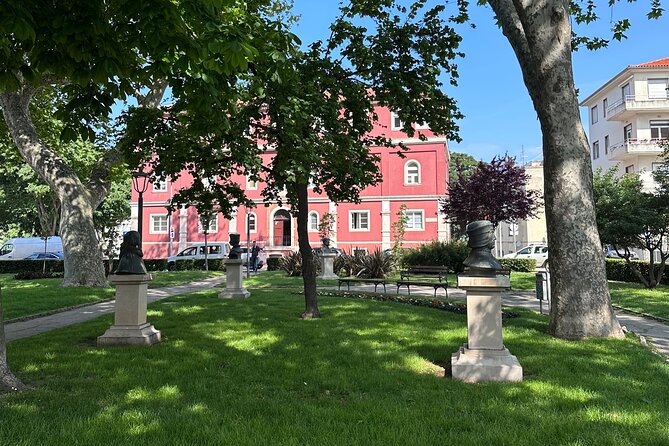
Perivoj kraljice Jelene Madijevke is a park created in the early nineteenth century. It became a central meeting place for people from Zadar, and the tour explains the story behind its creation and the reason it was needed.
I appreciate ending in a park rather than at a single monument. After a fast series of churches and squares, the green space gives you room to pause. It is also a practical place to continue your evening, though no onward transportation or meal is included.
The supplied endpoint information is slightly mixed. It names the Sea Organ, then says the walk ends in Queen Jelena Madijevka Park. A past tour also finished around Greeting to the Sun. Ask the guide at the start where the final stop will be on your date, especially if you have a dinner reservation.
The guides make the difference
The strongest part of this experience is the human side. Jurica is described as friendly, funny, patient, and well informed about Zadar’s past. He was also accommodating when a group arrived late, which matters when traffic, a cruise schedule, or a confusing old-town street causes delays.
Jadica was praised for arriving promptly, explaining the city’s age clearly, and taking the group through the market. Another guide was described as passionate about the origins of the area and easy to talk with.
That kind of guide can turn a short walk into a useful first lesson. You are free to ask questions, and the tour is designed to be interactive. I would use that opportunity. Ask about the Ottoman attacks, the city’s Roman layout, the meaning of the waterfront installations, or the market foods you see.
The main risk is guide variation. The experience is sold with a professional local guide, but a particular personality and speaking style cannot be promised. Still, the available feedback points strongly toward friendly, engaging leadership.
Is $23.66 good value?
At $23.66 per person, I consider this a reasonable introduction to Zadar. You receive about 100 minutes with a professional local guide, a route through the city’s main historic areas, an explanation of the modern waterfront installations, and a market visit.
The value is strongest if you are new to Zadar and want a clear overview before exploring on your own. The walk saves you from piecing together Roman, medieval, Venetian, religious, and modern sights without a connecting story.
The price is less useful if you want museum admission, a full food tour, hotel pickup, or long interior visits. None of those are included. Food, drinks, cheese and wine tasting, and transportation to or from your hotel cost extra or require separate planning.
You should also remember the tour is only about 100 minutes. It covers nine named stops, so the guide must keep moving. Think of it as a well-paced introduction, not a slow architectural study.
Practical details and who should book
The tour starts at 6:00 pm at Five Wells Square and is offered in English. It uses a mobile ticket, has a maximum group size of 25, and does not include hotel pickup.
Most people can participate, and service animals are allowed. The experience depends on good weather and a minimum number of participants. If poor weather or low enrollment cancels the tour, you are offered another date or experience, or a full refund.
Free cancellation is available up to 24 hours before the start time. Inside that window, the amount paid is not refunded, and changes are not accepted. The cutoff follows local Zadar time.
I would choose this walk if you are visiting Zadar for the first time, enjoy local stories, want to see the main old-town sights, or prefer a guide who welcomes questions. It also suits anyone who wants a short evening activity rather than a long day tour.
I would choose something else if your priority is an extensive museum visit, a guaranteed sunset viewing, a formal food tasting, or private attention. The route is compact and efficient, but its broad coverage leaves limited time at each stop.
Should you book The Ultimate Zadar Walking Tour?
Yes, if you want a friendly introduction to Zadar at a fair price. The best reasons are the mix of Roman, medieval, Venetian, market, and modern sights, plus the strong record of guides who explain the city in a warm and approachable way.
Before booking, check the sunset time and confirm the final stopping point. If you can accept a brisk route and extra costs for food or tastings, this is a sensible first activity in Zadar. It gives you the map, the stories, and several places worth revisiting at your own pace.
FAQ
How long does The Ultimate Zadar Walking Tour last?
The walking tour lasts approximately 1 hour and 40 minutes, or 100 minutes.
What time does the tour start?
The tour starts at 6:00 pm.
Where does the tour begin?
The meeting point is Five Wells Square, Trg pet bunara 1, 23000 Zadar, Croatia.
Where does the tour end?
The tour information names the Sea Organ as the end point and also says the walk ends in Queen Jelena Madijevka Park. Confirm the exact final stop with your guide.
Is the tour offered in English?
Yes. The experience is offered in English.
What is included in the price?
The price includes a 100-minute walking tour with a professional local guide, visits to the main sights on the route, an interactive format, and a stop near the local marketplace.
Are food and drinks included?
No. Food and drinks are not included.
Is cheese and wine tasting included?
No. The tour passes near cheese and wine tasting, but the cost is excluded. A free tasting of local cheese and meats has occurred during a tour, but it should not be treated as guaranteed.
How large is the group?
The tour has a maximum of 25 participants.
Can I cancel for a full refund?
Yes, if you cancel at least 24 hours before the experience starts. Cancellations made less than 24 hours before the start time are not refunded.
Just added around Zadar
- Zrmanja river & 3 Croatian seas boat tour★ 4.6 · 23 reviews
- Zadar: Ugljan and Preko Islands SpeedBoat Tour —with Drinks★ 4.9 · 81 reviews
- Zadar Private Walking Tour: German★ 5.0 · 16 reviews
- From Zadar: Romantic Sunset Sailboat Tour★ 5.0 · 5 reviews
- Zadar: Three Islands Private Boat Tour★ 5.0 · 80 reviews
- Zadar: Island-Hopping, Swimming & Snorkeling SpeedBoat Tour★ 5.0 · 33 reviews
- ✪ Zadar: Speedboat Tour to 3 Islands with Refreshing Drinks★ 4.7 · 14 reviews
- Zadar: Golden Hour Cruise RIB Tour Island Dinner Stop & Swim★ 4.8 · 73 reviews
Walking Tours, compared.
Walking Tour of Split and Diocletian’s Palace
Read our review →


Krka Waterfalls tour with Trogir Walking tour and Krka panoramic boat cruise
Read our review →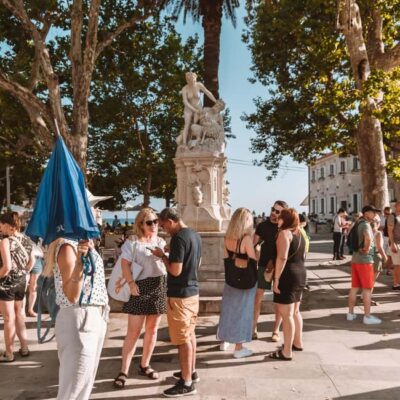
City Walls Early Morning or Sunset Walking Tour
Read our review →Browse the lists this tour appears in